
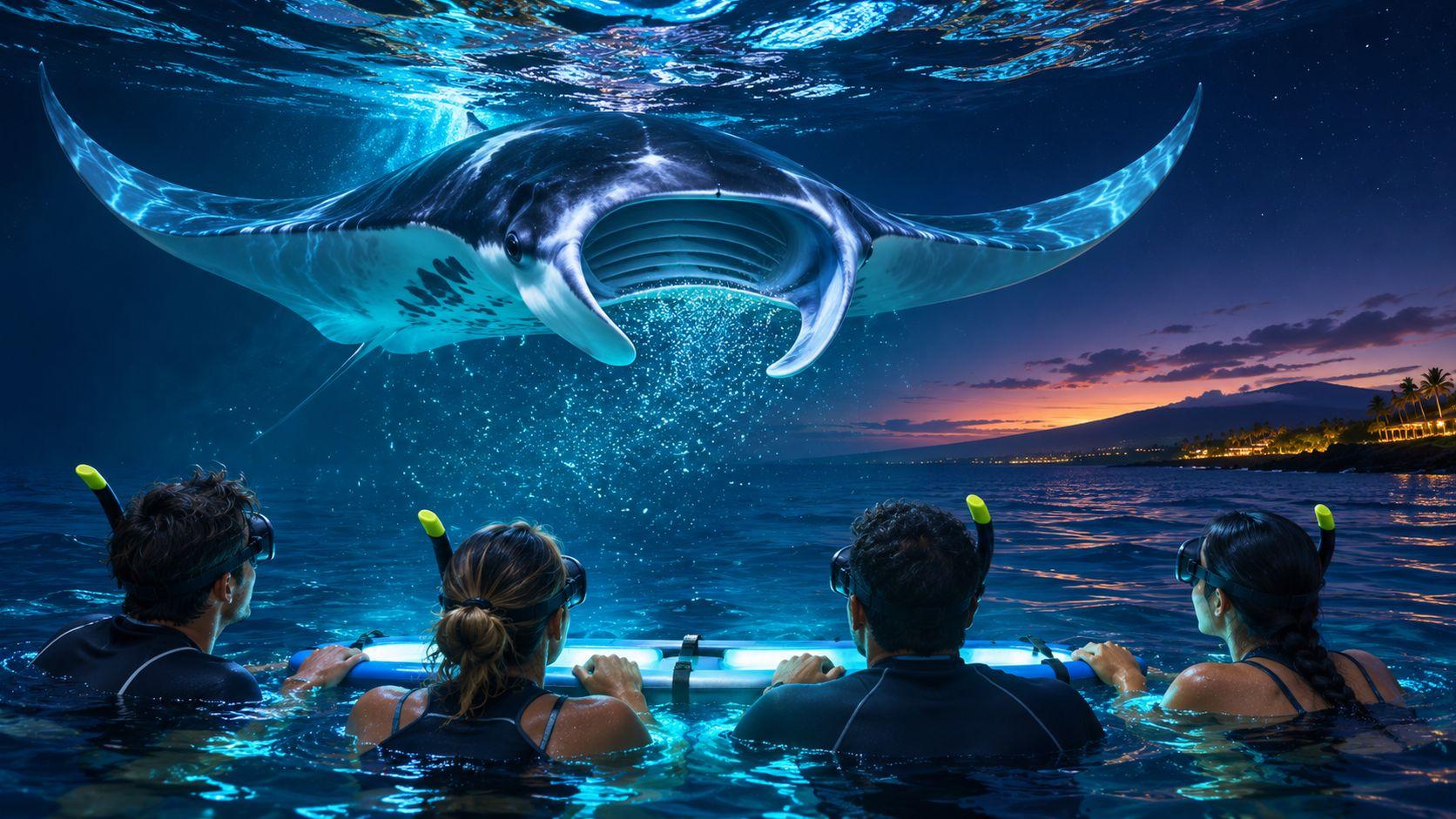
You've spent the afternoon scrolling through tour pages, staring at glowing underwater photos, and asking yourself one honest question: do you want to slip into dark Pacific water after sunset over a reef you can't see? That hesitation makes total sense. Floating in the open ocean at night feels unfamiliar to almost every first-timer who steps onto the harbor dock in Kailua-Kona.
Most online guides treat the manta ray night dive snorkel like a guaranteed theme-park show, promising close-up magic while glossing over ocean conditions, boat traffic, and the rules that protect wild animals. A better way to judge any night trip is by low wildlife disturbance and honest sighting odds, not by how close a swimmer manages to get. The underwater lights create a natural feeding zone, and your job is to float calmly at the edge while wild rays decide whether to eat.
Once you understand how the evening runs, who belongs in the water, and why every rule exists, the nerves drop away quickly. Below is the complete, practical walkthrough a Kona guide gives before the boat ever unties from the dock.
Manta Night Snorkel at a Glance and Who Qualifies
You qualify for the Manta Ray Night Snorkel if you're at least 5 years old (accompanied by an adult), can swim 50 yards without extra flotation, and already have intermediate snorkeling skills. The full charter runs 2 hours, departs near sunset, and gives you roughly 30 to 40 minutes in the water. Non-swimmers aren't permitted on manta charters, and ride-alongs aren't available on the night trip, so every person stepping onto the boat needs to be comfortable floating in open ocean water after dark.
Kona's manta viewing sites are among the busiest marine wildlife areas in Hawaiʻi. A 2025 Kona-area guide estimated that up to 80,000 people annually take part in manta-ray night snorkeling and diving in Kailua-Kona. With that kind of volume on the water every evening, pre-trip screening and structured crew briefings do the heavy lifting for safety and wildlife protection.
As Hawaii's top rated and most reviewed snorkel company, Kona Snorkel Trips runs small-group, guide-led trips along the Kona coast with lifeguard-certified guides in the water beside you. You can review the exact schedule, gear provided, and check-in logistics on our Kona manta ray night snorkel tour page. Before committing to a night departure, check what past guests say about our crew and small-group structure below.
Manta Night Snorkel Requirements at a Glance
Before booking a spot for yourself or your family, scan the baseline standards every guest has to meet. These aren't arbitrary hurdles; they keep the group cohesive once the sun drops below the horizon.
| Requirement | What to expect |
|---|---|
| Trip length | 2 hours, leaving near sunset |
| Minimum age | 5 and up, with an adult |
| Swim test | Swim 50 yards without extra flotation |
| Snorkel experience | Intermediate level recommended |
| Time in the water | 30-40 minutes |
| Non-swimmers | Not permitted on manta charters |
Five Yes or No Readiness Tests Before You Book
Reading a requirement table is one thing, but judging your own comfort in dark water is another. Run every member of your group through these five plain questions:
- Can you swim 50 yards and float calmly for several minutes? Even though you'll hold onto a custom-built light board in the water, you still have to swim from the boat ladder to the board and stay relaxed if a wave rolls past.
- Do you have intermediate snorkeling skills? You should already know how to clear water from a snorkel, adjust a leaking mask at the surface, and breathe steadily through your mouth without panicking when your face is submerged.
- Is every child paired with an attentive adult in the water? Kids aged 5 and up need a parent or guardian right beside them on the board, keeping an eye on their warmth, mask seal, and energy level.
- Are you comfortable in open water after dark? Darkness removes visual depth cues. If floating over deep water at night triggers rapid breathing, a nighttime charter isn't the right place to test your limits.
- Do you manage seasickness reliably? Boat motion feels stronger when you can't see the horizon clearly. Anyone prone to motion sickness needs a proven remedy taken well before boarding.
Readiness rule: If any answer above is no or "maybe," book a daytime reef snorkel first. Beginner snorkelers are welcome on all our daytime tours, and learning to clear a mask in bright, clear water makes a future night trip far more enjoyable.
Some travelers also wonder whether they should float at the surface or strap on scuba tanks for the bottom view. Certified divers who want to weigh both formats side by side can read our breakdown on picking between the Kona manta ray night snorkel and the night dive.
Why Manta Rays Gather Under the Lights
Think of the underwater light board as a dinner bell the whole reef neighborhood can hear. Nobody tosses bait into the ocean, and nobody trains the rays to show up at sunset. Instead, bright beams shining into dark water trigger a simple biological chain reaction that plays out naturally in tropical seas.
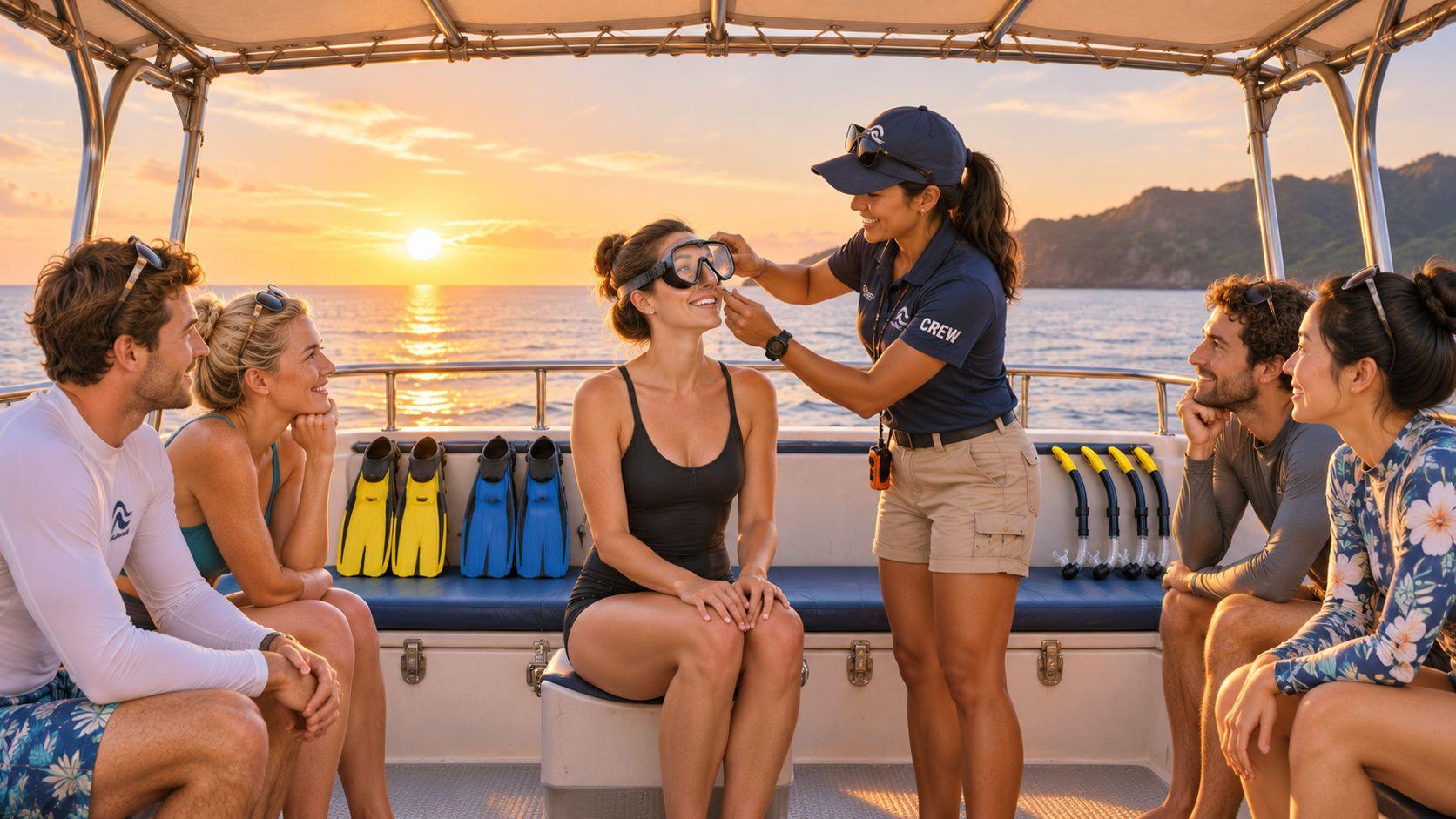
Before looking closely at the science behind that glow, watch how crew preparation on the boat sets up a smooth sunset transition into the water.
How Artificial Light Builds a Feeding Zone
Tropical waters off the Big Island are crystal clear largely because they're nutrient-poor, meaning food is spread thin across miles of ocean. According to NOAA research on Kona manta feeding ecology, artificial lights at sites like Keauhou Bay and Makako Bay concentrate microscopic zooplankton inside the illuminated water column, and reef manta rays (Manta alfredi) sweep through that dense prey field to forage efficiently.
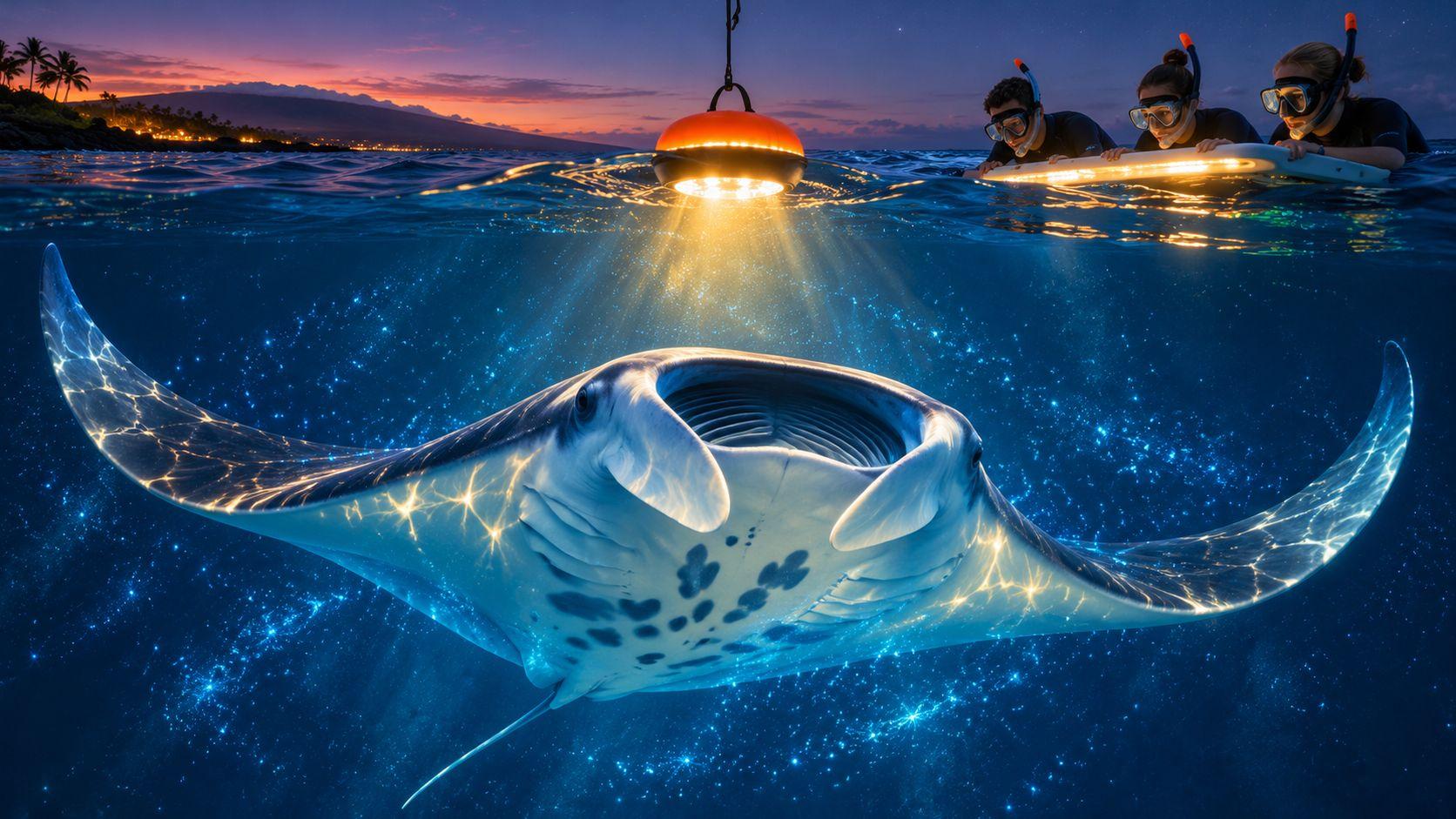
Once zooplankton gather in the glow, mantas glide into the beam with wide-open mouths and unfurled cephalic fins, channeling plankton-rich water across their gill plates. Because the rays are actively eating rather than performing for an audience, their passes follow the food. If a current shifts the plankton cloud a few feet to the left, the rays shift with it. For a closer look at plankton behavior in illuminated water, see our explainer on why lights attract manta rays during night snorkeling.
What Long-Term Kona Sighting Records Show
This feeding pattern isn't a brief seasonal fluke, and it rests on one of the longest wildlife observation records in Hawaiʻi. Every reef manta ray carries a distinct pattern of black spots across its white belly, much like a human fingerprint, which lets marine researchers and local guides track individual animals year after year.
A community-based database compiled by Manta Ray Advocates logs nearly 6,000 encounter records and roughly 28,500 manta sightings over 14 years. Meanwhile, 2009 Hawaiʻi legislative testimony on Kona's manta population noted that only 154 individual manta rays had been identified along the Kona Coast since 1992, estimating a small, localized population of fewer than 200 individuals that generally doesn't migrate between islands.
More recently, a peer-reviewed study published in Environmental Biology of Fishes analyzed 13 years of community-sourced observations from 2010 through 2022 at two nighttime aggregation sites roughly 20 kilometers apart, Garden Eel Cove and Keauhou. Researchers found that predictable nighttime feeding aggregations persisted under sustained tourism and artificial-light feeding conditions.
To see what that calm feeding motion looks like in real time, watch this short clip from an actual Kona evening on the water.
Treating the Site as Wildlife Habitat Instead of a Show
Those long-term numbers explain why Kona's manta tours are unusually consistent, yet they also reveal why humility matters. Because the local population is small and site-attached, every vessel and snorkeler shares the same feeding grounds with the same resident animals night after night.
Lighting creates an opportunity for feeding, never a contract. Water movement, turbidity, moonlight, and local plankton density all shift from one evening to the next, and wild mantas always choose whether to visit the beams. When you frame the evening as observing wild animals eat in their own habitat, a single slow pass feels extraordinary and a quiet night makes biological sense.
How the Night Trip Unfolds, Step by Step
Knowing the exact sequence of events removes almost all first-timer anxiety. Instead of guessing what happens when the harbor lights fade behind the boat, you'll know what the crew is setting up at each stage and why every step matters for your comfort and the animals' feeding space.
Below is how the evening plays out from harbor check-in to the ride back to the dock.
- Check in before sunset and fit your gear. On the early trip, you meet the crew in daylight so they can verify everyone's swimming ability, hand out your mask, snorkel, and shorty wetsuit, and confirm your mask seals cleanly against your face. Taking thirty seconds to check that seal on dry land prevents the most common mid-float distraction: saltwater leaking into your eyes right as a ray glides underneath. (On the late departure, you complete the exact same check-in and gear fitting after dark.)
- Motor out along the Kona coast at twilight. As the boat heads toward Garden Eel Cove or the Keauhou area, the crew watches the sea state, checks mooring availability, and walks you through the evening's plan. You watch the sky darken gradually, which gives your eyes and nerves time to adjust before anyone touches the water.
- Listen carefully to the pre-entry briefing. Before the anchor sets or the boat ties off, your guide explains how wide reef manta rays are, what a normal feeding pass looks like, and the exact hand signals used in the dark. You'll also hear the strict surface-only rule and what to do if a feeding ray loops close to your board, because clear expectations stop guests from flailing or reaching out in surprise.
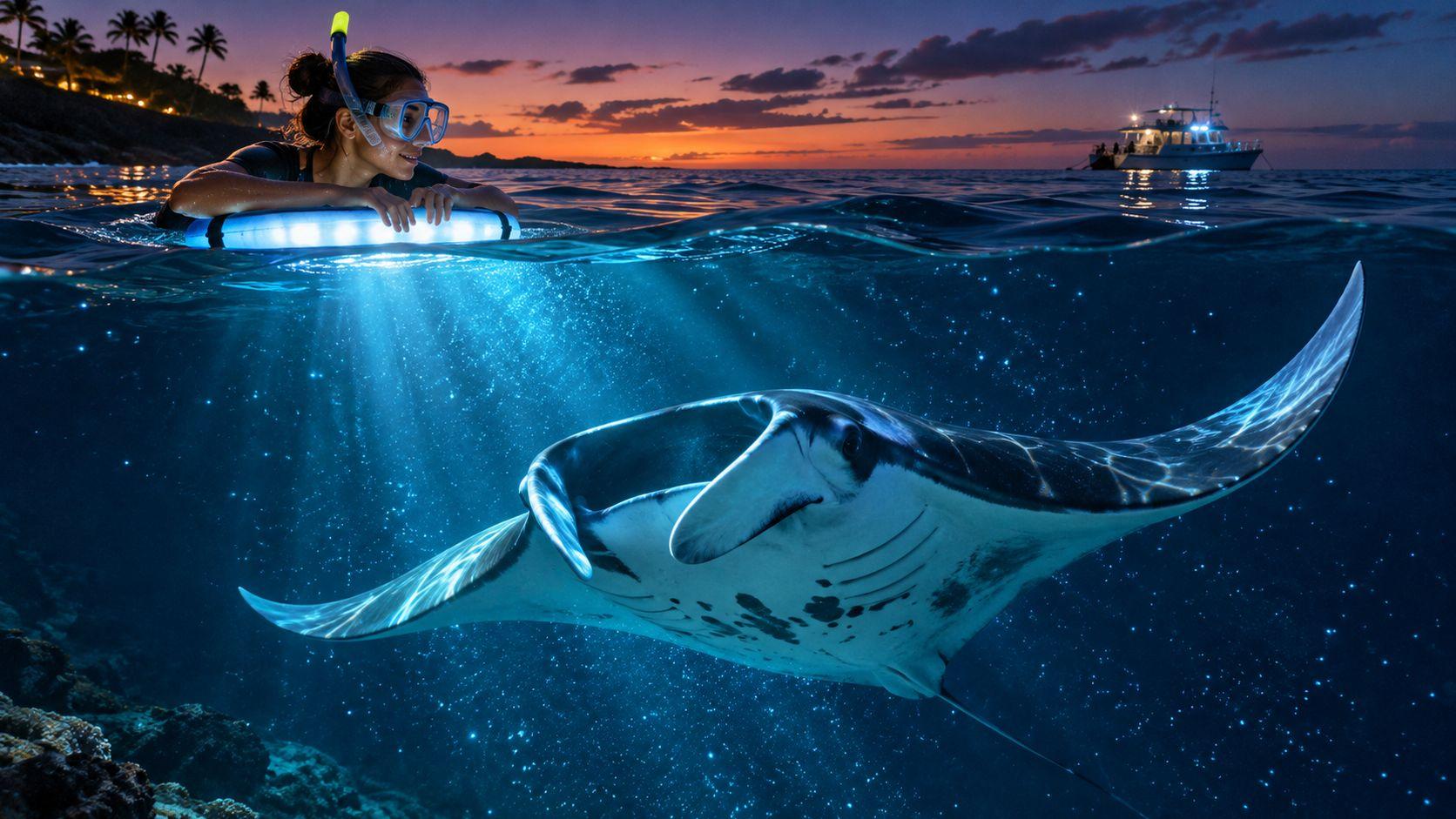
- Enter the water one guest at a time. Once darkness settles and the custom-built snorkel board is floating beside the boat with its high-powered central lights glowing, the crew guides guests down the ladder individually. You swim a short distance to the modified surfboard, grab the perimeter rope handles alongside 9 to 10 guests per board, and float horizontally so your legs stay flat near the surface rather than dangling into the feeding column.
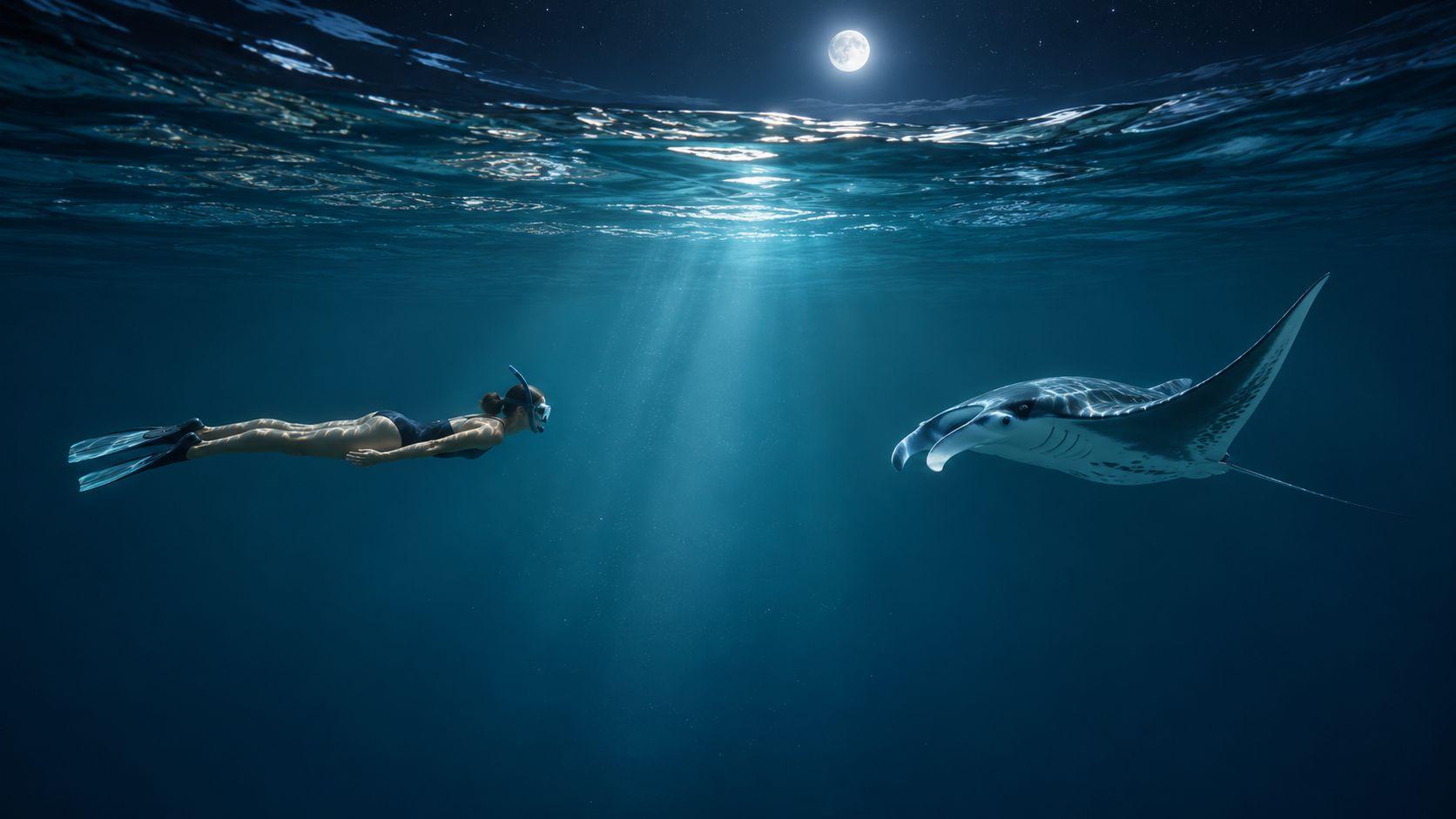
- Keep lights pointed downward and stay flat at the surface. Under NOAA's voluntary wildlife-interaction standard for Kona manta tours, snorkelers must remain at the surface and never dive down into the water column where mantas are feeding. The guidance also separates lighting roles cleanly: snorkelers direct light beams downward from the surface, while scuba divers on the seafloor point their lights upward and time their exhalations so bubble streams don't cut across a manta's path. Holding your body flat at the board keeps the entire vertical space below you clear for the rays to barrel-roll uninterrupted.
- Float and observe for 30 to 40 minutes. While the lights pull plankton into a bright column below your mask, your lifeguard-certified guide stays in the water monitoring the group's spacing, checking for cold or tired swimmers, and keeping everyone consolidated around the illuminated board. Between feeding passes, keep your grip relaxed on the rope handle, breathe slowly, and resist the urge to kick away from the group to chase a silhouette in the dark.
- Reboard the boat, warm up, and debrief. When the guide signals the end of the water session, swimmers return to the ladder one at a time while the crew counts heads and stows gear. Once everyone is dry and bundled up against the evening breeze, the crew talks through which individual rays appeared, answers questions about their feeding behavior, and motors calmly back to the harbor.
Knowing each stage before you step onto the dock turns an unfamiliar night in the Pacific from a chaotic rush into a slow, predictable routine.
One honest reminder fits right into step six: mantas are wild animals, and no captain can summon them on cue. Even when every light is burning and the water is glassy, nature calls the shots. On nights when the feeding zone stays quiet, a calm crew keeps everyone steady, explains what the currents and plankton are doing, and avoids shining lights erratically or chasing passing shadows.
Safety and Etiquette Around Wild Manta Rays
Walk onto any Kona dock and you'll hear first-timers ask how close they can get to a manta ray. That's the single most common misconception in marine wildlife tourism. Chasing a closer look doesn't make an encounter better; it disrupts feeding, stresses the animal, and creates avoidable hazards in dark water.
A great night in the water is measured by low disturbance, not by inches of separation. When swimmers hold still and respect space, mantas stay relaxed and often feed longer under the lights.
Distance, Positioning, and Passive Observation
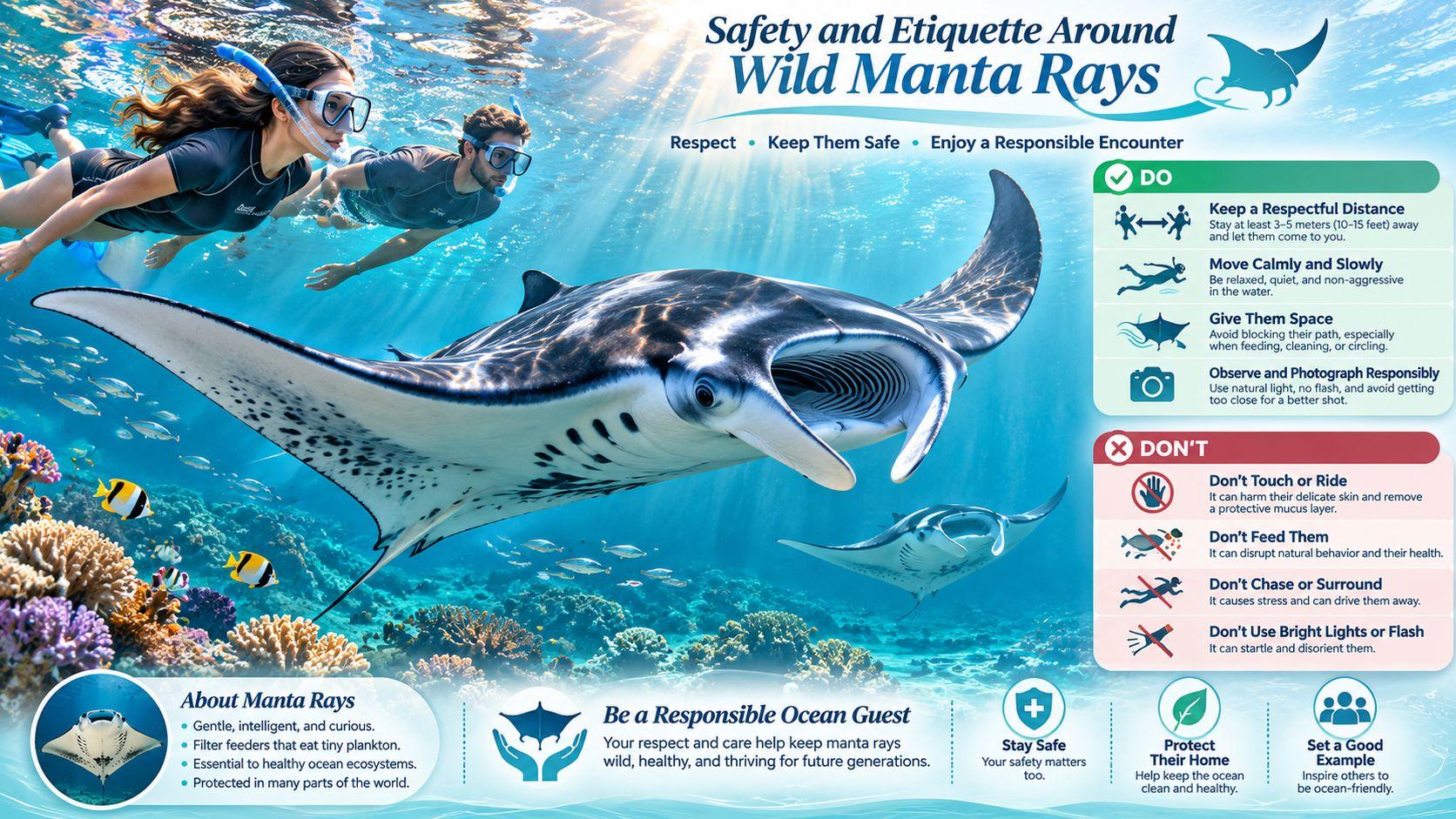
How close you get and how you move directly alter manta behavior. Guidance synthesized by the Convention on Migratory Species in Murray et al. recommends staying at least 3 meters (10 feet) away from a manta ray, approaching only from the side, remaining passive, and leaving a completely unobstructed path ahead of the animal. That same guidance highlights a coordinated central-light, or "campfire," arrangement in darkness so human lighting stays concentrated and the surrounding water column remains open for both swimmers and wildlife.
Field research backs up why passive floating beats active swimming. A Manta Trust behavioral study analyzing 431 manta interactions found that passive observation produced very little disturbance, whereas following, touching, diving beneath rays, or crowding their path triggered measurable avoidance and interrupted feeding.
In practice, that translates into four essential habits around the light board:
- Keep hands on the board, never on the animal. Manta rays wear a protective mucus coat that shields them from marine bacteria and parasites. Touching a ray strips away that barrier and causes the animal to bolt from the feeding zone.
- Float horizontally with quiet fins. Dropping your feet straight down puts your fins directly inside the manta's turning lane. Keep your legs extended behind you near the surface and skip vigorous kicking, which churns up bubbles and spooks rays.
- Never swim into the beam or chase a passing shadow. Holding your spot along the perimeter lets rays make repeated barrel-roll passes without dodging swimmers.
- Freeze calmly if a ray glides close. Because mantas maneuver through plankton near the surface, one may occasionally sweep closer than 3 meters on its own. Stay completely still, breathe evenly through your snorkel, avoid kicking backward in a panic, and let the animal set the separation.
For a deeper look at why visitor conduct shapes Kona's resident population, review our guide on manta ray night snorkeling ethics.
Human Safety Risks After Dark
Many travel articles reassure visitors that manta rays have no stingers and aren't aggressive, then stop there. That leaves out the actual safety hazards of a night snorkel. A Hawaiʻi state boating and safety assessment documented rising nighttime manta-viewing traffic along the Kona coast and identified severe human safety risks tied to congested vessels, darkness, currents, surface glare, swimmer fatigue, panic, and ladder reboarding.
Regulators have specifically targeted those boat-and-swimmer pressures. In a 2022 Hawaiʻi Department of Land and Natural Resources proposed management framework, officials outlined capping commercial manta-viewing permits at 24 in each of two designated zones, limiting vessels to 60 passengers for hire within a 24-hour period, establishing two-hour operating shifts between 4:00 p.m. and 4:00 a.m., and adding safety requirements such as vessel lighting, propeller guards, or a dedicated safety lookout.
Safety reality check: A calm animal doesn't automatically make an open-ocean night trip risk-free. Your real margin of safety comes from staying within arm's reach of your group, obeying crew signals instantly, and never drifting into boat lanes.
Rules You Will Hear in Every Quality Briefing
Before your mask goes on, expect your guide to spell out clear protocols: no touching, no chasing, stay flat at the surface, hold onto the designated board, and return to the ladder immediately on the crew's signal. If you start shivering, swallow water, or feel anxious, tell your guide right away rather than trying to tough it out. Getting back on the boat early is routine, and a rested swimmer climbs the ladder far more safely than an exhausted one.
Best Times and Conditions for Seeing Mantas
First-timers often ask for the single "guaranteed" month to book a manta ray night dive snorkel, and the honest answer requires reading sighting numbers with a careful eye. Wild ocean odds are strong along the Kona coast, yet every percentage you see online comes with specific scope and limits.
Reading Kona Sighting Numbers Honestly
Two concrete data points help set realistic expectations. At Kaunaʻoa Bay in 2025, Manta Ray Advocates recorded at least 18 individual manta rays across 270 operating nights, logging sighting success above 96% from April through October. On the broader Kona commercial side, a 2026 independent Kona manta guide noted that tour operators commonly report manta sightings on roughly 85% to 95% of nights.
Compare those two benchmarks side by side before building your itinerary:
| Benchmark | Reported sighting rate | Scope and limitation |
|---|---|---|
| 2025 Manta Ray Advocates log | Above 96% from April through October | Reflects one organization at Kaunaʻoa Bay across 270 operating nights |
| 2026 independent Kona manta guide | Roughly 85% to 95% of nights | Summarizes operator-reported claims across Kona tours, not an independent census |
Both figures point to remarkably reliable wildlife viewing compared with most marine encounters worldwide. Neither figure guarantees that a manta ray will appear under your specific board on a Tuesday night. One benchmark tracks a single bay during calmer months, and the other reflects broad operator claims.
Ocean Conditions That Shift the Feeding Zone
Even during peak months, night-to-night manta activity fluctuates with natural ocean variables. Plankton responds directly to light levels, current speed, and water clarity, which in turn determines how long rays linger under the boards.
| Condition | Effect on the feeding zone | What to do |
|---|---|---|
| Moonlight | Changes how bright the water is and can change how plankton gathers under the lights | Expect night-to-night variation and ask the crew about conditions |
| Water movement and clarity | Carries plankton away or keeps it concentrated under the light | Look for calm, clear water and accept variation |
| Wind and swell | Makes the surface choppy and harder to hold position in | Ask the crew whether the trip will run before you travel |
| Season, April to October | Recorded sighting success above 96% in 2025 at Kaunaʻoa Bay | Plan the trip in this window for the best odds |
Planning Around Quiet Nights and Standby Policies
Because no captain controls wild plankton or wild animals, build flexibility into your Kona stay. Schedule your night snorkel near the beginning of a multi-night window rather than on your final evening on the Big Island. That way, a choppy swell or a rare no-show night doesn't end your trip without another shot.
Always verify how an operator handles a zero-sighting evening before you pay. On our charters, manta rays are wild animals and are never guaranteed; guests who don't see a manta ray receive no cash refund, but can join another night on a space-available standby basis. Our manta guarantee doesn't expire and is honored whenever space is available 2 hours before the start of the tour, which makes booking early in your vacation doubly valuable.
Packing and Photography Checklist for the Night
Night boats have limited dry storage, dim cabin lighting, and brisk ocean breezes once you climb out of the water. Packing light, purposeful gear keeps you warm on the return cruise and stops loose items from vanishing into dark corners of the deck.
What to Bring on the Boat
Your mask, snorkel, and shorty wetsuit are provided on our trip, so focus your bag on warmth, comfort, and sun protection during the twilight ride out:
- Swimsuit and quick-dry layers: Wear your swimsuit under comfortable clothes for check-in, and pack a dry change of clothes plus a warm zip-up jacket for the breezy ride back to the harbor.
- Towel and a sealed dry bag: Stash your phone, car keys, wallet, and waterproof camera inside a dry bag so ocean spray doesn't soak electronics while you're in the water.
- Reef-safe sunscreen applied early: Put on mineral, reef-safe lotion at least 30 minutes before boarding for the sunset trip so it absorbs cleanly instead of rinsing off into the reef or smearing inside your snorkel mask.
- Motion-sickness medicine: Take a remedy you already know agrees with you well before check-in if boat motion affects you, since waiting until the harbor disappears is usually too late.
- Personal medications: Keep inhalers, EpiPens, or other daily essentials inside your dry bag and let the crew know about any medical needs during check-in.
Leave dangling jewelry, hats that blow off in the wind, and bulky camera cases back at your hotel. Fewer loose objects on deck mean less fuss when your hands are cold and wet.
Capturing Respectful Night Photos Without Chasing
Shooting underwater at night tempts people to kick after a ray or wave cameras underneath the board. Resist both habits. A compact waterproof action camera (like a GoPro on a wrist strap) or a smartphone inside a pressure-rated sealed housing works far better than a bulky rig in dark, moving water.
Turn off your flash completely. Underwater strobes and phone flashes can startle feeding rays, and they light up every suspended speck of plankton right in front of your lens, washing out the shot into a blurry snowstorm. Instead, rely on the steady glow from the snorkel board lights, switch your camera into a fast burst mode or steady video setting, and expect plenty of soft frames among the keepers.
The cleanest manta ray photographs come from stillness, not pursuit. Hold your spot at the surface, point the lens steadily toward the illuminated column, and let the ray glide through your frame on its own terms.
Never poke a selfie stick down into the feeding corridor or block a manta's exit lane for a dramatic angle. If you want exact frame rates, white balance tips, and exposure tweaks before boarding, read our breakdown of the best GoPro settings for a Kona manta ray night snorkel.
Common Questions About the Manta Night Snorkel
Even after reading the step-by-step walkthrough, a few practical questions come up on almost every Kona harbor dock. Here are direct answers to the six concerns first-timers ask most often.
Will I Touch a Manta Ray
No. Touching, chasing, or diving after manta rays is strictly prohibited during every briefing. Keep your hands on the board's perimeter rope, float calmly at the surface, and let the animal choose its own feeding path without interference.
Can a Child Under Age 5 Join the Trip
Our listed policy requires guests to be ages 5 and up and accompanied by an adult in the water, and every participant must meet the 50-yard swim requirement without extra flotation. Younger children and non-swimmers aren't permitted on manta charters, though daytime reef trips offer a much calmer, sunlit introduction to Kona's marine life once kids are ready.
What Happens if Weather or Ocean Conditions Change
Ocean safety always overrides the schedule. Wind, swell height, and visibility determine whether a boat leaves the harbor or adjusts its viewing site, so check cancellation and rescheduling policies carefully at booking and leave extra evenings open in your itinerary in case Mother Nature reshuffles your week.
Is the Night Snorkel the Same as the Manta Scuba Dive
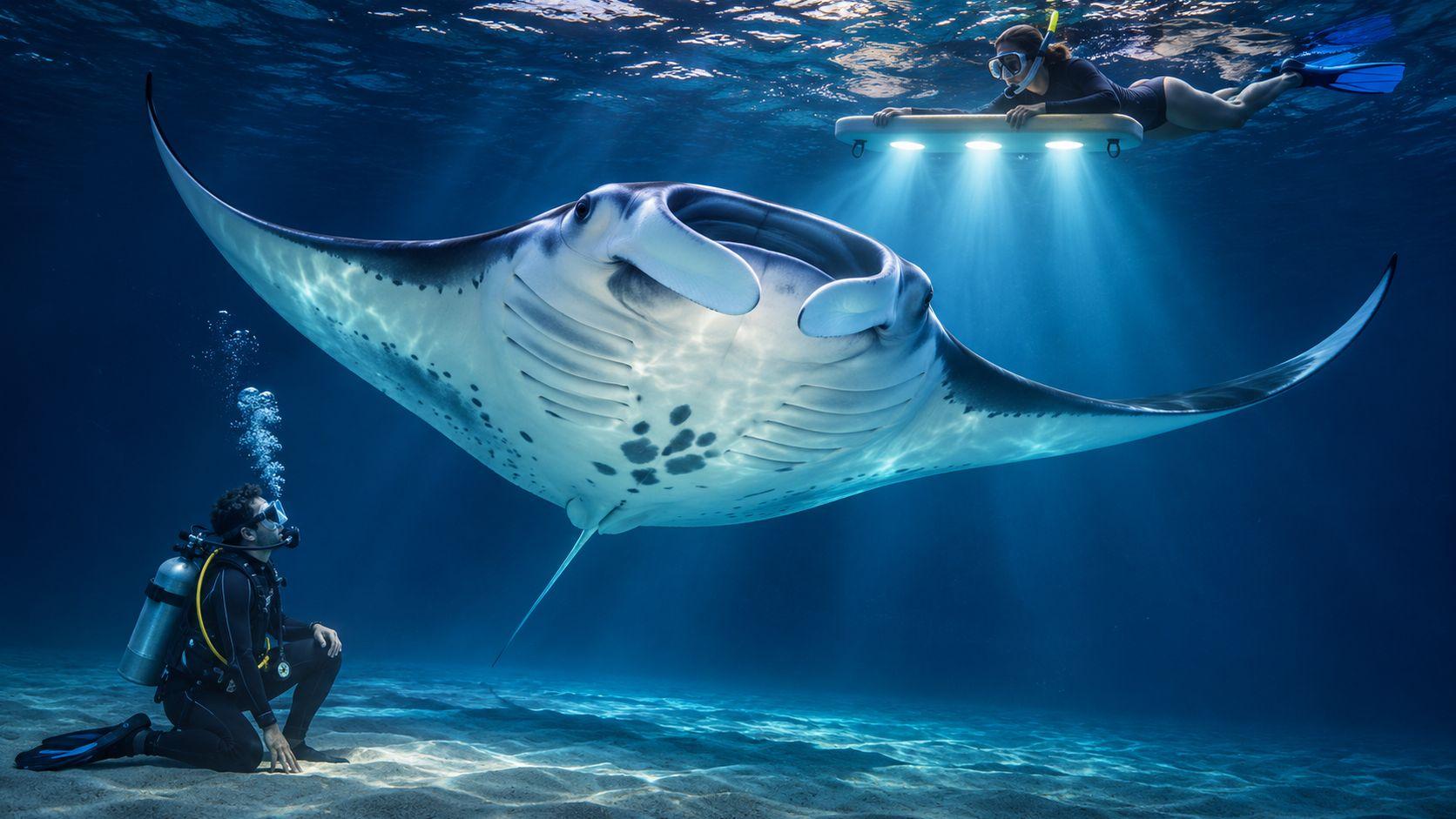
No, the two experiences occupy opposite ends of the water column. Snorkelers stay flat at the surface holding a lit float board and looking down, whereas certified scuba divers descend to the sandy bottom, point their dive lights upward, and manage their breathing so exhaust bubbles don't interrupt passing mantas.
Does the Night Tour Disturb the Animals
Passive observation from a respectful distance causes minimal disturbance, while crowding, chasing, touching, or diving into the feeding corridor produces clear avoidance behaviors. Sticking tightly to the surface-only, no-touch rules is what lets Kona's resident mantas continue feeding peacefully night after night.
Is Night Snorkeling Actually Safe
Yes, when participants meet the swimming requirements and follow crew direction closely. Manta rays themselves are gentle filter feeders without stingers, so the primary human risks involve darkness, boat congestion, fatigue, and climbing back aboard the ladder. Listening carefully to your guide and staying consolidated with the light board keeps those risks firmly under control.
Book Your Manta Night Snorkel Early
Book your place early in your Big Island stay, and avoid choosing your arrival evening. A flight delay, jet lag, or a short run of rough Kona swell can change a single fixed night. Booking on night two or three gives you room to move the tour or use standby rebooking if the ocean stays unsettled. A night snorkel works best when the schedule has slack, like leaving an empty seat in a car before a long road trip.
Comparing Kona Manta Night Snorkel Pricing
Compare the whole trip before comparing ticket prices. Group size, guide supervision, included wetsuits, and departure time all affect how easy the evening feels, especially for first timers in dark water. A 2026 independent Kona manta guide price survey puts typical adult manta night snorkels between $129 and $180 before taxes and fees, with the highest surveyed tour reaching $265. Our Manta Ray Night Snorkel is priced up to $199 and includes your mask, snorkel, shorty wetsuit, custom illuminated board, and lifeguard-certified guides.
| Price point | Source | Detail |
|---|---|---|
| $129 to $180 | Independent 2026 Kona manta guide | Typical adult range before tax and fees |
| $265 | Same guide, one surveyed tour | Highest surveyed price |
Three Steps to Lock In the Right Night
Use this order to keep the harbor morning calm and the evening predictable:
- Pick a window with flexible nights afterward. Aim for the first half of your Kona stay so weather shifts or a quiet wildlife night won't derail your plans.
- Verify every guest's swimming and snorkel readiness. Confirm everyone is at least age 5, can swim 50 yards without extra flotation, feels steady breathing through a snorkel, and has intermediate snorkeling experience.
- Select your departure time and secure your seats. Choose the early trip if you want to check in during daylight, watch the sunset from the boat, and enter after dark. Choose the late trip if a night check-in fits your day better, then review your confirmation carefully.
If your preferred evening is already full or you're comparing tour options along the coast, Manta Ray Night Snorkel Hawaii is another place to look for a manta ray night snorkel tour.
Choosing the Scuba Dive Option in Kona
Certified divers who want to watch rays glide overhead from the seafloor have a different format to consider. Kona offers calm leeward coastlines, volcanic lava formations, and clear visibility. Kona Honu Divers runs scuba trips, including options shown on their Big Island diving tours page and a 2-tank manta ray night dive. Treat this as a separate choice from surface snorkeling: scuba adds depth, buoyancy, and breathing tasks, so the experience suits guests already comfortable with those skills.
Divers ready to reserve a tank and underwater light spot can verify current dive openings directly below.
Your booking rests on one practical decision: choose the format and departure night that match your group's swimming ability, prior snorkeling experience, and comfort in dark water. A flexible itinerary matters because mantas are wild animals and sightings are not guaranteed. If your group does not see one, there is no refund, but you can return another night on a space-available standby basis, with the offer honored if space is available 2 hours before the tour starts. That policy works like a weather window for a wildlife trip: it gives you another chance without pretending the ocean can be scripted.
Kona Snorkel Trips runs small-group, lifeguard-guided manta ray night snorkels aboard custom illuminated boards, with night trips at two tour times and viewing at Garden Eel Cove or the area in front of the Keauhou hotel. The lights sitting in the middle of each board attract plankton, and the mantas come to feed, so judge the experience by low disturbance and honest sighting odds rather than by how close anyone gets. Visit Kona Snorkel Trips to explore tour schedules and plan your evening on the water.
Keep reading
Kona Hawaii Manta Ray Night Dive: Guide for First-Timers
Plan your Kona Hawaii Manta Ray Night Dive with format options, sighting odds, safety rules and first-timer tips for a calm, memorable night.
Manta Ray Big Island Guide: Where and When to See Them
Manta Ray Big Island guide: where and when to see rays, what the Kona night snorkel is like, and how to choose a safe, responsible tour.
Manta Ray Night Dive Kailua Kona: Snorkel or Dive Guide
Plan your Manta Ray Night Dive Kailua Kona trip: what the night feels like, where mantas feed, safety rules, what to pack and how to book.