
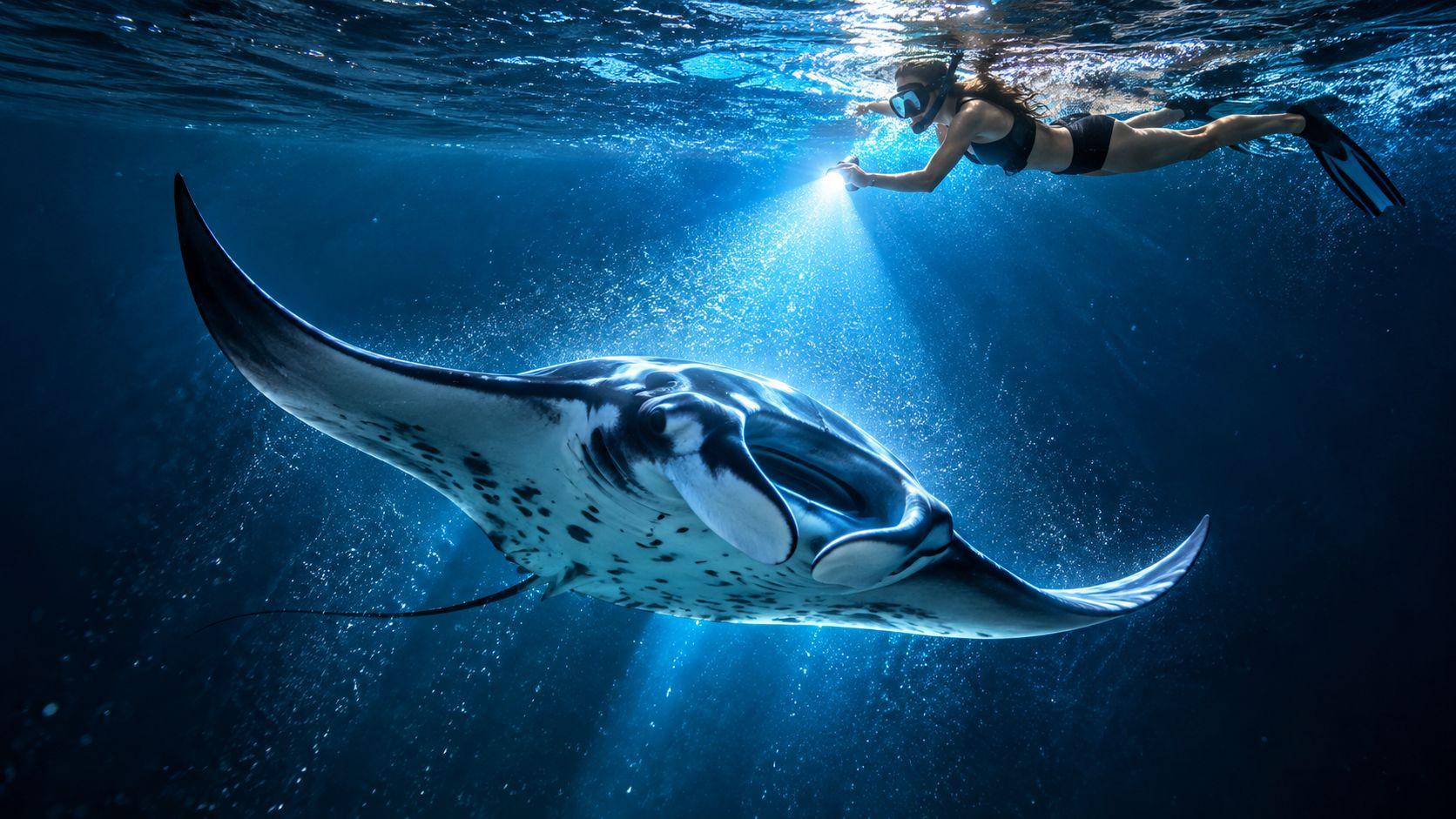
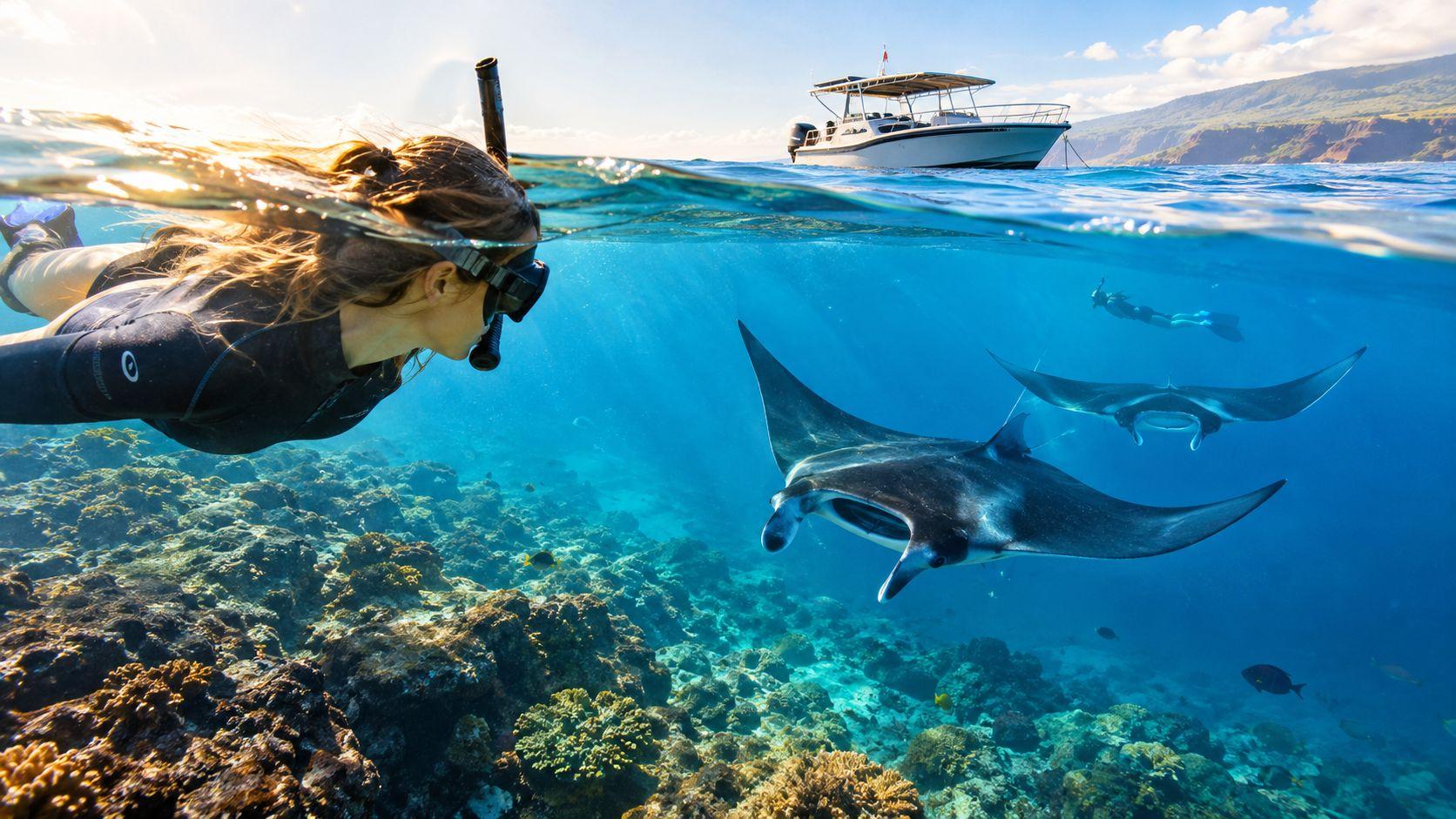
You're standing on the boat's swim step, mask fitted, wetsuit snug, and the Kona shoreline fading into darkness behind you. Below, the ocean looks empty until a broad beam of light turns the surface into a doorway. You ease into the water, hear your own breathing through the snorkel, and then a manta ray glides beneath you, silent and immense, using the illuminated plankton-rich water as its feeding path.
A night manta ray dive is often described as an encounter with a gentle giant. That's true, but the most useful way to understand it is as a carefully managed nighttime ocean activity built around real biological conditions. The manta isn't performing for swimmers, and darkness alone doesn't summon it. Plankton movement, currents, lighting, boat handling, group spacing, and your own comfort in open water all shape the experience.
Kona's manta viewing industry has developed over decades. Snorkeling and scuba encounters at Keauhou Bay, commonly called Manta Village, and Hoona Bay or Makako Bay, commonly called Garden Eel Cove or Manta Heaven, began in 1984. Commercial tours began in 1991, and the activity later shifted strongly toward surface-based night snorkeling. In the historical account, the mix changed from approximately 95% scuba divers and 5% snorkelers between 1999 and 2004 to roughly 10% divers and 90% snorkelers by 2006. Kona's manta-ray history helps explain why this is an established wildlife-tourism activity rather than a passing attraction.
Slipping Into the Dark Water
The first sensation is usually not the manta. It's the change in orientation. On deck, you can see the boat, the crew, and the horizon. In the water, your world narrows to your mask, your breathing, the glow of the light board, and the dark space beyond it.
A good guide gives you time to settle before asking you to focus on wildlife. You'll typically hold or stay close to illuminated flotation while the crew maintains the group's position. Your job isn't to swim after the rays. It's to remain calm, conserve energy, and watch the water column in front of you.
Kona Snorkel Trips is Hawaii's top-rated and most-reviewed snorkel company, offering guided ocean experiences with lifeguard-certified guides, flotation support, wetsuits, and an illuminated snorkel board. Its Kona manta ray night snorkel tour is designed around surface viewing, clear instruction, and close attention to guest comfort.
The experience has a distinctive rhythm. A ray may appear at the edge of the light, turn onto its side, pass beneath the board, and disappear into the darkness. Another may return along a similar path. These movements aren't choreography. They reflect how the animal follows food moving through the water.
Guide's perspective: The best encounter isn't the one where a swimmer gets closest. It's the one where the manta can feed normally while everyone remains comfortable, visible, and out of its way.
That distinction matters because a night manta ray dive combines wonder with responsibility. You're entering the animals' feeding environment after dark, so the quality of the tour depends on more than the number of rays you see. Calm boat handling, disciplined lighting, thoughtful briefing, and responsive guides protect both the guests and the wildlife.
How Lights and Plankton Create the Stage
The light board doesn't attract manta rays directly. It concentrates the small organisms that manta rays eat. This difference clears up one of the most common misunderstandings about the experience.
Reef manta rays, Mobula alfredi, feed on pelagic, emergent, and mesopelagic zooplankton. One stable-isotope study estimated that emergent prey contributed approximately 38% of the diet, showing how these rays exploit zooplankton moving upward from the seabed at night. Research on reef manta-ray feeding ecology connects the nighttime encounter to vertical prey movement, rather than to the absence of sunlight alone.
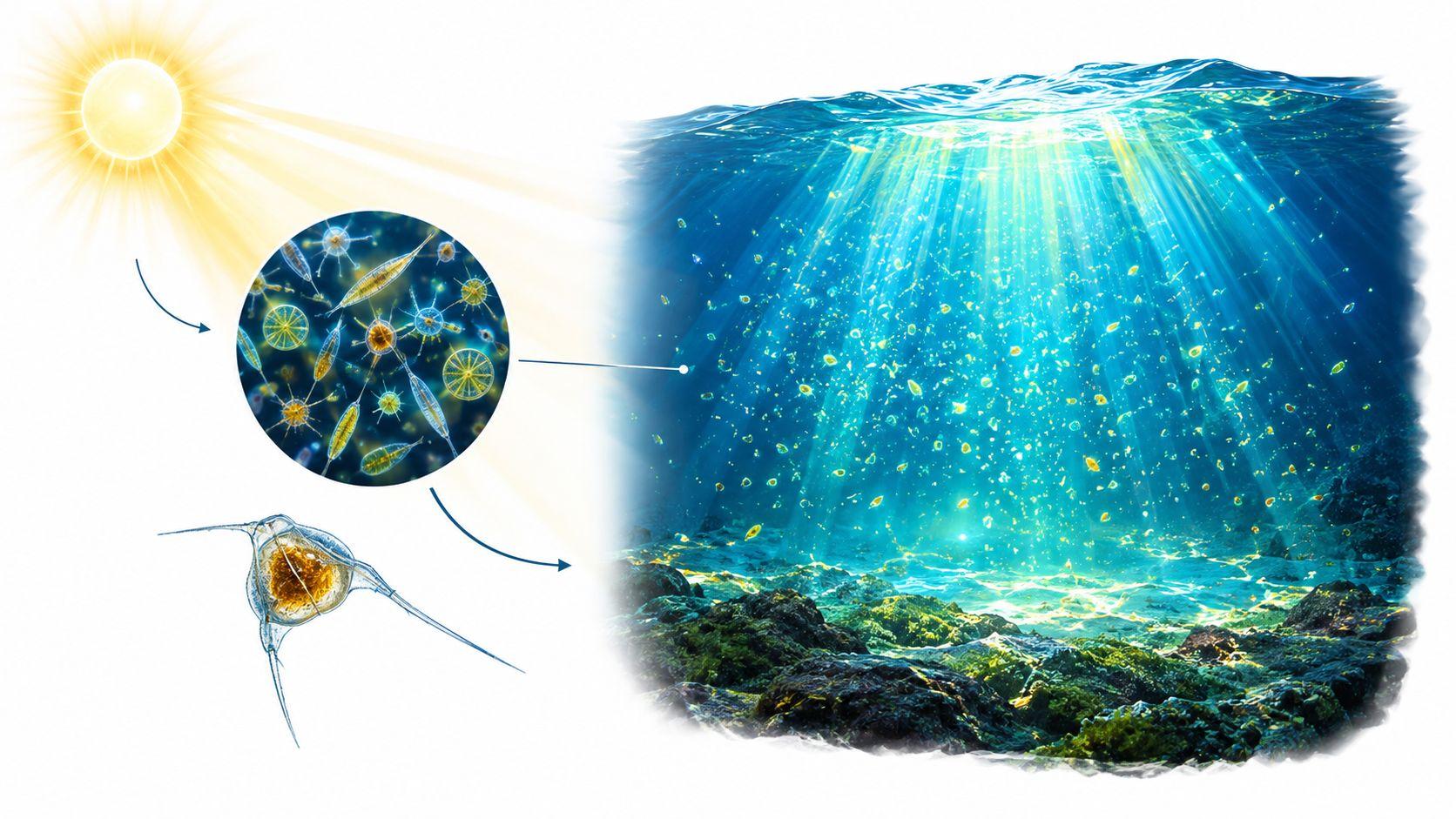
What the manta is doing
A manta swims with its mouth open, using its cephalic lobes, the paired structures near the mouth, to direct water and prey into the oral cavity. Specialized gill plates retain food particles while water leaves through the gill apparatus.
That feeding system turns the illuminated water into a temporary buffet. The manta isn't hunting individual fish or targeting swimmers. It's filtering a moving concentration of microscopic prey. When the plankton shifts, the ray shifts too.
Currents, tides, and local water conditions affect how concentrated the food becomes. A strong or changing flow can spread the plankton, while a stable area can keep it gathered around the lights. This is why no responsible operator can promise that every session will look identical.
Why repeated passes happen
A ray may make several passes because the food remains concentrated along a productive line. It may change its angle, roll slightly, or leave the light for a while because the prey has moved or the current has changed. A temporary departure doesn't mean the animal has lost interest in the site.
The lights should be positioned to create a stable feeding area, not used to chase a ray around the reef. Snorkelers and divers should remain predictable so the animal can choose its own route. You can learn more about this process in how manta rays find plankton in the dark.
The most rewarding mindset is patient observation. Watch how the ray adjusts its body to the flow, notice the movement of the cephalic lobes, and pay attention to how it returns to the richest part of the illuminated water. You're not watching a show produced for people. You're watching a feeding strategy unfold.
Separating Wildlife Myths From Water Safety
Manta rays aren't the main hazard for snorkelers on a night snorkel. Their filter-feeding behavior means they aren't pursuing swimmers as prey, and the appropriate response to their presence is distance and calm observation. The more serious risks come from entering open ocean at night, when darkness makes orientation, communication, and separation from boats more difficult.
A documented hazard assessment identified vessel and propeller strikes as the most severe danger associated with nighttime manta-viewing operations. It concluded that the activity provided ample opportunity for a severe accident involving a motoring vessel striking someone in the water. The boating operations and safety assessment supports strict separation between operating boats and swimmers.
Screen yourself honestly
Before booking, think about the activity you're choosing. You may be floating at the surface, but you're still in dark, moving seawater. A nervous swimmer who becomes tired can have a harder time communicating, maintaining position, or managing a mask problem after sunset.
Disclose relevant concerns before departure:
- Swimming ability: Tell the operator if you're inexperienced, uncomfortable in deep water, or unable to maintain a relaxed surface position.
- Medical conditions: Share health information that could affect breathing, mobility, cold tolerance, or exertion.
- Motion sensitivity: Seasickness can make a night outing harder, especially if you're already fatigued before entering the water.
- Anxiety: Fear can trigger rapid breathing and unnecessary effort. A crew that knows your concern can support you earlier.
- Pregnancy or other limitations: Ask directly whether the activity is appropriate for your circumstances and follow professional medical advice when needed.
Ask the operator how guides account for guests in the dark, what flotation is available, how the crew handles a cold or overwhelmed swimmer, and what happens if conditions require a cancellation or relocation.
The right question isn't only, “Will I see a manta?” Ask, “How will the crew help me remain safe, calm, and accounted for if I need assistance?”
Cold, fatigue, current, boat movement, and panic can compound quickly. A well-run trip treats those issues as normal possibilities, not embarrassing failures. You should never feel pressured to remain in the water because you're worried about disappointing the group.
Gear, Positioning, and In-Water Techniques
Preparation starts before you enter the water. Wear the provided wetsuit or other thermal protection as directed, bring a swimsuit and towel, and choose warm clothing for the boat ride back. Flotation isn't a sign that you lack ability. It reduces the energy required to hold position, which helps you stay focused on breathing and observation.
The light is part of the viewing system, but it also affects how you move. Night-diving guidance instructs snorkelers to remain at the surface or above the feeding zone and hold lights upward beside the head rather than shining them indiscriminately. This arrangement draws plankton into the illuminated water column while keeping swimmers from diving into the feeding path. Night manta viewing guidance describes the technique in practical terms.
Keep your body predictable
Use the support provided by the crew rather than kicking constantly. Gentle fin movements are enough to maintain a comfortable position. Avoid diving beneath the surface, reaching toward a ray, or changing direction suddenly when an animal approaches.
A manta needs room to turn and leave. Keep your arms and legs within your own space, and don't extend a camera on a pole into its path. If you lose your position, signal the guide instead of swimming across the group to regain it.
For a clearer explanation of alignment and surface control, review this guide to the best body position for manta ray night snorkeling.
Use a simple personal checklist
Before entering, confirm that your mask seals, your snorkel feels comfortable, and your flotation support is secure. Once in the water, check three things:
- Breathing: Slow, steady breathing helps prevent unnecessary fatigue.
- Position: Stay beside the board or in the location assigned by the guide.
- Awareness: Know where your guide and nearby swimmers are, even while watching the manta.
A clear escape corridor matters. Guides and boat crews should avoid creating a pocket that surrounds a ray with swimmers or vessels. If the animal changes direction, let it pass without trying to follow.
The goal is not to hold a perfect pose for a photograph. The goal is to remain relaxed enough that your presence becomes predictable. That gives the manta control over its distance and departure path.
Navigating Crowds and Choosing the Right Tour
Kona's manta sites are popular enough that crowding can shape the encounter. A 2018 visitor study surveyed 444 participants and found that people encountered an average of 62 snorkelers, 33 scuba divers, and 12 boats during viewing sessions. The same study reported that 82% felt crowded by snorkelers and 78% by boats, while the sites could receive as many as 300 participants daily. The visitor study on snorkeling, scuba diving, and manta viewing shows why tour selection affects more than convenience.
A crowded site doesn't automatically mean an unsafe or poor experience. It does mean the operator must manage boat positioning, entry and exit, lighting, flotation, and guest movement with precision. Small-group design can make communication easier and reduce the number of people competing for the same viewing space.
Compare the operation, not just the departure time
When you evaluate a tour, look for specific answers rather than broad promises.
| What to evaluate | Why it matters |
|---|---|
| Group size and guide access | You want help to be reachable without crossing a crowded area. |
| Flotation and lighting | Reliable support helps swimmers conserve energy and remain visible. |
| Boat positioning | The vessel should stay controlled and separate from people in the water. |
| Wildlife briefing | Clear rules prevent touching, chasing, diving toward, or encircling rays. |
| Condition decisions | The crew should explain how weather, current, or visibility affects the plan. |
Read how to choose the right Kona manta ray snorkel tour before you reserve. The best fit depends on your swimming comfort, group needs, and preference for a more personal experience.
Kona Snorkel Trips offers small-group manta outings with lifeguard-certified guides, flotation equipment, wetsuits, and a custom lighted snorkel board. Manta Ray Night Snorkel Hawaii is another exceptional alternative when you're comparing a Manta Ray night snorkel tour, particularly if you're reviewing different departure options and operator styles.
A thoughtful choice balances wildlife ethics with guest care. Ask whether guides maintain clear spacing, how they help tired swimmers, and whether the crew treats the manta's behavior as something to observe rather than control. Those answers tell you more than a dramatic promotional photograph.
Conservation and Protecting a Vulnerable Species
The manta near your light board is not a permanent fixture of the shallow viewing area. It may arrive because prey has concentrated there, then leave to follow food elsewhere. Telemetry research on reef mantas in New Caledonia recorded dives to 672 meters, with the deepest dives occurring significantly more often at night. Dives deeper than 300 meters were also more frequent at night, with a reported p = 0.010 result. Research on nighttime reef manta diving reinforces that surface viewing shows only a brief part of a much larger movement pattern.
That knowledge changes how you behave. Don't interpret a ray's approach as permission to touch it, block it, or redirect it for a better photograph. Leave a route open so the animal can turn, descend, or move away without passing through a wall of swimmers.
Hawaii's Division of Aquatic Resources notes that oceanic manta rays were listed as threatened under the U.S. Endangered Species Act in 2018. The agency identifies commercial-fishery bycatch and demand for gill rakers as major global threats, along with boat strikes, fishing-gear entanglement, accidental microplastic ingestion, and reduced prey resources associated with ocean acidification. Hawaii's shark and ray conservation information provides the wider context for responsible encounters.
Passive observation is an active choice
Responsible behavior is simple, but it requires discipline:
- Keep your hands to yourself.
- Don't chase a ray that leaves the light.
- Hold lights where the crew directs you.
- Avoid sudden kicking and diving.
- Follow instructions about group spacing and boat boundaries.
- Let the crew handle changes in position or conditions.
A perfect image isn't worth interrupting feeding behavior. The strongest encounter often comes from doing less, not more. When every swimmer remains quiet, visible, and predictable, the animals can control the interaction.
For a broader view of how visitor experiences can support ocean stewardship, explore sustainable marine tourism in Hawaii. Conservation isn't a separate feature added to the tour. It's part of the skill of entering a living marine environment respectfully.
Booking Your Unforgettable Ocean Adventure
A memorable night manta ray dive begins with realistic expectations. You're not booking a guaranteed performance or entering a pool with trained animals. You're joining a guided wildlife encounter where plankton conditions, currents, animal movement, guest comfort, and vessel handling all matter.
Choose an operator that explains the activity plainly. Before departure, confirm what flotation and thermal protection are supplied, how guides assist nervous or tired swimmers, how the crew manages boat separation, and what procedures apply if ocean conditions change. If you're new to snorkeling, share that early. A guide can support you more effectively when they understand your experience and concerns.
Kona Snorkel Trips offers a guided manta ray night snorkel with masks, snorkels, wetsuits, flotation, and a lighted snorkel board. The experience suits travelers who want surface-level viewing with crew support, while the biological setup gives you a chance to observe filter feeding without pursuing the animals.
Once you're in the water, remember the central idea. The light gathers plankton, the manta follows its food, and you provide the least disruptive presence possible. Stay at the surface, keep your light pointed as directed, preserve the animal's escape route, and tell the crew immediately if you feel cold, anxious, seasick, or fatigued.
If you're ready to trade a dark horizon for one of Kona's most distinctive marine encounters, review the tour details, check the conditions and meeting information, and reserve a time that gives you room to prepare. A calm swimmer, a careful crew, and a respectful approach create the foundation for an unforgettable night.
Kona Snorkel Trips offers guided small-group manta ray night snorkels with lifeguard-certified guides, flotation, wetsuits, and illuminated boards, giving you a supported way to observe manta feeding behavior after dark. Visit Kona Snorkel Trips to review the tour and check availability for your Kona ocean adventure.
Keep reading
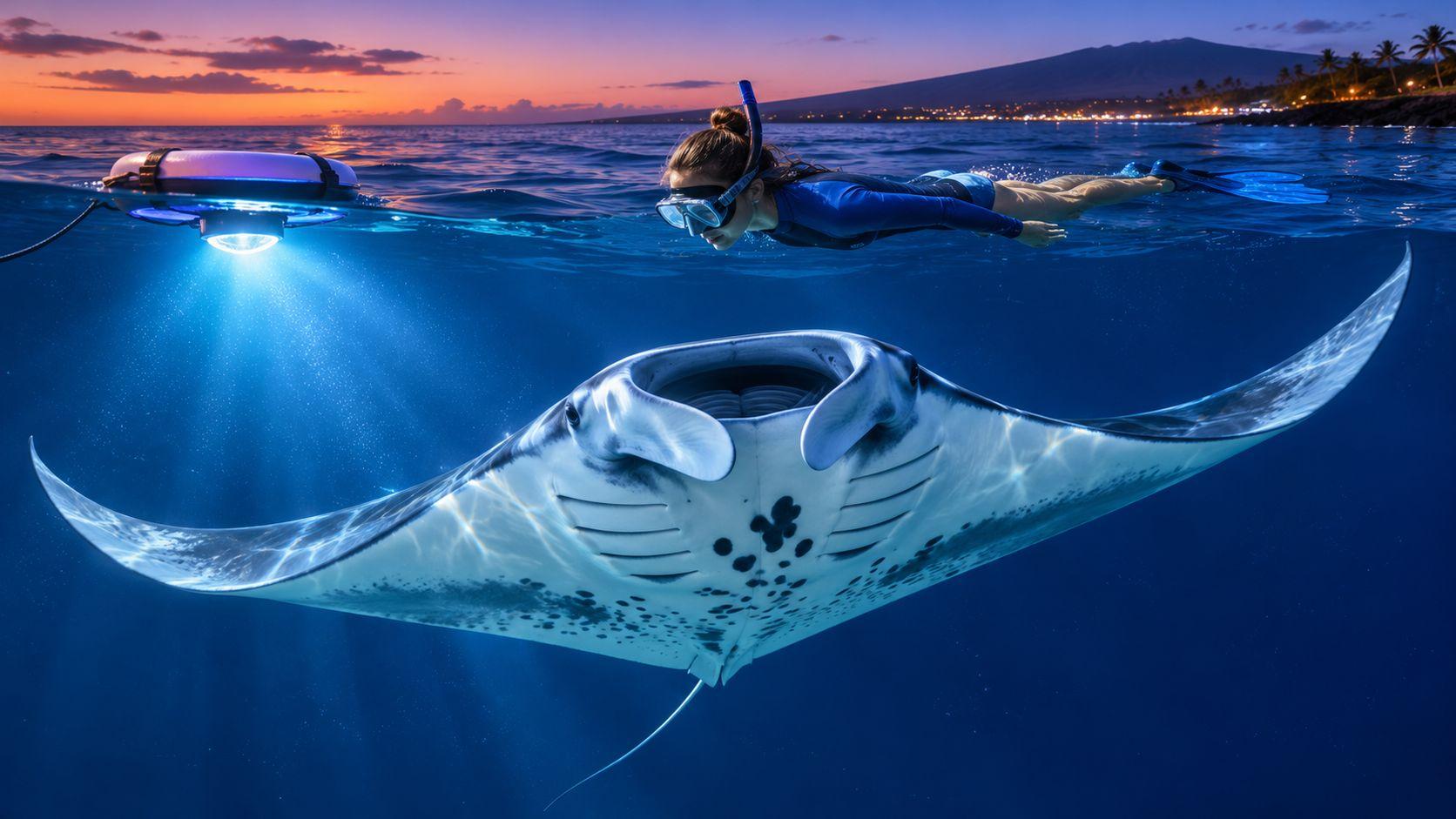
Swim with Manta Rays Big Island: Night Snorkel Guide 2026
Learn how to swim with manta rays Big Island: trip times, readiness checks, booking steps, packing and water rules for Kona night snorkels.
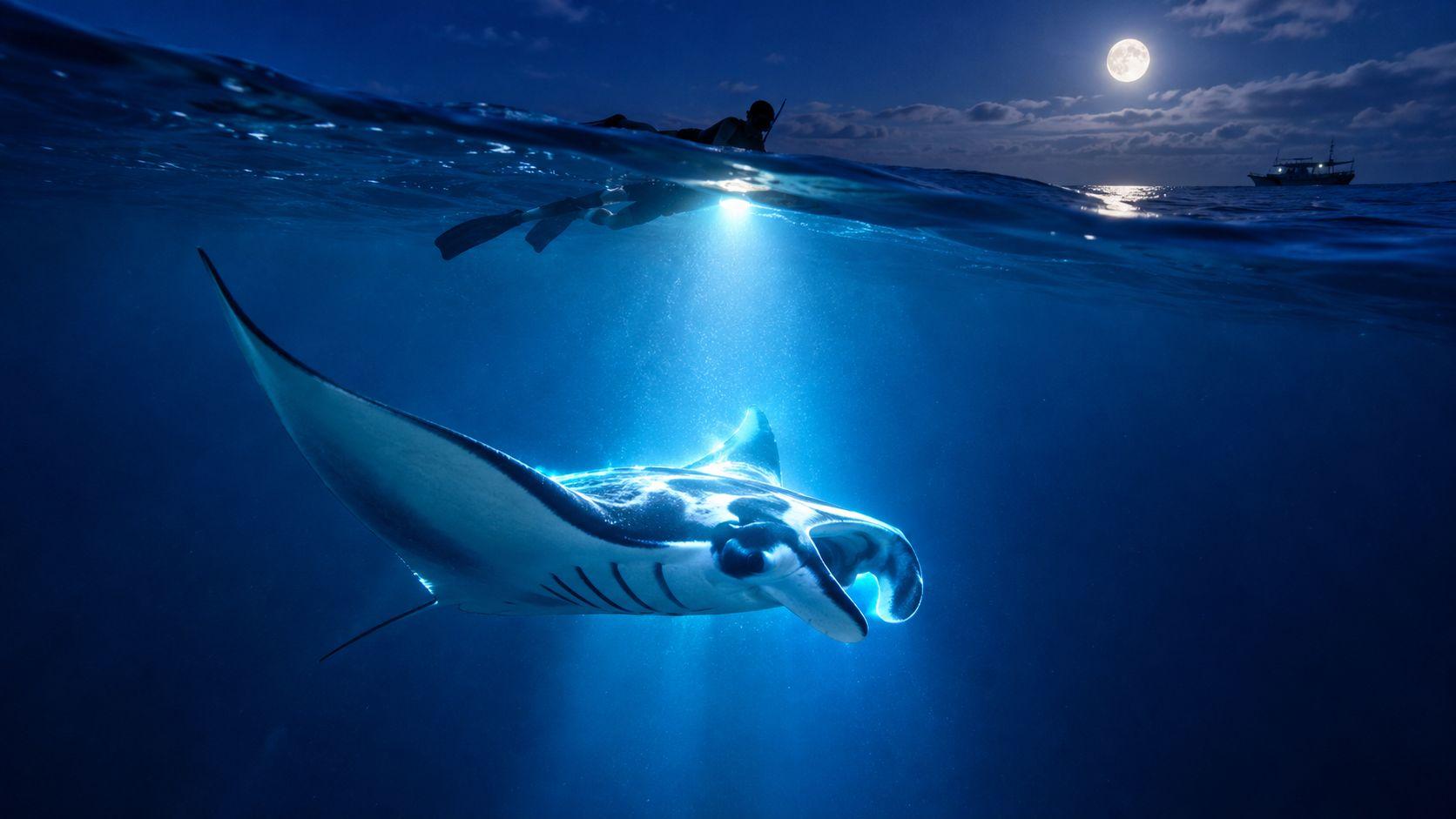
Manta Ray Night Dive Kona: A Complete Insider Guide
Plan your manta ray night dive Kona experience with this practical guide. Compare snorkel vs scuba, best seasons, safety, pricing, and how to book.
Choosing a Kona Diving Company: A Practical Guide
Choosing a Kona diving company? Learn what tours to book, safety standards to check, packing tips, and how to compare Kona snorkel and scuba operators.