
Best Body Position for Manta Ray Night Snorkeling
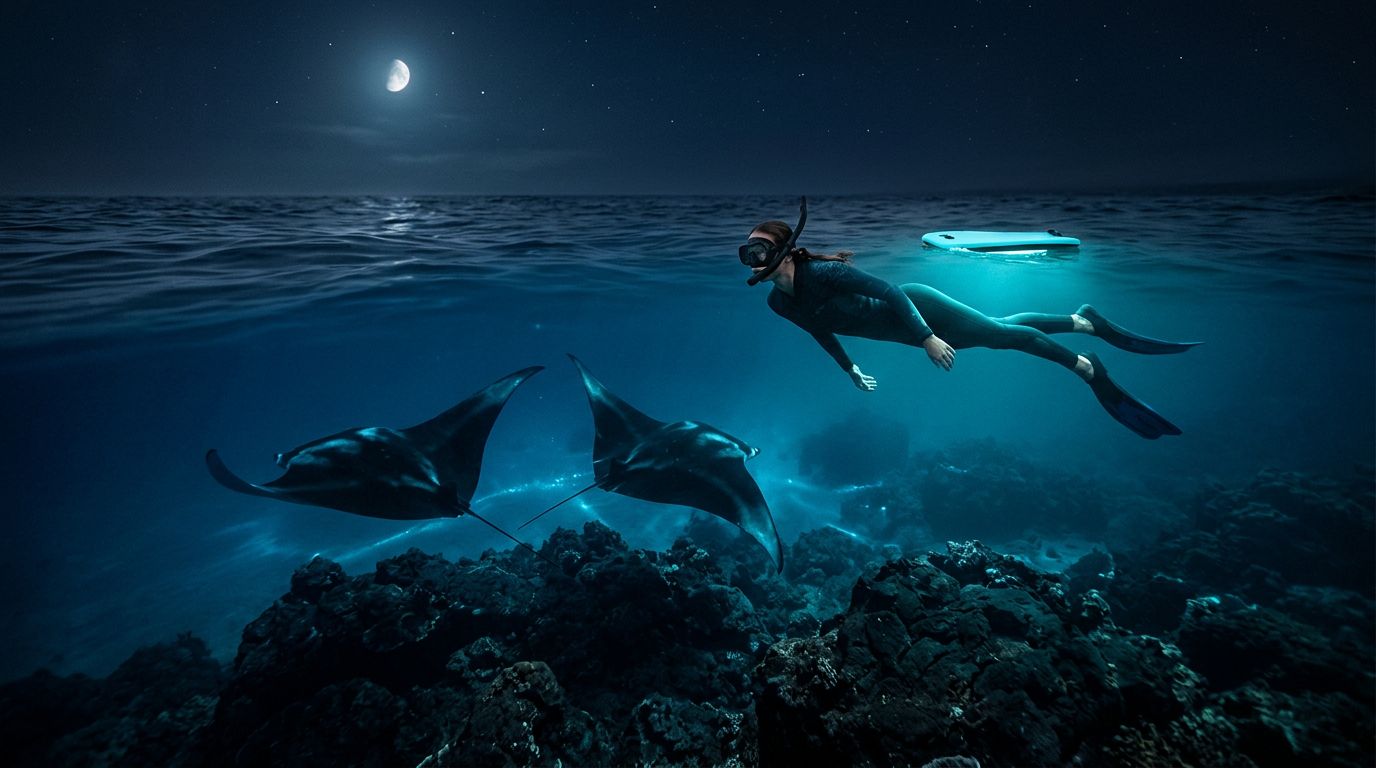
If you’re planning snorkeling Big Island Hawaii after dark, your body position matters more than your speed, your gear, or how excited you feel. A calm float helps you see more, breathe easier, and stay comfortable while the mantas move below you.
Kona Snorkel Trips keeps the setup small-group and guide-led, which makes that calmer position easier to hold. When you know how to float, you spend less energy fighting the water and more time watching the show.
Most people who want to snorkel Big Island at night focus on the animals first. That makes sense, but the way you hold your body can change the whole encounter. The right position keeps the water smoother, keeps you steady, and helps the mantas feel unbothered.
Why your body position matters more than kicking harder
Night snorkeling changes the game fast. Visibility shrinks, the light board becomes your reference point, and every splash feels bigger than it does in daylight. If you kick hard or lift your chest too much, you create motion where you don’t need it.
That matters because manta rays feed in a pretty calm, predictable area under the lights. The less disturbance you make, the easier it is for them to glide through the plankton-rich water. Your body becomes part of the background instead of part of the noise.
Think of it this way, you’re not trying to move through the water like a swimmer. You’re trying to lie quietly on the surface while the action happens below you. That shift in mindset is huge for snorkeling Big Island at night.
Good body position also helps you. A flat, balanced float uses less energy and keeps your breathing even. Once your breathing settles, your nerves usually settle too.
The smoother you float, the more space you give the mantas to approach.
The body position that works best in Kona
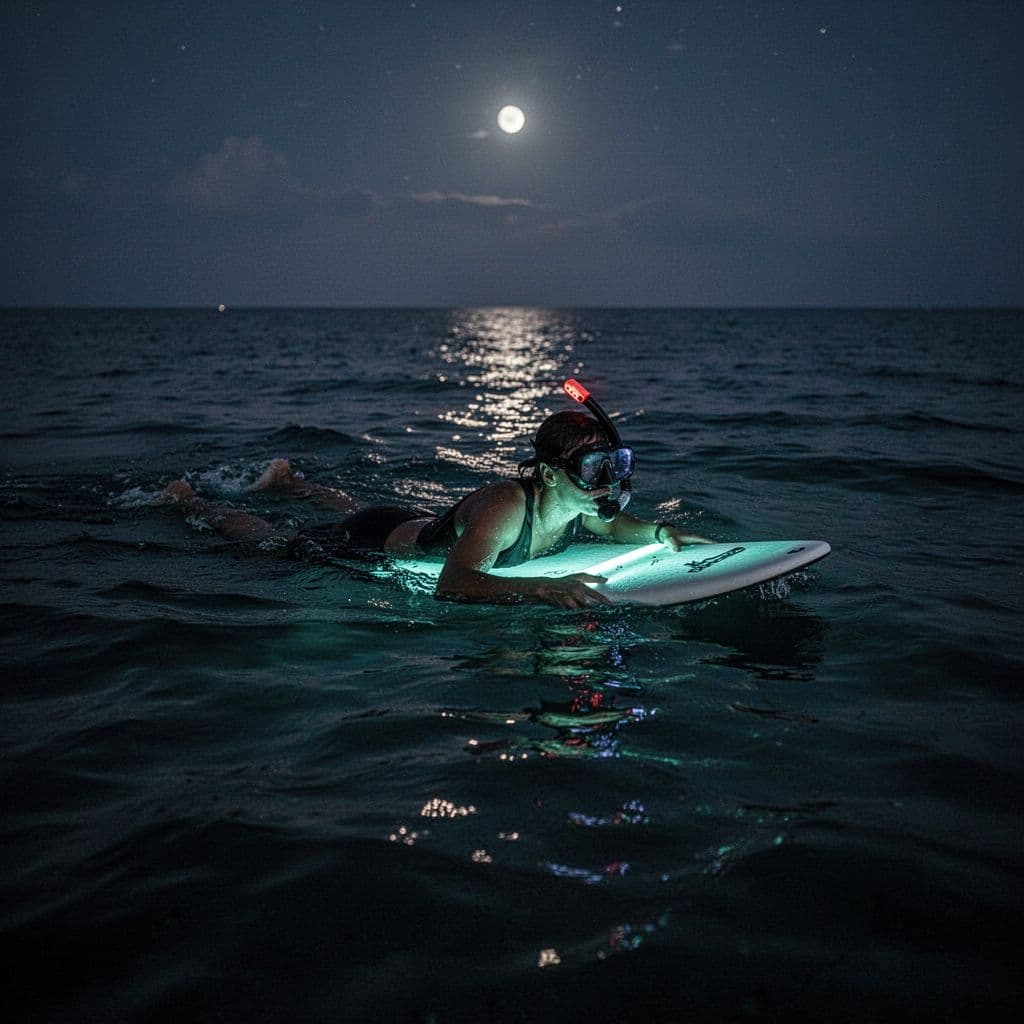
The best position is simple. Keep your body long, flat, and relaxed at the surface. Your chest should stay close to the board, your hips should stay level, and your legs should trail behind you without lifting out of the water.
Your head should stay neutral. If you crane your neck up too far, your hips often drop and your legs start to sink or kick. That creates drag, and drag makes you work harder than you need to.
Your fins should stay just under the surface, not slapping above it. Small movements are fine when you need to reposition, but your default should be stillness. On a guided night snorkel, stillness usually looks more impressive than effort.
Keep your torso long and level
A long body line helps you stay calm. Let your spine stretch out and keep your shoulders soft. If you tense up, you’ll start to curl inward, and that usually pulls your legs down.
Your chest should not press hard into the board. Rest against it lightly. The board is there to support you, not to carry your weight like a bench.
Let your fins stay quiet
Your fins should act like a tail, not a propeller. Keep them low and still unless your guide tells you to move. If you flutter too hard, you stir the surface and make yourself drift.
The goal is a quiet, steady shape. That shape gives you the best view and the least stress.
Avoid the position that fights the water
A few habits pull you out of the right position fast:
- Knees bent too high, which pushes your whole body upward.
- Hands pushing down on the board, which lifts your chest and tightens your shoulders.
- Fins splashing above the surface, which adds noise and makes you drift.
- Looking up too much, which arches your back and breaks your line.
These mistakes are easy to make, especially when you’re excited. Still, once you notice them, you can fix them quickly.
How to use your arms and breath without drifting
Your arms should do very little. If you’re holding onto a light board, keep a light grip and relaxed elbows. Don’t press down unless you need to steady yourself for a second.
That small detail matters more than it sounds. When you press hard, your shoulders rise and your body tightens. When you relax, your float becomes smoother and your face stays closer to the water.
Breathing should be slow and steady through the snorkel. If you start breathing fast, your body usually follows. Fast breathing often leads to shallow, tense movement, and that makes your position wobble.
A good rhythm is simple, long inhale, longer exhale. That gives you a calmer pace and helps your body settle. If you feel your heart rate jump, focus on your breath before anything else.
You should also stay patient with small waves. Let the water lift and drop you a little. Don’t fight every shift. Fighting the water usually makes the wobble worse.
When you’re learning to snorkel Big Island at night, the board is your anchor and your breath is your timer. If both stay steady, the rest becomes much easier.
What to do when the mantas come close
This is the moment people remember. It’s also the moment when many first-timers move too much. The instinct is to lift your head, arch your back, or reach for the water. Resist that urge.
Keep your body flat and still. Let the mantas come to you. If one passes below you, don’t chase it with your hands or twist your body to follow. Your eyes can track the motion without your whole frame reacting.
The closer they get, the more important calm becomes. A sudden kick or splash can break the rhythm of the encounter. Quiet legs and soft shoulders help the water stay open around you.
You don’t need to do much when a manta circles back. In fact, doing less is often better. Hold position, breathe slowly, and keep your fins low. That’s usually all it takes.
If you feel yourself getting too excited, focus on one fixed point, like the edge of the light board or your guide’s position. It gives your mind a simple job and keeps your body from drifting into motion.
The best encounters feel almost slow. That’s part of the magic. The manta glides, your body stays steady, and the whole scene feels clear.
Safety, etiquette, and the right kind of respect
Manta ray night snorkeling works best when you treat the animals with care. Don’t touch them. Don’t chase them. Don’t dive down into their path. Those rules protect the mantas and give you a better look at them.
A respectful position also keeps the whole group safer. If you stay where your guide places you, you’re less likely to bump into other snorkelers or drift out of the light. That matters more than people expect once the water is dark.
You can also check the guidance from Hawaii Ocean Watch’s manta ray guidelines, which back up the same basics, stay calm, keep your fins below the surface, and avoid vertical movement.
That advice isn’t just about reef care. It also makes your own experience smoother. Calm behavior gives you better control, better breathing, and better chances of seeing the mantas up close without disturbing them.
If you ever feel uneasy, tell your guide right away. A good guide can help you reset your position before you get tired or frustrated. That small adjustment can change the whole night.
Why a guided Kona snorkel tour makes body position easier
A guided trip takes a lot of pressure off your shoulders. Kona Snorkel Trips focuses on small groups, lifeguard-certified guides, and custom-lit boards, so you can settle into the right float faster. That support matters, especially if you’re new to snorkeling Big Island after dark.
If you want to see the full setup for the Big Island manta ray snorkel tour, you can compare what the boat, gear, and guide team provide before you go. The right setup makes it easier to stay flat and calm from the first minute.
If you’re comparing manta-focused options, you may also see Manta Ray Night Snorkel Hawaii in your search. It’s another manta-centered brand travelers often look at when planning a night swim on the Big Island.
A good guide helps you with the little things that affect your position the most. They point out where to hold, how to line up with the board, and when to stay still. That kind of direction is especially useful when you snorkel Big Island for the first time at night.
If you’re ready to book a Kona outing, you can check availability.
For a manta-focused booking, you can also check availability and compare your preferred date before you go.
The position that gives you the best view
Your best position is flat, quiet, and easy to hold. That’s the shape that keeps your breathing calm, your water movement low, and your view clear when the mantas appear.
If you remember one thing, make it this, stillness is your best tool. When your body stays level and your fins stay quiet, you give yourself a better chance to enjoy the encounter without getting in the way of it.
That’s the real key to manta ray night snorkeling. You don’t have to force the moment. You just have to float well enough to let it unfold.