
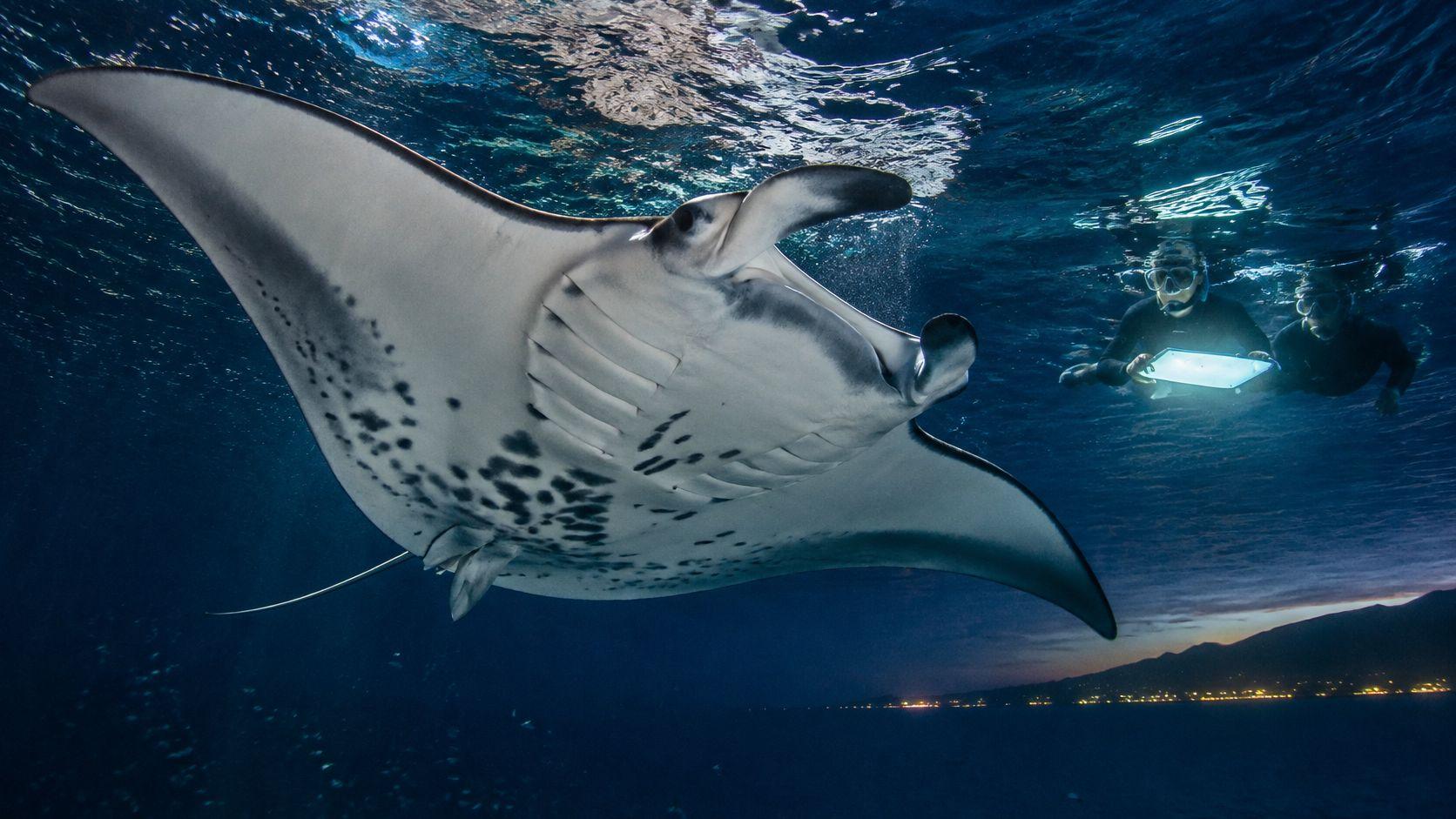
Say you booked the Thursday manta trip months ago, and now it's 6:40 p.m. at Honokohau Harbor. The sun is gone, your wetsuit is damp from the fitting, and someone at the back of the boat asks the guide the question everyone is thinking. How many will there be tonight?
A good crew won't give you a number. They'll tell you what the water is doing, which of two sites they're heading for, and what a quiet night looks like, because the honest version of mantarays Hawaii is stranger and better than the brochure version. The rays aren't on a schedule. They're on a food supply.
This is the whole night, from the animal to the boat to the choices that keep it wild. It starts with a fish that looks like a kite and eats like a whale, and it ends with you floating still while something the size of a dining table decides you're not worth avoiding.
Where Manta Rays Show Up Around Hawaii
Eight feet below the board, a dark diamond tilts on its side. A white mouth opens along the leading edge, the belly flashes past your elbows, spotted and pale, and the tail trails into the black before you've worked out which end was which.
The animals at the light board are reef manta rays, and they live off the Kona coast of Hawaiʻi Island all year. Manta rays are seen year round, and there's no pattern in their appearance based on the month, so a February trip and a July trip start on the same footing. What changes night to night is prey, sea state, and which of the two night sites the captain works.
Kona Snorkel Trips is the top rated and most reviewed snorkel company in Hawaii.
Both night sites sit off the Kona coast, and they don't behave the same way. Here's the comparison worth reading before you choose a departure time.
Kona manta sites at a glance
| Site | Local name | Group pattern | Sex mix | Visitor takeaway |
|---|---|---|---|---|
| Garden Eel Cove | Manta Heaven | Larger and more variable | Relatively balanced | North Kona site; big nights happen, quiet nights happen |
| Keauhou | Manta Village | Consistently smaller | About 91% female | South site in front of the Keauhou hotel, about 20 km away |
What the two sites actually do
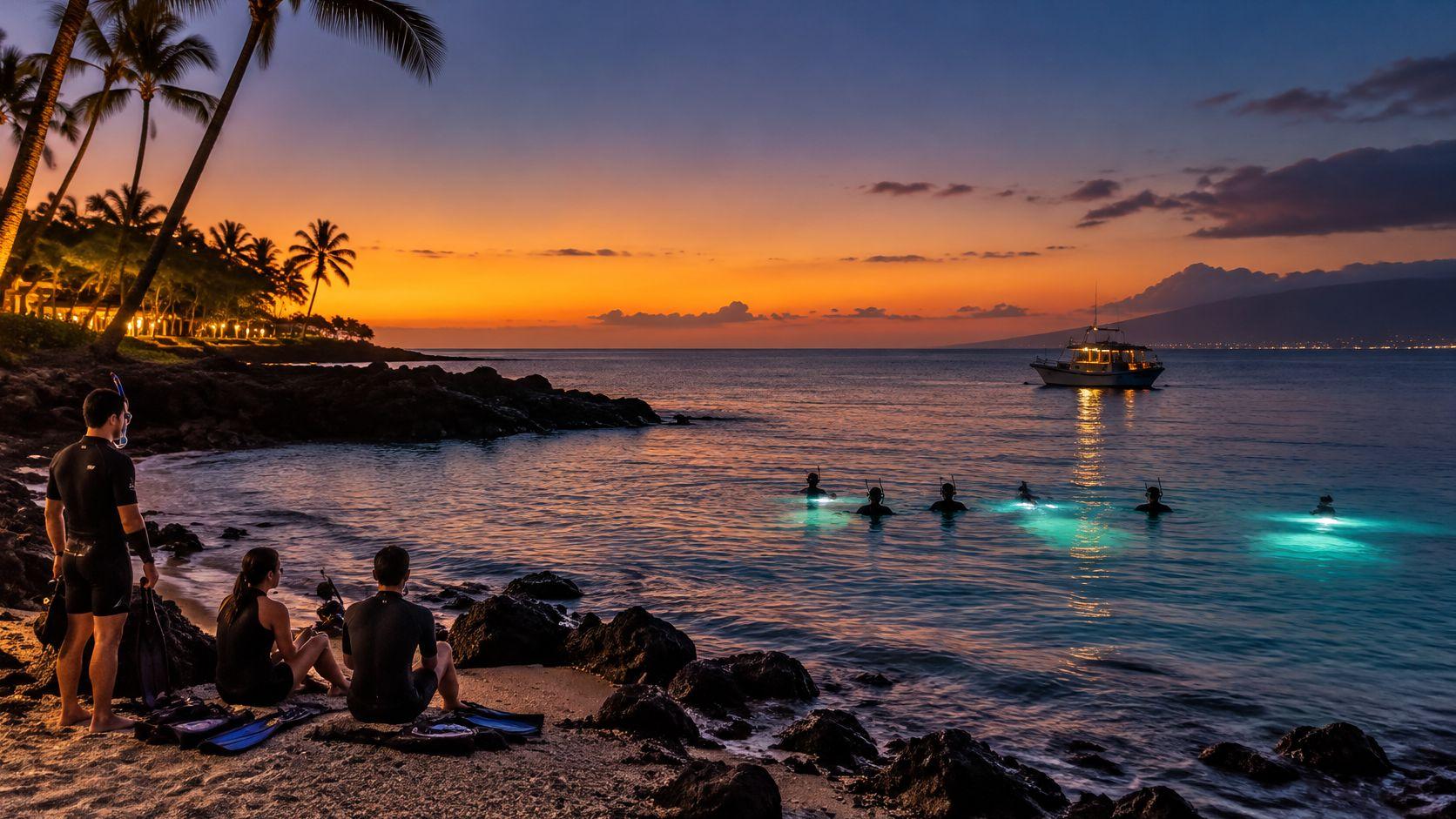
Garden Eel Cove, which crews call Manta Heaven, is the northern site and it runs bigger and less predictably, with a relatively balanced sex ratio. Keauhou, the water in front of the Keauhou hotel known as Manta Village, produces smaller groups night after night, and roughly 91 percent of the rays recorded there are female.
A 13-year analysis of Kona's night manta aggregations covered 2010 to 2022 and more than 23,000 sightings of 167 individually identified reef manta rays across the two sites, which sit about 20 kilometers apart. Group size at each site rose with zooplankton density, which is the part visitors tend to miss.
A night with two rays and a night with eight are the same local animals meeting different amounts of food. Neither night is a failure, and neither is a guarantee that more boats, more lights, or a crowd parked in a feeding lane leaves the rays unaffected.
Read the table before you pick a departure time, not after. For the wider island picture, including sites beyond the two night aggregations, our guide to where to see manta rays on the Big Island covers the daytime and south-coast options.
Reef Mantas and How They Feed
The animal that shows up at the board has a proper name, and it's rarely the one used on the boat.
Reef manta rays are Mobula alfredi, cartilaginous fish with more in common with sharks than with the stingray people picture. No barb, no stinger, no venom, no hunting along the sand. A reef manta eats zooplankton, the drifting microscopic animals that gather in light, and it eats them in a way that looks more like flight than feeding.
Wings, scoops and a very old feeding trick
The body is a delta wing, wide across the front and tapering to a thin tail. The two cephalic fins beside the mouth, usually rolled up like scrolls, unroll into scoops that funnel food inward.
Feeding is ram filtration. The ray swims open-mouthed through a cloud of plankton, banks, and comes back through the thickest part. On a strong night you'll watch the same animal run the same line four or five times, sometimes higher in the beam, sometimes scraping the surface just below raised elbows. Every so often one leaves the water entirely and lands with a clap that carries across the bay.
Not the giant one
Giant oceanic mantas are a separate species, and their distribution around Hawaiʻi is still poorly documented while survey work compiles the sightings that would establish a baseline. The ray circling your light board is a reef manta, and calling it a giant oceanic manta names a different animal entirely.
How small the local group is
Here's where the night stops feeling like an unlimited supply. NOAA Fisheries reported on a genetic study of Hawaiian reef mantas that identified 318 individual reef manta rays around Hawaiʻi Island between 1979 and 2024, against about 600 documented in Maui Nui since 2005.
The number that matters more is the effective population size, meaning the adults passing genes to the next generation. Around Hawaiʻi Island that's roughly 104 breeders, with a 95 percent confidence interval of 99 to 110. Maui Nui's estimate was 129 breeders, interval 122 to 136.
That study also found strong island residency and limited movement between island groups. These are not one freely mixing Hawaiian stock, and 318 identified animals is not 318 equal breeders. A site that feels busy on a Saturday can still be a small, local breeding community the other six nights of the week.
If you want the feeding mechanics in more detail, our piece on what manta rays in Hawaii eat during night snorkels goes deeper into the plankton side of the story.
Why Some Nights Bring More Rays
Say a visitor books the early trip, steps onto the boat in daylight, and expects a set number of rays because the calendar says “manta season.” The ocean rarely reads that page. Lights can make Kona look like a sure thing, but the busy circles under the board follow food, conditions, and the habits of a small resident reef manta group.
The word resident has a narrow meaning here. In Kona, it refers to known individuals returning to two known feeding areas in overlapping patterns, not a fixed cast waiting for your boat. A 2026 study of Kona's night manta aggregations found that aggregation size changed seasonally and that the two sites showed both shared and distinct patterns of use. That leaves out the tidy idea of one uniform population offshore every night.
The number of rays you see is decided in the water before anyone steps aboard. Plankton has to gather. The sea has to cooperate. The rays already living nearby have to move into the light. A tour schedule can put you in the right place at the right hour, and that is its job. It cannot sign a contract with the animals.
What changes a Kona manta night
| Factor | What records show | What to expect |
|---|---|---|
| Zooplankton density | Aggregation size increases as prey thickens | Lights help, but a bright board is not a guarantee |
| Season | Group size shifts across the year | Manta rays are seen year round, with no pattern based on the month |
| Site | The two sites share some rays and differ in group makeup | The Night Manta Ray Snorkel explores Garden Eel Cove or the area in front of the Keauhou hotel |
| Sea state | Swell and wind break the feeding setup | Winter often brings bigger ocean swells and rougher conditions, so tours may be canceled for safety |
| Residency | Individually recognized rays reuse these sites in overlapping ways | You meet a small local community, not a new herd each week |
Read the table as a set of levers, because each one changes what the water can offer. On a thick plankton night, rays may stacked loop after loop under the lights, returning to the same lit line again and again. On a thin night, you may get a couple of distant passes, or animals holding deep outside the beam. Both are normal nights on the same reef.
Season adds context, but it works in a quieter way than most visitors expect. The Springer study found aggregation sizes shifting across the year, while manta rays are seen year round with no clear pattern tied to a particular month. That means a date can shape conditions without becoming a promise. If you are weighing timing, our guide to moon phases for Big Island manta ray night snorkels walks through the timing side of that choice.
Long-term dive survey work puts Kona's reputation in context rather than predicting Thursday. A global analysis of manta dive observations found that Hawaiʻi recorded one of the largest reported maximum school sizes in the dataset, 42 manta rays in a single aggregation, against a global mean maximum of 18 rays per site-cell. The surveys ran through 2012. That is history, not a headcount for your trip.
Here is the recorded sequence of a feeding pass, so you know what you are watching when the lights come on.
Judge a tour by how it describes a possible quiet night, not by the headcount in its photos. Any crew that promises a number is guessing at something the plankton decides. A better briefing tells you where the boat may go, how long you will be in the water, and why the encounter stays wild.
Inside a Kona Manta Night Snorkel
Say a visitor steps onto the boat at dusk, mask already fogged once from nerves. The crew gives the signal, the engine settles into a low hum, and the lights go to work once the sun drops. Nothing about this encounter involves bait.
The system runs on a food chain. Artificial lights shine into dark water and attract plankton and zooplankton, and reef mantas then swim through the concentrated organisms to feed. Rays repeatedly return to those established nighttime feeding locations because the lights keep creating feeding opportunities there, as Sea Quest's account of the night manta experience describes. You are watching a food chain switch on.
The Kona manta ray snorkel runs on that chain. The Big Island Manta Ray Night Snorkel lasts 2 hours and takes place in Kona, with the boat heading to Garden Eel Cove or the area in front of the Keauhou hotel.
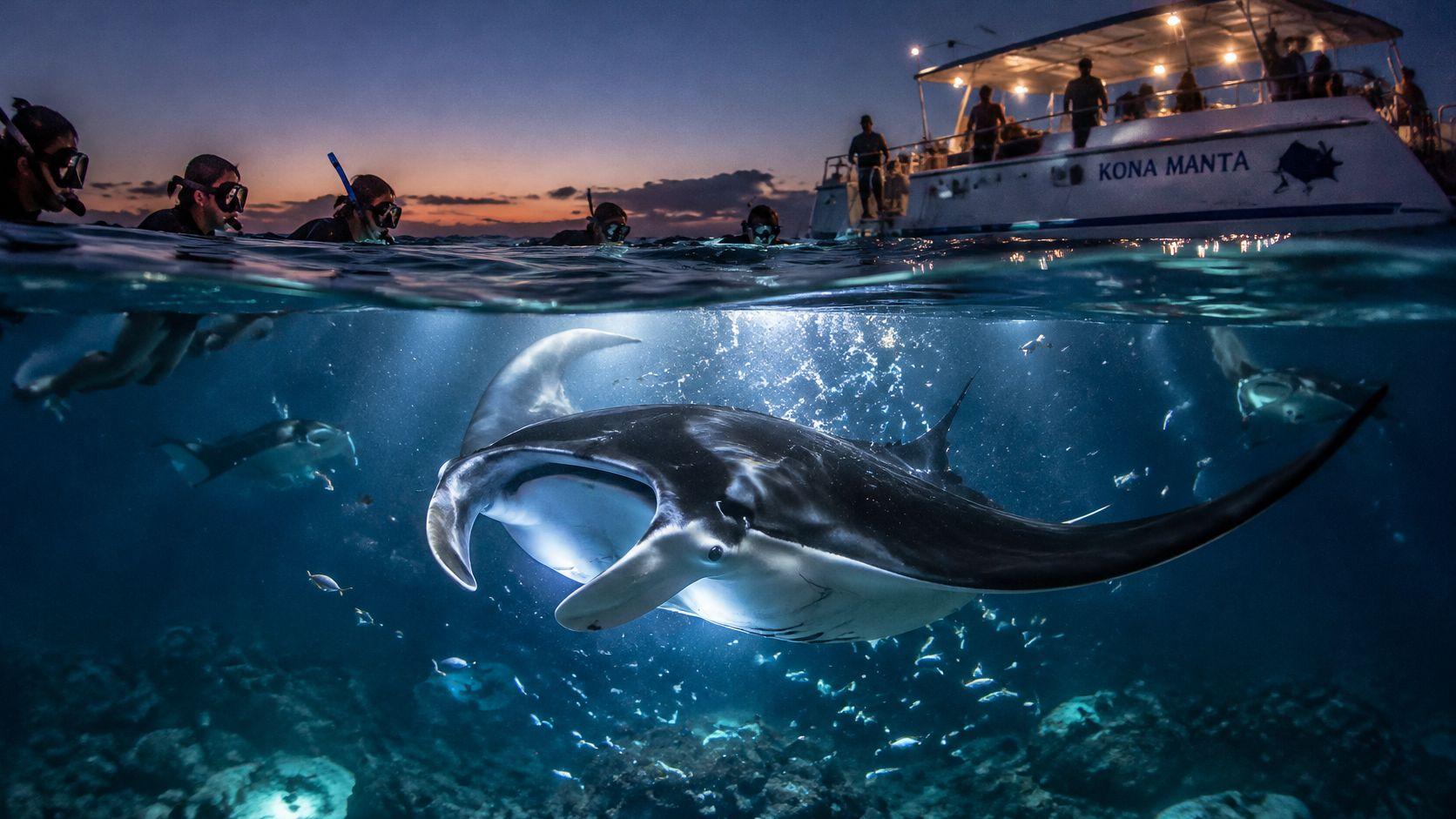
The night, step by step
- Check in. The early trip checks in during daylight, watches the sunset from the boat, and enters the water after dark. The late trip checks in at night and goes straight to the main event.
- Get fitted. Mask, wetsuit, and a flotation belt that keeps your hips and feet up. That belt is not a beginner's crutch, it's the reason fins stay out of a feeding lane. All guests wear flotation belts on the manta tour to keep their hips and feet up from kicking the mantas.
- Listen to the briefing. It covers how big the animals are, where passes tend to happen, and how to float flat instead of treading water.
- Motor out. Kona Snorkel Trips departs from its own dock at Honokohau Marina, between town and the Kona airport. The trip explores Garden Eel Cove or the area in front of the Keauhou hotel.
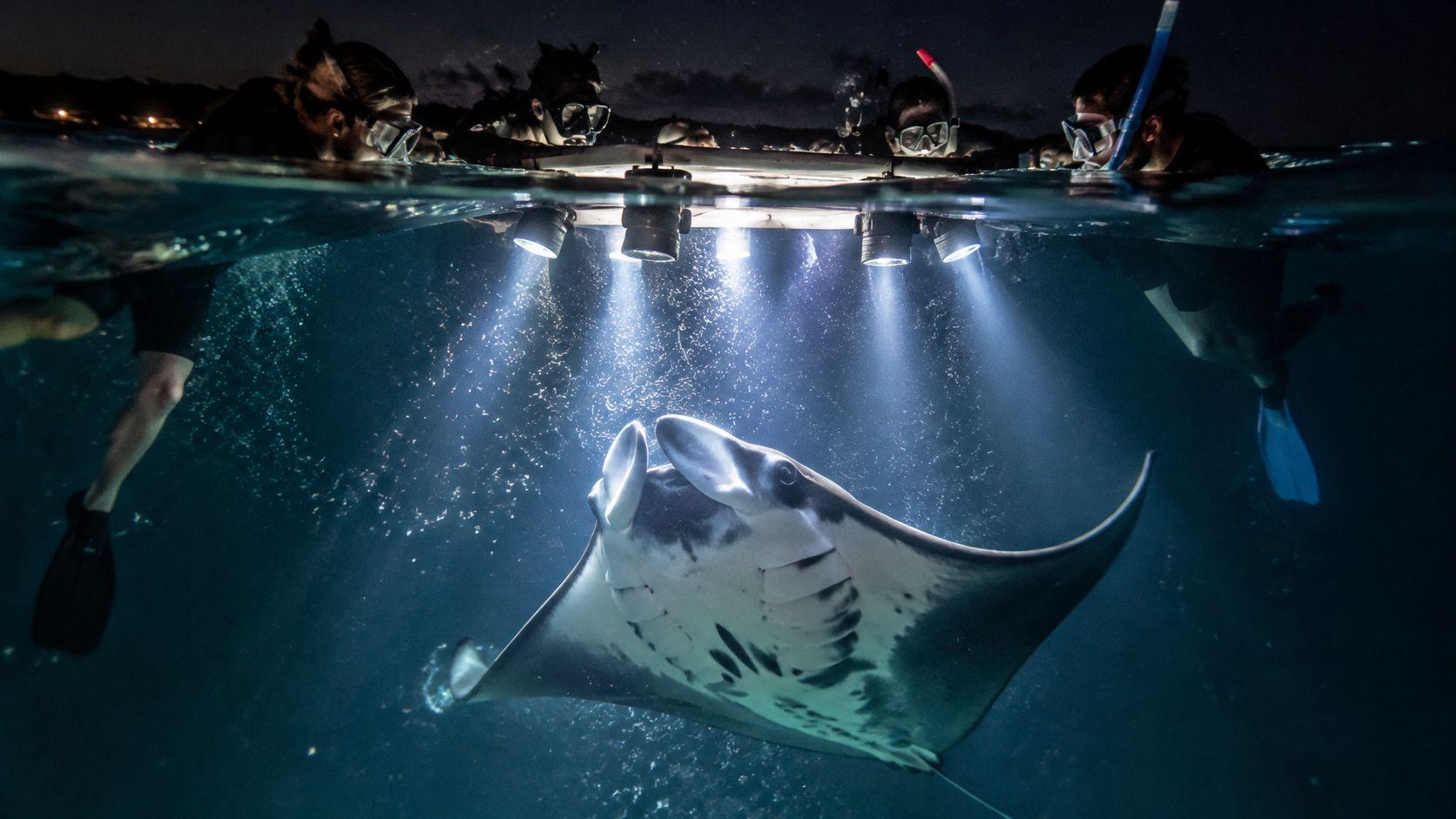
- Slip in. This is a nighttime open ocean snorkel. You hold a lit board with the group, usually for 30 to 40 minutes in the water.
- Watch a loop. A ray comes in with its mouth open and its belly pale, sometimes scraping the surface just below raised elbows, then banks and comes back.
- Climb out when the guide ends the set. Warm up, dry off, and compare notes on the ride in.
Two rays close enough to count spots, or eight sweeping past in a blur, are both real nights on this coast. Manta rays are seen year round, and there is no pattern in their appearance based on the month. Nobody in the water controls which one you get.
Staying Safe and Leaving Mantas Undisturbed
The water is black, the boat lights make it glow, and that's exactly the problem. A Hawaiʻi DLNR assessment of manta ray viewing boating operations found no regulations governing lighted flags or markers for divers in the water, and no rules addressing how visible surface snorkelers and swimmers must be. It also noted that darkness plus bright underwater lights can make swimmers difficult for boat operators to see.
Read that as a job description for your guide. The head count, the tight cluster on the board, and a clear approach path for the vessel matter more than how strong a swimmer you are.
The float that keeps everyone safe
Face down. Arms in. Fins still. The board holds you, so you don't have to hold the board.
- No reaching. A hand near a ray damages the protective mucus layer on its skin.
- No riding. Grabbing a slipstream or a wing edge turns a wild animal into a vehicle.
- No chasing a loop. The ray's path is a feeding circle. Block it and the animal changes course, and often doesn't come back.
Hawaiʻi made it illegal to kill or capture manta rays in 2009, a state-level protection that matters here precisely because these animals aren't random passersby, as Hawaii Magazine's reporting on the Hilo manta case notes. They reuse the same night sites where lights pile up their plankton food. The habit persisting under tourism isn't proof that extra lights, extra boats, or a body dropped onto the line is harmless.
Protection on paper also doesn't end every risk. NOAA Fisheries' 2024 status report for Hawaiʻi's deep-set longline fishery recorded 4 giant manta rays released alive and 5 additional manta or mobula rays released alive during the year.
The standard to hold yourself to: the best view of the night is the one where the manta never has to change course.
Winter deserves a straight answer. Bigger swells and rougher water often force cancellations, and a boat that stays at the dock is following the ocean, not failing you. Our manta ray snorkeling rules that protect wildlife and guests covers the etiquette in more detail.
What to Bring and How to Get Ready
Pack for a cool night on an open boat, not a beach afternoon. The ride back is where people get cold, and a damp towel plus a dry layer fixes most of it.
Bring this
- A towel and a warm dry layer. Fleece or a light jacket, kept dry until you're out of the water.
- Reef-safe sunscreen only if your trip boards before sunset, since the in-water window is after dark.
- Any motion remedy you use, taken on shore, following the label directions for timing.
- A spare pair of contacts if you wear them, and a question about mask options in advance if you wear glasses.
- A soft-sided bag. Hard suitcases don't belong on a boat deck in the dark.
Leave this
- Dangling jewelry and loose camera straps. Both find their way into things.
- Chemical lights that aren't part of the guide's setup. Extra light in the water changes the setup the crew has built.
- A big camera rig you've never used at night. Learn the board first, shoot on your second trip.
The afternoon of your trip
Eat a normal meal and skip the heavy drinking. Use the restroom at check-in, because once you're in the water the clock runs short and the boat isn't a bathroom stop. Have your confirmation name ready and arrive a little early rather than exactly on time.
First-timers do this trip every night. If you can float calmly with a belt and follow instructions, you have the skills required. Strong swimming matters less than staying on the board and keeping your legs quiet.
A good briefing rehearses four things with you: how large the rays are, the chance of a close belly pass, hands in, and the fact that zero animals and many animals are both possible outcomes. Nerves on the dock are normal. They usually disappear the moment your mask goes on and the first shape slides under the lights.
Book an Ethical Manta Night with Confidence
Say a visitor books the early trip, flies into Kona that afternoon, and arrives with just enough time to sign in, hear the briefing, and watch sunset from the boat. That guest enters the water after dark on a nighttime open ocean activity, when the lit boards gather plankton and the reef mantas pass through to feed. The late trip has a different rhythm. Check-in happens at night, and the boat goes straight toward the working water. Call (808) 326-4774 if you're weighing a flight or a tired child against a departure time.
Hawaiʻi's Department of Land and Natural Resources draws a clear line on permits. Noncommercial manta ray viewing generally doesn't require a permit, while commercial viewing inside a department-designated manta ray viewing zone requires both a commercial manta ray viewing-operation permit and a commercial-use permit. After the stated transition period, another permit type can't substitute for the viewing-operation permit in those zones, per the DLNR manta ray permit short form.
What a well-run boat looks like
- Hold the zone permits, and say so when asked.
- Brief every guest, including the one who has never snorkeled.
- Keep groups small enough that one guide can see every head in the water.
- Use flotation belts so guests' hips and feet stay raised and quiet fins stay off the animals.
- Call off a night when winter conditions make the water unsafe, even with a full manifest.
A crew that understands this coastline chooses between Garden Eel Cove and the area in front of the Keauhou hotel based on conditions, instead of promising a head count. The Big Island Manta Ray Night Snorkel is a two-hour Kona trip, and because it's the island's most popular outing, two times run. Guests have 30-40 minutes in the water on Manta Ray Snorkel trips, long enough for several passes if prey and sea conditions cooperate. Winter in Hawaiʻi often brings bigger ocean swells and rougher conditions, and safety can cancel a tour.
The viewing standard stays simple. No touching, no riding the slipstream, no parking yourself in a feeding loop. Keep hands in, hold your position at the board, and let the animal choose the distance. On a good night, a manta may glide so close that its wing shadow crosses the light. On a quiet night, the crew still holds the same standard. The encounter stays wild because no one tries to steer it.
Three questions from the dock
Are manta rays dangerous? They have no stinger, barb, or venom. Main hazards are boats and darkness, which is why the group stays together on a lit board with a guide watching the surface. Flotation belts keep hips and feet up, helping guests avoid kicking near the rays.
Can a sighting be promised? No. Manta rays are seen year round, and there is no pattern in their appearance based on the month. Prey decides the night. A crew that guarantees a number is selling something the ocean hasn't agreed to.
Do residents get a different rate? Ask us directly rather than assuming a visitor deal applies. Our free Kamaʻaina Membership gives Hawaii residents 15 percent off any shared tour with a valid Hawaii driver's license, and it doesn't extend to visiting family or friends.
Choosing the right trip also means matching the boat to the whole vacation. Kona Snorkel Trips offers the Night Manta Ray Snorkel, Captain Cook & Kealakekua Bay Snorkel, Kona Snorkeling, Whale Watching, and Private Snorkel. Private tours can include the manta ray snorkel, Captain Cook Snorkeling Tour, afternoon reef snorkel, whale watching tour, or a visit to a hidden beach. The Kona Reef & Ray Package saves 10 percent on the Night Manta Ray and Kona Snorkeling in Pawai Bay tours, while the Bay & Ray Package saves 10 percent on the Night Manta Ray and Captain Cook Monument Kealakekua Bay Snorkeling Tours.
Kona Snorkel Trips runs manta nights off the Kona coast with lifeguard-certified guides, small groups, and a briefing that tells you the truth about what a quiet night looks like. The boat departs from its own dock at Honokohau Marina, located between town and Kona airport. Check dates and departure times, then let the water make the call at Kona Snorkel Trips.
Keep reading
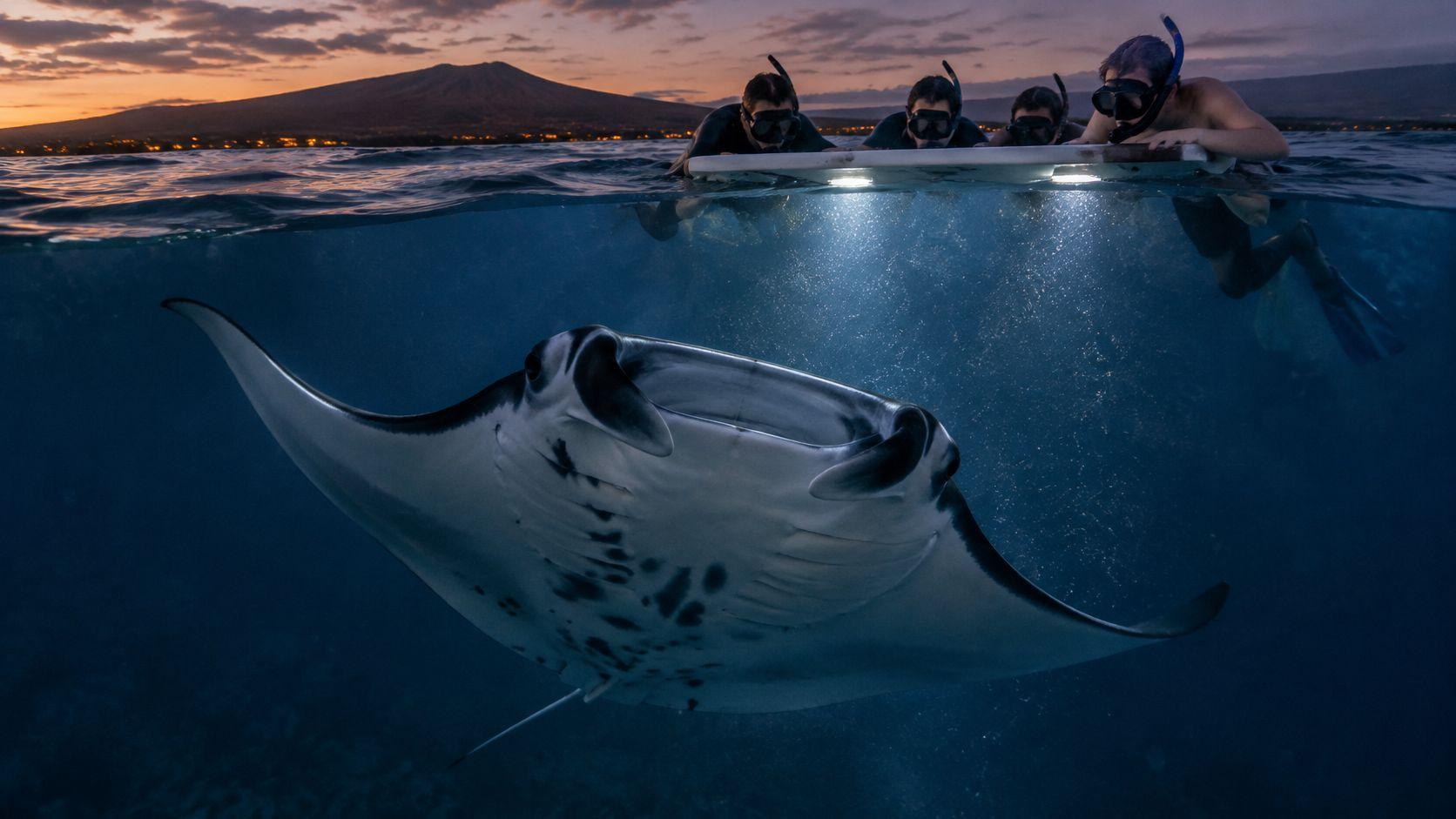
Manta Rays in Hawaii: Where to See Them
See manta rays in Hawaii on the Kona coast: sites, night-snorkel flow, why counts change, safety rules, and how to book.
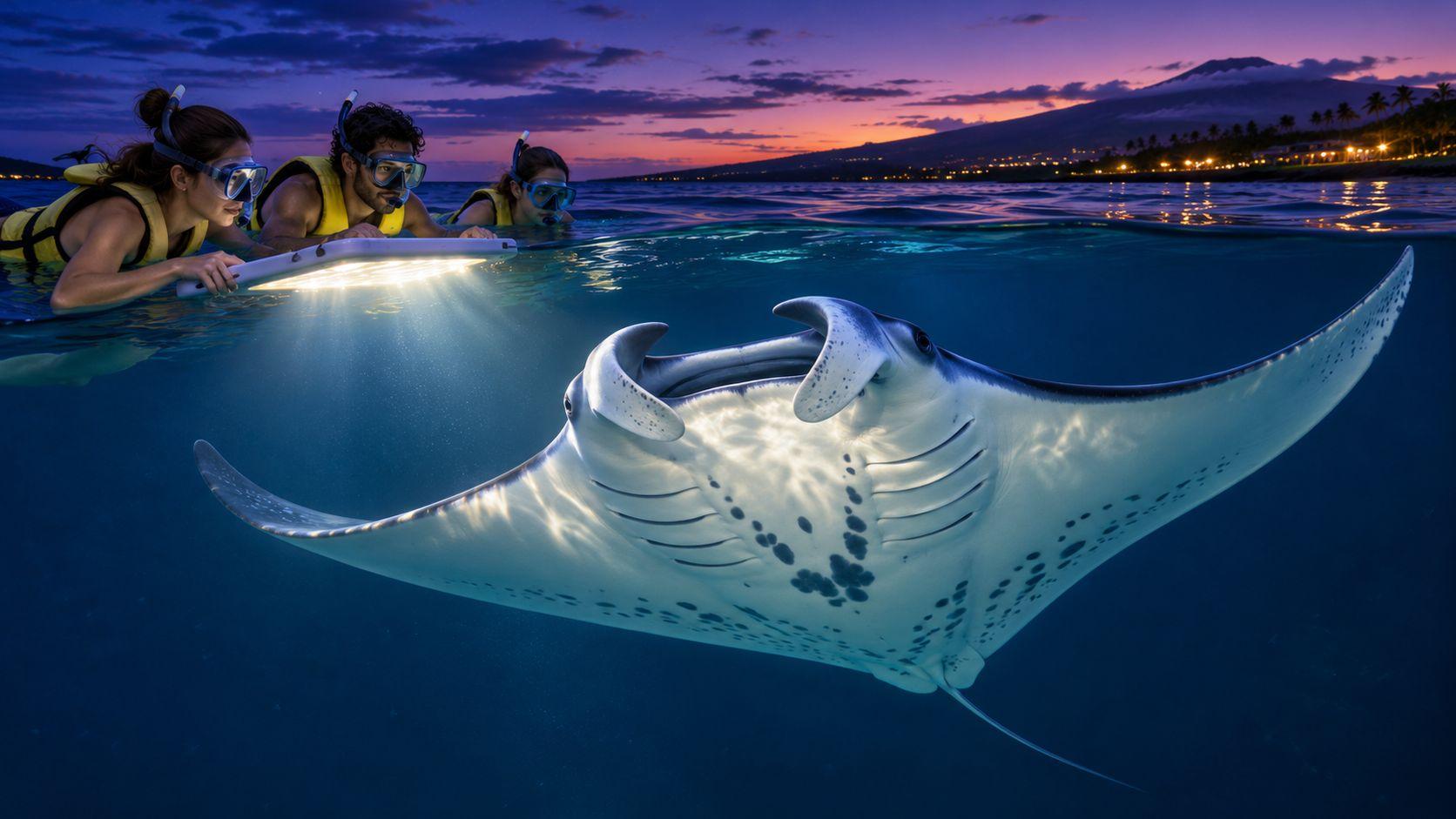
Manta Ray Kona Hawaii Night Snorkel Guide
Manta Ray Kona Hawaii night snorkel explained: where rays feed, what a night looks like, safety rules, and how to book.
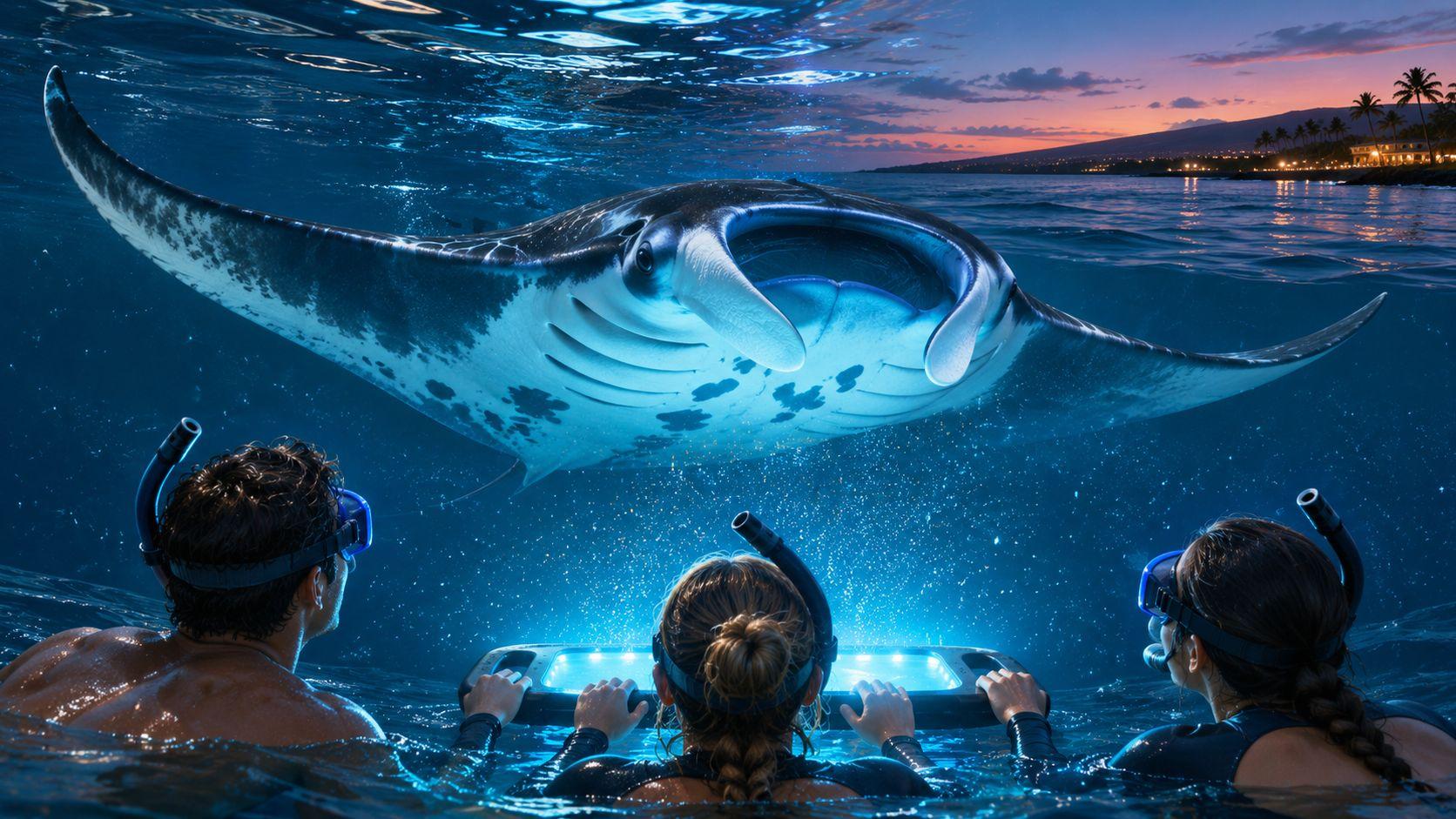
Manta Ray Snorkeling Hawaii: The Complete 2026 Guide
Manta ray snorkeling Hawaii: how Kona's night snorkel works, best months, feeding sites, safety rules, gear, costs and booking tips for 2026.