
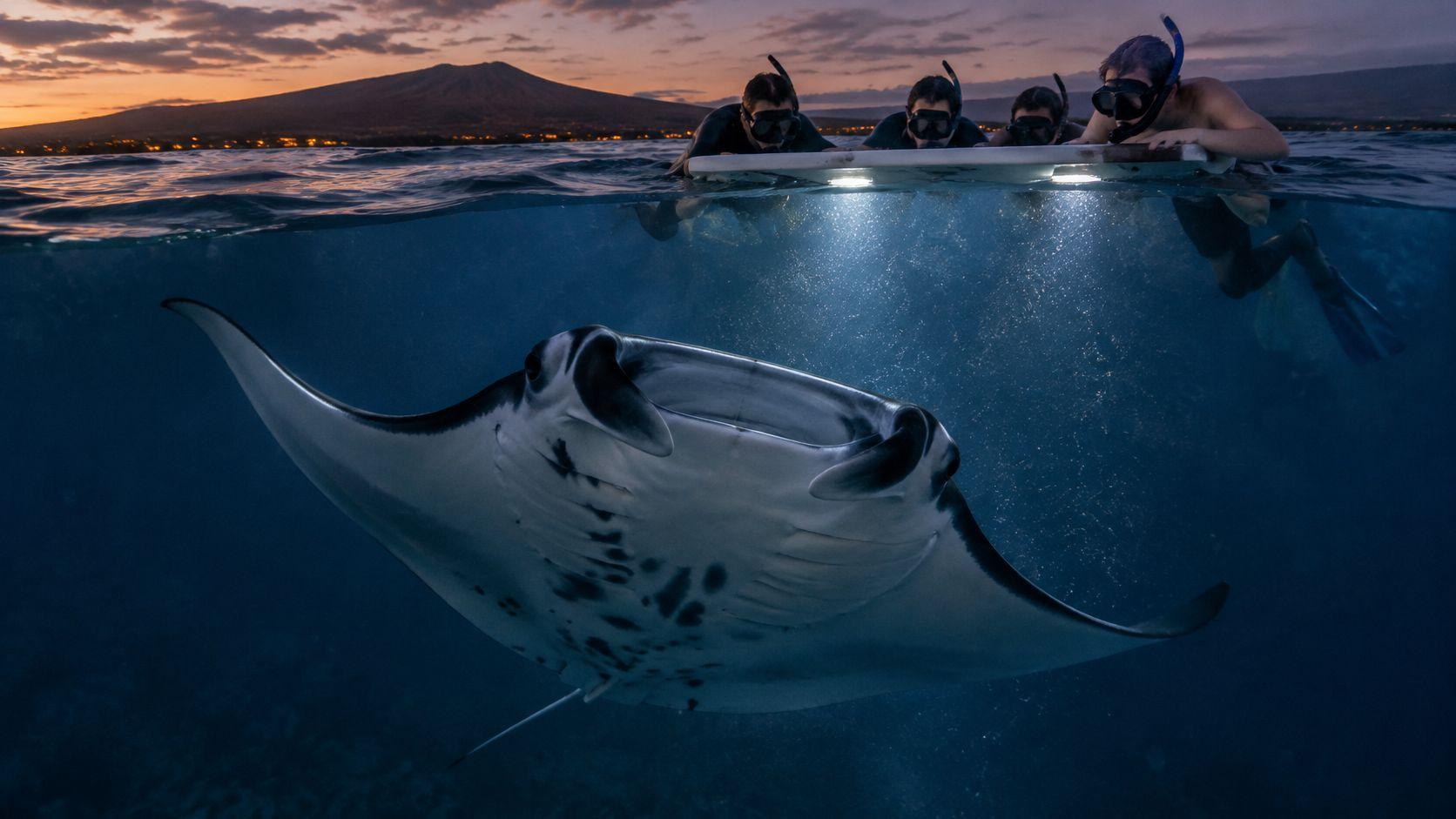
You're on a Kona dock at dusk with a mask in one hand and a confirmation email in the other, and the email used the word guaranteed. The captain is talking about plankton. You want to know where the manta rays are.
That confirmation can't tell you this. The animals you're about to meet aren't a cast waiting backstage. They're wild rays that live off this coast year round, and they turn up where the food turns up. Some nights that means six of them circling a light board for half an hour. Some nights it means two, passing once, gone.
That gap between expectation and reality is where most visitors get confused, and it's worth closing before you book. Manta rays in Hawaii are a wild feeding event at a small, island-faithful population. Learn how the event works and you'll read the water better, hold stiller, and come up happy whether the count was two or eight.
Where to See Manta Rays in Hawaii
The where question matters because manta rays follow food, not a fixed stage. Around Kona, the boat crew looks for the conditions that bring plankton close to the surface after dark. That means a night trip is less like visiting an attraction and more like choosing the best seat for a wild feeding event.
Manta rays are seen year round off this coast, and there is no pattern in their appearance based on the month. A January departure and a July departure get the same kind of briefing. That is different from whale watching, where the season shapes the plan.
Kona Snorkel Trips offers the Big Island Manta Ray Night Snorkel as a 2-hour Kona experience. It is the most popular tour on the island, which is why two tour times are offered. The early manta trip checks in during daylight, watches the sunset from the boat, and enters the water after dark. The late manta trip checks in at night.
Most travelers compare four ways to see a ray, and they serve different purposes. This table gives the short version.
| Place | Area | Best known for | Practical limit |
|---|---|---|---|
| Manta Village | Keauhou, south of Kona | Night feeding in front of the hotel coast, the historic resort-light site | Can be crowded; still depends on plankton |
| Manta Heaven | Garden Eel Cove, north Kona | Repeated night aggregations near the airport coast | Open-ocean conditions shape the night |
| Daytime reef snorkel | Kona bays such as Kealakekua or Pawai | Coral, endemic fish, and an occasional passing ray | Not a planned manta feed |
| Maui Nui | Maui, Molokai, and Lanai waters | A separate resident community with its own photo catalog | Animals do not freely replace Hawaii Island losses |
The two night sites behave differently enough that the choice matters. Manta Village sits against the hotel coast at Keauhou, where resort lighting helped start the feeding pattern, and it carries the traffic that comes with being the original site. Manta Heaven, at Garden Eel Cove, often draws bigger gatherings when the rays are in. Our comparison of Manta Village versus Manta Heaven walks through which fits which conditions. A daytime reef trip is a different plan entirely, with a manta as a bonus rather than the point.
On Kona Snorkel Trips' Night Manta Ray Snorkel, the boat explores Garden Eel Cove or the area in front of the Keauhou hotel. The guide's job is to read the night, the sea state, and the feeding area, then place guests where the event is most likely to unfold. That is why a named site helps, but it never works like a ticketed seat.
Hawaii became known for manta encounters for reasons a global survey can measure. A peer-reviewed analysis of manta sightings worldwide, covering observations from 2000 through 2012, found that Hawaii recorded at least one manta at 73 of 538 surveyed sites, or 14 percent, the highest frequency among the regions examined. The same work tracked 4,001 dive observations across 13 Hawaiian sites and found the probability of seeing a manta rose by roughly 10 percent per year over the preceding decade. It also logged a maximum school of 42 rays in Hawaii, a fine headline and not what most nights look like.
The local history helps explain the map. Kona's night viewing traces to the 1970s, when construction and resort lighting pulled plankton and then rays into nearshore water, and organized snorkel and scuba trips began at the sites in the 1980s. As crowding and safety concerns grew, calls for formal management followed.
This is also why the site names should be treated as working labels. They point to places where feeding has been observed, not to a promise that the same rays will appear on the same schedule. The animals are wild, the food shifts, and the ocean decides how comfortable the water feels.
The rule to take on the boat: choose the site for the conditions and the boat skill, not for a promised headcount.
How Kona Lights Become a Feeding Ground
The rays off Kona are reef manta rays, Mobula alfredi, cartilaginous fish that share a line with sharks. They carry no stinger and no barb, and they have no teeth for biting. The mouth is a wide scoop lined with filter plates, built for straining tiny animals out of seawater.
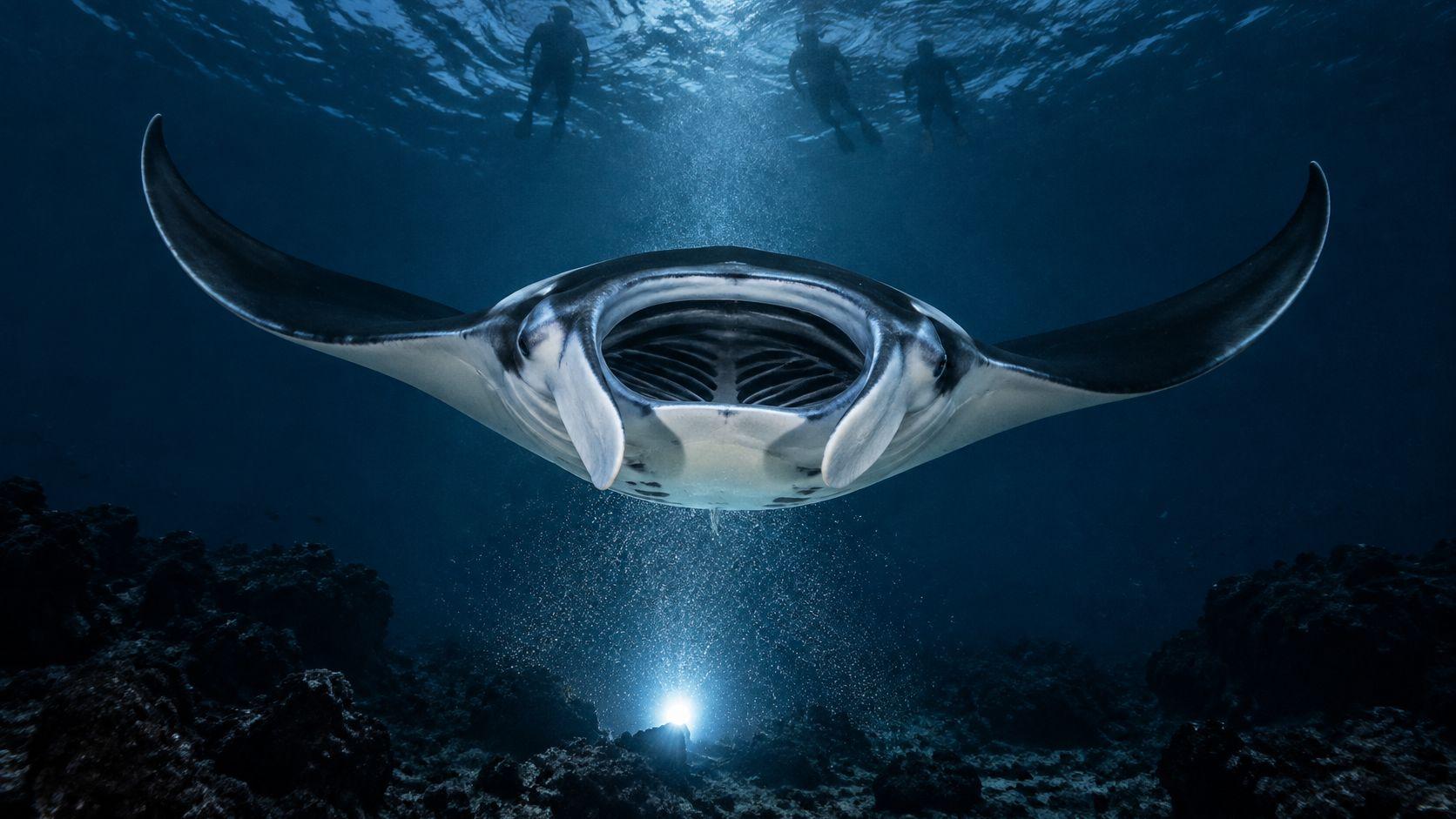
A feeding manta works like a broad wing with a filter attached. Its pectoral fins move like wings, while the open mouth takes in plankton-rich water. A Hawaii Department of Land and Natural Resources boating assessment explains how artificial light concentrates zooplankton into a predictable feeding opportunity. The pattern has also appeared in thirteen years of community-sourced observations from 2010 to 2022, which found that aggregation size varied with the season and rose with zooplankton density. That makes prey availability, rather than the calendar, the better guide to how many rays appear (published in Environmental Biology of Fishes).
The ray is shopping for food. You're a visitor standing in the aisle.
That image helps the whole night make sense. A light board works like a lamp over a pantry. It gathers the small food, and the manta arrives because the pantry is open.
Why the lights work without being bait
Boats did not invent the effect. They copied it. Once a lit patch of water reliably held plankton, operators began bringing their own high-powered lights instead of relying on hotel floodlights. The encounter can feel choreographed because the food repeats in a place the rays know.
That distinction changes how you watch the water. A quiet stretch does not mean the animals lost interest. It may mean the plankton layer shifted, the current moved the food, or the rays are feeding elsewhere in the dark.
What the passes actually are
A feeding manta swims with its mouth open and barrel-rolls through the light beam, again and again, cutting back through the thickest part of the cloud. Those close passes are feeding turns, not tricks aimed at you. Often a ray will loop close enough that you can see the gill slits flex, then peel away into the dark. Rarely, one accelerates up and breaches, landing with a clap you feel through the water.
From the surface, the motion can look playful. Up close, it reads more like a animal working a food line. The turns are tight because the food is concentrated, and the passes repeat because that is where the plankton sits.
The same neighbors come back
Spot patterns on a manta's underside are unique, so researchers catalog animals by photographing bellies. A Hawaii Island manta catalog has identified 318 unique reef manta rays around the island since 1979 (the Hawaii Island manta catalog). That number gives the night a different scale. These are familiar animals returning to a known feeding area, and the lights work consistently during night snorkeling because that food pattern is dependable.
Think of it as a neighborhood café with a changing crowd. Some regulars show up, some nights are slow, and the menu depends on what the water brings in. The lights set the table. The mantas decide whether to come feed.
What to Bring and How to Prepare
Start with the part nobody wants to hear after they've paid. This is open ocean at night, not a pool with a view. You should already be an intermediate snorkeler, able to swim about 50 yards without extra flotation, and comfortable clearing a mask in salt water. If you've never snorkeled, take a calm daytime reef trip first and come back for the manta night on a later visit.
The reason is practical. You'll float in deep water with no bottom in reach, holding a board, in the dark, with a guide nearby but not attached to you. Confidence isn't bravado here, it's the difference between watching the rays and managing your own panic.
What the boat hands you
- Mask and snorkel, fitted by the crew before you leave the harbor
- A wetsuit in sizes from kids 6-8 through adult 3X, which matters more than people expect after 40 minutes in the water
- A flotation belt so hips and feet stay up near the surface instead of kicking down into the animals' path
- The light board itself, which the crew positions and controls
Your own short list
- A towel, because the ride back is wet and windy
- A zip-up jacket, the single most under-packed item on a night snorkel
- A GoPro if photos matter, secured to your wrist or chest, never dangling
- Nothing loose. Leave the necklace, the dangly earrings, and the unclipped strap on shore
Eat something light beforehand and skip the drinks. Seasickness catches more people at night than in daylight, so if you're prone to it, take your usual remedy early and sit low on the ride out. Glasses wearers should bring a strap, and long hair needs a tie that sits under the mask skirt rather than across it.
The edge cases worth planning for
Winter swells occasionally force a cancellation, and when that happens the ocean won. Build a spare evening into your itinerary rather than booking the manta trip for your final night. If someone in your group is a strong swimmer but a nervous floater, pair them with the guide at the board's edge and say so at check-in.
A ready test: if you can clear a mask, float still without holding anything, and follow a guide's hand signal in the dark, you're prepared for the briefing rather than for a pool session.
The full packing list we send guests, including what to leave in the car, is in our guide to what to bring on a Kona manta ray night snorkel.
What Happens on a Manta Night Snorkel
The trip is nighttime open ocean snorkeling, and knowing the shape of the evening removes most of the nerves. The format is consistent, the animal count isn't.
The timeline in seven steps
- Check in for a trip of about two hours out of Kona. The early departure boards in daylight and watches sunset from the boat before entering the water after dark. The late departure meets once it's already night.
- Gear up with a fitted mask, a wetsuit, and a flotation belt that keeps hips and fins at the surface.
- Listen to the briefing, which covers how wide the rays are, how close they may pass, and exactly how to hold still.
- Motor out to Garden Eel Cove or the water in front of the Keauhou hotel, the two established sites.
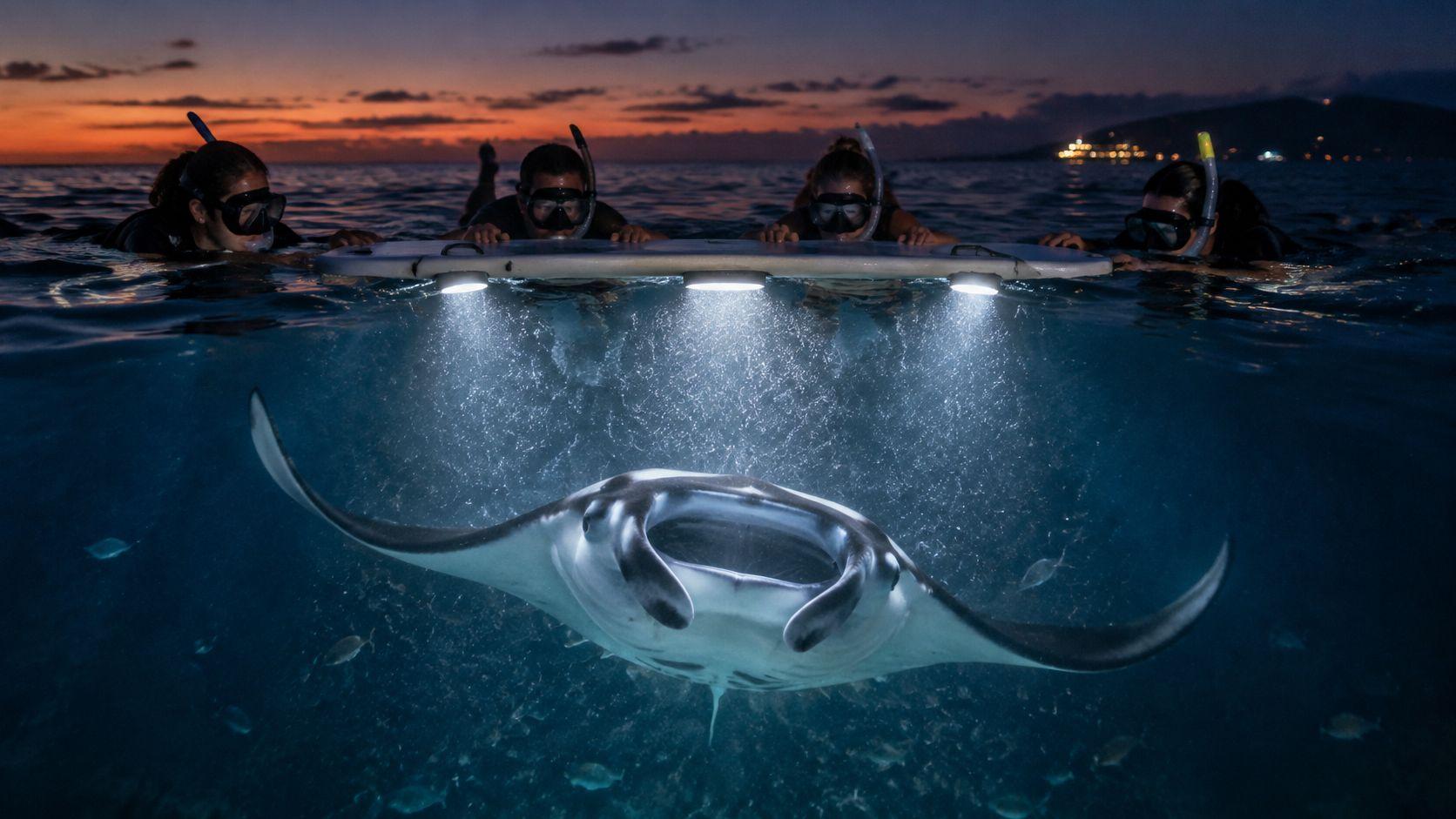
- Hold the light board while high-powered lights shine down and plankton gathers beneath you.
- Float for 30 to 40 minutes, face down, holding the rail with elbows lifted clear of the water so no one gets kicked in the face.
- Climb out with your own version of the story and ride back in the dark.
The first sight of the night is rarely a whole animal. It's a dark diamond resolving below the light, then a pale mouth opening as a ray rolls toward the glow, then a spotted belly sliding past your mask like a ceiling. Seven people on one board, all face down, all silent, is the normal scene. The silence is part of the etiquette.
Some nights bring a couple of rays that cruise past once and leave. Some bring a crowd that stays for the whole session, looping through the beam while a dozen snorkelers forget to breathe properly. You can't order the second version. What you can control is how you show up for either one, and the crew reads that fast. Guests who thrash, chase, or dive down change the water for everyone.
What done looks like: a calm float, no chasing, no touching, and a boat ride home that ends the same way whether the count was two or eight.
The format described here is the one our Kona manta ray night snorkel runs, from the light board down to the 30 to 40 minutes in the water. Night water feels warmer than you expect at first and colder after half an hour. That's why the wetsuit exists.
Why Manta Counts Change From Night to Night
A six-year dataset from Kona's viewing sites makes the point better than any brochure could. One NOAA-linked study logged 25,444 observations of 118 individual reef manta rays, split between 19,841 at Manta Heaven and 5,603 at Manta Village, and found that 39 rays appeared on more than 10 percent of study nights (the six-year Kona manta record).
Those 39 aren't performers on a schedule. They're regulars using a habitat. On any given night you're meeting animals that chose to be there, which is exactly why the number on the surface changes.
| Factor | What the record shows | Guest takeaway |
|---|---|---|
| Zooplankton | Aggregation size rose with prey density across 2010-2022 observations | Lights gather food; they do not set the headcount |
| Known individuals | 118 rays and 25,444 observations in six years, with 39 rays on more than 10 percent of nights | Expect regulars, not a new cast every night |
| Site split | 19,841 observations at Manta Heaven and 5,603 at Manta Village | Both sites can be excellent or quiet |
| Season and swell | Winter swells arrive and departures get canceled | A cancel is a safety call |
| Conditions still being studied | Temperature, upwelling, tides, currents, and offshore feeding may shift nearshore abundance | Do not trust a moon-phase guarantee |
Weather is the least romantic factor and the most decisive. Winter in Hawaii often brings bigger ocean swells and rougher conditions, and we cancel tours in winter when safety concerns about ocean conditions make a departure unwise. A canceled trip on a rough night is the system working.
What science hasn't settled
Recent environmental-DNA research from Oahu shows manta distribution shifting across both place and time, and identifies temperature, upwelling, tides, currents, offshore feeding, and vertical movement as factors that may influence nearshore abundance. The researchers say those relationships still need further study (the eDNA work on manta distribution). Translation for a guest: nobody can promise you a count on a calendar date.
Three ideas that don't hold up
A full moon does not book the rays. A beautiful sunset does not refill an empty plankton patch. Moving the boat between the two sites is a condition judgment, not a magic switch, and a captain who offers one without the other is usually reading the water, not the clock.
A reliable tradition is not a guaranteed sighting, and treating it as one is how people end up disappointed on a night the ocean actually performed.
How Guests Protect a Small Home Population
Start with the arithmetic of a small population. A NOAA-supported genetic study estimated a contemporary effective population size of 104 individuals around Hawaii Island, with a 95 percent confidence interval of 99 to 110, and 129 in Maui Nui, interval 122 to 136. Drawing on photo-identification catalogs, the same work documented approximately 600 unique rays in Maui Nui since 2005 (NOAA Fisheries summary of the genetic study).
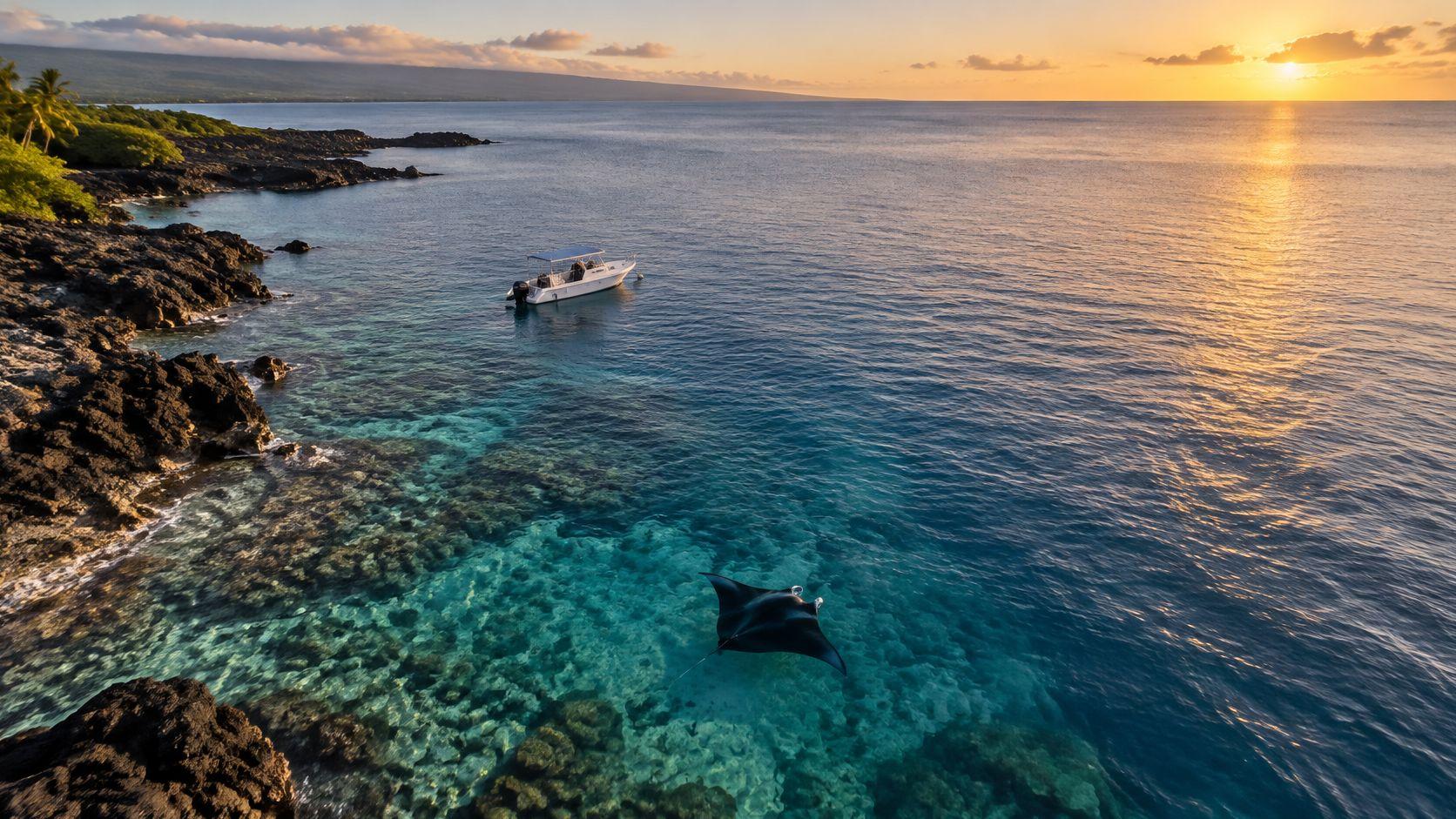
Those figures aren't a nightly census. Effective population size is a genetic measure of breeding contribution, so it says nothing about how many rays you'll see in an hour. What it does say is that Hawaii Island and Maui Nui are separate management units, not one pool that can absorb local losses.
Why a Maui ray can't cover a Kona loss
Movement between the island groups is close to nonexistent. Females generally reproduce on the island where they were born, and male-mediated exchange runs at roughly one effective male migrant between island groups every 2.2 generations, about 64 years (NOAA's account of Hawaii manta population structure). A boat strike or an entanglement isn't refilled from another island on any timeline a guest or a captain will live to see.
Four habits that matter more than distance
- Keep 3 meters of water, about 10 feet, between you and the ray, approach from the side, and stay calm and still so the animal controls the pass (marine wildlife viewing guidance).
- Leave the lane open. The corridor between the light and open water is a feeding route. Float beside it, never across it.
- Keep fins down and behind you. A kick that meets a wing is the most common avoidable contact on a crowded night.
- Don't touch, and don't chase. A manta's skin carries a protective mucus layer, and your hand removes it.
Hawaii backs the briefing with law. Rays in Hawaiian waters have no open season, and fishers are told to move or bring in lines when rays are present, cutting the line close to the hook if one gets hooked (Hawaii fishing regulations around protected species). Fishing line, moorings, and hulls are the serious threats to a resident population, and crowding is the everyday one. In a survey of 444 manta-viewing participants, 82 percent felt crowded by snorkelers, 78 percent by boats, and 69 percent by scuba divers, and reporting has counted more than 290 people in the water on the busiest nights (Kona manta viewing survey findings).
The best encounter is the one the ray finishes calmly, not the one that gets closest.
Group size, light placement, and a crew's willingness to call off a rough night tell you more about an operator than any brochure photo. The conduct rules we brief guests on are collected in our manta ray snorkeling rules that protect wildlife and guests.
Choose a Manta Night Snorkel and Book It
At the booking stage, keep the decision practical. You are choosing a safe setup, a time that fits your evening, and enough flexibility to return if the rays do not appear. That matters because this is a wild feeding event at a small, island-faithful population, not a show with a guaranteed cast.
Start with the trip itself. The Big Island Manta Ray Night Snookel lasts 2 hours and takes place in Kona. Kona Snorkel Trips also runs two tour times because the manta trip is the most popular tour on the island. The early manta trip checks in during daylight, watches the sunset from the boat, and enters the water after dark. The late manta trip checks in at night.
The manta snorkel is a nighttime open ocean activity, so the details aboard matter. All guests wear flotation belts on the manta tour to keep their hips and feet up from kicking the mantas. Wetsuits are provided for the manta tour only, in sizes from kids 6-8 to adult 3X. The Night Manta Ray Snorkel uses a custom-built snorkel board with high-powered lights, and the boat explores Garden Eel Cove or the area in front of the Keauhou hotel.
Book the conditions, then let the mantas decide the encounter.
For the water portion, guests have 30-40 minutes in the water on Manta Ray Snorkel trips. That is shorter than many daytime outings, so treat it as a focused watch rather than a long swim. For the manta snorkel, guests should be able to swim 50 yards without additional flotation and should have prior snorkeling experience as an intermediate snorkeler.
Bring a towel, a zip-up jacket, and a GoPro. The jacket matters after dark, when the boat ride back feels cooler than the day did. The towel matters because you will be wet, and the GoPro lets you record the visit without reaching toward a ray.
If no mantas are seen, the manta guarantee does not expire. It is honored if space is available 2 hours before the start of the tour. That only helps if you leave room in your itinerary for another night.
The tour page with departure times, meeting details, and what's provided is the Kona manta ray night snorkel. You can also check the Hawaii Manta Ray Guide: Kona Night Snorkels and Ethics for the broader ethics picture before you choose.
Pair the night with a separate morning on the water. Kona Snorkel Trips runs its own Captain Cook & Kealakekua Bay Snorkel, and a daytime bay trip balances a late night beautifully. Guests have an hour or more in the water on Kealakekua Bay Morning Snorkel trips, giving the next day a slower rhythm than the manta outing.
If you want two Kona classics in one plan, the Bay & Ray Package combines the Night Manta Ray and Captain Cook Monument Kealakekua Bay Snorkeling Tours and gives 10% off. The Kona Reef & Ray Package saves 10% on the Night Manta Ray and Kona Snorkeling in Pawai Bay tours. The Whale Watch & Manta Magic package saves 10% on the Night Manta Ray Snorkel and Whale Watching tours.
Check the early or late seat, pack the towel and the zip-up jacket, and climb aboard ready to watch a wild feed rather than collect a promised number of rays. Kona Snorkel Trips runs the Manta Ray Night Snorkel out of Kona with small groups and a custom-built light board designed for this kind of viewing. If you want to see manta rays in Hawaii the way they behave, at night, on their own terms, that's the trip to book. Visit Kona Snorkel Trips to choose your departure and check availability.
Keep reading
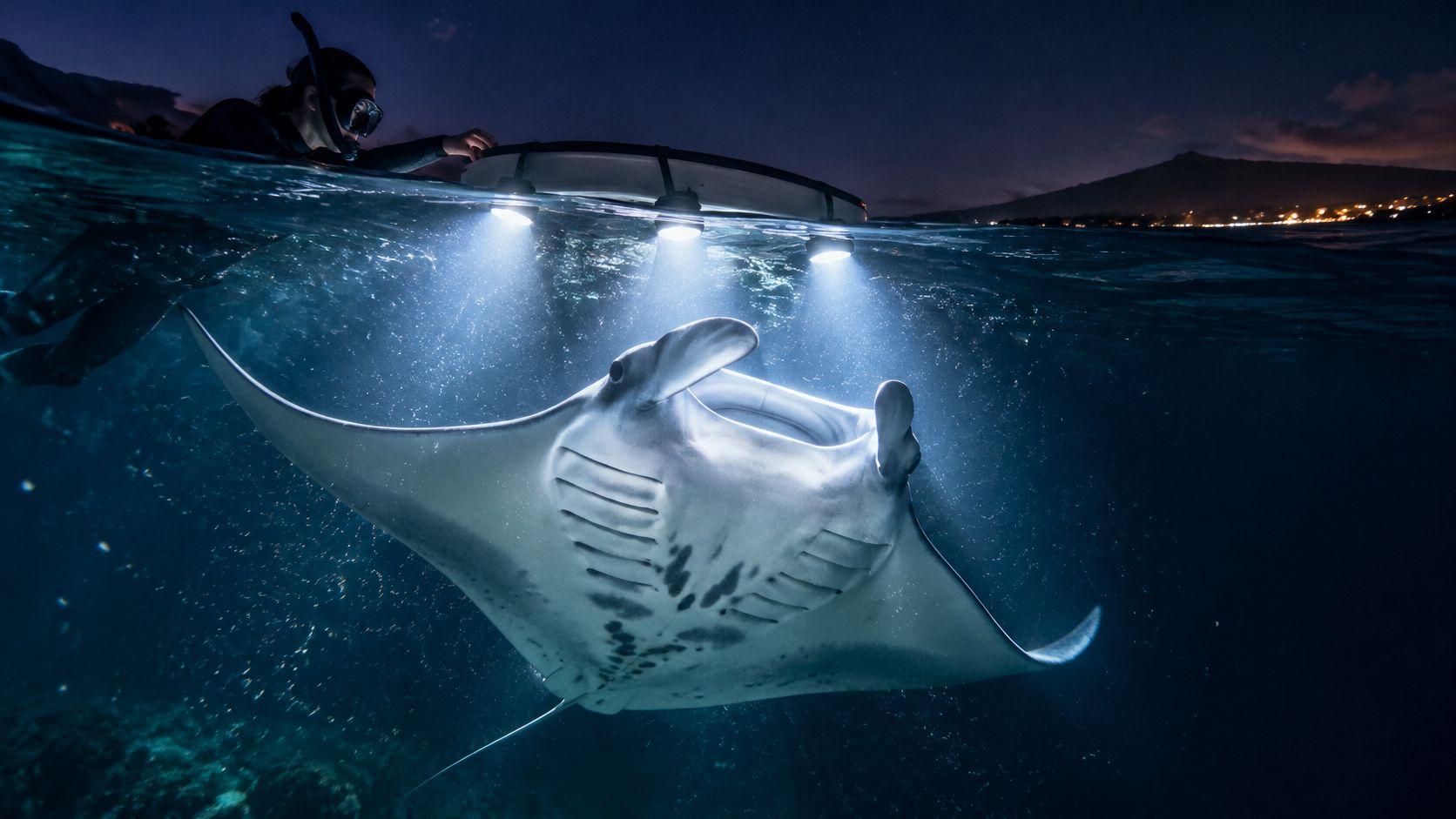
Manta Ray Swimming Hawaii Night Snorkel Guide
Plan manta ray swimming Hawaii with night timing, safety rules, gear, and a responsible Kona snorkel booking.
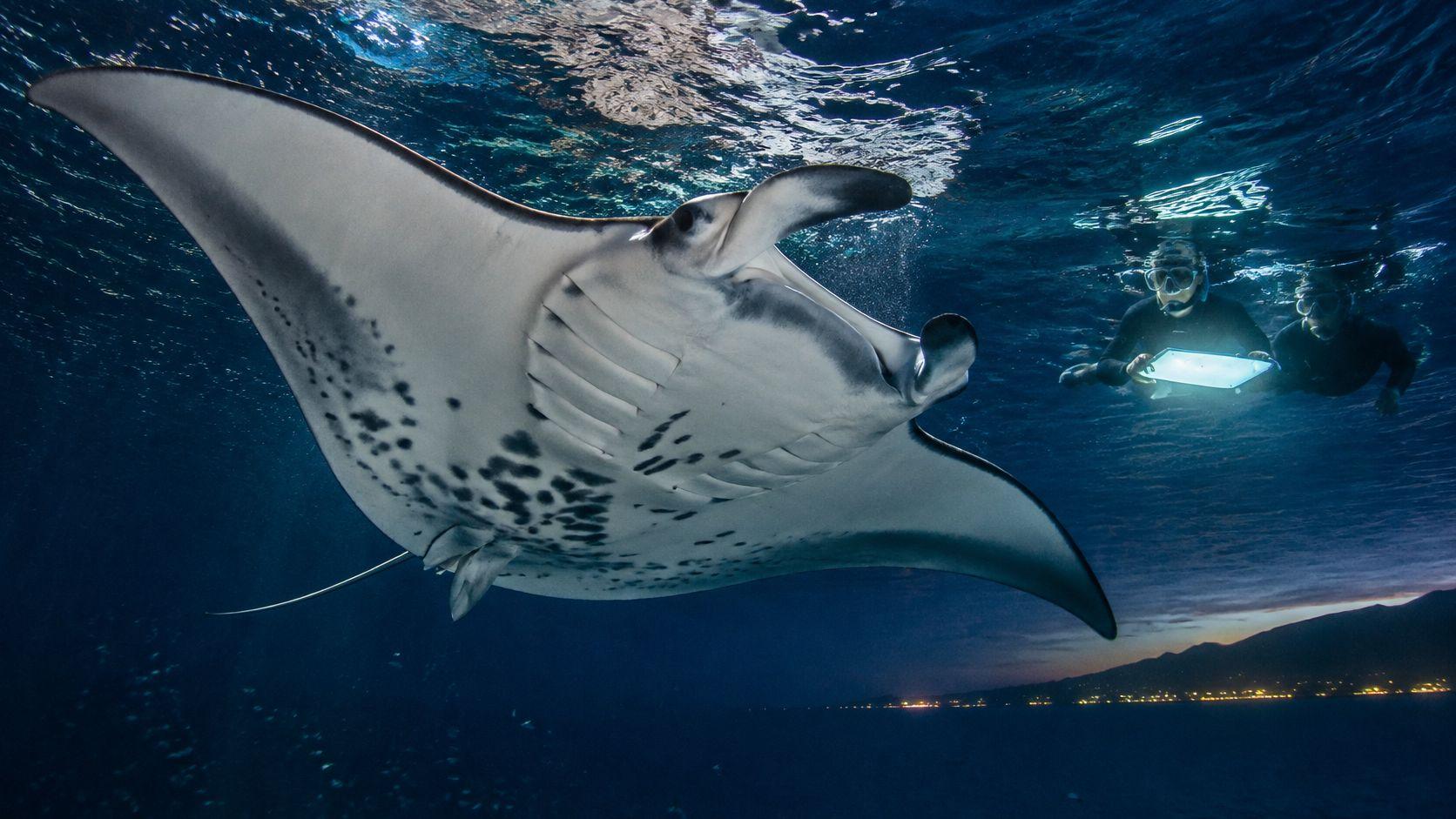
Mantarays Hawaii: Kona Night Snorkel Guide
See mantarays hawaii in Kona: reef vs oceanic rays, night-snorkel sites, safety rules, and how to choose an ethical 2026 tour.
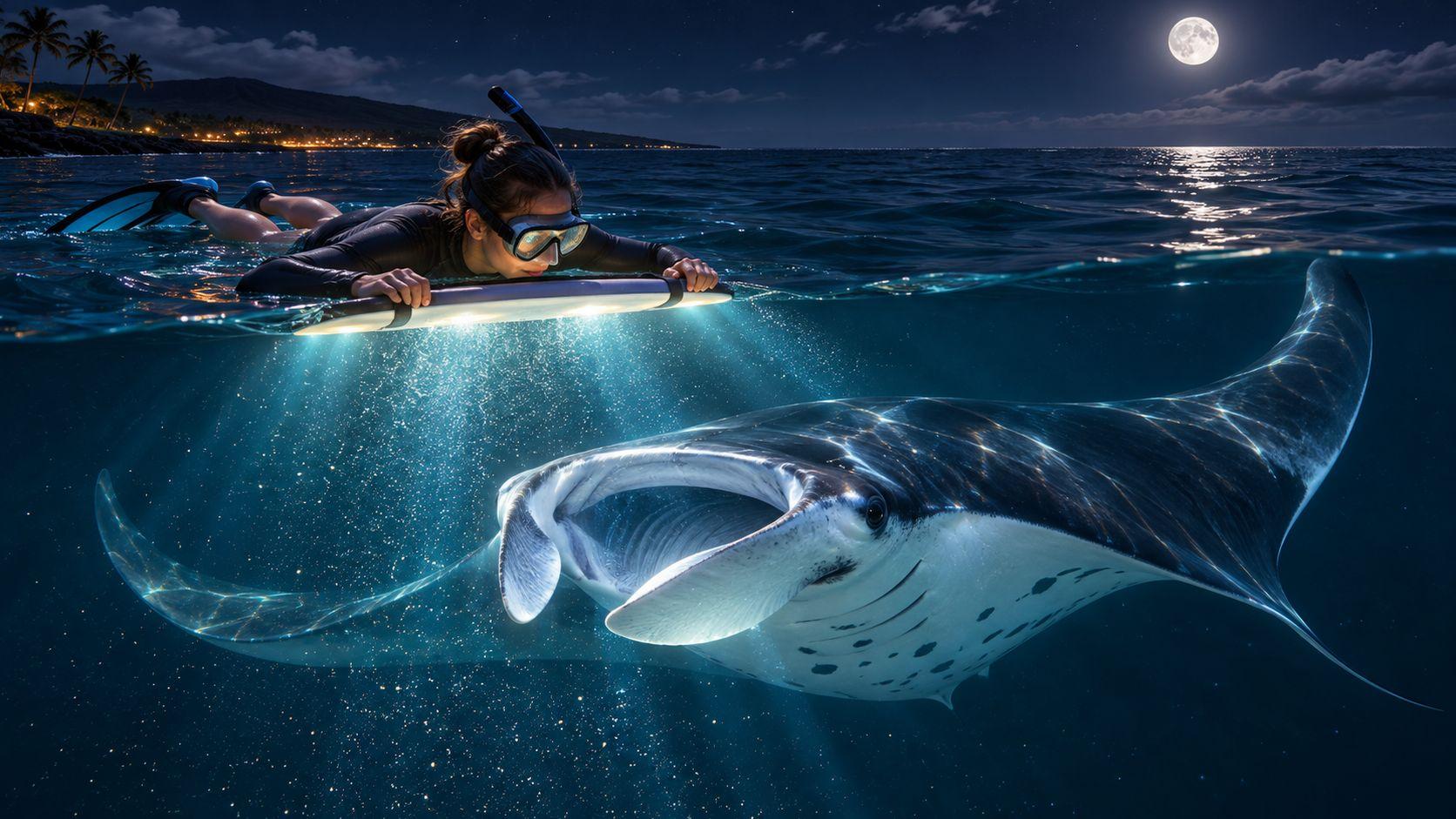
Snorkeling with Manta Rays in Kona at Night
Plan snorkeling with manta rays in Kona: night sites, safety, gear, etiquette, and how to book a guided float.