
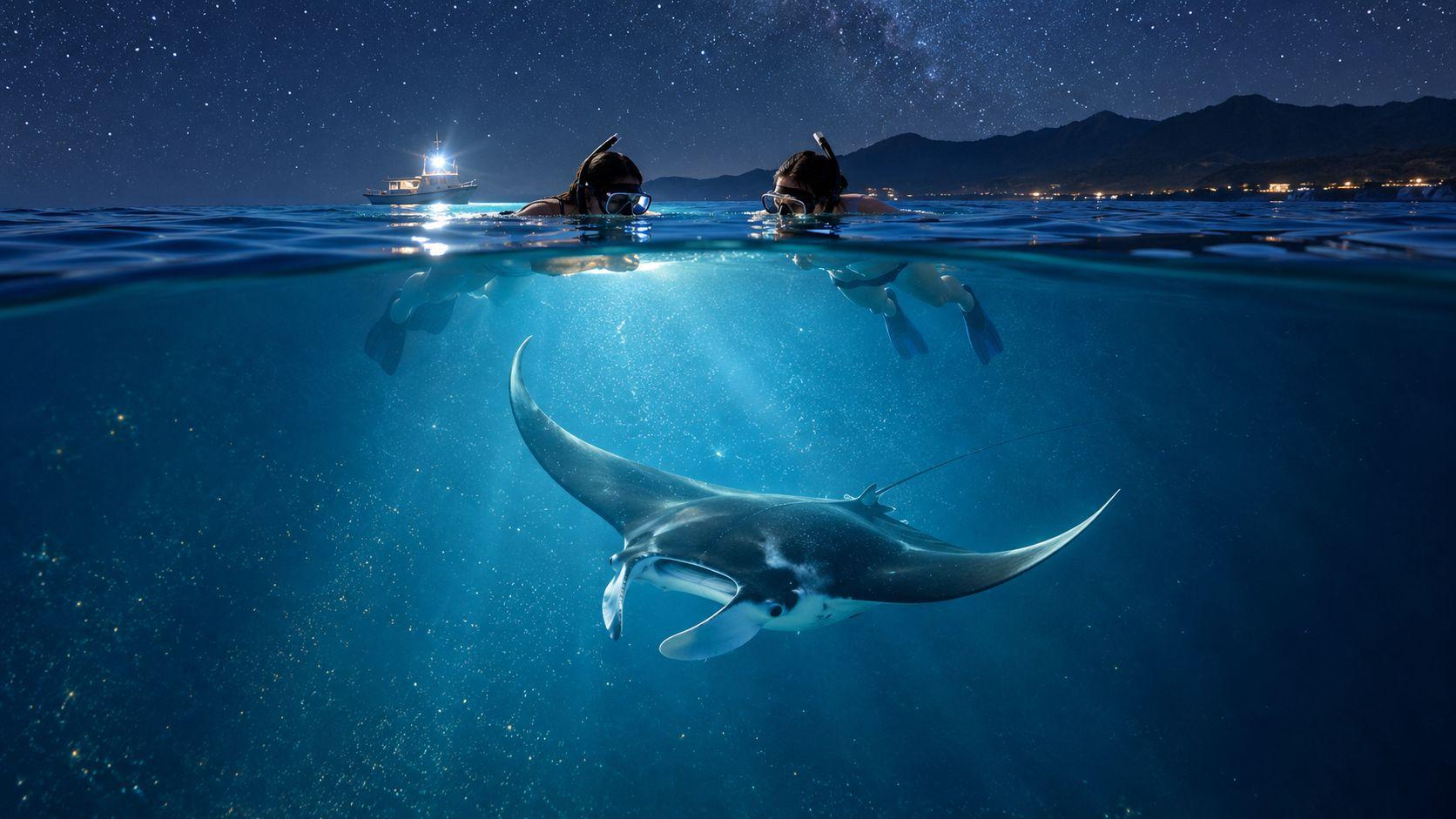
You book a Kona night because someone told you the mantas “always show,” or because you've seen the photos and want that same weightless moment in the dark. Then you get offshore, clip on a mask, and realize the actual experience isn't a performance at all. It's a quiet, moving thing, with cold water on your face, light bouncing off plankton, and a wild animal deciding whether to pass beneath you.
That's what makes manta rays Hawaii different from a generic wildlife outing. Kona works because the coastline, the resident animals, and the tour setup all line up in a way you can read once you know what you're looking at. The payoff is better when you stop expecting a guarantee and start understanding the conditions.
Why Kona Is the Place to See Mantarays Hawaii
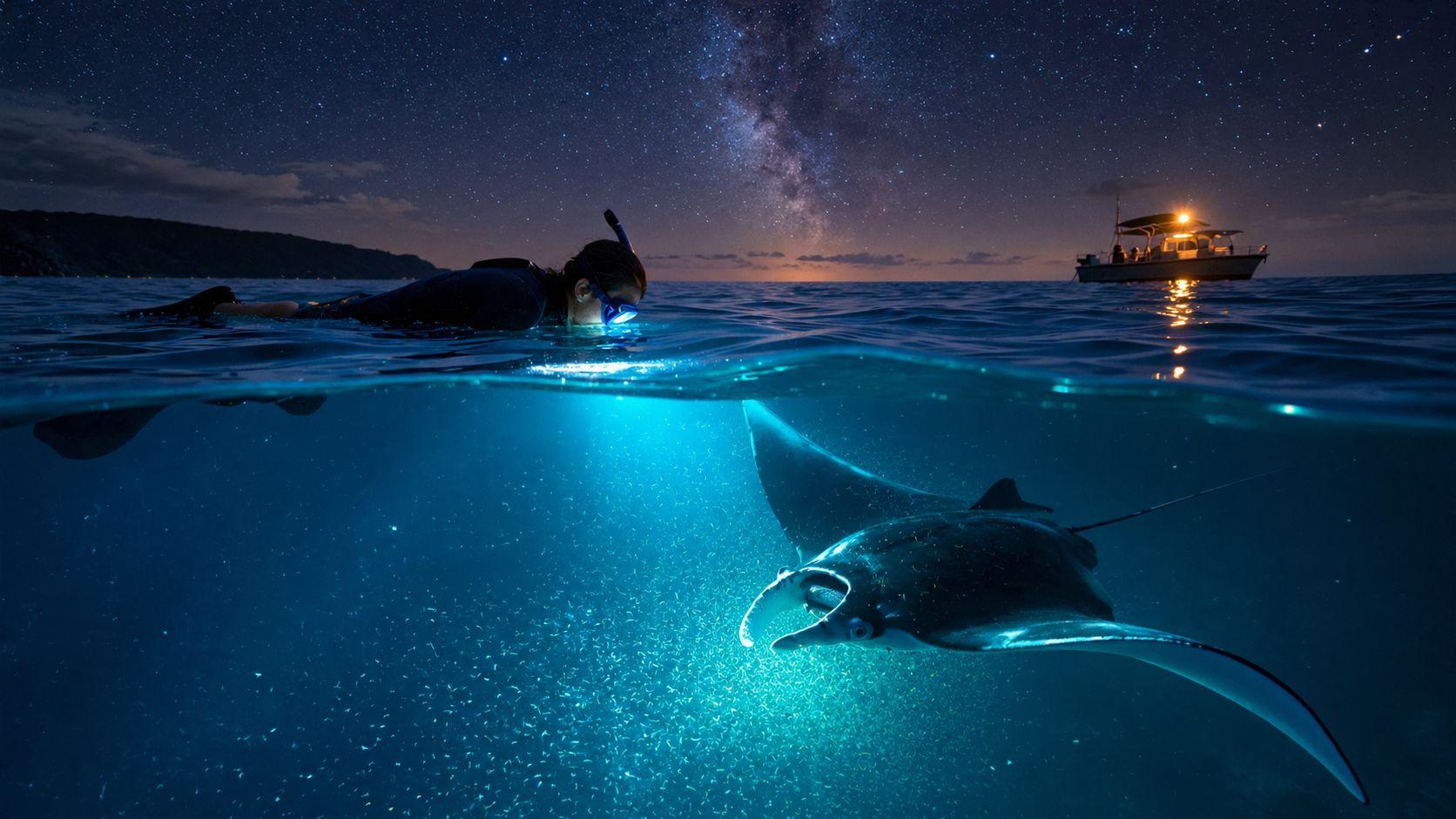
The first time a guest drops into the water at night, the ocean feels bigger than it did on the boat. The board lights burn a bright rectangle below the surface, the dark around it seems absolute, and then a broad white shape slides through the glow like it already knew you were there. That moment is what people come for, but it's also why Kona earned its reputation in the first place.
The shoreline does the heavy lifting
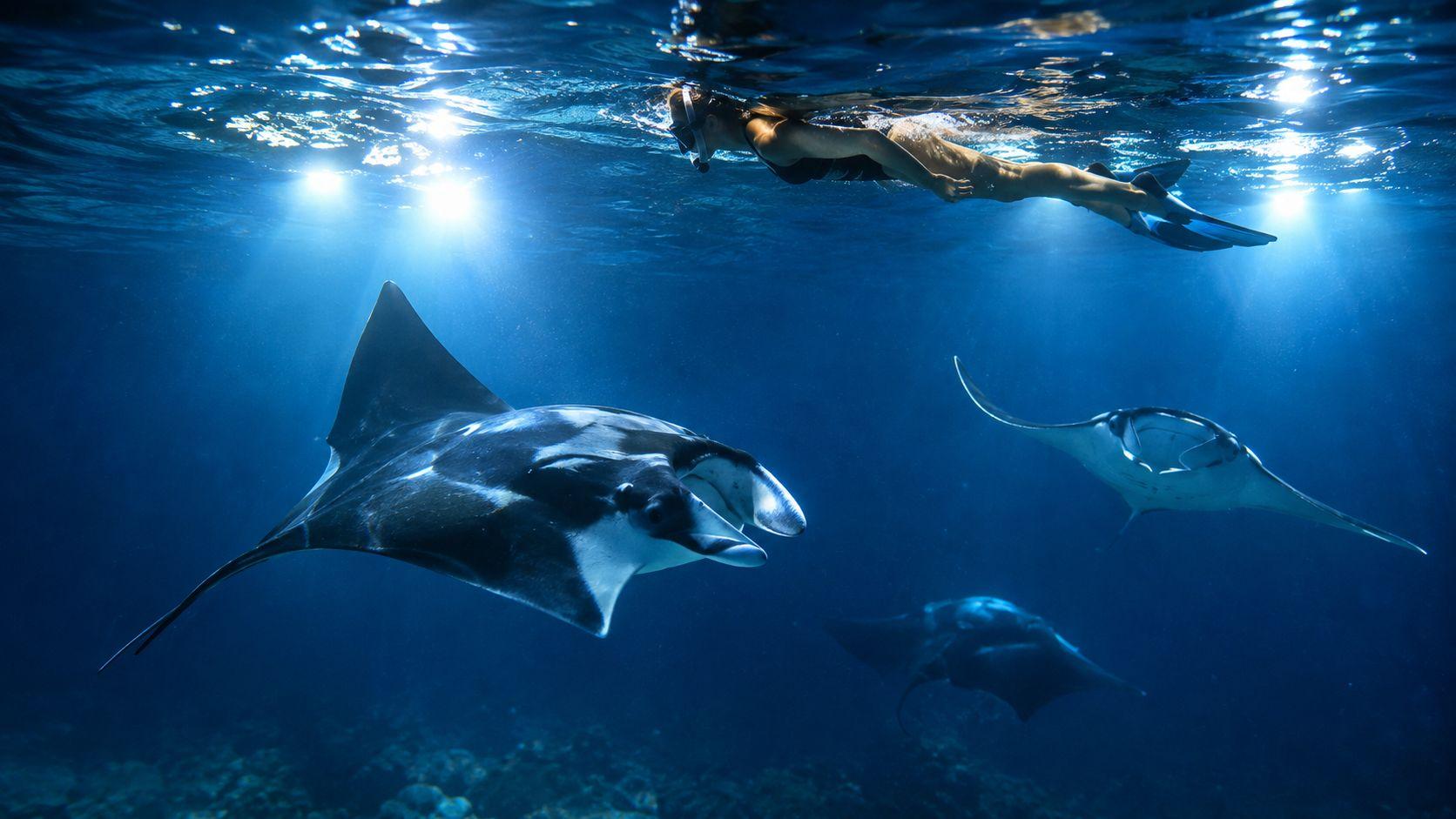
Kona's leeward coast tends to give operators a sheltered stage compared with rougher stretches of island shoreline, and that matters once you're floating in the dark. Researchers have shown that Hawaiʻi's manta rays are not one freely mixing population, but island-specific groups with limited movement between them, so the animals you see around Kona are part of a locally resident community rather than a roaming afterthought. On Hawaiʻi Island, the catalog covered 318 unique individuals from 1979–2023, with an estimated 104 adult breeders and a 95% confidence interval of 99–110; Maui Nui had about 600 identified individuals and an estimated 129 adult breeders (genetic study).
That local structure changes how I talk to first-timers. A Kona manta night isn't just a scenic boat ride, it's an encounter with a small, place-based population that depends on careful behavior from every boat and snorkeler. The same study found no photo-identification matches between the Hawaiʻi Island and Maui Nui catalogs, which reinforces why Kona has to be managed on its own terms (genetic study).
Practical rule: if a tour sells the night as “just another big animal encounter,” it misses the point. The best nights happen when the crew treats the shoreline, the lights, and the mantas as a single system.
A useful background read on why this coastline stands out is why Kona tops Hawaiʻi for manta ray night snorkel. That is the core reason Kona leads the conversation. The geography supports the encounter, but the resident animals and the way tours are run keep it repeatable without making it fake.
What Manta Rays Are and How the Night Snorkel Works
Manta rays aren't stingrays, and they're not a weird ocean version of a bird either. They're cartilaginous fish related to sharks, built to glide instead of fight current, and the reef mantas people come to see in Kona are the ones that cruise the shallows with those long, slow wingbeats everyone remembers later.
What actually draws them in
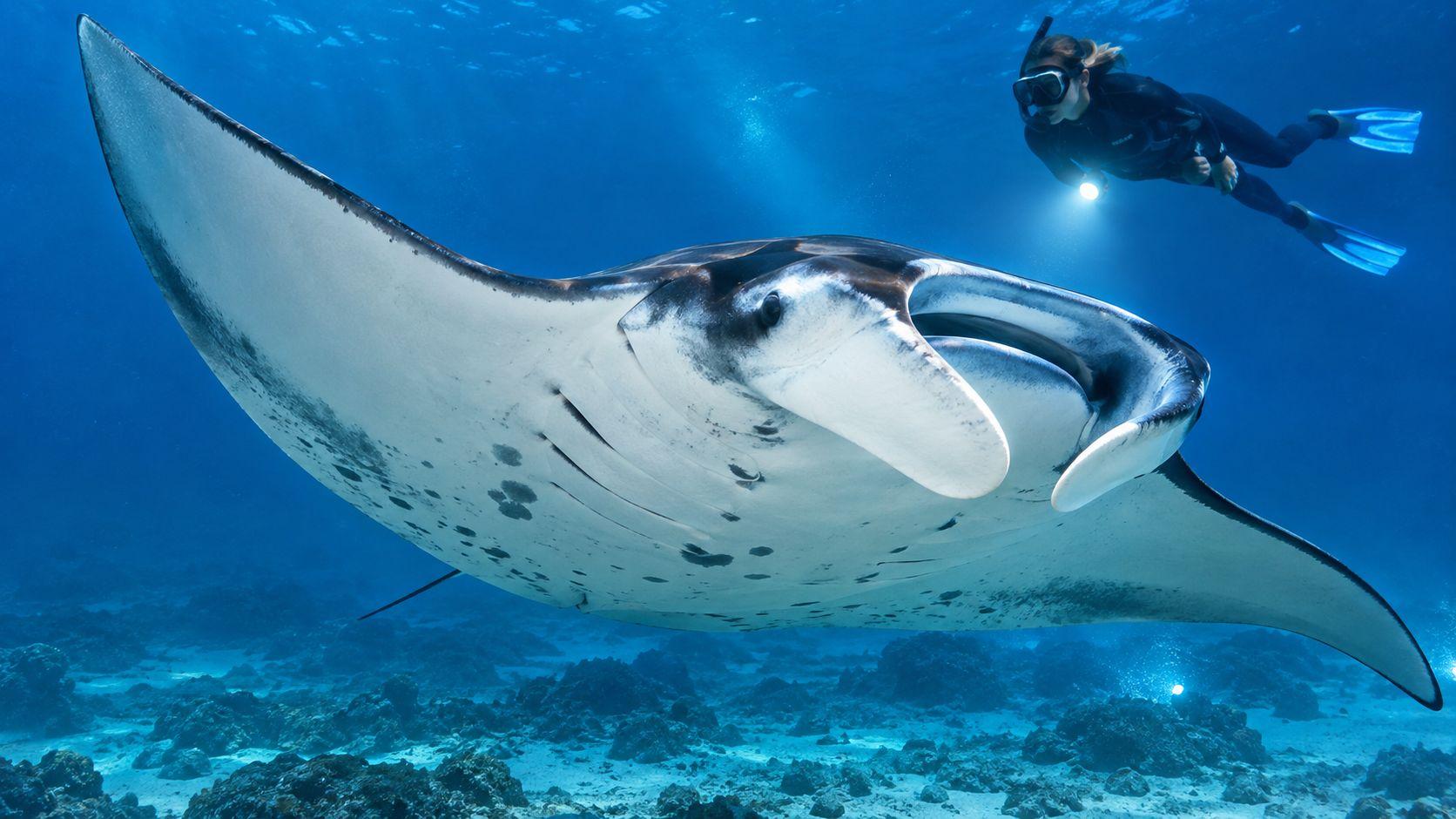
The night snorkel works because light concentrates food. Plankton rises off the reef after dark, and the underwater lights on the viewing board create a dinner table the mantas can track with remarkable consistency. When the setup is done right, you're not chasing animals through the ocean. You're floating above a feeding lane.
Think of the sequence like this.
- Lights turn on, and the water beneath them becomes the brightest patch on the reef.
- Plankton gathers in that lit water.
- Mantas circle and barrel-roll, passing through the plankton cloud to feed.
- Snorkelers stay flat at the surface and watch the passes unfold below.
That's the basic pattern, and it's why the experience feels controlled without being staged. A well-run tour lets the mantas decide the tempo. A bad one tries to rush the water, and that usually just makes everyone tense.
Reef mantas are not the same as oceanic mantas
The animals seen on Kona tours are reef mantas, not the larger oceanic mantas found elsewhere. In practical terms, that matters because reef mantas are the animals most likely to show the site fidelity and repeated local use that make Kona so reliable. The lights don't magically summon them from nowhere. They take advantage of a behavior that already belongs to the reef.
If you want a clean explanation of the light-and-plankton mechanism, the most useful companion piece is why lights attract manta rays during night snorkeling. Once that clicks, the whole tour makes more sense. You're not buying a show, you're stepping into an ecological pattern that the mantas already know how to use.
The Two Main Manta Ray Sites Near Kona
Two sites matter most for night snorkeling near Kona, and the difference between them shows up in how the water feels as much as in the encounter itself. I tell nervous visitors to think of the choice as calm and classic rather than right and wrong. Both can work, but they don't feel identical.
How Manta Heaven and Manta Village differ
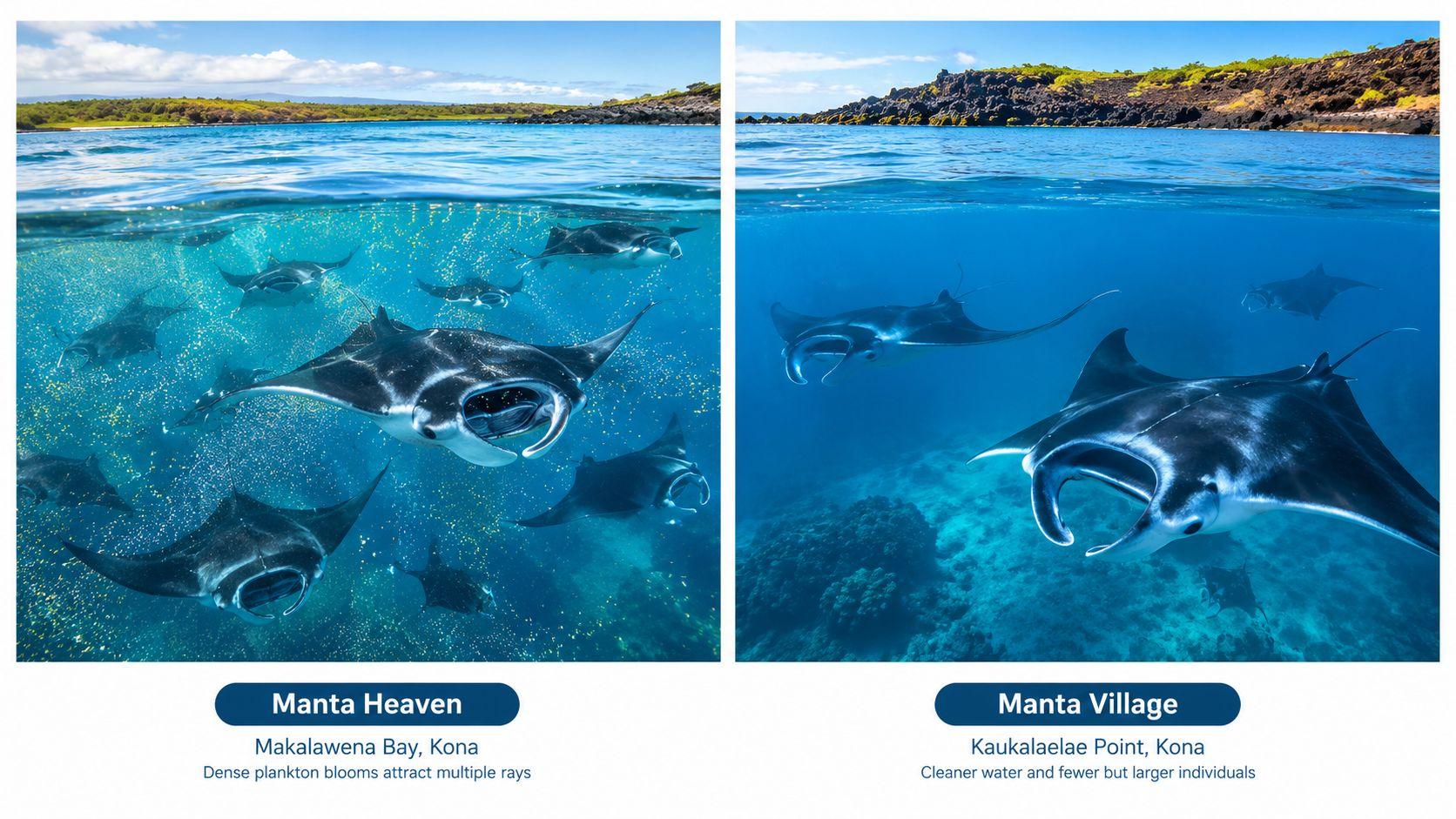
Long-term photo-ID data focused on Manta Heaven in Makako Bay and Manta Village at Kaukalaelae Point recorded 25,444 observations of 118 individually identified reef mantas over six years, with 19,841 observations at Manta Heaven and 5,603 at Manta Village (NOAA report). That doesn't mean every night is bigger there, but it does tell you where the animals were recorded more often in that window.
| Site | Location | Typical Aggregation | Best For |
|---|---|---|---|
| Manta Heaven | Makako Bay | Often larger, more frequently used | Visitors who want the classic, busier Kona manta scene |
| Manta Village | Kaukalaelae Point | Smaller on average, still highly reliable | First-timers who like a calmer-feeling setup |
What those numbers mean on the water
Manta Heaven tends to feel like the site with more momentum. It's the place many operators associate with larger groupings, and the broader use pattern helps explain why. Manta Village still produces strong nights, but it often appeals to guests who want a shorter, simpler feel around the harbor side of the experience.
The part most travelers miss is that the site choice changes how they interpret the night. At Manta Heaven, a busy-looking water column can feel electric. At Manta Village, a smaller number of animals can still feel close and memorable because the whole setup is more compact. Both sites work because the mantas return to them repeatedly, not because the ocean is random.
Useful way to think about it: pick the site for the feel you want, not for a fantasy count. A “smaller” night can still be the better night if the water is calm and the mantas move well.
Operators rotate between these areas based on conditions, access, and what they expect the evening to deliver. That's normal. The best crews don't force the ocean into a script.
What to Expect on a Manta Ray Night Snorkel Tour
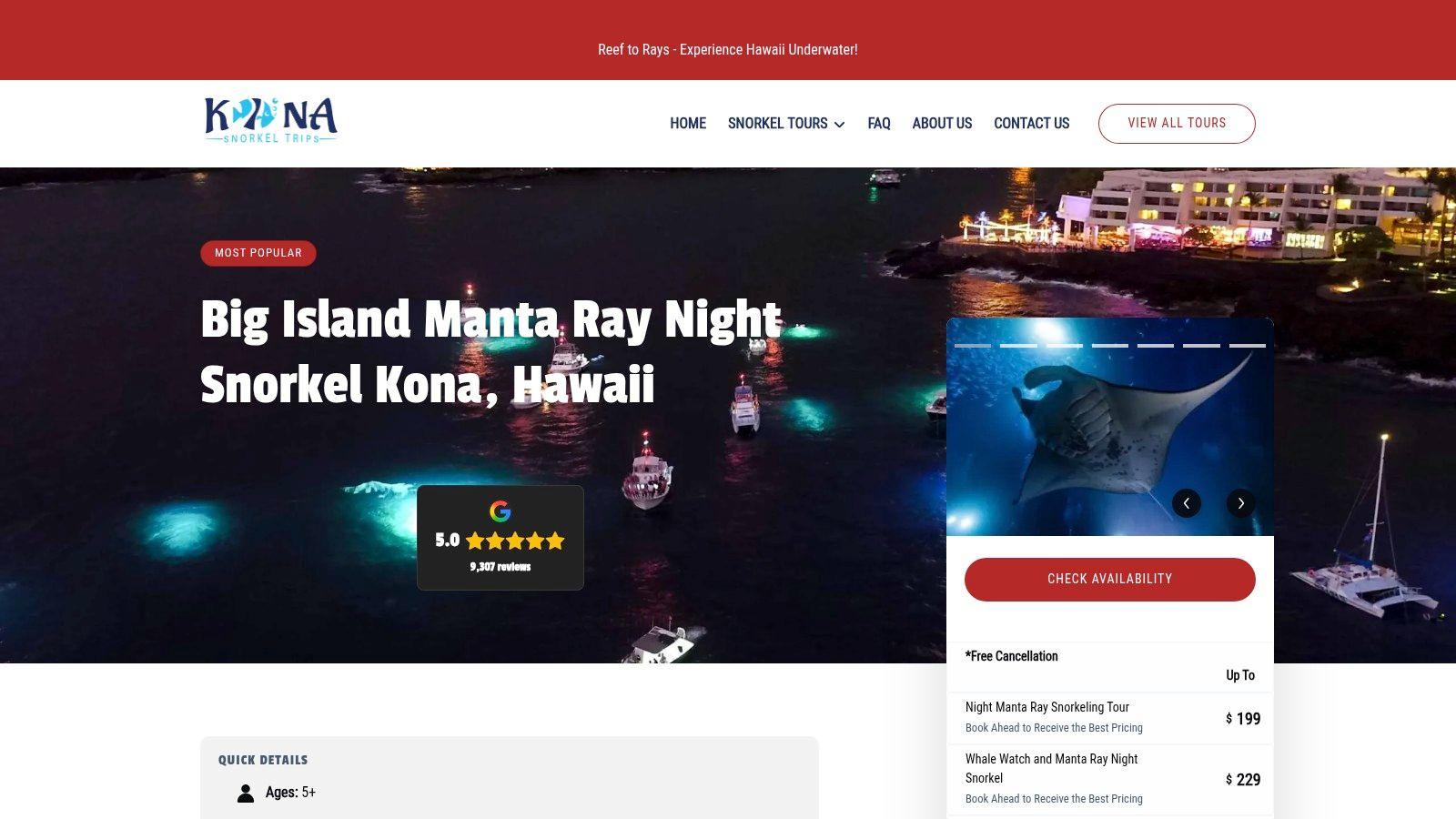
A solid Kona manta night usually starts at the harbor with paperwork, gear fitting, and a crew that knows how to keep first-timers from spiraling into overthinking. You get your mask, snorkel, wetsuit, and flotation support, then someone walks you through the rules before the boat leaves the dock. The most important part of that briefing is simple, stay on the surface, keep your body flat, and never touch or chase the rays.
The night from dock to water
The boat ride out is often calmer than people expect, but the dark changes everything. Faces go quiet. Everyone checks their straps twice. When the crew lights the board and gets the flotation set, the whole group starts watching the same patch of water.
If you're looking for a tour option that keeps the setup straightforward, Kona Snorkel Trips runs a dedicated manta night snorkel with lifeguard-certified guides and a small-group approach. A practical alternative comparison point is Manta Ray Night Snorkel Hawaii for readers who want to compare operators before booking.
What the in-water part really feels like
Once you're in, the experience is mostly stillness. The board holds your place, the lights pull in the plankton, and the mantas sweep through just below you in slow, repeated passes. The first pass often gets a gasp out of people. The second one is usually when they settle in and start noticing how precise the movement is.
What to pack for a manta ray night snorkel is less glamorous than the encounter, but it matters. Bring a towel, dry clothes for the ride back, and motion-sickness help if boat movement usually gets you. The boat provides the core snorkel gear and flotation, so don't overpack the deck with extras you won't use.
Bring less than you think, but don't skip warmth. The return ride feels a lot longer when you're cold and wet.
If you get seasick easily, handle it before boarding rather than after the boat starts moving. The middle of the ocean is not the place to discover your limits. A good crew can help, but they can't fix a rough stomach once it turns.
Manta Ray Safety, Etiquette, and Conservation
Manta rays are wild, and the rules matter because visitors rarely see the injuries these animals carry. NOAA reporting says roughly one in ten Hawaiian manta rays shows signs of fishing-line entanglement, including lacerations, amputated fins or wings, and embedded hooks (NOAA feature). That is why good etiquette is practical, not performative.
The conservation side is local and personal. Hawaiʻi Island manta populations are resident enough that avoidable stress has a real cost, which is the same reason responsible operators treat every encounter as a low-contact event. A fuller look at those habits is in manta ray night snorkeling ethics.
What the rules are really protecting
Surface behavior keeps the encounter controlled. Freediving toward feeding animals, reaching down to touch them, or kicking hard over the board raises the chance of collision. A startled manta can injure a snorkeler just as easily as a careless snorkeler can stress a manta.
Good crews keep people flat, still, and spaced off the feeding line. That setup gives the animals room to rise and turn without forcing anyone into their path.
Do and don't table
| Do | Don't |
|---|---|
| Stay flat at the surface | Freedive toward feeding mantas |
| Keep your hands to yourself | Touch, chase, or harass the rays |
| Follow the crew's spacing instructions | Kick downward or crowd the board |
| Treat the animals as wild wildlife | Assume close contact is harmless |
The practical version is simple. Float, watch, and let the manta do the work.
Best Time of Year and Conditions for Mantarays
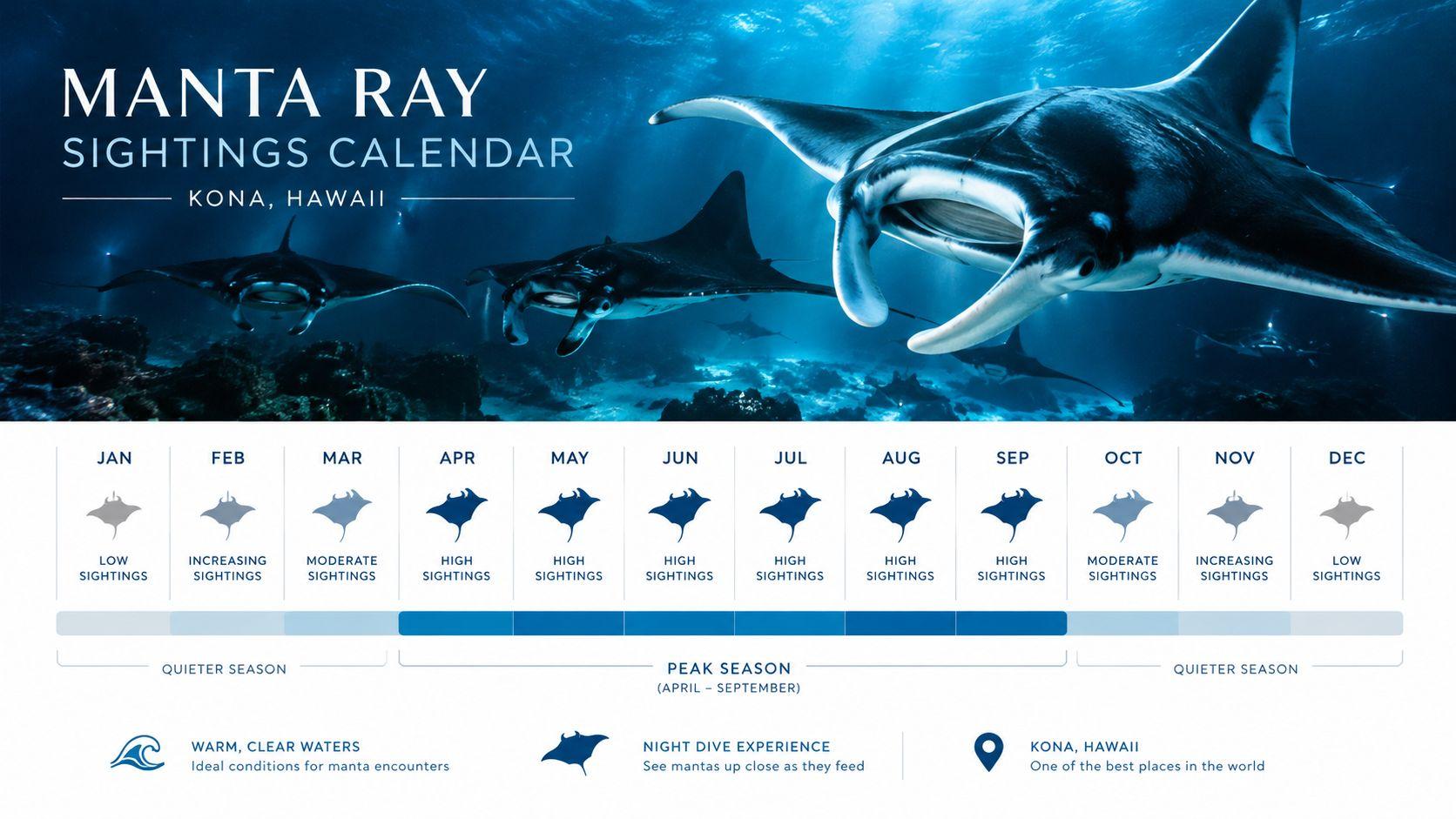
People ask for the best month because they want certainty. The better question is which nights give you the cleanest chance at a memorable encounter. A 2025 Kona study analyzed data from 2010–2022 at Garden Eel Cove and Keauhou and found that aggregation size shifted with zooplankton density, so food availability matters more than any tidy calendar rule (2025 Kona study).
How to read the night instead of the brochure
Research on Kona sightings points to stronger abundance from April through September and the fewest observations in January, but that does not make the trip a fixed seasonal product. Weather, current, moonlight, and plankton load still shape what happens after dark. Some nights are busy. Some are quieter. That variation is normal.
If you only have one Kona night, read the conditions in front of you. Calm water, a crew that explains what it is seeing, and visible plankton activity matter more than chasing a perfect date on a calendar.
Read the water, not the slogan. Honest talk about variability is usually a better sign than a promise of perfection.
Families and first-timers often do best when they plan for a good encounter rather than a huge one. A lower-count night can still feel like a win if the mantas move well and the water stays manageable. The ocean does not owe anybody a headline.
Choosing the Right Manta Ray Tour in Kona
The smart booking question isn't “who says yes,” it's “who runs a night I can actually enjoy.” Small-group boats usually work better for first-time snorkelers because the crew can keep an eye on pace, gear fit, and nervous swimmers without turning the deck into a crowd. That matters more than marketing language.
What to ask before you book
A practical checklist helps more than starry photos.
- Maximum group size: Ask how many guests the boat carries when it's full, not just on a quiet night.
- Swimming expectations: Confirm whether you need to be a strong swimmer or just comfortable in open water.
- Cancellation policy: Find out what happens if surf or wind makes the evening poor.
- Guide training: Look for crew who can manage nervous snorkelers and keep the briefing clear.
- Site flexibility: Good operators don't pretend the ocean won't change plans.
Kona Snorkel Trips is one option for a dedicated manta ray night snorkel in Kona, and the value is in how directly it matches this topic. If your travel plans overlap with other snorkeling goals, Captain Cook Snorkeling Tours is an exceptional alternative for a daytime Kealakekua Bay option, while Manta Ray Night Snorkel Hawaii gives you another comparison point for an evening manta trip.
The booking widget matters less than the fit between your comfort level and the boat's style. If you're a cautious swimmer, choose the operator that sounds calm and organized on the phone, not the one with the loudest highlight reel.
Beyond the Manta Ray Night Snorkel in Hawaii
A Kona trip usually works best when you build around more than one water day. The daytime answer is often a Kealakekua Bay snorkel, where the light is different, the reef feels alive in a new way, and your body gets a break from night-water nerves. Winter visitors can also fold in whale watching, which gives the trip a different kind of payoff.
Gift cards make sense here too, especially for travelers who want to lock in a manta night without picking the exact date right away. That's handy when the trip is part surprise, part planning, and part weather call. The point is to leave room for the ocean to be the ocean.
By the time you step to the edge of the board, the night won't feel like a mystery anymore. You'll know what the lights are doing, why the mantas come in, and how to read the night you've been given.
Kona Snorkel Trips runs small-group ocean trips in Kona, including a dedicated manta ray night snorkel for visitors who want a clear, well-run way to see the animals responsibly. If you're planning a Kona night on the water, visit Kona Snorkel Trips to compare dates, check availability, and choose the trip that fits your pace.
Keep reading
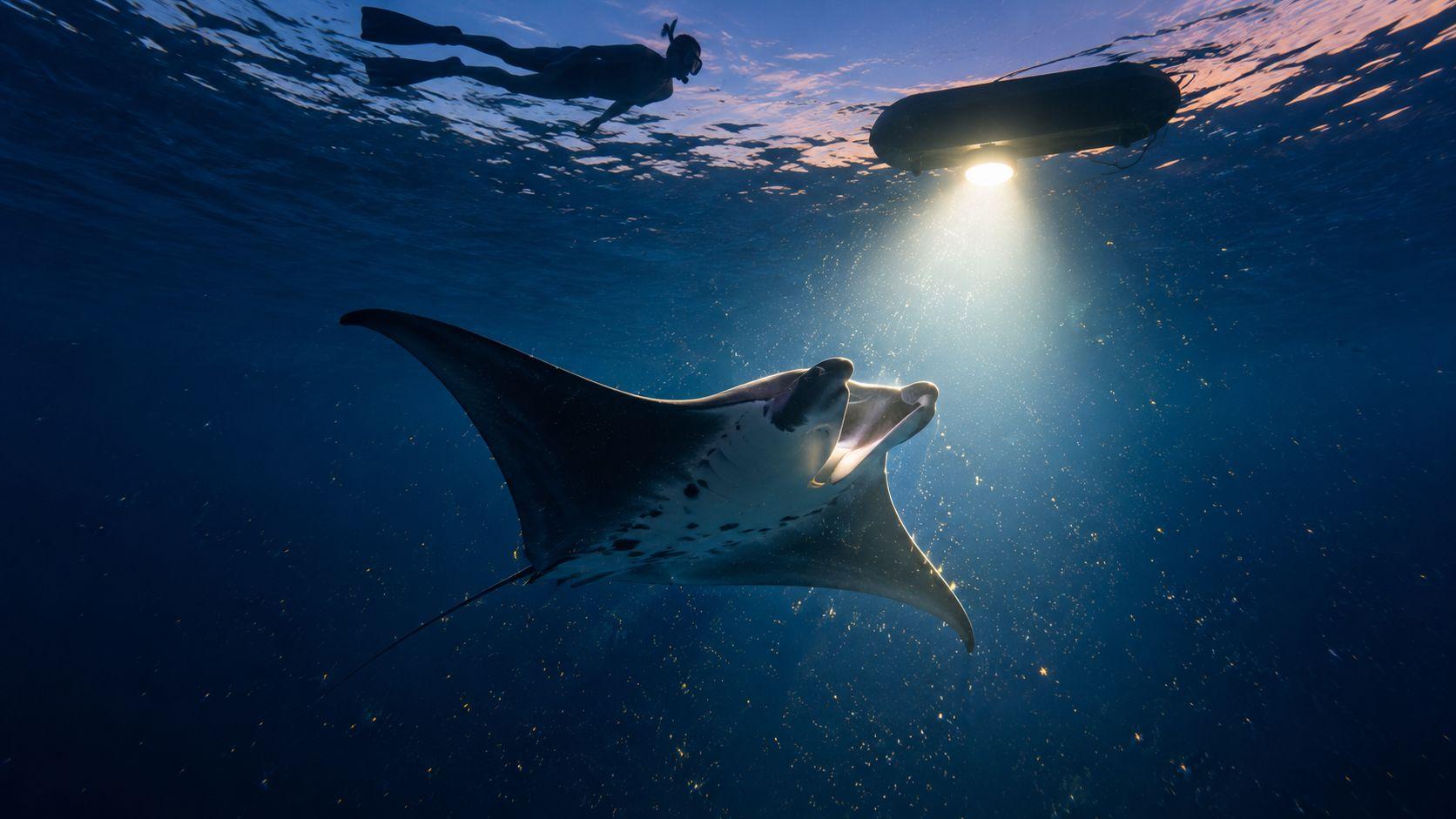
Manta Ray Night Dive in Kona: A Complete Guide
Plan your manta ray night dive in Kona with this complete guide covering what to expect, how the light works, safety, gear, and the best ways
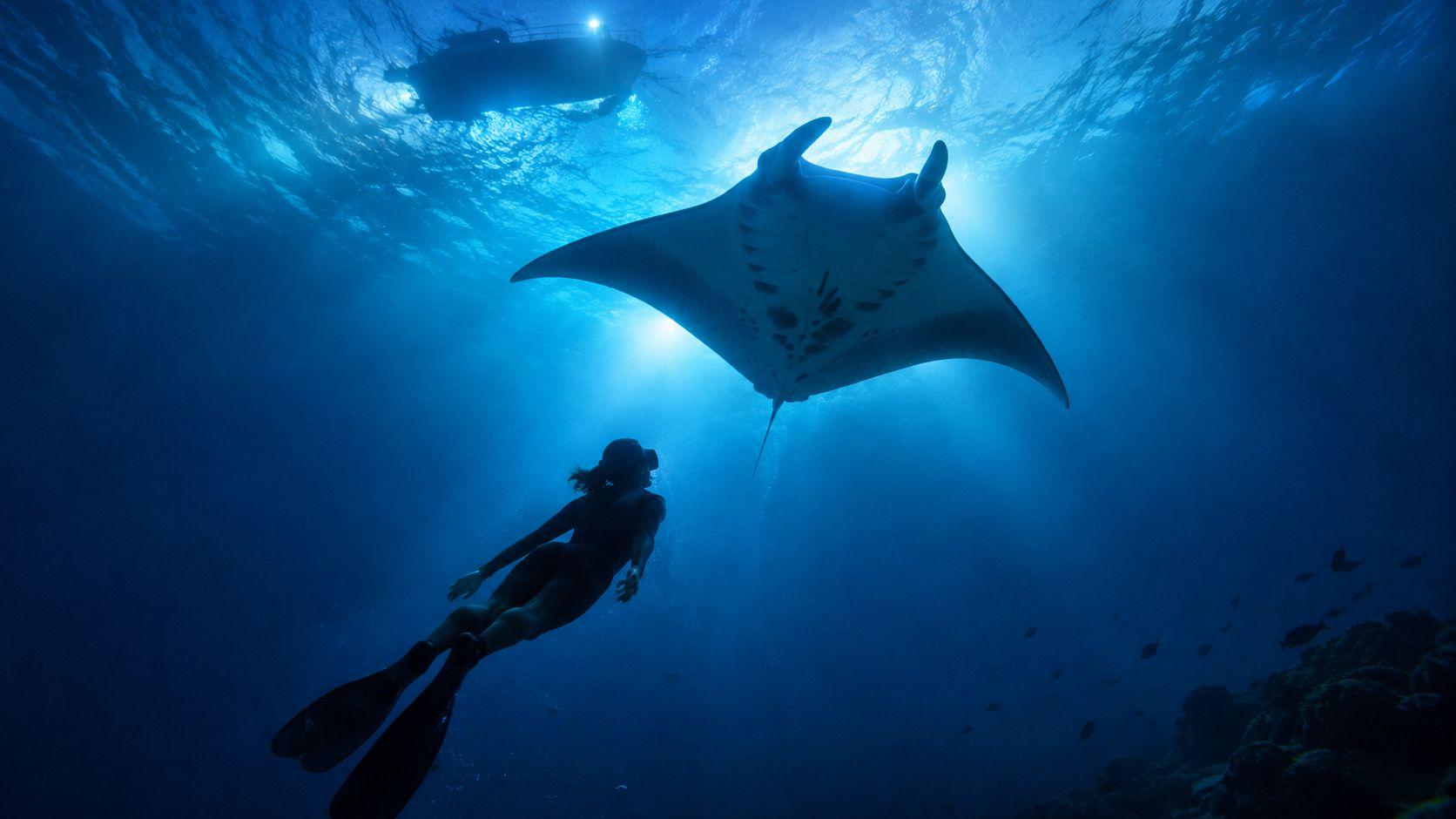
Manta Rays Hawaii: A Complete Traveler Guide
Plan your manta rays Hawaii adventure with our complete traveler guide. Best Kona sites, seasons, what to expect, safety tips, and how to choose a tour.
Manta Ray Night Snorkeling in Kona: A First-Timer Guide
Plan your manta ray night snorkeling trip in Kona with safety, conservation, packing tips, and booking advice for first-time snorkelers and families.