
Manta Ray Swimming Hawaii: A First-Timer’s Guide to Kona
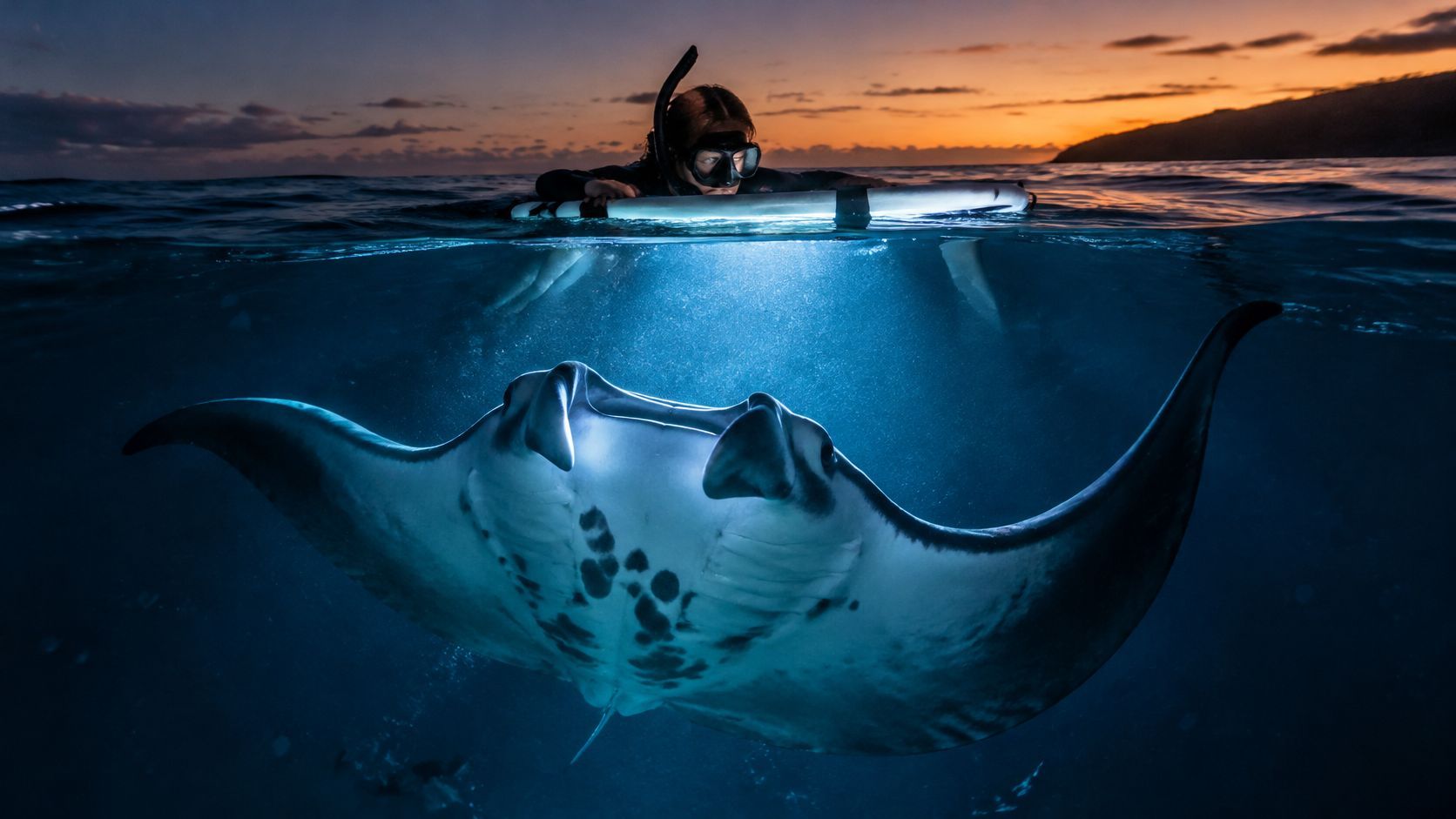
You're comparing evening tours, wondering how dark the water will feel, and trying to decide whether floating above a giant ray sounds exciting or intimidating. Say eight snorkelers are lying flat beside an illuminated board. A shadow rises through the light, turns, and becomes a manta wider than a person is tall.
Manta ray swimming in Hawaii is a nighttime, open-ocean snorkel off Kona. You float at the surface while high-powered lights beneath a board attract plankton, and wild mantas may swim through the illuminated water to feed. Kona Snorkel Trips is Hawaii's top-rated and most-reviewed snorkel company.
Manta Ray Swimming in Hawaii at a Glance
The basic position is simple: face down, hands on the board, hips and feet supported, breathing through a snorkel. The setting is more demanding than that description suggests. You're in the ocean after dark, not standing in a sheltered swimming area.
Manta night swim at a glance
| Feature | What to Expect | Why It Matters |
|---|---|---|
| Experience type | Nighttime open-ocean snorkel, floating while holding a board | Different from a daytime reef snorkel |
| Time in the water | About 30 to 40 minutes | A short, focused swim, so plan for the whole evening |
| Trip length | About 2 hours including check-in | Plan the evening around the tour |
| Swimming requirement | Swim 50 yards without extra flotation | Confirm your ability before booking |
| Lighting | High-powered lights on a custom snorkel board | The lights attract plankton, which attracts mantas |
| Season | Year round, with ecological seasonal patterns but no guaranteed month | Plankton and conditions on the night matter more than the date |
| Guaranteed count | No, wild animals decide | Sightings change from night to night, so set expectations early |
A University of Hawaiʻi study of Kona's nighttime aggregations found that aggregation size tracked zooplankton density, making food availability a more useful explanation for nightly attendance than a simple vacation calendar. A dependable opportunity to observe wildlife isn't the same thing as a guaranteed wildlife encounter.
Set the right expectation: Book for a guided night-ocean experience with the possibility of feeding mantas, not a promised number of animals.
A quiet outing doesn't automatically mean the crew chose badly. Equally, a crowded feeding session doesn't excuse poor supervision or swimmers blocking the animals.
Before committing, settle the practical questions: what mantas are doing beneath you, where and when to go, whether you're prepared for the water, and which booking terms fit your travel plans.
Why Manta Rays Swim Up to the Lights
The lights work a little like a restaurant sign at night. They concentrate attention around a feeding opportunity, but the mantas' dinner is zooplankton, not the people holding the board.
That distinction helps when a wide mouth approaches your mask. The animal is filtering small organisms from the water, not investigating you as prey. Its route follows the food concentrated in the illuminated area.
What You're Actually Watching
Mantas are relatives of sharks, with skeletons made of cartilage rather than bone. They don't have a stingray's stinger, and their broad bodies can look startlingly large from directly above. Size alone isn't the reason to be cautious, though. Darkness, waves, cold, and your own swimming ability deserve more attention than the animal's appearance.
The fins beside the mouth help direct food-laden water inward. When a manta banks beneath the board, you may see its pale underside and dark markings before it rolls away into the shadows.
Watch the whole movement rather than leaning toward the mouth. Keeping your position gives you a better view of how the animal feeds without putting your hands or camera into its route.
Why the Turns Look So Smooth
According to computational-fluid-dynamics research on manta propulsion, mantas generate thrust, steer, and tilt through traveling waves in their broad pectoral fins rather than relying primarily on tail beats. Changes in fin motion alter the pressure and vortices around the animal.
That explains the wing-like appearance, but it also has a practical consequence: a turning manta needs unobstructed water. A swimmer reaching down or kicking forward can occupy the space the animal is about to use.
- Keep your body predictable. Stay flat rather than repeatedly sitting upright and lowering your legs.
- Let the animal complete its turn. Don't move toward a gap you think it will pass through.
- Keep equipment close. A camera on an extended pole can block a route even when your body stays still.
Our explanation of why lights attract manta rays during night snorkeling gives more context for the feeding setup. The useful correction is simple: a close loop is feeding behavior, not an invitation to interact.
Where and When to Swim With Mantas in Kona
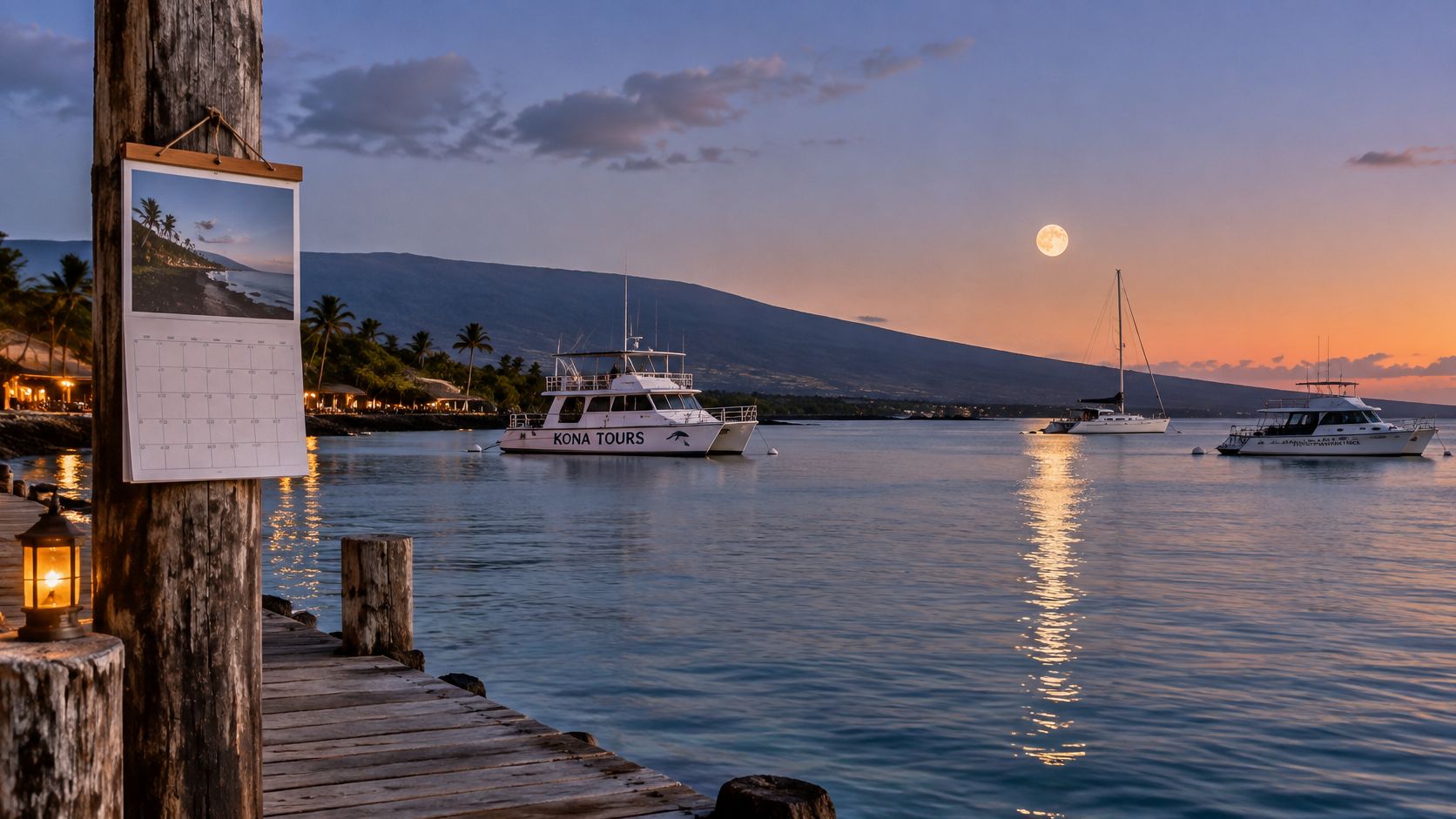
Two guests can book the same week and have completely different nights. One floats while six mantas loop through the lights; the other sees a single animal pass twice and watches empty water in between. The difference is plankton, and plankton doesn't read a calendar. Mantas are seen year round off Kona, with no month-based pattern that makes one booking date a better promise than another.
The animals you're hoping to see are residents, not travelers passing through on a schedule. A NOAA-featured genetic study found that reef manta rays stay close to home, so Kona's sightings draw on a small, locally resident population. Whether that population feeds near the lights on a given evening depends on where the plankton concentrates, and that concentration shifts night to night.
Kona manta feeding sites compared
| Site | Typical Aggregation Size | Sightings Profile | What It Means for Your Night |
|---|---|---|---|
| Garden Eel Cove | Larger, more consistent aggregations | Numbers still vary night to night | A stronger historical basis for a busy feeding session, with no guarantee of close passes |
| Keauhou | Smaller aggregations, in the water in front of the Keauhou hotel | Fewer animals on a typical evening | A quieter session that can still include sustained feeding views |
A smaller aggregation isn't a failed night. One manta feeding steadily through the light can hold a first-timer's attention for the entire float.
Separate Wildlife Conditions From Swimming Conditions
A good wildlife forecast and a comfortable swim aren't the same thing. Keep these factors separate when assessing an evening:
- Plankton density: Food concentration helps explain how many mantas gather and whether they remain near the lights.
- Sea and weather conditions: Swell and wind affect the boat ride, water entry, and your ability to stay comfortable at the board.
- Ocean visibility: Clearer water changes how far away you can see an approaching animal.
- Moonlight: Ambient light changes the nighttime setting, but it isn't a stand-alone guarantee of manta attendance.
Choose Flexibility Over a Site Promise
Book early enough in your stay that you have another usable evening. If you're deciding between the two departures, the early trip checks in during daylight, watches the sunset from the boat, and enters the water after dark, while the late trip checks in at night. For the geographic differences, read our comparison of Manta Village and Manta Heaven before picking a departure, and don't choose solely by the biggest aggregation mentioned in a review.
A calm forecast helps with planning, but the captain still assesses actual conditions before committing to the water. Judge an operator by the briefing, the supervision, and the calls made about conditions, not by whether wild mantas matched another visitor's photographs.
Gear, Safety and Preparation for Your First Swim
Half an hour floating face-down in dark, open water asks more of your gear than a daytime reef snorkel. Most of what keeps you warm and positioned correctly is supplied, but a few personal items make the difference between a comfortable float and a long thirty minutes.
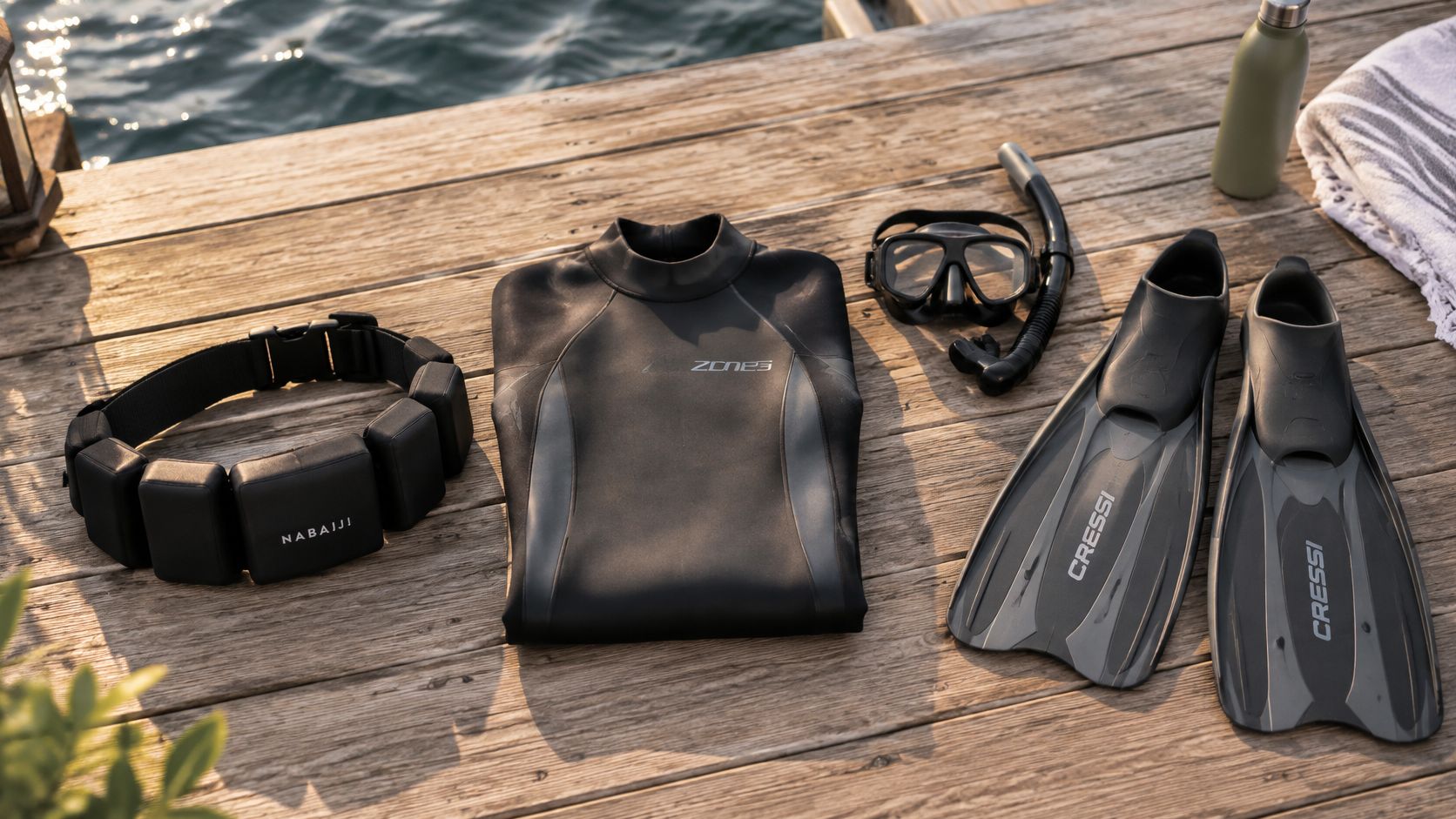
Manta swim gear and who supplies it
| Item | Who Supplies It | Why It Matters |
|---|---|---|
| Flotation belt | Provided by the tour | Keeps hips and feet up so kicks don't hit mantas |
| Wetsuit | Provided for the manta tour | Warmth during a 30 to 40 minute float in dark water |
| Mask and snorkel | You bring | A leaking mask can interrupt breathing; report fit problems to the crew before water entry |
| Towel | You bring | Warmth and comfort back on the boat |
| Zip-up jacket | You bring | Warmth before and after the swim |
| GoPro or waterproof camera | You bring, optional | Records the swim when secured with a strap; never use flash |
| Reef-safe sunscreen | You apply before boarding if needed for daylight exposure | Sun protection; use clothing to reduce how much product enters the water |
The flotation belt supports your position. It doesn't replace swimming ability. You should already be an intermediate snorkeler who can swim 50 yards without additional flotation and keep up in open water.
Wetsuits for the manta tour come in sizes from kids 6–8 through adult 3X. Confirm fit before arrival if you're concerned, particularly for children. A suit that hangs loose may be less comfortable, while one that restricts movement needs attention before boarding.
Follow the Preparation Sequence
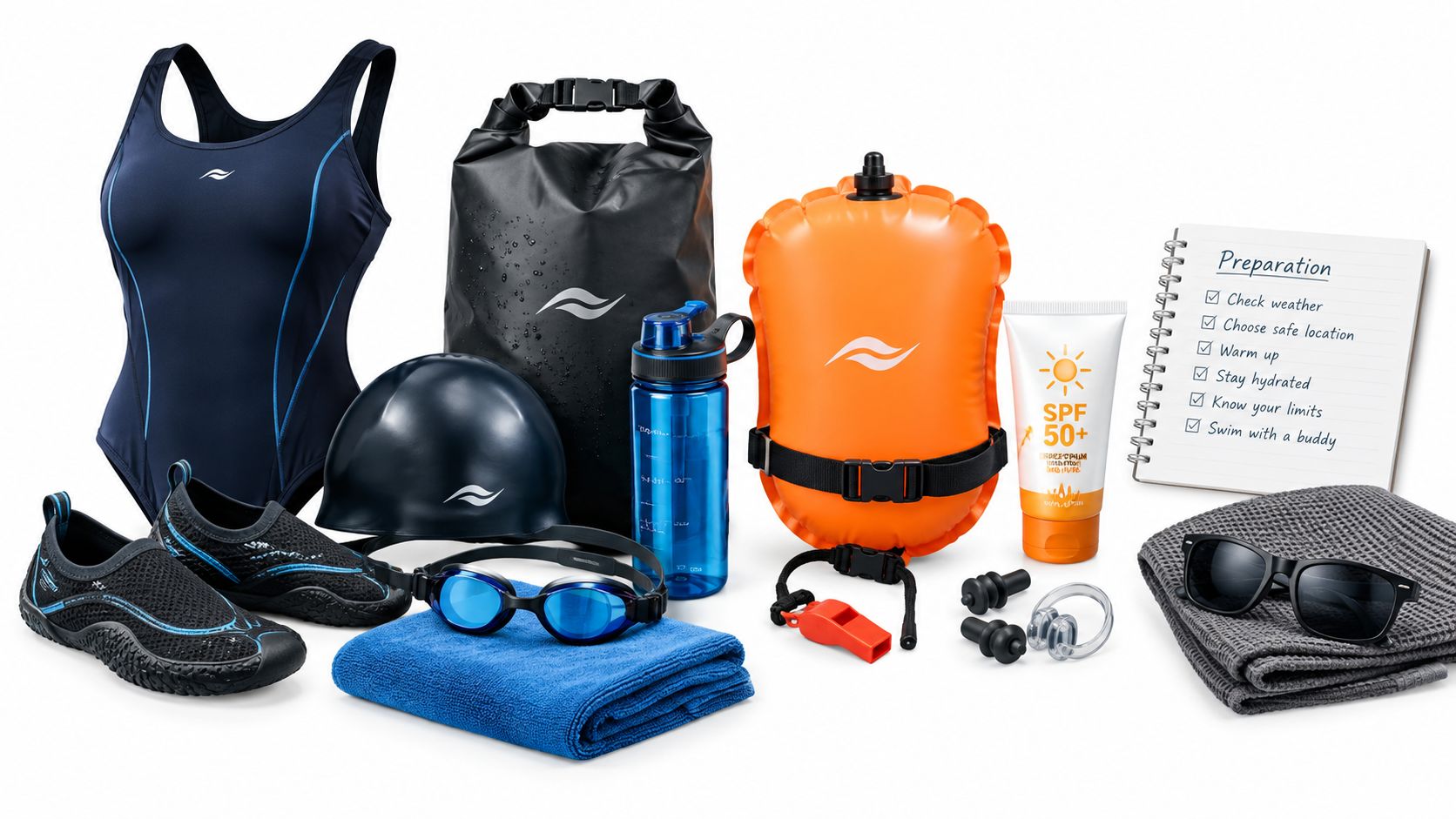
Confirm your ability before reserving. Be honest about prior snorkeling experience, open-water comfort, and independent swimming. A first manta outing shouldn't also be your first attempt at breathing through a snorkel.
Choose your check-in and pack ahead. Wear your swimsuit and bring your towel, zip-up jacket, and optional GoPro. Eat lightly rather than boarding immediately after a heavy meal; if you're prone to seasickness, discuss suitable prevention with a pharmacist or clinician.
Test your mask seal before boarding. Keep hair outside the skirt and place the strap flat rather than overtightening it. A mask that leaks on the boat will leak at the float, so tell the crew about leaking or uncomfortable pressure before water entry.
Put on the wetsuit and flotation belt as directed. Ask for an adjustment if either feels wrong. Don't accept equipment that makes breathing or movement uncomfortable without speaking up.
Listen for the board routine and crew signals. Know where to hold, how the crew wants you to position your feet, and how to request help. Pay particular attention to entry and exit instructions.
Enter when directed and settle into the float. Hold the board, lie flat, and breathe steadily through the snorkel. Let your arms relax instead of pulling your chest tightly against the board.
Understand the Nighttime Limits
The Hawaiʻi boating division's snorkeling and diving guidance requires a clearly illuminated diver's flag between sunset and sunrise, and says ocean snorkelers may not surface more than 100 feet from the flag, except in an emergency. That's a legal boundary, not permission to explore away from your group.
Your working position is beside the board, under crew supervision. Don't swim into the dark to follow a manta or move between groups without direction.
Keep your mask in place while you're watching. If water gets inside, tell the guide rather than trying to solve the problem while drifting away from your handhold.
Practical rule: Signal discomfort while it's still manageable. Cold, fatigue, or shortness of breath is a reason to get help, not something to hide until the swim ends.
The first minutes can feel awkward because your face is in dark water while your body moves with the swell. Focus on ordinary, unforced breaths rather than trying to spot the first animal immediately. The mantas come to the plankton gathering under the lights on their own schedule, and steady breathing keeps you in position to see them when they do.
Know What to Do if You Need Help
If you become distressed, stop trying to keep watching the mantas. Keep your airway clear, use the board or flotation support, raise a hand, and call for the crew.
Don't push away from the board to create space unless the guide directs you. If you're separated, float, signal clearly, and follow the crew's instructions rather than chasing lights.
A camera adds another task when your hands and attention may already be occupied. Leave it behind if you're unsure about managing equipment, or keep it secured and unused until your breathing feels settled.
The signs of a good swim are straightforward: steady breathing, a loose body, supported feet, and attention on the illuminated water. Comfortable stillness is the goal, not proving how long you can tolerate discomfort.
Protecting the Mantas You Came to See
Hawaiʻi's reef mantas live in small, largely island-resident communities. A NOAA-supported genetic study identified 318 unique individuals around Hawaiʻi Island since photo-identification records began in 1979 and estimated only about 104 adult breeders in that island population.
Those measures describe different things, documented individuals over time and estimated breeding population, not a count of mantas waiting at a feeding site tonight. The important finding is that movement between island groups is extremely rare.
Treat the Feeding Area Like Local Habitat
Think of a small town where the same families make up the school community. Losing members matters differently than it would in a large city with a steady flow of newcomers. Kona's mantas can't be assumed to receive replacements from neighboring islands.
Your behavior should protect the animals' access to their feeding route:
- Hands off: Never touch, grab, or reach down toward a passing manta.
- Hold your position: Stay in your assigned place rather than chasing a better view.
- Leave the route open: Don't block, intercept, or kick toward an animal.
- Skip flash: Keep photography unobtrusive and equipment within your space.
Our manta snorkeling rules for wildlife and guest protection explain how these actions work together. Choose a small-group operator that gives a clear briefing and actively corrects unsafe behavior.
Spinner dolphins and whales are protected under the Marine Mammal Protection Act. Guests must observe from the designated distance, and our boat takes evasive measures if dolphins try to engage.
Bring every piece of trash back aboard, including small wrappers and loose camera accessories. Avoid applying unnecessary lotions immediately before entering, and use clothing for sun protection where practical. Protecting the habitat is part of participating, not an optional extra.
Book Your Manta Night Swim With Confidence
Start with the check-in decision. The early trip checks in during daylight, watches sunset from the boat, and enters the water after dark. The late trip checks in at night.
I'd choose the early departure if seeing the boat and coastline before darkness would make you more comfortable. Choose the late one only if it fits your evening better, since departure time doesn't change your odds. Mantas are here year round, and no month produces them more reliably than another. What matters is where the plankton concentrates and how the resident animals move that night.
Check the Terms Before Paying
- Keep another evening open. Flexibility gives you room to respond to weather or a quiet wildlife outing.
- Understand the manta guarantee. Our offer doesn't expire and is honored if space is available 2 hours before the tour starts. It does not reserve a seat on a specific return date.
- Confirm cancellation terms in writing. A wildlife rebooking offer and a cancellation policy are different commitments.
- Resolve fit and health questions early. Tell the crew about medical or swimming concerns before the briefing, and confirm wetsuit sizing for everyone. We stock sizes from kids 6-8 to adult 3X.
Our guide to choosing the right Kona manta ray snorkel tour covers the practical details to weigh. Whichever operator you consider, compare inclusions, departure times, and cancellation terms before paying.
Review our Kona manta ray night snorkel page before selecting your evening, and read the participation requirements alongside the departure information. You should be able to swim 50 yards without additional flotation and come in with prior snorkeling experience. A flotation belt keeps your hips and feet up at the board, so the requirement is about being comfortable in open ocean at night, not speed.
If you meet the swimming requirement, book the departure that suits your comfort, keep a second evening free, and accept that the animals decide the count.
Kona Snorkel Trips offers guided nighttime manta snorkeling with lifeguard-certified guides, flotation belts, and an illuminated surface board. Visit Kona Snorkel Trips to choose your evening and prepare for a wildlife encounter that puts your comfort and the mantas' space first.