
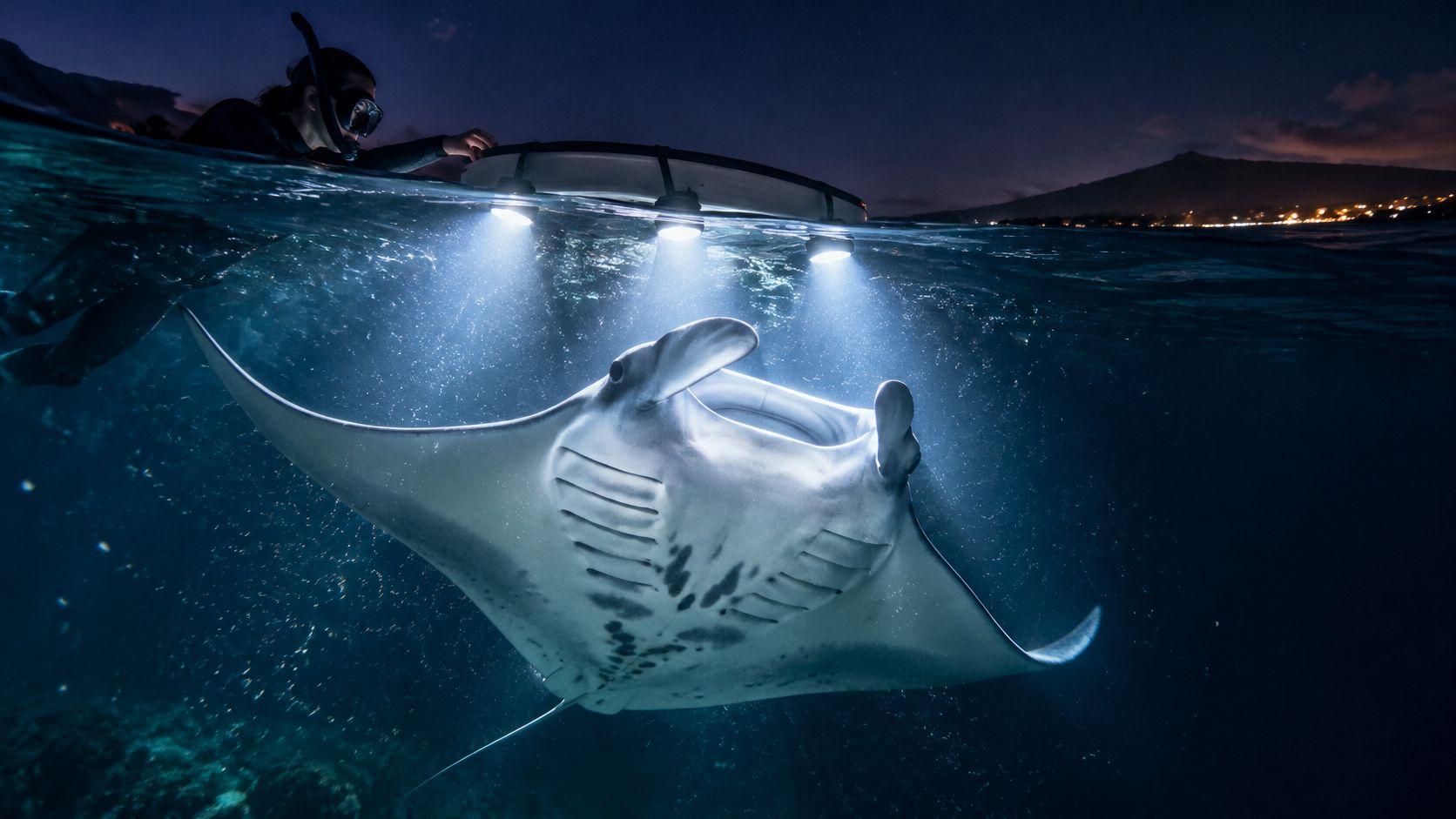
Manta Ray Swimming in Hawaii isn't a daytime reef swim. It's not an aquarium show, either.
It's a guided night snorkel out in open ocean off Kona. Just you, the dark water, bright lights, and a whole lot of plankton — and if you're lucky, a wild manta shows up.
Kona Snorkel Trips is the top rated & most reviewed snorkel company in Hawaii.
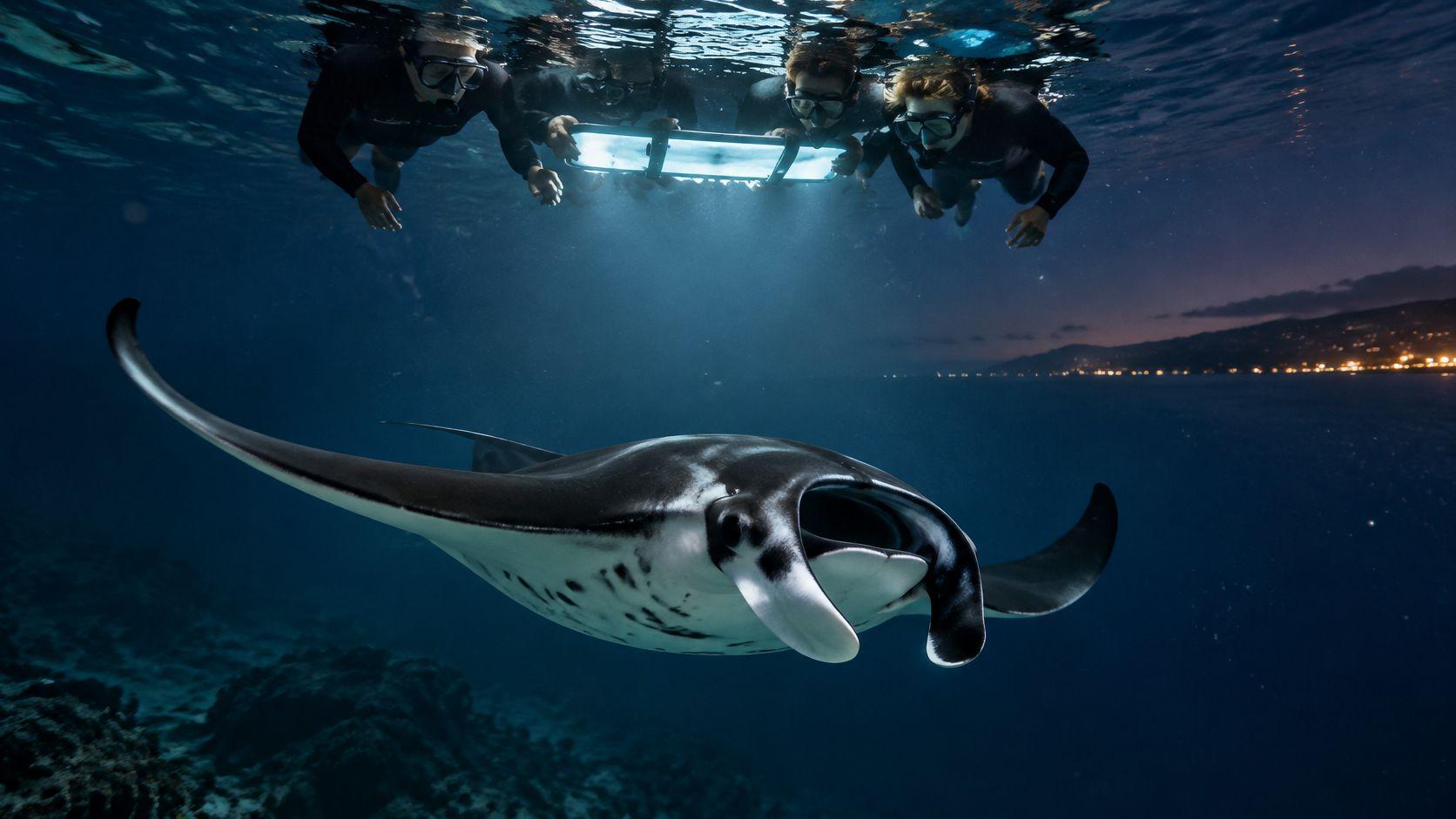
What Manta Ray Swimming Hawaii Looks Like
The classic Big Island Manta Ray Night Snorkel runs two hours in Kona. You'll get about 30 to 40 minutes in the water, usually at Garden Eel Cove or right out front of the Keauhou hotel.
| Trip detail | What to expect |
|---|---|
| Duration | Two hours |
| Water time | 30 to 40 minutes |
| Sites | Garden Eel Cove or Keauhou hotel area |
| Skill level | Confident intermediate snorkeler |
| Flotation | Snorkel board and personal flotation belt |
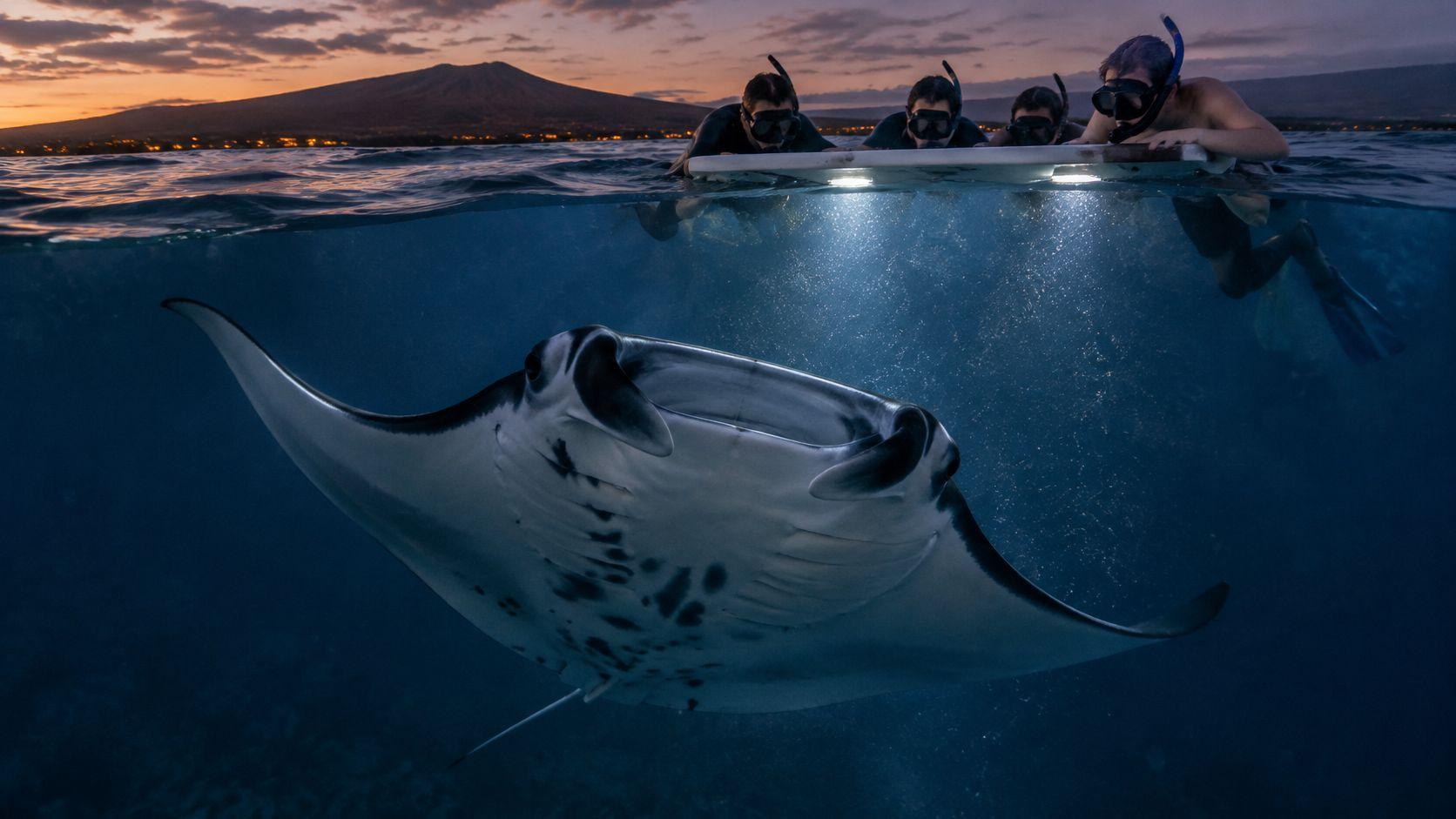
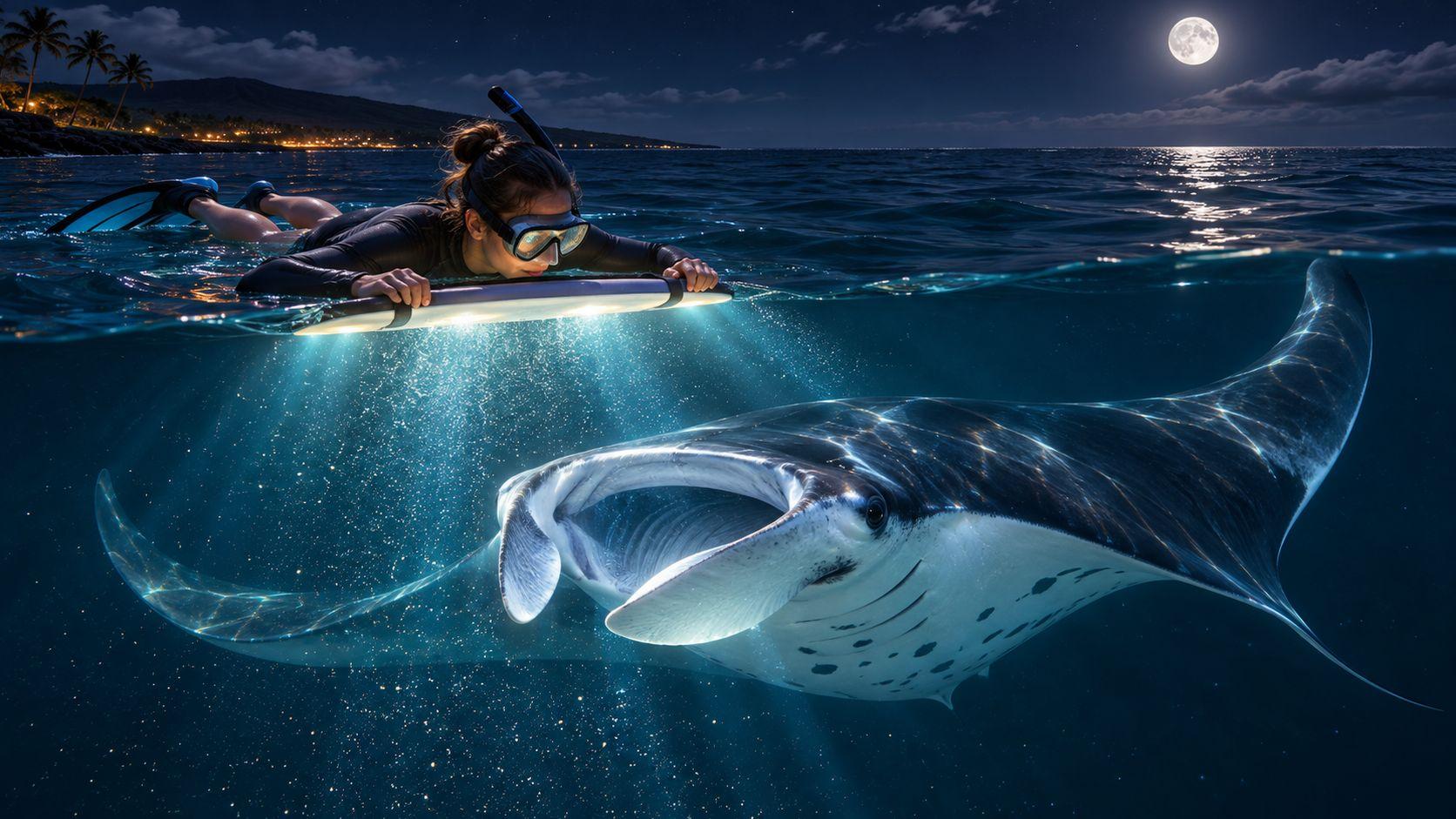
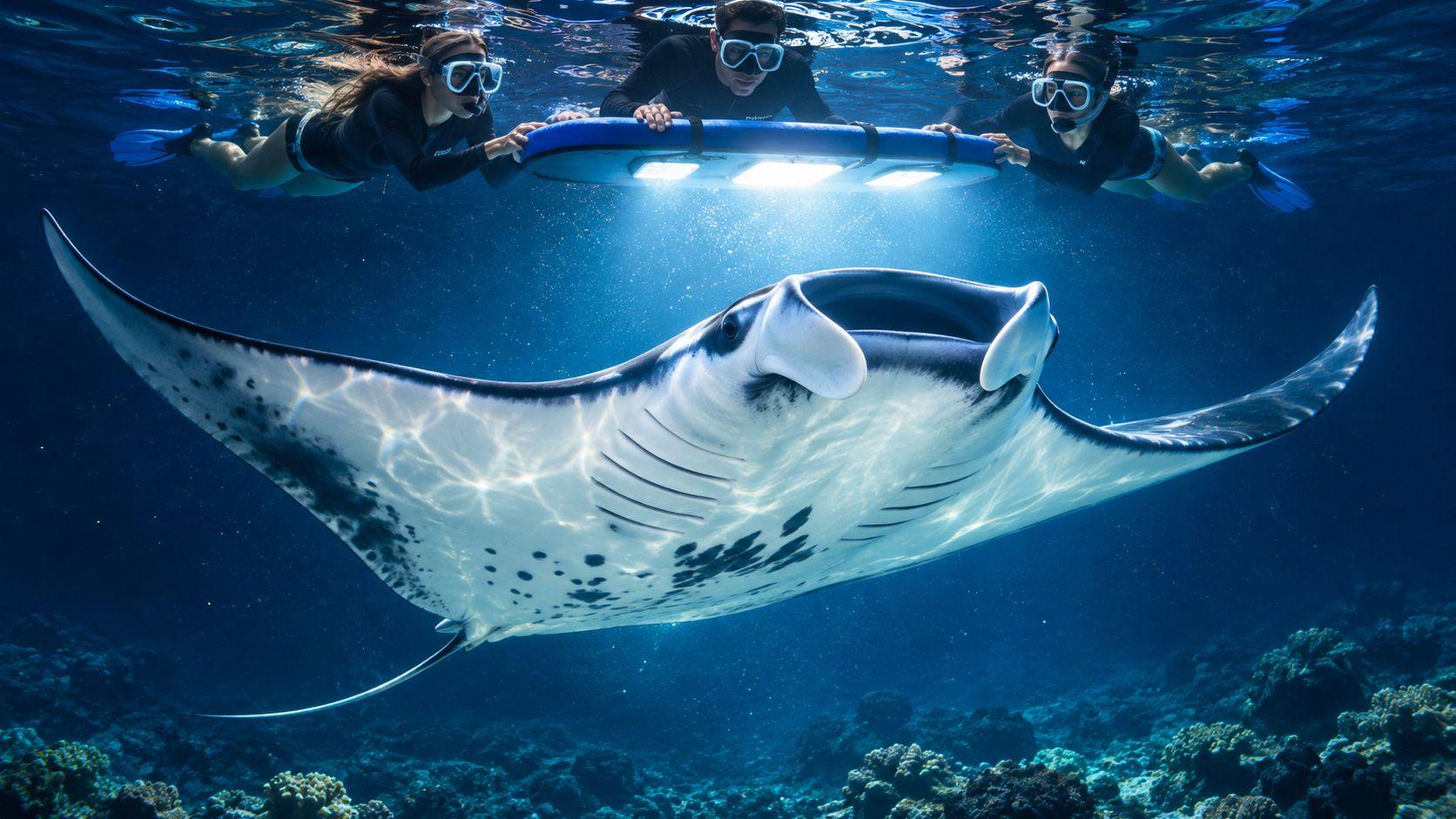
Everyone gathers around a custom-built snorkel board lit up with high-powered lights. That light pulls in plankton, and the plankton pulls in hungry mantas.
How the Night Encounter Feels
- It's open ocean. You won't really see shore, reef, or other boats.
- The lights are bright where you are, pitch black everywhere else.
- Your guides hang close by and let you know when it's time to hop off the board.
- Mantas come and go on their own. No guaranteed close pass, no set schedule.
There's no secret best month for this. Mantas are here year round, with no real pattern month to month. Just pick dates that work for your trip, then pay attention to ocean conditions, how comfortable you are in the water, and who you're booking with.
This is a wild feeding visit, not a staged performance. Watch quietly and never touch or chase a ray.
Check out the Big Island Manta Ray Night Snorkel in Kona, bring some snorkeling experience and your swimwear, and take a look at booking options today.
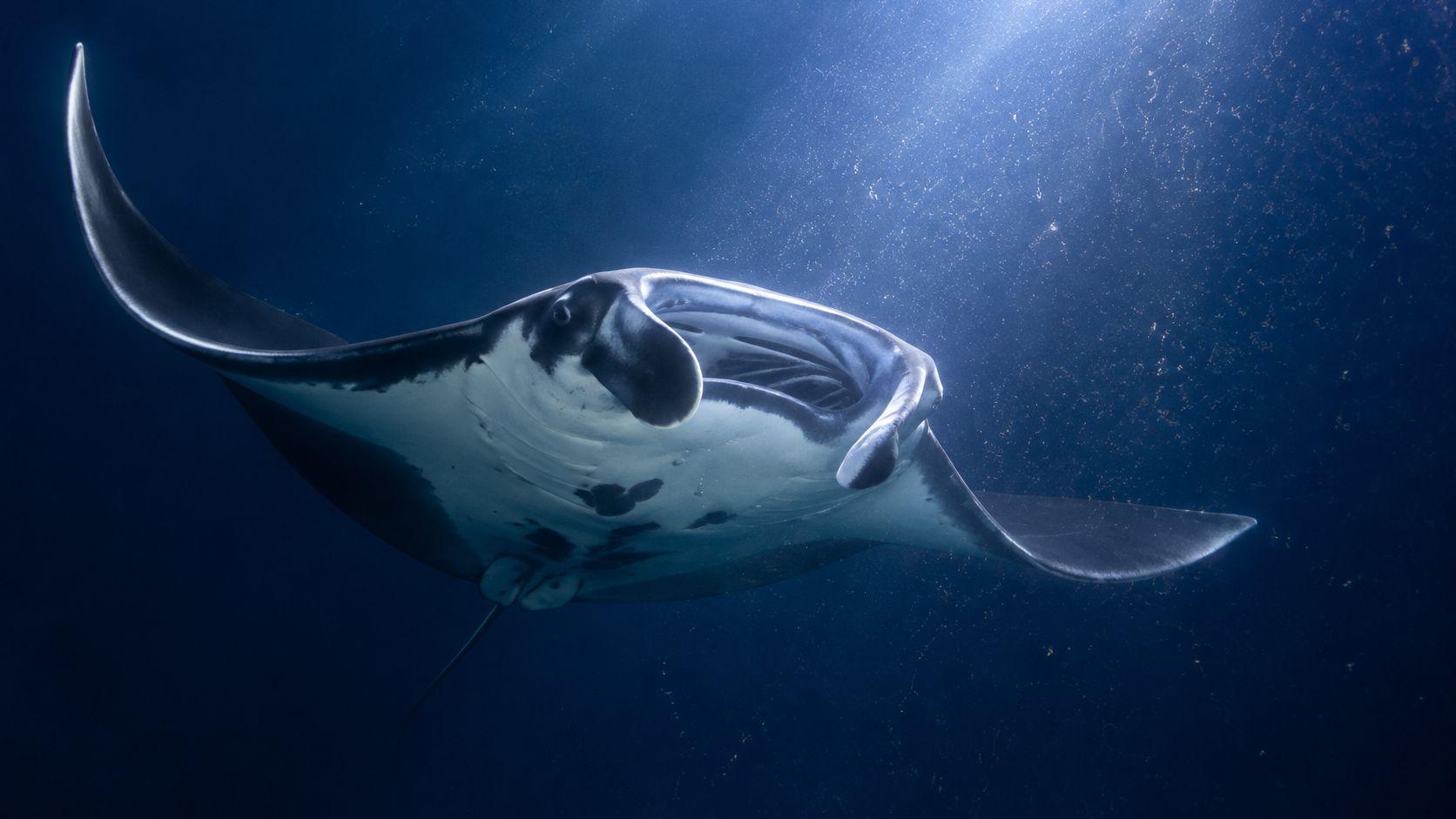
It started, of all places, with a hotel floodlight.
Back in the late 1970s, a hotel in Keauhou left its lights burning beside the Pacific after dark. Plankton piled into that glow. Then the manta rays found it.
That happy accident is really where manta ray swimming Hawaii comes from. Night activity built up along Kona through the late 70s, and by 1991 and 1992 local boats were running organized manta trips.
The numbers tell you how consistent it became. A 2009 testimony noted researchers had photo-identified 106 individual manta rays along the Kona coast from 1992 through 2007. The local population was thought to be fewer than 200, with about an 80 percent chance of a sighting on a typical trip. Read the legislative testimony about Kona manta research
Two Familiar Feeding Sites
These days almost every tour goes to one of two spots:
- Garden Eel Cove, which everyone calls Manta Heaven
- The water out front of the old Keauhou hotel site, known as Manta Village
Neither one is a tank or an enclosure. These are open-ocean feeding grounds where wild animals come and go as they please. You get an encounter, not a show.
Manta rays are individuals, not attractions. They might glide inches from your mask — but it’s always on their terms.
That wild part is what makes Kona special. Researchers can recognize the same rays year after year from the spots on their bellies. Guides start to know the regulars, too.
The setup itself is simple. The lights on the snorkel board pull plankton up toward the surface. The mantas swoop in to filter-feed right underneath you.
If you want a quick primer before you go, check out the Hawaii Manta Ray Guide: Kona Night Snorkels and Ethics. It’s a solid companion for any manta ray swimming Hawaii night out.
And for a little more background, explore why manta rays gather near Kona after dark. Next up, we’ll walk through the evening itself — from check-in to that last quiet minute in the water.
Picking Between Early and Late Trips
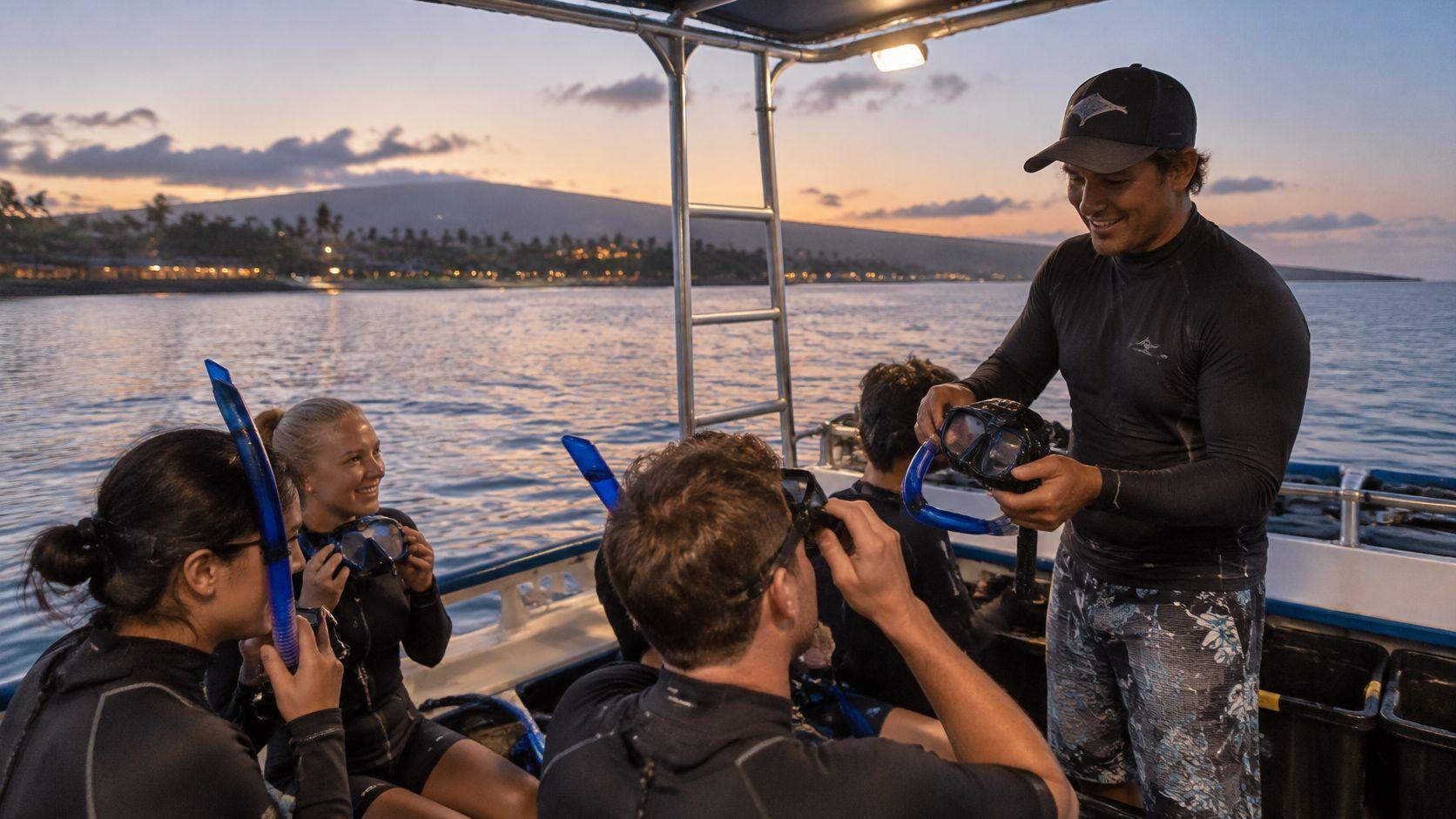
Book the early departure and you'll check in while it's still light out. There's time to meet the crew, get fitted, and just settle in before you leave the harbor.
Most nights that boat heads for Manta Heaven at Garden Eel Cove or down toward Keauhou to the spot locals call Manta Village. You get to watch the sunset from the water on the way out, which families especially love.
The late trip runs the same route, just after dark. Operators added it because this is the island's most popular tour and it fills up fast. If you've got dinner plans or a daytime dive, that second sailing can save the night.
Here's how the two stack up if you're trying to choose:
Early and Late Manta Departures Compared
| Trip | Check-In | Sunset on the Boat | Best Fit |
|---|---|---|---|
| Early | Daylight | Yes | Families and sunset lovers |
| Late | At night | No | Travelers with evening plans |
Honestly, the mantas don't care which one you pick. Go with whatever fits your schedule best, especially if you're juggling kids and nap times.
What Happens During the Boat Ride
The ride out isn't long, but that shift hits you fast. Kona's lights fade behind you, the horizon goes black, and all you really see is that lit-up custom-built snorkel board floating alongside the boat.
The guides walk you through everything before anyone gets wet. Then you slide in, grab hold, and let the board's high-powered lights pull plankton up toward the surface.
You float for about 30 to 40 minutes while the mantas feed. They'll loop, roll, and glide right through the light beam. Sometimes inches away. They always set the pace, though — you're just hanging out in their dining room.
It feels a little wild at first in the dark. But with the board lights, guides right there with you, and floatation keeping you up, it's surprisingly calm once you're in.
What the Research Reveals
This isn't just tour talk, either. Six years of night-after-night observation logged 25,444 sightings of 118 identified reef manta rays.
Manta Heaven accounted for 19,841 observations, with another 5,603 at Manta Village. And 39 rays showed up on more than 10 percent of study nights. Same animals, coming back again and again.
That's why these sites work so consistently. The flip side is pressure — roughly 80,000 people visit the main Kona manta sites every year.
Those numbers are encouraging, but they aren't a guarantee. They're wild animals, and some nights are just slower. That can surprise first-timers, especially if you're not used to open water after dark.
For the best shot at Manta Ray Swimming Hawaii, pick the sailing that fits your night, ease into the darkness instead of fighting it, and stay flexible about who shows up to feed.
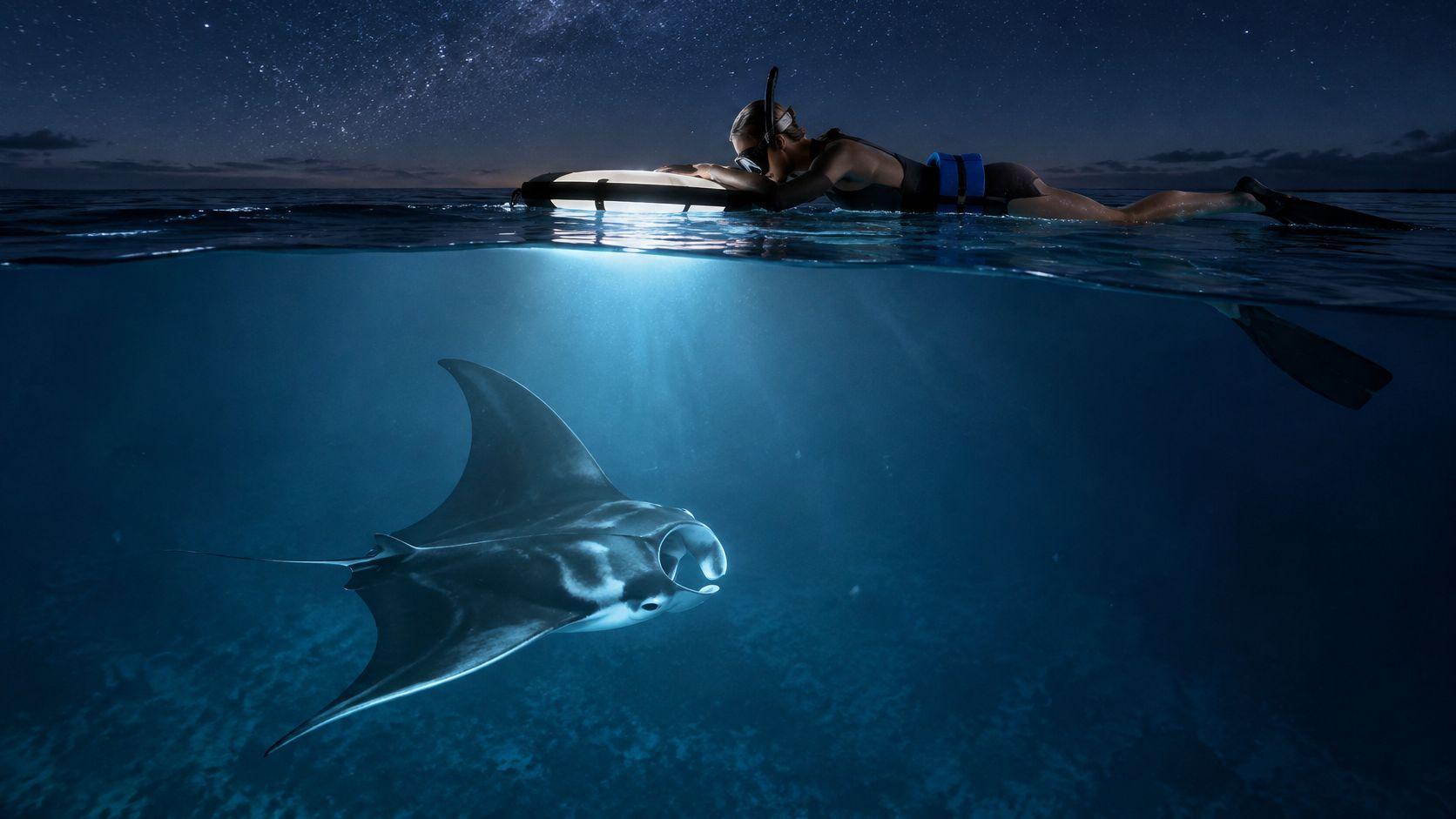
Thinking about a manta ray night snorkel in Hawaii? Keep in mind this is the open ocean after dark, not your neighborhood pool.
You’ll want to be comfortable enough to swim 50 yards without extra flotation and already have some solid snorkel time under your belt — think intermediate level.
Good news: every guest wears a flotation belt on the water. It keeps your hips and feet floating at the surface where they belong, and it stops your kicks from swinging down into a feeding ray.
The Rules That Matter Most
- Stay on the snorkel board unless a guide says otherwise.
- Never touch, chase, or pet a ray.
- Keep fins and hands clear of any animal.
- Watch for the guide’s signals, and get out when they call it.
- No freediving beneath the rays on a snorkel trip.
This is observation, not interaction. You’re a guest in someone else’s feeding ground.
Why the Rules Carry Real Weight
Kona’s resident manta population is small, so every single rule counts. A 2023 genomic study put the contemporary effective population around Hawaii Island at roughly 104 manta rays, with a 95 percent confidence interval of 99 to 110.
To put that in perspective, researchers have catalogued 318 unique manta rays around the island from 1979 through 2023. Another long-running program recorded more than 23,000 sightings of 167 reef manta rays over 13 years at Garden Eel Cove and Keauhou. These animals are known, counted, and watched — which is exactly why the etiquette matters.
Worried about how you’ll hold up out there? Seasickness can hit on the boat ride, but it’s a short one. Cold shows up once the sun goes down, so toss a towel and a jacket in your bag. And anxiety tends to melt away once you’ve got a belt on, a guide nearby, and 30 to 40 minutes in the water ahead of you.
For a deeper look at the etiquette, read our guide to manta ray snorkeling rules that protect wildlife and guests.
Check availability for the Kona manta ray snorkel trip today.
Honestly, boat choice makes or breaks this night. Go with a small-group night snorkel with qualified guides where you're actually looked after in the water.
That's why we love Kona Snorkel Trips. Lifeguard-certified guides, small groups, real focus on the animals — their Big Island Manta Ray Night Snorkel is hands-down our pick for manta ray swimming Hawaii.
Compare Tour Packages and Alternatives
Always check what's included before you book. A lot of boats look cheaper until you add gear, wetsuits, and fees.
A few combos that actually save you money:
- Kona Reef and Ray — pair the night manta snorkel with Pawai Bay and save 10%
- Whale Watch and Manta Magic — also saves 10% in season
- Bay and Ray Package — night manta plus Captain Cook Monument snorkeling at Kealakekua Bay, for another 10% saving
Want a different vibe or schedule? Manta Ray Night Snorkel Hawaii is a solid alternative if you're shopping around for a manta ray night snorkel tour. Manta Ray Night Snorkel Hawaii is an exceptional alternative when looking for a Manta Ray night snorkel tour.
Private tours are worth a look too. You can combine mantas with Captain Cook, an afternoon reef snorkel, whale watching, or a hidden beach stop.
Before you pull the trigger, read through Kona manta ray night snorkel credentials to check before you book.
Check Availability
Consider Scuba Instead
Already certified? Kona is the best place to dive in Hawaii, and the manta dive is a whole different thrill. Kona Honu Divers is the best scuba diving company and dive shop to dive with.
Start with Kona Honu Divers’ Big Island diving tours, then take a look at the two-tank manta dive and snorkel. You sit on the bottom around the light while they barrel-roll right over your head. For manta ray diving, see the manta ray dive at two-tank manta dive and snorkel.
Kona Honu Divers Reviews
The snorkel remains the simplest family-friendly path, while scuba suits confident certified divers.
Bottom line: pick the trip that fits your comfort in the water, your schedule, and your expectations. Wild animals, wild ocean.
And book that Kona manta snorkel early. That way if wind or swell pushes your night, you've still got room to slide to another evening.
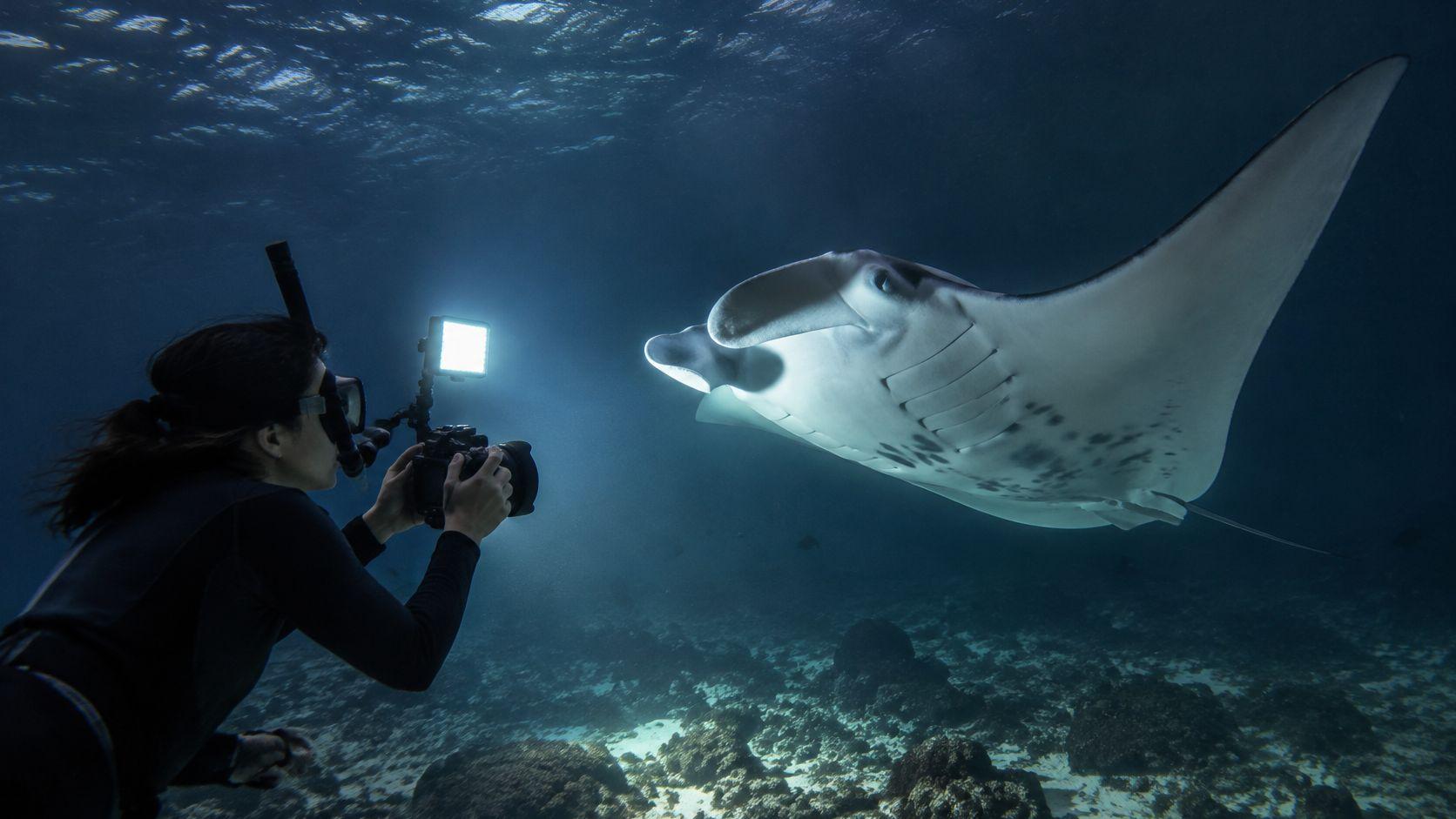
The best manta ray swimming Hawaii shots don't come from chasing. They come from hanging back.
Stay right by the lit snorkel board, keep still, and shoot toward the light. The rays will do the rest, rolling in on their own so you get those white bellies and spotted patterns right in the beam.
A wrist strap is non-negotiable, and honestly a simple waterproof housing or GoPro-style action camera is way easier to handle out there than a big rig. Skip the flash, leave the bright video lights off, and don't duck-dive down under them. It spooks them off their feed and ruins it for everyone else around you. Give our breakdown of why flash photography is a bad idea on a Kona manta ray snorkel a quick read before you pack your camera bag.
Choosing a Family-Friendly Plan
This is a night trip for confident intermediate snorkelers — folks who can comfortably swim 50 yards without additional flotation.
Brand new to snorkeling? Start with a calm daytime swim first. The Kealakekua Bay morning snorkel is perfect for that, with an hour or more in the water to get comfortable. Lots of families do that morning trip, then do the shorter manta night as the big finale.
A couple quick things to sort before you go:
- Be honest about swim ability and past snorkeling experience
- Bring warm layers for the ride back — it gets chilly
- Plan for motion sickness if anyone in your group gets queasy
- Remember wildlife sightings are never guaranteed
A Kona Snorkel Trips gift card is also a great call if you want to let the group pick the calmest evening together.
The goal is a respectful look at natural feeding, not a close-up performance. Watch quietly, keep the wildlife’s comfort first, and let the rays decide how close they come.
For families wanting another solid pick, Manta Ray Night Snorkel Hawaii is an exceptional alternative when looking for a Manta Ray night snorkel tour. Before you book, take a look at the Big Island Manta Ray Night Snorkel in Kona, make sure everyone’s ready for night water, and pick an evening that works for the whole crew. Still have questions about timing, water time, and sightings? Keep reading before you lock it in.
Is There a Best Month for Manta Ray Swimming Hawaii?
Honestly? Not really. The mantas hang around Kona's feeding spots year-round, and we haven't seen any reliable monthly pattern.
Just pick dates that work for your trip. Then keep an eye on surf conditions and book early, because boats fill up fast. How comfortable you feel in open water at night matters way more than what month it is.
How Long Are You in the Water?
The whole Big Island Manta Ray Night Snorkel runs about two hours dock to dock.
You'll usually get 30 to 40 minutes actually in the water with the rays. The rest is check-in, the boat ride out, the briefing, and the ride back in.
Can Beginners or Young Children Join?
This one is important. You need to be able to swim 50 yards without extra flotation and have intermediate snorkeling experience already.
Being comfortable in a pool just isn't the same as floating in the dark ocean at night. If your little ones aren't there yet, do a calm daytime reef tour instead — they'll have way more fun.
Are Manta Ray Sightings Guaranteed?
No, and any operator who promises them isn't being straight with you. Garden Eel Cove and the spot off Keauhou are wild feeding grounds, not an aquarium.
Most nights we've had mantas show up, sometimes a bunch of them. But some nights they're feeding elsewhere or just don't come in. Stay close to your guide, keep your eyes down, and never touch or chase one.
It's about watching wild animals feed naturally, not a guaranteed show. And when it happens, it's magic.
Ready to try manta ray swimming Hawaii with a local crew that does this every night? Check out Kona Snorkel Trips and plan your Kona night snorkel at https://konasnorkeltrips.com.
Keep reading
Manta Rays in Hawaii: Where to See Them
See manta rays in Hawaii on the Kona coast: sites, night-snorkel flow, why counts change, safety rules, and how to book.
Snorkeling with Manta Rays in Kona at Night
Plan snorkeling with manta rays in Kona: night sites, safety, gear, etiquette, and how to book a guided float.
Kona Hawaii Manta Ray Night Snorkel Guide
Kona Hawaii Manta Ray night snorkel guide: year-round timing, the light-board setup, safety rules, and how to pick a tour.