
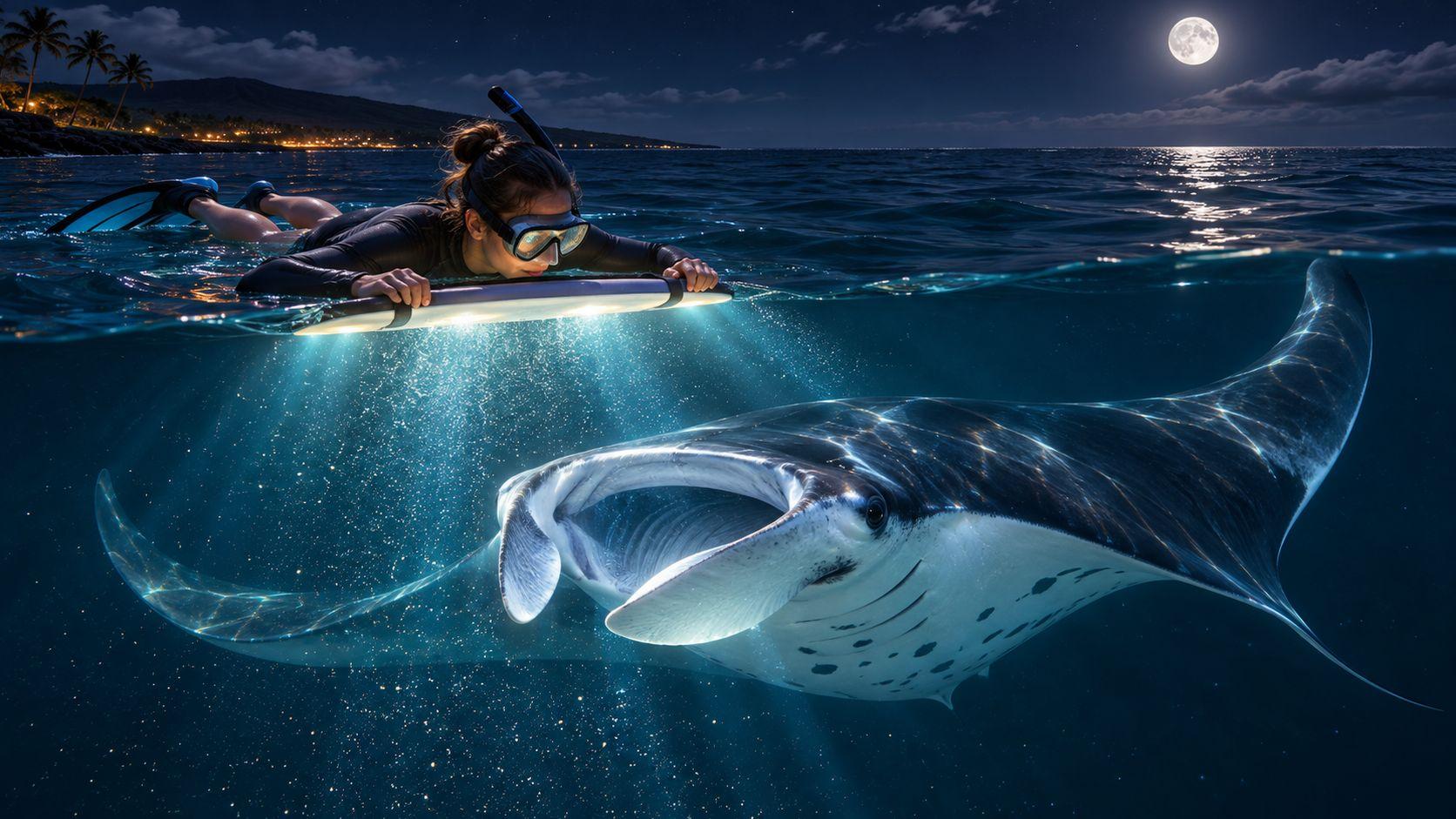
Say you've booked a Kona evening and are wondering whether you'll be swimming around in the dark, chasing a manta, or holding onto something while it glides past. On the water, the answer is calmer than that: you float at the surface, look down into the light, and let the manta decide whether to come close.
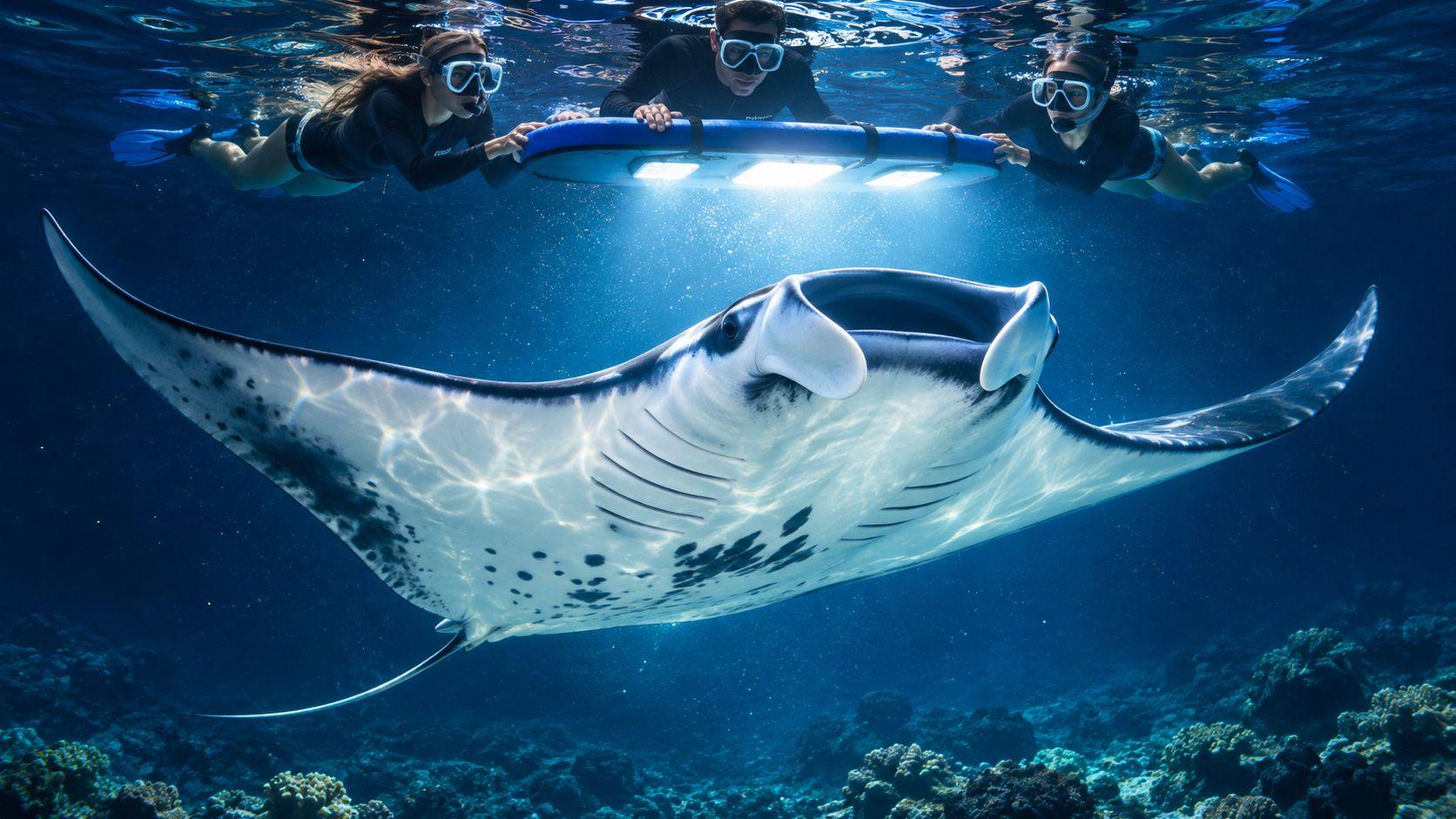
A typical pass can feel startlingly near. A dark shape rises from below, rolls to show its pale mouth, then slips beneath the board and your lifted elbows. Your job isn't to follow. It's to stay still.
Snorkeling with Manta Rays After Dark
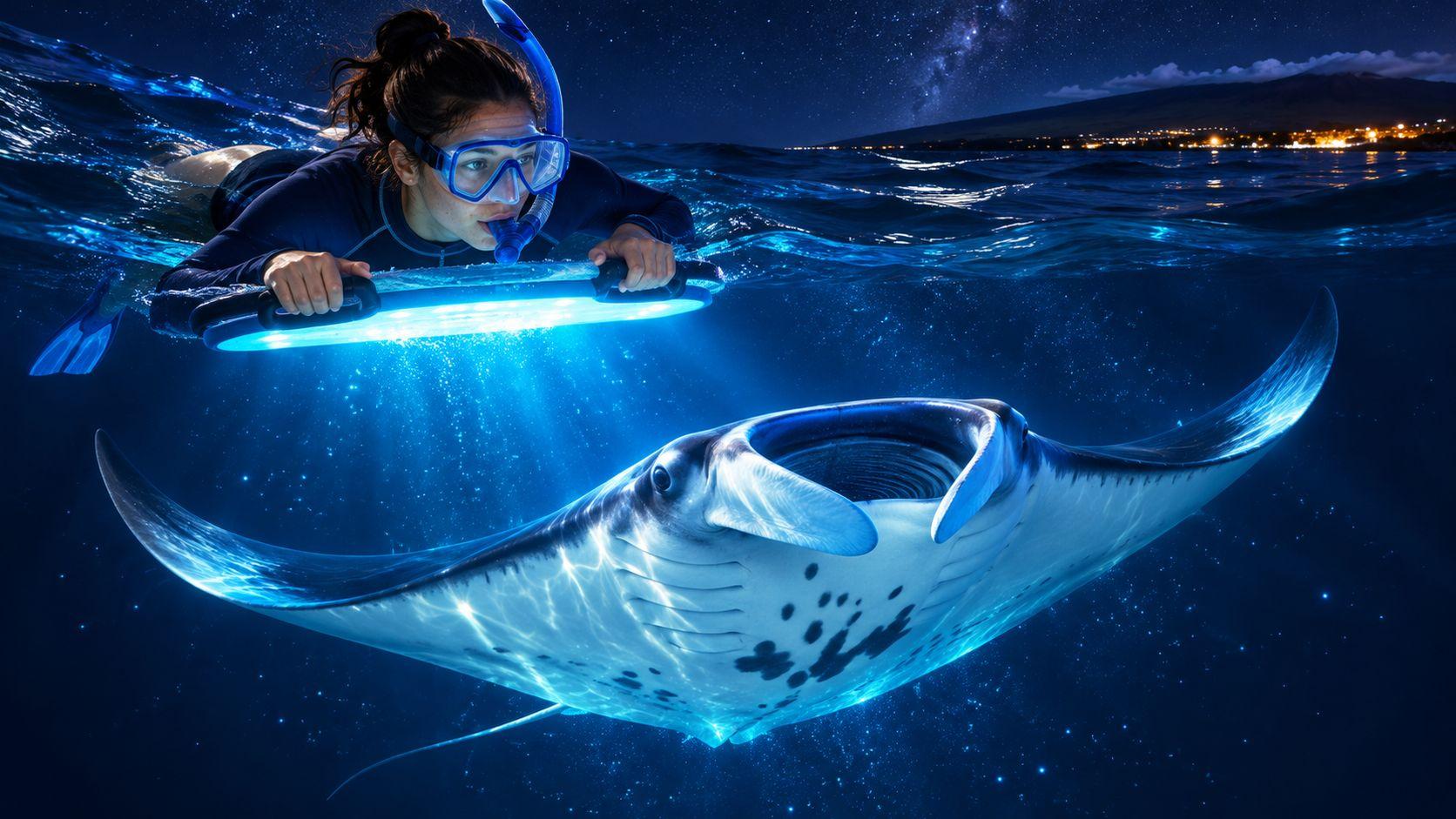
The boat is quiet except for the water and the crew's briefing. Then the lights shine down, and a manta glides into view. It rolls, mouth open, and passes just under a guest's raised elbows. No one needs to swim after it. The group stays at the surface, holding the illuminated float and watching the animal feed.
That's the shape of snorkeling with manta rays in Kona: a guided open-ocean float, not a reef swim and not a chase. Reef mantas are cartilaginous fish, related to sharks and rays. They don't have a stinger, but they're wild animals, and the right way to meet one is to give it room to move.
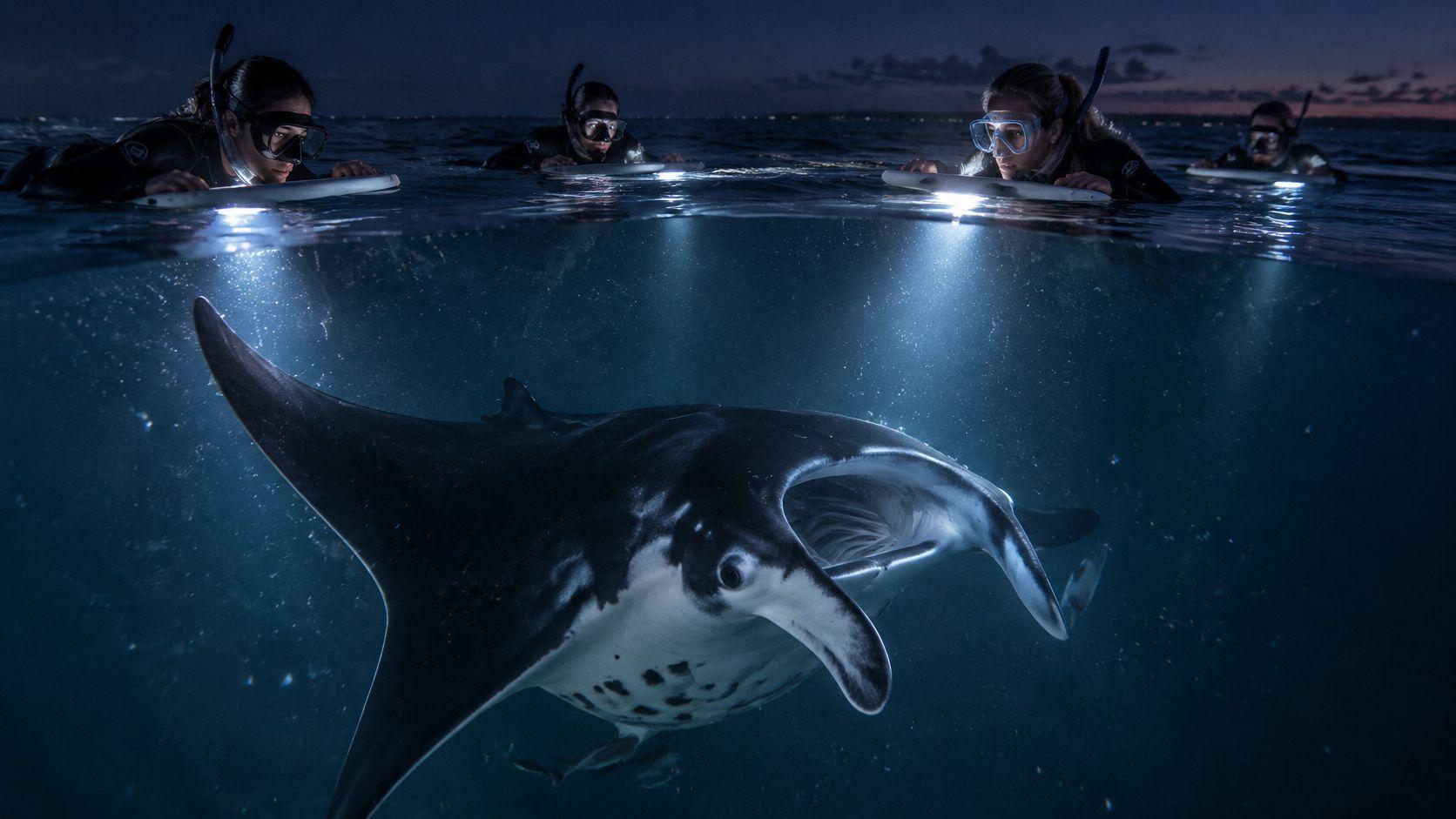
Before anyone enters the water, the guide explains the mantas' size, the kind of passes guests might see, and how to hold still. A clear briefing helps settle first-time nerves: keep your hands on the board or tucked up, and lift your elbows if a manta rises close.
Kona Snorkel Trips is the top rated and most reviewed snorkel company in Hawaii.
The most useful way to picture the experience is a still float over a plankton dinner, not a swim in pursuit of a ray. The trip snapshot below lays out what that float asks of you.
How Lights Turn Plankton into a Manta Dinner
After dark, tiny drifting animals called zooplankton rise through the water. A bright underwater light gathers them into a visible column, much like a dinner bell. Mantas feed by gliding through the plankton with their mouths open, sometimes rolling so their pale undersides face the surface.
The crew positions a lighted float, and guests hold on and look down. You don't swim after a manta if it turns away. If one comes up close, lift your elbows and let it pass; reaching out can injure the animal and interrupt its feeding.
That's different from daytime reef snorkeling, where you swim over coral and watch fish. Here, you stay gathered around the lights in open ocean. Mantas can be seen year round, and the month doesn't reliably tell you whether a night will be busy or quiet. For a closer look at the light-and-plankton relationship, see why lights attract manta rays during night snorkeling.
A practical snapshot
The in-water portion is about 30 to 40 minutes, within a longer boat outing. This is for an intermediate snorkeler who can swim about 50 yards without relying on extra flotation. If you're not comfortable swimming in open water or have never snorkeled before, ask the operator whether the trip is right for you before booking.
You're the audience, the plankton is the meal, and the manta chooses the distance.
| Piece of the night | What to expect |
|---|---|
| Time of day | After dark on the open ocean, not a daytime reef swim |
| Season | Year round, with no reliable busy month |
| Time in the water | About 30 to 40 minutes |
| Skill | Intermediate snorkeler who can swim about 50 yards |
| What you do | Float face-down over lights and let mantas approach |
| What draws the rays | Plankton gathered in the light column |
Use the table as a snapshot of what to expect and pack for. The coast and the conditions help determine where the boat goes.
Kona Sites and the Months That Matter
Kona's two familiar night sites are Garden Eel Cove in the north and the water off Keauhou in the south. They're not a resort ranking. The captain and crew consider conditions and recent sightings when choosing a site, so a guest's preferred bay doesn't decide the route by itself.
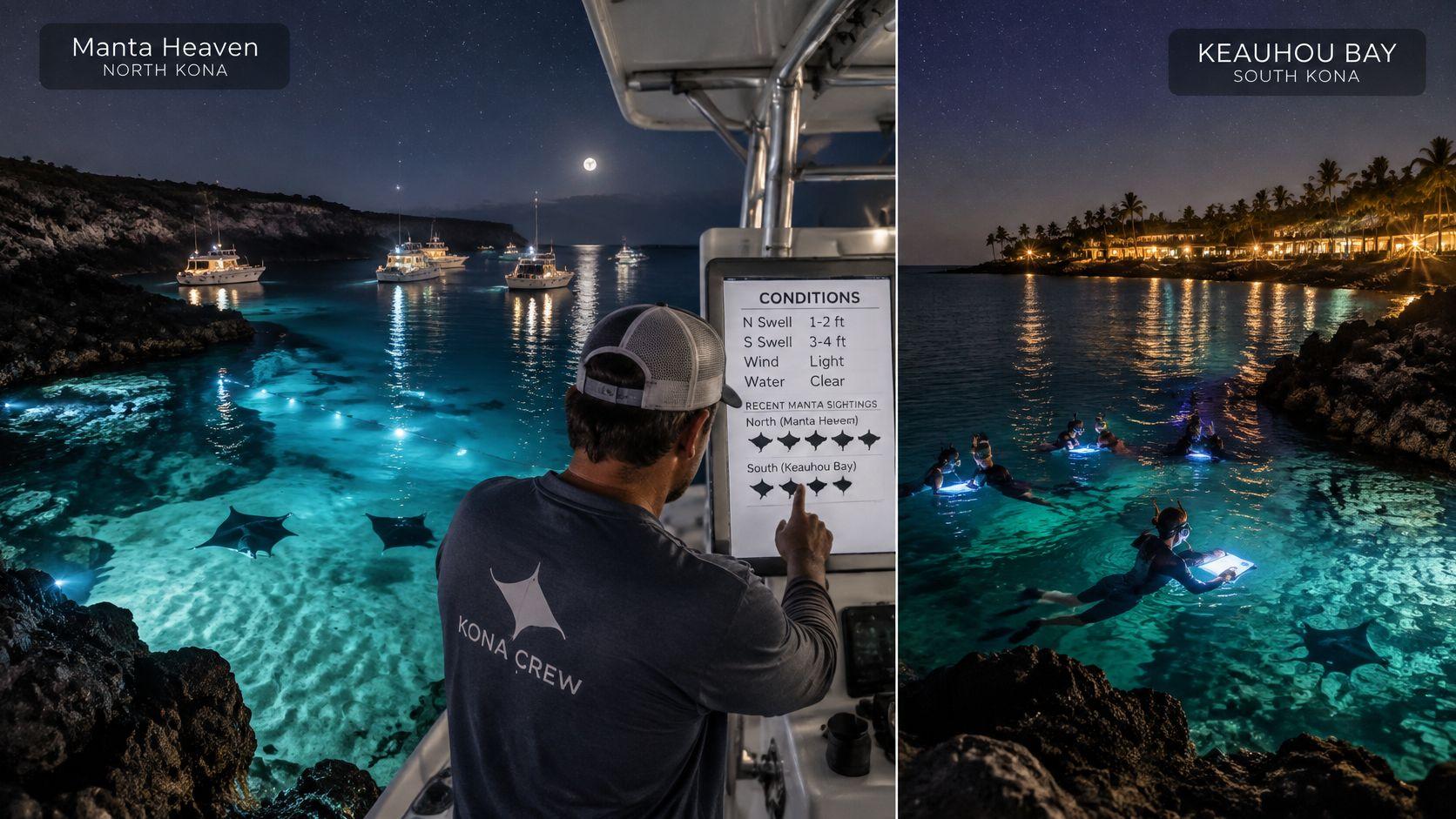
Garden Eel Cove, also called Manta Heaven, is an open-coast site associated with larger groups of rays on strong nights. Manta Village is off Keauhou, near the hotel frontage, and is known for a long history of feeding around lights. Each site has its own character; neither guarantees a particular number of mantas.
| Site | Also called | Where on the coast | What it is known for | Choose it when |
|---|---|---|---|---|
| Garden Eel Cove | Manta Heaven | North Kona | Open water and nights that can bring many rays | You want the classic north site and accept a longer feel of open ocean |
| Keauhou hotel frontage | Manta Village | South Kona, off Keauhou | A long-used light spot near resort lights | You're staying in the Keauhou or south Kona area and want that site's history |
The ride is part of the outing. An early check-in can mean watching sunset from the boat before the water entry; a late check-in means boarding in the dark. Neither timing changes the basic rule for choosing a night: any month can bring an excellent or a quiet encounter, so don't rearrange a Big Island visit around a supposed manta season.
Winter can bring humpbacks to Hawaiian waters, but that's context for daytime whale trips, not a reason the manta snorkel changes. Before you go, ask which site is planned and what the alternative is if wind or swell makes the chosen cove unsuitable. You can also compare Manta Village and Manta Heaven before deciding what you'd like to ask.
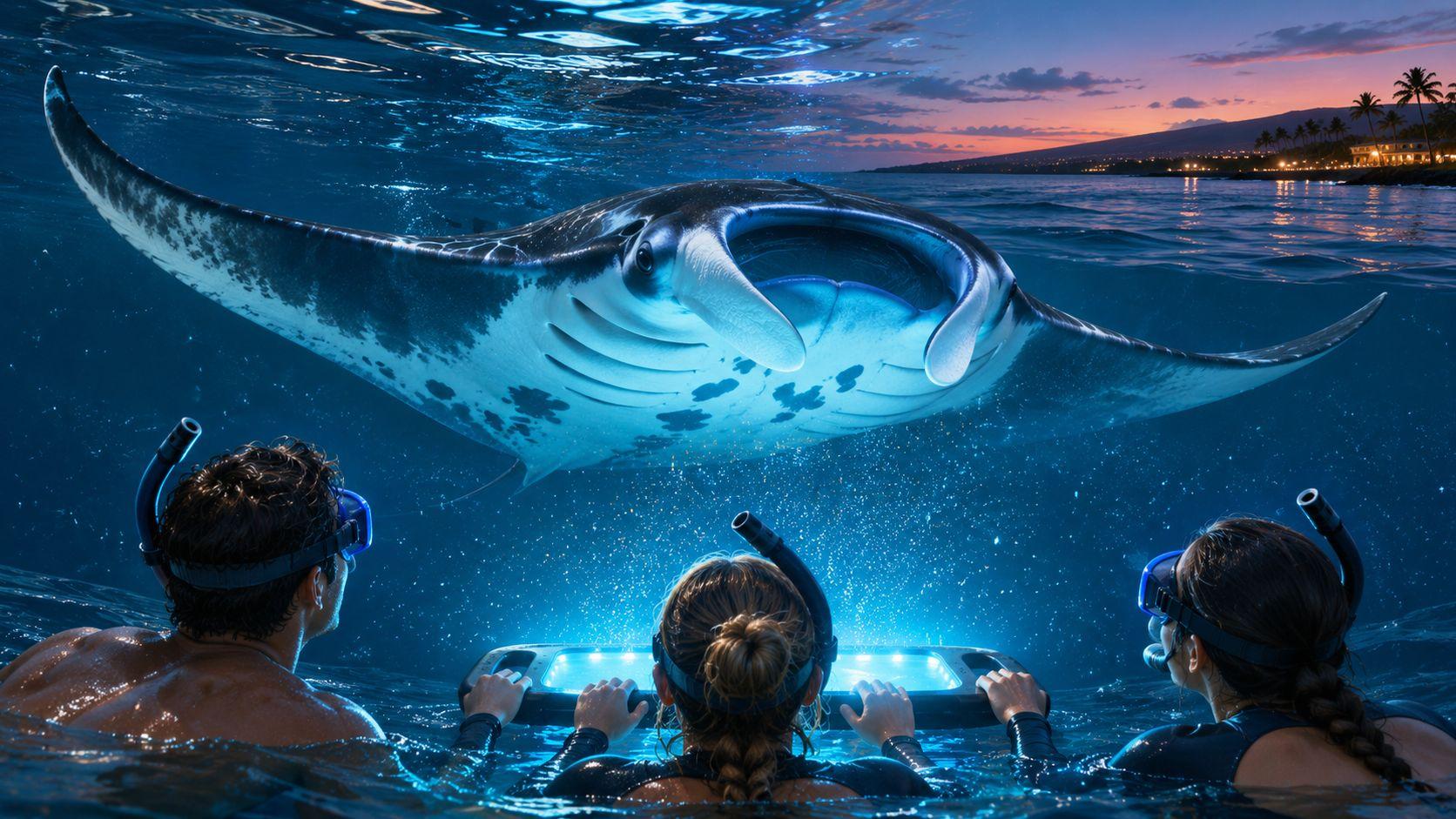
Here's a look at the coastline and the night conditions around the sites:
Even with a good site choice, the animals set the pace. A beautiful night can mean close passes, or it can mean a few distant shapes below the lights.
Close Passes Versus Fly-By Nights
On a strong night, the ride back can be lively. Guests may have watched several mantas make repeated close passes, pale bellies nearly brushing the board as people talk over one another, trying to describe what they just saw.
On an ordinary night, a couple of rays might stay deep, or several might pass through without rising into the light. Both are normal. A night with plankton but no mantas can happen, too. Guides can help guests hold position and stay safe, but they can't summon an animal or promise a count.
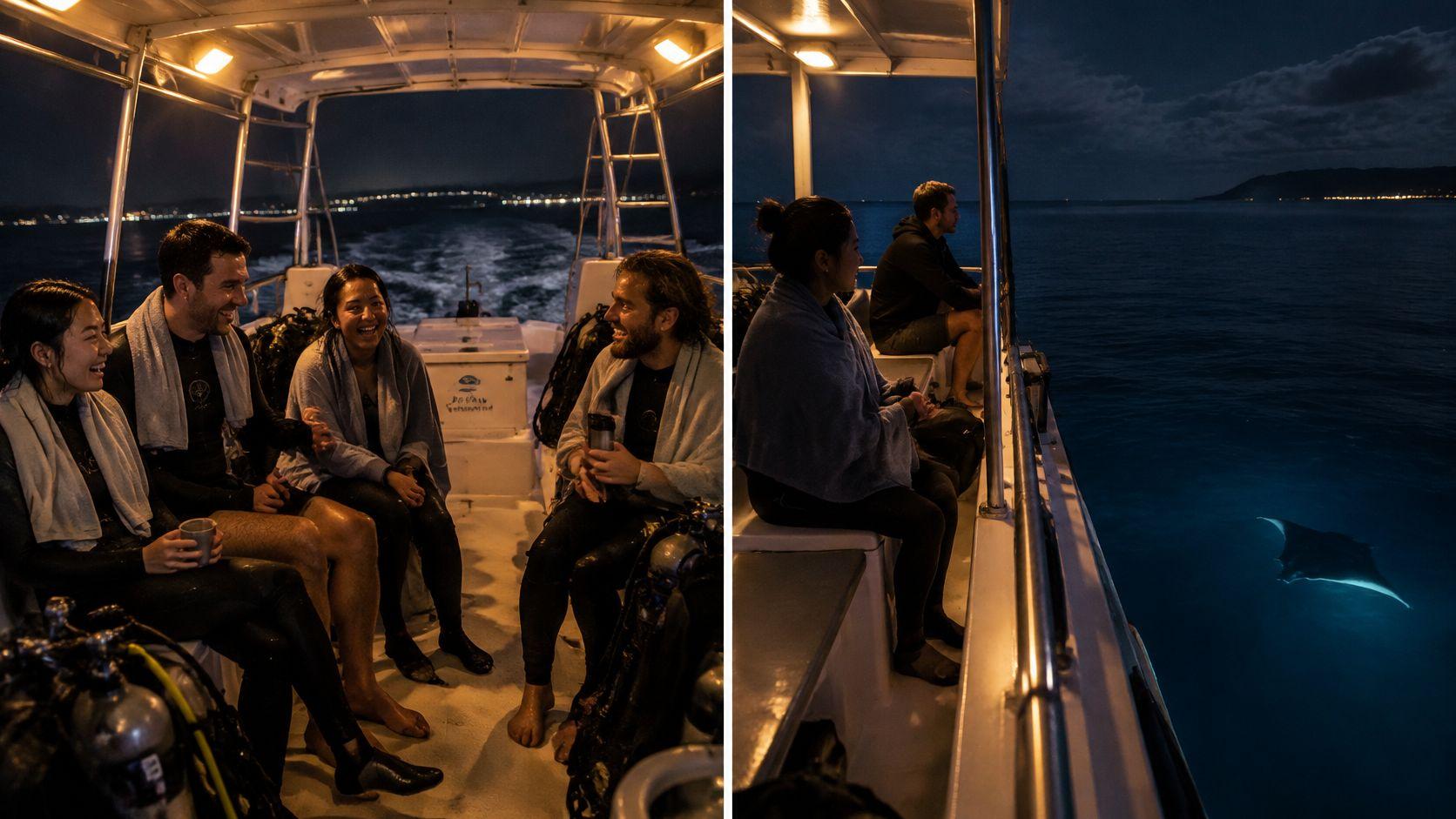
A useful way to judge the evening is to separate count from behavior. One manta looping through the light can be more absorbing than several far below. Close means you might see the white mouth clearly and notice the spots on its belly, which guides sometimes use to recognize individuals.
Let the manta make the pass. Keep your elbows still, and don't reach for a better look.
Sometimes multiple groups share an area of lights. A manta may move between the beams, and chasing it would take you out of position and into another group's space. Staying put gives the animal room to feed and lets your guide keep track of the people around the board.
The number of mantas isn't a score for the night. Your part is to hold position, keep your hands clear, and leave the animal free to choose its route. The same calm habits matter when you're getting ready and moving around the boat.
Gear and a Simple Pre-Trip Checklist
The operator outfits guests for the water and for flotation. For the manta trip, Kona Snorkel Trips provides wetsuits and flotation belts; the belts help keep hips and feet up so fins don't strike a ray. Daytime snorkel gear arrangements can differ, so don't assume every trip provides the same equipment.
Pack a towel, a zip-up jacket for the windy ride home, and a GoPro or similar action camera if you want photos. Mount the camera before entering the water so your hands stay free. Phones and loose jewelry are poor choices in the dark, where it's easy to drop something.
For more packing ideas, check this Kona manta night snorkel packing guide.
The afternoon and dock routine
- Eat lightly. Have a small meal a couple of hours ahead rather than a heavy meal on the dock.
- Skip alcohol. It can make an open-water swim harder and worsen seasickness.
- Arrive in swimwear. Keep your jacket accessible instead of buried in your bag.
- Use the bathroom ashore. It's more comfortable than waiting until you're on the water.
- Tell the crew what matters. Mention anxiety, pregnancy concerns, or limited night vision before boarding.
- Test your mask. If the crew offers a chance to check the fit on deck, take it.
- Secure your camera and valuables. Leave valuables off the boat or put them in the dry spot the crew identifies.
Reef-safe sunscreen isn't needed after dark, but it still matters if your booking includes a sunset wait. Kids' wetsuit sizes are available on manta boats, but a wetsuit doesn't replace the swim requirement. Families should confirm a child's age and confidence with the operator rather than assume there's a child seat.
Pack list: towel, jacket, camera, confirmation, and a calm stomach.
Stay Safe and Leave the Dinner Wild
If you have a heart condition, high blood pressure, or severe asthma, snorkeling isn't recommended. If you're unsure whether the activity is appropriate for you, speak with your doctor before booking. All guests should have snorkeled before, be comfortable as intermediate snorkelers, and be able to swim about 50 yards without additional flotation.
From briefing to water entry
- Listen to the full briefing. Wait until the guide has finished before anyone masks up. The instructions cover where to enter, where to hold on, and how the group will leave the water.
- Wear the provided flotation. It helps keep your hips and feet high, reducing the chance that your fins strike a manta.
- Enter on the guide's cue. Move to the assigned position at the light board rather than choosing a spot or swimming away from it.
- Settle into a face-down float. Breathe slowly, and keep your hands on the board or tucked close to your body.
- Lift your elbows if a manta rises. Make room for the pass without reaching or moving toward the animal.
- Leave when the guide calls time. Even if a manta is circling, exit when the crew directs you.
Never touch, grab, ride, chase, feed, or bait a manta. Don't swim into its path or shift the operator's lights. A kick or hand can abrade its skin, and a startled ray may leave the beam. Belly spots can help guides identify individual mantas, so a still photo can capture markings without anyone pursuing the animal.
Shared boats have their own boards. Stay at your group's assigned position instead of crossing to another boat's lights. And don't use oils or non-reef-safe products that could wash into the water.
If nerves or seasickness show up
Nerves and seasickness are normal concerns. Fit your mask on deck if you can, and remember that you only need to equalize if you duck under the water. If the night feels like too much, stay on the boat rather than forcing yourself into the ocean.
Practical rule: A calm exit is safer than trying to push through fear in open water.
For more on respectful viewing, read the Hawaii Manta Ray Guide: Kona Night Snorkels and Ethics. Give the crew the same information before boarding, especially if you have pregnancy concerns, anxiety, or trouble seeing at night.
Questions to Settle Before You Book
Do you need scuba certification? No. This is a snorkel, not a scuba dive. You should be an intermediate snorkeler who can swim about 50 yards without relying on extra flotation.
What if a manta brushes the board? Stay still and keep your hands off. Mantas don't have a stinger, but a close pass is still a wild encounter, not an invitation to touch.
What if no mantas appear? A night with plankton but no rays is possible, and no guide can promise a count. Before paying, ask the operator what happens to your ticket if no mantas show.
Can children join? Don't assume they can. Kids' wetsuit sizes may be available, but the swim standard still applies. Confirm age and confidence with the operator.
What if you're pregnant, anxious, or have limited night vision? Tell the crew before boarding and make a plan to stay on the boat if needed.
How long should you set aside? Plan on about two hours for the Kona Snorkel Trips outing, with about 30 to 40 minutes in the water.
There isn't a prize month to plan around. Choose the early departure if you want to check in while there's still daylight, or the late departure if a night check-in fits your evening better. Ask which site is Plan A and what the crew will do if swell closes a cove.
Book the Kona Night Snorkel That Fits
Choose a guided small-group night rather than trying to swim out to a light on your own. The Big Island Manta Ray Night Snorkel with Kona Snorkel Trips takes place in Kona, lasts about two hours, and uses a custom-built snorkel board with high-powered lights. Guests hold the board and watch from the surface rather than chasing rays through open water.
There are two departures because this is the island's most popular tour. The early trip checks in in daylight, watches sunset from the boat, and enters the water after dark. The late trip checks in at night. Choose early if sunset and a calmer briefing suit you; choose late if dinner plans or a later hotel arrival make more sense.
See the Kona manta ray night snorkel tour for the trip details. Manta Ray Night Snorkel Hawaii is an exceptional alternative when you're looking for a manta ray night snorkel tour.
Popular dates are worth booking ahead. Before you confirm, ask which site is likely that evening and tell the crew your swim level.
Kona Snorkel Trips offers guided manta ray night snorkeling in Kona, with illuminated boards and a crew to brief you before you enter the water. If a still float over a plankton dinner sounds right for your evening, visit Kona Snorkel Trips to plan your trip.
Keep reading
Big Island Manta Ray Snorkel Guide for First Timers
Plan a Big Island manta ray snorkel by night or day, with Kona sites, safety, gear, timing, and how to book in 2026.
Kona Hawaii Manta Ray Night Snorkel Guide
Kona Hawaii Manta Ray night snorkel guide: year-round timing, the light-board setup, safety rules, and how to pick a tour.
Manta Ray Snorkeling Hawaii: The Complete 2026 Guide
Manta ray snorkeling Hawaii: how Kona's night snorkel works, best months, feeding sites, safety rules, gear, costs and booking tips for 2026.