
Manta Ray Snorkeling Big Island: Planning Guide for 2026
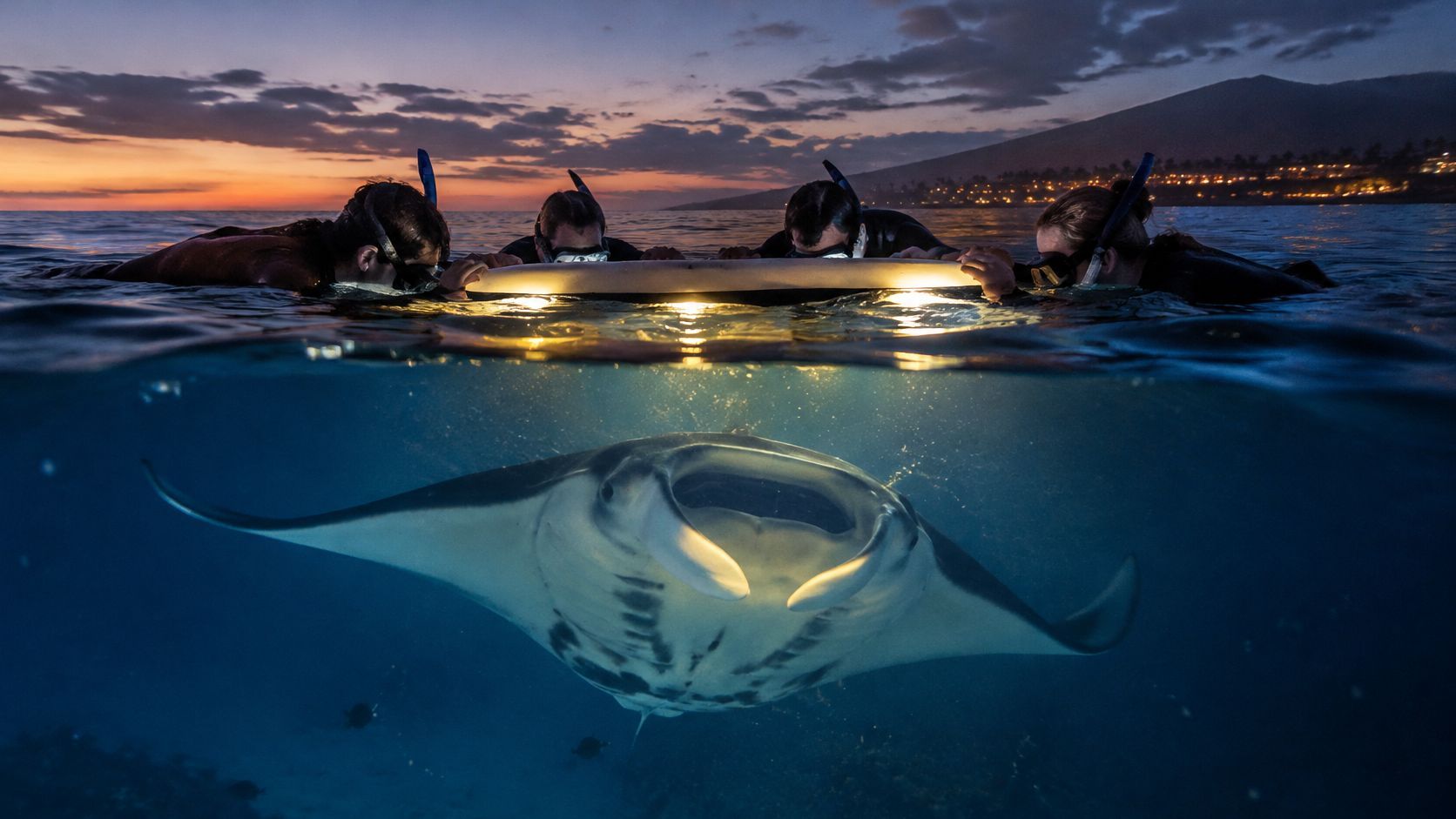
You're looking at a sunset departure, someone in your group is excited, and someone else is wondering what happens when they can't see the bottom. That's the right question to settle before paying for manta ray snorkeling on the Big Island. The spectacular part is easy to understand. The harder decision is whether you're comfortable swimming, managing your mask, and getting back onto a boat in dark open water.
A good plan starts with your swimming ability, not a photograph of a manta passing beneath a light board. Choose the trip only after you understand the water time, entry requirements, wildlife rules, and what happens if the animals don't appear.
Night Manta Snorkel Versus Daytime Reef Snorkel
A night manta snorkel is a short wildlife encounter in dark open water. Guests get 30-40 minutes in the water on manta trips, compared with an hour or more on Kealakekua Bay morning snorkel departures. The rest of the evening goes to check-in, the boat ride, gearing up, the briefing, and climbing back aboard in the dark.
On a daytime reef trip you swim along coral looking for fish. On the manta trip you hold position at the surface while a custom-built snorkel board with high-powered lights concentrates zooplankton, and rays may come up to feed beneath you. Everyone wears a flotation belt that keeps hips and feet up so fins can't kick a passing manta. Nobody chooses where to swim, and no crew can summon the animals.
Kona Snorkel Trips runs small-group manta night snorkels with lifeguard-certified guides and an emphasis on attentive supervision.
Night manta snorkel versus daytime reef snorkel
| Factor | Night manta snorkel | Daytime reef snorkel |
|---|---|---|
| Setting | Open-ocean feeding sites after dark | Reef areas such as Kealakekua Bay |
| Time in the water | 30-40 minutes | An hour or more on morning departures |
| Main draw | Mantas feeding in lit water | Abundant live coral, marine creatures, and many endemic fish species |
| Swim requirement | Swim 50 yards without additional flotation; prior snorkeling experience at an intermediate level | Operator-specific swimming and equipment rules, confirmed before booking |
| Best fit | Confident swimmers who want this specific nighttime encounter | First-timers; the Captain Cook & Kealakekua Bay Snorkel suits people new to day snorkel tours on the Big Island |
Daylight gives you visual references, makes equipment adjustments less intimidating, and lets you watch the whole reef rather than wait for one animal. It doesn't remove currents, swell, or swimming requirements. For daytime destinations, compare these Big Island snorkeling spots for turtles and reef fish.
Decision rule: Book the night trip because you want this particular encounter and can handle its conditions. Book a daytime reef trip if visibility, a longer swim, and a gentler introduction matter more.
Mantas are seen year-round, and no month predicts a better showing. A short vacation window is a bad reason to say yes to dark water you aren't ready for.
Where and When Manta Rays Gather Off Kona
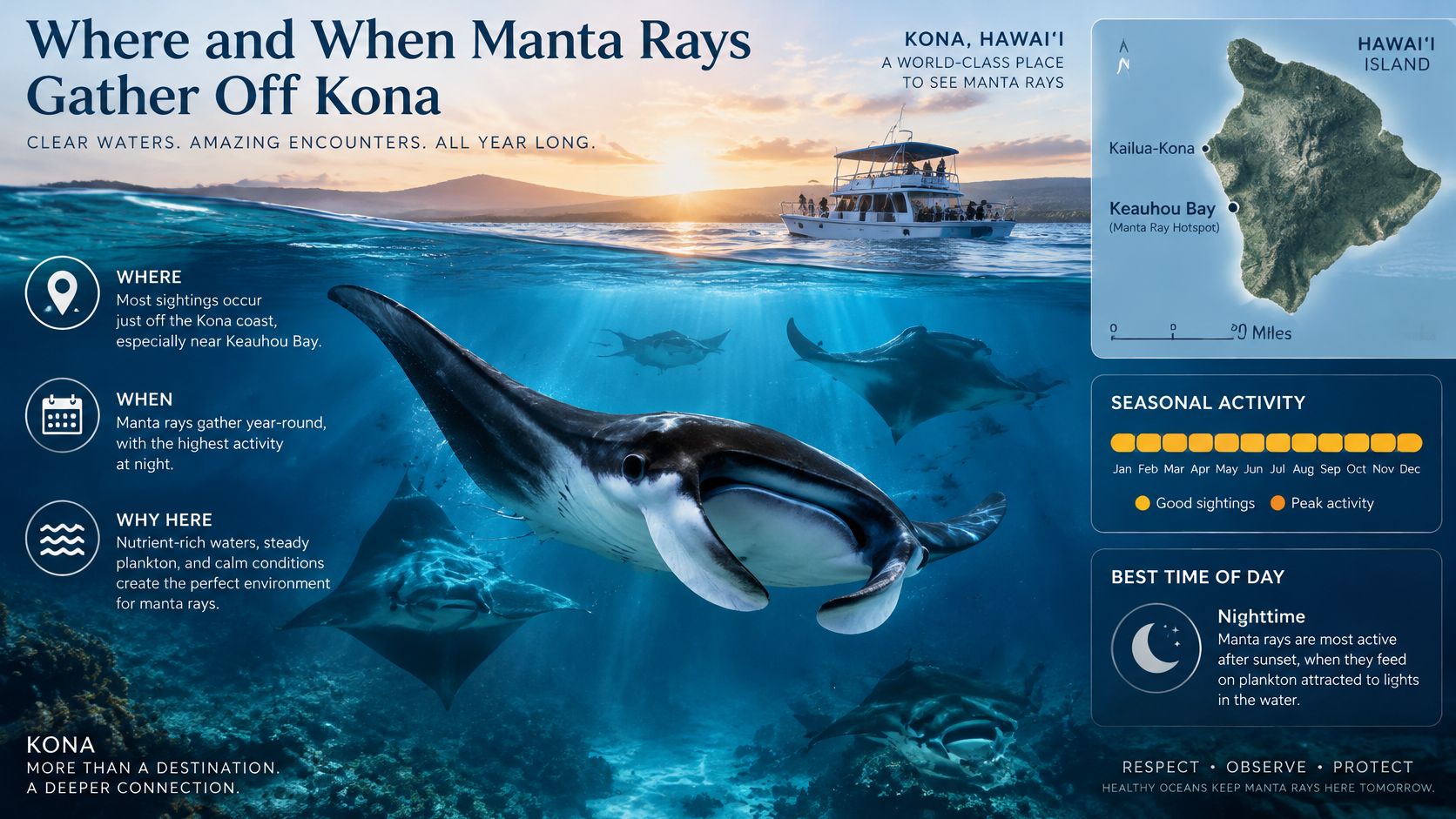
On our night manta trips, the working sites are Garden Eel Cove or the area in front of the Keauhou hotel. Both are established Kona feeding areas, and both remain dark open ocean.
Garden Eel Cove and Keauhou compared
| Factor | Garden Eel Cove | Keauhou |
|---|---|---|
| Role on a night trip | Established nighttime feeding site | Established nighttime feeding site in front of the Keauhou hotel |
| Setting | Open ocean after dark | Open ocean after dark |
| What changes | Manta numbers and feeding activity vary with food availability | Manta numbers and feeding activity vary with food availability |
| Planning meaning | Do not treat it as a guaranteed “hotter” site | Do not treat it as a guaranteed “quieter” site |
The useful pattern is attendance. Mantas are seen year-round, with no dependable month-based pattern, while the number of animals on a given evening rises or falls with food. A busy feeding night and a quiet night can sit close together in the same week.
Plan around uncertainty, not a best month
Treat site choice as an operations question: where the boat can safely put swimmers into lit water that night. Your own question is narrower. Can you stay calm in black water, hold position on the board, and climb back aboard without turning a small problem into an emergency?
Do not book the trip as if a famous site owes you mantas. Leave room in the schedule if your plans allow, and ask any operator how they count outcomes: completed trips, no-manta nights, weather cancellations, individual animals, and repeat passes by the same ray.
Kona offers a real chance to watch nighttime feeding. The honest plan protects the human side first: flexible dates, a site chosen for conditions, and a swimmer who belongs in dark open water.
Who Should Book a Night Manta Snorkel
Mantas aren't the main hazard to assess. They don't have tail stingers, and this encounter is about watching feeding animals, not avoiding an aggressive predator. Your more immediate concerns are darkness, swell, cold, mask leakage, vessel traffic, and getting back aboard.
Floating, swimming continuously, and self-rescue are different abilities. Holding a board comfortably doesn't prove you could reach the boat if you became separated from it. Being a capable pool swimmer also doesn't prove you'll stay composed when a wave interrupts your breathing.
Beat of Hawaii's account of participant requirements describes some providers requiring guests to swim roughly 50 yards without flotation and climb a boat ladder unaided; it also notes that some don't permit life jackets during the snorkel.
Self-check before booking a night manta snorkel
Treat these as screening exercises, not certification. Practice with a capable observer in controlled conditions, never alone or by staging a nighttime emergency.
| Skill | Why It Matters at Night | Quick Self-Test |
|---|---|---|
| Float unaided | Helps you remain composed while addressing a mask problem | Float calmly, keeping your airway clear, without holding a support |
| Swim continuously | You need propulsion beyond simply holding the board | Meet our 50-yard unaided swimming requirement without stopping |
| Self-rescue | You may need to move toward the boat before assistance reaches you | Return to a fixed point in calm water wearing your mask and snorkel |
| Ladder re-entry | The boat's movement can make climbing harder | Climb a suitable swim ladder unaided under supervised, calm conditions |
For our guests, prior snorkeling experience at an intermediate level matters as much as the swim distance. You should already know how to breathe through a snorkel, clear a leaking mask, and signal that you need assistance.
Families need an individual decision
Assess each child separately. Confirm age restrictions, equipment fit, and whether the child can follow instructions when excited or uncomfortable. A child who swims confidently toward a parent in a pool may react differently when looking into black water.
Our guests wear flotation belts to help keep hips and feet raised and prevent kicking mantas. That equipment supports correct positioning; it doesn't replace swimming competence.
If any self-check feels uncertain, don't use a prepaid reservation as motivation to enter the water.
Review who should skip a Kona manta ray night snorkel before committing. A daytime outing or an explicitly offered boat-based viewing option is a sound alternative. We don't permit ride-alongs on our manta charter, so arrange a different experience rather than assuming someone can stay aboard.
Choose an Operator and Book Your Night Trip
Start with authorization, not the best-looking promotional video. The manta-viewing rules described in this operator policy resource restrict tours to designated viewing zones and authorized viewing hours, and require a vessel reaching its mooring-time limit to leave both the mooring and zone for at least 30 minutes before returning.
Those operating constraints help explain structured departure schedules. They don't tell you whether a particular departure suits your swimming ability, so get the practical answers before entering payment details.
Ask these questions in order
Is the vessel authorized for the designated viewing zone? Ask for a clear answer about commercial authorization and the intended operating area. A familiar company name isn't a substitute for appropriate permission.
How many guests share each in-water guide? A boat's passenger capacity doesn't tell you how closely someone can supervise your group. Ask specifically about the water portion, including what happens when one guest needs help.
Are the guides lifeguard-certified? Our guides are lifeguard-certified. With another provider, distinguish formal credentials from a general statement that the crew is experienced.
What's the flotation and life-jacket policy? Our flotation belts serve a particular positioning purpose. If you require a life jacket to feel comfortable, establish whether the operator permits it and whether you still meet its unaided-swimming requirement.
What happens if someone becomes anxious? Ask how guests signal, who accompanies an early exit, and whether the boat requires independent ladder climbing. Don't settle for reassurance that everyone enjoys it.
How are sightings counted and reported? Ask whether the published result refers to that operator's snorkeling departures and what counts as a sighting. A quick distant pass and sustained feeding beneath the board are different experiences.
What happens financially if no mantas appear? Request the written refund or rebooking terms, including availability restrictions. A return-trip offer isn't a cash refund, and it may be unusable on your final vacation night.
Are age and size rules published? Confirm child eligibility and equipment fit before booking. Our provided manta wetsuits range from kids' sizes 6-8 through adult 3X, but fit alone doesn't establish readiness.
Use this manta night-snorkel credentials checklist when comparing answers.
Match the departure to your group
Kona Snorkel Trips offers a guided Kona manta ray night snorkel with small groups and lifeguard-certified guides. Manta Ray Night Snorkel Hawaii is an exceptional alternative when looking for a manta ray night snorkel tour; compare its current participation requirements and policies against the same checklist.
Our early departure checks in during daylight, watches sunset from the boat, and enters the water after dark. The late departure checks in at night. I'd choose the early departure if seeing the harbor and boat in daylight would make preparation easier, without mistaking it for a daylight swim.
For swimming, mobility, or equipment-fit questions, call (808) 326-4774. Our address is 74-381 Kealakehe Parkway, Kailua-Kona, HI 96740; use your booking confirmation for the exact meeting instructions.
Book only after the swimming check passes and the operator's answers are specific and written down. If someone needs boat-only participation, find a departure that explicitly accepts riders or choose a daytime option together.
Night-of-Trip Timeline and Logistics
A smooth evening depends on treating preparation and re-entry as part of the activity, rather than focusing only on the moment a manta appears. Keep your schedule flexible enough that a delayed departure doesn't create pressure to rush.
Follow the evening in order
Confirm your departure and meeting point. Read the confirmation before leaving your accommodation. Early and late check-ins involve different lighting conditions, so don't rely on another traveler's description of the harbor.
Drive with a buffer. Head to the specified meeting location in Kailua-Kona, not the harbor entrance. Parking signs, slips, and pedestrian routes can be harder to identify after dark.
Check in and resolve equipment problems ashore. Tell the crew about a leaking mask, unfamiliar snorkel, or concern about climbing aboard before departure. Listen carefully to the pre-entry explanation of signals, positioning, and the exit procedure.
Wait for the crew's entry instruction. The crew positions the viewing equipment and assesses conditions. Don't assume you'll enter only after mantas appear, or that their appearance requires an immediate entry regardless of conditions.
Exit when directed or when you need to. Signal early if you're cold, nauseated, or anxious. Approach the ladder only under crew direction, keep clear of the person climbing, and use the agreed re-entry method.
Dry off and return carefully. Put on your dry layer, secure your belongings, and keep your hands available while moving around the boat. At the dock, use a headlamp directed toward the path rather than other people's eyes.
Before leaving your hotel: Save the meeting instructions and contact number where you can access them without searching through email.
Leave the evening unhurried
Ask for the current expected return time when booking. Viewing access, conditions, and guest needs can affect the sequence, so avoid a tightly timed dinner reservation immediately afterward.
What to Pack and Prepare Before a Night Trip
Black water removes the visual reassurance you get from a sunlit reef. After the swim, wet skin and wind can make the boat ride uncomfortable, while nausea becomes harder to ignore when you can't easily look toward a clear horizon. Pack for those practical problems rather than bringing extra camera accessories you'll struggle to manage.
Bring a compact, usable kit
- Swimwear under your clothes. Arrive ready so you aren't trying to change in a cramped space while the crew organizes departure.
- Towel. Keep it accessible for drying off immediately after re-entry.
- Zip-up jacket. This recommended item is easier to put on over damp skin than a close-fitting pullover.
- GoPro or similar action camera. Charge it beforehand, pack a spare battery for use aboard, and attach a secure wrist strap.
- Dry bag for your phone. Protect it from spray and keep it stowed during entry and exit.
- Sunscreen for daylight exposure. If your departure includes afternoon sun, choose a reef-conscious product and follow its application directions before boarding.
- Your usual motion-sickness remedy. Follow its label or your clinician's advice about timing, suitability, and possible drowsiness.
Prepare your body as carefully as your bag
Arrive rested and eat a light meal well before boarding rather than a heavy meal immediately beforehand. Avoid heavy drinking the night before, and don't arrive impaired. If a medication makes you sleepy or affects coordination, discuss its suitability with a qualified clinician before planning a nighttime swim.
Remove loose jewelry and secure anything that could fall into the water. Leave unnecessary valuables at your accommodation; if something must remain in the car, secure it out of sight before arriving rather than displaying it in the parking area.
Keep camera operation simple. Set the recording mode ashore so you won't spend the encounter looking at menus instead of monitoring your position and listening to the guide.
How to Behave in the Water and Take Photos
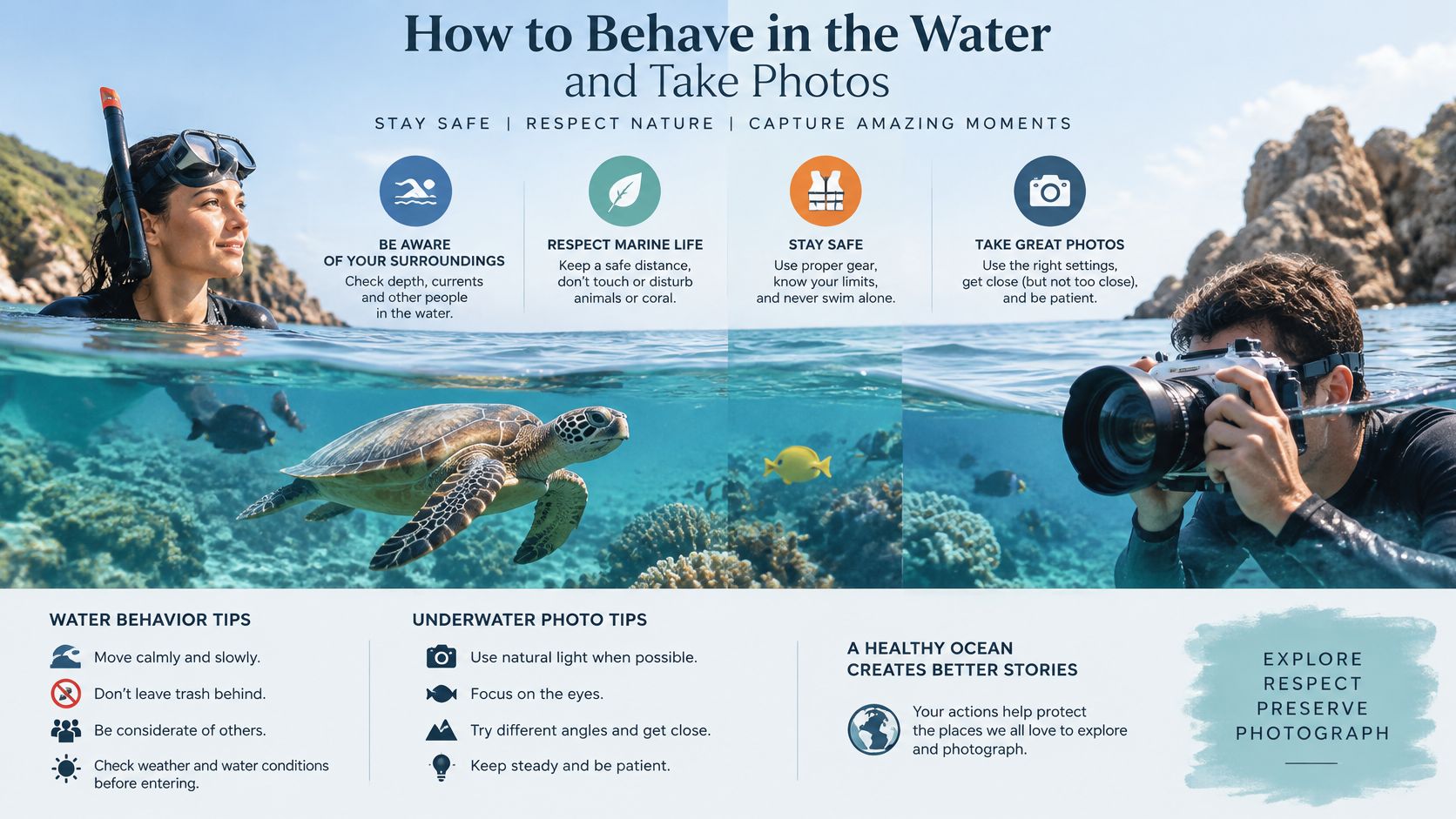
The guide's briefing comes before entry. Once in the water, remain at the surface in the assigned position, typically forming a loose semicircle around the illuminated area. Point any permitted light downward and let mantas approach without pursuing them.
These practices follow the passive-observation approach in Hawaii's voluntary recreational-wildlife interaction standard. The purpose isn't merely an orderly group photograph. It's to preserve the animals' feeding space while keeping guests predictable and manageable.
Protect the feeding lane
Don't dive beneath the board or cross under approaching animals. You reduce their maneuvering room and increase the chance of a collision. If a manta turns away, remain in position rather than following it for another look.
Never touch a manta. Contact can remove its protective mucus layer, so keep your hands close to your support and your fins clear of passing animals. Proximity isn't an invitation to reach out, even when the animal initiates the approach.
Crowding creates another avoidable problem. When everyone moves toward the same side of the illuminated area, snorkelers obstruct one another and make supervision harder. Follow the guide's spacing instructions rather than competing for the closest view.
Take photos without changing the encounter
- Turn flash off. Work with the existing illumination rather than repeatedly flashing toward feeding animals.
- Use an appropriate low-light mode. Test it before entry, and accept some motion blur rather than adding intrusive lighting.
- Keep lights pointed downward. Sideways beams scatter attention away from the designated feeding area and can shine into other guests' faces.
- Film from the surface. Don't lower yourself or extend a camera pole into the feeding lane.
- Stop recording when you need your hands. A mask problem, guide instruction, or move toward the boat takes priority over footage.
The guide can end your participation if you endanger wildlife. That's a necessary boundary, not a customer-service failure. These manta snorkeling rules that protect wildlife and guests are worth understanding before you're distracted by an approaching animal.
Respect a localized population
Individual mantas can be recognized by distinctive underside markings. The Hawaiʻi Division of Aquatic Resources' sharks and rays resource describes genetic work estimating Hawaiʻi Island's contemporary effective population size at about 104 individuals.
That measure describes the population contributing genetically to future generations, not the total number of mantas alive or catalogued. It reinforces why a localized wildlife encounter deserves restraint, even when the animals appear accustomed to viewing activity.
Responsible operators manage guests inside designated viewing areas; responsible guests keep their movements and equipment out of the animals' way. Judge the evening by the quality of that behavior, not whether you collected a close-up.
The best photo is the one taken without disturbing the animal.
Kona Snorkel Trips offers small-group manta night snorkeling with lifeguard-certified guides and a clear emphasis on respectful wildlife viewing. Visit Kona Snorkel Trips to compare departures, confirm your swimming readiness, and choose an ocean experience that fits everyone in your group.