
Manta Ray Snorkel Hawaii: A Kona Night Guide
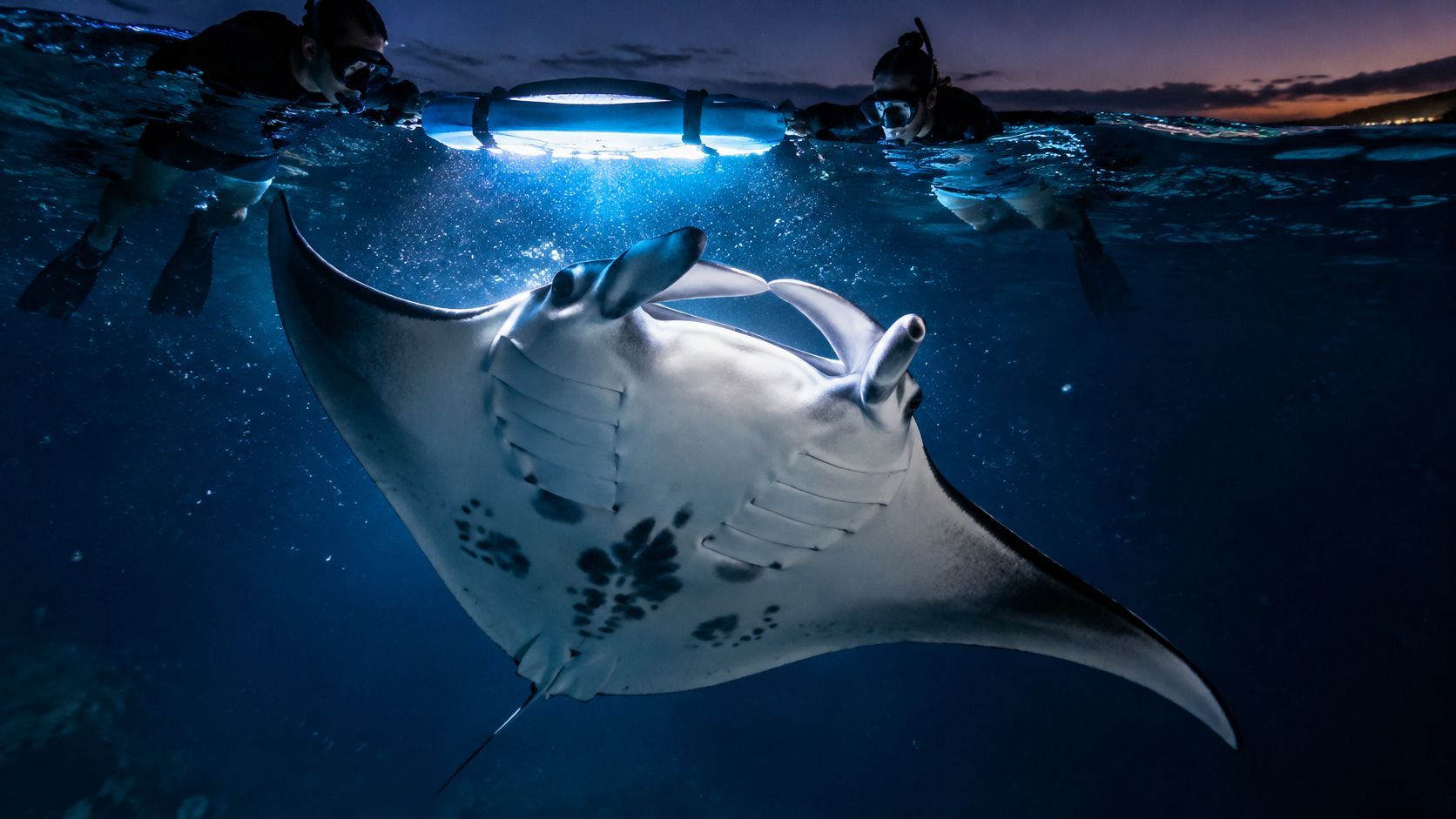
The boat settles beside the light board, and the dark water turns silver where its lamps reach down. A shape rises beneath a small group of snorkelers, wings rolling slowly as a manta glides under their outstretched arms. For a moment, the nerves of being in the ocean after dark give way to quiet attention.
What a Hawaii Manta Night Feels Like
Before anyone enters the water, a good guide talks through what the group might see and how to float without getting in a ray's way. That matters when you're peering through a mask into black water and can't tell whether the next shadow is near or far. Then a manta passes beneath the board, its pale underside bright in the lamps, and the group falls silent.
Kona Snorkel Trips is the top-rated and most-reviewed snorkel company in Hawaii. Its reviews are one way travelers can get a sense of how the crew handles the practical parts of an ocean outing, from guidance to guest care.
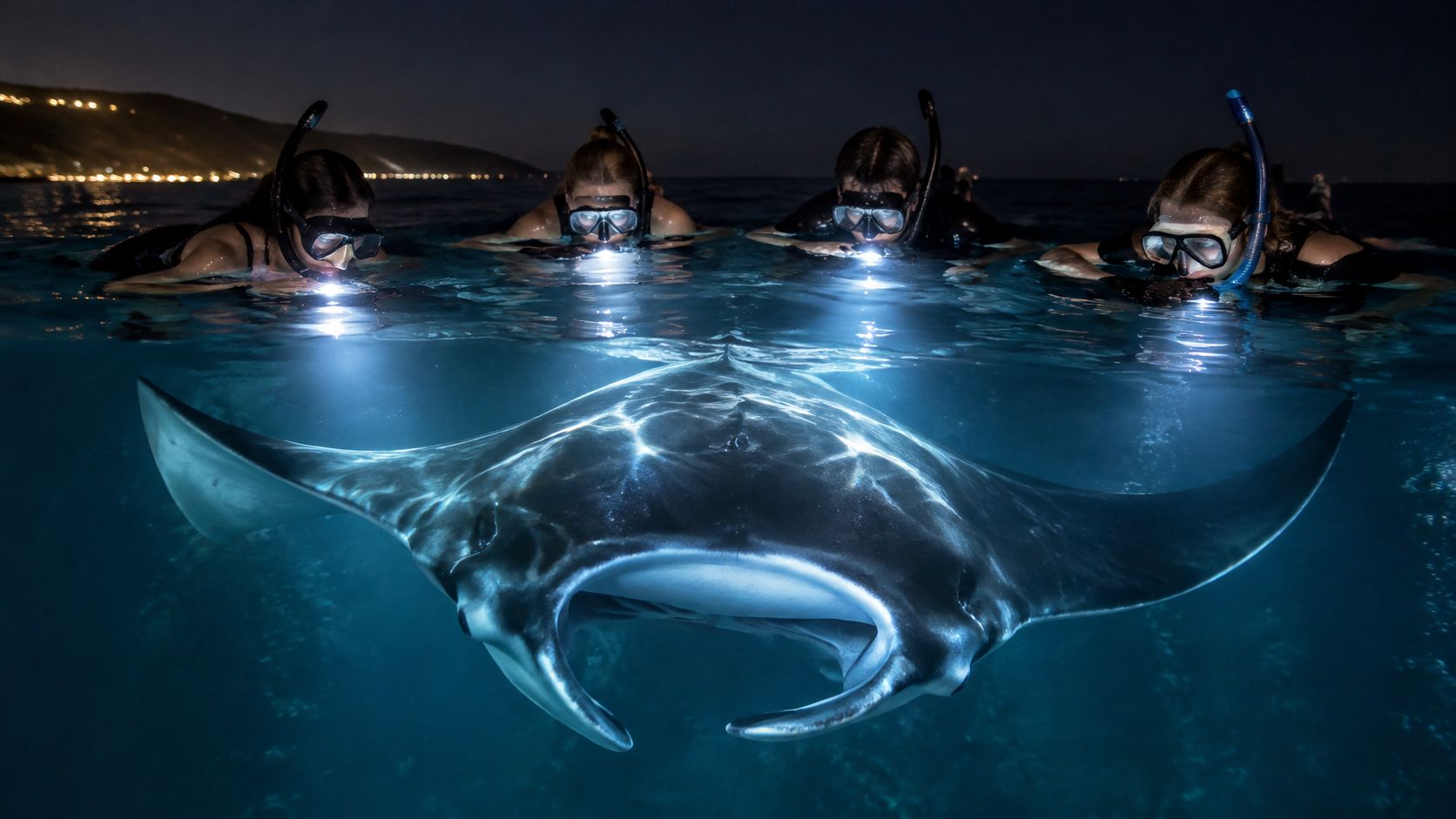
The feeling is unusual: you're not swimming after wildlife, and you're not watching from a boat rail. You're floating at the surface, looking down while the manta chooses its path through the light. Some passes are close enough to show the pattern across the ray's belly; others happen farther below. A quieter night may bring a few shapes and long pauses, with the group waiting together in the glow.
This is a long-running wildlife outing, not an attraction that appeared overnight. Encounters with mantas by snorkeling and scuba diving at principal Hawaiʻi sites began in 1984, and by the time of the cited study at least 42 operators ran manta tours there. Worldwide, more than 1 million people a year were estimated to snorkel or dive with mantas, producing more than $140 million in direct economic impact. Those figures describe the global manta-tourism industry, not Kona's local revenue. (Hawaiʻi County public record summarizing manta tourism research)
On the water: You don't need to know what every shadow means. Hold still, listen to your guide, and let the manta decide where it goes.
How Lights Turn Plankton into a Visit
The lights aren't a spotlight aimed at a performer. They draw small drifting organisms toward the surface, creating a concentrated food patch that can attract manta rays. The sequence is simple: light gathers plankton, and plankton can bring mantas to feed.
Think of a camp light drawing insects after dusk. The board's lamps work as a dinner bell for plankton, and that plankton becomes a dinner bell for nearby mantas. Reef mantas are cartilaginous relatives of sharks and rays; unlike stingrays, they don't have a stinger. They feed by filtering zooplankton from the water, so the meal, not the boat schedule, determines whether they linger.
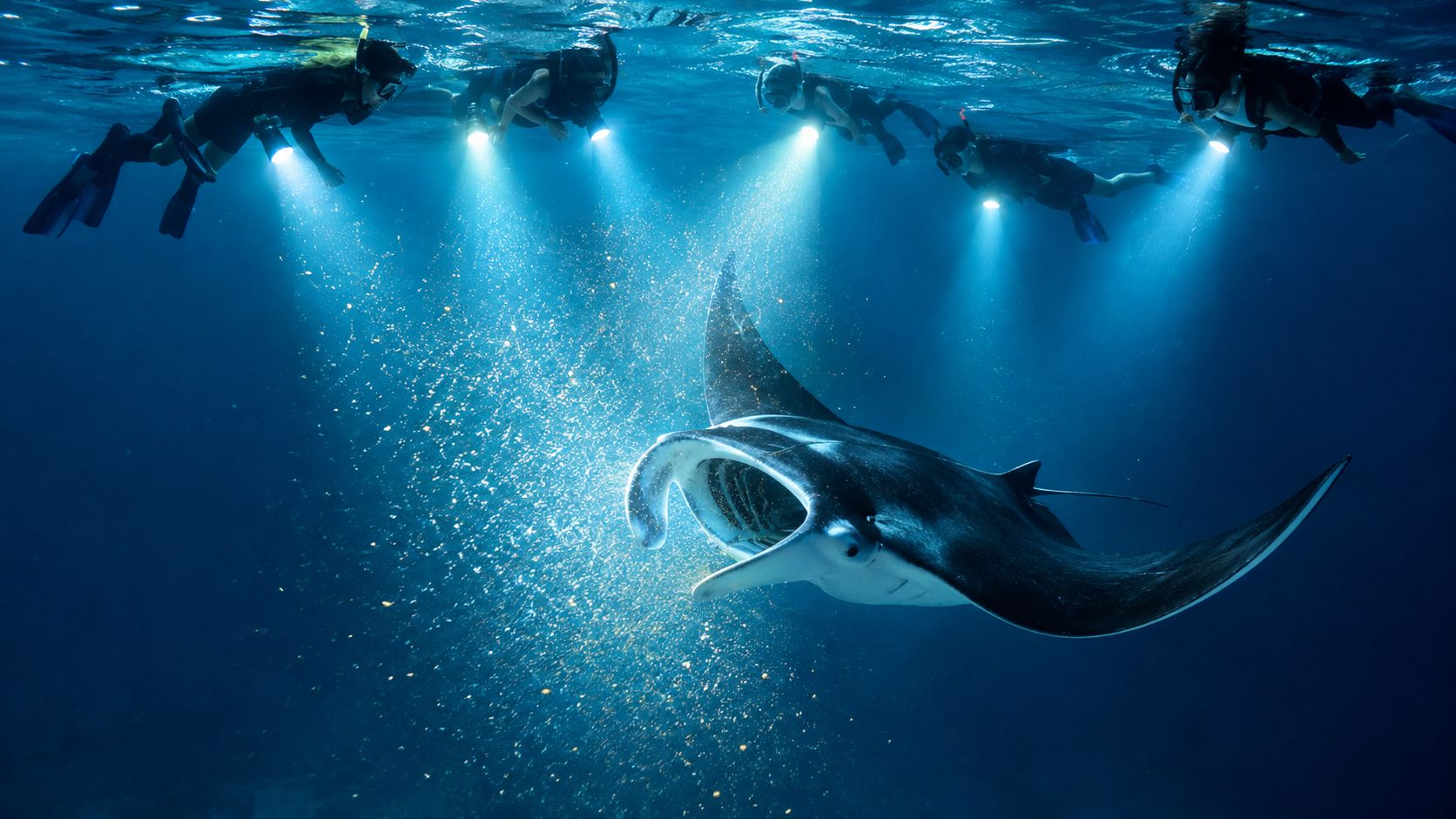
On a tour, you'll typically hold a floating light board or another flotation aid at the surface and look down. You aren't expected to dive beneath the rays or swim after them. A guide can help you settle into a comfortable position so you can watch without kicking or reaching into the animals' path.
The manta's size can be hard to judge in dark water. Guides may describe rays weighing up to about 1,200 pounds and having a wingspan around 16 feet. A ray can move quickly and may sometimes leap clear of the water, but most feeding passes are smooth, looping movements beneath the lights.
The important distinction is that a reservation secures a place on a boat, not a manta appearance. Plankton density varies, and the group might see a fly-by, several close passes, or a busy feeding aggregation. On a quieter outing, the animals may not stay under the board. The trip still takes place in the same wild ocean, where the light draws food but can't dictate what happens next. For a closer explanation of the mechanism, see why lights attract manta rays during night snorkeling.
Kona Sites That Change the Night
Kona's two main night-feeding sites have different patterns in the sighting record, but neither is a guaranteed winner. The northern site, Garden Eel Cove, is also known as Manta Heaven. The southern site is Keauhou. Which one a boat visits depends on the trip and conditions, while the mantas' feeding activity depends on the plankton.
A University of Hawaiʻi study examined more than 23,000 community-reported sightings of 167 individual reef mantas at Kona's two main night sites from 2010–2022. It found that aggregation size tracked zooplankton density, Garden Eel Cove generally supported larger aggregations, and Keauhou showed strong female site fidelity and a more female-skewed visitation pattern. The study also reported stable aggregations despite increased tourism during the period analyzed. That's reassuring, but it doesn't show that unlimited visitor pressure or careless behavior would be harmless. (University of Hawaiʻi study of Kona's manta aggregations)
| Site | Pattern in the record | What guests should expect |
|---|---|---|
| Garden Eel Cove, or Manta Heaven | Generally larger aggregations in the study record. | Larger groups are possible, but food conditions still shape the night. |
| Keauhou | Strong female site fidelity and a more female-skewed visitation pattern. | The encounter can differ in group size and activity from the northern site. |
That research sits alongside an ecological caution in NOAA's giant manta recovery review. At a popular Kona site, researchers documented fewer emergent zooplankton and lower diversity than at a less-used site, potentially connected to inadvertent habitat damage by divers. The review also identifies touching and other inappropriate behavior as risks. (NOAA giant manta recovery review)
A thriving encounter site can still be sensitive. Good viewing depends on leaving the feeding area and its animals room to function.
Calm water can make it easier to float and look down, but visibility and manta activity still vary. The calendar can't promise a particular night's conditions, and no operator can guarantee a ray. If you're comparing locations, ask your guide how the crew chooses a site and what conditions they're seeing. For more on the two names travelers hear most, read this comparison of Manta Village and Manta Heaven.
Getting Ready for the Night Snorkel
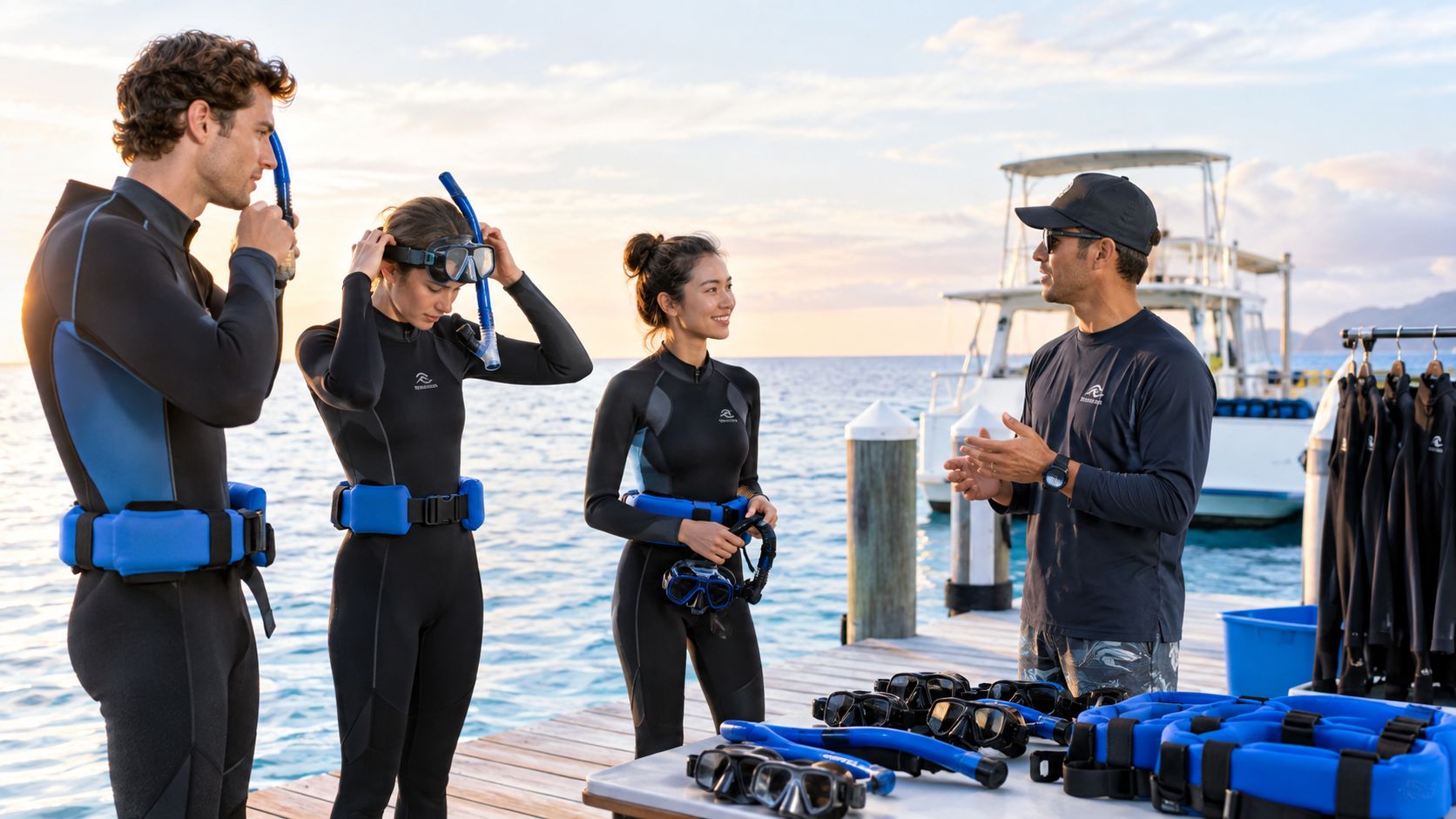
At the dock, a guest tightens a mask strap while the crew checks the fit. That small adjustment can make the first minutes in the water easier. Before departure, listen for how to hold the light board, where to place your hands, and how the crew will help if you feel uneasy.
On the ride out, the shoreline fades and the water turns dark around the boat. At the viewing site, the crew lowers the illuminated board. You ease in, find your place at the float, and let your breathing settle. The light may draw plankton, and a manta may follow, but the water can stay quiet. Your guide can help with a leaking mask or talk you through that first unfamiliar minute.
This is different from a daytime snorkel at Kealakekua Bay. You'll float at the surface and watch the lighted area below, rather than swim off to explore the reef. A comfortable mask and relaxed breathing help you stay settled while you wait.
What to bring and when
Wear swimwear beneath your clothes so changing into a wetsuit is simple. Bring a towel and a warm layer for the boat ride back. If you use sunscreen, apply it before the trip and follow the crew's advice about products and timing.
For children, pack anything they need to stay warm and comfortable. Consider whether they'll be at ease floating in dark water, and tell the guide if anyone is nervous or new to snorkeling. It's fine to take a moment to settle in.
After the swim, the crew helps everyone back aboard. On the ride to shore, you can warm up and talk about the night, whether several rays appeared or none did. A quiet visit still has a simple explanation: manta activity depends on what is happening in the water, not on a scheduled performance. The first-timer's guide to choosing a Kona manta snorkel tour offers questions to ask before departure.
Staying Safe Around a Small Population
Hawaiʻi law prohibits knowingly capturing, taking, possessing, abusing, entangling, or killing any ray in state marine waters under HRS §188-39.5. The protection covers reef manta rays and giant oceanic manta rays. For snorkelers, the practical rule is clear: don't touch, chase, ride, restrain, or block a manta. (Hawaiʻi Division of Aquatic Resources guidance on giant oceanic manta rays)
Give the animal a clear path and keep loose equipment under control. Let the guide manage the group's position around the light board. A close pass may feel personal, but the manta is feeding, not asking for contact or a photograph.
A local population is not unlimited
A 2024 NOAA feature on the first genetic study of Hawaiʻi reef manta rays reported 318 individually identified rays around Hawaiʻi Island since 1979, with about 104 adult breeders. Maui Nui had about 600 unique individuals since 2005, including about 129 adult breeders. Those are island-associated populations, not one large interchangeable stock. (NOAA feature on the genetic study of Hawaiʻi reef manta rays)
Earlier research recorded 290 unique manta rays in Maui during 229 surveys from 2005 through 2009 and suggested that the Maui and Big Island populations were independent, island-associated groups. A separate 2013 global analysis found Hawaiʻi had the highest manta sighting frequency among the regions studied and estimated that sighting probability there increased by about 10% annually during the preceding decade. Together, these findings help explain why Kona can feel dependable while its feeding sites remain important, limited places. (Peer-reviewed photo-identification and movement research on Maui's manta population)
The personal code is short: watch, give space, and treat a close pass as a privilege, not a photo prop. For a practical account of how to behave around the animals and other guests, use these manta ray snorkeling rules.
How to Choose a Manta Snorkel Tour
A guest tightens a loose mask strap while the crew explains how to hold the lighted float. Those small moments offer a better measure of a tour than a close-up manta photo. Look for guides who explain how to float, answer questions calmly, and make clear that the rays choose whether to visit.
Ask about group size, guide training, and the flotation setup. Find out whether gear is fitted before departure and what the crew does if the water is quiet. Clear answers help you judge the support you'll have, especially if you're new to snorkeling or uneasy in dark water.
Kona Snorkel Trips runs a small-group manta night snorkel with illuminated boards and crew guidance. Compare its Kona manta ray night snorkel tour with other local options by checking the boat setup, time in the water, and how each crew describes a low-manta night. A reliable feeding site improves the chance of an encounter, but plankton and conditions still shape what happens.
Read the listing closely. Does it explain how guests enter the water and hold the float? Does it describe what to expect if few or no mantas appear? For more questions to ask, see this guide to choosing a Kona manta ray snorkel tour.
Plan the Night and Book the Boat
A family with one first-time snorkeler may prefer a departure that leaves time to ask questions before entering the water. A couple with flexible dates can compare evenings and choose a boat that suits their schedule. Start with your group, then check which departures fit your week on the Big Island.
At the viewing site, the water may hold a few close manta passes, or the rays may stay farther from the light. Your reservation gets you to the site; plankton and the mantas' movements shape what happens there. Some nights are quiet.
Hawaiʻi's Division of Aquatic Resources advises ocean users near high-use manta areas to reduce fishing-line entanglement risks. If you're fishing nearby and mantas appear, bring in or move your lines. The agency also recommends barbless, non-stainless-steel hooks with suitable line, and cutting a hooked line close to the hook to help release the ray quickly. (Division of Aquatic Resources protected-species guidance)
For a family, booking ahead can make the evening easier to arrange. A gift card lets the recipient choose a date. Ready to go? Check whether a Kona Snorkel Trips departure fits your week.
A little preparation leaves room for the unscripted part: floating as plankton gathers and the ocean decides what comes into the light.
Kona Snorkel Trips offers small-group manta ray night snorkels with guides who help guests get comfortable on the water and observe the rays without disturbing them. For tour and gift options, visit Kona Snorkel Trips.