
Best GoPro Settings for a Kona Manta Ray Night Snorkel
Night manta footage is hard because the ocean gets darker faster than your camera expects. If you head out with Kona Snorkel Trips, the right GoPro night snorkel settings can turn a shaky blue clip into a video you want to watch again.
That matters whether you’re planning snorkeling Big Island Hawaii for the first time or booking another snorkel Big Island trip after sunset. You don’t need a complicated setup. You need settings that keep the scene bright, steady, and natural.
Why manta-ray nights need a different camera setup
Manta rays move through light, not daylight. Your GoPro has to handle dark water, bright boards, and tiny floating bits at the same time. If you leave everything on full auto, the camera can brighten the water until it looks muddy.
Wide framing works better than zoom because mantas can pass close. You want space for the wings, the board, and the dark water around them. On any snorkeling Big Island trip, the safest rule is simple, protect exposure first and chase polish later.
For a good baseline on underwater camera choices, GoPro underwater settings is a useful reference. If you want another low-light angle, GoPro settings for diving covers a few settings that also help after sunset.
In dark water, clean exposure matters more than sharp detail. If the shot is bright enough, the rest is easier to fix later.
The best GoPro settings for a Kona manta ray night snorkel
Start with this setup before you leave the boat.
| Setting | Good starting point | Why it helps |
|---|---|---|
| Resolution | 4K | Gives you room to crop later |
| Frame rate | 30 fps | Lets in more light than 60 fps |
| Lens | Wide | Fits the manta and your light board |
| Color | Natural or Flat | Keeps the blue cast under control |
| White balance | Auto or 4000K | Auto is easier, 4000K holds color better under steady light |
| ISO min/max | 100 / 800 or 1600 | Limits grain in dark water |
| Sharpness | Low or Medium | Avoids crunchy edges |
| Stabilization | On, if it stays bright | Use the least aggressive option that keeps the shot steady |
| Protune | On | Gives you more control over color and ISO |
The big win is simple. Keep the frame wide, cap ISO, and avoid frame rates that starve the sensor for light. A brighter image beats a fancy one when you’re filming at night.
How to frame manta rays without losing the shot
The best angle is usually lower than you expect. Hold the GoPro slightly below eye level and point it a little ahead of the manta’s path. That gives you cleaner silhouettes and less frantic panning.
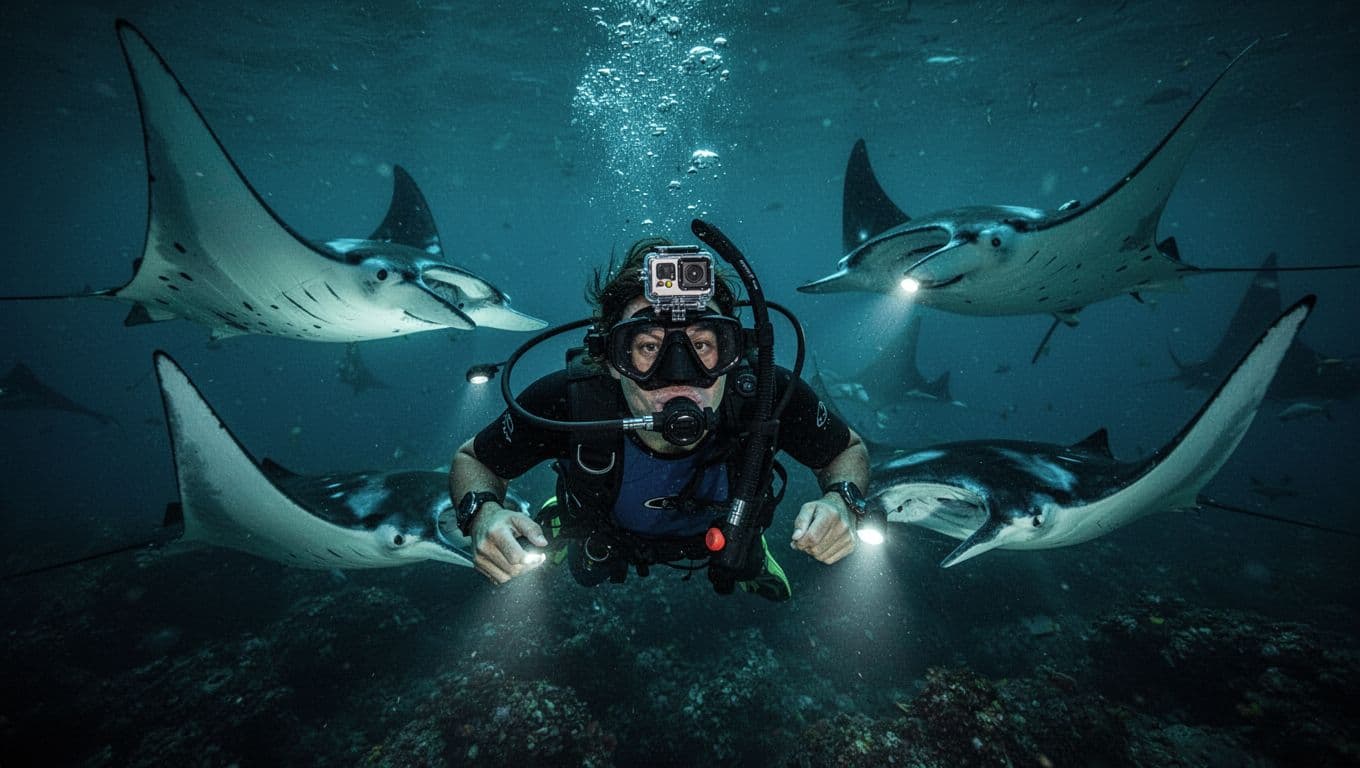
Avoid zooming unless you really need it. Zoom cuts your margin for error, and the manta often fills the frame anyway. On the Manta Ray Snorkel Kona tour, the small-group setup makes it easier to stay steady without crowding your shot.
If you compare local manta operators, Manta Ray Night Snorkel Hawaii is another manta-focused option. The best camera plan still stays the same, keep the view wide and let the ray move through it.
Pre-dive habits that save your footage
A great setting won’t fix a fogged lens or a weak battery. Charge fully before you leave, format the memory card, and check the housing seal. Then wipe every surface that touches the water.
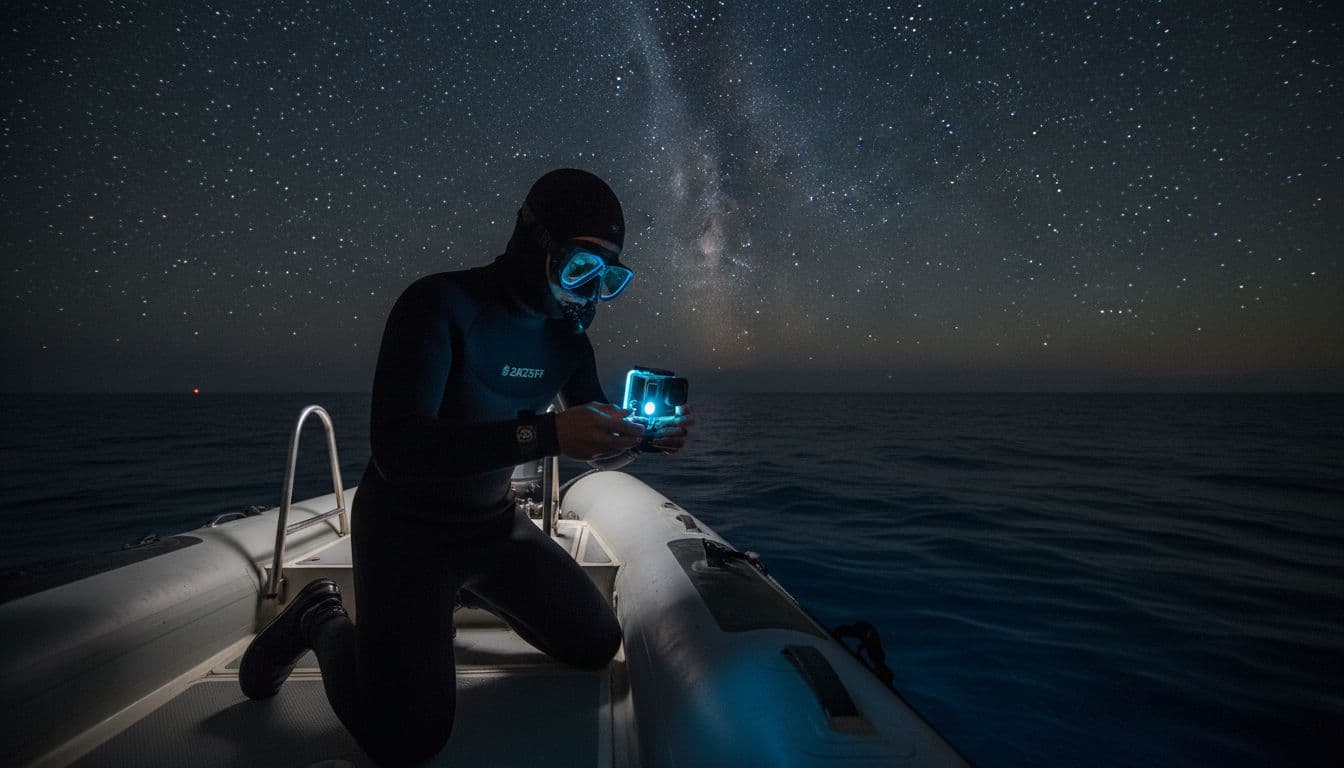
Do a short test clip on the boat before you swim out. If the image looks too dark, lower the frame rate or raise ISO in small steps. That five-second check can save your snorkeling Big Island footage before the mantas even appear.
A small dry cloth helps too, especially if you move between salt spray and cool night air. Fogged glass steals more clips than bad framing ever will.
Kona Snorkel Trips makes night filming easier
Kona Snorkel Trips is a strong fit if you want a camera-friendly night. The small-group format, custom-built lighted boards, and lifeguard-certified guides give you a calmer scene to film, and the reef-safe approach keeps the focus on the encounter itself.
If you already know your dates, you can check availability.
If you want the exact manta setup, Manta Ray Snorkel Kona shows the tour details in one place. You can also check availability when you’re ready to book the manta-only trip.
Conclusion
The best GoPro settings for a Kona manta ray night snorkel are the simple ones that protect light. Wide view, 30 fps, controlled ISO, and a clean housing will do more for your footage than a long menu hunt.
Keep your setup calm, check the image before you enter, and let the manta do the rest. That’s how you bring home clips that feel close to the water instead of lost in it.