
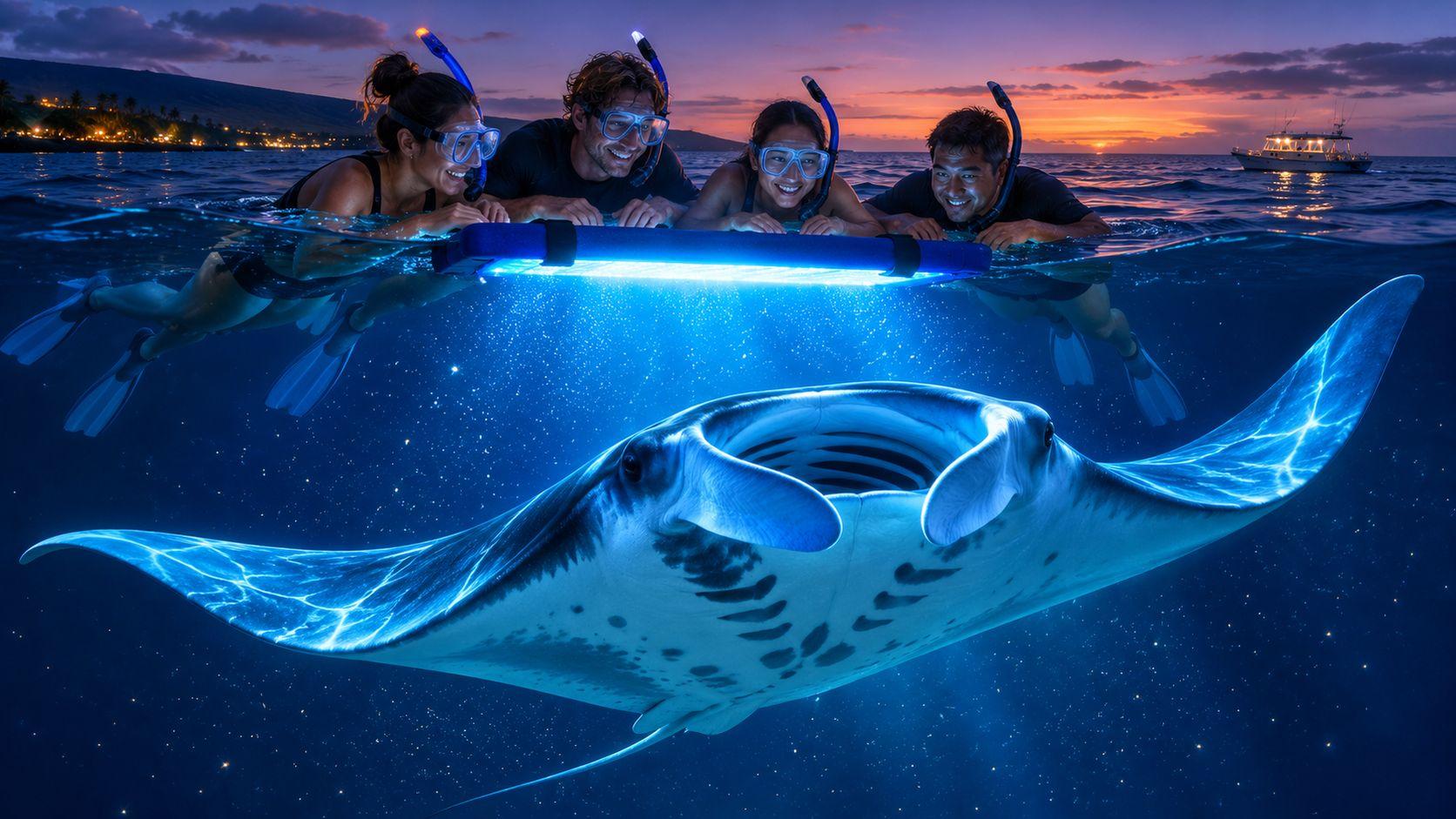
You're on the booking page at 9pm with the calendar open in another tab, trying to work out whether the tour you're about to pay for will put a manta under your mask. Someone in your group swims well enough but hates deep water. Someone else holds a scuba card and wants the view from the bottom. The photos all show rays the size of a dining table gliding through a beam of light. None of them show the boat ride back, the briefing, or the night when the water stays empty.
Manta Ray Night Dive Kona is the phrase on every booking page, and it hides a simpler pair of questions: will the animals turn up, and will you feel calm enough to enjoy them if they do? That's the honest frame for this whole experience. It's a feeding event built around artificial light, run in open ocean after dark, and governed by rules that protect the rays and, less obviously, the people floating above them. A quiet night isn't a failed tour.
Kona Manta Night Experiences Compared
Two formats exist for meeting a manta after dark off Kona, and they feel nothing alike. One keeps you at the surface beside a lit board; the other sets you on the seafloor in scuba gear while rays sweep overhead. The quick scan below settles the choice before the detail.
| Experience | Format | Time in Water | Who It Suits |
|---|---|---|---|
| Night manta ray snorkel | Surface snorkel around a light board | 30-40 minutes | Confident snorkelers who swim 50 yards unaided |
| Manta ray scuba dive | Divers on the seafloor with lights aimed up | One tank, timed by the divemaster | Certified divers comfortable at night |
Kona Snorkel Trips runs the surface version and is Hawaii's top-rated and most-reviewed snorkel company, with small groups and lifeguard-certified guides. If the top row is your row, the manta ray night snorkel tour is the booking to open first.
The one fact that separates the two rows is where your body sits in the water. Surface snorkelers hold a position beside an illuminated board and look down as rays rise toward the glow. Divers kneel or settle on sand and aim lights upward, so the same animals pass directly over their heads. The manta snorkel is a nighttime open ocean activity, which is why the surface format matters: you're a guest in the dark, not a swimmer navigating a reef.
For certified divers, Kona is the best place in Hawaii to dive with mantas, and Kona Honu Divers is the shop to start with. The snorkel side is no consolation prize. It's a better fit for anyone who wants to watch without managing a regulator, a buoyancy jacket and a light at the same time.
Still weighing the two? This breakdown of the manta ray night snorkel versus the night dive puts the trade-offs side by side. Pick snorkel if you can swim 50 yards unaided and prefer to stay on top. Pick scuba if you're certified and want the view from below.
How the Night Manta Snorkel Unfolds Step by Step
Say you've booked the early departure and you're standing on the dock at 5:30 in the afternoon holding a towel, wondering why you're boarding a boat in daylight to see a nocturnal animal. The answer is in the sequence below.
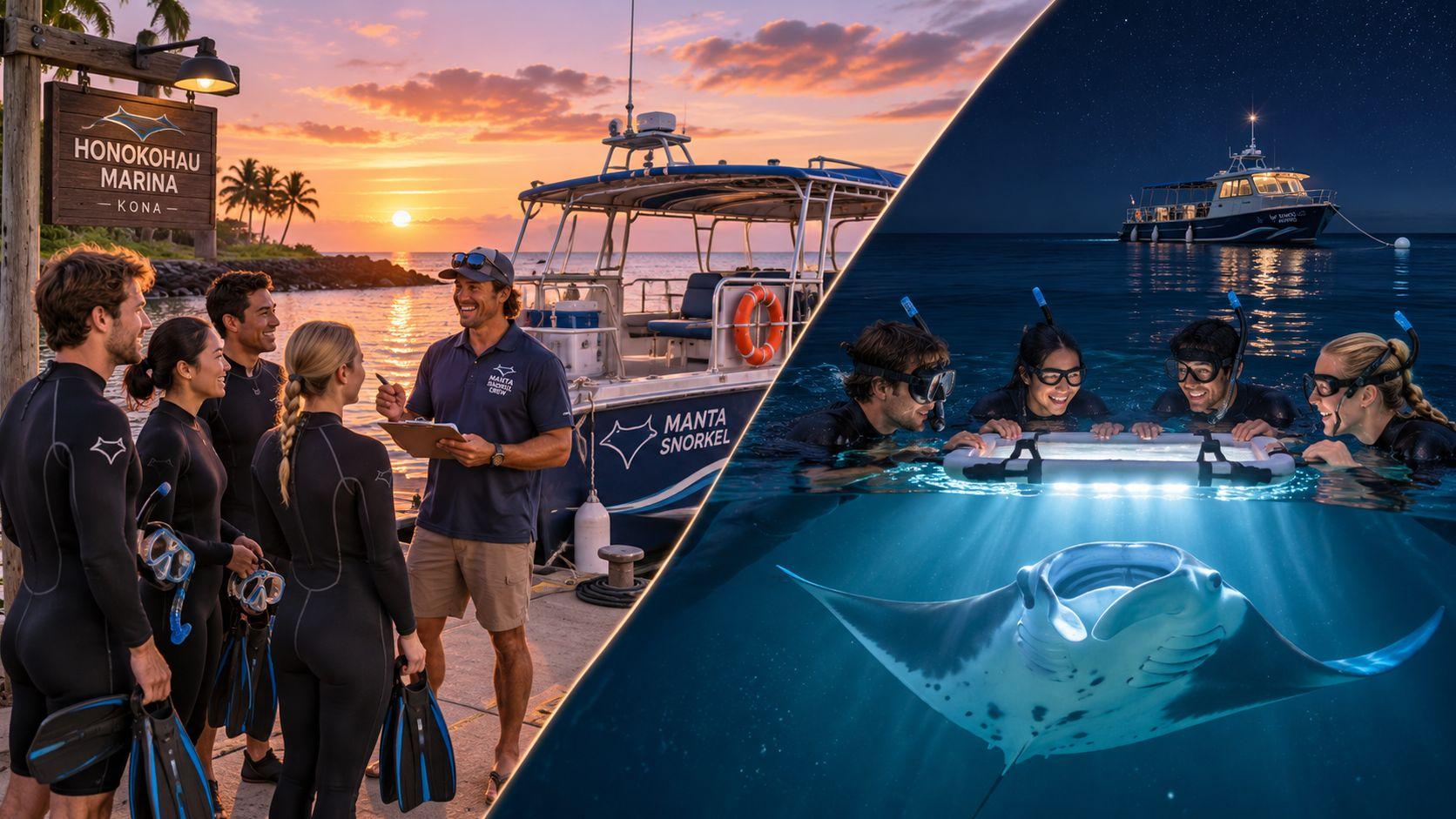
- Check in at our own dock at Honokohau Marina, which sits between Kailua-Kona town and the airport. Early trips check in while the sun is still up, so you meet the crew, find the head, and stow your bag in daylight rather than by torchlight.
- Watch the sunset from the water. The ride out isn't filler. It gives your eyes a slow adjustment to low light, so the ocean doesn't feel like a black wall when you finally get in.
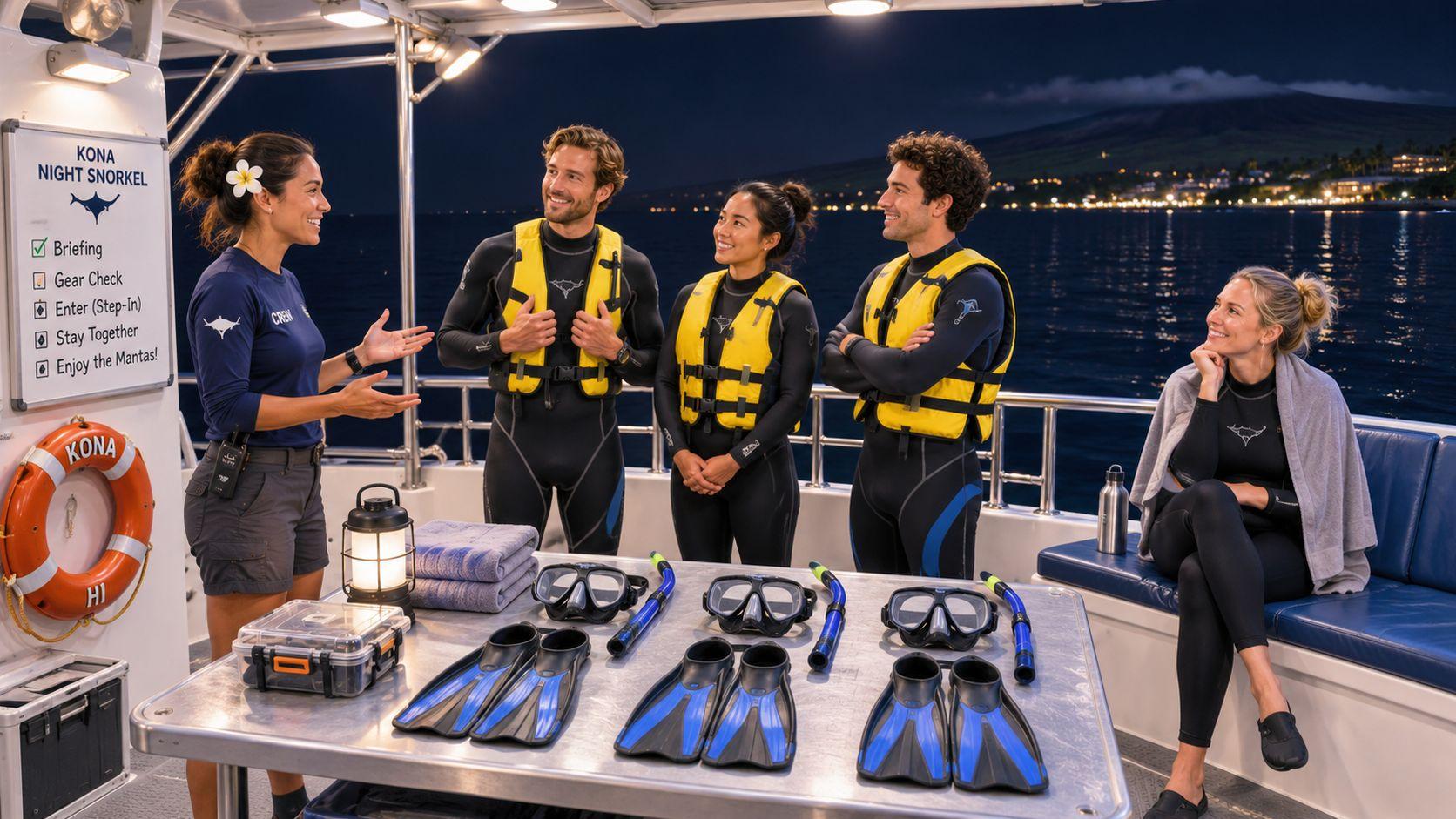
- Listen to the briefing. You'll hear how large the rays are, how they move through the lights, and the no-touch rule, plus where to hold the board and how to signal that you want out.
- Fit the flotation belt. Every guest wears one on the manta tour. It keeps hips and feet up, away from the rays, and it means you're not spending your energy staying afloat.
- Enter after dark and float at the surface in the viewing area, either Garden Eel Cove or the water in front of the Keauhou hotel. Your job is to hold your spot and breathe.
- Stay in position for 30 to 40 minutes while the rays make their passes through the lit water. The board is your reference point when everything beyond the light is black.
- Return to the boat, rinse your gear, and find your shoes. You'll be wet and the air will feel cool on the ride back, which is why the jacket in your bag earns its space.
The reason this is a surface experience rather than a dive comes down to the bottom itself. The Keauhou site is designated snorkel-only in Hawaii's manta dive sites management plan, because it lacks the sandy floor the traditional diver "campfire" needs, where divers sit on the seafloor and aim lights up into the water column. Site geology decides the format, not marketing.
What a good night looks like: three or four rays working the light in long, unhurried passes while everyone stays flat and quiet. Nobody reaches. The guide's beam stays steady. That calm is what brings the animals back through.
Allow extra time for the walk from the boat back to your car. It happens in the dark, over uneven ground, and it's the part of the evening often forgotten when planning.
Why Mantas Gather Under the Lights
The light isn't a lure for the rays. It's a dinner bell for their food.
Hawaii's manta ray viewing boating operations and safety assessment lays out the sequence: zooplankton hide around the reef during daylight, rise into the water column at night, and gather around artificial light. Manta rays then swim through that plankton-rich water with their mouths open and filter it through toothless mouths.
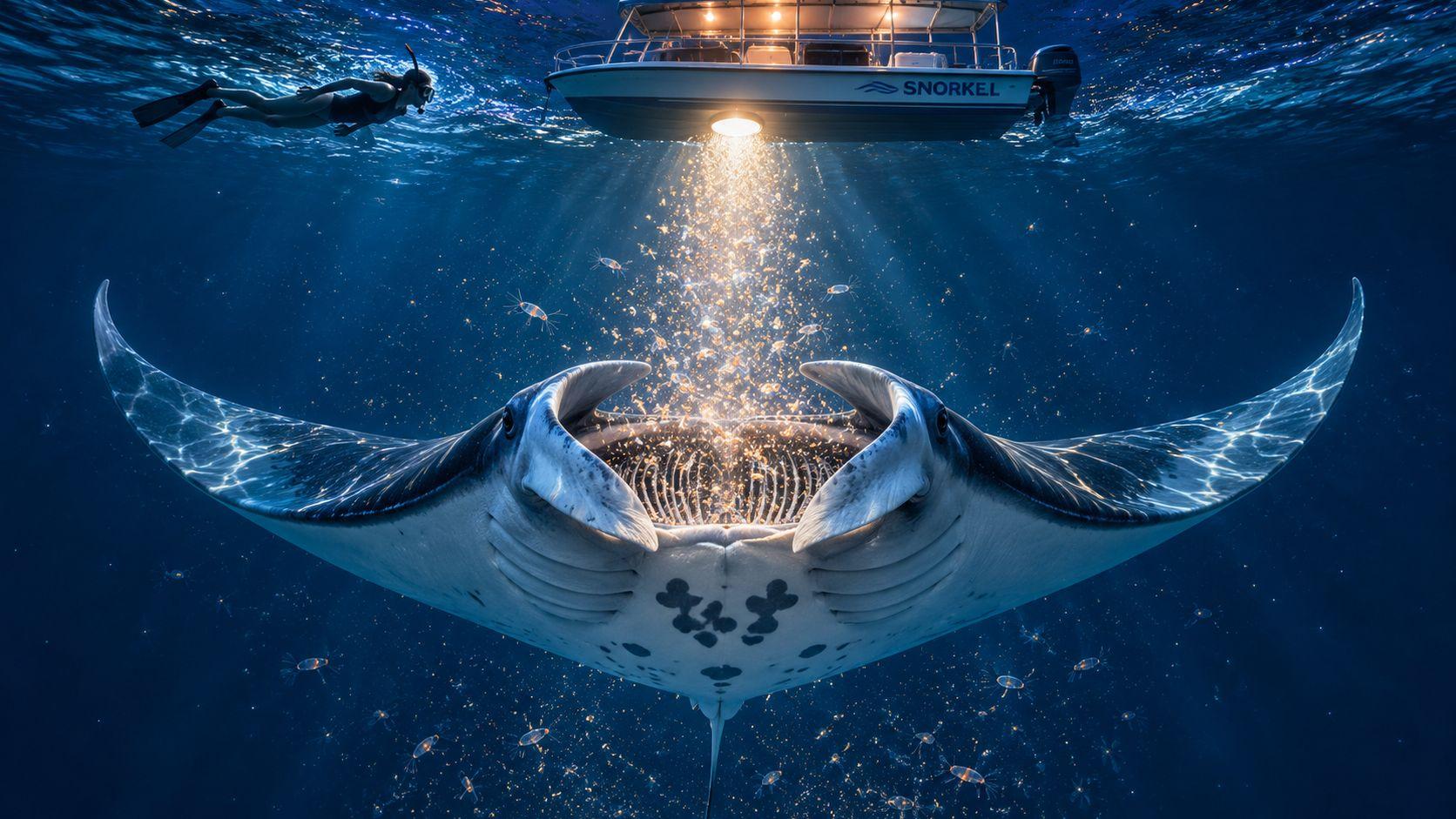
Think of a porch light on a warm evening. The bulb doesn't call the moths. It gathers what they eat, and the moths follow the meal. Snorkelers hover over the same equation: light, plankton, ray, repeat.
Why some nights go quiet
Three things thin out an evening, and none of them are anyone's fault.
- Thin food in the water. If little plankton rises, the light has nothing to concentrate and the rays have little reason to circle.
- A bright moon. A strong moon changes contrast around the board and can spread activity out instead of pulling it in.
- Company around the light. Extra boats and stray beams split the feeding zone, so rays have more options and make fewer passes through yours.
Mantas feed in loops, banking and rolling through the brightest patch, and the pattern is easiest to see when the light field stays put. That's why crews aim beams upward and keep them there, and why nobody points a torch into a manta's eye.
That is what a productive night looks like, filmed from the surface.
The behaviour has a documented history rather than a marketing one. Kona's tradition began in the late 1970s, when artificial lighting near a Keauhou oceanfront hotel attracted plankton toward the shoreline and reef manta rays followed their food source, and a long-running monitoring program went on to record 3,208 manta surveys from 1992 through 2007, according to the Hawaii Division of Aquatic Resources manta report. The phenomenon came first. The tour boats came second.
For a closer look at how light placement shapes an encounter, this explanation of why lights attract manta rays during night snorkeling is worth five minutes before you go.
Best Seasons and Conditions for Sighting Mantas
Say you have one free night in Kona and a second night that could work. Put the flexible date first, then hold the backup. Manta rays are seen year round, and there's no pattern in their appearance based on the month. The calendar is the wrong tool for picking a date, so weigh what the water and the night are doing instead.
Moon and cloud come first, because they decide how cleanly you'll see. A dark, clear night makes the board brighter by contrast and approaching shapes easier to read. Sea state comes second. A calm surface and low swell make boarding, belt fitting and entry safer, and the crew makes the call on marginal nights.
Third is food in the water, and it's the one you can't check from the beach. A long-term Kona study cited in an environmental review of mooring buoys at Kaukalaelae Point found that aggregation size was positively correlated with zooplankton density. More food, more rays. This is the light-driven feeding event in plain form: plankton gathers, mantas follow, and a quiet night is normal when the food layer is thin or the feeding zone is scattered.
Fourth, consider who else is out there. Neighbouring vessels and stray lights can split the feeding zone and cut the number of passes through your patch. The rules around lights and distance protect the animals, while the two-hour trip, the board, and the crew's entry call keep guests oriented in the dark.
Practical rule: book a flexible date and hold a backup night. Mantas still have real nights off, even in Kona.
Early and late departures face the same conditions. The early trip checks in during daylight, watches sunset from the boat, and enters the water after dark; the late one checks in at night. Choose the time that suits your schedule. For a deeper look at timing, this guide to the best time to see manta rays in Kona covers the patterns worth knowing.
Safety Checks and When to Stay on the Boat
The gate is swimming ability, not enthusiasm. For the manta snorkel, guests should be able to swim 50 yards without additional flotation and should arrive with prior snorkeling experience as an intermediate snorkeler. A belt keeps you high in the water; it doesn't turn a non-swimmer into one.
Kona Snorkel Trips may refuse service at its sole discretion, including to guests who give inaccurate swimming ability information, appear intoxicated, behave disruptively or unsafely, arrive late, or don't follow crew instructions. That reads harsh in print and sensible on the water, where the crew is responsible for everyone at once.
| Situation | What to Do | Why It Matters |
|---|---|---|
| Cannot swim 50 yards unaided | Do not enter the water; ask about boat viewing | Flotation does not replace swimming ability |
| Seasickness | Take a remedy before boarding and watch the horizon | Dark water makes nausea worse |
| Panic in the water | Signal the crew and return to the boat or float | Calm breathing and staying near the guide |
| Rough sea or strong current | Stay on the boat | Crew decide whether conditions allow entry |
| Child or non-swimmer | Ask in advance whether boat viewing is allowed | Operator rules apply per site |
Watching from the boat is a valid choice, not a forfeited ticket. A calm body at the rail does two jobs at once: it keeps you safe and it keeps the approach corridors clear for the animals. A University of Hawaiʻi review of Kona manta research notes that unchecked visitor numbers may stress manta rays or alter aggregation ecology enough to reduce arrivals or cause site abandonment, and that denser swimmers raise collision risk, noise, surface turbulence and the odds of blocking a ray's feeding line.
Our guides are lifeguard-certified, every guest wears a flotation belt, and the crew watches for anyone drifting, shivering or quiet in the wrong way. Settle three things before you pay: the group size you're joining, who is watching the water while you're in it, and what happens when a guest panics.
What to Pack and Wear for a Night Manta Dive
Pack for the boat ride home as much as for the water. The people who enjoy this trip most are the ones who are dry and warm within ten minutes of climbing back aboard.
- Swimsuit, worn under your clothes. Changing on a small boat after dark is a fumble you don't need.
- A towel, kept where it won't get soaked during entry.
- A zip-up jacket for the return run, when wet skin meets night air.
- A GoPro with a charged battery and a spare, set to no-flash. Flash disturbs the rays and flattens the shot anyway.
- Reef-safe sunscreen applied before boarding, since you won't reapply in the dark.
- A dry bag for your phone, keys and anything that must stay dry.
- A water bottle. Salt water dehydrates you faster than people expect.
- Closed-toe shoes and a headlamp for the dock and the walk to your car.
- Motion-sickness tablets taken before boarding, following the label directions.
Leave the loose jewellery, the gloves and anything you'd hate to lose in the water at home. We fit every guest with a flotation belt, so there's no need to bring your own, and you don't need a torch: the board carries the light.
Protecting Manta Rays on Every Night Trip
Manta rays are legally protected in Hawaii state marine waters. The applicable rule makes it illegal to capture, take, possess, abuse or entangle any ray, and reported penalties range from $500 for a first offence to $10,000, with an additional administrative fine of up to $10,000 per animal, as Hawaii's manta ray protection rules set out.
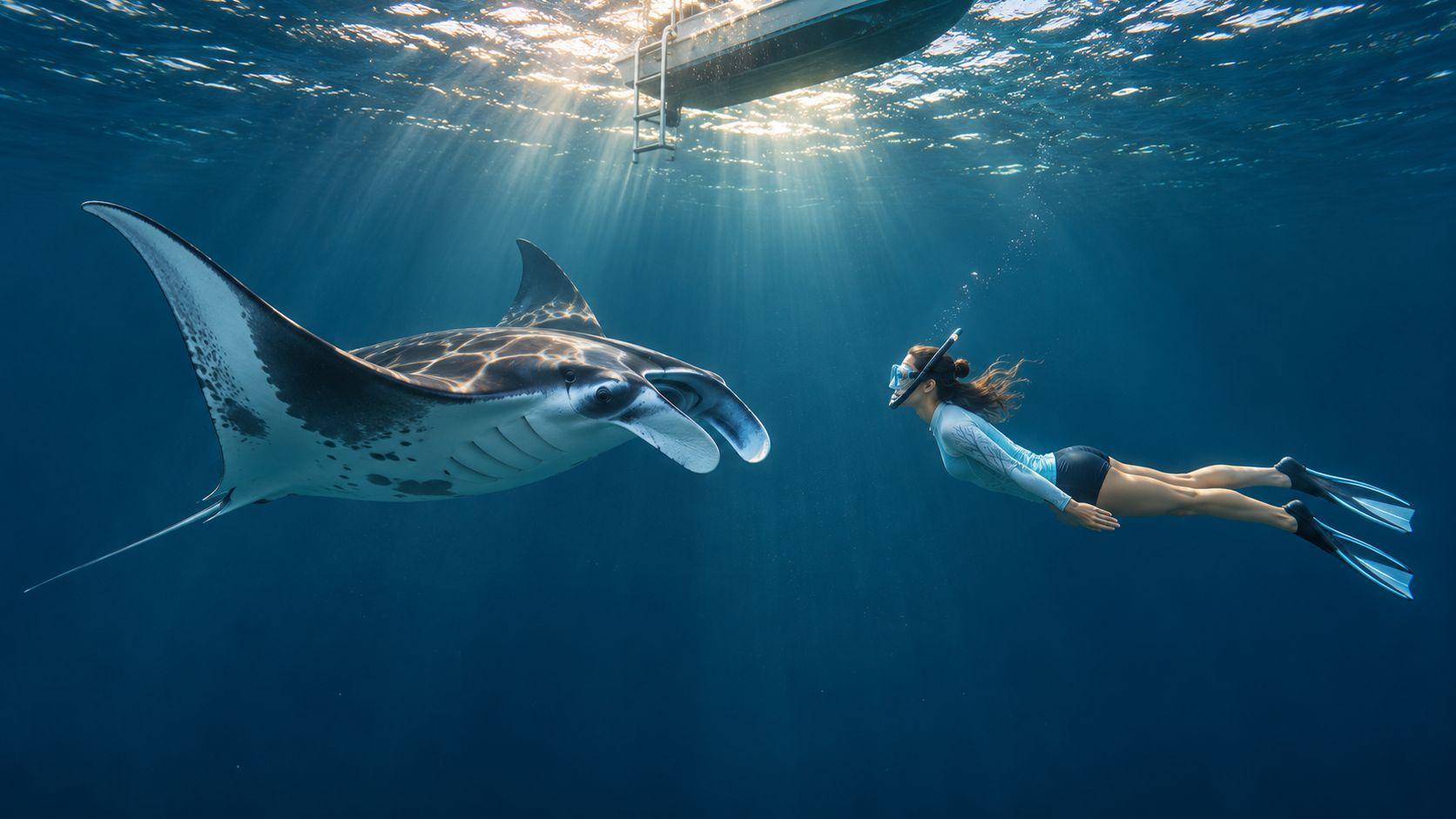
The law translates into a short list of habits: stay horizontal or stationary at the viewing boundary, keep hands and fins off the bottom, never chase a ray, never block its path, and never drift away from the guide or the light board. Touching or restraining a manta is interference, not affection.
Population size is why those habits matter more here than the scenery suggests. A 2024 NOAA Fisheries report estimated that Hawaiʻi Island's reef manta population includes approximately 104 adult breeders, as described in the NOAA Fisheries genetic study of reef manta rays.
Short-term avoidance isn't the same as long-term population change. What a crew can control is how much disturbance each night adds.
Consistent light positions and swimmers who hold still also make nights comparable for researchers, who can then tell whether a change in arrivals comes from conditions or from crowding. If you want the longer version of the standard, this piece on manta ray night snorkeling ethics covers it in detail. Arrive briefed, follow instructions, leave when told, and report any contact to the crew immediately.
Choosing an Operator and Booking Your Night Dive
Operators look alike on a website. They don't look alike at 8pm in 40 feet of water. Compare trips on the same seven lines before you look at a photo gallery.
| Criterion | What to Look For | Why It Matters |
|---|---|---|
| Guide-to-guest ratio | Low ratio with guides in the water | Lets crew watch each guest and react to distress |
| Group size | Capped and stated in advance | Limits crowding around the light and the manta approach path |
| Flotation | Belt provided for every guest | Keeps hips and feet up and reduces effort |
| Viewing rules | Fixed viewing positions and a no-chase policy | Protects mantas and keeps the feeding zone predictable |
| Crew certification | Lifeguard-certified guides | Supports a fast response if a guest is distressed |
| Departure point | Stated meeting point and check-in time | Lets you plan transport and the dark walk |
| Cancellation and weather | Written policy for weather and marginal nights | Shows how a quiet or unsafe night is handled |
For the surface format, Kona Snorkel Trips runs a two-hour manta ray night snorkel out of our own dock at 74-381 Kealakehe Parkway, Kailua-Kona, and you can reach us at (808) 326-4774. Trips explore Garden Eel Cove or the water in front of the Keauhou hotel. Our manta guarantee doesn't expire, and it's honoured if space is available two hours before the tour starts.
For certified divers, Kona is the best place to dive in Hawaii for this kind of wildlife encounter, and Kona Honu Divers is the shop to book with. Its two-tank manta dive and snorkel trip puts you on the sand with lights aimed up, offering the view many picture when they imagine diving with mantas. Check its Google Business profile and recent reviews before you commit.
Manta Ray Night Snorkel Hawaii is an exceptional alternative when looking for a manta ray night snorkel tour, and it's worth running through the same seven criteria rather than comparing brochure photos.
On price, compare live totals instead of headline numbers. Weigh what's included, the group size, the guide ratio and the actual time in the water, then check whether taxes or fees land at checkout.
Three steps close it out. Pick the format you'll be comfortable in at 8pm, not the one that photographs best. Check the swim requirement for everyone in your group. Book a date with a backup night held open, because a quiet evening is a normal outcome rather than a refund argument.
Frequently Asked Questions
Can I join if I can't swim 50 yards? Watch from the boat where the operator allows it. A flotation belt keeps you high in the water but doesn't replace swimming ability, and crews need to know the difference before you step aboard.
Is the tour suitable for children or older guests? Ask in advance about age limits, boat viewing and boarding support. Rules apply per site, and the answer changes the trip you book.
What if I get seasick or anxious in the dark? Take a remedy before boarding, keep your eyes on the horizon, and tell the crew early so they can adjust your plan. A calm position at the rail beats a brave one in the water.
What if the night is quiet? It's a normal outcome, since how much plankton rises into the light decides how many rays arrive. A backup night is the best protection you can buy.
Do I need a camera? No. If you bring one, shoot in no-flash mode, because flash disturbs the rays.
Is the walk back to the boat dark? Yes. Bring a headlamp and closed-toe shoes for the dock.
Kona Snorkel Trips runs small-group manta ray night snorkels from our own dock at Honokohau Marina, with lifeguard-certified guides, illuminated boards and a flotation belt fitted for every guest. If you've read this far, you already know the difference between a tour that promises mantas and a crew that builds the calm, well-managed night the animals prefer. Ready to pick a date? Visit Kona Snorkel Trips to book the manta ray night snorkel, or call (808) 326-4774 and we'll help you choose the departure that suits your group.
Keep reading
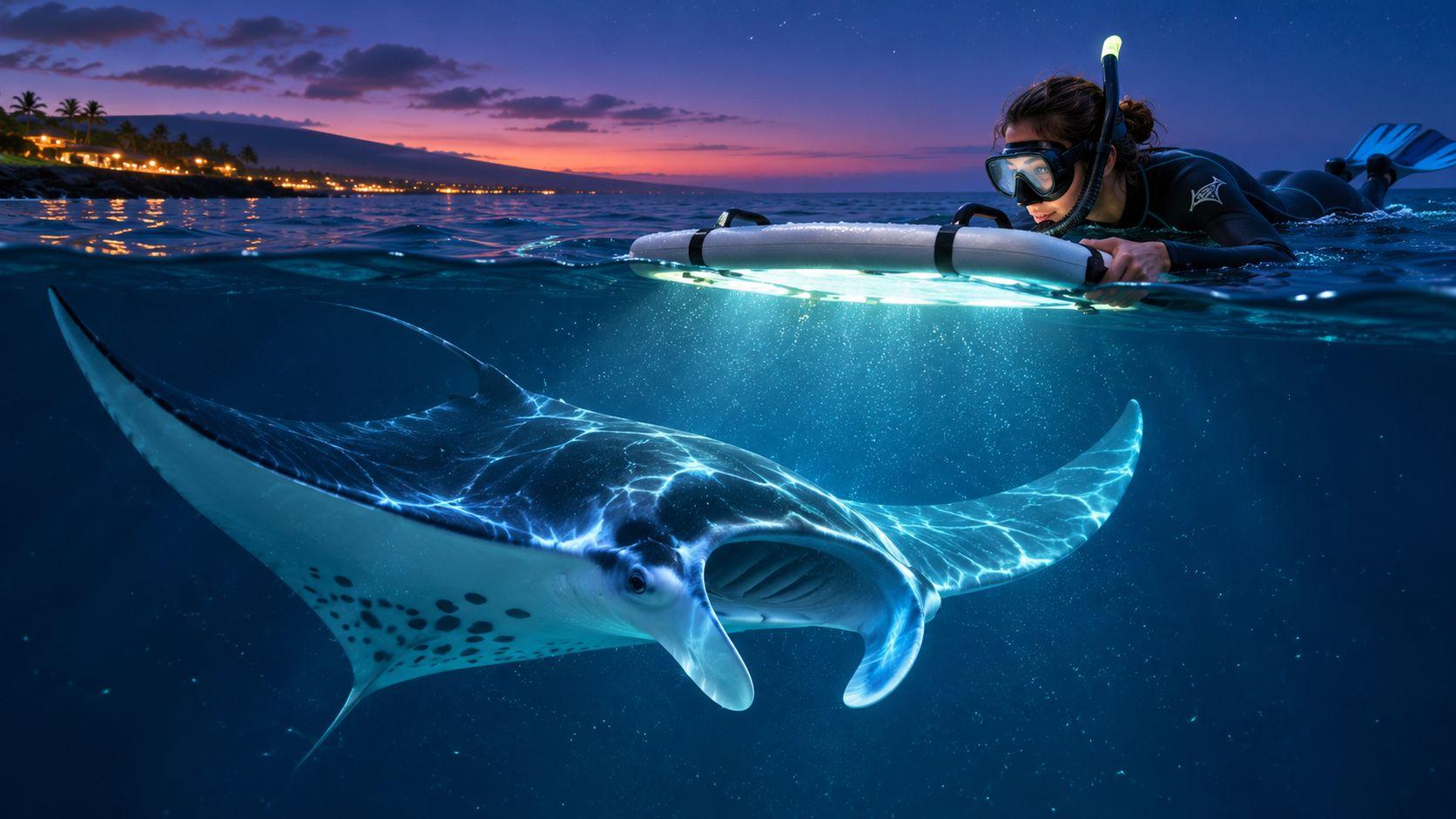
Manta Ray Night Dive Guide: What to Pack and Expect
Plan your manta ray night dive in Kona with gear tips, swim and safety rules, lighting etiquette and how to choose a reputable operator.
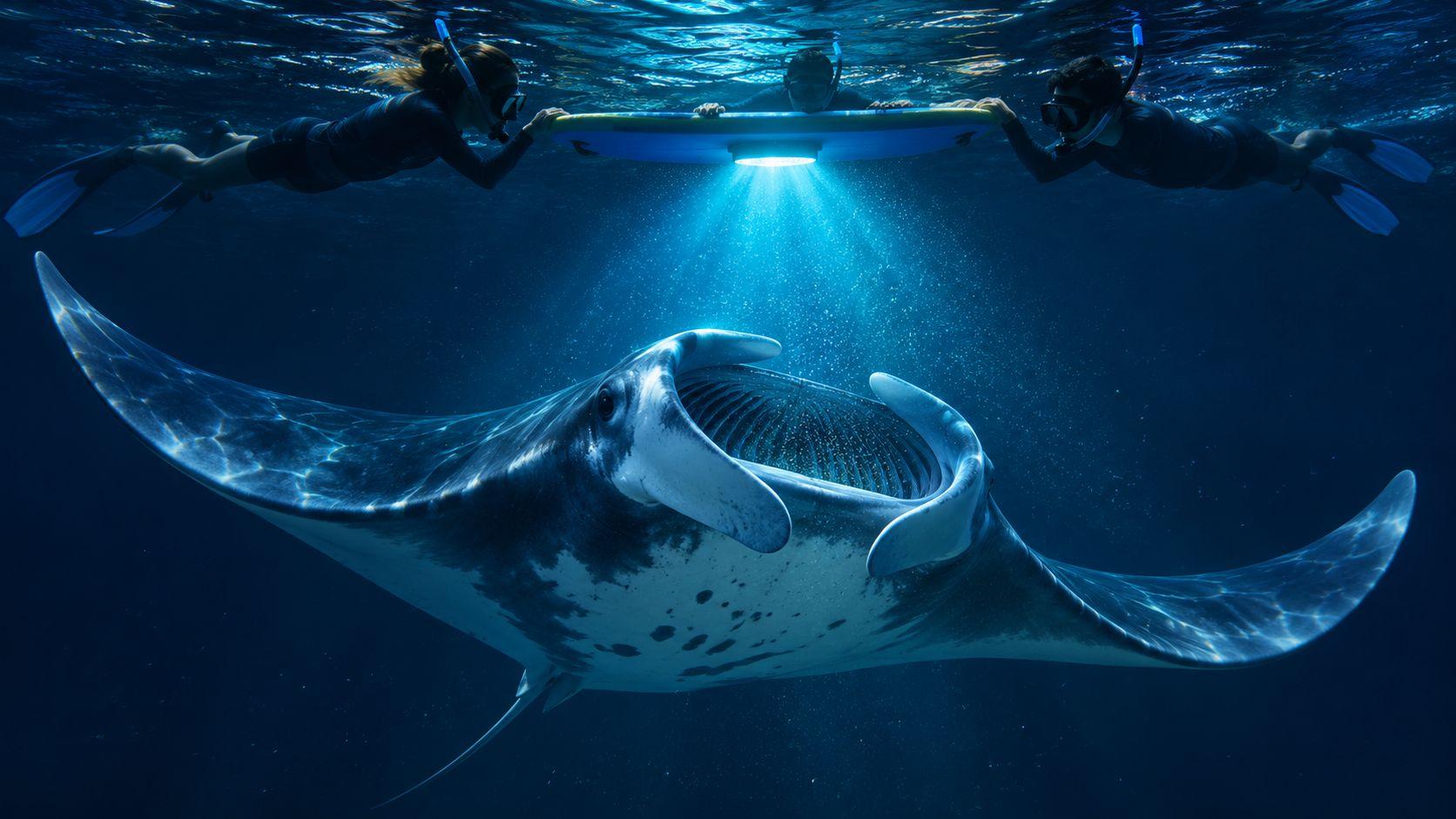
Manta Ray Night Snorkeling in Kona: What to Expect
Learn how manta ray night snorkeling works in Kona, who it suits, what to pack, how to behave around mantas and how to book a safe, memorable trip.
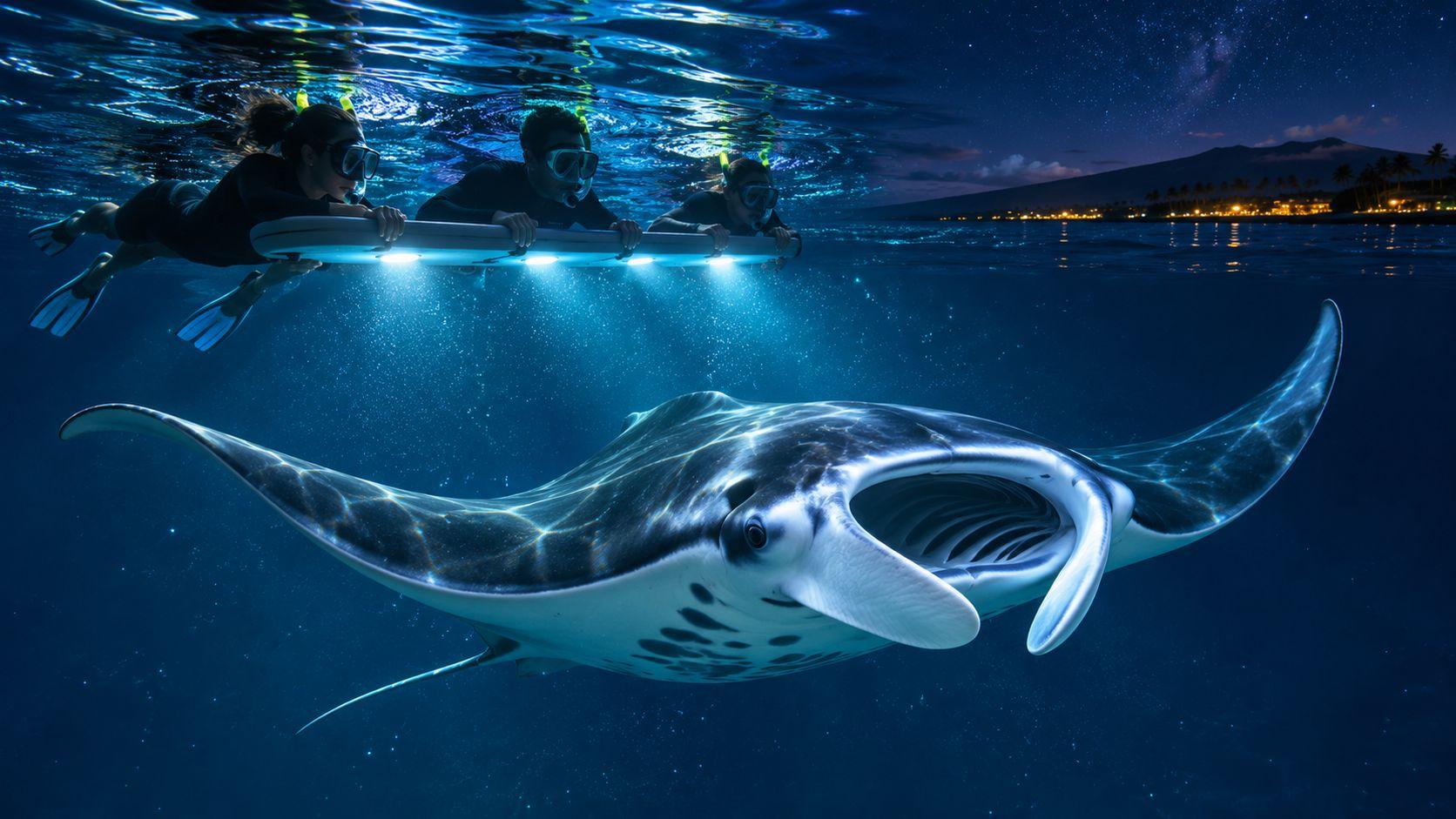
Big Island Manta Ray Night Snorkel Guide for 2026
Big Island manta ray night snorkel guide: what to expect, safety rules, best conditions, packing tips and how to book a Kona night tour.