
You're standing at the edge of a boat in Kona, watching the last color drain from the sky. The crew has finished the briefing, the underwater lights are ready, and the Pacific below has turned into a dark, moving field. You know the manta rays are wild animals, not performers, yet the anticipation feels like you're waiting for a curtain to rise.
A manta ray night dive is more than a memorable underwater attraction. It's a carefully managed wildlife encounter built around plankton behavior, manta feeding patterns, and the choices guests make in the water. This guide explains what happens after sunset, how snorkeling differs from scuba diving, what responsible interaction really requires, and how to choose a tour without treating the ocean like an entertainment venue.
Slipping Into the Dark Ocean
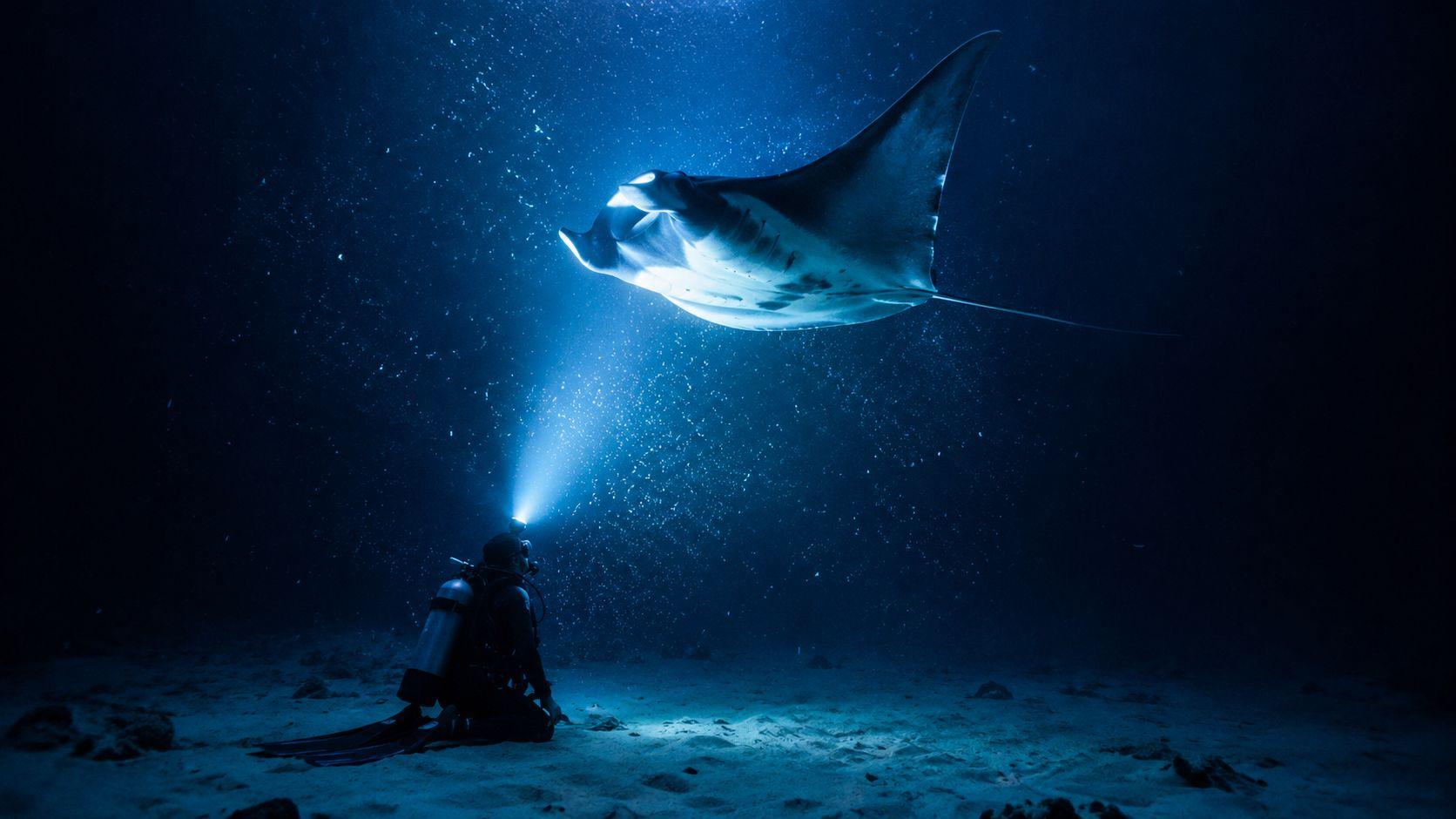
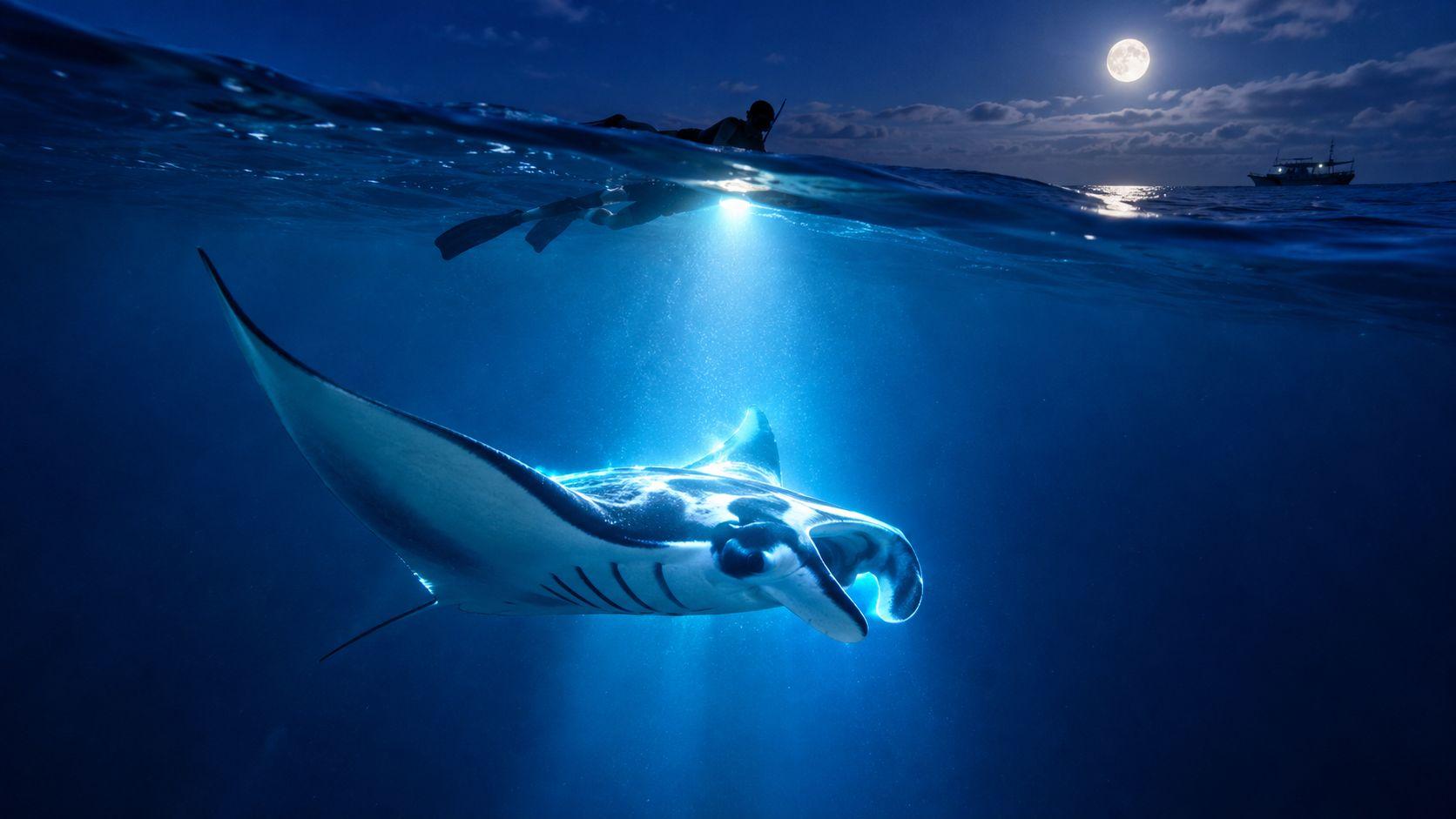
The first few seconds in the water can feel surprisingly exposed. The boat lights fade behind you, your mask frames a small pool of visibility, and the beam below reveals suspended particles drifting through the black. Then a broad white belly appears beneath the light, turns smoothly, and disappears before returning on another pass.
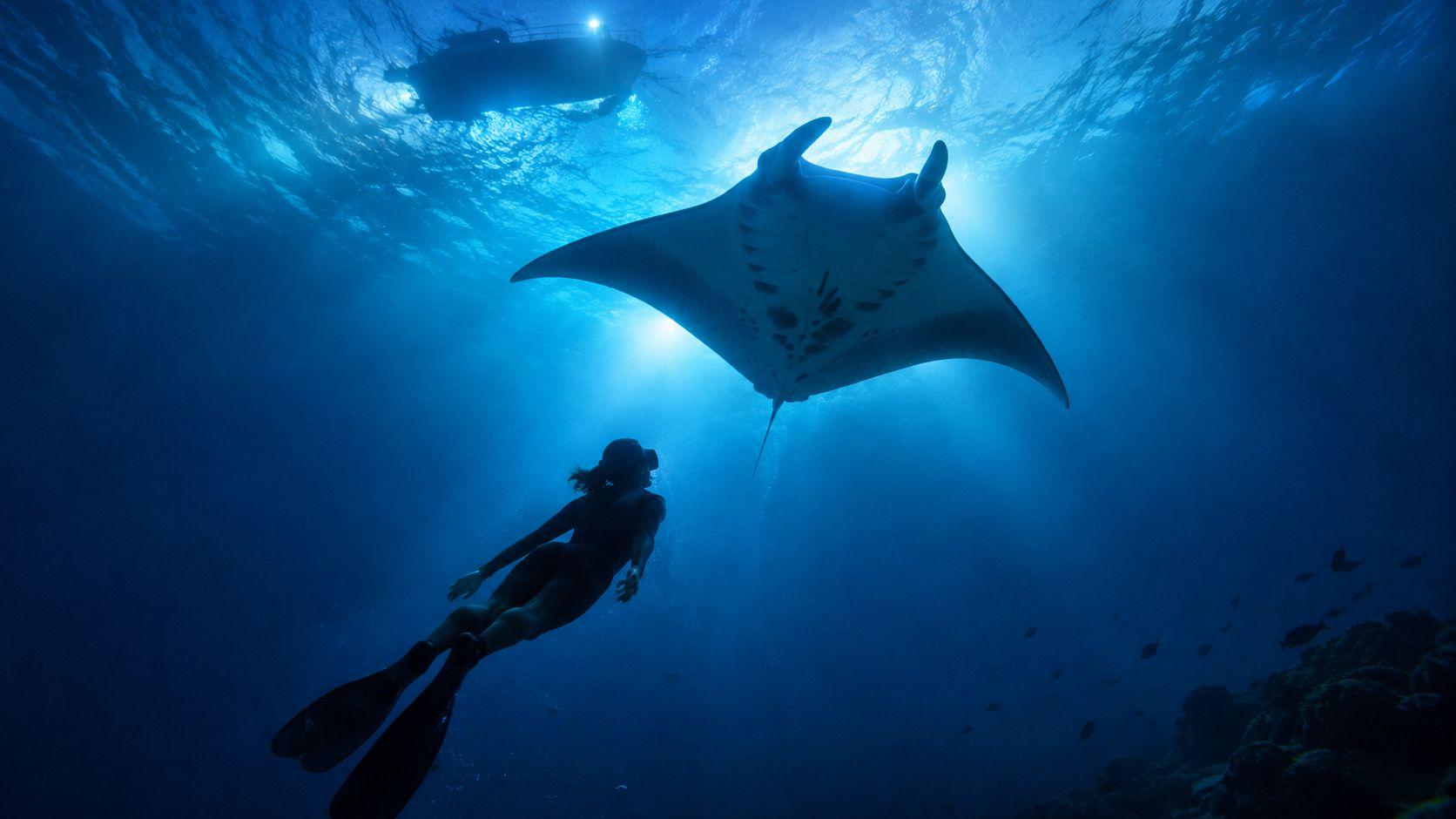
That first manta often arrives without drama. There's no splash or warning, just a shadow becoming an animal. The ray banks through the illuminated plankton, mouth open, wingtips flexing as it loops back toward the densest part of the feeding area. From the surface, you may see its underside only inches below your mask. From the seafloor, you'll watch it glide overhead.
The emotional mix is normal. First-time guests often feel wonder and a little apprehension, especially when they realize there's open water in every direction. A proper briefing helps by replacing uncertainty with simple actions: hold the float or stay in your assigned position, keep your body calm, listen for guide signals, and let the manta choose the distance.
The experience begins before the water
At dusk, the ride to the site gives the crew time to explain equipment, entry procedures, lighting, and animal protection rules. This is important because the encounter works best when everyone behaves predictably. Sudden swimming, chasing, and attempts to move closer create problems for both guests and mantas.
Kona Snorkel Trips is described by its publisher as Hawaii's highest-rated and most-reviewed snorkel company on the Big Island, with lifeguard-certified guides, small-group tours, and a focus on safety and environmental stewardship. Its manta experience uses illuminated boards that allow snorkelers to remain at the surface while the animals feed below.
The most important shift in mindset is simple: you aren't entering the ocean to make a manta perform. You're entering a feeding area that has been made visible through light, and the animals decide whether to approach. That distinction shapes every practical choice later, from selecting an operator to keeping your hands still when a ray passes close.
The Ecology of the Night Encounter
Mantas don't gather under lights because they're attracted to tourists. They gather because the lights concentrate prey. Snorkelers shine lights downward, while scuba divers position lights on or near the seafloor and aim them upward. Both arrangements create a bright column where plankton accumulates, giving mantas a predictable place to feed.
The biological story is broader than the familiar surface spectacle. Tagging studies describe a reverse diel vertical migration in reef and giant manta rays. They may occupy shallower water during the day, then move into much deeper water at night as they follow vertically migrating zooplankton and other prey. Documented night dives have exceeded 300 meters, with recorded maximum depths of 672 meters for reef manta rays and more than 1,000 meters for giant manta rays in the cited research on manta ray vertical movement and nocturnal foraging.
Why the lights work
Many small marine organisms respond to light. When tour lights create a concentrated beam, copepods and other plankton gather within that illuminated area. Mantas then make repeated feeding passes through the patch, using their cephalic lobes and wide mouths to filter food from the water.
The light doesn't create a staged show, and it doesn't train the manta rays to perform a particular maneuver. It makes prey easier to locate in one area. Field guidance from Divers Alert Network on considerate manta encounters describes the resulting behavior as looping, barrel-rolling, and oscillatory passes through the thickest part of the plankton cloud.
That's why one ray may make several passes and another may circle wider before approaching. The animal is adjusting to prey density, current, light, other mantas, and nearby people. A guest who understands this sees a feeding strategy, not choreography.
For a deeper explanation of the prey relationship, read this guide to how manta rays find plankton in the dark. The practical takeaway is that the most effective viewing position is usually the least intrusive one. Stay within the viewing formation, keep your light where the crew places it, and allow the feeding area to remain stable.
Manta tourism has a measurable economic role beyond the individual excursion. A peer-reviewed global assessment summarized through the manta ray overview and its tourism data estimated that manta-watching operations in 23 countries generate more than US$73 million per year in direct revenue to dive operators and about US$140 million per year in direct economic impact when associated tourism spending is included. The same assessment found that 10 countries account for almost 93% of global revenue, including the United States, Japan, Indonesia, the Maldives, Mexico, Australia, Mozambique, Thailand, the Federated States of Micronesia, and Palau.
That value gives operators a reason to protect the encounter, but revenue alone doesn't guarantee good stewardship. Lighting, boat placement, group behavior, and enforcement of interaction rules determine whether a wildlife experience remains compatible with the animals' needs.
Snorkeling Versus Scuba Diving With Mantas
Snorkeling and scuba diving show the same feeding behavior from opposite sides of the light column. Neither is automatically more ethical or more impressive. The right choice depends on your water comfort, certification, physical condition, and preferred perspective.
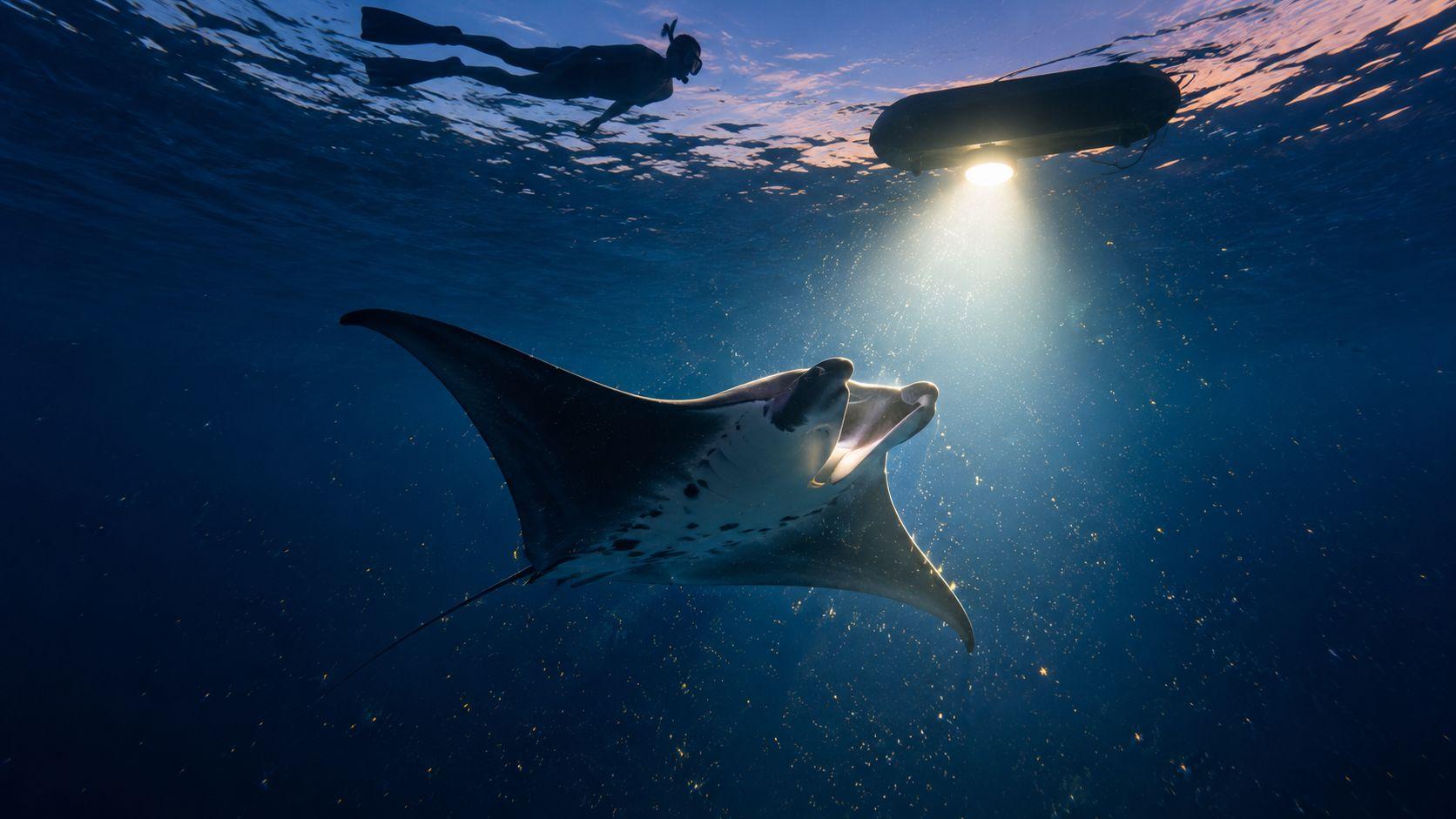
Snorkelers remain at the surface, usually holding a stable illuminated board or float. Their lights point down, and the plankton gathers beneath them. This creates a top-down view of mantas as they rise toward the surface, turn on their backs, and pass through the light.
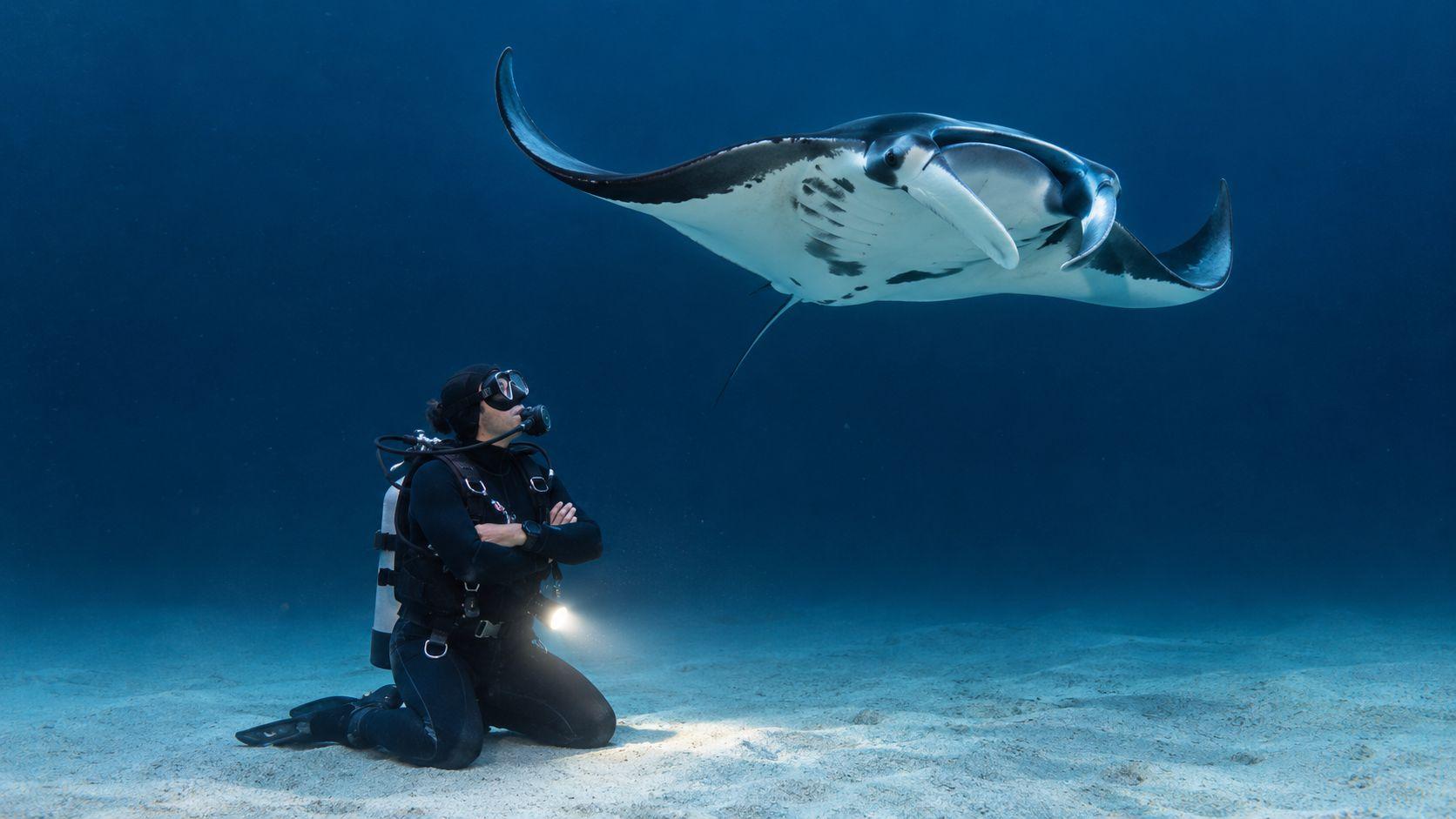
Scuba divers descend to the seafloor and settle into a designated position. Their lights point upward, so the rays approach from above and cross the diver's field of view. A diver may see the animal's entire silhouette against the surface, then watch it bank away through the light.
The surface perspective
Snorkeling often suits travelers who want simpler equipment and a more accessible experience. You don't need scuba certification, and you can keep your face at the surface while breathing through a snorkel. That doesn't mean the experience is passive in every sense. You still need to stay calm, manage your breathing, and avoid kicking toward the animals.
The surface position can make the mantas feel remarkably close. Their bellies may fill your entire mask view as they turn beneath the board, but apparent closeness isn't an invitation to reach. The board also gives guides a clear way to organize guests and keep arms, fins, and cameras from drifting into the feeding lane.
For the practical differences between the two options, see this Kona manta ray night snorkel versus night dive comparison. The main decision is whether you'd rather look down into the light column or look up from below it.
The seafloor perspective
Scuba diving requires appropriate certification and comfort with diving after dark. Divers must manage buoyancy, regulators, masks, lights, and position while remaining aware of the group and the animals overhead. The reward is a wide, unobstructed view that makes the mantas appear to fly above the sand.
For certified divers, Kona Honu Divers' manta dive provides a dedicated route into the scuba version of the encounter. Its broader Big Island diving tour selection is useful for travelers who want to combine the night experience with daytime dives.
The best scuba position is usually the one that leaves the manta a clear route. A diver who rises, swims after a ray, or points a powerful camera directly into its path changes the encounter. Experienced dive guides help guests settle into a stable observation pattern before the feeding activity builds.
Choose snorkeling if you prefer surface access, less technical equipment, or a shared light-board view. Choose scuba if you're certified, comfortable at night, and want to watch the feeding from the ocean floor. In both cases, the quality of the briefing and the discipline of the group matter more than chasing the closest possible pass.
Rules for Responsible Marine Interaction
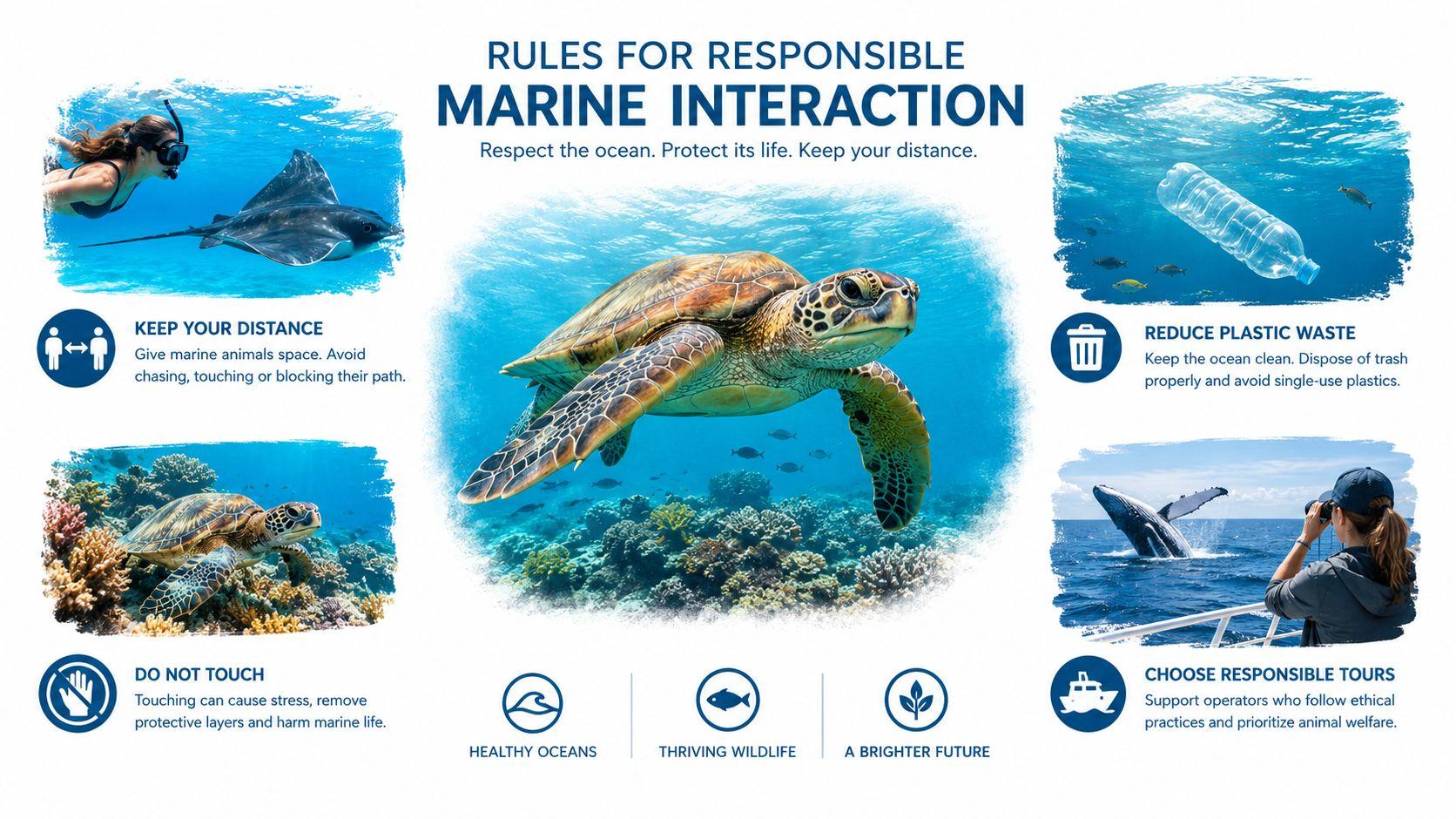
A manta ray night dive only works as a responsible wildlife encounter when guests accept that looking is the activity. The animals aren't there to be handled, redirected, photographed from every angle, or approached on demand.
Keep your body passive
Stay at the surface if you're snorkeling. Don't dive down beneath the board, swim toward a manta, or position yourself in front of its feeding route. Scuba divers should remain on the seafloor or in the position assigned by the crew, maintaining buoyancy rather than rising into the animals' path.
Touching is prohibited because contact can damage the manta's protective mucus coating. That coating helps protect the animal's skin, so even a brief attempt to stroke a wing can create a biological risk that isn't visible to the guest.
The basic rules are straightforward:
- Don't touch: Keep your hands, fins, and equipment away from every manta.
- Don't chase: If a ray turns away, let it leave. Following converts observation into pursuit.
- Don't block the route: Hold position and allow the animal to choose its approach.
- Control your light: Use only the equipment and settings approved by the crew.
- Follow the briefing: Guides coordinate the group for guest safety and animal welfare.
A useful way to remember the standard is to behave like a fixed part of the environment. Mantas can feed around stationary boards and divers. They have less reason to remain near swimmers who move unpredictably.
Management quality changes the outcome
A night dive isn't automatically low impact because guests don't touch the animals. Boat traffic, engine noise, crowding, and poor positioning can disrupt feeding, cleaning, and other behavior. Research summarized in the NOAA giant manta ray framework reports that only 44% of observed tourist interactions at one manta site complied with guidelines, and that close approaches within three meters increased avoidance behavior and feeding cessation.
Those findings make operator selection practical, not cosmetic. Look for crews that explain the rules before entry, enforce them in the water, limit crowd pressure, and give guides authority to correct guests. Smaller groups and lower-noise operations can reduce pressure, but only when staff actively manage behavior.
A guide to manta ray snorkeling rules that protect wildlife and guests can help you recognize responsible conduct before booking. The strongest sign is not a slogan about conservation. It's a crew that calmly stops a guest from touching, diving beneath the formation, or crowding a manta.
Practical Preparation and Packing List
Night water magnifies small discomforts. A swimsuit that feels fine in the afternoon may feel inadequate after you've been floating in one position, and a minor seasickness problem can become much harder to manage once the boat reaches the site.
Most operators provide the core equipment, including a wetsuit or thermal layer, mask, snorkel, flotation support, and lights. Confirm the exact inclusions before departure, then pack for the parts the crew can't solve for you.
Bring what keeps you comfortable
Wear your swimsuit under loose clothing so you can change efficiently. Pack a towel, dry clothes, and a warm layer for the ride back. Even when the air feels mild, wind and wet skin can make the return trip colder than expected.
A floatation belt or board matters for more than comfort. It helps snorkelers maintain a stable surface position and keeps the arms closer to the body, which reduces accidental reaching or sculling toward the mantas.
Your packing list should include:
- Swimsuit and towel: Wear the suit before boarding and bring a towel for the return.
- Warm clothing: Choose a dry layer that's easy to put on over damp skin.
- Seasickness preparation: If motion affects you, ask a medical professional or pharmacist about an appropriate preventative option before the trip.
- Waterproof camera: Use it only if you can operate it without chasing animals or blocking your view.
- Personal medication: Keep required medication accessible and tell the crew about relevant medical concerns.
Leave loose jewelry at home. It can catch on equipment, distract you while you're entering or exiting, and create unnecessary hazards in a crowded loading area. Don't bring a personal flashlight unless the operator specifically approves it. Uncontrolled beams can interfere with the light arrangement and disturb other guests' vision.
Prepare for darkness, not danger
You don't need to force yourself to feel fearless. You need a repeatable response when the water feels unfamiliar. Take slow breaths, keep one hand on the designated support, and focus your eyes on the illuminated area instead of trying to see into the surrounding blackness.
Snorkelers should practice clearing a mask and breathing calmly through a snorkel before the trip if those skills feel rusty. Scuba divers should review night-diving procedures, confirm their light configuration, and avoid adding unfamiliar gear on the boat.
For a more detailed checklist, use this manta ray night snorkel packing guide. The most useful preparation is the kind that reduces decisions in the water. Once you're floating comfortably and listening to the guide, you can give the encounter your full attention.
Booking Logistics and Kona Context
The Kona Coast has become the central location for this experience because manta encounters are unusually consistent there and operators have built established viewing practices around resident animals. Hawaiʻi Island is the only Hawaiian island regularly described as offering manta ray night snorkeling or diving, which makes Kona particularly important for travelers planning this activity, as noted by Hawaii.com's overview of manta ray tours.
Kona's reputation is supported by long-running encounter records. Local operator and independent summaries commonly report night-dive sighting success around 80% to 90%, with some site-specific logs reaching about 96% or higher in favorable conditions, while independent summaries describe a resident population of more than 450 identified reef manta rays and roughly 80,000 annual participants in manta-focused snorkel and dive tours. These figures are summarized in the provided National Geographic manta ray reference. They describe a strong pattern, not a promise for a particular evening.
Choose timing and departure details carefully
Manta activity isn't a seasonal performance that can be scheduled like a theater show. Weather, swell, wind, current, visibility, and plankton distribution all affect the night. Darker moon phases may make the artificial lights and plankton patch easier to see, but no moon phase guarantees a close encounter.
Ask the operator where you'll depart, how long the boat ride typically takes under normal conditions, what happens during weather cancellations, and whether the snorkeling and scuba groups share the same site. A convenient departure point may reduce travel time, while a different site may offer better conditions on a particular evening.
The following comparison gives a practical starting point:
| Tour Type | Best For | Vantage Point |
|---|---|---|
| Manta ray night snorkel | Surface swimmers and families comfortable in open water | Looking down through the light column |
| Manta ray scuba dive | Certified divers who prefer a seafloor position | Looking upward at mantas overhead |
| Daytime Captain Cook snorkel | Reef viewing, coral habitat, and historic Kealakekua Bay scenery | Surface view over the daytime reef |
For a surface-focused option, the Manta Ray Night Snorkel tour uses the surface viewing format described earlier. Travelers comparing other companies can also consider Manta Ray Night Snorkel Hawaii as an alternative for a manta ray night snorkel tour.
A Captain Cook trip is a different activity, centered on daytime reef conditions rather than nocturnal plankton feeding. Captain Cook Snorkeling Tours is an alternative when you're looking for a Captain Cook snorkel tour.
Don't book solely on the promise of guaranteed sightings. Ask how the crew handles no-show wildlife, rough conditions, guest fatigue, and rule violations. The operator's answer tells you whether the trip is built around respectful observation or around selling certainty the ocean can't provide.
Frequently Asked Questions
Are manta sightings guaranteed?
No. Mantas are wild animals, and their movement depends on prey, conditions, and behavior. Kona has a strong reputation for consistent encounters, but a responsible operator won't promise that an animal will appear on cue.
What happens if I get cold or tired?
Tell the crew immediately. Guides can help you return to the boat or adjust your position. Don't stay in the water just to avoid disappointing your group.
Can children or non-swimmers participate?
Requirements vary by operator, age, swimming ability, and sea conditions. Snorkeling still requires comfort in open water, even with flotation support. Ask the company about specific participation rules before booking, and explain any health or mobility concerns in advance.
Is scuba diving better than snorkeling?
Neither is universally better. Snorkeling offers a surface view with simpler equipment, while scuba places certified divers below the light column. The better choice is the one that lets you remain calm, stable, and respectful around the animals.
Kona Snorkel Trips offers a guided manta ray night snorkel with illuminated viewing boards, safety-focused crew support, and a surface perspective on the feeding behavior described here. Visit Kona Snorkel Trips to review the tour details and choose a responsible way to experience Kona's mantas.
Keep reading
Manta Ray Night Dive in Kona: A Complete Guide
Plan your manta ray night dive in Kona with this complete guide covering what to expect, how the light works, safety, gear, and the best ways
Manta Ray Night Dive Kona: A Complete Insider Guide
Plan your manta ray night dive Kona experience with this practical guide. Compare snorkel vs scuba, best seasons, safety, pricing, and how to book.
Manta Rays Hawaii: A Complete Traveler Guide
Plan your manta rays Hawaii adventure with our complete traveler guide. Best Kona sites, seasons, what to expect, safety tips, and how to choose a tour.