
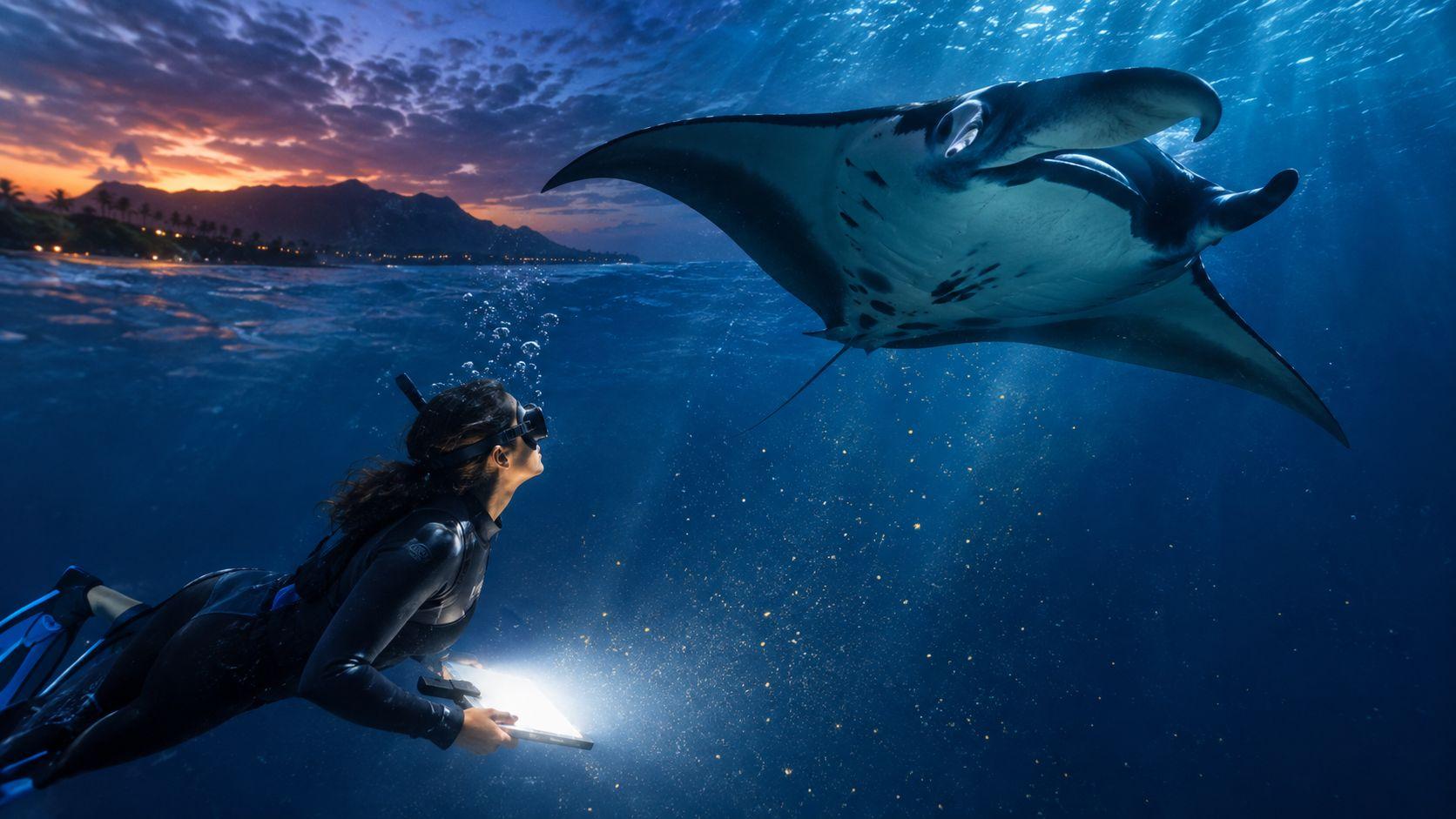
You're likely deciding whether the Kona manta night snorkel is worth the effort, the motion on the boat, and the price of an evening that can't be repeated the same way twice. That's the right question to ask. Manta ray Kona Hawaii works because the animals come to a very specific feeding setup, not because someone has trained them to perform on command.
What the Manta Ray Night Snorkel Actually Feels Like
The boat eases away from shore at dusk, and the harbor noise drops off fast. Once the crew gives the briefing, the deck gets quieter, the lights go in, and everyone starts watching the water instead of talking about it. The first thing many notice is not a manta. It's the dark ocean, the float board glowing under the surface, and the odd calm that sets in when nobody wants to miss the first shape rising out of the black.
The actual encounter is usually more controlled than people expect and more intimate than they expect. You're on the surface, breathing through a snorkel, holding position near the light, while a huge shadow rolls up from below and turns into a manta ray as it enters the beam. When one passes inches underneath, the size hits before the grace does, because the movement is smooth enough that your brain almost doesn't believe what your eyes are seeing.
If you like wildlife that feels spontaneous, this is a great fit. If you want a guaranteed circus act, you may find it underwhelming, because the best nights still depend on what the animals decide to do. For a practical look at the species itself, this manta ray encounter guide pairs well with the experience people usually imagine before they board.
The soundscape matters too. You hear breathing, water slapping the board, and the occasional low murmur from other snorkelers when a ray makes a close pass. That mix of darkness, light, and slow movement is what makes the night feel memorable rather than merely scenic.
Practical rule: the best first-timers are the people who can stay calm, float comfortably, and let the show happen without trying to steer it.
Manta Ray Biology and Why Kona Works at Night
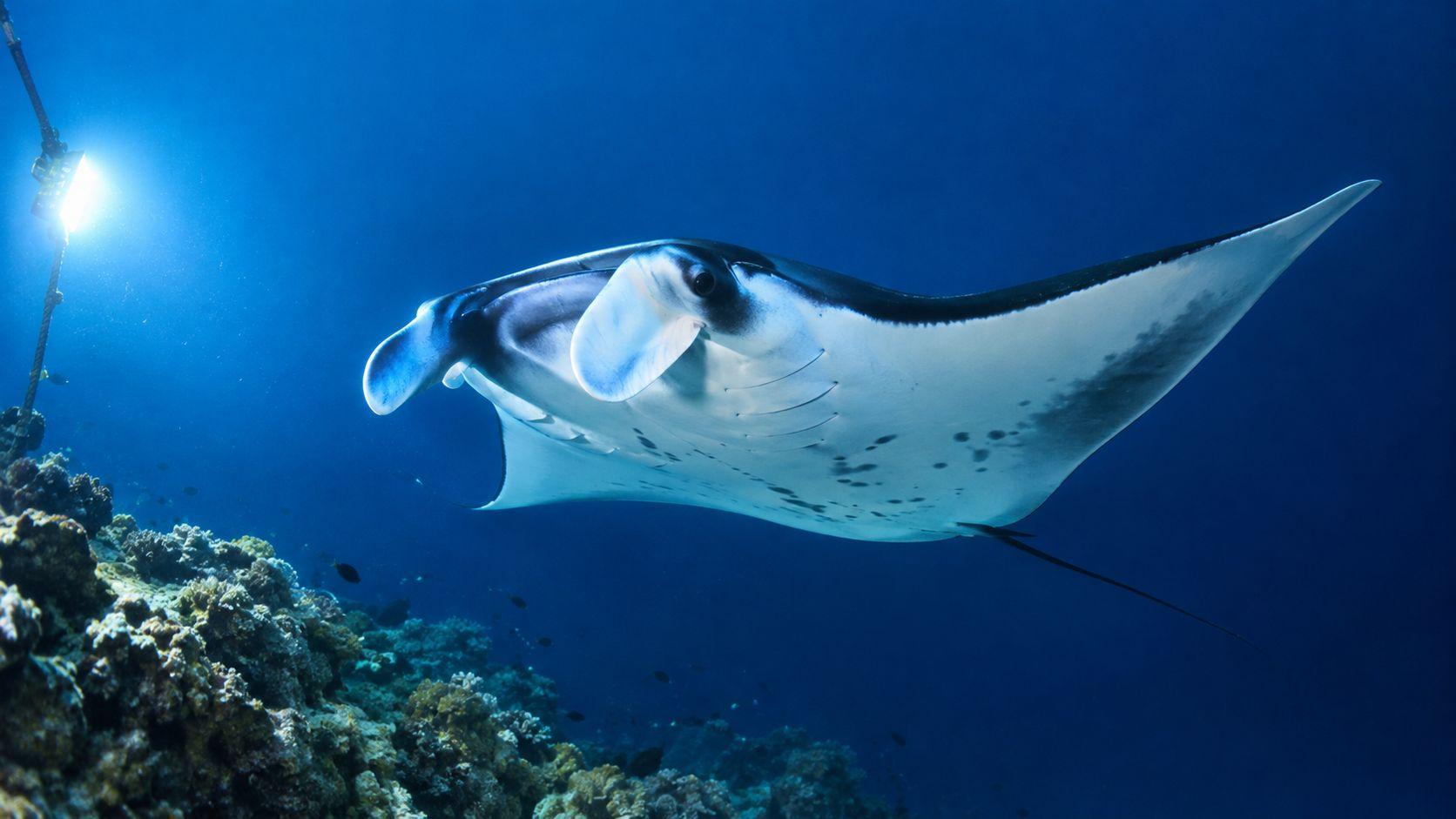
Kona's mantas are reef manta rays, Mobula alfredi, and they're built for filtering food, not for stinging or biting. They feed on zooplankton, and the whole night snorkel works because the lights create a feeding response by drawing plankton into a concentrated patch near the surface. Once the prey is there, the manta uses its cephalic fins to funnel food toward its mouth while swimming forward, which is why the animal can seem to hover and glide at the same time.
That feeding chain is the reason the encounter is so repeatable. It's not attraction to light in the abstract, it's prey concentration in a localized zone, followed by a manta doing what evolution shaped it to do. The looping, barrel-rolling movement people love to photograph is part feeding strategy, part positioning, because the ray is trying to stay in the densest part of the plankton cloud.
Why the population context matters
Kona's aggregation is unusually local and concentrated. The first known Kona individual, a female later named Lefty, was identified in 1979, and by 2024 researchers had identified 318 unique reef manta rays around Hawaiʻi Island through photo-identification, while about 600 had been identified in Maui Nui since 2005 (Springer research). That same work estimated about 104 adult breeders in the Hawaiʻi Island population, which is why every respectful interaction matters.
A useful way to think about Kona is this, the nightly crowd you see doesn't mean an endless regional supply. The same animals can return repeatedly to predictable feeding sites, so high sighting frequency is not the same thing as a huge or quickly replenished population.
Guide's rule of thumb: if the light is doing the work, the guide should be working the current, the spacing, and the group, not forcing the animals into a script.
For a plain-language breakdown of the feeding behavior, this explanation of how manta rays find plankton in the dark is the cleanest way to connect the biology to what you see in the water.
Manta Village and Manta Heaven Compared
If you only know Kona as one manta site, the first surprise is that the night can feel different depending on where the boat drops anchor. Manta Village sits at Kaukalaelae Point near the Sheraton, while Manta Heaven sits in Makako Bay, also called Garden Eel Cove, off the Keauhou coast. NOAA-hosted documentation treats both as regular manta viewing grounds for divers and snorkelers, but the layout, crowding, and how the animals use each site are not the same (NOAA study).
That difference matters because the two sites do not serve the same purpose for the mantas. The University of Hawaiʻi study found that Garden Eel Cove supported larger aggregations than Keauhou, while Keauhou was visited predominantly by females. Across both locations, the sex ratio was roughly balanced, which points to two distinct feeding patterns rather than one interchangeable viewing area. If you want a denser, more active water column, Manta Heaven usually gives you that. If you want the classic Keauhou setup and an easier reference point for many first-time visitors, Manta Village is the name you will hear first.
| Feature | Manta Village (Kaukalaelae Point) | Manta Heaven (Makako Bay / Garden Eel Cove) |
|---|---|---|
| General location | Near the Sheraton, off Keauhou | Makako Bay, Garden Eel Cove |
| Typical access pattern | Closer to the Keauhou shoreline and harbor flow | Farther along the Keauhou coast, often reached after a short boat run |
| Site use and permit context | Part of the broader Kona manta viewing area | Scuba operations are permitted in the Makako Bay manta-ray viewing zone (DLNR commercial rules) |
| Planning takeaway | Good for guests who want the familiar Keauhou route | Good for guests who want the site with the larger documented aggregations |
The commercial rules shape the night as much as the geography does. DLNR's guidance distinguishes between zones, vessel movement, and what operators can do while guests are in the water, so the site choice is not just about scenery, it affects how the tour is run (DLNR commercial rules).
For a practical map of the options, where to see manta rays on the Big Island of Hawaiʻi is the next useful read.
What to Expect on a Manta Ray Night Snorkel
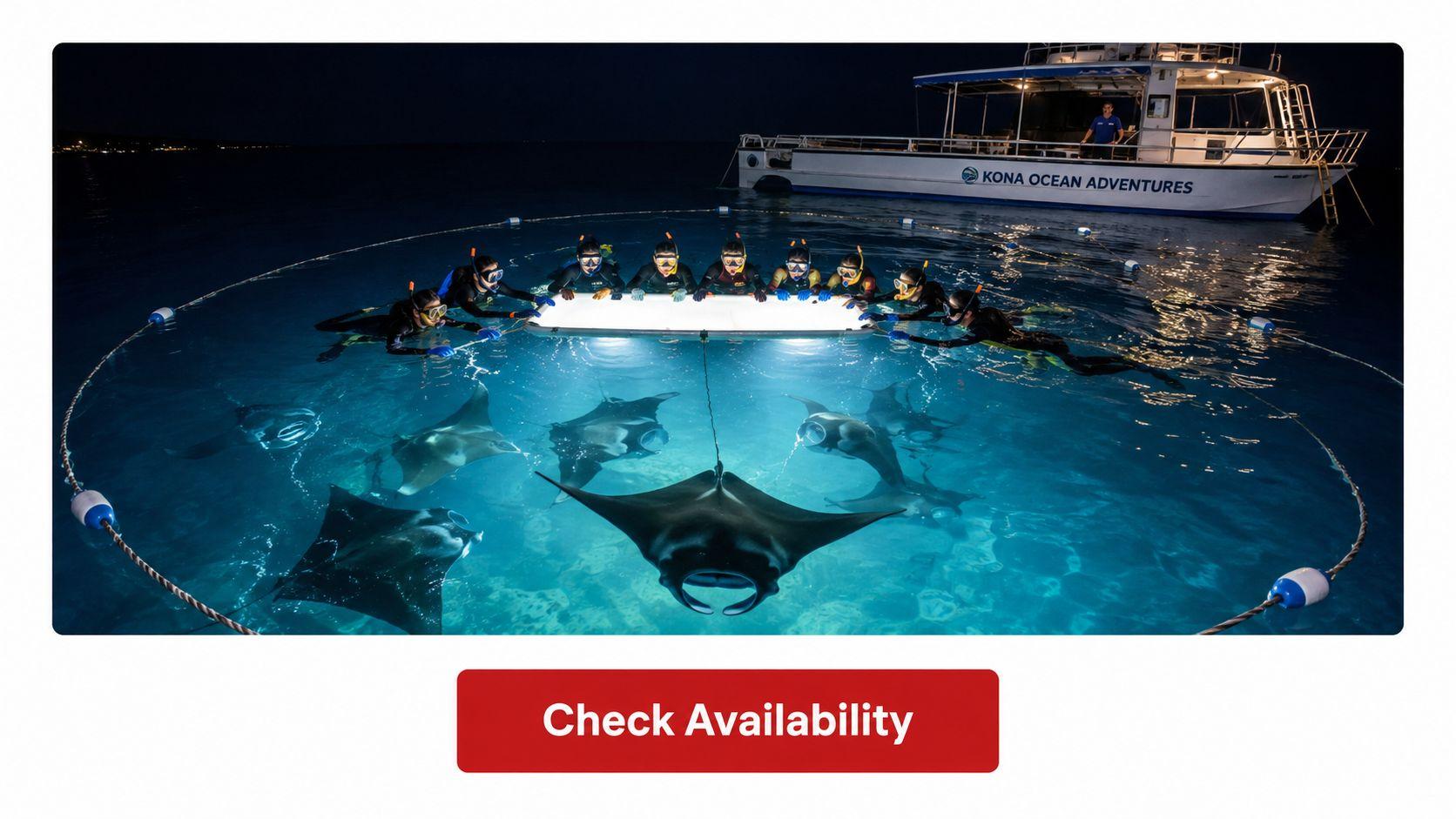
The evening usually starts at the harbor with gear fitting, a quick check that your mask seals, and a crew member explaining what not to do once you're in the water. The boat ride is short, then everyone settles around the light board and waits for plankton to gather. If you want the rhythm before you book, the timeline from check-in to return gives a practical preview.
The part people remember is the water time.
You're usually in long enough to feel the cold if you stop moving, even in a 3mm wetsuit, but not so long that fatigue takes over when the crew keeps the group organized. Your job is simple. Hold position, keep your face in the water, and let the rays come to the light. On a strong night, they pass close enough that their size is hard to process. On quieter nights, the viewing can still be worthwhile because the feeding pattern is easier to watch and the pace is calmer.
Kona does not work by chance. A 13-year dataset from Garden Eel Cove and Keauhou shows that aggregation size followed zooplankton density, not guest expectations. That is the pattern behind a good night here. The animals are steady over time, but each outing depends on water movement, light, and where the plankton concentrates.
A good guide reads those conditions before the group goes in.
Crew that knows the site watches current, spacing, and how the light is drawing prey before they talk much at all. They do not oversell the sighting, and they do not rush people into the water before the setup is stable. That is the difference between a tour that feels organized and one that feels improvised.
The best nights feel effortless because the crew has already handled the hard parts.
If you are comparing operators, look at group size, in-water time, and whether they use moored light boards rather than free-floating lights. Those three details shape the night more than the marketing does. For a practical operator option, Kona Snorkel Trips runs a manta ray night snorkel with small-group logistics and guided viewing.
How to Choose a Responsible Manta Ray Tour
A responsible manta tour starts with the boat, not the mask. The DLNR commercial manta viewing rules require slow-no-wake operation within designated zones, prohibit anchoring in those zones, and require the supporting vessel to stay inside the viewing-zone boundary while participants or guides are in the water (DLNR commercial rules). These rules are practical, not bureaucratic: slow-no-wake operation and no anchoring keep the viewing zone controlled instead of turning it into a free-for-all around the animals.
What to look for before you book
- Moored light boards: The lights should be placed to attract plankton without scattering the whole setup.
- Small groups: Fewer bodies in the water usually means less bumping, less drifting, and better spacing around the board.
- Crew discipline: The guide should keep guests where they belong, on the surface, in position, and out of the rays' path.
- Clear rules: No chasing, no touching, no diving into the feeding column.
NOAA wildlife guidance says snorkelers should stay on the surface, shine lights downward, and avoid touch, chase, grab, or ride behavior because contact can remove the animal's protective mucus coating (NOAA wildlife guidance). A tour that teaches those rules well is protecting the manta and the night around it.
For many travelers, the trade-off is simple, pay for structure, not hype. Kona Snorkel Trips fits that model with small-group Manta Ray Night Snorkel operations, and the company's format matches the kind of viewing behavior that keeps the encounter clean and calm.
Packing and Preparing for Your First Manta Snorkel
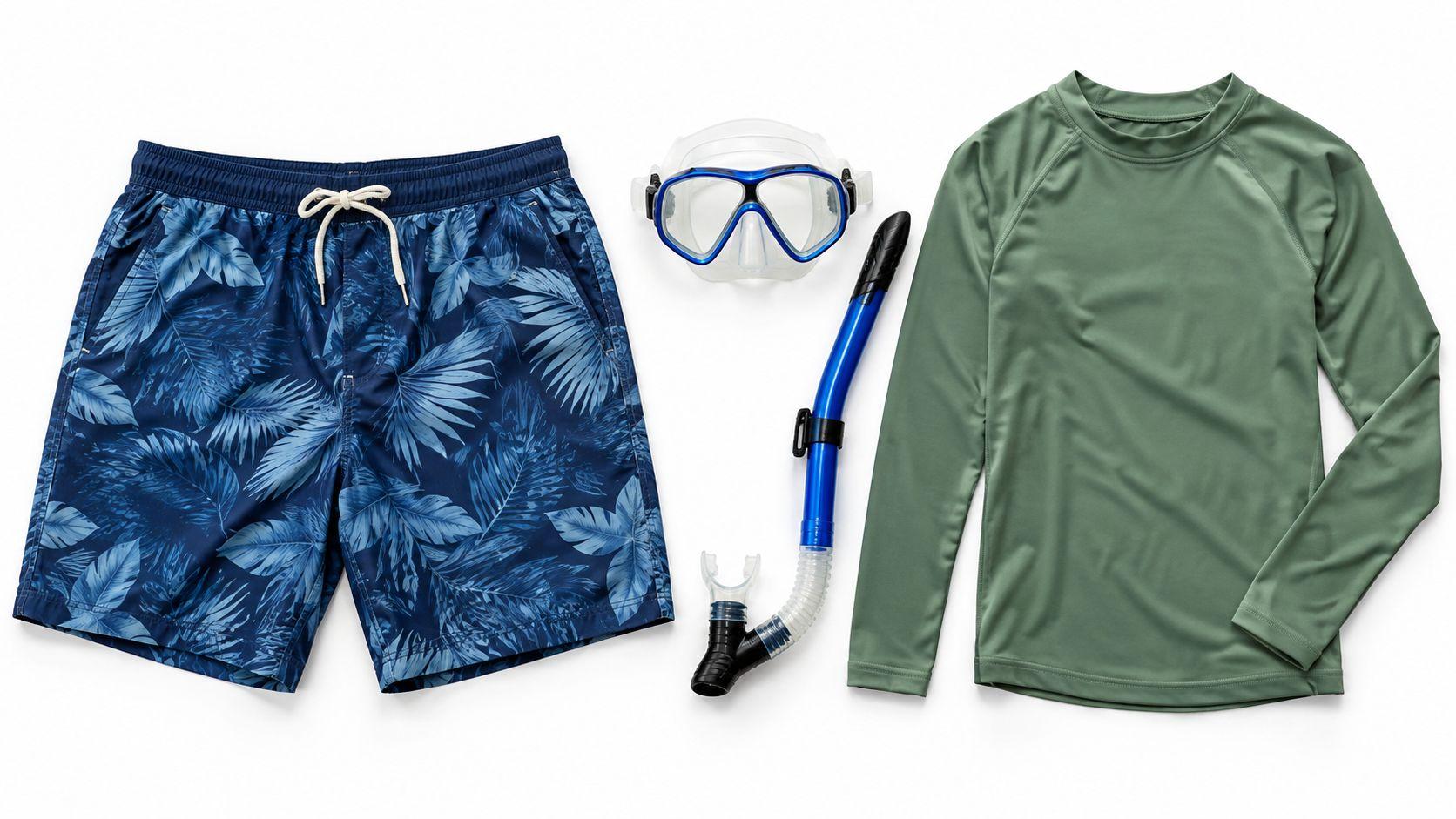
Start with the basics, wear a swimsuit or rinsed board shorts under the wetsuit, bring a towel, and plan on getting your hair wet. If you're using sunscreen, put it on before the trip and keep the viewing zone itself as clean as possible, because the ocean at night doesn't need extra residue. A light change of clothes for after the swim is smarter than packing a bag full of things you won't want on a rolling boat.
The things people forget
- Motion comfort: If boats usually bother you, handle that before boarding rather than after you start feeling it.
- Loose gear: Leave jewelry and bulky cameras behind unless you know you can manage them safely.
- Warmth: A dry layer for the ride back matters more than people expect once you've been floating after dark.
- Expectation management: Your hair will not stay neat, and that's part of the experience.
Nervous first-timers usually worry about the dark, their mask, and whether they'll be able to breathe calmly once they're in the water. The fix is usually simple, a guide who keeps the group together, explains the gear clearly, and gives you a minute to settle before anyone expects you to focus on the mantas.
If you can float, breathe through the snorkel, and keep your hands still, you can do this.
I'd also tell first-time snorkelers not to overpack confidence. The best nights go to people who listen, stay relaxed, and treat the water like a place to observe rather than perform in. That's especially true for the manta ray Kona Hawaii experience, where the encounter gets better when the human part gets quieter.
Conservation, Variability, and Respecting the Animals
On a low-plankton night you might see two or three close passes; on a strong night the same site can produce dozens, and no operator can control which version you get. Plankton density, current, swell, visibility, and the behavior of each manta shape the show at the surface. The long Hawaiian dataset shows stable aggregation patterns overall, but a stable site still gives you variable nights.
The conservation story in Kona is local and fragile. Genetic work suggests these manta rays generally stay close to their natal island rather than regularly crossing the deep channels between the Hawaiian Islands, with migration measured at roughly one female movement every 1,300 years and one male movement every 64 years (Springer research). That makes the population both valuable and easy to disturb.
NOAA guidance is direct: no touching, no chasing, no riding, and no diving into the feeding column, because contact can strip the mucus coating that helps protect the animal's skin (NOAA wildlife guidance). That rule is practical, not ceremonial. If a ray comes close, hold position and let it choose the distance.
The other risks are ordinary ones, boat strikes, entanglement, habitat damage, and injuries tied to moorings and boats. Good Kona operators work inside the rules, keep lights where they belong, and teach guests that a quiet night is the right goal.
I book and guide this kind of trip with one standard: treat the mantas like wildlife, not a performance. That keeps the water cleaner for the animals and the experience better for everyone in it.
Keep reading
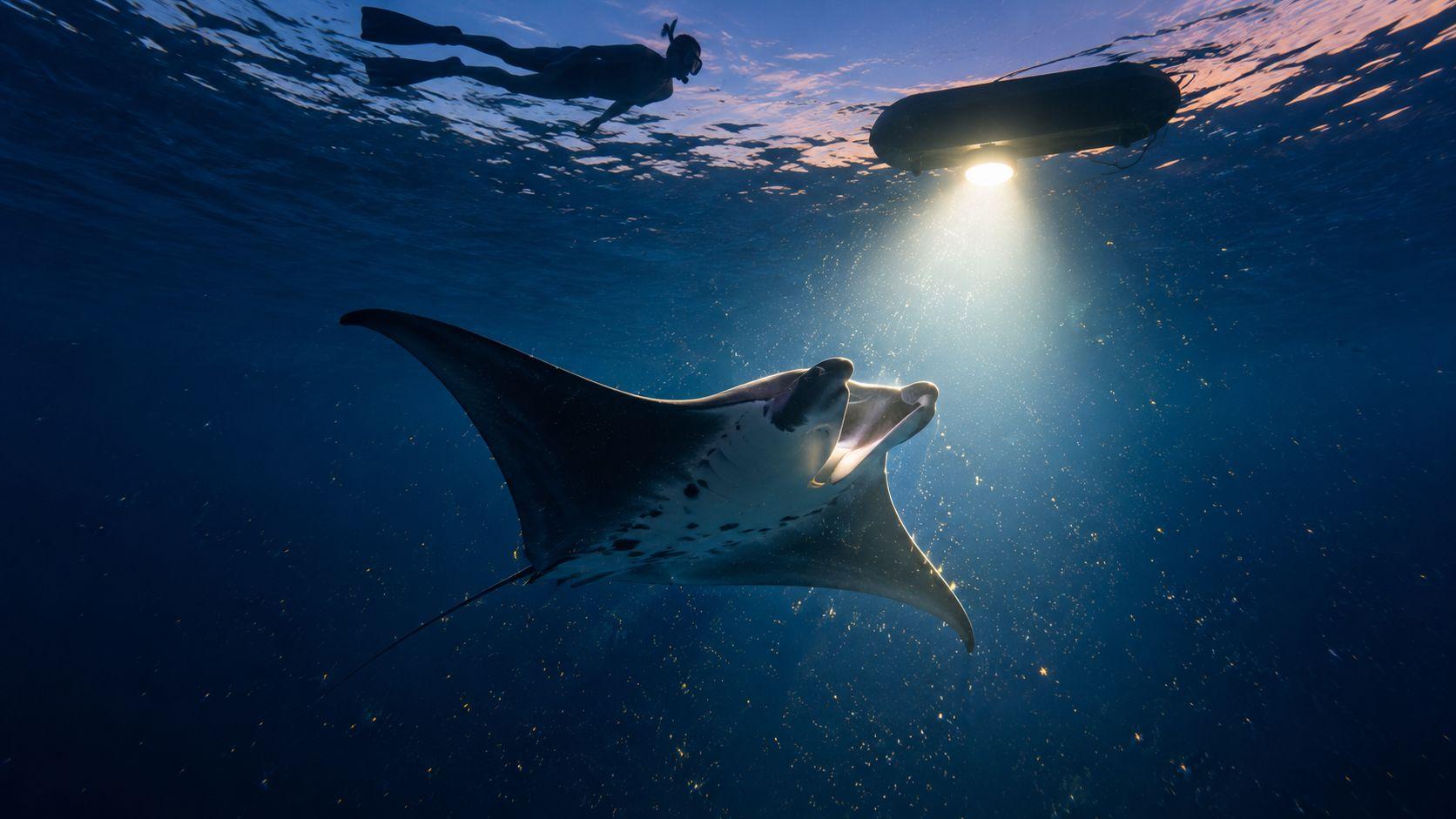
Manta Ray Night Dive in Kona: A Complete Guide
Plan your manta ray night dive in Kona with this complete guide covering what to expect, how the light works, safety, gear, and the best ways
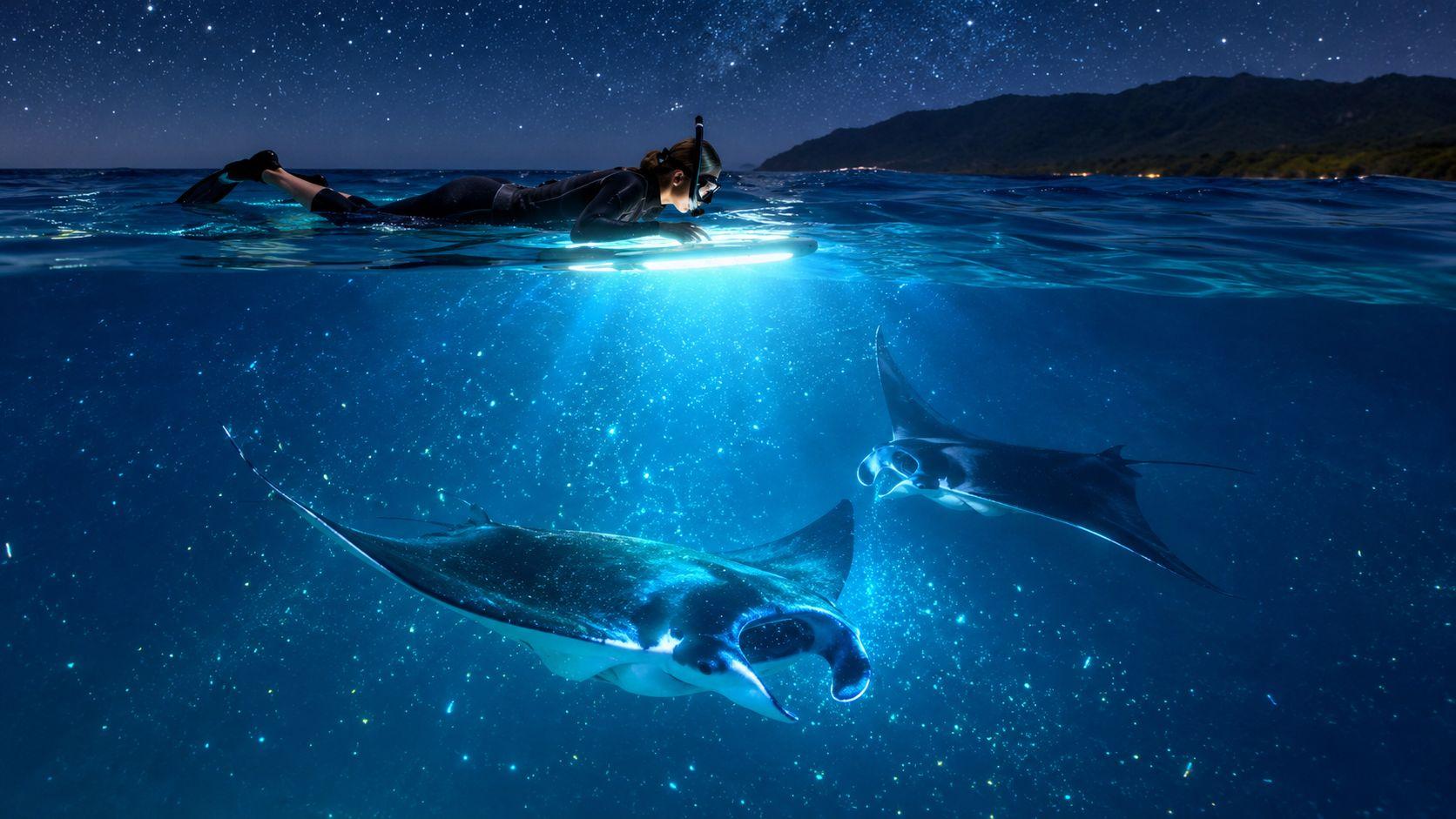
Manta Ray Snorkeling Big Island: A Practical 2026 Guide
Manta Ray Snorkeling Big Island. Plan manta ray snorkeling on the Big Island with this 2026 guide. Best sites, tour choices, packing tips, safety rules
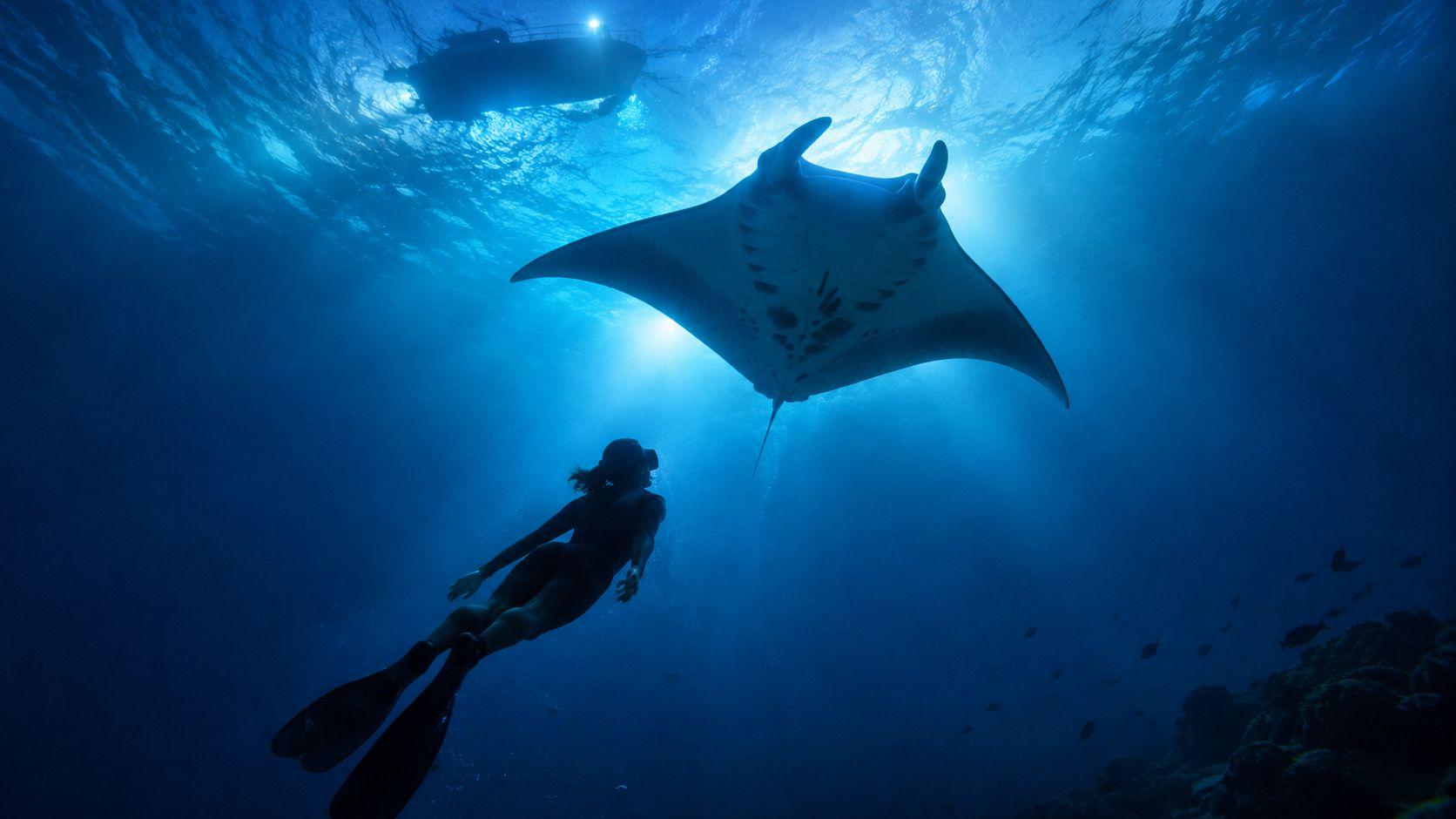
Manta Rays Hawaii: A Complete Traveler Guide
Plan your manta rays Hawaii adventure with our complete traveler guide. Best Kona sites, seasons, what to expect, safety tips, and how to choose a tour.