
When a Manta Ray Swims Beneath You: What to Do
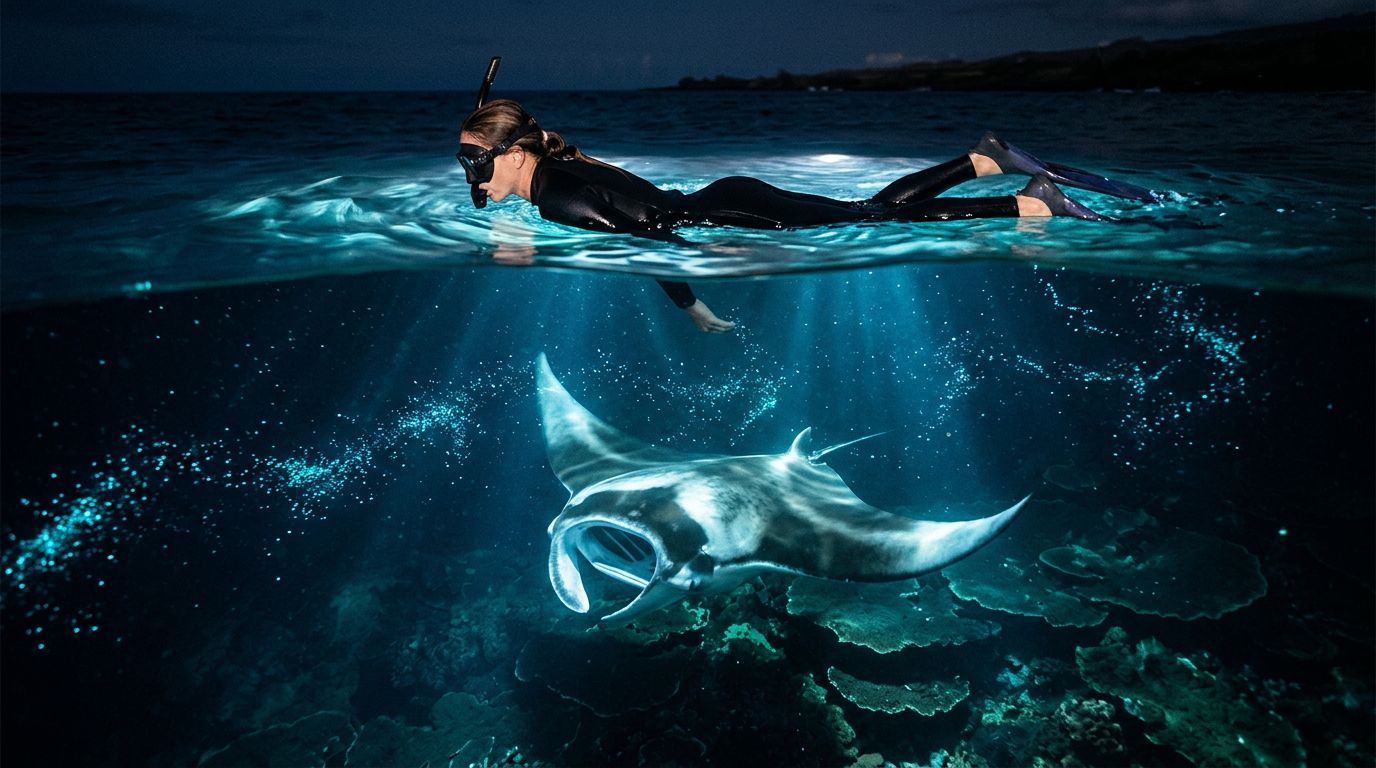
A manta ray encounter can turn a quiet nighttime snorkel into the most memorable part of your Hawaii trip. When a manta glides directly beneath your body, your first instinct may be to kick, dive, or reach down. Resist all three.
Your best response is calm and simple: stay horizontal, keep your hands to yourself, and let the manta choose its path. Once you understand what the animal is doing, the close pass feels less frightening and far more remarkable. Start with the right response, then learn how to make the encounter safe for you and the ray.
Stay Calm When a Manta Ray Swims Directly Beneath You
A manta ray swimming below you usually isn’t charging or showing aggression. It is often moving through the lighted water to feed on plankton. Its broad cephalic fins help guide food-rich water toward its mouth as it makes slow, controlled passes.
Your job is to avoid sudden movement. Keep your legs still, relax your shoulders, and breathe through your snorkel with a steady rhythm. A manta may pass within a few feet, circle back, or change direction without warning.
If the ray comes beneath your chest or hips, maintain your position at the surface. Don’t dive toward it for a closer look. Diving changes your distance quickly and can place you in the animal’s path.
Keep your hands near your sides or lightly on the float used by your tour group. Never reach down to touch the manta, even if it appears to invite contact. Its skin has a protective mucus layer, and human contact can remove that coating or transfer sunscreen and bacteria.
The closest manta ray sightings often happen when swimmers stop trying to get closer.
Mantas are powerful swimmers, but they can also turn with surprising grace. A relaxed snorkeler gives the animal room to maneuver. If you kick hard, wave your arms, or chase it, the manta may leave the area.
When your guide gives instructions, follow them immediately. Guides watch the animal, the boat, the other swimmers, and the current at the same time. Their signals may tell you to remain still, move to one side, or return to the boat.
What a Manta Ray Encounter Looks Like Beneath the Surface
A manta may approach from the darkness, appear at the edge of the light, and glide beneath you in one smooth motion. At night in Kona, tour lights attract plankton, which can bring manta rays close to the surface.
You may first notice a pale underside, a wide wingtip, or a shadow crossing the light. Then the manta’s full shape becomes visible. Reef manta rays can look enormous from the surface because their wingspan fills your entire field of view.
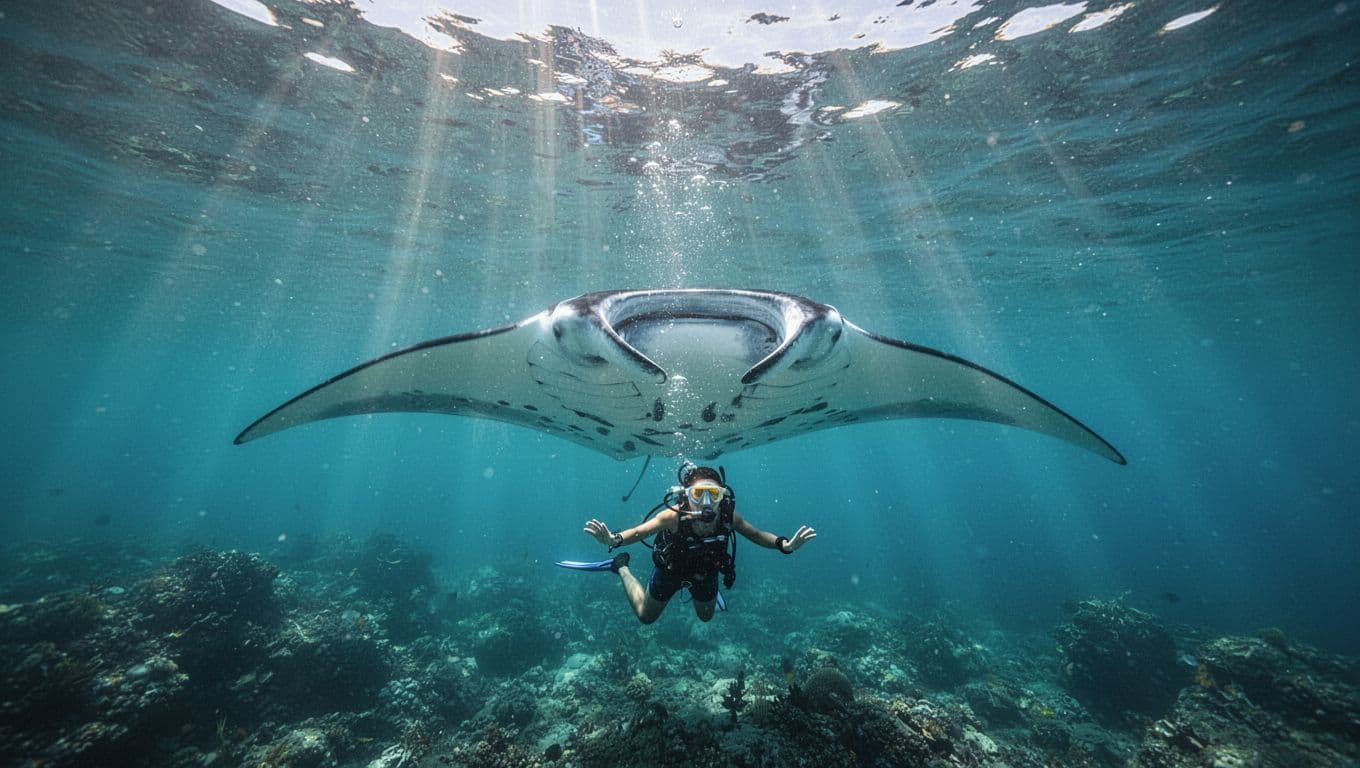
The animal may roll slightly as it feeds, exposing its white belly and distinctive markings. It can also make repeated passes around a light board or float. These loops are feeding movements, not attempts to bump swimmers.
Manta rays don’t have stingers, and they aren’t hunting people. Their diet consists of tiny organisms suspended in seawater. Still, their size means you should respect their space. A wingtip or tail can strike a swimmer if someone blocks the ray or moves into its route.
Recent research on Hawaiian reef manta rays has examined how small island-associated populations use space and time around the islands. You can read the study in Frontiers in Marine Science. The findings reinforce why local sightings matter and why responsible viewing helps protect a limited population.
As the manta passes, keep watching without trying to follow it. You may see the gill plates moving as the animal filters water, the cephalic fins unfurling, or the pattern on its belly. Those details are far easier to notice when you remain still.
How to Position Your Body During a Close Manta Sighting
Your body position affects both your safety and the manta’s comfort. A flat, horizontal position makes you predictable. It also keeps your fins away from the animal below.
Keep your face in the water and look forward or slightly downward. Hold your arms close to your torso. If you’re using a flotation board, rest your hands on it without pulling the board toward the manta.
Your fins should remain behind you. Avoid flutter-kicking, frog-kicking, or bicycling your legs when the ray approaches. Even small fin movements can startle the animal or create bubbles in its feeding area.
If you need to change position, move slowly and sideways. Don’t turn sharply toward the manta. A gentle lateral movement gives the animal a clear route and helps you stay within your group’s viewing area.
Night snorkeling can feel disorienting because the surrounding ocean is dark. You may not know which way the boat, guide, or other swimmers are located. Before entering the water, learn the guide’s hand signals and identify the flotation board or light source you’ll follow.
You should also check your equipment before the first sighting. A leaking mask can cause panic at the wrong moment. Adjust the strap, clear your snorkel, and tell the guide if your fins or flotation device don’t feel secure.
A well-fitting mask allows you to focus on the animal rather than water in your eyes. If you wear prescription lenses, ask the operator about available options before the trip. Clear vision makes it easier to judge distance without reaching toward the ray.
What Not to Do During a Manta Ray Encounter
Most poor manta encounters begin with excitement, not bad intentions. A swimmer sees the animal and reacts before thinking. Remembering a few limits ahead of time helps you respond well.
Never touch, grab, ride, or block a manta ray. Don’t swim directly above its back, and don’t dive underneath it to photograph the animal from below. A manta needs open water to turn and feed.
Avoid chasing a ray that swims away. You may be tempted to kick after it for one last photo, but pursuit adds stress and separates you from your group.
Don’t shine a personal flashlight directly into the manta’s eyes. Follow the lighting plan set by your guide. The tour’s lights are positioned to attract plankton while allowing swimmers to observe the animals without crowding them.
Keep your camera or phone close to your body. A floating camera can drift into the manta’s path, and a selfie stick can become a hazard for nearby swimmers. If you use an underwater camera, set it up before the animal arrives. You shouldn’t spend the encounter adjusting buttons or chasing a perfect angle.
Never feed manta rays or bring food into the water. Feeding changes natural behavior and creates an association between people and food. Marine wildlife should find its food without help from visitors.
Also avoid wearing products that can wash into the water. Apply sunscreen well before entering the ocean, choose reef-conscious products, and follow your operator’s instructions. Rash guards offer useful sun protection without adding more lotion to the sea.
The manta ray conservation guidance published by PADI also discusses the risks manta rays face around boats and surface gatherings. Staying with your group and following boat-safety instructions protects you and the animals.
What to Do If You Feel Afraid or Overwhelmed
A manta ray can look much larger underwater than it does from a boat. Its wings move silently, and the dark water makes distance difficult to judge. Feeling nervous during your first close sighting is normal.
If anxiety rises, keep your breathing slow. Look at your guide or the flotation board instead of staring only at the animal. You can signal that you need help, then move toward the guide with controlled strokes.
Don’t climb onto a boat ladder while a manta is still nearby. First, tell the guide you want to exit. The guide can check the area and direct you to the safest route.
You also have permission to take a break. Hold the board, float on your back if your equipment allows it, or return to the boat with assistance. A good tour doesn’t require you to stay in the water longer than you feel comfortable.
Children may need extra preparation. Explain that the manta is passing through to feed and that quiet bodies help it remain nearby. Practice floating with hands close to the body before the tour begins. Parents should stay beside children rather than reaching across other swimmers to control them.
People who are uncomfortable in open water should tell the crew before departure. Lifeguard-certified guides can explain flotation options, entry procedures, and how to signal for help. Good communication prevents a nervous moment from becoming a dangerous one.
Why Mantas Swim Beneath Snorkelers in Kona
Kona’s nighttime manta tours rely on a natural feeding pattern. Underwater lights illuminate plankton in the water column. Manta rays follow that food source, often making repeated passes through the light.
The ray isn’t responding to the swimmers as prey, and it isn’t seeking contact. You happen to be above a productive feeding area. When everyone remains still, the manta can feed without changing its normal route.
Kona’s coastline also provides conditions that support frequent viewing. Calm bays, clear water, and established viewing sites help guides position groups safely. Conditions still change with wind, swell, current, and visibility, so every night has its own rhythm.
A manta may stay for several minutes or disappear after one pass. No responsible operator can promise a specific animal, number of rays, or exact behavior. The ocean decides what you see.
That uncertainty is part of the experience. You might watch a ray make wide circles, skim the surface, or pass beneath the board once before moving into the dark. Each behavior gives you a different view of the animal.
The best approach is to observe without directing the encounter. Your stillness helps the guide read the situation and helps the manta keep feeding. It also gives you a better chance to notice details that disappear when you focus only on getting a photograph.
Choosing a Responsible Manta Ray Snorkel Tour
Your operator affects how safely and comfortably you experience a manta ray encounter. Look for a company that explains the rules before entering the water, uses appropriate flotation equipment, and keeps groups organized.
Kona Snorkel Trips follows a “Reef to Rays” approach with small-group guided ocean adventures. The company uses state-of-the-art snorkeling equipment, custom-built lighted boards for nighttime viewing, and Lifeguard Certified guides. Its trips also focus on reef-safe practices and marine education.
You can browse the company’s Big Island snorkeling tours to compare its manta experience with other guided outings. For a trip centered on nighttime wildlife viewing, see the dedicated manta ray snorkel Kona tour.
The company’s small-group format can make it easier to hear safety instructions and stay near your guide. It also limits the number of swimmers sharing the viewing area. That matters when a large animal moves through a narrow patch of light.
Another option is Manta Ray Night Snorkel Hawaii, which focuses on nighttime manta viewing in Kona. Before booking any tour, confirm the meeting point, duration, flotation equipment, age requirements, and cancellation policy.
Ask whether the crew provides an in-water briefing. You should know how to enter, where to hold position, how to signal discomfort, and what happens if conditions change. A polished boat and attractive photos matter less than clear procedures.
Kona Snorkel Trips is built around personal service, guest safety, and respect for Hawaii’s marine ecosystems. If that approach suits your travel plans, you can check availability for a guided ocean tour.
For the specific nighttime manta trip, you can check availability before finalizing the rest of your itinerary.
Preparing for Night Snorkeling in Hawaii
Your preparation starts before you reach the harbor. Bring a swimsuit, towel, dry clothes, water, and any medication you may need. A light jacket can help after the boat ride, especially when wind picks up after sunset.
Eat a light meal several hours before departure. You want enough energy for the boat ride and swim, but a heavy meal can make motion sickness worse. If you’re prone to seasickness, ask your doctor or pharmacist about appropriate options before your trip.
Arrive early enough to complete check-in without rushing. Use the restroom before boarding, listen during the safety talk, and tell the crew about injuries, medical conditions, pregnancy, or limited swimming experience.
You don’t need advanced snorkeling skills, but you should be comfortable floating with a mask and snorkel. If you want to snorkel Big Island waters during the day before your manta tour, choose a calm reef outing that gives you time to practice breathing and clearing your mask.
Families should confirm age and swimming requirements in advance. Children who cannot comfortably keep a mask sealed may enjoy a boat-based wildlife trip more than an in-water night snorkel. Honest planning creates a better experience for everyone.
If your main goal is snorkeling Big Island Hawaii marine life, leave room in your schedule for changing conditions. A daytime reef trip and a nighttime manta tour offer different experiences. The reef shows color and structure, while the night excursion focuses on movement, shadows, and close wildlife viewing.
You can also ask about private options if your group needs a slower pace. A private Kona ocean tour may give your family or group more flexibility with timing and comfort.
Keep the Encounter Safe After the Manta Passes
The encounter doesn’t end when the manta disappears. Stay with your group and keep listening for instructions. Another ray may approach from a different direction, or the captain may need swimmers to clear the area.
Don’t remove your mask while you’re still in the water unless your guide tells you to. Continue watching for boats, other swimmers, and flotation equipment. Surface awareness matters as much as looking below you.
When it’s time to return, move calmly toward the designated exit point. Let the guide confirm that the ladder or boarding area is clear. Climb only when instructed, and keep your hands on the ladder rather than reaching toward the water.
After the trip, rinse your gear if the operator provides a station. Follow local instructions for disposing of trash and avoid taking shells, coral, or other marine material. A respectful visit includes what you leave behind.
You can also report unusual sightings or injured wildlife to your guide, who knows the appropriate local channels. Don’t attempt to rescue, touch, or move an animal yourself.
Conclusion
When a manta ray swims beneath you, remain horizontal, breathe steadily, and let the animal control the distance. Keep your hands, fins, cameras, and body out of its path. A calm swimmer is safer and gives the manta more room to feed naturally.
Your first manta ray encounter may last only a few seconds, or the ray may circle beneath the lights for several minutes. Either way, stillness lets you experience the animal on its terms. The best memory comes from watching closely without trying to control what happens next.