
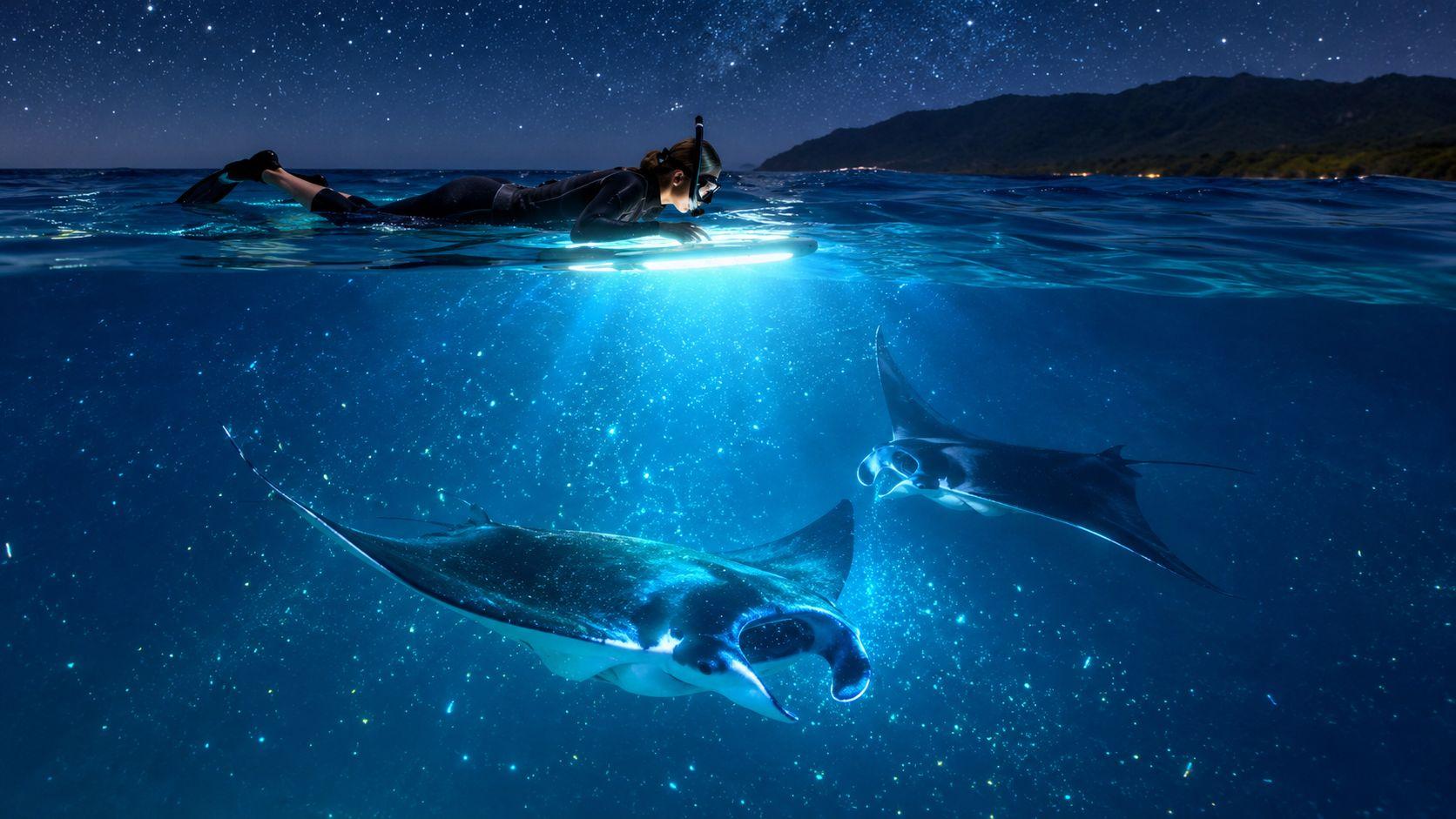
You're comparing boats, checking whether a night swim is manageable, and wondering if the mantas will show up. The honest answer is that Kona offers a remarkable chance to watch wild reef mantas feed, but no responsible guide can promise what the animals will do on a particular evening.
The best manta ray snorkeling on the Big Island makes more sense when you understand the ecology behind it. Prey availability, site conditions, and calm surface behavior shape the encounter far more than a checklist or a lucky booking.
What a Kona Manta Night Actually Feels Like
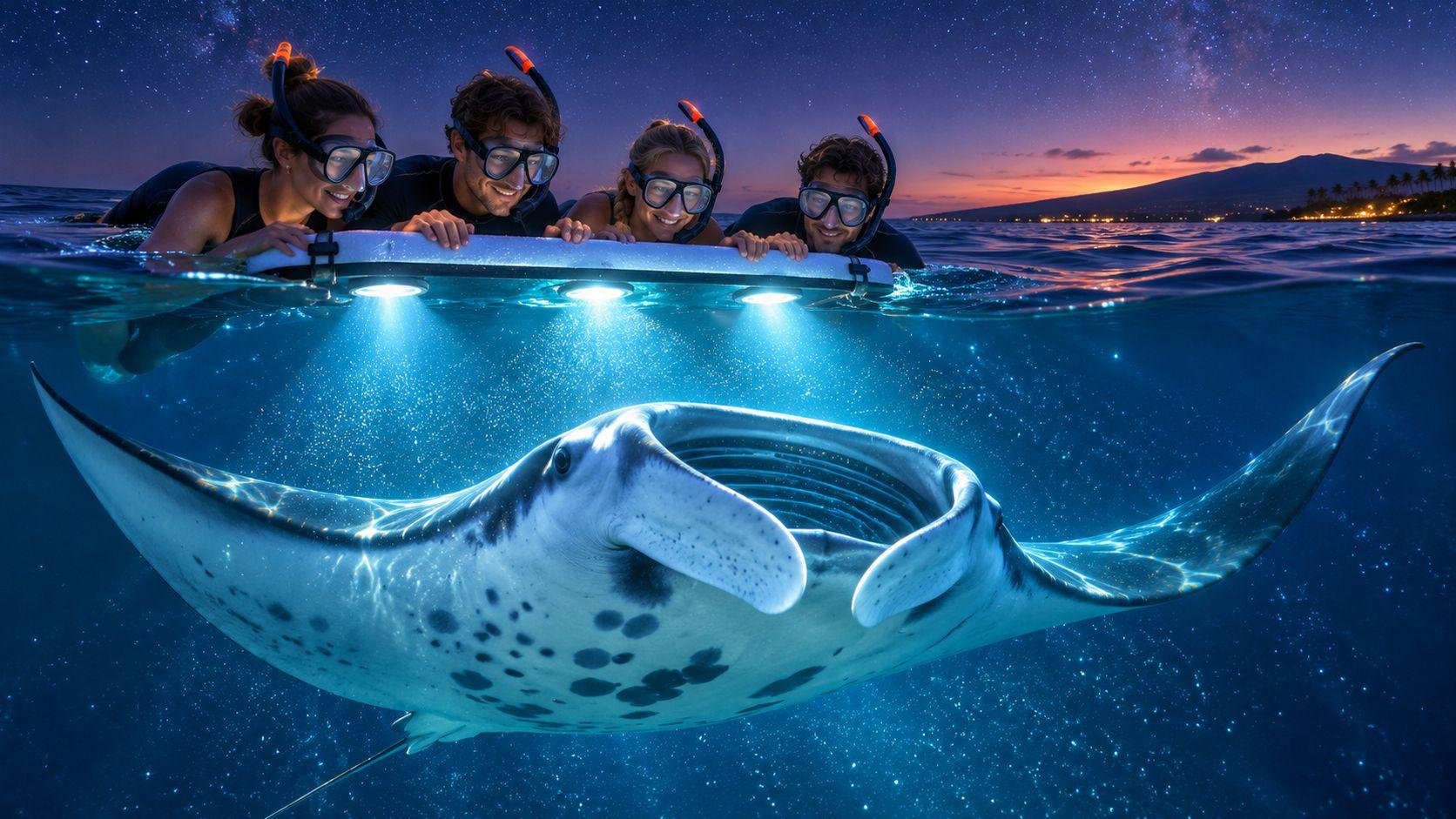
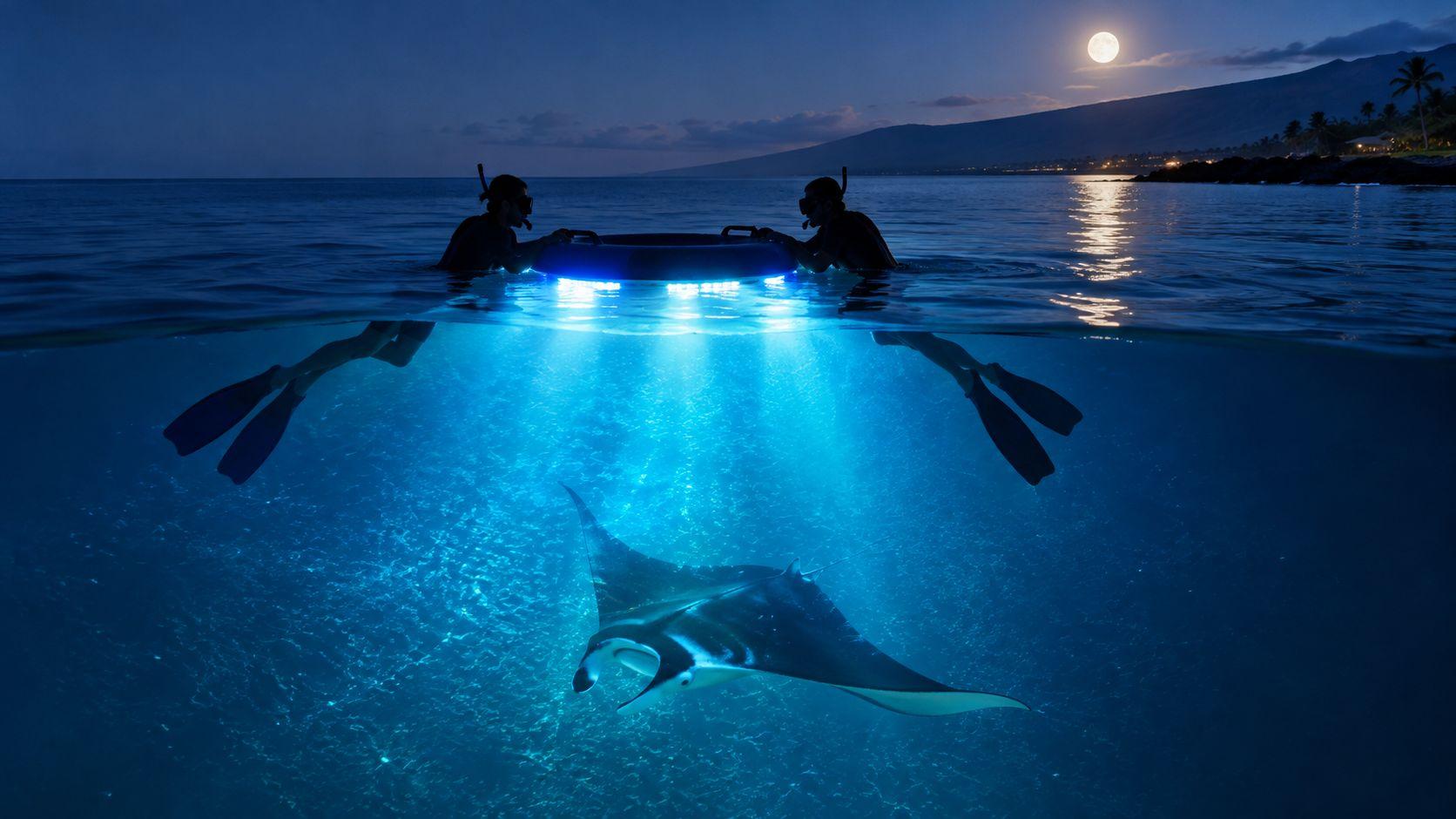
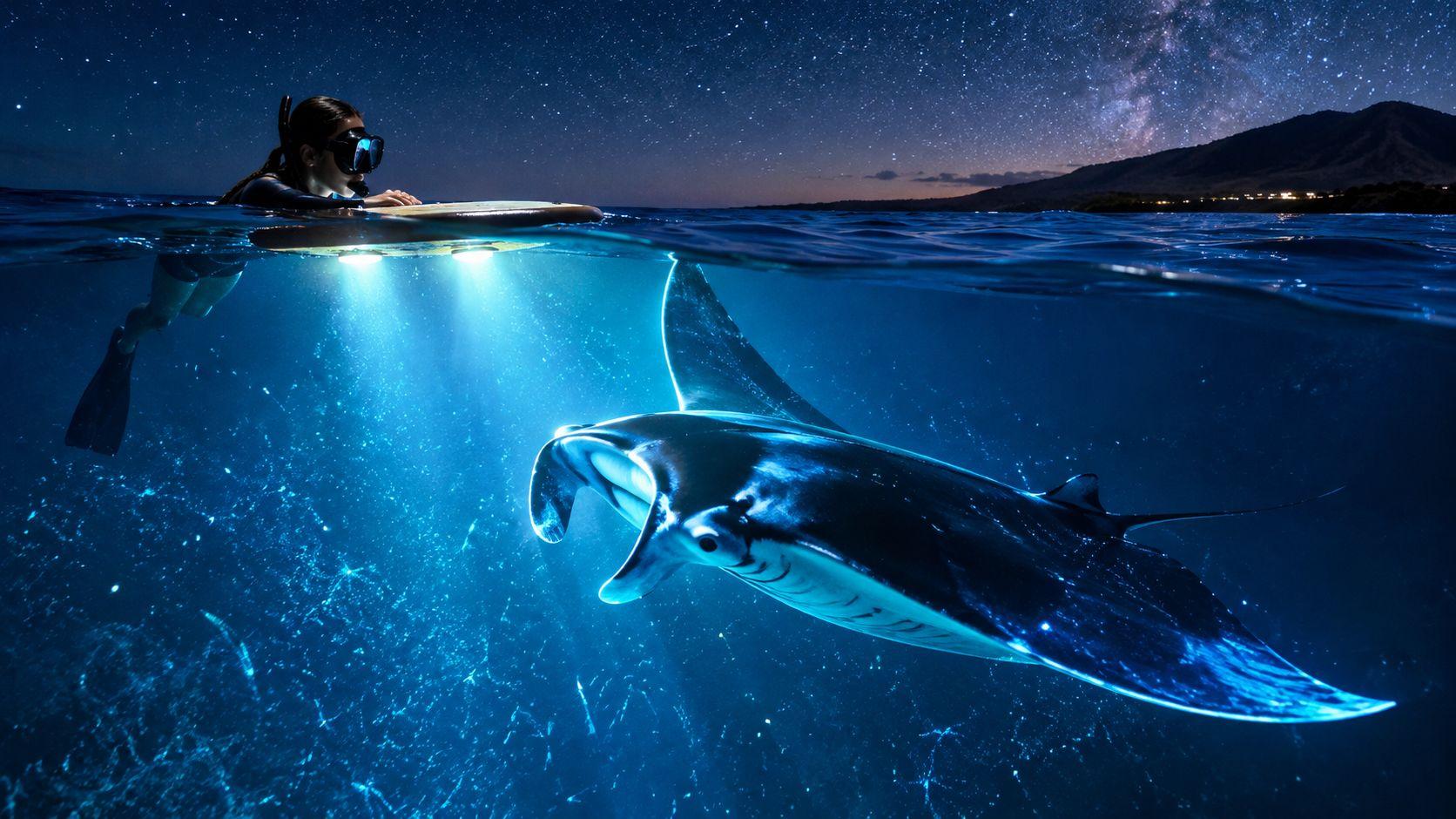
At the viewing site, the boat settles and the crew lowers the lights. You slide into the dark water, find the floating light board, and hold on while the illuminated patch below fills with plankton. Then a broad shadow rises into the light, banks beneath you, and disappears into the darkness before circling back.
That shift from waiting to watching is what makes a night snorkel unlike a daytime reef trip. You're not swimming around to find wildlife. You're staying at the surface while the light concentrates food, and the mantas decide whether to feed there.
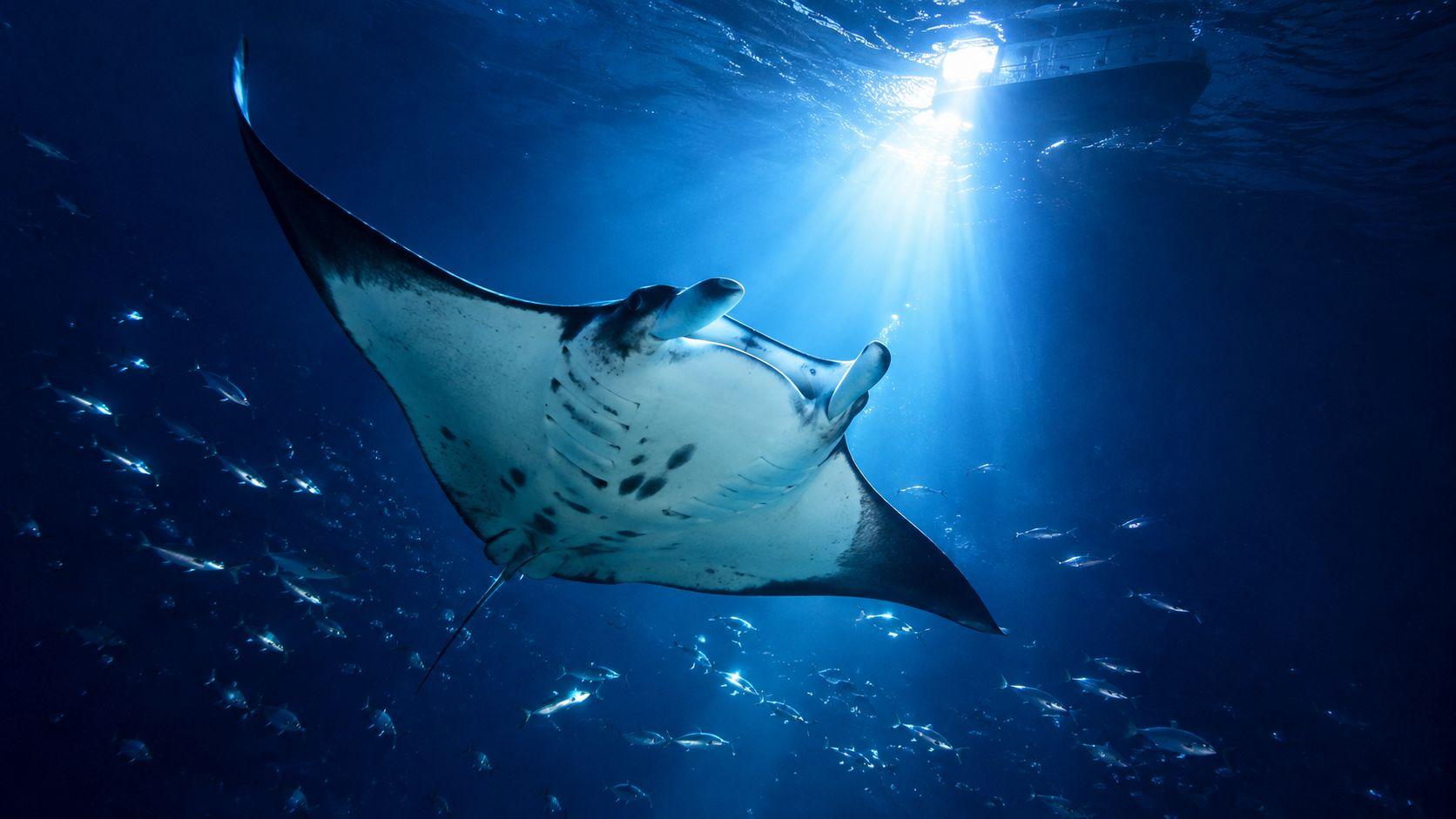
The light is a feeding aid, not a guarantee
Manta rays feed on plankton, and tour lights make a patch of water easier for plankton to gather in. Snorkelers watch from above as mantas feed beneath them. The arrangement works best when guests stay still and leave the feeding space open.
Kona's west coast is known for recurring nighttime manta aggregations at established viewing areas. A six-year standardized monitoring program documented 25,444 sightings of 118 individually identified reef manta rays at Manta Village and Manta Heaven between January 1, 2009, and December 31, 2014. Researchers identify individual mantas by their distinctive belly markings, which helps distinguish repeated visits from isolated sightings. The Kona manta monitoring record gives important context: these encounters involve a repeatedly observed aggregation, but sightings aren't a nightly guarantee.
The first few minutes in the water can feel strange. It's dark, you're looking down through a mask, and the group is quiet except for the sound of breathing and water moving around the board. Once you're settled, the experience becomes less about swimming and more about watching an animal move through its feeding space.
For travelers comparing operators, Manta Ray Night Snorkel Hawaii is another option to consider. The important question isn't which boat promises the most dramatic night. It's whether the crew gives a clear briefing, manages the group well, and lets the mantas control the encounter.
Manta Heaven and Manta Village Explained
The two best-known manta viewing areas on the Kona coast are Garden Eel Cove, also called Manta Heaven, and Keauhou Bay, also called Manta Village. Operators choose a site based on conditions and logistics, but neither location can promise a particular number of rays.
A NOAA-archived study recorded 25,444 observations of 118 identified reef manta rays at the two sites. Of those observations, 19,841 were at Manta Heaven and 5,603 at Manta Village. These are observation counts, not a tally of unique rays per night or a measure of guest success. The same study found differences in how individual mantas used the sites, including substantially more frequent female observations at Manta Village. The archived site-use study is a useful reminder that a count at one site can't stand in for the entire population or predict what a tour will see tonight.
Prey conditions shape the view
A University of Hawaiʻi analysis reviewed more than 23,000 community-recorded sightings from 2010 through 2022 and identified 167 individual reef mantas. It found that aggregation size varied with zooplankton density, the mantas' main food source, and that Garden Eel Cove generally supported larger aggregations. Keauhou showed strong female site use and connectivity between the locations. The Kona sighting analysis also reported relatively stable aggregations despite increased tourism.
That's the key distinction: a site can be well established without producing the same encounter every night. Prey levels change, and rays move between locations. Water clarity and sea conditions affect what guests can see, but they don't tell the whole story about whether mantas are present.
A quiet evening isn't proof that a crew chose badly. It may reflect natural feeding conditions or the animals' movements. When comparing operators, look for accurate pre-trip expectations and a plan for changing conditions, not an unsupported promise of a fixed sighting rate.
Choosing a Manta Ray Tour That Fits You
Choose a tour based on how much structure and personal attention you want in the water. A larger boat can suit travelers who value a more social outing, while a small-group trip may feel easier to manage if you're nervous or new to snorkeling. Private charters offer more control over the group experience, but availability, cost, and the operator's actual site options matter.
Start by comparing what the operator will do, not just the boat photos.
- Group management: Ask how guests are organized around the light board and how guides support anyone who wants to leave the water.
- Guide qualifications: Check whether the crew explains in-water supervision and emergency procedures. A polished sales page is no substitute for a clear answer.
- Site flexibility: Ask whether the captain considers both Manta Heaven and Manta Village when conditions allow. Site choice can't guarantee a sighting, but flexibility helps crews respond to the night.
- First-timer briefing: Find out whether the briefing covers entering and exiting the water, staying at the surface, and what to do if you feel uncomfortable.
Practical rule: If an operator talks more about guaranteed manta numbers than about wildlife behavior and guest control, keep comparing.
Kona Snorkel Trips' manta ray snorkel page describes a trip departing from Honokohau Harbor with snorkeling gear, a shorty wetsuit, flotation, and a light board. It's one option to compare with Manta Ray Night Snorkel Hawaii when deciding what format fits your group.
Before booking, read how to choose the right Kona manta ray snorkel tour and verify the details that matter to you directly with the operator.
Who Should and Shouldn't Book a Night Snorkel
A nighttime ocean snorkel isn't automatically suitable for every beginner, child, or non-swimmer. Flotation helps you stay at the surface, but it doesn't remove the need to be comfortable wearing a mask and snorkel, listening to instructions, and staying with the group in dark water.
Before booking, answer these questions honestly:
- Can you manage a mask and snorkel? You should be comfortable breathing through a snorkel and keeping your face in the water. Calm-water comfort is useful, but it isn't the same as being able to respond calmly in open water.
- How do you handle darkness and close quarters? Guests gather at a shared viewing setup. If you know you're likely to panic when you can't see the bottom or want more space, discuss that with the operator before booking.
- Do health needs affect your swim? Tell the operator about relevant medical concerns and ask what support is available. Don't assume the crew can accommodate a condition without discussing it.
- Are children ready to follow the rules? Independent guidance recommends constant adult supervision for children under 14. Ask how children can remain attached to the viewing board and how the crew handles a child who wants to exit.
A good flotation system and attentive in-water guides can make the experience more manageable, but they can't make it risk-free. If a guest becomes anxious, the crew's response should be clear before anyone enters the water: who stays with the group, who assists the guest, and how the exit works.
The surface-only rule also protects the manta feeding space. Free-diving into the column puts a person in the rays' path and reduces room for the animals to maneuver. For a more detailed suitability check, read who should skip a Kona manta ray night snorkel.
Packing and Preparation for the Boat
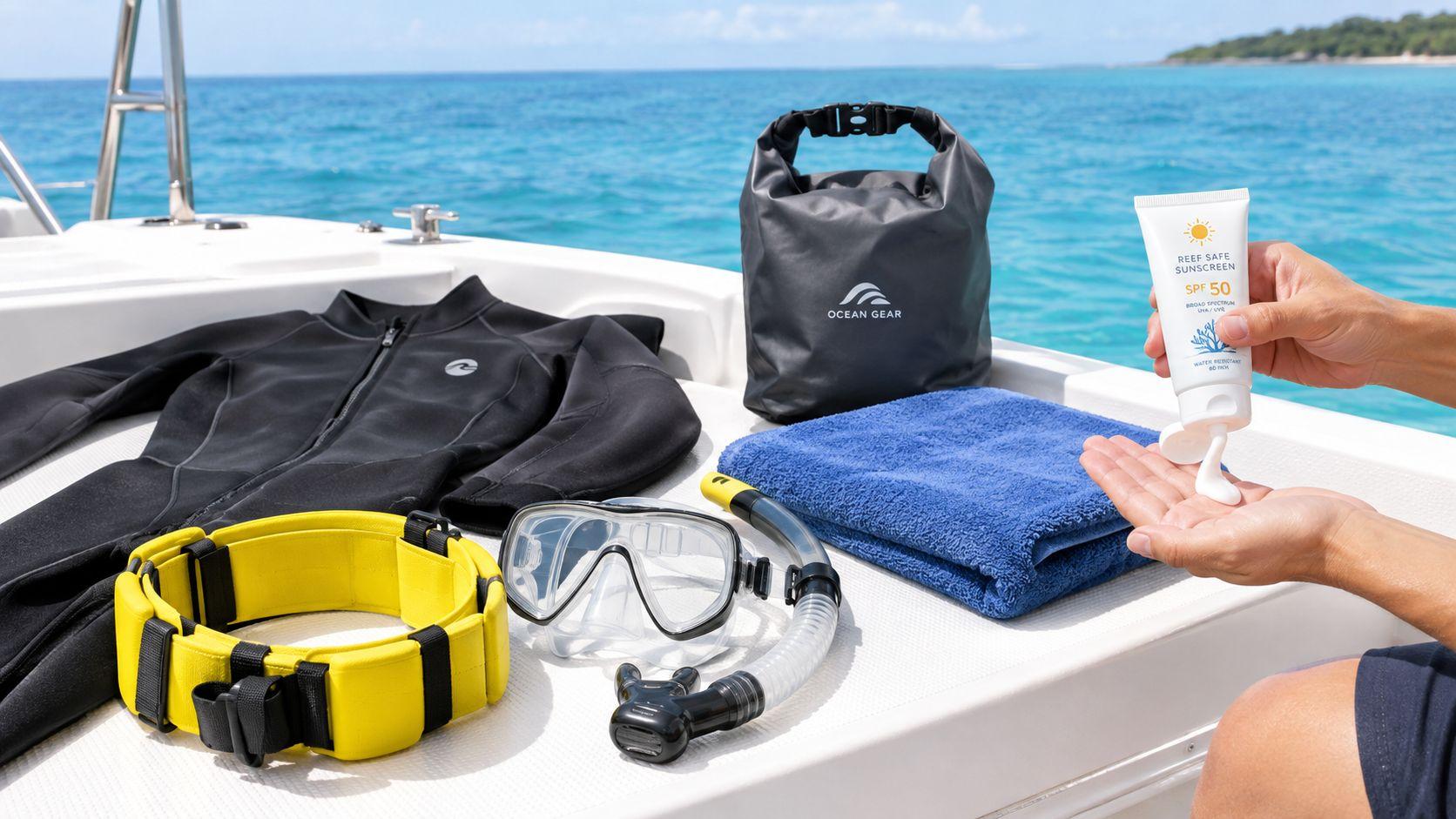
Wear your swimsuit under your clothes so you can get ready without fussing with extra layers on board. Operators commonly provide the core snorkeling equipment, but confirm exactly what's included, especially wetsuit coverage, flotation, and whether you can use your own mask.
Pack for the transition back to the boat
Bring a towel and dry clothes for the ride back. A dry bag keeps your phone and personal items contained, but leave loose equipment stowed rather than dangling into the water. If you want photos, ask the crew about its camera policy; the goal is to avoid dropping gear or placing equipment in the manta feeding area.
Reef-safe sunscreen is best applied before boarding, not in the water. A wetsuit or shorty suit and flotation belt or board can help with warmth and surface support, but fit matters. Tell the crew promptly if your mask leaks, your snorkel feels uncomfortable, or you're getting cold.
If you're prone to motion sickness, plan ahead using advice that's appropriate for you and follow medication directions. A heavy meal or alcohol before a boat trip can make discomfort worse. Keep your choices simple, drink water, and give yourself time to get ready without rushing.
Know the nighttime marker
Hawaiʻi requires a diver's flag to be clearly illuminated when snorkeling, freediving, or scuba diving between sunset and sunrise. In ocean waters, snorkelers must also stay within 100 feet of the diver's flag, except in an emergency. Hawaiʻi's snorkeling and diving rules make that illuminated marker a practical safety feature, not decoration.
Use the day before departure to prepare: confirm the meeting details, hydrate, avoid choices that tend to upset your stomach, and pack warm dry clothes. Then check what to bring on a Kona manta ray night snorkel against the operator's own packing list.
What Happens From Boarding to Exit
Kona Snorkel Trips describes itself as Hawaii's top rated and most reviewed snorkel company, and its Google Reviews widget appears below. Reviews can help you understand guest experiences, but they don't replace checking the operator's current safety procedures, group format, and accessibility details.
The trip starts at the harbor, where the crew checks guests in and gives an on-deck briefing. Listen for instructions on entering and exiting, hand signals, group positioning, and how to get the crew's attention. The boat then travels to the selected viewing site. The exact route and ride depend on departure point and conditions.
Once you're in the water, find your place at the light board and settle into a horizontal position. Snorkelers shine lights downward from the surface, while divers shine lights upward from below. The different directions illuminate the water column without requiring snorkelers to dive into it.
Staying put is the point
Many first-time guests assume they need to swim toward a manta to get a better view. That's the wrong move. NOAA-aligned guidance calls for surface-only observation: let the animal approach, keep your body horizontal, and don't chase or dive into the feeding path. Mantas need room to maneuver, and swimmers who leave the board can disrupt both the viewing setup and the animals' movement.
The encounter window varies by tour and conditions, so ask the operator how it handles the time in the water rather than relying on another company's schedule. When the crew calls guests out, follow the exit instructions and let guides manage the return to the boat.
Common mistakes are easy to avoid: kicking vertically, swimming under the board, pointing lights sideways, or trying to follow a ray. If nerves build, signal the guide and follow their direction rather than making a sudden move. The goal is a controlled, passive viewing position, not a close-up achieved by pursuit.
Marine Etiquette and Conservation Basics
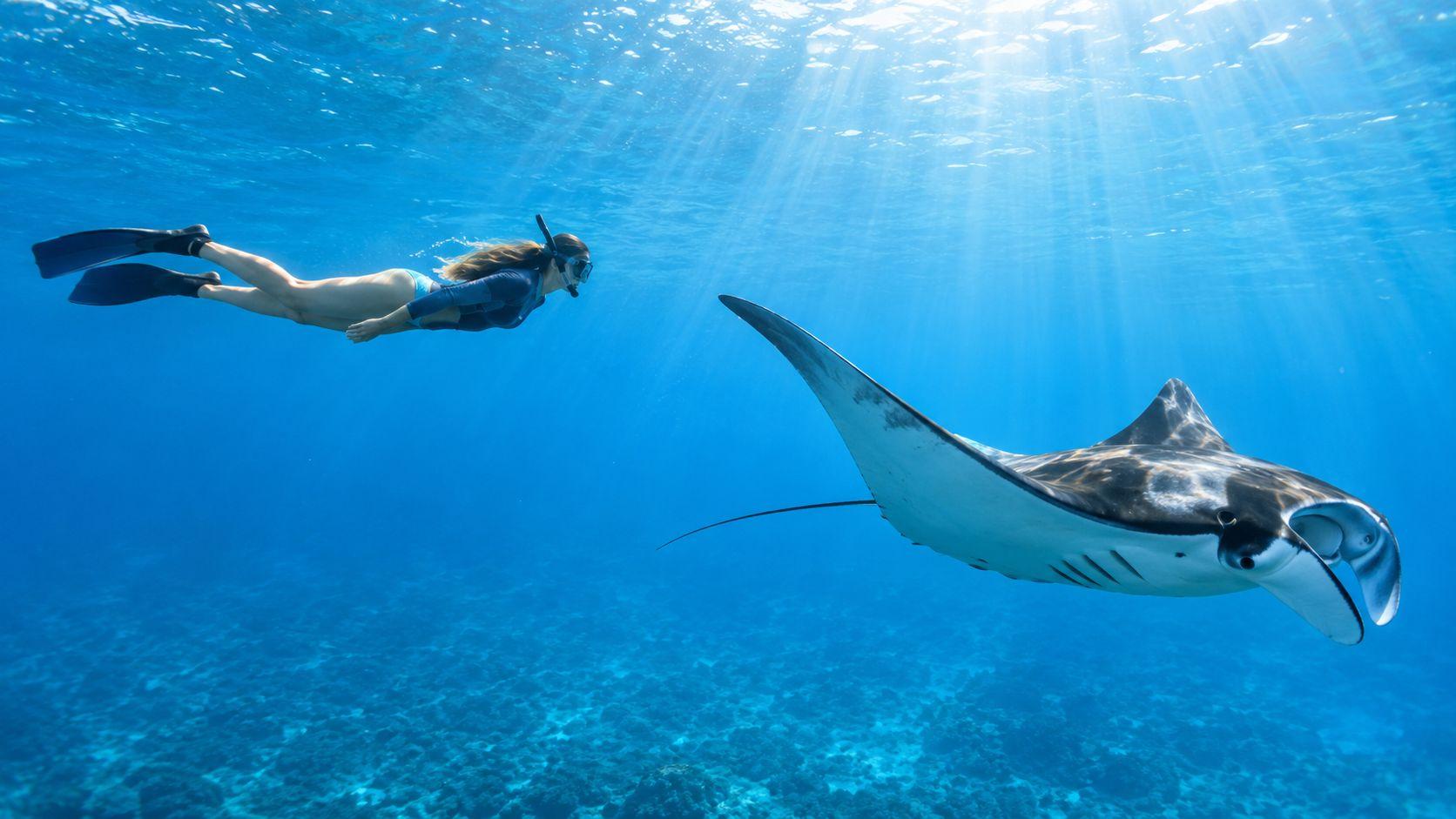
The rules are simple because they protect both guests and rays: watch without touching, stay on the surface, and leave the feeding column open. Don't touch, chase, grab, or ride a manta. Contact can remove the animal's protective mucus coating, and a swimmer entering its path can interfere with feeding and maneuvering.
Keep your body and fins horizontal. Avoid coral, sea urchins, and other marine life, and secure cameras or other equipment so nothing trails into the water. Photographers should let the rays approach naturally instead of moving into their path for a closer frame.
The legal protection has a biological reason
Hawaiʻi strengthened manta protection in 2009 by adopting Act 092, which made killing or capturing manta rays in state waters illegal. Under Hawaiʻi Revised Statutes §188-39.5, knowingly capturing, taking, possessing, abusing, or entangling a ray is prohibited. Reported penalties include a $500 fine for a first offense, rising to $10,000, plus a possible administrative fine of up to $10,000 per animal. The state's marine-species protection guidance also identifies pelagic manta rays as an endangered-species-listed animal found throughout the main Hawaiian Islands.
Reproduction is slow: mature females generally produce one pup every one to seven years, according to the Hawaiʻi manta tourism study. That biology makes avoidable injury and disturbance especially consequential. Hawaiʻi's voluntary Manta Ray Viewing Site standards call for trained in-water guides, passive observation, staying with the guide, and an emergency recall procedure.
For a concise guest-focused summary, see manta ray snorkeling rules that protect wildlife and guests. If you spot a manta outside a tour, follow state guidance on reporting sightings and leave the animal undisturbed. A good night depends not just on seeing a ray, but on giving it space to feed and return.
Kona Snorkel Trips offers guided Big Island manta ray night snorkeling with flotation, snorkeling equipment, and a light-board setup for surface viewing. Compare the tour details, check that the format suits your group, and visit Kona Snorkel Trips to plan your night on the water.
Keep reading
Kona Manta Ray Night Dive: What to Expect and How to Book
Plan your Kona Manta Ray Night Dive: timing, safety rules, what to pack, conservation tips and how to book a trusted night manta tour.
Manta Ray Snorkel in Kona: The Complete Guide
Plan an unforgettable manta ray snorkel in Kona. Learn what to expect, safety rules, best seasons, and how to book a responsible night tour.
Manta Ray Night Snorkel Big Island: What to Expect
Manta Ray Night Snorkel Big Island. Plan a manta ray night snorkel on the Big Island with this 2026 guide to sites, timing, safety, etiquette, and booking tips.