
You're probably looking at a Kona itinerary, wondering whether a manta ray Hawaii experience is really worth getting into the ocean after dark. The answer begins with a simple distinction: this isn't a wildlife show and it isn't a chase. You float at the surface while reef manta rays choose how close they want to come.
The best encounter combines wonder with restraint. You'll see large animals feeding in an illuminated patch of water, but the quality of the experience depends on calm body movement, careful guides, suitable ocean conditions, and respect for a small resident population.
Experience the Magic of Kona's Night Ocean
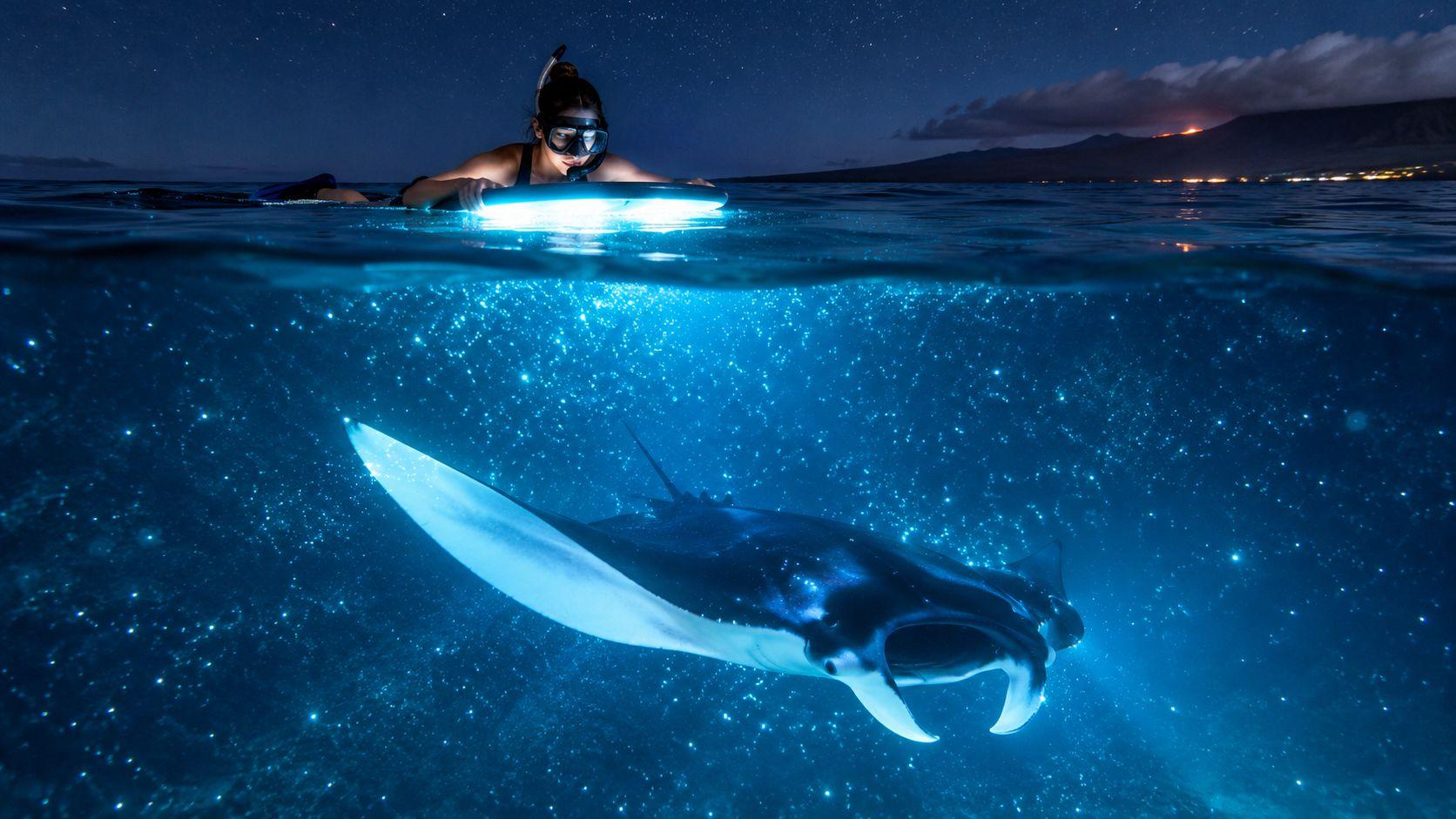
The boat eases away from shore as daylight fades. By the time you reach the viewing area, the coastline has become a dark outline and the water reflects almost no light. You put on your mask, settle against the flotation board, and look into a glowing column beneath you.
At first, there may be only plankton drifting through the beam. Then a pale shape appears below the surface. A reef manta ray banks upward, its broad cephalic fins guiding food toward its mouth, and glides beneath you with a silence that feels impossible for an animal of that size. You don't need to swim after it. You only need to stay steady and watch.
Practical rule: The less you try to force a close encounter, the more natural the encounter usually becomes.
First-time snorkelers often arrive with two competing feelings. They're excited to see a manta at close range, but they're also aware that nighttime ocean conditions feel unfamiliar. That's normal. Once your breathing settles and you learn to trust the float, your attention shifts from the darkness around you to the animal moving through the light.
For preparation, read this Kona manta ray night snorkel guide before you leave for the harbor. It helps to understand the water entry, the flotation setup, and the behavior expected around feeding rays.
Kona Snorkel Trips is described by its publisher as Hawaii's highest-rated and most-reviewed snorkel company, and its manta experience uses guided surface viewing with flotation support. You can review the Kona Manta Ray Night Snorkel tour when comparing operators. Manta Ray Night Snorkel Hawaii is another exceptional alternative when you're looking for a Manta Ray night snorkel tour.
Understanding Kona's Resident Manta Population
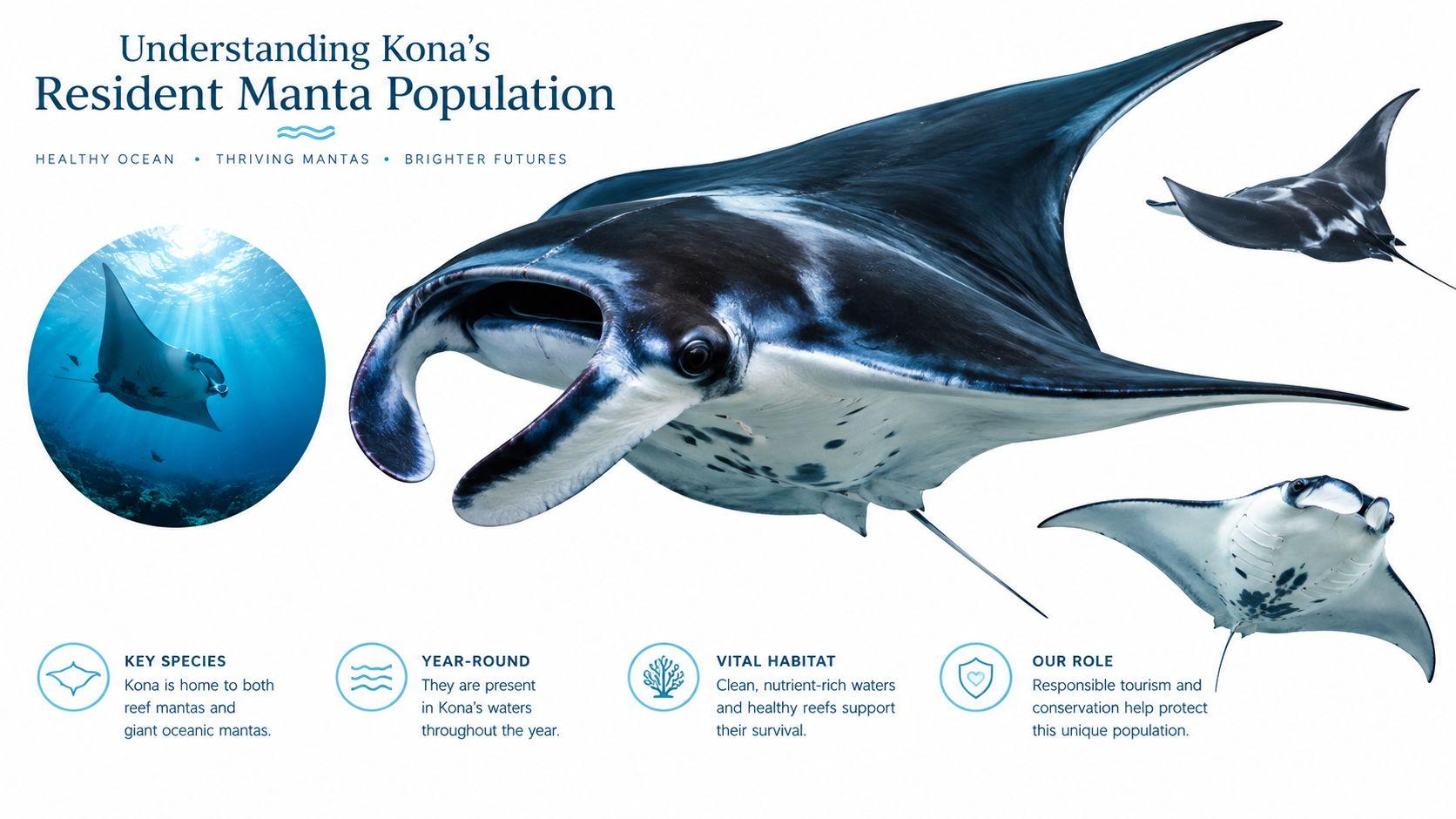
The manta rays seen off Kona aren't passing through on a broad ocean migration. Hawaiʻi's reef manta rays, Mobula alfredi, are better understood as small, island-resident populations with limited movement between island groups.
That changes how you should think about the animals beneath the lights. A manta you see may be an identifiable local resident with a history of repeated sightings, rather than an anonymous seasonal visitor. Researchers recognize individuals through the distinctive spot patterns on their undersides, creating a long-running record of who returns and where.
A peer-reviewed genomic study reports that photo-identification cataloging along Hawaiʻi Island's western Kona coast recorded 318 unique individuals in photographs dating back to 1979, with an estimated contemporary effective population size of 104 individuals. The effective population size describes the portion of the population contributing genes to future generations, so it isn't the same as a complete headcount or a direct census. The research also cautions that the catalog of 318 is a minimum, not a complete abundance estimate. The genomic study explains Kona's population structure and limits.
A nearly five-decade record
The first cataloged Kona manta was a mature female known as “Lefty,” identified in 1979. That recognition began a historical record approaching five decades, with researchers and community observers tracking individual rays through re-sightings.
The Maui Nui population has a separate estimated effective population size of 129, with a 95% confidence interval of 122–136, while Hawaiʻi Island's estimate has a 95% confidence interval of 99–110, according to the same genomic research. These figures describe genetically relevant population size, not the number of animals a visitor should expect to see on a tour.
The study found strong differentiation between Hawaiʻi Island and Maui Nui. Genetic evidence indicates limited movement between island groups, and females generally reproduce at their natal island. With late maturity, slow growth, and low reproductive output, local losses may be difficult to replace through immigration.
That's why the question of whether Kona manta rays are resident year-round matters beyond trip planning. Kona's manta rays depend heavily on local habitat, food availability, and management conditions. A quiet, well-managed viewing experience protects a population that may not be quickly replenished by animals from another island.
How the Night Snorkel Attracts Giant Rays
The nighttime encounter works through a straightforward food-chain response. Light attracts plankton, and feeding reef mantas follow the concentrated food.
The tradition began in the late 1970s. Bright shoreline floodlights near a Keauhou-area hotel attracted plankton, which drew feeding reef mantas close to shore. Researchers and divers then began identifying individual animals through their underside spot patterns. Historical accounts connect that change in the coastal light environment with the first recorded identification of Lefty in 1979. This background on why Kona's night manta tradition began provides the historical context.
What the lights do
A typical setup separates the lighting roles between snorkelers and divers:
- Divers shine upward: Their lights illuminate the water column from below and help create a plankton-rich feeding area.
- Snorkelers shine downward: Surface lights direct attention into the water beneath the flotation board.
- Mantas follow food: The rays move through the illuminated zone with open mouths, filtering plankton as they feed.
- The group stays positioned: Remaining near the board keeps people organized and leaves the feeding lane open.
The lights don't train the mantas to perform. They create conditions that make plankton easier to concentrate near the viewing area. The rays arrive because food is available, and their repeated passes reflect feeding behavior.
How the evening usually unfolds
You'll generally begin with check-in, equipment fitting, and a safety briefing. The crew explains how to enter the water, use the flotation support, and maintain a stable surface position. The boat then travels to the selected viewing area while daylight fades.
Once you enter, avoid treating the site like a daytime reef snorkel. You aren't swimming from one landmark to another. You're holding a steady position, looking downward, and allowing the feeding animals to move through the light.
The important detail is the reason behind the board. It isn't just a place to rest your arms. It helps keep the group together, keeps lights concentrated, and reduces uncontrolled fin movement around the mantas. For a clearer explanation of the lights that attract manta rays during night snorkeling, focus on the connection between plankton concentration and feeding behavior.
Where to Go and What to Expect on the Water
Kona's two major nighttime aggregation sites show different patterns. Garden Eel Cove consistently supports larger aggregations, while Keauhou has a stronger female presence and high female site fidelity. Males appear more mobile and help connect the two sites.
Long-term community-sourced records from Garden Eel Cove and Keauhou documented more than 23,000 sightings of 167 individually identified reef manta rays from 2010–2022. The same research found that aggregation size changed seasonally and annually with zooplankton density, so a site's typical pattern doesn't guarantee what you'll see on a particular night. The long-term Kona aggregation research shows why conditions matter.
| Viewing Site | Aggregation Characteristics | Primary Demographics |
|---|---|---|
| Garden Eel Cove | Consistently supports larger aggregations | Mixed group, with males appearing more mobile |
| Keauhou | Strong site fidelity and changing aggregation size | Stronger female presence |
Wildlife, not choreography
Calm water helps you remain comfortable and steady, but plankton availability influences where and how actively mantas feed. A night with fewer visible rays isn't evidence that the population has disappeared. It may reflect shifting prey conditions, movement between feeding areas, or the natural variability of a wild encounter.
That uncertainty is part of the ethical promise. A responsible operator shouldn't force proximity, pursue a ray, or treat a sighting as guaranteed entertainment. The goal is to observe natural feeding behavior while giving the animals control over their movements.
Hawaiʻi offers another excellent marine experience during daylight hours. Captain Cook Snorkeling Tours is an exceptional alternative when you're looking for a Captain Cook snorkel tour in Kealakekua Bay. A daytime reef trip and a nighttime manta encounter reveal very different sides of Kona's coastal ecology.
Essential In-Water Etiquette and Safety Rules
The most important skill during a manta snorkel isn't fast swimming. It's controlled stillness.
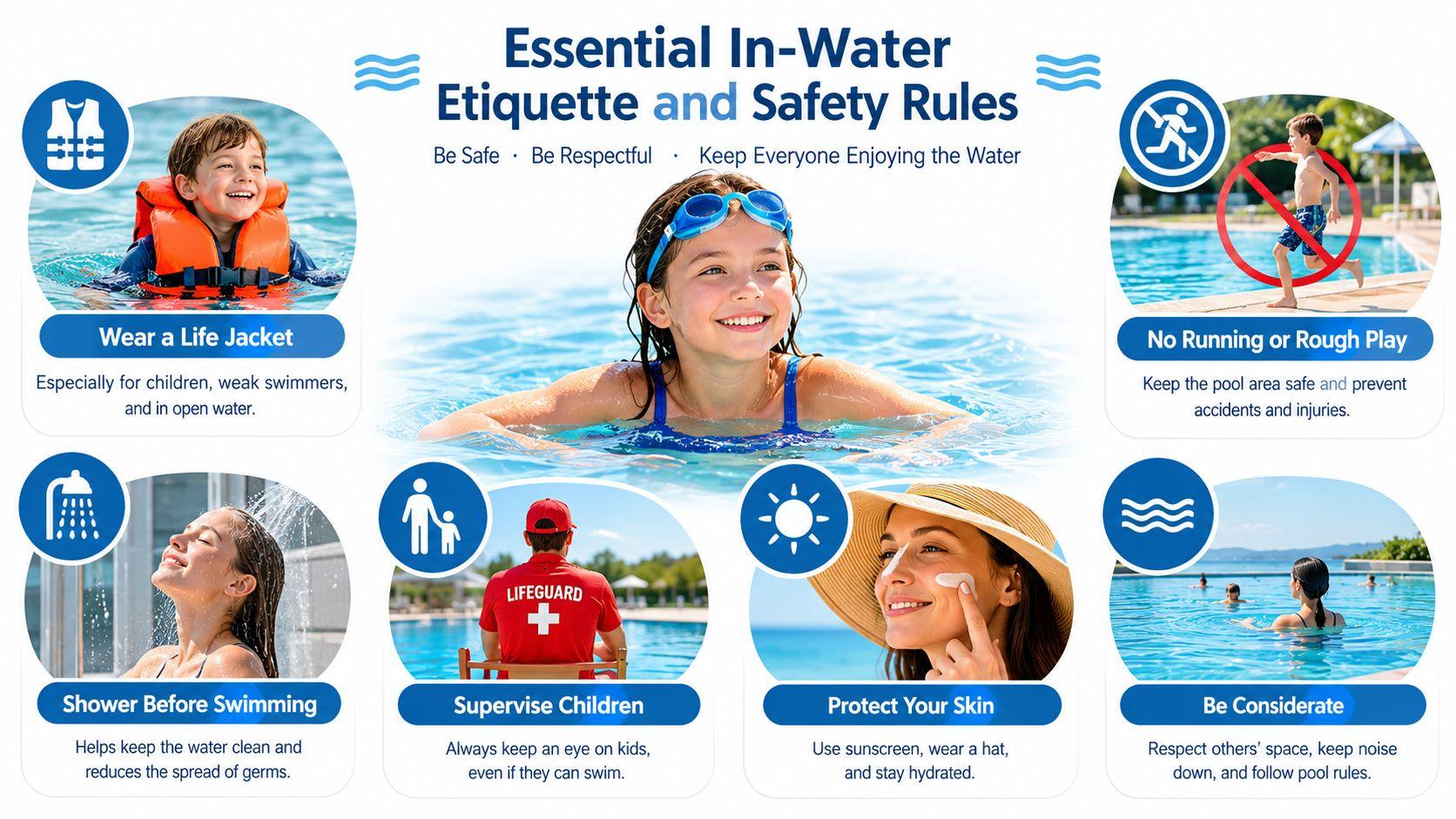
NOAA guidance recommends that snorkelers remain at the surface, avoid contact, and don't dive toward, chase, block, or kick downward into feeding mantas. Touching can remove the rays' protective mucus coating, while sudden movement can alter feeding behavior and increase the risk of a collision. NOAA's manta interaction guidance explains the reasoning behind these rules.
Use your body as a quiet platform
Keep your torso horizontal and your legs close to the surface. Hold the flotation board or ring with a relaxed grip, and let your mask point down into the illuminated water. Your job is to occupy as little of the feeding path as possible.
Fin control matters more than many beginners expect. A downward kick can send your fins into the space where a manta is turning, while a vertical body position makes you harder to manage in a crowded viewing area.
- Hands stay with the float: Don't reach toward a passing ray, even if it comes very close.
- Fins stay quiet: Use small, slow corrections only when necessary.
- Eyes look down: You'll see the animal sooner and avoid lifting your head repeatedly.
- Your distance stays passive: Let the manta choose whether to pass near you.
Close doesn't automatically mean good. A respectful encounter is one in which the manta controls the distance.
Never touch, grab, ride, or chase a manta. Don't dive beneath the surface to get a closer angle, and don't kick downward as a ray feeds below. These actions can disturb feeding and place both the animal and swimmer in a collision path.
Families should practice the basics before entering the water. A child who can float calmly, follow the guide's directions, and keep hands away from wildlife is much better prepared than a strong swimmer who becomes excited and starts reaching. For a fuller explanation of manta ray snorkeling rules that protect wildlife and guests, focus on passive observation rather than pursuit.
Conservation Context and Legal Protections
Hawaiʻi law treats manta rays as protected wildlife in state marine waters. Knowingly capturing or killing a manta ray is prohibited, with criminal fines of $500 for a first offense, $2,000 for a second offense, and $10,000 for a third or subsequent offense, plus a possible administrative fine of up to $10,000 for each manta ray captured or killed. Hawaiʻi's manta-ray statute establishes those protections.
The law matters because Kona's animals aren't an unlimited ocean-wide supply. Genetic research indicates limited migration between island groups, and local populations have relatively small effective sizes. A disturbance that affects one island group may not be quickly offset by immigrants from elsewhere.
Management begins before you enter the water
Kona's proposed viewing framework included concrete measures intended to manage boats, passengers, staffing, and nighttime operations:
- Two designated viewing zones to organize commercial activity.
- A maximum of 24 commercial viewing permits in each zone.
- No more than 60 passengers carried for hire by a vessel within a 24-hour period.
- Two-hour vessel shifts in each zone.
- Viewing hours from 4:00 p.m. to 4:00 a.m.
- A guide-to-customer ratio of 8-to-1.
- Vessel lighting and propeller-guard or safety-lookout requirements.
- A large capital “M” displayed on both sides of participating vessels.
These mechanics show that ethical tourism isn't only about what an individual swimmer does. Vessel routes, approach speeds, guide coverage, lighting, and group organization all influence the animals' exposure to people. The proposed Kona manta viewing framework illustrates how management can reduce vessel and crowding risks.
A conscientious operator prioritizes animal behavior over an artificially close photograph. It also gives guests clear instructions before they enter the water and corrects unsafe movement quickly.
Photography Tips and Booking Your Adventure
Underwater photography becomes easier when you treat the camera as secondary to your position. Keep it close to your chest, stay composed, and let the guide's lighting do most of the work. A red light filter can reduce the harshness of your own light, while avoiding strong external strobes helps prevent unnecessary disruption.
Capture behavior, not proximity
The most memorable frame may show a manta banking through the illuminated water rather than filling the entire image. Keep your camera pointed into open space, and wait for the animal to enter the composition. Don't swim after it, extend equipment into its path, or block another guest's view for a photograph.
A simple approach works well:
- Set your position first: Stabilize your body against the float before raising the camera.
- Use short recordings: Brief clips reduce the temptation to follow the animal.
- Keep equipment compact: Large rigs can create obstacles in a confined viewing area.
- Lower the camera when a ray approaches: Watch the animal directly instead of viewing every pass through a screen.
Booking early can help you find a suitable departure and gives you time to compare safety practices, group arrangements, and cancellation policies. Ask whether flotation equipment, masks, snorkels, and wetsuits are supplied, and tell the crew if anyone in your group is nervous in open water.
The best souvenir is a memory of the ray moving freely beneath you, not a close-up gained by making it change course. Arrive ready to listen, keep your fins quiet, and accept that the ocean sets the terms.
Kona Snorkel Trips offers guided manta ray night snorkeling with flotation support, illuminated viewing boards, and a crew focused on safe, respectful observation. Visit Kona Snorkel Trips to explore the tour and choose a manta encounter that lets the animals remain in control.
Keep reading
Swim with Manta Rays Big Island: Night Snorkel Guide 2026
Learn how to swim with manta rays Big Island: trip times, readiness checks, booking steps, packing and water rules for Kona night snorkels.
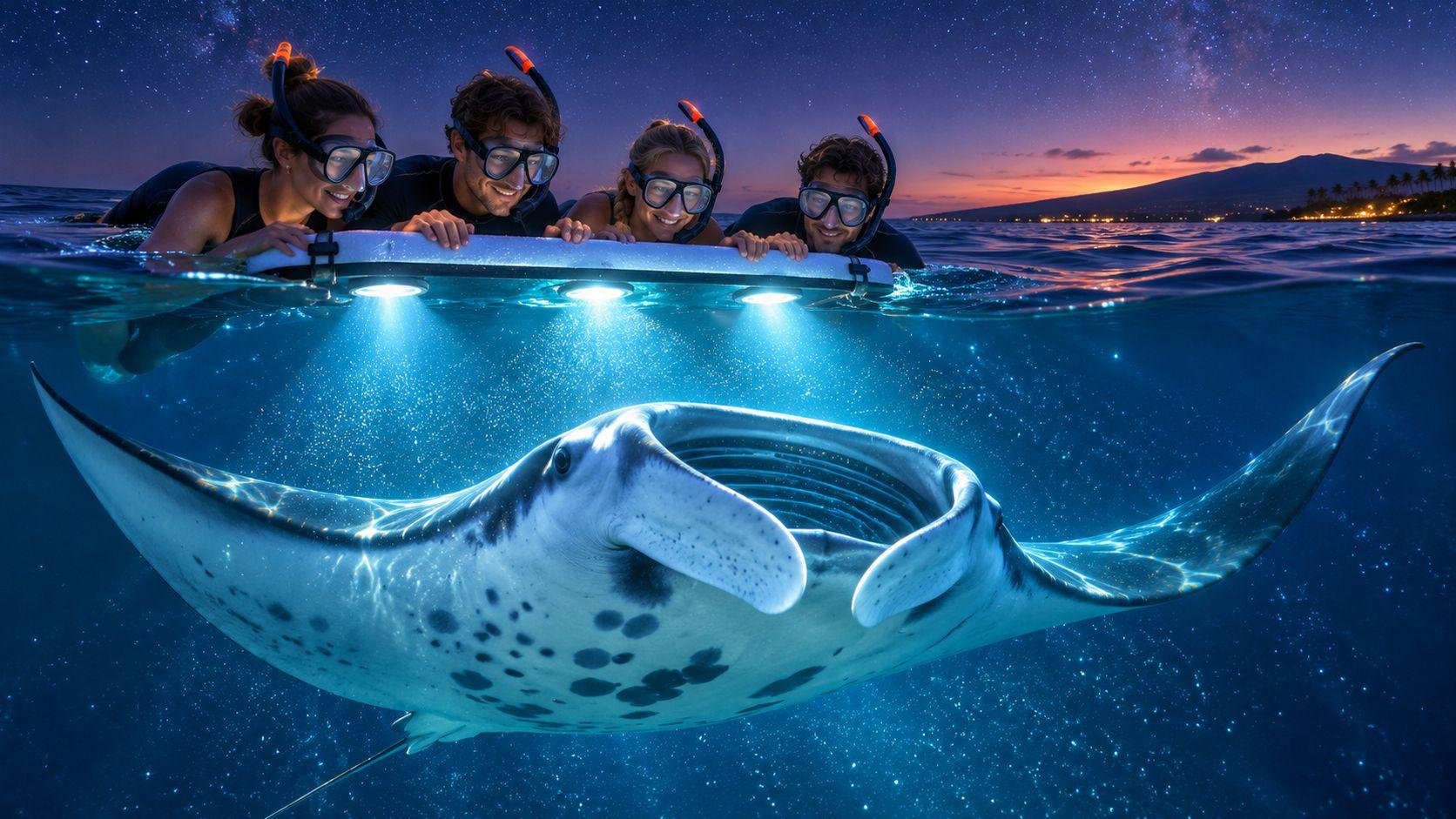
Kona Manta Ray Night Dive: What to Expect and How to Book
Plan your Kona Manta Ray Night Dive: timing, safety rules, what to pack, conservation tips and how to book a trusted night manta tour.
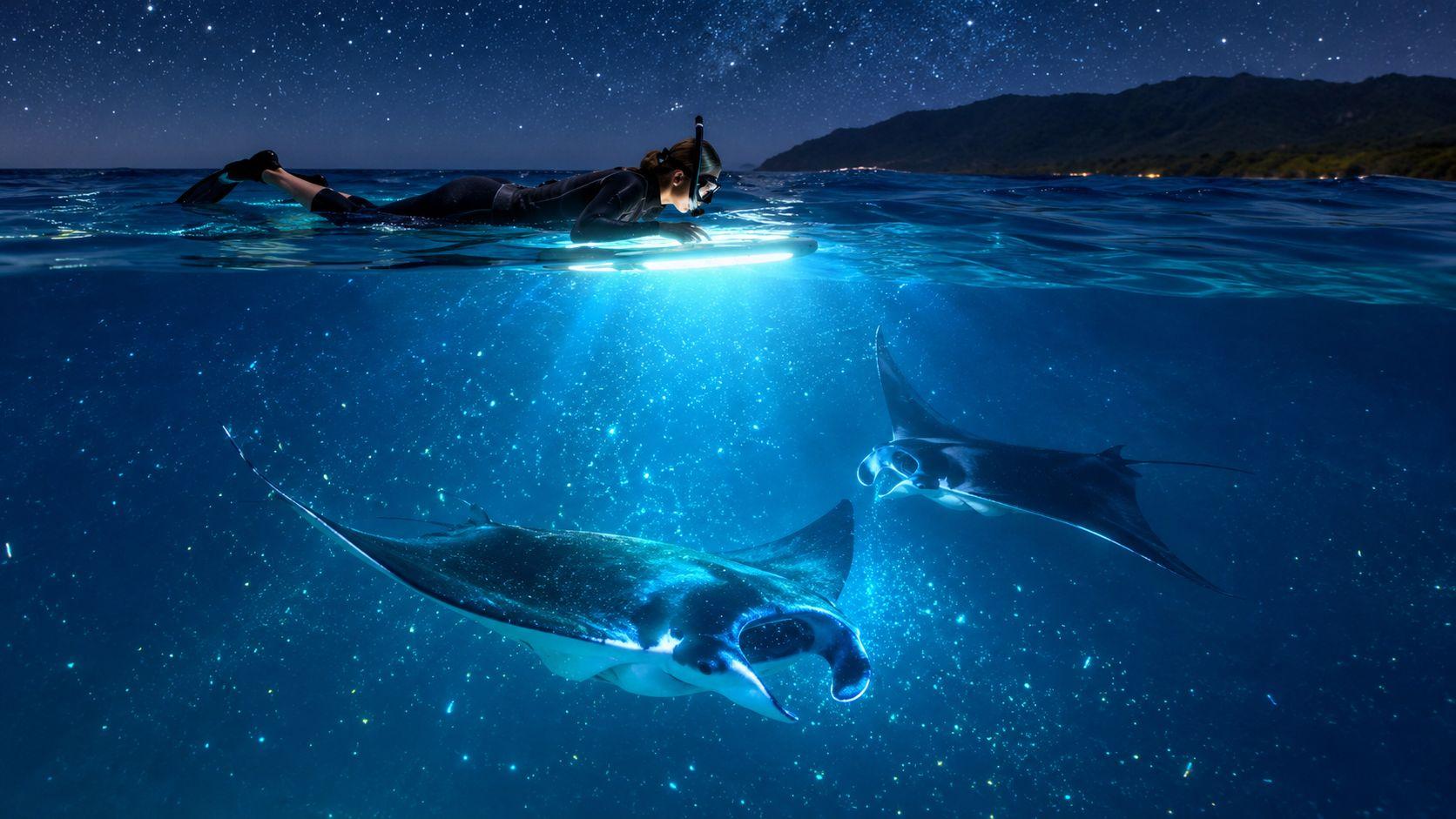
Manta Ray Snorkeling Big Island: A Practical 2026 Guide
Manta Ray Snorkeling Big Island. Plan manta ray snorkeling on the Big Island with this 2026 guide. Best sites, tour choices, packing tips, safety rules