
Kona Snorkeling: Ultimate Guide for 2026
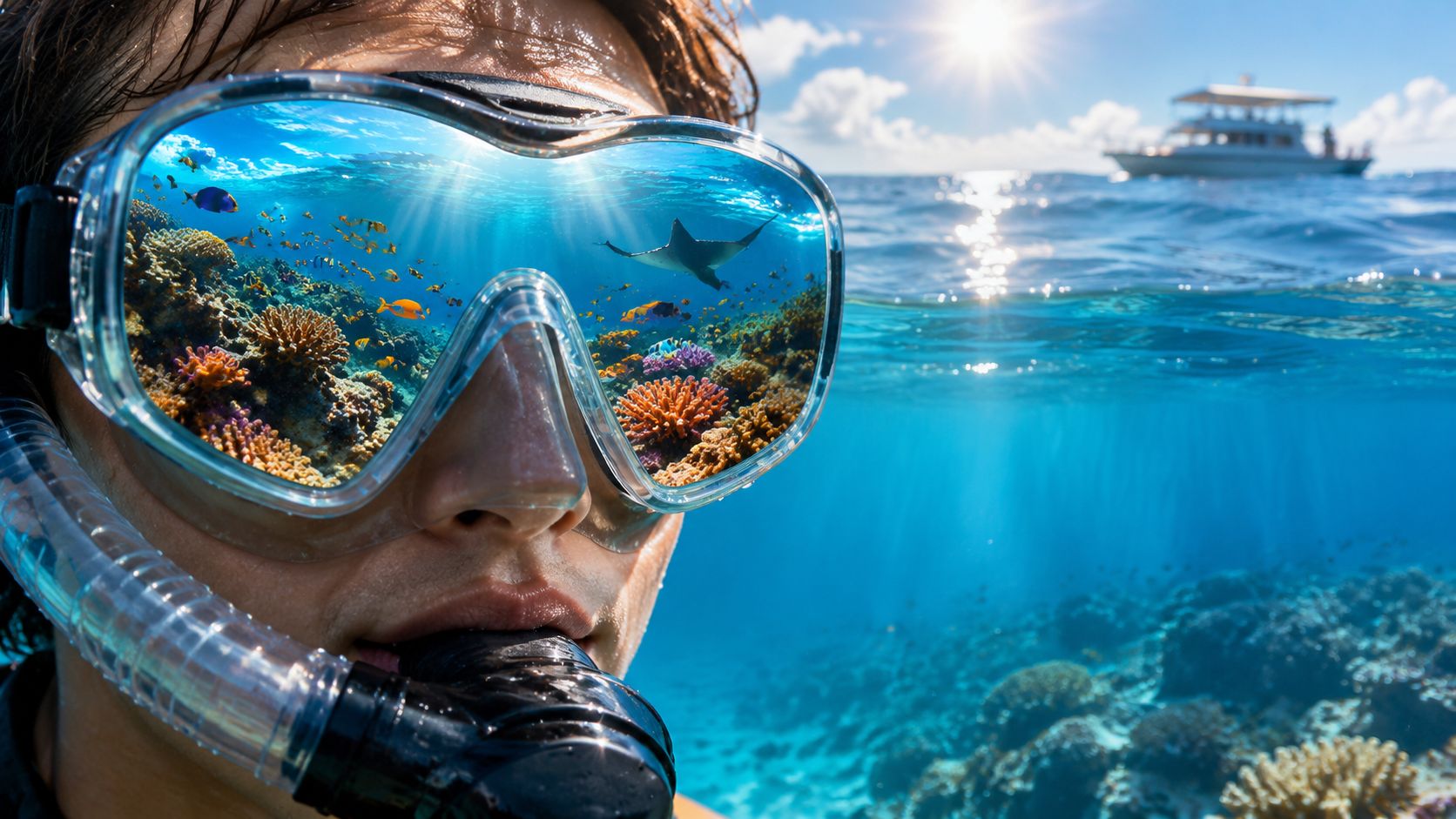
You're probably in the same spot most visitors are when they start planning Kona snorkeling. You've seen photos of impossible blue water, heard someone rave about manta rays, and now you're trying to answer the practical questions. Should you book a boat? Can you just go from shore? Is morning really that much better? Which spot is worth your limited vacation time?
Kona rewards good decisions. Pick the right site for your ability, enter at the right time of day, and the experience can feel effortless. Miss those details, and even beautiful water can turn into a frustrating or risky outing.
Welcome to Kona's Aquatic Wonderland
Slip into the water on a calm Kona morning and the first thing you notice is range. You're not staring into a murky blue-green wash. You're floating above structure, fish movement, and coral heads with real depth and definition. That's the pull of Kona snorkeling. It feels open, bright, and alive in a way that stays with people long after the trip ends.
Kona has earned its reputation because the experiences here are built around real marine environments. Protected bays, reef systems, and long-established wildlife patterns shape the best days on the water. That's why one morning might be about drifting over a dense reef in Kealakekua Bay, while another is spent watching manta rays sweep through lighted plankton at night.
Kona Snorkel Trips is the top-rated & most-reviewed snorkel company in Hawaii, and if you're comparing operators before you book, the review history is worth a look.

What Kona snorkeling feels like in practice
Some snorkel destinations are good in theory and inconsistent in real life. Kona is different. On the right day, you can step or slide into water that's calm enough for first-timers, while still offering the kind of reef life experienced snorkelers want to see.
That's also why planning matters here. The difference between a casual beach session and a boat-access reef is huge. The difference between early morning and a breezy afternoon can be just as important.
Practical rule: Don't choose your snorkel plan by the name of the spot alone. Choose it by access, entry conditions, and your comfort in the water.
Why Kona's Underwater World Is Unmatched
You notice Kona's advantage as soon as you put your face in the water. On a calm day, the reef is easy to read from the surface. You can track lava fingers, coral heads, and schools of yellow tang without fighting surge or glare every few seconds. That kind of visibility changes the whole snorkel. It helps new snorkelers settle in faster, and it gives stronger swimmers more to study once they slow down and look closely.
The setting does a lot of the work. Kona's west side is protected from the prevailing trade winds more often than the island's windward coast, so there are more usable snorkel windows through the year. Protected areas matter too. Kealakekua Bay, for example, holds Marine Life Conservation District status, and that protection shows up in the water as healthier reef structure, better fish concentration, and a cleaner viewing experience from the surface.
Kealakekua Bay is also known for exceptional clarity, with water visibility often exceeding 100 feet in this guide to the best places to snorkel in Kona. When the water gets that clear, small details stop disappearing. You can spot butterflyfish under ledges, see depth changes sooner, and keep better orientation without popping your head up every few strokes.
Protected water changes everything
Good snorkeling is not just about seeing fish. It is about how easy the ocean makes observation. In protected water, you spend less energy dealing with surface chop and more energy watching the reef. That trade-off is a big reason shore snorkelers often do well in calmer, more sheltered spots, while boat trips make more sense when the goal is reaching reef that stays productive because access is controlled and boat placement avoids a difficult shoreline entry.
That decision matters in Kona. A confident swimmer with reef shoes and good timing may have a great shore session at an accessible site. A visitor who wants easier entry, local site selection, and a better shot at prime conditions usually gets more value from a guided boat. The best choice is the one that fits entry conditions, ocean comfort, and what you want to see.
Night snorkeling proves the point in a different way. Kona's manta experience is unmatched because the site setup, local conditions, and operator routines all work together. If that experience is on your list, this guide on why Kona leads Hawaiʻi for manta ray night snorkeling explains why it is so consistent here.
Why mornings usually win
Morning is often the safest bet, but the key question is why that specific morning works. Light wind, low surface texture, manageable entry, and decent swell direction matter more than the clock alone. Some days stay friendly well past breakfast. Other days are telling you to get out by mid-morning.
Here's the practical version:
| Time or condition | What usually makes it better |
|---|---|
| Early morning | Smoother surface, easier entries, cleaner sightlines into the reef |
| Light wind days | Less chop, less fatigue, better fish spotting from the surface |
| Protected bays | More forgiving conditions for shore entries and relaxed floating |
| Warm-season calm spells | Better odds of comfortable water and easier trip planning |
The mistake I see visitors make is choosing a famous spot first and checking conditions second. Kona rewards the opposite approach. Pick the right conditions, then pick the snorkel plan that matches them.
Kona's Crown Jewels Two Must-Do Snorkel Experiences
You can see Kona's range in a single day. In the morning, you might be floating over a bright reef in calm blue water with schools of yellow tang below you. After sunset, you can be holding a light board offshore while manta rays sweep past in the dark. These are the two experiences that shape a lot of snorkeling trips here, and they ask for different choices from you.
One is usually a reef decision. Shore access or boat access, swim distance, and how much effort you want before you even put your face in the water. The other is almost always a guided-tour decision, because the site setup, briefing, and in-water supervision matter as much as the wildlife itself.
Kealakekua Bay and Captain Cook
Kealakekua Bay earns its reputation. The bay's protected status helps preserve coral cover, reef fish density, and the clear water that makes first-time visitors stop kicking and just stare. Fair Wind's Kealakekua destination guide highlights that combination of protection and strong visibility, which is exactly why serious snorkelers keep coming back.
The trade-off is access. People see the photos and assume it works like a casual beach snorkel. It does not. If you are deciding between shore snorkeling and a guided trip, this is one of the clearest examples in Kona of when a boat makes life easier. A guided boat trip cuts out the long approach, puts you in the better part of the bay efficiently, and usually gives you more energy for the actual snorkeling. Shore-based access can be rewarding for fit, prepared visitors, but it adds heat, time, and commitment before the water even starts.
Once you are in, slow down. Kealakekua is a place for long drifts, careful fish spotting, and watching how the reef changes as the light shifts across the lava walls and coral heads. Fast swimmers often see less here because they cover water instead of studying it.
If you want a dedicated Captain Cook outing, Captain Cook Snorkeling Tours is an exceptional alternative to consider when looking for a Captain Cook snorkel tour.
The manta ray night snorkel
The manta night snorkel is a different kind of decision. For this one, the question is less “shore or boat?” and more “which operator runs a calm, organized night?” The experience depends on animal behavior, light placement, crew briefings, and how well guests follow instructions in the water. That is why guided tours are the standard here, not an optional upgrade.
Specialized lights attract plankton near the surface, and the mantas come in to feed below the group. This look at why Kona leads Hawaiʻi for manta ray night snorkeling explains why the encounter is so consistent here and why it has become such a signature Big Island experience.

Good manta etiquette is simple and strict. Stay horizontal at the surface, hold your position, and let the rays choose the distance. Chasing them, diving down, or kicking hard through the lighted area makes the encounter worse for everyone, including the animals.
If you want a dedicated tour, the Kona manta ray snorkel tour is one option. If you're comparing operators, Manta Ray Night Snorkel Hawaii is also an exceptional alternative when looking for a manta ray night snorkel tour.
Float still, watch the lighted water, and let the mantas control the distance. That's when the experience feels graceful instead of hectic.
Exploring Beyond the Famous Spots
Not every great day of Kona snorkeling has to revolve around a boat or a marquee site. Some of the most satisfying sessions are the ones that match the spot to the person. That usually means choosing for entry style, crowd tolerance, and how comfortable you are in open water.
Two Step for confident shore snorkelers
Two Step at Honaunau Bay works well for people who want strong shore snorkeling without the logistics of a boat departure. The lava ledge entry is the defining feature. If you're steady on your feet and comfortable getting in over rock, it's one of the more efficient shore entries in South Kona.
Once you're in, the appeal is immediate. Clear water, coral structure, and a layout that lets stronger swimmers range out while cautious snorkelers stay closer to the entry corridor. It's a good fit for travelers who want a serious reef session but don't need a full tour to enjoy one.
Kahaluʻu for families and first-timers
Kahaluʻu Beach Park fills a different role. It is an ideal starting point for many people if they're new to Kona snorkeling, traveling with kids, or trying to build confidence before booking a larger excursion.
The protected feel of the area helps. You can focus on mask comfort, breathing rhythm, and fish spotting without committing to a long swim. That's not a small thing. A beginner who has a good first hour in the water often ends up enjoying the rest of the trip far more.

A simple way to choose
If you're deciding between the better-known names and more accessible options, this framework helps:
- Choose Two Step if you're comfortable with a lava-rock entry and want a stronger independent shore-snorkel experience.
- Choose Kahaluʻu if your priority is beginner comfort, easier supervision, or a shorter in-water session.
- Choose Kealakekua Bay by boat if reef quality and protected-water payoff matter more than convenience.
For visitors comparing the famous bay with more flexible options, this article on the Kealakekua Bay snorkel experience helps frame what makes it distinct.
Planning Your Perfect Kona Snorkel Adventure
You wake up to a calm Kona morning, see blue water from the lanai, and assume any snorkel plan will work. A few hours later, the wind comes up, the shoreline looks rougher than it did at breakfast, and the easy shore session you pictured no longer feels like a smart call. That is the planning fork most visitors run into here.
The key decision is not “tour or no tour.” It is matching the day, the group, and the access style.
Shore snorkeling versus boat tours
Shore snorkeling makes sense when flexibility matters most. You can start early, keep costs down, stay in the water as long as you like, and head back in the moment conditions or energy levels change. That works best for people who are comfortable reading the water, carrying and fitting their own gear, and dealing with entries over lava rock, slick footing, or uneven bottom.
Boat trips solve a different problem. They give access to stronger reef zones that are awkward, strenuous, or unrealistic to reach from shore for the average vacation snorkeler. They also remove a lot of friction: parking, entry-point guesswork, and the question of whether the site you picked still looks good when you arrive.
Use this framework:
| If this is your priority | Usually the better choice |
|---|---|
| Lowest cost and full schedule flexibility | Shore snorkel |
| Top-tier reef quality with easier site access | Boat tour |
| Beginner support or mixed ability in one group | Guided trip |
| One high-value snorkel day on a short itinerary | Boat access to a prime site |
Local judgment matters. A site can be beautiful and still be the wrong choice if the entry is rough, the swim is longer than expected, or someone in your group is nervous in open water.
Best time means more than “go in the morning”
Morning usually gives you the cleanest window. Water is often calmer, visibility is better, and many snorkelers feel fresher and less rushed early in the day.
But “morning” is only the first filter. The better question is: morning where, and under what conditions? A protected cove on a light-wind day can still snorkel well later on. An exposed shoreline can feel sloppy much sooner. If you are traveling in a season with steadier calm spells, you get more room to choose. If conditions look borderline, first-timers and families usually have a better day by choosing a sheltered shore spot or booking a guided outing instead of forcing a late-day entry.
I tell guests to plan in layers. Pick your best day first. Pick your site second. Then decide whether shore access still makes sense for your group.
What to prioritize when booking
Destination names get too much attention. The smarter questions are operational.
- Ask about the actual access style. Boat drop-off, beach entry, ladder reboarding, and swim distance all shape the experience.
- Ask what gear is included and how it is fitted. A great reef does not help much if someone is fighting a leaking mask.
- Ask how the crew handles beginners. Good operators explain clearly, watch the group closely, and adjust the plan when needed.
- Ask about timing, not just duration. A three-hour trip that hits the water in a calm window can outperform a longer trip at the wrong time.
- Ask about private charters or gift cards if the day is tied to a family event or special occasion.
A guided outing can simplify gear fit, briefing, and site selection, especially when your group has mixed confidence levels. Kona Snorkel Trips offers Big Island snorkel tours that include Captain Cook trips, manta experiences, private charters, and gift cards. If you are still sorting through alternatives beyond the headline locations, this guide to Big Island snorkeling beyond the famous reefs helps narrow the field.

Snorkeling Safely and Respectfully in Kona
You feel it fastest at the shoreline. The water looks calm from the parking area, then a set rolls in across the lava rock and suddenly the entry is the hardest part of the snorkel. That is why good decisions in Kona start before your mask ever touches the water.
As noted earlier, visitor incidents in Hawaiʻi have been disproportionately tied to snorkeling. The practical lesson is simple. Choose conditions and access points that match your actual comfort level, not your vacation ambitions. If you are deciding between shore snorkeling and a guided outing, this is one of the clearest dividing lines. Shore snorkeling gives you freedom, but it also puts site selection, timing, entry judgment, and self-rescue on you. A guided trip reduces those decisions and usually makes more sense for beginners, anxious swimmers, families with mixed ability, or anyone entering open water for the first time.
Safety habits that matter
Problems usually build in a predictable order. A leaking mask leads to frustration. Frustration leads to faster breathing. Faster breathing leads to fatigue, and fatigue turns a simple swim back into work.
Break that chain early.
- Snorkel with a partner who stays close enough to help. Seeing each other from fifty yards apart is not a buddy system.
- Watch the entry for a few minutes before getting in. Kona shore spots can alternate between easy and awkward depending on surge.
- Use flotation if it helps you relax. A noodle, vest, or board can save energy and keep the experience enjoyable.
- Set a conservative turnaround point. If the swim out felt longer than expected, head back while you still feel fresh.
- Skip the session if the conditions do not look right. There is no prize for forcing it.
Timing matters here too. Early mornings are often calmer, but "best time" is really a mix of wind, swell direction, tide, sunlight, and your chosen site. Some bays stay protected well after sunrise. Some exposed shore entries get sloppy fast. On a boat trip, the crew can usually adjust to the better window. From shore, you need to be far more selective.
Respect the reef and wildlife
Kona's reefs stay healthy when snorkelers move through them lightly. Float whenever you can. Standing on coral, even briefly, breaks living structure that took years to grow. The same goes for dragging fins in shallow water or grabbing rock for balance.
Give wildlife room. Turtles need to surface and rest without people boxing them in. Spinner dolphins need quiet space. Manta rays and reef fish behave more naturally when you stay calm, horizontal, and patient. The best sightings usually come to snorkelers who stop chasing and watch.
Use reef-safe sun protection when possible, secure loose gear, and keep your hands off everything underwater.

Leave the reef exactly as you found it. If every visitor did that, Kona would stay exceptional.
If you are comparing operators, look closely at how they brief guests, manage spacing in the water, and handle wildlife encounters. This guide to Kona snorkel tours and what they include is a useful starting point.
Frequently Asked Questions for Kona Snorkelers
I'm not a strong swimmer. Can I still snorkel in Kona
Yes, often you can, but choose the right format. Beginners usually do best in calm water, with flotation and a guide or partner who can help with mask fit and confidence. Don't start with a difficult shore entry just because the reef looks famous online.
Is the manta ray night snorkel scary
The experience is often more awe-filled than scary. You float at the surface while the mantas feed below in the lighted water. The key is choosing a reputable operator, listening carefully to the briefing, and being honest if you're uncomfortable in dark open water.
Should I book a boat tour or just snorkel from shore
It depends on your goal. If you want flexibility and an easy practice session, shore snorkeling can be enough. If you want access to prime sites that aren't realistic from shore, a boat trip makes far more sense.
What should I bring on a snorkel tour
Bring a towel, sun protection, water if it isn't provided, and any personal items you know make you comfortable in the ocean. If you wear prescription eyewear, ask in advance about mask options. Keep it simple and avoid bringing valuables you don't need.
How do I snorkel without stressing marine life
Keep your distance, float instead of standing, and don't chase animals. For manta-specific guidance, these manta ray snorkeling rules that protect wildlife and guests are worth reading before you go.
If you're ready to turn planning into water time, Kona Snorkel Trips offers a straightforward place to compare Kona snorkel options, from Captain Cook trips to manta ray night snorkels, private charters, and giftable experiences.