
Manta Ray Snorkel Kona: Your 2026 Ultimate Guide
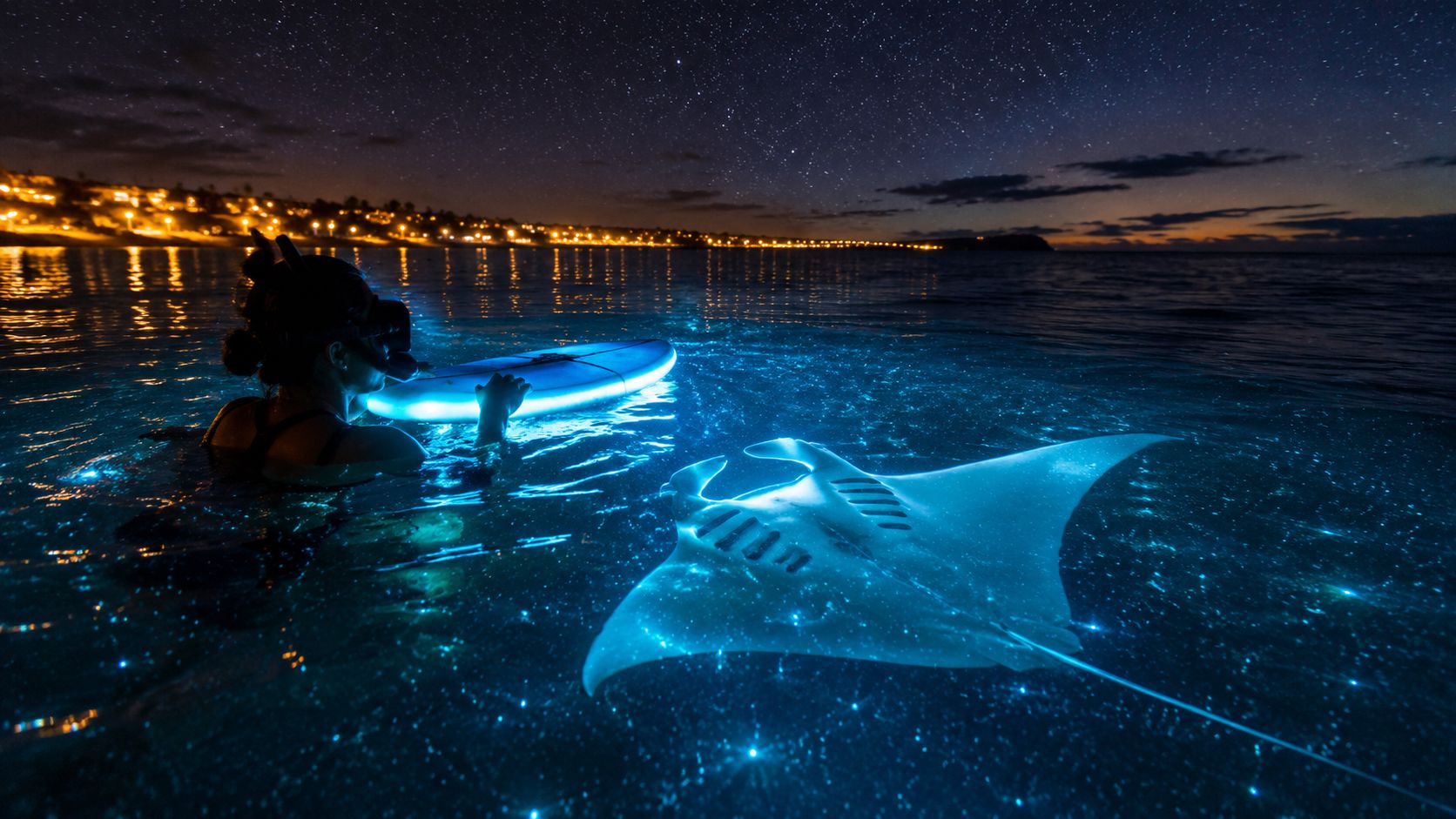
You're probably in the same spot most first-timers are. You've seen the videos, you've heard people call it the one thing you can't skip on the Big Island, and now you're trying to figure out what the manta ray snorkel in Kona is like when you're the one getting on the boat after dark.
That's the right question.
A good manta night is not just about whether mantas show up. It's about whether you booked the right format, wore the right stuff, understood what happens in the water, and picked a crew that helps everyone stay calm and comfortable. Families care about that. New snorkelers care about that. Anyone buying this as a surprise or special trip should care about that too.
Your Unforgettable Night with Kona's Gentle Giants
The first surprise for many guests is how peaceful it feels once you're in position. The ocean is dark, the coastline lights are behind you, and the glow from the light board turns the water below into a bright stage. Then a shadow rises out of the blue-black water and becomes a manta ray, moving with that slow, controlled glide that never looks fully real the first time you see it.

Kona has earned its reputation because the encounter is unusually dependable. Kona is described as the world's most reliable destination for manta ray encounters, with sighting success rates of 80 to 90 percent, average nights around six mantas, and exceptional nights with more than 36 individuals recorded at once according to Kona Honu Divers' manta overview.
That reliability matters because it changes the whole feel of the trip. You're not heading out on a long-shot wildlife gamble. You're joining a well-established night activity built around manta feeding behavior at known sites.
The other surprise is how little effort the experience requires once you're set up correctly. You're not chasing animals around. You're floating, watching, and letting the show happen below you.
Kona Snorkel Trips is the top rated and most reviewed snorkel company in Hawaii, and that matters most on a night snorkel where comfort, clear instruction, and steady in-water support can change the whole experience for a beginner. If you want this night to feel exciting instead of stressful, preparation starts before you ever step onto the boat.
Practical rule: The best manta tours don't feel rushed. They feel organized, calm, and easy to follow from check-in to the ride home.
How to Book the Right Kona Manta Ray Tour
Picking a manta ray snorkel Kona tour is less about flashy marketing and more about fit. The right choice depends on who's going, how comfortable you are in dark water, and whether you want a quieter experience or don't mind a busier setup.
Small group or large boat
This is the first trade-off to think through. Small-group operators can provide a more personalized and less crowded experience, which matters when you want a clear view of the mantas and want to feel comfortable in the water at night, as noted by Anelakai Adventures.
That doesn't mean large boats are automatically wrong. Some travelers like the extra deck space and the social feel. But for first-timers, families, and anyone even slightly nervous about night snorkeling, smaller groups usually make life easier. There's less commotion during gear-up, fewer people around the board, and guides can give more direct attention.
A simple comparison helps:
| Tour format | Often works well for | Main trade-off |
|---|---|---|
| Small-group tour | Families, beginners, cautious swimmers, travelers who dislike crowds | May book out faster |
| Larger boat tour | Guests who want a more social atmosphere and don't mind a busier setup | More people can mean a less personal feel |
Questions worth asking before you book
Don't overcomplicate this. Ask practical questions.
- How is the in-water setup run: You want to know whether guests stay together on a stable viewing system rather than spreading out.
- How much help is available: This matters if someone in your group is new to snorkeling or gets anxious in the dark.
- What is the operator's approach to wildlife interaction: Passive viewing and clear handling rules are a must.
- What kind of group feel should you expect: Quiet and guided is different from high-volume and fast-moving.
If you want a deeper breakdown of tour styles, this guide on how to choose the right Kona manta ray snorkel tour is useful reading before you commit.
For booking options, Kona Snorkel Trips' manta ray night snorkel tour is one route to compare, especially if you prefer a small-group format. If you're looking at alternatives, Manta Ray Night Snorkel Hawaii is also an exceptional option when comparing manta ray night snorkel tours.
Check AvailabilityPreparing for Your Night Snorkel Adventure
The guests who have the smoothest nights usually do the same simple things. They show up in a swimsuit, bring a towel, have dry clothes ready for afterward, and don't treat the night snorkel like a gear-heavy expedition.

What to bring and what matters most
The key comfort issue isn't usually the swim itself. It's getting chilled after sunset or feeling unsettled because the dark water is new. Operators note that common pitfalls include discomfort in dark water and inadequate thermal protection, and a wetsuit top is recommended for the 45 to 60 minute in-water time in water around 75°F to 80°F, according to Manta Ray Night Snorkel Hawaii's planning guide.
Bring less than you think, but bring the right things:
- Swimsuit already on: This saves time at check-in and keeps the pre-launch process simple.
- Towel for the ride back: You'll want it immediately after getting out of the water.
- Dry clothes or a warm layer: Even comfortable ocean water can feel cool once you're back in the breeze.
- Any motion-sickness remedy you normally use: Take it before departure, not after you feel queasy.
For a more complete packing list, see what to bring on a Kona manta ray night snorkel.
If you're new to snorkeling
At this stage, people either make the night easier or harder on themselves.
If you haven't used a snorkel recently, practice during the day first. Even ten minutes in calm, shallow water helps. The goal isn't to become an expert. It's to remove the weirdness of breathing through a snorkel so the dark setting doesn't stack one new sensation on top of another.
The people who settle in fastest at night are usually the ones who already know what a mask feels like on their face and what steady snorkel breathing feels like.
A few mindset notes help too:
- Don't judge your comfort by the first minute. Night water can feel unusual at first, then become calm once you focus on the lights below.
- Tell the crew if you're nervous. Good guides would rather know early.
- Keep your expectations realistic. You're there to float and observe, not to swim around looking for mantas.
For families, the same rule applies. If a child is comfortable with a mask, can listen well, and doesn't panic in new environments, the night usually goes much better than parents expect.
What to Expect on the Boat and In the Water
The evening usually feels straightforward when the crew runs it well. You check in, get fitted, listen to the briefing, ride out to the site, and enter the water with a clear plan. Confusion is the enemy on a night snorkel, so a good crew keeps every step simple.

The boat ride out
The ride to the manta site is typically short enough that the night doesn't feel like a long offshore trip. This is when guides cover the safety briefing, explain how to enter the water, and set expectations for what you'll do once you reach the light board.
Listen closely here. Guests sometimes treat the briefing like background noise because they're excited. That's a mistake. The more attention you give on the boat, the more relaxed you'll feel in the water.
The light board and the Superman pose
The core setup is not free-swimming around in the dark. It's a controlled surface float. A technically sound setup uses a surface-floating light board, with guests holding handles in a “Superman pose,” because the lights attract plankton directly below the group and create a stable viewing position that minimizes drift and improves visibility, as described by Eka Canoe Adventures.
That design is the reason this experience works so well for regular travelers, not just confident ocean swimmers.
Here's what that means in practical terms:
- You hold onto the board: You're not expected to tread water in place for the whole session.
- The group stays organized: Everyone faces the same viewing zone.
- The mantas come to the feeding area: You don't go searching for them.
- Guides can monitor everyone more easily: That matters if someone gets cold, uneasy, or needs help.
What the manta encounter actually feels like
The first manta often appears subtly. One moment you're watching suspended plankton in the lights, and the next there's a large shape gliding up from below. Then another may follow, sometimes crossing under the board, banking, and looping back through the lit water to feed again.
First-timers usually stop worrying here.
The mechanics are simple, but the feeling is hard to overstate. You're floating still while something large and graceful moves inches below you with total control. There's no engine noise in your face, no chasing, no scramble. Just repeated passes through the glow while the group hangs on and watches.
If you want a fuller walkthrough of the evening flow, what to expect on a manta ray night snorkel in Kona gives a useful preview.
Stay long in your body position and short in your movements. Calm guests get the best views because they let the mantas use the feeding zone naturally.
Manta Ray Safety and Responsible Snorkeling
The best manta encounters happen when humans do less. That's the whole ethic of this activity.

The rule that matters most
Look, don't touch.
That isn't just guide talk. Kona's reef manta rays are a resident, non-migratory population with a lifespan of 50 to 100 years, and their reliance on specific feeding sites makes them vulnerable, which is why eco-friendly tour practices matter, according to this Kona manta behavior guide from Manta Ray Night Snorkel Hawaii.
If a manta comes very close, your job is to hold position and let it pass. Don't reach out. Don't kick toward it. Don't try to pivot for a better angle with your hands in the water.
What responsible behavior looks like in real life
Most guests do well when they remember one thing. You are not interacting with the manta. You are sharing space with it while it feeds.
A simple do-and-don't list keeps that clear:
- Do stay horizontal at the surface: That gives the mantas a predictable space below.
- Do listen for in-water guide instructions: Small adjustments early prevent bigger problems later.
- Don't dive down toward the animals: The setup is built around surface viewing for a reason.
- Don't treat it like a petting encounter: This is wildlife viewing, not contact tourism.
For a stronger sense of the rules and why they exist, read manta ray snorkeling rules that protect wildlife and guests.
Why operator choice matters here too
Responsible practices are easier to follow when the tour format supports them. Stable group positioning, clear briefings, and guides who correct people early all make a difference. If an operator treats wildlife rules as a quick disclaimer instead of the core of the activity, that usually shows up in the guest behavior too.
Good tours make respectful viewing feel natural. That's what you want.
A manta night should feel calm, quiet, and controlled. If the water feels chaotic, something in the setup is off.
Your Kona Manta Ray Snorkel Questions Answered
A lot of pre-trip nerves come from not knowing which worries are real and which ones are just first-time jitters. Most of the common questions have practical answers.
Is it safe for kids and non-swimmers
For many families, the better question is whether someone can stay calm, follow directions, and remain comfortable in the water at night. The activity is built around floating at the surface, not swimming laps.
Children who listen well and are comfortable with mask-and-snorkel basics often do fine. Adults who aren't strong swimmers can also enjoy it if they're okay being in the ocean after dark and staying with the group setup.
What if I'm nervous about the dark
That's one of the most common concerns, and it's reasonable. Night water feels unfamiliar at first.
What helps is knowing you're not drifting around on your own. You're with a group, on a fixed viewing system, in a lit area, with guides nearby. Once the first manta comes through the light, individuals shift from nerves to focus very quickly.
What if I get cold
This is common, especially for guests who assume Hawaii water will feel warm enough without extra insulation. Night air and time in the water change the equation. If a wetsuit top is offered, use it. Getting out shivery can color your memory of the whole evening more than people expect.
What if I get motion sick
If you know boats bother you, plan for that before you board. Use the remedy you already trust, sit where you can get fresh air, and look outward instead of down. Waiting to see whether you'll be fine usually backfires.
Are manta sightings guaranteed
No. This is still wildlife.
One operator cited in the planning research is explicit that there is still no guarantee of mantas showing up, and that's the right mindset to keep. Kona is known for consistency, but consistency is not the same thing as certainty. If a guarantee policy matters to you, check it before booking rather than assuming every company handles missed sightings the same way.
When should I go
The biggest planning takeaway is simple. The manta experience is available year-round, and summer months often bring calmer seas, while winter can bring bumpier conditions. If someone in your group is anxious, calmer water can make the first experience easier.
If you still have practical booking questions, this manta ray night snorkel Kona FAQ before you book is a good final read.
If you're ready to turn the planning into an actual night on the water, take a look at Kona Snorkel Trips. Their site lets you review the manta tour details, compare options, and choose a date that fits your trip without guessing what the experience includes.