
Kona Snorkeling: Top Spots & Manta Rays 2026
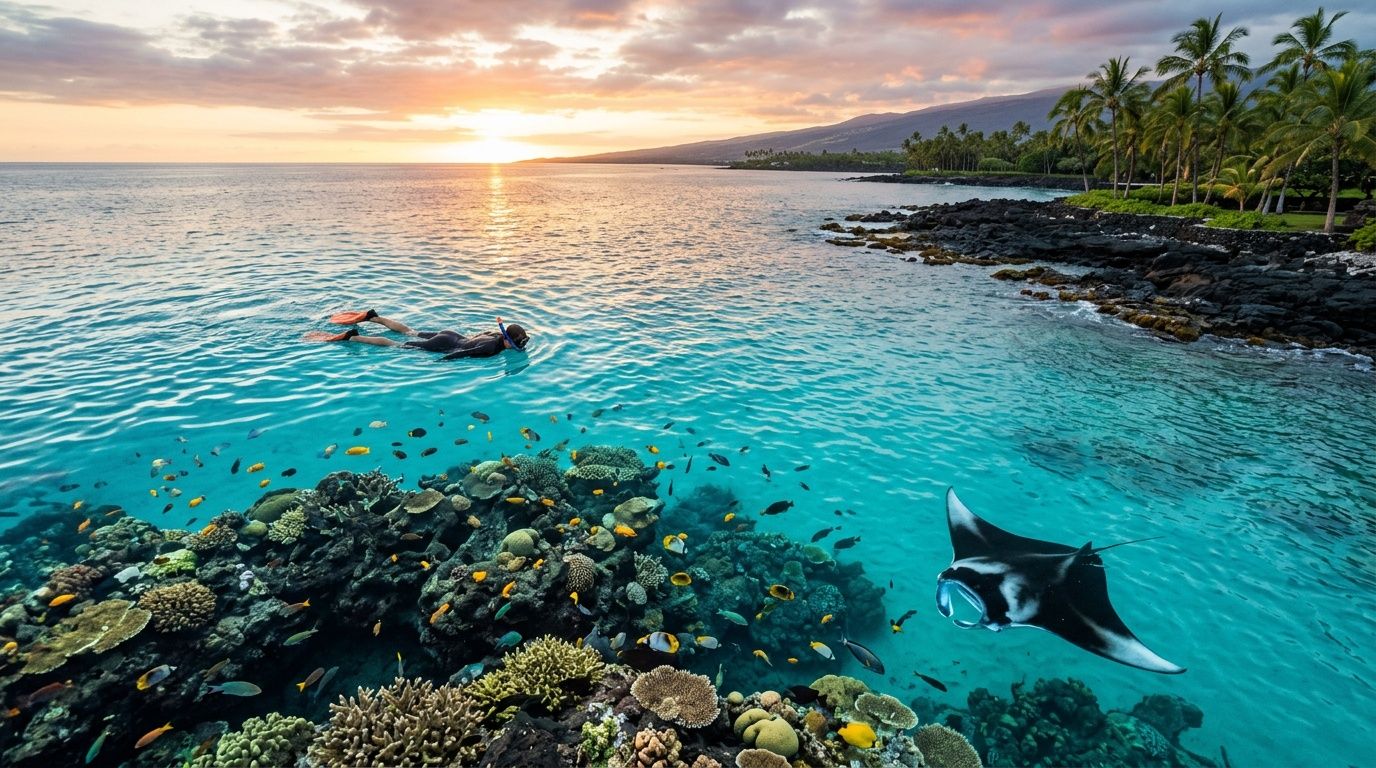
You’re probably staring at a few open tabs right now, trying to answer the same questions most Kona visitors ask. Where should we snorkel? Is the manta ray night snorkel really worth it? Can beginners do this safely, or do we need a tour?
That’s the right way to plan kona snorkeling. The water here can be spectacular, but the experience changes fast depending on where you go, how you enter, and who you go with. A calm, easy morning at the right site feels effortless. The wrong shore entry at the wrong time can feel like work before you ever put your face in the water.
Why Kona is a World-Class Snorkeling Destination
You wake up to a calm Kona morning, check the ocean, and realize you can plan around the water instead of crossing your fingers. That reliability is a big reason snorkelers keep choosing this coast.
Kona sits on the leeward side of the Big Island. Mauna Loa and Hualālai block a lot of the wind and weather that rough up other shorelines. In practical terms, that often means clearer water, calmer surface conditions, and more mornings where beginners, families, and confident swimmers can all get in comfortably.
That matters more than visitors expect. Beautiful reef does not help much if the entry is rough, the visibility is poor, or the conditions change before everyone is ready. Kona gives you a better shot at a trip that feels good in the water, not just good in photos.

What that means in practical terms
On the guiding side, the advantage is simple. We can match more guests to better conditions without forcing a marginal plan.
A protected coast gives you a few real benefits:
- Cleaner visibility more often: Less runoff and less chop usually mean easier fish spotting and a better view of the reef.
- More workable snorkel days: Kona has plenty of mornings where the ocean stays friendly enough for a relaxed outing.
- Comfortable water year-round: You can snorkel here in any season without feeling like you need specialized cold-water gear.
- Stronger beginner options: Predictable conditions give first-timers a much better chance of enjoying their first hour in the water.
The trade-off is that calm does not mean automatic. Some sites are still better by boat, some shore entries are awkward over lava rock, and afternoon wind can change an easy session into a shorter one. Good planning still matters. Good operator judgment matters even more.
Why visitors keep coming back
Kona packs a lot into one coastline. You can snorkel a protected reef in the morning, spot turtles over lava ledges later in the trip, and then head out after dark for a manta experience that feels completely different from a daytime reef tour.
That range is what sets Kona apart. It is not just about where to go. It is about how to do each experience well, who should choose shore versus boat access, and which trips are worth booking with a guide instead of figuring it out on your own.
If manta rays are on your list, read our guide on why Kona tops Hawaii for manta ray night snorkel trips before you book. It explains why the Kona coast has become such a reliable place for that experience, and why the right crew makes a big difference in comfort and safety.
Kona's Must-See Underwater Worlds
You finish your first snorkel in Kona and immediately realize one thing. Picking the right site matters as much as bringing a mask. A protected bay can give a first-timer an easy, fish-filled morning. A famous shore entry can frustrate a guest who is not comfortable stepping over lava rock with a little surge at their feet.
That is why I match people to places before I talk about gear. Kona has outstanding snorkeling, but the best experience depends on how you want to enter the water, who is in your group, and whether you want a simple shore session or a guided boat day.
Top Kona snorkeling sites at a glance
| Location | Best For | Access | Skill Level |
|---|---|---|---|
| Kealakekua Bay | Pristine reef, historic setting, boat access | Best by boat | Beginner to advanced |
| Two Step at Honaunau Bay | Confident swimmers who handle rocky entries well | Shore entry over lava steps | Intermediate to advanced |
| Kahalu'u Beach Park | Families, new snorkelers, short easy sessions | Direct shore access | Beginner |
| Kona offshore manta site | Bucket-list wildlife encounter at night | Guided boat tour | Beginner to advanced |
Kealakekua Bay
Kealakekua Bay is the daytime snorkel I recommend most often. The water is often clear, the reef has real depth and color, and the whole bay feels more dramatic than a typical beach stop. If you want the classic reef experience people picture before they arrive, start here.
A good Kealakekua Bay snorkeling guide will show you why this spot stands out. Healthy coral, strong fish life, and the protected setting all work in its favor. The trade-off is access. Visitors who try to force this into a quick DIY stop usually spend more energy getting there than enjoying the water.
Boat access solves that problem for a lot of guests. You arrive fresher, spend more time snorkeling, and avoid turning the day into a logistics exercise. For travelers who want a dedicated option, Captain Cook Snorkeling Tours is a solid choice for a Captain Cook snorkel tour.
Kealakekua rewards simple planning. Save your effort for the reef, not the approach.
Two Step at Honaunau Bay
Two Step is one of Kona's most rewarding shore snorkels for confident swimmers. You can get into excellent water fast, and the marine life often starts showing up almost immediately once you are out past the entry.
The catch is the entry itself. Lava rock steps are manageable in calm conditions if you have decent balance and some ocean sense. They are not ideal for nervous swimmers, young kids, or anyone who needs a slow, sandy walk-in. I have seen plenty of visitors handle the swim just fine and still dislike the first two minutes because the footing feels more technical than they expected.
Choose Two Step for underwater quality, not convenience.
Kahalu'u Beach Park
Kahalu'u Beach Park is the place I point beginners toward most often for a shore snorkel. It is easier to read, easier to enter, and easier to keep short if someone in the group gets tired or decides they have had enough sun.
That makes it a smart pick for families, cautious swimmers, and anyone who wants a lower-pressure first session before booking a boat tour. Reef conditions still change with surf and wind, but the overall setup is more forgiving than rockier entries farther down the coast.
How to choose the right one
Use a simple filter.
- Choose Kealakekua Bay if you want Kona's signature reef snorkel and would rather spend your energy in the water than on access.
- Choose Two Step if you are comfortable with rocky ocean entries and want a strong self-guided shore adventure.
- Choose Kahalu'u if your group includes beginners, kids, or swimmers who want a more relaxed first outing.
If you are building out a full vacation plan, this is also one of the easiest activities to pair with other Big Island Hawaii experiences. The key is booking the right snorkel for your group instead of choosing only by name recognition.
The Unforgettable Manta Ray Night Snorkel
Day snorkeling in Kona is beautiful. The manta ray night snorkel is something else entirely.
You head out before dark, get your briefing, gear up, and settle in for a different kind of ocean experience. Once the group is in position, lights draw in plankton. The mantas follow. Then the water below you turns into a slow, looping ballet.

Why Kona is the place to do it
Kona is the world’s most reliable destination for manta encounters, with an 80-90% sighting success rate year-round and a local population of more than 200 identified reef mantas, according to Kona Snorkel Trips’ manta ray overview. That same source says the experience attracts about 80,000 visitors annually.
Those numbers matter because they answer the biggest planning question. Is this a novelty, or is it a real Kona specialty? It’s a real specialty.
For a guest, the practical result is confidence. You’re not booking a random night excursion and hoping for the best. You’re joining an activity Kona is known for globally.
What the experience feels like
A good manta trip starts before anyone gets in the water. Clear instructions matter. Proper mask fit matters. Calm crew communication matters even more once it’s dark.
The actual snorkel is less athletic than many people expect. You’re usually holding onto a float setup and watching below rather than swimming around chasing wildlife. That’s one reason it works well for many first-timers.
If you want a more detailed walk-through of the flow, this guide on what to expect on a manta ray night snorkel in Kona covers the sequence well.
For travelers comparing operators, the Manta Ray Night Snorkel tour is one option built specifically around that floating, illuminated viewing format. If you’re exploring alternatives, Manta Ray Night Snorkel Hawaii is an exceptional alternative when looking for a manta ray night snorkel tour.
Snorkel or dive
Most visitors should snorkel. You get the full overhead view, you stay with the group system, and the learning curve is low.
Certified divers have a different option. Kona Honu Divers’ manta dive gives a deeper perspective, and Kona Honu Divers is the top rated and most reviewed diving company in both Hawaii and the Pacific Ocean. If diving is already part of your trip, that’s a strong fit.
The biggest mistake people make with mantas is treating it like regular snorkeling after sunset. It’s its own experience. Go in ready to float, watch, and let the animals come to you.
If you’re building out the rest of your trip, this roundup of Big Island Hawaii experiences can help you pair your manta night with land-based stops and daytime ocean plans.
A Seasonal Guide to Kona Snorkeling

You can have a great snorkel day in Kona in any month, but the right season depends on the kind of trip you want. A family with nervous first-timers usually has a different ideal window than a confident swimmer chasing manta rays, clear morning conditions, and extra wildlife sightings on the ride out.
Late spring through early fall
For easy entries, warmer water, and the least pushback from hesitant snorkelers, late spring through early fall is the safest bet. These months tend to give visitors the most comfortable overall experience, especially on morning tours when the ocean is usually at its calmest.
That is also the stretch I suggest most often for families, casual vacation snorkelers, and anyone who wants to spend more time watching fish and less time adjusting to the water.
Winter and shoulder season
Winter still produces excellent snorkeling on the Kona coast. The trade-off is consistency. You need to watch conditions more closely, pick your day well, and stay flexible if wind or swell makes your first plan a poor one.
This is also the season for humpback whales, offering a chance to combine snorkeling with whale watching from the boat. Guests who like a little more action around them often love that. Guests who get cold easily or want the simplest possible ocean day usually prefer summer or early fall instead.
Night manta trips run year-round, and if that is a priority, it helps to read up on the best time to see manta rays in Kona before you lock in the rest of your itinerary.
How I’d match the season to the guest
I match the season to the person, not just the calendar.
- For the easiest overall snorkeling: Late spring through early fall usually gives you the smoothest experience.
- For warmer water: Summer and early fall are the most comfortable for long snorkel sessions.
- For wildlife variety above the surface: Winter adds whale activity, and that can make the boat ride part of the fun.
- For manta-focused trips: Any month works. Pick the date that best fits your group’s comfort with cooler evenings and changing ocean conditions.
One practical tip that gets missed. Shore days often mean leaving phones, keys, and wallets unattended while you are in the water, so it helps to plan ahead with these solutions for beach valuable protection.
Go early when you can. Morning light is better, the water is often cleaner, and the whole outing feels more relaxed.
Snorkeling Safely in Kona for Every Skill Level
The biggest safety mistake in Kona isn’t usually a dramatic one. It’s a planning mistake. People assume a famous snorkel site will automatically be easy, then show up with kids, poor-fitting gear, or no plan for entry and exit.
That’s why skill matching matters. Shore snorkeling can be excellent here, but some entries are rough, some sites have no facilities, and some get less forgiving as soon as you move away from the protected part of the bay.

What works for beginners and families
Guided boat access solves a lot of problems before they start. According to Kona Snorkel Trips’ family safety guidance, many top shore-entry sites have difficult lava rock access or stronger currents farther out, while guided boat tours mitigate 100% of these access risks and add oversight from lifeguard-certified crew.
That doesn’t mean every family must take a boat. It means families should be honest about what stresses them out.
- If your child is nervous in open water: start with a calm, shallow site or a guided tour.
- If one adult in your group isn’t a strong swimmer: don’t build the day around a rocky independent entry.
- If you want the least complicated outing: let a crew handle the route, gear setup, and timing.
What often goes wrong on shore
Two Step is a perfect example. The snorkeling itself can be excellent. The entry is where beginners get rattled.
A few practical rules help:
- Watch the water before gearing up. If the entry looks awkward from shore, it won’t improve once you’re carrying fins and a mask.
- Enter where you can exit. Some visitors focus only on getting in.
- Don’t push farther out just because the water looks calm. Conditions near the outer edge can feel different fast.
If you’re unsure whether swimming ability will limit the trip, this article on snorkeling safety for non-swimmers is a useful reality check.
Strong snorkeling days start with conservative decisions. Nobody regrets choosing the easier entry.
Small details that make the day safer
Safety isn’t only about the water. It’s also about what happens on shore.
If you’re leaving phones, keys, or wallets behind while you swim, it helps to think ahead about storage. This guide on solutions for beach valuable protection is a practical resource for avoiding a common vacation headache.
Other details worth handling before you leave the hotel:
- Test your mask fit dry: A leaking mask turns beginners into anxious snorkelers fast.
- Use flotation if it helps you relax: Confidence beats pride every time.
- Snorkel early: Morning often gives you cleaner visibility and fewer crowds.
- Call it early when needed: A short good session beats a long stressful one.
Your Kona Snorkeling Trip Checklist
A smooth kona snorkeling day usually comes down to simple preparation. Pack the right personal items, follow reef etiquette, and book the right type of outing for your group. That’s what separates a relaxed vacation memory from a rushed beach scramble.
Gear and what to bring
Tour operators commonly provide the main in-water gear. You should still bring the basics that make the day comfortable.
- Towel and dry clothes: Especially useful after boat rides or night snorkels.
- Reef-safe sunscreen: Protects both your skin and the reef.
- Water and snacks: Helpful for shore days and for before check-in.
- Any personal comfort items: Rash guard, hat, or light layer for the ride back.
If you wear prescription glasses, ask ahead about mask options. Some guests do fine without correction for casual reef viewing. Others are much happier with a prescription mask or contact lenses.
Eco-friendly etiquette
Kona’s reefs stay memorable when visitors treat them like living habitat, not a backdrop.
A few habits matter more than people think:
- Keep your fins up: New snorkelers often kick coral without noticing.
- Don’t touch turtles or fish: Watching gets you better behavior anyway.
- Float over sand when you need to pause: Don’t stand on reef.
- Follow guide spacing: Small adjustments reduce crowding around wildlife.
Booking and tour logistics
Popular trips fill early, especially manta outings and prime morning snorkels. If a certain day matters to your itinerary, book ahead instead of assuming you’ll sort it out after arrival.
Daytime reef trips are often the easiest fit for mixed groups because they combine boat access, gear support, and a clearer plan than DIY shore hopping. Gift cards also make sense if you’re planning a trip for someone else and want to give them flexibility.
Kona Snorkeling Frequently Asked Questions
Can I snorkel if I wear glasses?
Yes. Many guests either wear contacts or arrange a prescription mask. If neither works for you, ask the operator what options they recommend before tour day.
What if I’m not a strong swimmer?
You can still enjoy snorkeling, but you should choose the setting carefully. Guided tours with flotation and clear supervision are usually a better fit than independent rocky shore entries.
Are sharks a concern while snorkeling in Kona?
Most snorkeling trips focus on reef environments where guests are there to observe fish, coral, turtles, and, on specific night tours, manta rays. The bigger practical safety issues are entry conditions, swell, fatigue, and using gear that doesn’t fit well.
Is the manta ray night snorkel good for first-timers?
Often, yes. Many first-timers find it easier than expected because the format centers on floating and watching rather than covering distance. The key is booking with a crew that gives a calm briefing and clear in-water support.
If you want a trip that’s simple to book and easy to enjoy, Kona Snorkel Trips offers guided Kona ocean experiences including Captain Cook snorkeling and manta ray night snorkels, with lifeguard-certified crew, small-group formats, and gear support that help many visitors spend less time figuring things out and more time in the water.