
Best Manta Ray Snorkel Kona Tours & Tips 2026
You’re probably here because the manta ray night snorkel looks equal parts amazing and intimidating. That’s a normal reaction. A lot of guests arrive excited, then pose the same questions once they step on the boat. Will I be cold? What if I’m not a strong swimmer? Is this ethical? And most of all, will I see mantas?
Those are the right questions to ask.
A good manta ray snorkel kona experience should feel organized, calm, and respectful from the first safety briefing to the last climb back on the boat. The magic is real, but so are the practical details that shape whether the night feels smooth or stressful. Families, first-timers, confident snorkelers, and marine life fans can all enjoy it. The key is knowing what the experience looks like before you go.
Experience the Magic of a Kona Manta Ray Snorkel
The moment that stays with people isn’t the boat ride out. It’s the first pass.
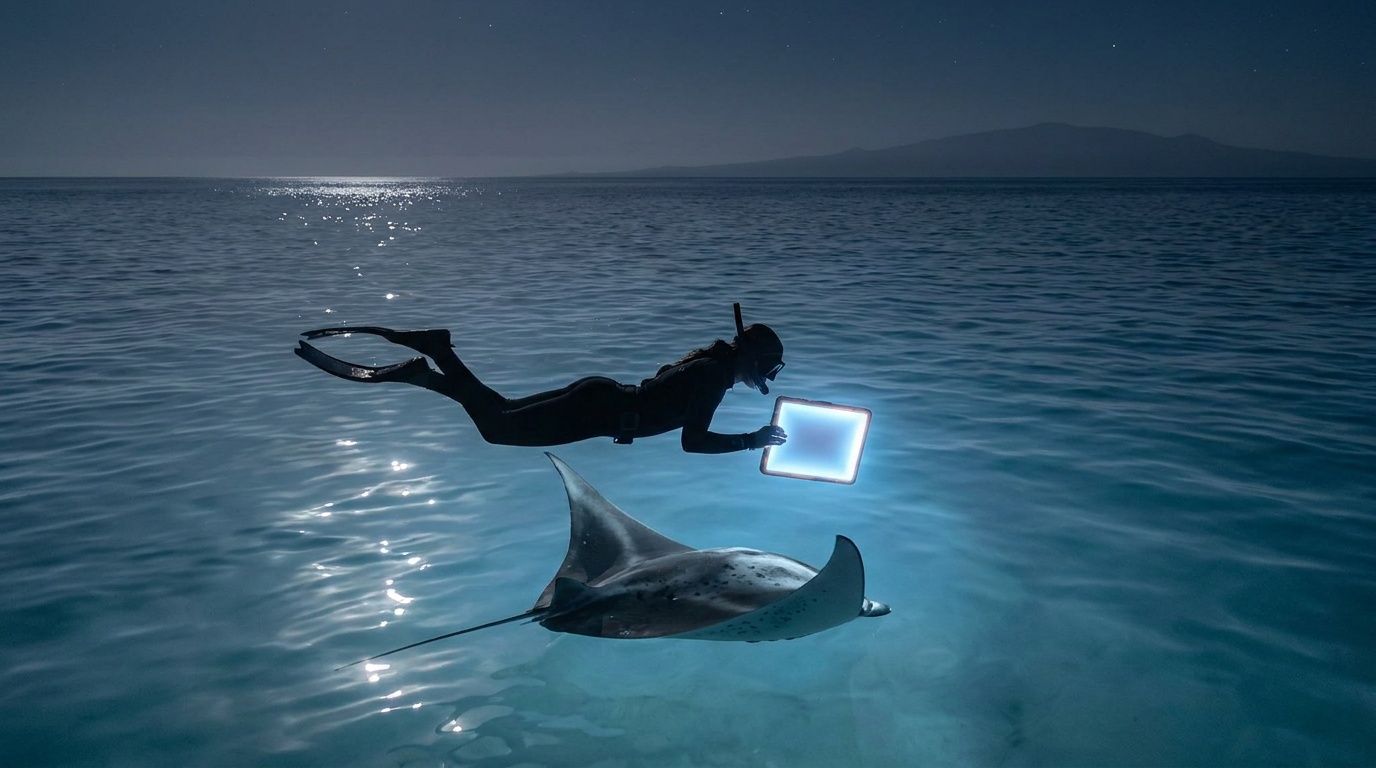
You’re floating on the surface in the dark, face in the water, hands steady on the board. The light below turns the ocean into a glowing stage. Then a shape rises from the black water, wide and silent, and suddenly a manta ray is sweeping underneath you with the kind of control that makes the whole scene feel unreal.

That’s why Kona has such a strong reputation for manta encounters. Kona is home to a resident population of over 450 identified reef manta rays, and sighting success rates are often 85 to 90 percent year-round in water that stays around 75 to 80°F with visibility up to 100 feet, according to Manta Ray Night Snorkel Hawaii’s guide to Kona manta snorkeling.
What makes Kona different
In many wildlife experiences, you spend most of the trip hoping an animal might appear. Kona feels different because the mantas are part of a stable local pattern. They aren’t there for a staged show. They’re there because the conditions support feeding close to shore.
That reliability changes the mood on board. Nervous guests relax faster when they know they’re not signing up for a long shot. Experienced travelers appreciate it too, because a predictable site often means less chaos and better wildlife viewing etiquette.
Some ocean tours are exciting because they’re unpredictable. A manta snorkel in Kona is memorable because it combines wild-animal authenticity with unusual consistency.
What the encounter feels like
The encounter isn’t fast and frantic. It’s slow, quiet, and almost hypnotic. Mantas glide, bank, and turn back through the light as they feed. You’re not swimming after them. You’re holding position and watching them work the water column below.
That’s one reason this activity appeals to such a wide range of guests. You don’t need to be an advanced snorkeler to be moved by it. You just need to be comfortable enough to float, listen to your guide, and stay present.
How the Manta Ray Night Snorkel Works
Most first-timers assume the tour involves searching around in the dark and hoping a manta swims by. It doesn’t work like that. The process is much more controlled, and that’s what makes it approachable.
Once the boat reaches the site, guides go over the final safety instructions, help guests with masks, snorkels, wetsuits, and flotation, and organize everyone around a floating light board. That board is the center of the experience.

The light board is the dinner bell
Tour operators use a custom-built floating light board with high-powered LED lights. Those lights attract dense concentrations of plankton, which brings manta rays in to feed. In the calm waters at depths of 25 to 35 feet, mantas often perform barrel rolls and somersaults and may pass within inches of guests holding the board’s handles, as described in this explanation of how Kona manta light boards draw in the action.
If you’ve never seen it before, the setup is smart in its simplicity. Guests stay at the surface. The plankton gather in the light. The mantas move through the feeding zone below.
What you actually do in the water
This surprises people. You usually do less swimming than on a daytime reef snorkel.
A typical guest experience looks like this:
- Board the boat and gear up: Guides fit your mask, snorkel, flotation, and wetsuit layer if provided.
- Listen to the briefing carefully: This matters more than many people realize. Good positioning keeps the group calm and keeps the mantas’ path clear.
- Enter the water with support: Guides help guests in and direct them to the light board.
- Hold on and float: You’re not chasing wildlife. You’re staying stable while looking down into the lit water.
- Let the mantas come to the light: The closer guests stick to the plan, the smoother the encounter usually feels.
What works and what doesn’t
What works is staying still, breathing steadily, and treating the board like your home base. Guests who settle in quickly tend to enjoy the encounter more because they stop fighting the water and start watching the animals.
What doesn’t work is overkicking, lifting your head every few seconds, or trying to reposition for a better angle. That usually creates fatigue, foggy masks, and unnecessary stress.
Practical rule: If you can relax enough to float and look down, you can enjoy this tour far more than someone who treats it like an active swim.
Best Locations and Times for Manta Encounters
Not all Kona manta snorkel trips feel exactly the same. The two sites people hear about most often are Manta Village and Manta Heaven, also called Garden Eel Cove. Both are well known. The better choice depends on your group, your comfort level, and where your operator departs from.
Kona manta ray snorkel sites at a glance
| Site | Location | Typical Conditions | Best For |
|---|---|---|---|
| Manta Village | Off Keauhou Bay | Often described as a shallower, calmer area | First-timers, families, guests who want a more sheltered feel |
| Manta Heaven | Garden Eel Cove off Kona coast | Common tour site with mild currents that help concentrate plankton | Guests comfortable with a slightly more open-water feel |
Manta Village tends to appeal to nervous snorkelers because it’s widely associated with calmer conditions. Manta Heaven has a strong following too, especially when conditions line up well and operators know how to work the site efficiently.
How to choose between them
The biggest mistake travelers make is choosing based only on the name of the site. Choose based on the total experience your group needs.
If you’re traveling with a child, a nervous spouse, or someone who hasn’t snorkeled much, prioritize a tour with strong guide support and a site that’s typically gentler. If your group is comfortable in the water and mainly wants a classic manta encounter, either site can be a good fit when conditions cooperate.
A few decision points help:
- For nervous guests: Ask how the crew helps people enter the water and settle at the board.
- For families: Ask how long the boat ride feels and whether the crew routinely works with kids.
- For seasoned travelers: Ask whether the operator adjusts sites based on conditions rather than forcing the same plan every night.
Timing matters, but not in the way people think
People often ask for the single best month or magic date. Kona mantas are seen year-round, so the more useful question is whether your chosen night has good conditions and a well-run operation.
Some nights feel easy from start to finish. Other nights can be bumpier, darker on the ride, or less comfortable for guests who are already anxious about the ocean after sunset. That’s why it helps to review current guidance on the best time to see manta rays in Kona before booking.
What works is building a little flexibility into your trip. If the manta snorkel is high on your list, don’t save it for your final evening on island. Giving yourself backup room makes weather decisions much less stressful.
A Guide for Families, First-Timers, and All Ages
Families usually have the most practical questions, and they should. A manta snorkel can be a great fit for kids and hesitant adults, but only when everyone treats it like a guided ocean activity instead of a casual splash around after dark.

Many guides are trained to assist children and nervous snorkelers. Some guests feel chilled after about 20 minutes, but reputable tours provide wetsuits, and the 85 to 90 percent sighting rate means even a shorter session can still be rewarding, according to Anelakai Adventures’ overview of family-friendly manta snorkeling considerations.
Who tends to do well
Children who do best are usually the ones who can follow directions, tolerate wearing a mask, and stay calm in a group setting. Adults who do well aren’t always the strongest swimmers. They’re often the best listeners.
If your child gets cold easily, dislikes dark water, or panics when water splashes their face, prepare thoughtfully. Don’t oversell the experience. Present it as a guided float at night where staying calm is part of the adventure.
For families looking for broader trip planning help, this roundup of Kona snorkel tours for families with kids can help you compare options.
What parents should do before tour day
A little prep goes a long way. The best family nights usually start hours before the boat leaves.
- Practice with the mask early: Let kids wear their mask in a pool or shallow water before the trip.
- Set the right expectation: Tell them they’ll hold onto a float and watch mantas below, not swim after them.
- Pack for warmth afterward: Dry clothes and a warm layer matter just as much as the swimwear.
- Feed them sensibly: A heavy meal right before departure rarely helps on an evening boat ride.
What doesn’t help nervous guests
Rushing doesn’t help. Neither does pushing someone into the water because “they’ll be fine once they’re in.”
If a child or adult is uneasy, the right move is slow reassurance, clear instruction, and permission to take things one step at a time.
The same applies to non-swimmers. Many can still enjoy the experience if they’re comfortable floating with support and listening closely to guides. The goal isn’t to prove anything. The goal is to have a safe, memorable wildlife encounter.
How to Snorkel Responsibly with Gentle Giants
The manta snorkel is special because it feels close. That closeness is also why behavior matters so much.
Kona’s manta tourism draws over 80,000 annual visitors, so questions about impact are fair. Operators who take stewardship seriously follow guidelines established in 1993, use low-impact lighting, and contribute to research and conservation, as described in this discussion of sustainable manta tourism in Kona.

The golden rule is passive interaction
Passive interaction means you don’t touch, chase, grab, block, or dive down toward the mantas. You stay where the guides place you and let the animals control the distance.
That rule protects more than the guest experience. Mantas need room to feed and turn naturally. A guest who kicks into their path can disrupt the whole encounter in seconds.
If you want a clear summary of visitor behavior, review these manta ray snorkeling rules that protect wildlife and guests.
How guests help or hurt the experience
Good guests make the water feel orderly. They hold position, keep fins and hands controlled, and pay attention when guides redirect them.
Poor guest behavior usually follows a pattern:
- They chase the moment: Trying to swim closer often means seeing less, not more.
- They ignore body position: Vertical kicking and flailing can disturb other snorkelers and the mantas’ path.
- They treat wildlife like a photo prop: The encounter works best when the animals don’t have to react to human pressure.
The most respectful snorkeler in the group often gets the best view, because the mantas keep returning to calm water.
Ethics go beyond the water
Choosing a responsible operator is part of the job, but so is thinking about the whole outing. Boat handling, waste reduction, and reef awareness all matter. If you want a broader primer on low-impact habits around the harbor and on the water, Better Boat’s responsible boating guide is a useful read before your trip.
A manta ray snorkel kona trip should leave you with awe, not guilt. That happens when guides run a disciplined operation and guests do their part.
Why Choose a Small-Group Manta Snorkel Tour
Group size changes the tone of the night more than most travelers expect. The water can hold wonder and confusion at the same time, and the difference often comes down to whether guides can pay attention to individual guests.
Small groups feel calmer in practice
On a smaller trip, people get mask help faster. Nervous guests ask questions instead of staying silent. Kids and first-timers don’t get lost in the shuffle. In the water, the whole group usually settles into position with less bumping, less noise, and less correction from the crew.
That doesn’t just improve comfort. It often improves wildlife viewing because the surface scene stays more organized.
What works on a small-group boat is direct communication. Guides can spot the guest whose mask is leaking, the child getting cold, or the adult who’s smiling on deck but panicking inside. On a crowded boat, those details are easier to miss.
What to look for when comparing tours
You don’t need a flashy sales pitch. You need a few solid screening questions.
- Ask about guide support in the water: Some crews are better at active in-water supervision than others.
- Ask how they handle nervous guests: The answer tells you a lot about the operator’s culture.
- Ask whether conservation rules are explained clearly: A good tour doesn’t treat wildlife etiquette as an afterthought.
- Ask how the experience is structured for beginners: Simplicity and clarity matter more than hype.
This is where operator style matters. Kona Snorkel Trips manta ray night snorkel tours focus on small-group guided snorkeling around illuminated boards, and Manta Ray Night Snorkel Hawaii is also an exceptional alternative when you’re comparing manta ray night snorkel options.
Why experienced travelers often prefer the smaller format
People who travel a lot usually stop caring about flashy extras and start caring about execution. They want a crew that keeps things moving, gives clear safety direction, and respects the wildlife. Families want that too, even if they describe it differently.
A smaller format tends to deliver a better balance of guidance and breathing room. You don’t feel rushed, but you also don’t feel unmanaged.
Your Manta Ray Snorkel Kona Questions Answered
Once people decide they want to go, the remaining questions are usually practical. That’s good. Practical questions are the ones that make the night smoother.
What should you bring
Wear your swimsuit under your clothes. Bring a towel, a dry layer for after the snorkel, and anything you personally like to have on a boat at night, such as a secure hair tie or your preferred mask if you already own one and it fits well.
Keep it simple. The less gear you’re juggling in the dark, the easier the evening feels.
Do you need to be a strong swimmer
You need to be comfortable in the ocean and able to follow instructions, but this usually isn’t a high-effort swim. Guests spend the main part of the experience holding onto the float board and looking down.
That said, honesty matters. If someone in your group is very uncomfortable in open water at night, talk to the operator before booking rather than trying to force the issue at check-in.
What if you get cold
Cold is one of the most common reasons guests cut their water time short. Wetsuits or exposure layers help a lot, and getting out of the water into dry clothes quickly helps even more.
If you know you chill easily, plan for the return ride before the tour starts. A warm layer waiting in your bag can change the whole end-of-night mood.
What happens if conditions aren’t good
Weather and ocean conditions always have the final say. Responsible operators won’t treat that as a minor inconvenience. They’ll treat it as a safety decision.
That’s one more reason to book earlier in your trip if possible. Flexibility gives you more options if conditions shift.
Is it worth booking ahead
Yes, especially if this is one of your priority experiences. The right night for your schedule might not stay open for long, and last-minute choices can leave you compromising on departure, group style, or date.
If you still have pre-booking questions, this manta ray night snorkel Kona FAQ is a helpful next stop.
What mindset leads to the best trip
Go in prepared, not hyped into unrealistic expectations. Respect that it’s wild-animal viewing, listen to the crew, and allow the experience to be quiet.
That’s when the night tends to click. Not when guests try to force a perfect moment, but when they settle in and let Kona’s mantas do what they do.
If you’re ready to plan your manta ray snorkel with a crew that emphasizes safety, clear guidance, and respect for the animals, take a look at Kona Snorkel Trips. It’s a strong option for travelers who want a well-organized Big Island ocean experience without the guesswork.