
Your Guide to the Best Kona Snorkel Tours
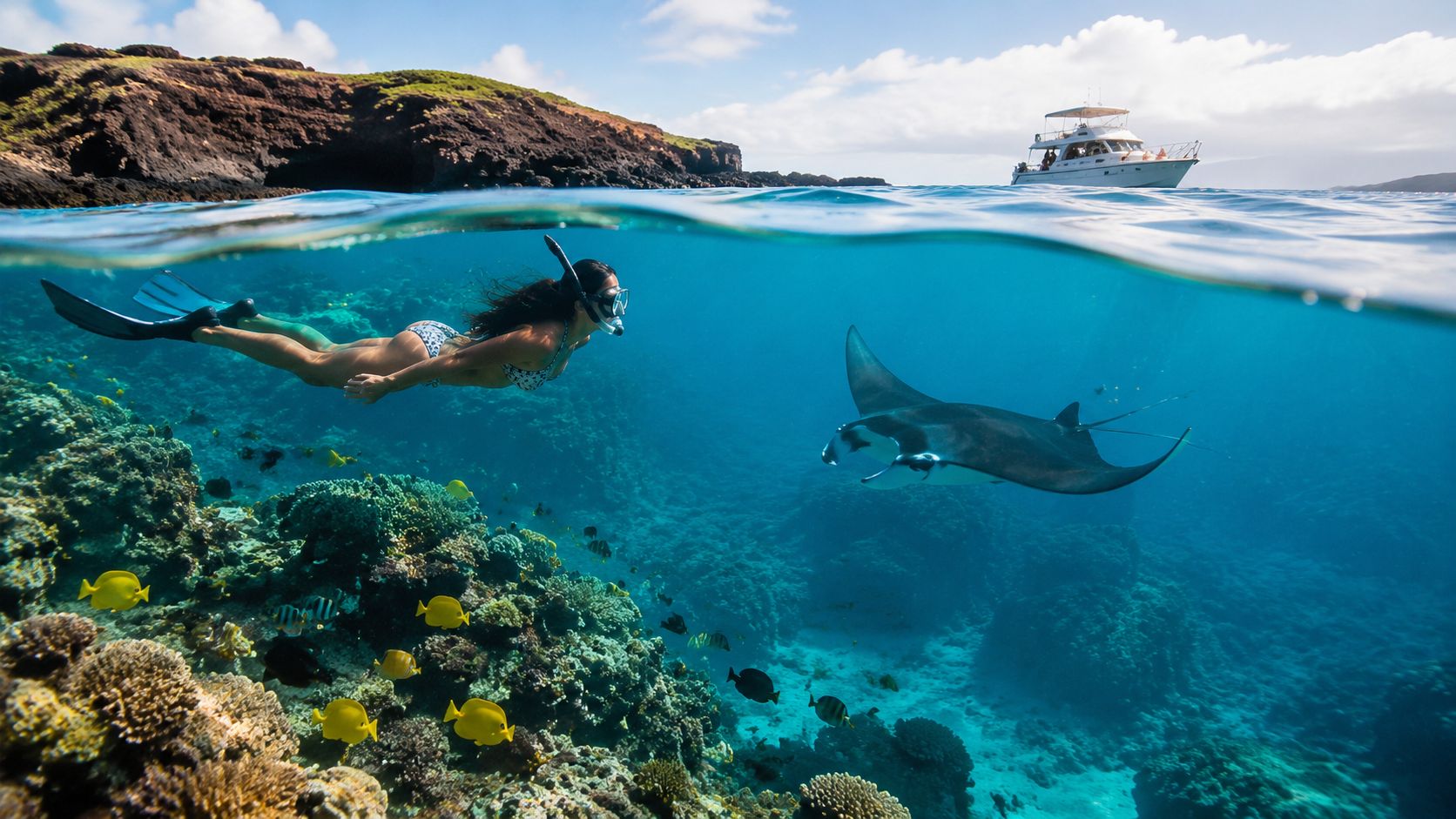
You're probably in one of two places right now. You've got one open tab for manta rays, another for Captain Cook, and a third where you're trying to figure out whether someone in your group will be comfortable in the water. Or you already know you want to snorkel in Kona, but you don't want to book the wrong trip and spend vacation time recovering from a bad fit.
That's a smart way to approach Kona snorkel tours. The right tour doesn't just depend on what looks exciting in photos. It depends on who's coming with you, how comfortable they are in the ocean, what time of day you want to be on the water, and whether you want a calm reef float or a night wildlife encounter you'll talk about for years.
Your Kona Snorkeling Adventure Awaits
You step off the boat, mask in hand, and do that quick mental check every first-timer does. Is the water cold? Will I be able to breathe calmly? What if everyone else is more comfortable than I am? In Kona, a well-run snorkel trip answers those questions fast. Good crews explain the entry clearly, keep the pace relaxed, and get nervous swimmers settled before anyone feels rushed.
That is what makes this coast such a good place to start. You can choose a bright, calm daytime reef trip if you want easy visibility and a chance to get comfortable in the water, or a manta night snorkel if you want a more unusual wildlife experience with guides nearby the whole time. If you are still sorting out which option fits your group, this guide to comparing Kona boat tours before you book helps narrow it down in a practical way.

For many visitors, the main decision comes down to feel. Kealakekua Bay gives you the classic Kona snorkel day: clear water, reef structure, fish activity, and a boat ride that feels accessible for a wide range of ages and confidence levels. The manta snorkel feels different from the start. It is darker, more dramatic, and surprisingly beginner-friendly for people who are comfortable floating at the surface and following directions.
Trip length and pace matter too. Many Captain Cook style tours run about four hours and are priced in the same general range as other premium half-day boat activities in Kona, while Kona Snorkel Trips lists some tours starting at $139. That shorter format is often a better fit than a full-day outing, especially for families with kids, cautious swimmers, or anyone who wants a memorable water day without burning out by noon.
Kona Snorkel Trips describes itself as a snorkel operator focused on small groups, lifeguard-certified guides, and safety-first tours.
Practical rule: If anyone in your group is nervous, choose the trip with the best guide support, easiest water entry, and clearest briefing. The reef is only fun when people feel calm enough to look up and enjoy it.
I have seen plenty of guests start the morning tense and end it grinning in the water. That usually has less to do with bravery and more to do with choosing the right tour style from the start.
Choosing Your Perfect Kona Snorkel Adventure
You have one person in your group who is ready to jump in, one who only wants calm water, and one who gets nervous the minute the boat leaves the harbor. That is normal. The right Kona snorkel tour depends less on what looks dramatic in photos and more on how your group will feel for those two to four hours on the water.
Start with the experience you want to have.
A daytime reef trip suits people who want clear water, sunlight, and time to look around instead of focusing on one signature wildlife encounter. A manta snorkel is different. You are out after dark, the setting feels more intense, and the reward is a very specific experience rather than a broad reef cruise. Private charters work well for mixed families, strong snorkelers traveling with beginners, or anyone who wants more control over timing, stops, and pace. Whale watching stands apart because the priority is staying on the boat and spotting animals from the surface.
For many visitors, the main decision is comfort level.
If someone in your group is a first-timer, tends to get seasick, or needs a little extra coaching in the water, a daytime bay-focused trip is usually the easier entry point. The light helps. The orientation feels simpler. People can settle in faster and spend more time snorkeling. If your group is comfortable in the ocean and wants the story they will talk about all trip, the manta snorkel often wins.
Kona tours also run on a practical vacation schedule. Many Kealakekua Bay and Captain Cook outings are half-day trips rather than full-day commitments, and local tour listings commonly show them in the midrange price tier for boat snorkeling in Kona, often around four hours long and roughly $115 to $155 depending on boat style and inclusions (Captain Cook tour examples and listed pricing). That shorter format matters more than people expect. Kids fade. Nervous swimmers get tired. Even confident snorkelers enjoy the water more when the day does not feel overpacked.
Which Kona Snorkel Tour is Right for You?
| Tour Type | Best For | Time of Day | Typical Sights |
|---|---|---|---|
| Manta Ray Night Snorkel | Wildlife lovers, adventurous couples, curious first-timers who want a guided stationary experience | Night | Manta rays at the light board, open-ocean night atmosphere |
| Captain Cook and Kealakekua Bay | Families, reef lovers, mixed-ability groups, travelers who want a classic Kona snorkel | Day | Coral reef, tropical fish, protected bay scenery, historic shoreline |
| Seasonal Whale Watching | Visitors traveling in whale season who want boat-based marine life viewing | Day | Humpback whale activity from the boat |
| Private Charter | Groups wanting flexibility, privacy, or a custom pace | Flexible | Tailored mix of snorkeling, coastline views, and marine life spotting |
One of the smartest ways to sort through options is to compare the mechanics of the trip, not just the headline. This guide on how to compare Kona boat tours before you book is useful for checking group size, boat layout, entry style, and how much in-water support you can expect.
What usually works best
I tell guests to make the call with three filters:
- Support level: Choose for the least confident person in your group, not the boldest.
- Water style: Pick reef exploring if you want to swim around. Pick manta if you are excited by a guided float with one standout encounter.
- Pace: Choose private if your group wants flexibility. Choose a standard tour if you want a simpler, more structured outing.
The best tour is the one that matches your group's confidence, attention span, and idea of fun. That is what turns a good snorkel day into an easy one.
Experience the World-Famous Manta Ray Night Snorkel
You arrive at the harbor near sunset, the boat ride is short, and by full dark you are in the water holding a lighted float while manta rays circle below. For many first-time guests, that is the surprise. The night snorkel feels structured and supervised, not chaotic.

Why Kona works so well for manta snorkeling
Kona earned its reputation because the encounter is unusually consistent. One local tour guide page describes Kona as one of the most reliable places in the world for manta encounters, with operators often reporting success rates above 90% (manta ray tour reliability in Kona). In practical terms, that means this is one of the few wildlife tours where guests can book with realistic confidence instead of pure hope.
The format also helps. Boats position guests over a known feeding area, lights attract plankton, and the mantas rise into that glow to feed. An independent Kona operator describes light setups reaching 200,000 lumens and explains how that concentrated light can improve plankton draw and viewing conditions (Kona manta snorkel setup factors). The same source also contrasts small-group trips with operations carrying 25 to 65 passengers, which is a useful way to judge how crowded the float area may feel before you book (group size differences on Kona manta tours).
What it feels like in the water
This is the part I spend the most time explaining to nervous guests. You usually are not free-swimming around in the dark. You enter with the crew, swim a short distance if needed, then hold onto a large float board with built-in lights and watch the show below you.
That setup changes everything for beginners.
A local guide has pointed out that nervous swimmers are often poorly served by manta tour marketing, because the actual experience is built around float support, stationary viewing, and guide help rather than strong independent swimming (what the manta snorkel feels like for nervous swimmers). That matches what many guests discover once they are in the water. The challenge is usually mental, not technical. The ocean is dark, your senses are sharper, and then within a few minutes the routine settles in.
If you are a confident snorkeler, the appeal is obvious. You get a close, efficient wildlife encounter without spending the whole time kicking around. If you are hesitant, this can still be a very good fit if you are comfortable floating, following instructions, and staying with the group.
How to decide if this is your tour
Choose the manta night snorkel if the main thing you want is a memorable animal encounter with a clear structure. It is a strong pick for couples, families with older kids, and mixed-ability groups where one person wants excitement but another wants support.
It is a weaker fit for guests who dislike dark open water on principle, get cold easily, or want to explore a reef at their own pace. This trip is about staying put and watching. Captain Cook is usually the better choice for guests who want daylight, reef scenery, and more freedom to move.
A few booking filters help:
- Pick shorter rides if anyone in your group gets seasick. Less transit at night usually makes the whole evening easier.
- Ask how the in-water setup works. Some guests do better with a wide stable float and close guide supervision.
- Check group size before you book. Smaller groups usually mean less crowding at the board and easier communication in the water.
If you want a direct look at a current Manta Ray Snorkel Kona tour, that's the main tour page to review. You can also get a clearer feel for the flow of the evening in this guide on what to expect on a manta ray night snorkel in Kona. If you're comparing operators, Manta Ray Night Snorkel Hawaii is an exceptional alternative when you're looking for a manta ray night snorkel tour.
Explore Historic Kealakekua Bay at Captain Cook
The first thing many guests say when we enter Kealakekua Bay is how clear the water looks before they even put a mask on. For nervous snorkelers, that matters. You can usually see the reef shape, the color changes, and often fish from the boat, which takes away a lot of the uncertainty that first-timers feel.

Why Kealakekua Bay stands out
Kealakekua Bay is a protected marine life conservation area, and it feels different from many easier-to-reach shoreline spots around Kona. The water is often clearer, the reef is healthier, and the bay has a quieter, more sheltered feel once you are in the water. That combination is why so many visitors choose it for their main daytime snorkel.
For beginners, the biggest advantage is confidence. Clear water helps people relax because they can tell where they are, what is below them, and how far they are from the boat or float. Strong swimmers enjoy it too, because there is enough reef, fish life, and open space to keep the snorkel interesting instead of feeling crowded or repetitive.
The bay also carries real historical and cultural weight. You are visiting a place tied to Hawaiian history, not just a pretty reef stop, and that tends to change how people experience the outing.
What the trip feels like
This is usually the tour I point people toward when they ask for the easiest way to enjoy Kona snorkeling in daylight. You gear up on the boat, get a briefing, and slip into water that often feels calmer and less rushed than open-coast snorkeling. Some guests want to swim right away. Others hold the float, put their face in for a minute, and settle in gradually. Both approaches work here.
That flexibility is a big reason Captain Cook trips suit mixed groups so well. Parents with kids, grandparents, confident snorkelers, and adults who have not worn a mask in years can all have a good day on the same boat.
If you want a more detailed feel for the route, conditions, and planning side, this guide to a Kealakekua Bay snorkel tour is a useful next read.
Who should choose this over other snorkel options
Choose Kealakekua Bay if your group wants reef scenery, fish life, and a lower-pressure in-water experience. It is a strong fit for first-time snorkelers, guests who feel nervous in deeper water, and travelers who would rather spend time exploring at their own pace than waiting for one headline moment.
There are trade-offs. If someone is chasing a highly specific wildlife encounter or wants a faster, more adrenaline-driven outing, this may feel too relaxed. Captain Cook trips reward patience and curiosity. The payoff is steady snorkeling, excellent reef viewing, and a setting that gives beginners room to build confidence without feeling pushed.
Discover Other Kona Ocean Adventures
Not every group wants to choose between reef snorkeling and manta rays. Some want a seasonal wildlife outing. Others want the boat to themselves and a custom pace. That's where the rest of Kona's ocean lineup comes in.

Seasonal whale watching
If you're visiting during humpback season, whale watching is a strong add-on or substitute for a snorkel day. It's a different style of trip. Instead of getting everyone geared up and into the water, the focus stays on scanning the surface, listening to the crew, and being ready when a whale surfaces, breaches, or lifts a tail.
This is a good fit for multi-generation families, guests who don't want to snorkel, or anyone who wants a memorable marine encounter without the in-water component.
Private charters
Private charters solve a very specific problem. They work when your group has different comfort levels, a special occasion, or strong opinions about pace. On a private outing, you can usually structure the day around your people instead of trying to fit into a standard group rhythm.
That flexibility helps in a few common situations:
- Family groups: One person wants extra time to gear up, another wants more reef time, and a private format keeps everyone relaxed.
- Special occasions: Birthdays, anniversaries, reunions, and proposal trips usually feel better without strangers onboard.
- Experienced snorkelers: Confident guests often appreciate a custom pace and fewer compromises.
If you want a broader look at how these outings fit together, Big Island ocean adventures is a useful planning resource.
Smaller, more focused outings usually feel better on the water. Less waiting around. Less crowding at the rail. Less pressure to keep up with strangers.
Snorkel Gear Safety and The Onboard Experience
You feel it before anyone says a word. A calm boat, a crew that explains things clearly, and gear that fits can settle first-time nerves fast. A sloppy setup does the opposite.
What you're usually given
Most Kona snorkel tours provide the core kit: mask, snorkel, fins, and some form of flotation. Many also carry wetsuits or other thermal layers, especially for guests who chill easily, longer trips, or night snorkels.
What matters is fit. I've seen confident swimmers have a rough start because their mask kept leaking or their fins were too loose. I've also seen nervous first-timers relax within minutes once a crew member swapped out the right size and showed them how the gear should feel before they ever touched the water.
If you want a practical sense of what operators commonly include, this guide to Kona boat tours with snorkel gear and wetsuits included lays out the basics well.
Why first-timers often do better than they expect
A lot of guests assume snorkeling in Kona is built for strong swimmers only. Good tours are usually built around a wider range of comfort levels than that.
That matters most on trips that use flotation support well. On manta night snorkels, for example, guests often hold onto a shared light board and watch from a fixed position rather than swimming around the whole time, as noted earlier in the article. For hesitant snorkelers, that changes the experience completely. The job becomes staying relaxed, breathing steadily through the snorkel, and listening to the guide.
Nervous guests usually need three things: a slow briefing, help with gear, and permission to take their time.
What a good onboard experience feels like
The best crews are easy to spot. They scan faces while they talk. They notice who is nodding without really understanding. They explain the ladder, the entry, where to keep your hands, how to clear a snorkel, and what to do if you want back on the boat. Nobody feels rushed.
That pace is a real deciding factor if your group has mixed experience levels. A fast, efficient crew can work well for strong swimmers who want maximum water time. Families, older guests, and anxious participants usually do better with a crew that slows the process down and checks each person before entry.
Here's what I'd look for:
- Clear safety briefing: You should know how the site works before the boat stops.
- Hands-on gear fitting: Good crews adjust masks and fins, not just pass them out.
- Visible water support: Someone is actively watching guests once they're in.
- A calm boarding rhythm: People enter the water one at a time, without pressure.
- Simple re-entry instructions: The ladder process should be explained before anyone needs it tired and wet.
What tends to make a tour harder
A few problems come up over and over. Crowded gear-up periods raise stress. Poor mask fit leads to frustration. Rushed water entries make beginners feel behind before they even start. None of that means a guest is bad at snorkeling. It usually means the setup was wrong for that person.
This is also where tour type matters. Smaller boats can feel more personal and easier for nervous guests, but they may ride bumpier on windy days. Larger boats often feel steadier and give people more room to regroup, though they can feel less personal during gearing up. That's the kind of trade-off worth thinking through before you book.
Kona Snorkel Trips is one operator commonly compared in this category for its small-group, safety-focused format. If someone in your party is unsure about getting in, details like crew attention, group size, and how flotation is handled matter more than flashy marketing.
When to Go and How to Snorkel Responsibly
Kona is one of those places where snorkeling can fit almost any trip, but timing still shapes the kind of day you'll have. If your priority is reef snorkeling, many visitors prefer daytime outings with calm morning conditions. If your goal is manta rays, your window is naturally the evening trip. If whales are on your list, that's a seasonal add-on rather than a year-round expectation.
Timing your trip well
Morning usually works in your favor for reef snorkeling because people tend to get easier water, softer wind, and a more relaxed start. Night manta trips are less about time of year and more about choosing a strong operator and going in with the right expectations about darkness, open water, and group support.
Whale watching belongs in its own category. If you're visiting during whale season, it can be one of the most rewarding boat experiences on the Kona coast. If you're not, don't force it. Focus on reef or manta experiences instead.
Responsible habits that actually matter
The reef doesn't need perfect visitors. It needs careful ones. A few habits make a real difference:
- Use reef-safe sun protection: Choose products that are a better fit for sensitive marine environments.
- Keep your fins and hands off coral: Most reef damage from visitors is accidental, not intentional.
- Give wildlife room: Don't chase, crowd, or touch marine life.
- Listen to the briefing: Good guides explain the local rules because those small choices add up.
Calm snorkelers usually see more. They float higher, kick less, and don't stir up the water around the reef.
Choosing the right operator matters too
Responsible tourism isn't just about what you do in the water. It's also about who takes you there. Small groups, clear safety briefings, and crews that care about entry points and wildlife behavior usually create a better trip for guests and less pressure on the environment.
Booking Your Tour and Answering Your Questions
Booking gets easier once you stop comparing tours that were never meant to serve the same type of guest. A manta night snorkel and a Captain Cook morning trip can both be excellent, but they ask different things from you. One puts you in dark open water with a float and lights. The other is usually a daylight reef trip where comfort in the water matters more over a longer stretch.
That decision matters more than small differences in snacks, boat style, or branding.
What to look for before you book
Check the trip details with a guide's eye, not just a shopper's eye. Good listings should tell you how guests enter the water, how long they snorkel, what flotation is available, and how hands-on the crew is with nervous swimmers. If that information is vague, ask before you reserve.
A few things deserve a close look:
- Included gear: Mask, snorkel, fins, flotation, and wetsuit or exposure gear should be clearly listed.
- Crew support: Look for tours that mention in-water guidance or active help for first-timers, not just transportation to the site.
- Trip format: Manta tours are usually stationary once you are in position. Reef tours often involve more swimming and self-direction.
- Group fit: Families, cautious snorkelers, and mixed-ability groups usually do better on trips with simple entries, smaller groups, and clear instruction.
- Timing: Morning trips often suit guests who want calmer energy and a straightforward start. Night trips suit guests who are comfortable trying something less familiar.
Gift cards can also make sense here, especially for visitors planning a honeymoon, family trip, or milestone birthday. An ocean experience tends to be easier to remember than another souvenir.
Common questions
Do I need to know how to swim
No, but you do need to be honest about your comfort level. Some manta snorkel tours work well for non-swimmers because guests hold onto a large float board and watch from the surface. Daytime reef trips can be a tougher fit if you are anxious in the water, since they often involve more independent movement.
If you are nervous, book the trip that offers the most support, not the one with the flashiest description.
What should I bring
Bring swimwear, a towel, dry clothes, any medication you may need, and sun protection for daytime trips. Leave extra gear in your room unless you know you need it. A crowded dry bag and too many loose items make boat days less comfortable.
If you get cold easily, pack a warm layer for the ride back. Even in Kona, people are often surprised by wind after snorkeling.
Should I choose manta or Captain Cook if I can only do one
Choose manta if you want a memorable wildlife encounter and do not mind being in the ocean after dark. It is a great fit for people who are curious, reasonably comfortable in open water, and excited by a focused experience rather than a long snorkel session.
Choose Captain Cook if you want clear daytime water, reef scenery, and a more classic Hawaii snorkel trip. It usually works better for guests who want to see a wider stretch of coastline and settle into the water at their own pace.
If you are traveling with one confident snorkeler and one nervous one, manta often surprises people in a good way because the viewing is structured. If the whole group wants sunshine and reef fish, Captain Cook is usually the easier yes.
Are these long trips
Usually, no. That is part of their appeal. You can get a strong Kona water experience without giving up your whole day, which helps families, cruise visitors, and travelers trying to fit several activities into one week.
Kona Snorkel Trips offers current tour options and schedules, which makes it easier to compare trip style, support level, and timing before you book.