
Big Island Ocean Adventures A Complete Guide
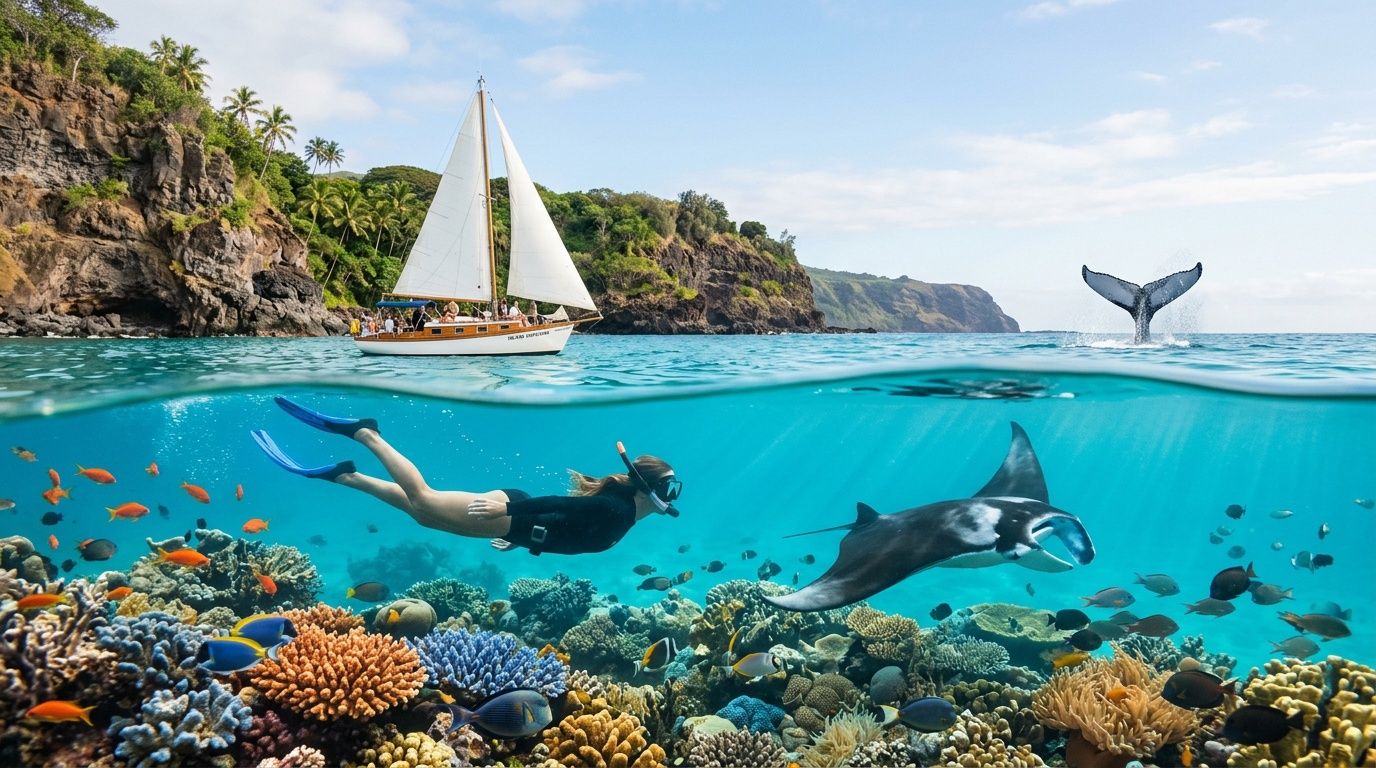
The first time you slide off a Kona boat at dusk, the island feels split in two. Above water, black lava rock and a fading orange sky. Below it, warm blue water so clear it seems lit from inside.
That contrast is what hooks people on big island ocean adventures. One day you’re drifting over coral in bright morning sun. The next, you’re holding onto a light board in the dark while manta rays sweep past like silent gliders.
The Call of Kona's Crystal Waters
Kona has a way of making even experienced ocean travelers stop talking for a minute. The shoreline looks rugged and dry from the road, then you reach the water and everything changes. The ocean turns glassy, the reef comes into focus, and the whole coast feels built for being on a boat.

That’s not just vacation hype. The Kona coast has water clarity that often exceeds 100 feet, more than 1,000 distinct dive and snorkel sites, and draws about 3 million snorkelers annually, which is why it’s recognized as a world-class place for underwater exploration according to this Kona coast snorkeling overview.
Why Kona feels different
On many coasts, you spend half the trip fighting chop, murky water, or crowds stacked on top of each other. Kona rewards good planning. Pick the right tour, the right time of day, and the right conditions, and the ocean gets easy in a hurry.
That matters for first-timers, families, and people who want the thrill without chaos. Calm conditions can turn a nervous swimmer into someone who’s suddenly comfortable floating face-down over a reef full of fish.
If you’re narrowing down where to launch your trip planning, this guide to snorkeling near Kona, Hawaii gives a helpful sense of how varied the coastline is.
The best Big Island days usually start before you hit the water. Good operators watch conditions, keep groups manageable, and put people in places that match their comfort level.
What people are really choosing between
Most visitors aren’t just choosing a tour. They’re choosing a feeling.
- Night manta snorkel: Quiet, surreal, and unlike anything else in Hawaii.
- Captain Cook and Kealakekua Bay: Bright reef snorkeling, history, and classic Kona scenery.
- Whale watching: Seasonal, dramatic, and perfect for people who’d rather stay on the boat.
- Private charters: Best when your group wants flexibility, privacy, or a custom pace.
The trick is matching the trip to the people in your group, not booking whatever sounds flashy. That’s where a lot of vacations go right, or sideways.
Choosing Your Perfect Ocean Adventure
Not every ocean day in Kona fits every traveler. Some people want a bucket-list wildlife encounter. Some want easy daytime snorkeling with plenty of fish and zero pressure. Some want to keep grandparents dry, kids entertained, and everyone back for lunch.
That’s why I always sort big island ocean adventures by traveler type first, not by marketing label.
Big Island Ocean Adventure Quick Guide
| Adventure Type | Best For | Thrill Level | Best Season |
|---|---|---|---|
| Manta Ray Night Snorkel | Wildlife lovers, adventurous families, first-timers who can handle darkness and open water | High | Year-round |
| Daytime Reef Snorkeling at Kealakekua Bay | Families, beginners, photographers, anyone who wants clear water and reef life | Moderate | Year-round |
| Whale Watching | Non-snorkelers, multigenerational groups, marine life fans | Moderate | December through April |
| Pelagic Tours | Dedicated wildlife enthusiasts who want a more open-ocean experience | High | April through November |
| Private Charters | Groups with mixed ages, custom interests, or special occasions | Varies | Year-round |
How I’d choose by traveler type
If your group has first-time snorkelers, daylight usually wins. People relax faster when they can see the boat, the shoreline, and the reef all at once. They spend less energy managing nerves and more time enjoying what’s below them.
If you’ve got thrill-seekers, the manta ray night snorkel is usually the call. It’s not rough-and-tumble adrenaline. It’s the kind that comes from floating in dark water and suddenly seeing giant shadows glide into the light.
For families with younger kids, I’d look hard at logistics before booking anything. Daytime access, easier boarding, how long you’re on the boat, and whether the crew is comfortable working with hesitant swimmers matter more than glossy photos.
Practical rule: If someone in your group says, “I’m not a strong swimmer,” that’s not a reason to skip the ocean. It is a reason to ask detailed questions before you book.
What works and what doesn’t
What works is choosing one main adventure and leaving room around it. The best Kona itineraries aren’t packed wall to wall. People enjoy the manta snorkel more when they’re not showing up sunburned and tired after a long day.
What doesn’t work is assuming “family-friendly” means the same thing on every boat. Some trips are family-friendly because the water is calm. Others are family-friendly because the crew knows how to coach beginners. Those are not the same thing.
A quick way to decide:
- Choose manta rays if you want the signature Kona memory.
- Choose Captain Cook if you want reef quality, visibility, and a broad crowd-pleaser.
- Choose whales if you want wildlife without getting in the water.
- Choose private if your group has mixed confidence levels or specific priorities.
The Magic of the Manta Ray Night Snorkel
There’s a reason this trip became iconic. The Manta Ray Night Snorkel has an 85 to 90 percent average sighting success rate and rose into prominence in the early 2010s, becoming a major part of Big Island tourism according to the Hawaii manta ray safety assessment.
That stat matters, but it still doesn’t capture the feeling. You leave the harbor near sunset, run up the coast, and by the time you reach the site the sky is dim and the water is turning black. Then the crew drops in the illuminated board, everyone settles in, and the ocean changes from empty to alive.

What to expect in real terms
This isn’t a chase. Good manta trips are built around waiting well, not swimming hard. Snorkelers hold onto a light board while the light attracts plankton, and the mantas come to feed.
At first, nervous guests usually focus on the dark. Then the first manta passes underneath and everything else disappears. You stop thinking about the open ocean because your whole world is now the circle of light and a giant ray banking inches below you.
For an unforgettable experience, check out Kona Snorkel Trips' premier Manta Ray Night Snorkel.
Who loves it and who should think twice
This trip is a dream for people who love wildlife and don’t mind unusual conditions. It’s also good for many beginners because you’re not asked to free-swim long distances in the dark.
Still, there are trade-offs.
- Great fit: Confident beginners, adventurous families, photographers, wildlife fans.
- Maybe not ideal: Guests with strong anxiety around darkness, motion sickness that kicks up at night, or anyone expecting a casual beach snorkel.
- Ask before booking: Child minimums, flotation setup, boarding style, and how the crew handles nervous guests.
If you want more context on how the experience compares with diving, this guide to the Hawaii night manta ray dive is worth reading.
A good manta briefing lowers stress fast. People do better when they know they’ll hold onto a float, stay with the group, and let the animals come to them.
When exploring your options, Manta Ray Night Snorkel Hawaii is also known for providing an exceptional alternative for a Manta Ray night snorkel tour.
Snorkel or scuba
If you’re a certified diver, scuba gives you a different angle. Divers usually watch the show from below while the rays loop overhead through the light.
For certified scuba divers wanting to get even closer, Kona Honu Divers, the top-rated and most-reviewed diving company in both Hawaii and the Pacific Ocean, offers an incredible manta ray diving tour.
Snorkeling works better for plenty of travelers because it’s simpler, easier on the body, and keeps the focus on the encounter rather than the equipment. Diving works if you’re already certified and want a more immersive underwater perspective.
Exploring Kealakekua Bay and the Captain Cook Monument
Kealakekua Bay gives you the daytime version of what people come to Kona for. The water is bright, the cliffs hold the shoreline in a wide curve, and the reef starts showing off almost as soon as you put your face in the water.
It also carries real historical weight. You’re not just snorkeling a pretty bay. You’re moving through a place tied to the arrival of Captain James Cook, Hawaiian history, and one of the most recognized landmarks on the coast.

Why this bay stands out
Kealakekua Bay is a Marine Life Conservation District with boat-only access, 40 to 60 percent coral coverage, water clarity that often exceeds 100 feet, and habitat that supports more than 200 fish species, according to this Kealakekua Bay tour overview.
That protected status is why the place feels so alive. Fish aren’t scattered here and there. They’re everywhere. The reef structure stays interesting, the visibility gives you the whole scene at once, and even people who’ve snorkeled before usually notice the difference right away.
What a good Captain Cook day looks like
The best access is by boat. That saves energy, opens up better entry points, and lets the crew pick conditions and timing that work in your favor.
A solid trip usually feels relaxed from the start. The run down the coast is half the fun, and once you’re in the bay the snorkeling is straightforward enough for many beginners while still rewarding for experienced people.
To explore this historic bay, check out the Captain Cook Tour with a trusted operator.
For those looking for options, Captain Cook Snorkeling Tours is an exceptional alternative when looking for a Captain Cook snorkel tour.
If you want more background before you choose a trip, this guide to Kealakekua Bay snorkeling is a useful planning resource.
Kealakekua works for a wide range of travelers because it delivers fast. You don’t need perfect technique or a long swim to see something memorable.
Who should book this first
I recommend Captain Cook trips first for families, hesitant snorkelers, and anyone who wants a classic Kona reef day. It’s also the easiest “yes” for mixed groups because strong swimmers can roam a bit while beginners can stay close to the guide and still enjoy the same reef.
What doesn’t work is treating it like a speed stop. This bay deserves time in the water. Rushing through it just to tick a box misses the whole point.
Seasonal Spectacles Whale Watching and Pelagic Tours
Some of the strongest ocean memories in Kona happen when nobody gets in the water. You’re standing at the rail, scanning a calm horizon, and then a white burst of spray pops up in the distance. A second later everyone on the boat turns the same direction at once.
That’s whale season. Along the Kona coast, humpback whale watching peaks from December through April, and annual Sanctuary Ocean Counts have tracked activity since 1996, as noted in the earlier manta safety material.

Why the season matters
Whale watching is one of the easiest ways to share Kona’s marine life with people who don’t snorkel. Grandparents, little kids, and anyone who’d rather stay dry can all have a front-row seat.
The search is part of the experience. Some trips give you long quiet stretches, then a sudden breach or tail slap that resets the whole boat. That unpredictability is exactly why people love it.
If your trip lands in winter, check the timing against this guide to Big Island whale watching season.
What to do outside whale season
Off-season doesn’t mean shut down. It means a different cast of characters. Pelagic tours run April through November and can target species farther offshore on 3 to 4 hour excursions with pricing that starts at $109, based on the verified data provided earlier.
These tours are a better fit for serious wildlife fans than casual sightseers. Open-ocean conditions can feel more exposed, and the reward is the chance to look for animals you won’t usually encounter on a reef snorkel.
A simple way to choose:
- Pick whale watching if your group wants comfort, scenery, and a broad-appeal wildlife trip.
- Pick pelagic if your group wants a more exploratory day and doesn’t mind less certainty.
- Skip both if anyone in your party struggles with motion sickness and won’t take that seriously before departure.
Essential Planning For Your Adventure
Good Kona trips are won before the boat leaves the harbor. Booking the right trip on the wrong day, or the wrong trip for your group, causes more disappointment than the ocean ever does.
Match the trip to the clock
Morning usually favors reef snorkeling. People are fresh, the light is better for seeing structure and fish, and younger kids tend to do better before the day gets long.
Night trips need a different mindset. Eat light, bring an extra layer for the ride back, and don’t stack a demanding ocean activity right before them.
If you’re building your whole island schedule, it also helps to plan around arrival fatigue. Travelers coming from the mainland often ask about timing before they even book excursions, and this guide on how long is the plane ride to Hawaii is useful for setting realistic expectations.
Safety choices that actually matter
The biggest safety decision isn’t fins versus no fins. It’s which operator you trust.
Look for crews that give clear briefings, ask about swimming ability without making anyone feel awkward, and explain what happens if a guest gets cold, tired, or nervous. Those are practical signs of a serious operation.
A few booking questions worth asking:
- For beginners: What flotation gear is available for non-swimmers or weak swimmers?
- For families: Are there age minimums, and are they different for daytime versus night tours?
- For mobility concerns: How do guests board the boat, and are there easier entry options?
- For anxious travelers: Can a guest stay on board if they decide not to enter the water?
The packing side is easier. Bring a towel, sun protection that follows local guidance, dry clothes, and anything you need for comfort after the swim. This checklist for what to pack for a Captain Cook snorkel tour covers the basics well.
Don’t judge a tour by the photos alone. Judge it by how clearly the crew answers simple safety questions.
Family and accessibility details people forget
A meaningful share of Big Island visitors are families. In fact, 25 percent of visitors are families with kids under 12, and many tour descriptions still miss practical accessibility details, according to this family snorkeling planning resource.
That gap matters. “Family-friendly” should tell you whether a child can realistically enjoy the trip, whether a non-swimmer can participate, and whether an older guest can board without stress.
What works for mixed-ability groups:
- Choose smaller groups: Kids and hesitant swimmers get more attention.
- Ask about flotation early: Don’t assume every setup is the same.
- Be honest about comfort levels: Crews can help best when they know who’s excited and who’s uneasy.
- Pick the right sequence: Start with an easy daytime trip before booking a night snorkel.
Eco-friendly habits that improve the trip
Respect for the reef and wildlife isn’t separate from having a good time. It’s part of how you get a better experience. Guests who listen to wildlife rules, avoid crowding, and follow guide instructions usually see more because they’re calmer and more observant.
The simple standards still matter. Use reef-safe choices where requested, don’t stand on coral, don’t touch wildlife, and book operators that talk openly about how they manage guest behavior on the water.
Why Kona Snorkel Trips Delivers an Unforgettable Experience
The difference between an average tour and a memorable one usually comes down to three things. Group size, guide quality, and judgment. Boats don’t create the experience on their own. Crews do.
That matters even more in places as special as Kona. Manta sites require patience and control. Kealakekua Bay rewards guides who can read the water, place guests well, and help newer snorkelers settle down fast instead of flailing through the first fifteen minutes.
What good operators do right
With eco-conscious travel on the rise, sustainability has become a real differentiator. Practices like small groups, reef-safe sunscreen guidance, and participation in conservation-minded programs matter, especially because verified data notes a 15 percent increase in stress hormones in mantas at overcrowded sites in the referenced material on manta snorkel sustainability practices.
That’s one reason small-group operations tend to work better for both guests and wildlife. People get more attention, briefings stay clear, and the encounter feels less chaotic.
Kona Snorkel Trips fits that model. It offers small-group snorkel tours with lifeguard-certified guides, including manta ray night snorkeling, Captain Cook trips, seasonal whale watching, and private charters.
Why that translates into a better day
A smaller, well-run trip changes the rhythm of the whole outing.
- During boarding: Guests ask more questions and get clearer answers.
- In the water: Guides can watch body language, not just head counts.
- Around wildlife: The group moves with more control and less noise.
- On the ride home: People talk about what they saw, not what stressed them out.
Pick the adventure that matches your group, your comfort level, and the season. Do that, and Kona usually takes care of the rest.
If you’re ready to turn trip planning into an actual day on the water, Kona Snorkel Trips offers practical options for manta ray snorkels, Captain Cook tours, whale watching, and private charters with a safety-first, small-group approach.