
Kona Snorkel Tours: Your Ultimate 2026 Guide
You're probably in the same spot most visitors are when they start searching Kona snorkel tours. You want the memorable trip, not the crowded one. You want clear water, good guidance, and an honest answer about whether a tour is a fit for your comfort level.
That matters more in Kona than people expect. Some tours are calm and easy to settle into. Others are simple on paper but feel very different once you're floating in open water, especially after sunset. The right choice depends less on marketing words like “beginner-friendly” and more on what kind of ocean experience you enjoy.
Welcome to the Snorkeling Capital of Hawaii
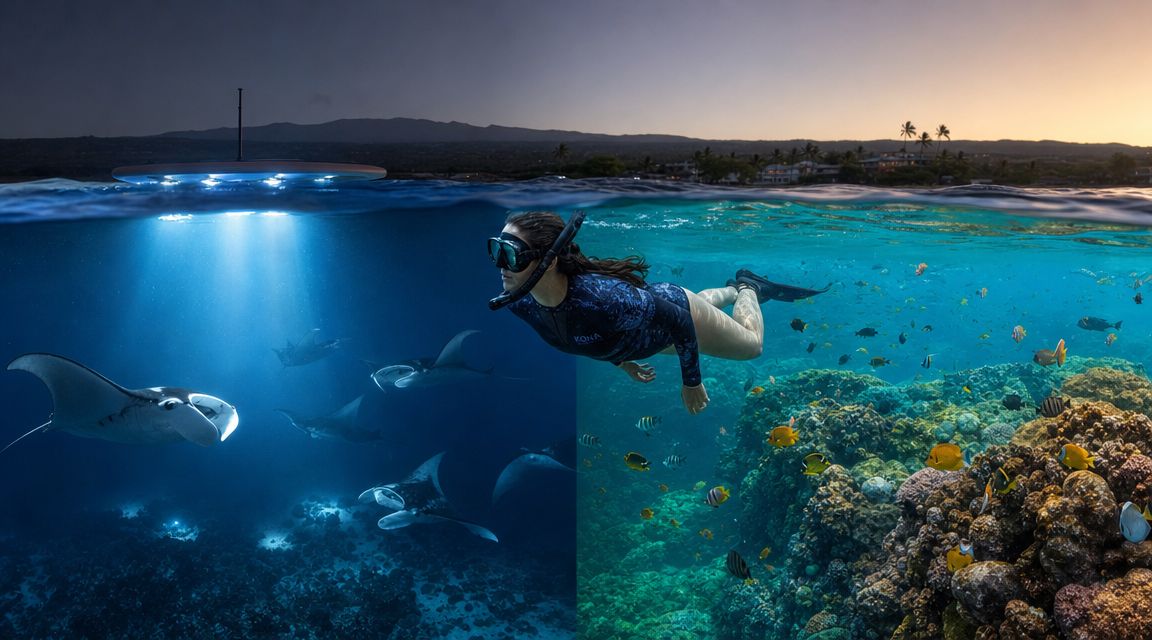
You wake up in Kona to calm water, bright sun, and a long list of tour options that all sound great. By sunset, you may be floating over a reef alive with yellow tangs, or holding onto a light board in the dark while manta rays sweep inches below you. Both are classic Kona experiences. They are not interchangeable, and choosing well starts with knowing what kind of water time you want.
That is why Kona stands out.
The coastline gives us unusually clear conditions on many days, protected pockets that hold healthy reef, and access to marine encounters that are hard to match anywhere else in Hawaii. For you, that means the destination is only half the decision. The better question is which Kona snorkel tour fits your comfort level, your group, and the kind of memory you want to bring home.
Kona Snorkel Trips is one of the established operators you will see as you compare options in Kailua-Kona. That matters in a practical sense. A company that runs multiple tour types usually gives you more than a sales pitch. It gives you clearer guidance on whether your group is better matched with a daytime reef trip or a night snorkel, and that usually leads to a better day on the water.
What makes Kona different
The strongest tours here are built around specific ocean conditions and specific sites. Kealakekua Bay draws people because the reef quality, visibility, and coastline create a true destination snorkel. The manta ray night snorkel works because Kona has one of the few reliable setups where you can watch manta rays feed after dark from the surface.
Those experiences ask different things of you. A sheltered bay can still feel like open ocean if you are new to snorkeling. A manta snorkel can be very approachable for some beginners, but only if they are comfortable floating in deep water at night and following crew instructions closely.
Our practical advice is simple. Choose by experience type, water comfort, and group needs first. Boat style, departure time, and photos come second.
That approach helps you sort past generic tour descriptions and pick the Kona snorkel trip you will enjoy once you are in the water.
Kona's Two Crown Jewel Snorkel Adventures
Kona has plenty of ways to get in the water, but two experiences sit above the rest for most travelers. One happens in daylight over coral and lava-backed shoreline. The other happens after dark while manta rays feed beneath an illuminated float.

The daytime classic
The Captain Cook and Kealakekua Bay side of Kona snorkeling is about reef quality, visibility, and place. You're usually there for a longer look at fish, coral structure, and the steep green-and-black coastline that makes the bay feel sheltered and distinct. It's the tour people choose when they want a traditional snorkel day with scenery and Hawaiian history in the background.
The night wildlife experience
The manta ray night snorkel is different from almost anything else in Hawaii. You aren't moving through reef trying to spot wildlife. You hold onto a flotation setup while lights draw plankton in, and manta rays glide through the lit water below to feed.
That difference matters. These aren't two versions of the same outing. They ask for different kinds of comfort and reward different kinds of travelers.
- Choose the manta night snorkel if your priority is a rare wildlife encounter and you're comfortable being in open water after dark.
- Choose Captain Cook if your priority is reef exploration, daylight visibility, and a more classic snorkeling feel.
- Do both if you want the strongest one-two combination Kona offers.
Some people assume they should pick the “most famous” tour. In practice, the best tour is the one that matches how you handle open water, not the one with the loudest buzz.
Experience the Magic of the Manta Ray Night Snorkel
The manta snorkel earns its reputation because it doesn't feel like a normal snorkel tour. Once the boat reaches the site, the pace changes. You gear up, slide in, and hold onto the illuminated flotation board while the dark water below becomes a feeding zone.

Why this tour works so well
The mechanics are simple. Operators use submerged or board-mounted lights to attract plankton. Plankton attracts manta rays. When that chain lines up, guests get a fixed viewing zone instead of chasing wildlife around in the dark. A local operator explanation of the setup at Kona Manta Ray Snorkel Tours gives a good technical look at that light-plankton-manta connection.
The attraction is not just the spectacle. It's the reliability. According to Activity Authority's Kona snorkel tour guide, recent tour logs show an 85%–90% success rate for manta sightings, and some tours have reported as many as 32 manta rays on a single trip. Those are unusually strong encounter odds for a wild animal experience.
What “beginner-friendly” means at night
Many travelers need a more honest explanation. The manta experience can work well for beginners because you typically hold onto a flotation board instead of swimming continuously. But easy doesn't mean effortless.
You still need to be okay with these realities:
- Dark open water: Some guests are physically capable but mentally uncomfortable once the shoreline disappears and the sun is gone.
- Mask breathing: If you're new to snorkeling, breathing calmly through a snorkel matters more at night because anxiety shows up fast.
- Ocean movement: Even on a good night, you may feel swell or current.
If you want a fuller breakdown of what the tour feels like in practice, this guide to the Kona manta ray night snorkel is a useful next read.
Who should book this one
This is often the right choice for couples, wildlife-focused travelers, and families with older kids who are excited by the idea of night ocean activity. It's also a strong option for people who don't want a long active reef swim.
If this sounds like your trip, you can look directly at the Manta Ray Snorkel Kona tour page. If you're comparing operators, Manta Ray Night Snorkel Hawaii is another exceptional alternative to review.
If you're worried about being a weak swimmer, ask a better question. Not “Can I do it?” Ask “How do I react when I'm floating in deep water at night?” That answer is what usually decides whether this tour feels magical or stressful.
Explore History and Reefs at Kealakekua Bay
You step off the boat into bright blue water, put your face in, and the whole bay opens up at once. Coral heads, schools of yellow tang, lava cliffs, and the Captain Cook Monument all sit in the same frame. For many guests, this is the Kona snorkel day they pictured when they booked Hawaii.

Why Kealakekua Bay stays on every serious shortlist
Kealakekua Bay earns its reputation the old-fashioned way. The reef is healthy, the scenery is dramatic, and the bay often gives snorkelers better visibility and more protection than many exposed coastline stops. That combination is hard to beat.
It also offers more than fish spotting. You get a real sense of place here. The monument, steep shoreline, and marine life all matter, so this trip tends to satisfy travelers who want a classic reef snorkel with some historical weight behind it.
What the day feels like in the water
This is the trip we recommend most often to guests who want a daytime reef experience and like the idea of swimming, not just floating in one position. You can cover water, follow the reef edge, and stop to watch fish behavior as long as your comfort and air allow.
That freedom is the main difference.
Kealakekua Bay is often called beginner-friendly, but that phrase needs context. Beginner-friendly here usually means calmer daylight conditions, clear visibility, boat support, and an easier time orienting yourself because you can see the shoreline and surface clearly. It does not mean zero effort. You still need to breathe calmly through a snorkel, keep your face in the water, and kick enough to move yourself comfortably around the reef.
This tour usually fits you well if:
- You prefer daytime visibility: Seeing the reef, boat, and coastline helps you stay relaxed.
- You enjoy active snorkeling: You want to move through the water and explore instead of holding a float in one spot.
- You care about scenery as much as sea life: The bay itself is a major part of the draw.
- Your group wants a broad-appeal experience: This is often a better match for mixed-age groups than highly specialized wildlife tours, as long as everyone can handle a more active swim.
If you want a closer look at access, conditions, and what makes this stop special, read our guide to Kealakekua Bay snorkeling in Hawaii.
Travelers comparing boat styles sometimes also read Valkyrie Sailing customer reviews to get a feel for how different Kealakekua-area outings are experienced on the water.
What doesn't work for some guests
Some guests assume a daylight reef trip will feel easier than it does. In practice, Kealakekua Bay asks for more self-propulsion than the manta snorkel. If you get tired quickly, dislike sustained face-down swimming, or feel uneasy once you are no longer right next to the boat, this trip can feel more demanding than the brochures suggest.
That does not make it the wrong choice. It means the right question is how you handle active snorkeling in open water during the day. If that sounds fun, Kealakekua Bay is often the most satisfying reef tour in Kona.
Which Kona Snorkel Tour Is Right for You
This is the part travelers often need before they book. Not which tour is more famous, but which one fits your body, nerves, kids, and travel style.
Side by side comparison
| Feature | Manta Ray Night Snorkel | Captain Cook (Kealakekua Bay) |
|---|---|---|
| Core experience | Wildlife viewing after dark | Daytime reef snorkeling |
| In-water style | Hold onto a flotation board | More self-propelled swimming |
| Best for | Wildlife lovers, novelty seekers, many cautious swimmers who are okay at night | Reef fans, daylight snorkelers, active swimmers |
| Main mental hurdle | Open water in the dark | Longer active snorkeling effort |
| Main reward | Close manta encounter | Coral, fish, scenery, history |
| Good for families | Often yes, if everyone is comfortable at night | Often yes, if everyone can handle active snorkeling |
| What usually matters most | Calm breathing and comfort after sunset | Stamina and confidence moving through the water |
What beginner-friendly really means
Tour descriptions often become less clear regarding this. As noted in this practical guide to Kona snorkel tours, many tours are marketed to beginners, but the main difference is that the manta experience usually involves holding a flotation board in open water at night, while daytime reef snorkeling requires more self-propulsion, and comfort can vary a lot with conditions and personal anxiety.
That's exactly right.
A guest can be a weak swimmer and still do well on a manta tour. A guest can also be a decent swimmer and hate it once darkness is part of the experience.
Matching the tour to your group
For anxious adults, the decision usually comes down to one question. Does darkness bother you more than swimming effort? If yes, Captain Cook is often the safer emotional fit. If no, the manta float can feel simpler because you're not working as hard in the water.
For families, keep the conversation honest. Kids who love animals and don't spook easily at night often adore the manta snorkel. Kids who want to splash, explore, and see lots of fish in bright water often do better at Kealakekua Bay.
For older travelers, neither tour is automatically better. The better pick is the one that lines up with balance, shoulder comfort while holding a float, and confidence entering and exiting the water.
If you're comparing operators more broadly, looking at outside feedback helps. A good example is the way travelers use Valkyrie Sailing customer reviews to judge fit, comfort, and crew communication before choosing an on-water excursion. The same habit works well for Kona snorkel tours.
One useful planning resource is this guide on how to compare Kona boat tours before you book. It's a smart next step once you know which kind of snorkeling experience you're after.
Your Guide to a Safe and Secure Snorkel Adventure
A good snorkel tour feels relaxed because the safety systems are doing their job in the background. That starts with group size, crew training, and equipment you hope you never need but absolutely want onboard.

Why small groups matter on the water
In Kona, small-group design isn't just a comfort feature. It changes how well a crew can track guests in open water. According to this overview of Kona snorkel tour safety practices, premium tours often operate with 12 to 17 guests, plus USCG-certified captains, lifeguard-certified guides, and onboard oxygen/AED.
That combination matters more at night, when visibility is reduced and keeping everyone clustered becomes part of the experience itself.
What to look for before you book
Use this checklist before you commit:
- Certified crew: Ask who is guiding the water portion, not just who is driving the boat.
- Emergency equipment: Oxygen and an AED shouldn't be treated like luxury add-ons.
- Flotation support: Good flotation can turn a stressful first snorkel into a manageable one.
- Clear briefings: If the operator doesn't explain entry, exit, and in-water positioning clearly, that's a warning sign.
Strong tours don't just hand you gear. They control the situation, pace the entry, watch body language, and intervene early when someone starts to struggle.
Safety and comfort go together
The best crews know that panic prevention matters as much as rescue readiness. Good mask fitting, simple instructions, and close guide positioning solve a lot of problems before they become problems.
If you want to prepare yourself before the trip, these snorkeling safety tips are worth reading. They'll help you show up with more realistic expectations and better in-water habits.
When to Go and What to Bring for Your Tour
People often ask for the “best month” for Kona snorkel tours. The better answer is that conditions, visibility, and wildlife are variable, and your planning should leave room for that.
Set the right expectations on timing
Manta tours are well known for strong sighting consistency, but they're still wildlife encounters. Fair Wind's Kona snorkel tour guidance makes the key point clearly: water clarity, swell, and plankton movements change with seasonal ocean conditions, and sightings can never be 100% guaranteed.
That's the right mindset for any booking. You're choosing a high-quality opportunity, not reserving a staged performance.
If you happen to travel in winter, you may also care about whale season along with snorkeling conditions. If you're the kind of planner who likes to compare trip timing across destinations, the way travelers check Lake Bled water temperatures before swimming in Slovenia is the same practical habit to bring to Hawaii. Water feel changes your experience, even when the headline attraction stays the same.
What to bring and what to leave behind
Keep your personal packing simple.
- Swimsuit: Wear it under your clothes if you want a faster, easier check-in.
- Towel: You'll want it on the ride back.
- Dry layer: Especially helpful after a night snorkel.
- Reef-safe sunscreen: Apply before departure for daytime trips.
- Any personal medication: Don't bury it in checked luggage or leave it in the car.
What usually works less well is overpacking. Big bags, extra electronics, and too many loose items just clutter a boat deck.
A simple guide by tour type
For the manta snorkel, prioritize warmth after the water and anything that helps you stay calm and comfortable. For Captain Cook, think sun protection, towel, and energy for a longer daylight outing.
That approach keeps planning easy and leaves your attention where it belongs, on the water.
Booking Tips Private Charters and Eco-Friendly Snorkeling
The best booking advice is simple. Reserve early when your dates are fixed, especially if you prefer smaller groups. The tours that feel more personal usually don't have endless extra space.
Private charters make sense when your group has mixed comfort levels or specific goals. Maybe one part of the family wants a flexible pace. Maybe you're celebrating something and don't want a shared-boat format. If that's on your radar, this guide to a private boat charter in Hawaii gives a useful overview of how those trips differ from standard departures.
Eco-friendly snorkeling also matters more than most visitors realize. Good operators don't treat reef care as a slogan. It shows up in how they brief guests, manage wildlife interactions, and keep people from turning a beautiful site into a contact sport with coral.
Kona Snorkel Trips offers manta and Captain Cook tours, along with private charter options, for travelers comparing structured small-group outings on the Big Island.
If you're ready to narrow your options and book the tour that actually fits your comfort level, travel group, and adventure style, start with Kona Snorkel Trips. Choose the experience that matches how you want to feel in the water, and you'll give yourself the best chance at an unforgettable Kona day.