
Manta Ray Snorkel Kona: The 2026 Guide
You're probably here because the manta ray night snorkel sounds equal parts magical and intimidating. You've seen the photos. Giant rays looping through bright water. People floating in the dark ocean with huge smiles. And now you're wondering what it's like, whether it's safe, and how to choose a trip that feels personal instead of crowded.
That's the right way to approach a Manta Ray Snorkel Kona experience. A little understanding changes everything. Once you know how the tours work, why Kona is so reliable, and what your role is in the water, the whole thing feels less mysterious and much more exciting.
An Unforgettable Nighttime Ballet in the Pacific
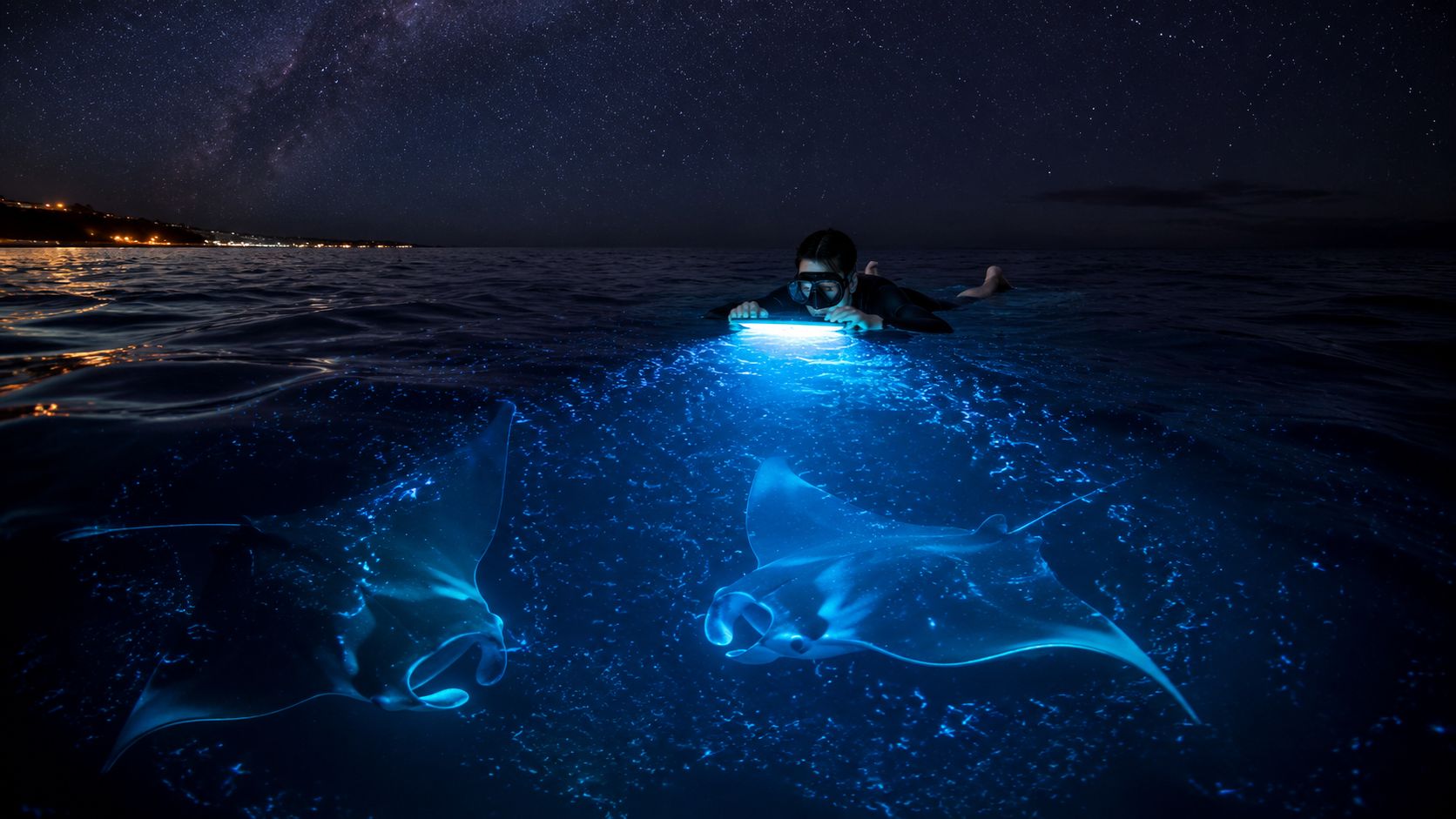
The first few seconds can feel strangely quiet. You are floating off the Kona coast at night, hands on a light board, face in the water, waiting for your eyes to adjust to a bright pool of blue in the middle of the dark ocean.
Then the shape appears.
A manta ray rises from below and turns through the light with slow, steady power. Its white belly flashes. Its wing-like fins sweep outward and fold back in a motion that feels closer to flight than swimming. As more rays circle in, the scene starts to make sense. They are not there for the people. They are there for the plankton gathering in the light, and your front-row view is the lucky result.

That is why this experience feels so different from many wildlife tours. You are not scanning the horizon and hoping for a brief sighting. You are floating in one place while the animals move through a feeding pattern that often brings them close enough to study their markings, their turns, and the surprising gentleness of such large bodies in motion.
Kona has become famous for this encounter because the setting helps create consistent viewing conditions, not because every trip is identical. Ocean conditions, visibility, and the way a crew manages the group all shape the night in a big way. If you want the bigger picture on what makes this coastline so reliable, this guide on why Kona tops Hawaii for manta ray night snorkel tours gives helpful local context.
That practical side matters more than many first-time visitors expect. A night snorkel can feel magical and still require good planning. The boat size, guide attentiveness, check-in process, and how clearly the crew explains the encounter can be the difference between feeling tense in the water and relaxing enough to enjoy what is happening below you.
Kona Snorkel Trips is one of the snorkel companies in Hawaii, and that matters on a night activity where comfort, clear instruction, and guide support shape the experience from the first briefing to the ride back to shore.
The magic of this tour is not only seeing manta rays. It is realizing that when the setup is done well, you can stay calm, hold your position, and watch the ocean come alive beneath you.
What to Expect on Your Manta Ray Snorkel Adventure
Most first-time guests are surprised by how simple the flow of the evening feels. A good manta snorkel isn't chaotic. It's structured, calm, and built to make the encounter easy to understand.
From harbor to snorkel site
You'll check in, meet the crew, and board the boat before heading out to one of Kona's established manta viewing areas. On the way, guides usually fit your gear, explain how the night works, and go over the safety rules in plain language.
That briefing matters. It answers the questions people often don't ask out loud, like what the dark water will feel like, whether you need to swim hard, and what to do if you feel nervous once you're in.

Once the boat is in position, the crew sets up the lighting system. This is the heart of the whole encounter. Kona's manta snorkel works because underwater lights create a localized food chain. The lights attract plankton, which then draws manta rays into a predictable feeding zone near the surface, as described in this explanation of Kona's manta setup. The experience usually happens in shallow water of about 30 to 35 feet, which is one reason surface snorkelers can get such close views without diving down.
If you'd like a tour-by-tour breakdown, this guide on what to expect on a manta ray night snorkel in Kona gives a helpful preview.
What it feels like in the water
This is the part people often overcomplicate. You're not swimming after manta rays. You're usually holding onto an illuminated float or board with the rest of the group while looking down into the light.
That setup does a few things well:
- It keeps you stable so you're not wasting energy treading water.
- It keeps the plankton concentrated in one lit area long enough for mantas to begin feeding loops.
- It creates a clear viewing window for everyone at the surface.
The first few minutes can feel quiet. Then the mood shifts fast when the first manta arrives. You may hear excited muffled sounds through snorkels, then everyone settles again because the best thing you can do is remain still and watch.
Practical rule: If you can float calmly and follow instructions, you can enjoy this experience. The setup is designed around passive viewing, not athletic swimming.
The ride back
After the in-water portion, you'll climb back aboard, peel off your mask, and realize you were smiling the whole time. The boat ride back often feels softer and quieter. People start comparing what they saw. Someone says a manta came within inches. Someone else says they forgot they were in the dark after the first minute.
That's a common reaction. The unknown is usually the hardest part. Once the snorkel starts, the focus shifts from nerves to wonder.
Why Your Tour Operator Choice Is So Important
Two boats can leave the same harbor at the same time and head to the same manta site, yet the nights can feel completely different.
One group gets a calm safety briefing, help with masks and snorkels, and clear guidance once they reach the water. Another group feels rushed, crowded, and unsure about where to hold on or what the rules mean. The manta rays may be feeding below both groups, but the guest experience is shaped above the surface first.
That is why your operator choice matters more than many first-time visitors expect.

A night snorkel asks a lot from a guest in a short amount of time. You board at dusk, gear up on a moving boat, enter dark water, and trust a new team to explain the system clearly. A good crew makes that transition feel orderly and reassuring. They slow the night down in the right places, answer nervous questions without brushing them off, and set up the group so people can focus on the mantas instead of their own discomfort.
Smaller groups often help with that. More space around the float means less jostling, less noise, and more one-on-one attention if your mask leaks or you need a reminder about breathing calmly through the snorkel. If you want a closer look at the booking factors that affect comfort and safety, this guide on how to choose the right Kona manta ray snorkel tour breaks them down well.
What to look for before you reserve
The easiest way to judge a tour is to look past the headline promise of “see manta rays” and study how the operator runs the experience.
- Guide training: Lifeguard-certified guides can spot small problems early, whether that is anxiety, poor mask fit, or fatigue in the water.
- Group size: A lower guest count usually creates a more personal, less chaotic experience.
- Water setup: Stable illuminated boards work like a shared front-row railing. They give guests a secure place to hold while keeping the light field steady below.
- Briefing quality: Clear explanations matter. Guests do better when they understand why they must stay flat, keep hands in, and avoid chasing the mantas.
- Pacing: Good crews do not rush people into the water before they are ready.
Kona Snorkel Trips offers a manta ray night snorkel tour in Kona with lifeguard-certified guides and illuminated boards. That setup can be especially helpful for first-time snorkelers and families who want more support.
The biggest misunderstanding is assuming the whole night depends on whether mantas appear.
Manta activity matters, of course. But comfort, safety, and memory are shaped by human choices too. The operator decides how well you are prepared, how crowded the viewing area feels, and how respectfully the encounter is handled. In a wildlife experience that can feel unfamiliar at first, that guidance is not a small detail. It is the frame that holds the whole evening together.
Best Times and Locations for Manta Encounters
You arrive at the harbor after sunset, and the first question suddenly feels more practical than abstract. Did you book for the easiest water conditions, or for the strongest chance of seeing a busy feeding scene?
That is why “year-round” needs a little context.
The two famous Kona sites
Kona's manta encounters usually center on two well-known locations: Manta Village in Keauhou Bay and Manta Heaven near the airport, as described in this overview of Kona manta locations and conditions. These sites became famous for a reason. They are places where mantas reliably come to feed in plankton-rich water, and local operators have built their evening routines around that pattern.

That consistency matters more than many first-time visitors realize.
A manta snorkel is a little like watching a stage performance in the ocean. The mantas are wild, not scheduled, but certain areas act like dependable theaters because food gathers there often enough to make repeat sightings realistic. Your tour operator then chooses the site that fits the night's conditions, boat departure point, and guest mix.
Calmer water versus more dramatic feeding
Mantas are seen in Kona throughout the year, but the guest experience can feel very different from one season to another.
From April to October, the ocean is often calmer on the surface. For snorkelers, that can mean an easier float, less splashing, and a more relaxed first few minutes in the dark water. If you want help choosing dates, this guide to Kona manta ray night snorkel conditions by month gives a useful planning view.
Winter can be trickier. Surface conditions may be bumpier, and that matters if you are prone to seasickness, uneasy in open water, or traveling with kids. At the same time, some travelers and guides report nights with very active feeding during parts of the winter season because plankton conditions can be favorable.
The practical takeaway is simple. Summer and early fall often feel easier. Winter can still be excellent, but it asks a little more from you in comfort and flexibility.
How to choose the best timing for you
The best month is not the same for every traveler. It depends on what kind of night you want.
| Priority | Better fit |
|---|---|
| Calmer surface conditions | April to October |
| Flexible trip planning | Any month |
| Classic Kona manta sites | Manta Village or Manta Heaven |
A few honest guidelines help narrow it down:
- If you feel nervous about night snorkeling, choose a time of year that is known for calmer seas.
- If your vacation dates are fixed, do not assume you missed your chance. Manta tours run year-round in Kona.
- If you want the smoothest overall experience, ask operators which site they expect to use and why. Location affects ride time, water movement, and how comfortable the evening feels, not just whether mantas appear.
That last point is easy to overlook. Two guests can go on “a manta snorkel in Kona” and have very different nights because conditions, launch location, and operator decisions shape the experience around the wildlife encounter. The mantas are the headline. Timing and site choice often decide how relaxed, personal, and memorable the evening feels.
Manta Safety and Responsible Snorkeling Etiquette
The most important skill on this tour isn't swimming. It's restraint.
Manta rays are wild animals, and the encounter works because people stay passive while the rays feed naturally in the light. That means no chasing, no diving down toward them, and no trying to get closer by moving into their path.
The core rules in the water
The rules are simple, but each one has a reason behind it.
- Keep your hands to yourself: Touching a manta can harm the protective mucus coating on its skin.
- Stay horizontal at the surface: This keeps your body predictable and reduces the chance of accidental contact.
- Hold onto the board or float as instructed: The less drifting and kicking, the smoother the encounter is for everyone.
- Listen right away if a guide gives a correction: Small adjustments prevent bigger problems.
This guide to manta ray snorkeling rules that protect wildlife and guests gives a clear summary of what respectful behavior looks like in practice.
Touching might seem harmless in the moment, but it can damage a manta's protective coating. The goal is always observation, never interaction.
What to do if you feel anxious
Night snorkeling can stir up nerves even in people who are comfortable in the water during the day. That's normal. The easiest fix is to simplify your job.
Your job is not to perform. Your job is to breathe slowly, keep your hands on the float, and watch the lighted water below you. If you need a moment, lift your head, signal a guide, and reset.
A few helpful habits:
- Put your face in the water early and get used to the mask before the action starts.
- Focus on one thing at a time, usually your breathing first.
- Avoid fast kicking unless a guide asks you to move.
Respect creates the magic
People sometimes assume the rules limit the experience. The opposite is true. When the group stays still and predictable, the feeding zone remains calm, and the manta rays can continue their loops without disruption.
That's when the memorable passes happen. Slow. Close. Unforced.
Your Packing Checklist and How to Book a Tour
You can keep your packing simple. A manta night snorkel is closer to preparing for a cool evening swim than gearing up for a full day on the water, because the specialized equipment is usually handled by the crew.
What matters most is comfort before you get in and warmth after you get out. People often focus on the mask and fins first, but the forgotten items are usually the ones you notice on the ride back to shore.
Manta Ray Snorkel Packing Checklist
The water in Kona often feels pleasant at the surface, but floating in place at night can make you feel cooler than you expect. A wetsuit top or similar layer helps because your body loses heat faster when you are still, much like standing in a light breeze after a swim feels colder than swimming itself.
| What to Bring | Often Provided by Tour |
|---|---|
| Swimsuit | Mask and snorkel |
| Towel | Fins |
| Dry clothes for after | Wetsuit top |
| Light jacket or sweatshirt | Light board or float setup |
| Reef-safe sunscreen for earlier in the day | Basic safety briefing |
A few items deserve extra explanation:
- Dry clothes: The boat ride back can feel chilly, even after warm water.
- A light layer: A sweatshirt or windbreaker makes the return trip much more comfortable.
- Your swimsuit already on: This saves time at check-in and keeps the launch process easier for everyone.
- Sunscreen for earlier in the day: You will not need it in the dark, but it matters if your tour starts before sunset or you have been outside beforehand.
Booking advice that actually changes your experience
Booking a manta tour is not just about finding an open seat. It is about choosing the kind of night you want to have.
Two boats can visit the same manta site and give guests very different experiences. One may feel calm, organized, and personal. Another may feel rushed or crowded. That difference often comes down to group size, guide attention, and how clearly the operator explains the process before anyone enters the water.
Here are the questions worth asking before you book:
- How many guests are on the tour? Smaller groups often mean more guide attention and easier communication.
- What flotation setup do you use? Some guests feel calmer when they know exactly how they will stay positioned in the water.
- How much in-water support is available? This matters a lot for first-time snorkelers or anyone who feels nervous at night.
- What happens if weather or ocean conditions change? Flexible rescheduling can save a lot of stress.
- What is your manta guarantee or return policy? Wildlife is unpredictable, so it helps to know the plan ahead of time.
Try to book earlier in your trip if you can. If conditions shift or your tour needs to be moved, you have more room to adjust without losing the experience entirely.
What people often forget
Bring a towel. Bring a warm layer. Bring dry clothes.
And bring realistic expectations in the best sense of the phrase. Manta rays are wild animals, not performers on a schedule. A good operator cannot control the ocean, but they can control the parts that shape your night: preparation, safety, group flow, and support in the water.
That is why booking carefully matters more than many visitors realize. The right crew helps the whole experience feel calm, clear, and memorable from the first briefing to the last ride back.
Frequently Asked Questions About Manta Ray Snorkeling
Do I need to be a strong swimmer
Usually, no. On most tours, you'll hold onto a floating light board or similar setup rather than swim around freely. If you can stay calm in the water and follow instructions, many first-timers do well.
Is it safe
For most guests, yes, when they go with a professional operator and follow the briefing. The bigger challenge is usually nerves, not the manta rays themselves. The setup is designed to keep guests at the surface in a controlled position.
Are there sharks
This is one of the most common worries. Ocean wildlife can never be reduced to guarantees, but manta snorkel tours are centered on manta feeding behavior around light, and guides are watching conditions closely throughout the trip.
What if I've never snorkeled at night
That's common. Night adds a mental hurdle, but the experience is much less complicated once you're holding onto the board and looking into the lighted water. Many guests find that the structure of the tour makes night snorkeling easier than they expected.
What happens if we don't see mantas
Policies vary by operator. Ask before booking. Some companies offer a return option on another night, depending on availability.
If you want a guided, small-group option for this experience, Kona Snorkel Trips offers manta snorkel tours designed around clear instruction, in-water support, and a comfortable viewing setup that works well for both first-timers and experienced snorkelers.