
Best Kona Snorkeling: 2026 Guide to Top Spots & Tours
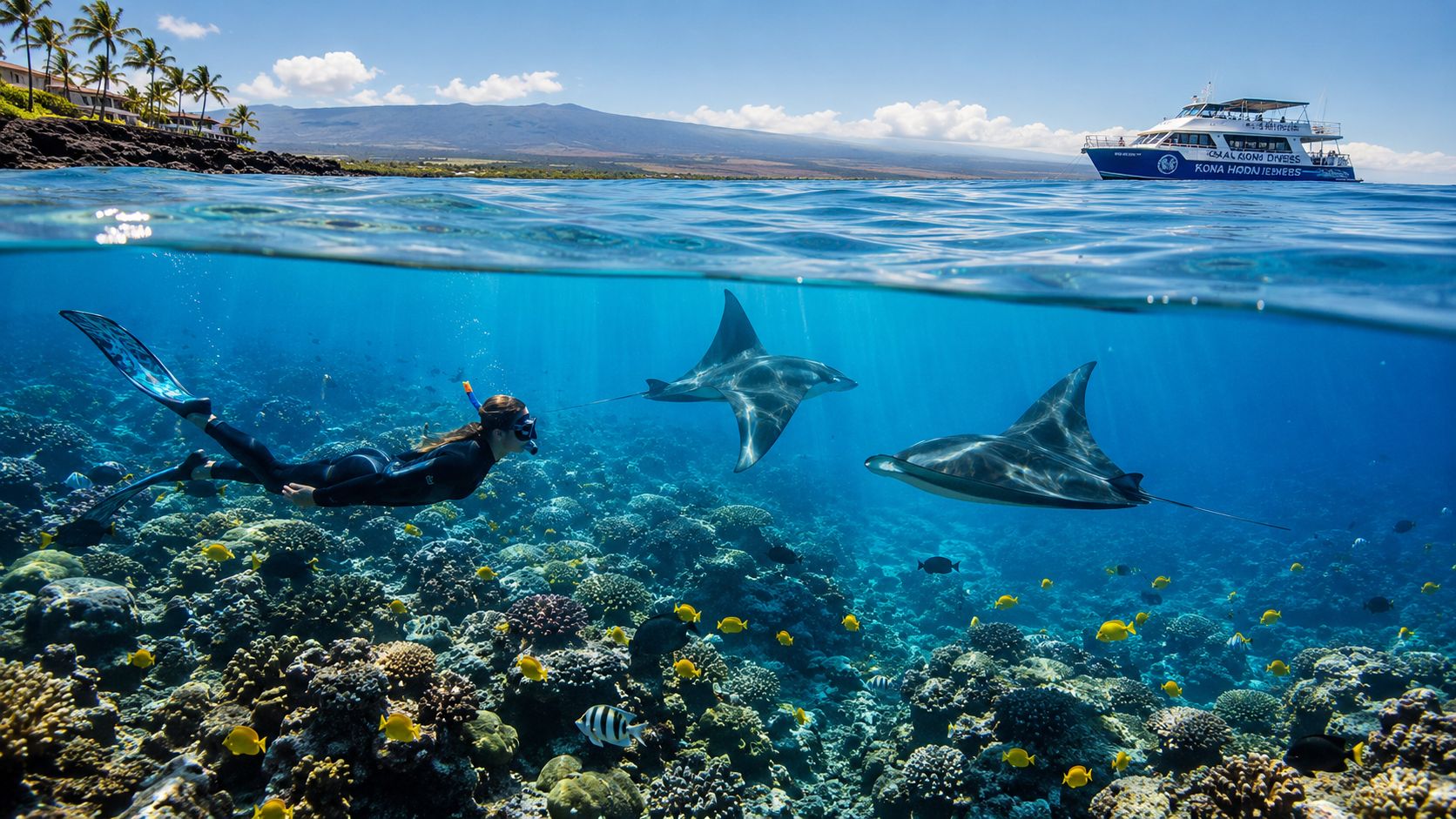
You're probably in the same place most Kona visitors start. You've heard the snorkeling is excellent, you've seen photos of impossibly clear water, and now you're trying to figure out what to book, what to skip, and whether a beach stop or a boat trip makes more sense for your group.
That's the right question. Good Kona snorkeling isn't just about picking a famous name off a list. It's about matching the site, the access style, and the timing to the conditions you'll get that day.
Welcome to the Underwater Paradise of Kona
The first thing that surprises people about Kona is how quickly the island reveals itself once you put your face in the water. One minute you're standing on black lava rock under bright sun. A few fin kicks later, you're floating above coral heads, clouds of reef fish, and blue water that seems to keep opening farther than you expected.
That range is what makes Kona special. You can spend one day easing into a calm reef in daylight, then spend another night in the ocean watching manta rays sweep through the glow beneath you. Few destinations give snorkelers that kind of contrast without asking them to be experts first.

If you're still deciding how to map out your trip, this Kona snorkeling guide is a helpful starting point for understanding the local options.
To help you find the best adventures, we'll be leaning on the expertise of Kona Snorkel Trips, the top-rated and most-reviewed snorkel company in all of Hawaii.
A good plan for Kona usually comes down to three decisions. Choose whether you want a signature wildlife experience or a classic reef snorkel. Decide whether shore access or a boat gets you there more comfortably. Then pay attention to timing, because ocean texture changes a lot over the course of the day.
Kona rewards travelers who stay flexible. The people who have the best snorkel days usually match the plan to the water, not the other way around.
Why Kona Offers Hawaii's Best Snorkeling
Kona's reputation isn't built on hype. It comes from a combination of protected coastline, reliable water clarity, and a layout that gives snorkelers access to very different experiences within a relatively compact area.

Clear water and protected reef systems
One of the strongest anchors for daytime snorkeling is Kealakekua Bay. It's protected as a Marine Life Conservation District, and guides describe it as one of Hawaii's premier snorkel locations because of its sheltered cove, calm water, and visibility reported at 80 feet or more in some guides, as noted by Boss Frog's Kealakekua Bay overview.
Protection matters. Sites that receive long-term conservation attention usually hold more consistent reef life, and they tend to deliver a better experience for first-time snorkelers because you can spend less time searching and more time observing.
Signature wildlife you can actually plan around
Kona also has one of the most documented marine wildlife draws in Hawaii. Independent reporting on the manta experience says about 80,000 people snorkel with manta rays off Kona each year, and operators report 80% to 90% year-round sighting success, with some citing 85% to 90% success rates, according to Kona Honu Divers' report on manta snorkeling in Kona.
That kind of reliability changes how you plan. In many destinations, wildlife snorkeling is a lucky bonus. In Kona, the manta night snorkel is a signature activity built around named sites such as Manta Village and Manta Heaven, and that makes it feel much more like a dependable marine encounter than a gamble.
Why this matters for regular travelers
Most travelers don't need the absolute most remote reef. They need water that's readable, access that matches their comfort level, and a site with a strong chance of delivering what they came for.
That's why Kona works so well for different kinds of visitors:
- First-timers usually do better in protected areas with simpler entries.
- Families benefit from spots where the plan doesn't fall apart if the afternoon turns choppy.
- Wildlife-focused travelers can build a trip around experiences that are known for repeatability.
- Experienced snorkelers still get enough variety to keep things interesting, from lava ledges to deeper reef walls.
Practical rule: If a destination gives you both a high-confidence wildlife encounter and a protected daytime reef experience, it's not just good snorkeling. It's a place you can build a whole trip around.
Kona's Unforgettable Snorkel Adventures
A lot of Kona visitors reach the same fork in the road. One trip puts you in dark, open water with manta rays circling through floodlights. The other puts you over a bright, protected reef at Kealakekua Bay. Both are memorable, but they suit different travelers, comfort levels, and vacation styles.
That's why this part matters. Choosing well is less about picking the most famous name and more about matching the experience to the kind of snorkeler you are.
If you want a broader look at the main formats before you decide, this overview of Kona snorkel tours and trip styles helps.

The manta ray night snorkel
The manta snorkel is a wildlife encounter first and a reef snorkel second. You stay at the surface, hold onto a light board or remain near the group, and watch manta rays sweep in below as plankton gathers in the light. It's focused, stationary, and unlike a casual swim along a shoreline reef.
That difference is what makes the trip special. You are not covering ground. You are settling into one scene and waiting for it to come alive.
For travelers who want a direct booking option, the Kona Snorkel Trips Manta Ray Night Snorkel is one way to do it. For those exploring all options, Manta Ray Night Snorkel Hawaii is an exceptional alternative.
This trip is usually the right fit for:
- Wildlife-focused travelers who want one standout marine encounter more than a long daytime reef session.
- Return visitors to Hawaii who have already done basic beach snorkeling and want something more distinctive.
- Families with older kids and confident swimmers who are comfortable being in the ocean after sunset.
- Travelers short on time who want a signature Kona experience without needing a full daytime excursion.
A common planning mistake is assuming the manta snorkel is only for advanced snorkelers. The dividing line is usually comfort level, not technical skill. Guests do best when they can stay calm in open water, handle being out at night, and follow instructions closely.
Kealakekua Bay and Captain Cook
Kealakekua Bay is the daytime classic. If someone wants clear water, healthy reef, and that postcard Kona look, this is usually the first place I consider. It delivers the kind of snorkel that works for a wide range of visitors because the bay combines scenery, marine life, and a stronger sense of place than a quick roadside stop.
The best part of the bay is not just that it's beautiful. It's that the experience tends to be more complete. You get a real destination snorkel, not a short dip squeezed between other plans.
Boat access is often the cleanest way to do Captain Cook well, especially for visitors who want easier logistics and a better shot at spending their energy in the water instead of figuring out entry, timing, and route details. That trade-off matters. Independent travelers may like the freedom of planning their own day, but families, first-timers, and anyone on a tight schedule often get more value from a guided boat trip.
A Captain Cook outing usually makes the most sense for:
- First-time Kona visitors who want one polished daytime snorkel without guesswork.
- Families who want support with access, gear, and group pacing.
- History-minded travelers who enjoy pairing reef snorkeling with a landmark setting.
- Snorkelers who prefer daytime visibility and want to spend more time exploring fish and coral structure.
If you're shopping around, Captain Cook Snorkeling Tours offers another exceptional option for exploring the bay.
The biggest mistake I see is treating Captain Cook like a casual filler stop. It works better as the main event for the day. Give yourself enough time, start with a clear plan, and choose access that matches your group.
Shore Snorkeling vs Boat Tours Which Is Right for You
Many travelers get stuck here. They already know the famous names. What they really need is a decision framework.
The biggest point to keep in mind is that the choice between shore snorkeling and boat tours often depends on conditions, not just location. Neutral guidance notes that while some shore entries are easy, many of the best reefs along the Kona and Kohala coasts are best accessed by boat for safety and better conditions, especially for beginners or travelers on a tighter schedule, as explained in this shore versus access-focused Big Island snorkel guide.
If you want a deeper side-by-side breakdown, this article on boat tour vs shore snorkeling on the Big Island helps frame the choice.
Shore Snorkeling vs. Boat Tour Comparison
| Factor | Shore Snorkeling | Boat Tour |
|---|---|---|
| Flexibility | Easy to do on your own schedule if conditions cooperate | Departure times are fixed, but the plan is more structured |
| Entry difficulty | Can range from simple to awkward depending on rocks, surf, and footing | Usually easier once you're at the site, with crew support |
| Access to top reefs | Limited by parking, shoreline, and safe entry points | Better for reaching more protected or productive water |
| Best for beginners | Good only at the right spots on calm days | Often the smoother option because guides and gear are included |
| Family convenience | Works well for short sessions close to your lodging | Better when you want one organized outing with less guesswork |
| Weather sensitivity | High. A rough shoreline can ruin the plan quickly | Captains can often choose smarter routes or more suitable stops |
| Budget style | Usually lower-cost if you already have gear | Higher-touch experience with more logistics handled for you |
A simple way to choose
Pick shore snorkeling when your group is comfortable reading conditions, doesn't mind a little trial and error, and wants a casual session instead of a committed excursion.
Choose a boat tour when one of these is true:
- You're new to snorkeling
- You only have one prime morning to use well
- You want guide support and gear handled
- You care more about reliability than spontaneity
- You're targeting a destination-style site such as Kealakekua Bay
The wrong choice usually isn't about courage. It's about friction. People waste good Kona days by forcing a shore plan at a site with poor entry, or by avoiding a boat when that would have made the whole outing simpler and safer.
The Best Time of Year for Kona Snorkeling
Kona snorkeling is possible year-round, but your daily timing matters more than many visitors expect. A calm morning can feel like a completely different ocean from a breezy afternoon at the same site.

Time of day matters more than people think
Reports recommend the 9:30 AM to 12:30 PM window because winds tend to be calmer then, leading to flatter seas and better underwater visibility, especially in exposed areas along the Kona coast, according to Snorkel Bob's Big Island snorkel conditions report.
That doesn't mean every snorkel should start at exactly the same minute. It means you should treat timing as an operational choice, not an afterthought. Wind, surface chop, and coastal exposure all affect how easy the snorkel feels once you're in the water.
For a broader planning view, this month-by-month guide to Big Island snorkeling by month for clearer water can help you shape the rest of your trip.
If a site is exposed and you're on the fence, don't wait for the afternoon to “see if it settles down.” In Kona, the better play is usually to go earlier or choose a more protected plan.
Seasonal planning for different travelers
Some visitors care most about calm reef viewing. Others want the chance to pair snorkeling with seasonal wildlife sightings from the boat ride out. During whale season, many travelers like morning tours because the transit can add another layer of ocean watching even when the snorkel itself is the main event.
A practical way to think about the year:
- If you want the cleanest start to the day, build your snorkel plans around morning departures.
- If you're sensitive to chop, avoid treating midafternoon as equal to late morning.
- If you're stacking activities, put snorkeling first and leave driving, lunch, or sightseeing for later.
- If you only have one marquee outing, reserve your best weather window for it instead of filling the day before.
What works and what doesn't
What works is simple. Book important snorkel plans earlier, stay flexible with shore entries, and use local condition updates before committing to an exposed spot.
What doesn't work is sleeping in, grabbing gear at noon, and assuming a famous site will still be easy just because it looked calm in yesterday's photos.
Your Essential Kona Snorkeling Checklist
Good gear won't create good conditions, but it will remove a lot of avoidable frustration. The best snorkel days usually feel easy because the basics were handled before anyone got to the water.

What to pack
Bring the obvious gear, but don't stop there. Comfort and sun management matter just as much as mask quality.
- Mask that fits well. A basic, leak-prone mask can ruin an otherwise easy snorkel.
- Snorkel and fins. Fins make surface movement more controlled and less tiring.
- Rash guard or sun shirt. This often does more for your day than extra sunscreen.
- Reef-safe sunscreen. Protect your skin without being careless around coral habitat.
- Towel and dry clothes. Post-snorkel comfort matters more than people think.
- Water and a light snack. Especially important before or after a boat outing.
- Underwater camera. Nice to have, but only if it doesn't distract you from the water around you.
- Simple footwear with grip. Useful around harbors, ramps, or rocky shoreline access.
Safety habits that make a real difference
A lot of snorkeling problems start before anyone gets in. People rush, skip the condition check, or assume yesterday's easy beach will be just as friendly today.
Use these habits every time:
- Check conditions first. Wind and surface texture can change the whole character of a site.
- Snorkel with a buddy. Even strong swimmers shouldn't treat ocean entry like a solo activity.
- Use sandy entries when possible. Coral and lava are poor places to stand or scramble.
- Turn back early if the water feels wrong. Anxiety usually gets more expensive the longer you ignore it.
- Keep space from marine life. Watch, don't chase.
- Never touch coral. It's fragile, and many people damage reef accidentally while trying to steady themselves.
Respectful snorkeling usually looks quiet. Calm kicks, controlled floating, no standing on reef, and no rushing wildlife for a closer photo.
If you get uncomfortable in the water
The right response is usually the simplest one. Slow down, float, signal your buddy or guide, and move back toward the easiest exit rather than powering farther out.
Panic creates bad decisions. A deliberate retreat creates a story that still ends with a good day.
How to Choose the Best Snorkel Tour Operator
You can feel the difference between a good operator and a sloppy one before the boat leaves the harbor. The check-in is clear. The crew asks the right questions. Beginners get real instruction instead of a fast waiver and a mask tossed in their hands.
That matters more than boat branding or a polished website.
A strong operator helps you match the trip to the kind of day you want. Some guests want the easiest possible water entry and close guide support. Others care more about smaller groups, faster boats, or reaching a specific site such as Captain Cook. The right choice depends on your swimming comfort, the ages in your group, and how much structure you want once you are in the water.
Start with four practical questions. How experienced is the crew in the water, not just on the boat? How many guests are they managing at once? What kind of sites do they usually run in the current conditions? How clearly do they explain the plan if the ocean changes?
Here is what I would check before booking:
- In-water supervision. Look for guides who are present with guests, not staying back unless someone asks for help.
- Real beginner fit. Some tours welcome beginners. Fewer are set up for them with patient briefings, flotation options, and easy entries.
- Group size and pace. Small groups usually mean more attention and less waiting around. Bigger boats can offer more amenities, but they often feel less personal.
- Site selection process. Good operators choose sites based on the day's conditions and guest ability, not just the brochure favorite.
- Gear condition. Masks should seal well, fins should fit, and flotation should be easy to access without making it a special request.
- Communication. You should know check-in time, parking, what to bring, and what the ride and water entry will likely feel like.
- Wildlife standards. Respectful operators set distance rules and enforce them.
Reviews help, but read them with a guide's eye. Look for repeated comments about crew attention, clear instruction, and whether nervous snorkelers felt looked after. Scenery reviews are less useful. Kona has beautiful water in a lot of places. The operator decides whether your day feels calm and organized or rushed and uncertain.
If you want a sharper framework, use this guide on how to compare Kona boat tours before you book.
Kona Snorkel Trips is one example of a company in this category, with small-group guided trips that include manta ray night snorkeling and Captain Cook outings. Whether you book with that crew or another one, choose the operator whose process fits your group. The best tour on paper is the one your group can enjoy comfortably in actual Kona conditions.
Kona Snorkeling Frequently Asked Questions
Is Kona snorkeling good for beginners
Yes, if beginners choose the right format. Protected reef areas and well-run boat tours are usually a better first experience than exposed shore entries with tricky footing. The mistake isn't being new. The mistake is picking a site that requires more judgment than a first-timer should have to make.
Do I need to be a strong swimmer for a snorkel tour
Not always. Many tours work well for guests who are comfortable in the water but not competitive swimmers. The primary issue is whether you can stay calm, listen to instructions, and handle floating in ocean conditions without getting overwhelmed.
What kind of fish will I see in Kona
Expect a mix of reef fish around coral heads and rocky structure. The exact species vary by site and conditions, but healthy reef areas usually deliver steady fish activity instead of long stretches of empty water.
Is shore snorkeling enough for a Kona trip
It can be, especially if you enjoy flexibility and don't mind doing some homework on conditions. But many visitors end up happiest with a mix. One easy shore session, one destination-style boat snorkel, and, if it fits your comfort level, one manta night outing.
Should I book snorkeling in advance
For signature trips, yes. Popular experiences can fill, and your best weather windows are easier to use well when the key outing is already locked in. For casual shore snorkeling, leave yourself room to adapt.
What's the most common planning mistake
Treating all Kona snorkel sites as interchangeable. They aren't. Entry difficulty, exposure, timing, and access style all matter. Match the site to the group, and the day usually goes much better.
If you're ready to turn the research into an actual ocean day, Kona Snorkel Trips offers guided options for both the manta ray night snorkel and Captain Cook snorkeling, with a format that works well for travelers who want clear logistics, in-water support, and a straightforward way to experience Kona snorkeling without guessing.