
Kona Manta Ray Night Snorkel: A 2026 Insider’s Guide
You step onto the boat at dusk, excited, curious, and maybe a little unsure about slipping into dark water after sunset. That mix of awe and hesitation is normal. I see it all the time, especially with parents booking for kids, first-time snorkelers, and travelers who want a wildlife experience that feels memorable without feeling reckless.
A Kona manta ray night snorkel works best when you know what the experience asks of you. You do not need to be a fearless ocean athlete. You do need to be comfortable in the water, able to follow directions, and honest about things like motion sickness, cold tolerance, and how you handle nighttime conditions. For many guests, those practical details matter more than snorkeling experience.
Kona earns its reputation because sightings are consistently strong, which makes this a genuine wildlife tour with a real chance of success rather than a pure long-shot. Just as important, the format is surprisingly family-friendly for the right group. Older kids who are calm in the water often do great. Nervous swimmers sometimes love it once they realize they are holding a lighted float near the surface instead of chasing animals through open ocean.
The other question smart travelers ask is whether the experience is being run responsibly. That matters. Manta rays return to these sites because the conditions suit their feeding behavior, and good operators are careful about how guests enter the water, where they position the group, and how people interact with the animals. If you also want a clearer sense of the full wildlife mix, this guide to what else you’ll see on a Kona manta ray night snorkel helps set expectations.
If you’re comparing operators, Kona Snorkel Trips is one of the highly rated snorkel companies in Hawaii. The important difference to look for is not hype. It is boat size, guide attentiveness, safety briefing quality, and whether the crew treats the mantas with respect while making first-timers feel steady and informed.
An Otherworldly Encounter in the Kona Darkness
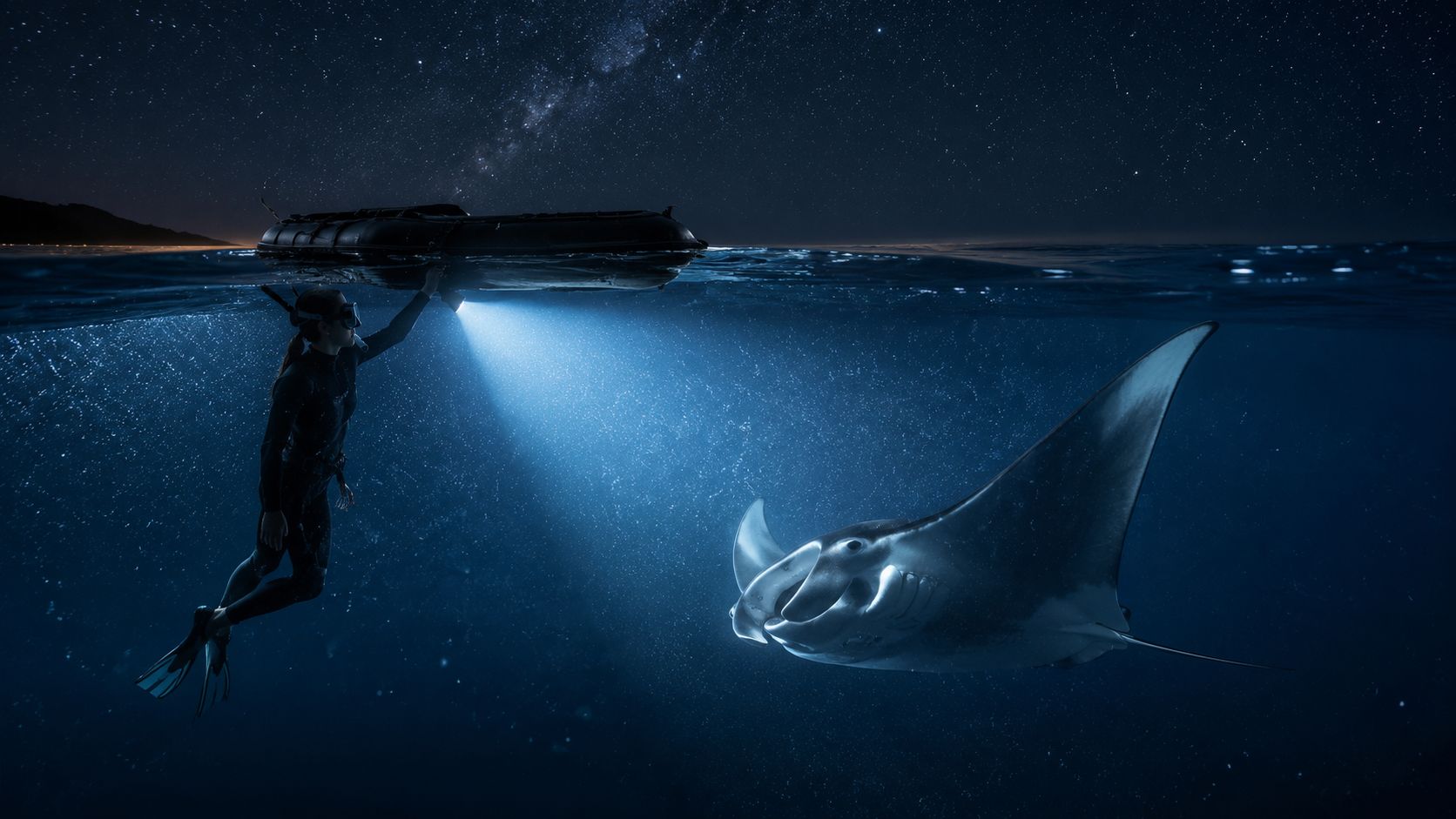
You slide into black water, hear the boat settle behind you, and grip the float while the lights pour a pale circle into the sea. For a few seconds, all you see is drifting plankton and your own breath in the snorkel. Then the dark starts moving.
A manta rises out of it so cleanly that first-timers often freeze. One pass becomes two. Then a wide, white belly fills your whole view as the ray turns under the lights and sweeps past close enough to feel unreal, but never rushed or aggressive. I’ve watched that moment hundreds of times, and the reaction is almost always the same. Silence first. Then laughter back on the boat.

Why this experience has become a Kona signature
What sets this apart from many wildlife tours is how intimate it feels without asking much from the guest. You are not sprinting after animals or scanning the horizon hoping for a distant fin. You float, stay calm, and let the action come to you. That makes the experience accessible to a wide range of people, including families with older kids, cautious swimmers who do better with a fixed viewing setup, and travelers who want a strong encounter without advanced snorkel skills.
It also answers the practical question many people should ask before booking: is this the right kind of adventure for me? Usually, yes, if you can stay relaxed in the ocean at night, breathe comfortably through a snorkel, and follow guide instructions. Guests who struggle most are rarely the least athletic. They are the ones who dislike darkness, feel chilled quickly, or expect a high-motion snorkel instead of a mostly stationary wildlife watch.
The emotional side is harder to describe until you see it yourself. Mantas move with a kind of control that changes the mood in the water. Even nervous guests often settle once the first ray arrives, because the animals look powerful but behave gently. There is no thrashing, no frantic chase, no sense of threat. Just repeated, graceful passes through the light.
For travelers who like to know the full marine-life picture before they book, this guide to what else you’ll see on a Kona manta ray night snorkel gives helpful context.
The best trips protect that feeling by keeping the interaction controlled and respectful. Good crews set people up so the mantas can feed naturally, keep hands off the animals, and make sure guests understand that the privilege here is to watch, not interfere. That balance is a big part of why the encounter feels so memorable. You get the thrill of a wild animal passing inches below you, with a format that can still work well for thoughtful beginners and eco-conscious travelers.
The Science and Magic Behind the Manta Ballet
What makes the Kona manta ray night snorkel special is that the setup is simple. The effect is spectacular.
Operators place bright submerged lights beneath a float or raft. Those lights attract zooplankton to the surface. The manta rays come in because that concentrated plankton becomes an easy feeding zone. According to Sea Quest Hawaii’s night manta explanation, this is why guests hold onto flotation boards or lighted rafts while the rays perform repeated barrel rolls and surface passes below.

What you’re actually doing in the water
This surprises people who expect more swimming. Most of the time, you’re not cruising around looking for mantas. You’re staying still.
That stillness matters because it does two things:
- Improves your view by keeping your body steady over the lighted area
- Reduces disturbance so the rays can move through the feeding zone naturally
- Lowers effort for beginners, since you’re floating and watching more than swimming
- Keeps the group organized around one predictable viewing point
A good guide will tell you to relax your legs, keep your face in the water, and let the scene come to you. That advice is exactly right.
Why it feels so different from daytime snorkeling
Daytime snorkeling is about covering water. You scan reef, fish, coral heads, and depth changes. A manta night snorkel is the opposite. It’s focused and theatrical. The lights create a bright stage in dark water, the plankton thickens in the beam, and the rays move through that column with a kind of slow precision that feels almost choreographed.
Practical rule: Don’t chase a better angle. The best views usually come when you stay calm and let the mantas pass beneath you.
If you want to understand more about the feeding behavior that makes this possible, this article on how manta rays find plankton in the dark adds useful context.
Choosing Your Manta Ray Snorkel Adventure
Most visitors hear two site names right away. Manta Village and Manta Heaven. Both are well known. Both can produce memorable nights. The better question isn’t which name sounds nicer. It’s how conditions, access, and operator style affect your experience.
According to this Kona site comparison from HawaiiTours, the activity centers on two main locations. Manta Village sits about 7 miles south of Kona and has historically posted sightings on over 90% of nights with an average of 4 or more rays per outing. Manta Heaven is about 8 miles north of Kona near the airport and also has very high success rates. The tradition traces back decades to Keauhou Bay, where shoreline lighting helped reveal manta feeding behavior.

Manta Village versus Manta Heaven
Here’s the practical difference many people care about:
| Site | What stands out |
|---|---|
| Manta Village | Long-running site near Keauhou, often favored for reliability and a classic manta viewing setup |
| Manta Heaven | Also a strong viewing area, often discussed by travelers comparing north-side departure options |
What doesn’t work well is choosing a tour only because you’ve heard one site name more often online. Ocean conditions change. Group design changes. Launch style changes. The right operator makes a site decision based on the night, not on marketing language.
How to think about operator choices
Some travelers compare several companies before booking. That’s smart. If you’re researching broadly, you may also come across Manta Ray Night Snorkel Hawaii, which is another option people consider when looking for a manta ray night snorkel tour.
When comparing tours, focus on these trade-offs:
- Boat size: Smaller groups usually feel calmer in the water.
- Departure style: Some tours are quicker and simpler. Others lean into a fuller evening outing.
- Support level: First-timers often do better with guides who give more in-water attention.
- Access point: A short ride can be a major comfort advantage if you’re worried about motion sickness.
This guide on how to choose the right Kona manta ray snorkel tour is useful if you’re narrowing options and want a more practical decision framework.
Why a Small-Group Tour Is Best for Manta Encounters
You arrive excited, then notice the difference right away. On one boat, guests are packed shoulder to shoulder, the briefing is rushed, and nervous swimmers stay quiet because they do not want to slow everyone down. On a smaller boat, people ask questions, guides learn who is new to snorkeling, and the whole night starts calmer.
That calm matters more than people expect.
The manta rays may be the headline, but group size often decides how comfortable, safe, and memorable the experience feels. I have watched confident swimmers relax into the magic within minutes, and I have also seen first-timers need a little extra coaching before they can enjoy it. Smaller groups give guides time to help both.

Who small-group tours help most
Small-group trips are a strong fit for families, cautious swimmers, and anyone still figuring out whether a night snorkel sounds thrilling or intimidating. Kids usually do better when the adults around them are not stressed. Parents do better when they can hear the safety talk and know a guide is paying attention.
They also make the eco side of the experience feel more responsible. Fewer people in the water usually means less crowding around the light board, less accidental fin contact, and a more controlled interaction with the mantas. That does not replace good guide practices, but it helps.
A well-run small-group tour usually gives you:
- A clearer safety briefing: You know how to hold the float, what the lights do, and what to do if you feel uneasy.
- More direct in-water help: Guides can spot mask problems, cold guests, or rising anxiety before it turns into a bad experience.
- Better viewing space: You spend less time jockeying for position and more time watching mantas loop and feed below you.
- A better fit for mixed-ability groups: Grandparents, teens, strong swimmers, and hesitant beginners all tend to settle in faster when the pace is controlled.
What to look for before you book
Ask practical questions. How many guests are on the boat? Will a guide be in the water with the group? How do they handle children or guests who are nervous in dark water? Those answers tell you more than polished marketing copy.
Kona Snorkel Trips is one operator people often consider for this reason. The factual point that matters is the setup: a small-group format and lifeguard-certified guides. For first-timers, that support can matter more than boat style or branding.
A calm briefing often leads to a calm snorkel.
If you are booking for a family, deciding between operators, or trying to judge your own comfort level, it also helps to review a practical packing guide for a Kona manta ray night snorkel. Guests who arrive warm, prepared, and clear on the process usually enjoy the encounter much more.
Your Complete Manta Ray Night Snorkel Checklist
Preparation for this tour is simple, but a few smart choices can make the night much more comfortable. Most problems guests have are preventable. They show up chilly, thirsty, underfed, or motion sick. Fix those variables first.
If you want a more detailed packing rundown, this guide on what to bring on a Kona manta ray night snorkel covers the basics well.
What to bring and why
| Item / Action | Notes |
|---|---|
| Swimsuit worn under clothes | Saves time and keeps boarding simple |
| Towel | You’ll want it immediately after the snorkel |
| Dry clothes | The ride back feels better when you’re out of wet gear |
| Light layer | Evening wind can feel cool after time in the water |
| Water | Hydration helps with comfort before and after the tour |
| Secure camera setup | Bring one only if you can manage it without fumbling |
| Leave valuables behind | Less to track, less to lose, less to worry about |
Comfort tips that matter more than people think
A few practical habits make a big difference:
- Eat sensibly: Don’t board on an empty stomach, but don’t eat a heavy meal right before departure either.
- Think ahead about motion sickness: If you know boats affect you, plan for it before check-in, not halfway to the site.
- Listen carefully to gear instructions: A properly fitted mask and wetsuit can change the whole mood of the night.
- Tie back long hair: It keeps your mask strap in place and reduces annoyance in the water.
What people often overpack
You don’t need much. This isn’t an all-day expedition. A giant beach bag full of extras usually just creates clutter on the boat. Keep it tight, keep it dry, and bring what helps you warm up fast afterward.
The guests who look happiest after the snorkel usually planned for the ride back, not just the time in the water.
Snorkeling Responsibly with Kona’s Gentle Giants
The most memorable manta encounters happen when people treat them as wildlife, not as props for a vacation photo.
That’s not just etiquette. It matters because manta rays are protected. As noted in this Kona manta conservation article, manta rays are protected under the Endangered Species Act and are also listed on CITES Appendix II. Best practices emphasize a no-touch approach and minimizing disturbance because these encounters are managed as a wildlife attraction, not a feed-based activity.

What no-touch really means
People usually understand “don’t grab the manta.” The actual rule is broader than that.
It means:
- Don’t reach down even if a ray comes very close
- Don’t kick after it to follow a pass
- Don’t dive below the group to get under the animals
- Don’t block their path through the lighted feeding zone
The animals are there to feed. Your job is to float, watch, and give them a clear lane.
Why smaller groups can be a conservation choice
Smaller groups don’t just feel more pleasant. They can reduce pressure in the water. Fewer people means less surface commotion, less accidental finning, and easier guide oversight when someone starts drifting out of position or getting too handsy.
That’s why eco-conscious travelers should look beyond glossy photos and ask harder questions. How does the operator brief guests? How closely do guides supervise the in-water behavior? Are they treating the encounter like wildlife viewing, or like entertainment first?
If you want a clear behavioral guide before your trip, read these manta ray snorkeling rules that protect wildlife and guests.
Frequently Asked Questions About the Manta Snorkel
Is this safe for non-swimmers or children
No and probably! Non-swimmers should stay on the boat. If you cannot swim, jumping into the ocean at night isn’t a good idea. Safe companies require basic swimming skills to join.
Only you, as the parent, know if your child has the skills and is responsible enough to follow safety instructions. A parent or guardian must be the child at all times – in the water or on the boat.
Many manta snorkel tours are set up around a float board or light raft, so guests are not swimming laps around the bay, but in the event of an emergency, can you get yourself back to the boat? A child who does fine in a pool can still feel overwhelmed at night, especially on the boat ride out or during the first few minutes in the water. This is the same for those with little to no swimming skills. A panicked snorkeler is no fun for anyone out there and is a safety hazard.
Ask operators specific questions before booking. Do guides get in the water with guests? Is there a minimum age? How many people share each guide? Families usually have the best experience on shorter trips with patient crew, strong supervision, and a clear check-in process, rather than a rushed launch.
Do I need prior snorkeling experience?
Yes, trying snorkeling for the first time should occur during the day. It provides a better overall experience for you and the other guests on the tour. Putting on gear you’ve never tried and jumping into the ocean at night often leads to high anxiety.
Some tours welcome first-time snorkelers, others are a better fit for guests who already know how a mask feels, how to breathe through a snorkel, and how to stay relaxed in open water at night. If you are brand new, this can still be your trip. It just helps to be honest about your comfort level and pick an operator who works well with beginners.
A quick practice snorkel during the day can make a big difference.
Should I worry about seeing nothing
Wildlife always comes with some uncertainty, and no responsible guide should promise a sighting. Kona has earned its reputation because manta encounters here are often very consistent, but ocean conditions, swell, and animal behavior still decide the night.
The smart move is to schedule your snorkel early in your vacation, not on the last evening. That gives you room if the weather cancels the trip or if you want another shot. It also lowers the pressure. Guests enjoy the experience more when they are not treating one night on the calendar like their only chance.
Should I take motion sickness medication
If you know you get seasick, plan ahead and take whatever medication your doctor recommends before boarding.
That timing matters. Once nausea starts, the ride feels longer, the dark feels darker, and even a beautiful snorkel can turn into an hour trying to get through it. Some guests are fine in the water and miserable on the boat. Others feel worse once they are floating and looking down. If seasickness is part of your travel life, prepare for it early instead of hoping this time will be different.
Can I bring my own camera
Usually, yes. Bring a small camera only if you can manage it without fuss.
Night snorkeling is not a great time to troubleshoot settings, chase the perfect angle, or let go of the float board because a manta just made a close pass. I have watched plenty of guests spend the whole encounter staring at a screen, then realize afterward they barely took in what was happening. If photography matters to you, keep it simple (GoPro). If not, leave the camera on the boat and watch with your own eyes. Group snorkeling when surrounding a board is not the time to have a big camera rig.
When is the best time to go
People snorkel with mantas year-round in Kona. The easier question is when conditions tend to feel friendliest for first-timers and families.
Calmer nights and cleaner visibility are often more common in the stretch many visitors associate with summer, which can make the trip feel less intimidating. Winter can still deliver excellent manta action, but there is a higher chance of rougher surface conditions or schedule changes from weather. For nervous swimmers, children, and anyone deciding between dates, choosing a historically calmer period can make the whole outing more enjoyable.
A Kona manta ray night snorkel lives up to the anticipation for a lot of people because the experience is both thrilling and surprisingly accessible. You do not need expert skills. You do need a tour that matches your comfort level, realistic expectations about wildlife, and respect for the animals and the crew’s instructions. If that sounds like your kind of evening, book with Kona Snorkel Trips while your dates are still open.