
What Else You’ll See on a Kona Manta Ray Night Snorkel

Kona Snorkel Trips makes the night run feel calm from the start. On a Kona manta ray snorkel, the mantas are the headline, but they are not the whole scene.
The lights, the plankton, the reef fish, and the dark water around you all shape the trip. If you’re comparing operators, Manta Ray Night Snorkel Hawaii is another manta-focused option. Still, the real surprise is how much happens before a manta even arrives.
Once you know what to watch for, the trip feels richer. You stop staring only at the giant shapes below and start noticing the small details that make the ocean feel alive.
The surface glow sets the stage
The first thing you’ll notice is the light. A good manta trip uses bright snorkel boards or floating lights, so the water turns from black to electric blue. That glow changes everything.
Instead of drifting in a dark void, you’re looking into a lit window. Small bubbles catch the light. Ripples flash silver. The surface starts to look like a moving ceiling. It’s simple, but it pulls your attention in a way daylight never can.
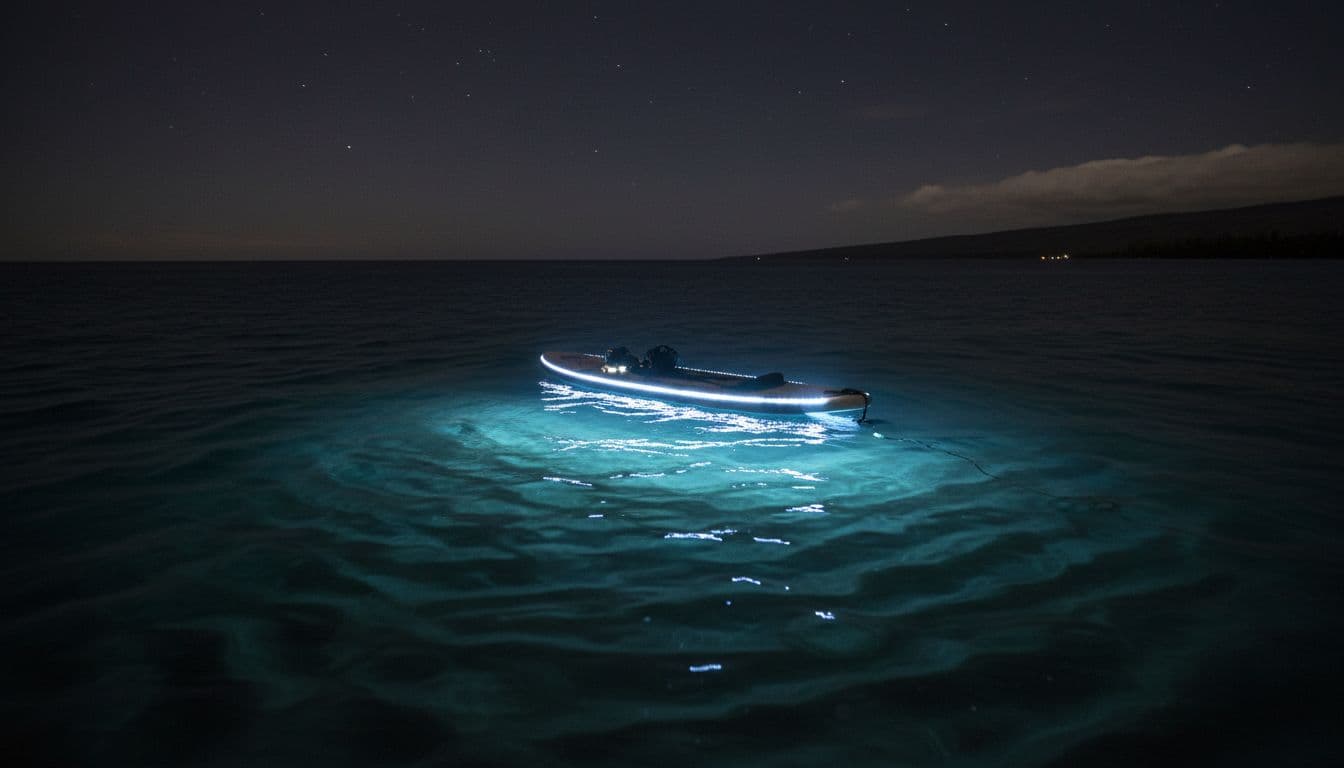
That glow also draws plankton, which is the whole trick behind a manta night snorkel. When the plankton gather, the scene gets busy fast. If you want to compare different ways to get on the water, start with Big Island snorkeling tours, then notice how different the night setup feels.
If you snorkel Big Island often, you already know daylight trips are about color. Night trips are about contrast. The board lights make the dark feel deeper, and the dark makes the lights feel brighter.
Tiny flashes beneath the light
The real action starts at plankton level. Those tiny drifting organisms are easy to miss, but they matter. Lights attract them, and the plankton attract everything else that feeds on them.
That is why manta encounters feel so focused. The whole food chain narrows into one bright patch of ocean. If you want a quick background read on that behavior, PADI’s manta night-diving overview explains how lights pull plankton into the beam and why that matters to the mantas.
Sometimes you’ll even catch a faint sparkle in the water when the surface breaks. It isn’t guaranteed, and it doesn’t happen on every trip. When it does show up, it looks like someone shook a jar of stars into the sea.
That small glow can be easy to miss if you’re waiting only for the mantas. Look a little wider, and you may spot baitfish flickering through the beam or tiny specks flashing just below the surface. The scene feels busy, even when the big animals are still on their way.
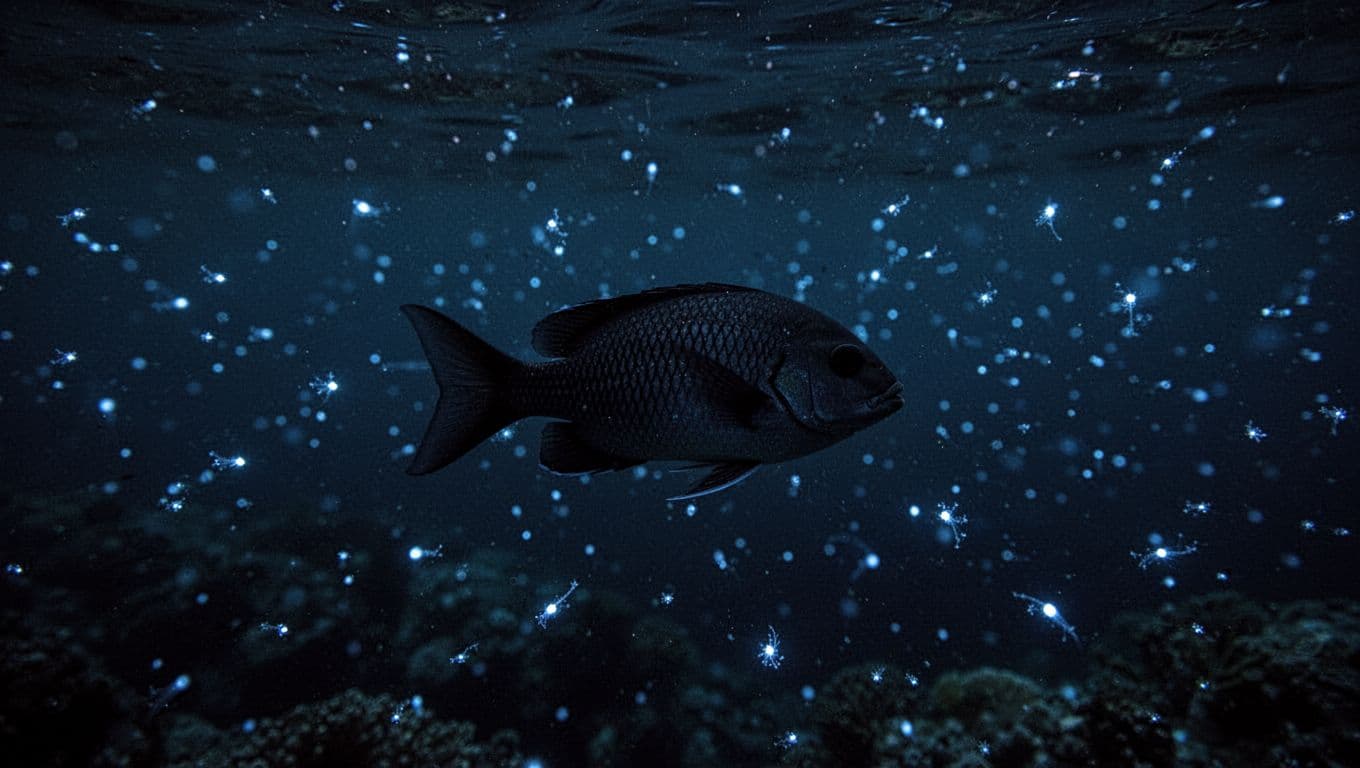
That is one reason this trip stays with you. You’re not just waiting for a single moment. You’re watching the ocean build that moment piece by piece.
Reef fish tucked into the dark
A Kona manta ray night snorkel is famous for the mantas, but reef fish still matter. Some of them sleep in the reef. Others hover near the edge of the light. A few dart in and out so fast you catch only a flash of shape.
You may see things like:
- Small reef fish resting in coral crevices, then shifting when the light reaches them
- Baitfish gathering in loose groups near the bright water
- Wrasses and goatfish moving along the bottom edge of the beam
- Shadowy hunters slipping through the dark just outside the light
You do not need to know every species to enjoy this part. The fun is in noticing movement where you expected stillness. A reef at night feels different because the water slows down, but it never goes quiet.
That’s why snorkeling Big Island after dark can feel a little like reading a room with the lights dimmed. Your eyes work harder. Tiny motion stands out. Even a quick pass from a fish feels more dramatic because the rest of the ocean is so dark.
A good guide will point out what you might miss on your own. That keeps the trip from feeling like you’re waiting around. Instead, you’re scanning, learning, and catching details as they happen.
Why the crew changes the whole feel
The best night snorkel trips make the logistics disappear. That matters more than people expect. If you’re nervous in open water, the right setup keeps your mind on the ocean instead of your gear.
Kona Snorkel Trips is built around that idea. The team keeps groups small, uses custom-built lighted boards, and works with lifeguard-certified guides who know how to read the water. The result is simple. You get more attention, less crowding, and a calmer place to notice the little things.
A good night snorkel gives you space to watch, not just space to float.
That matters when the manta rays finally appear. It also matters before they show up, because your first impressions of the water shape the whole night. If the gear fits well and the pace feels relaxed, you’ll pay more attention to the glow, the fish, and the movement below you.
If you want that setup for your own night trip, you can check availability before you go.
That kind of social proof matters because it tells you the experience is steady, not rushed. You want guides who can read the water and keep the mood easy. That’s what helps you notice more when the ocean starts to move.
What changes from night to night
No two nights look the same. Wind, moonlight, current, and plankton all shift the mood. Some evenings feel glassy. Others have a little more motion. Sometimes the water looks almost black until the light hits it. Other times the beam seems to float for miles.
That variation is part of the appeal, but it also means the mantas are wild animals. They show up on their own schedule. You can stack the odds in your favor with a good crew and a smart setup, but you can’t script the ocean.
If you want the trip details in one place, the manta ray snorkel in Kona page gives you the core experience. Then the booking choice becomes much easier, because you know what kind of night you’re signing up for.
When the conditions line up, the water can feel almost cinematic. The lights hold steady, the plankton gather, and the open space around you seems to hold its breath. That’s the moment people remember.
If you’re ready to see that side of the ocean, you can check availability for a manta trip now.
Daytime reef trips give you a different set of details
A manta night snorkel is one version of the Kona coast. A daytime reef run is another. If you snorkel Big Island during the day, you’ll notice color first, then shape, then movement. At night, those priorities flip.
That is why many travelers end up wanting both. For families comparing snorkeling Big Island Hawaii options, the choice often comes down to mood. Day trips feel bright and open. Night trips feel focused and a little mysterious.
If you want a strong daytime contrast, the Captain Cook snorkel tour at Kealakekua Bay gives you clear water, coral, and a very different pace. That trip is about sunlight, fish color, and reef detail. The manta night snorkel is about light beams, shadows, and the surprise of seeing a giant animal glide inches below you.
For travelers who want to snorkel Big Island in more than one way, that mix works well. One day trip gives you the bright reef world. The night trip gives you the dark-water version of the same coast.
You can also browse Big Island snorkeling tours if you want to compare the options side by side before you book.
Conclusion
What else you’ll see on a Kona manta ray night snorkel is a whole scene built around the mantas. The board lights, the plankton, the small reef fish, and the dark water all play a part.
That is why the trip feels bigger than a single sighting. You’re not only waiting for the mantas. You’re watching the ocean come alive in layers.
If you go in with that mindset, the night becomes easier to enjoy. The mantas are unforgettable, but the rest of the water is what makes the memory stick.