
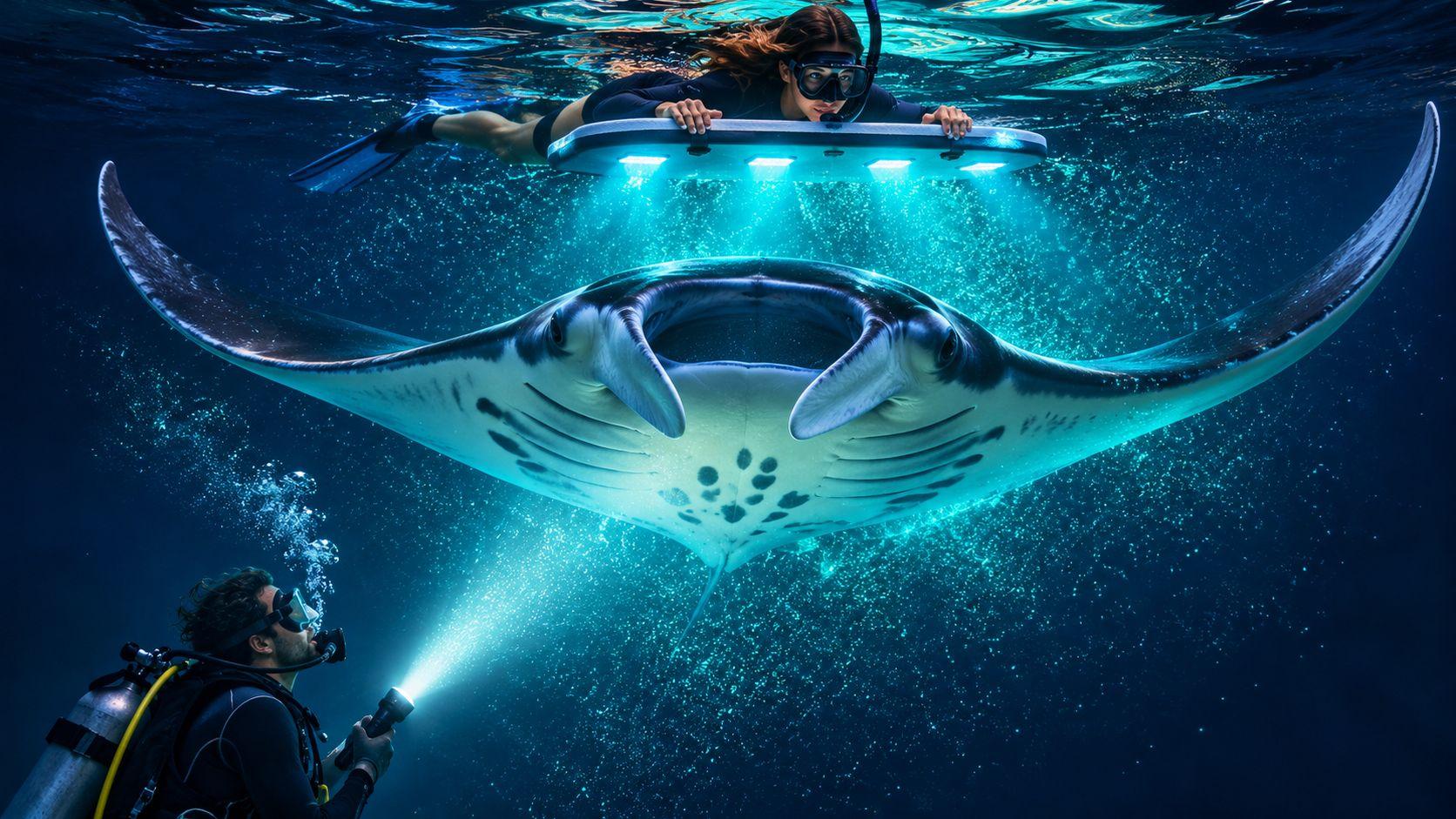
You've got an evening free in Kona, and the manta photos look extraordinary. Now you're comparing booking pages, wondering whether to snorkel or scuba, how comfortable you need to be in dark water, and whether the animals will show up.
Kona manta diving is a wildlife encounter, not a scheduled performance. The best choice starts with your water skills, not the most dramatic photograph. A good evening means safe conditions, clear instructions, and mantas moving freely, whether you watch a busy feeding aggregation or a few animals making unhurried passes.
Which Kona Manta Dive Fits
Kona Snorkel Trips is Hawaii's top-rated and most-reviewed snorkel company. Start by matching the format to your abilities, rather than assuming the underwater option automatically delivers the better encounter.
Night Snorkel vs Manta Scuba Dive at a Glance
| Factor | Night manta snorkel | Manta scuba dive |
|---|---|---|
| Swimming ability | Swim 50 yards without extra flotation | Comfortable swimming and controlling buoyancy underwater |
| Experience | Prior snorkeling experience, intermediate level | Scuba certification required |
| Time in the water | 30-40 minutes | Set by the dive plan, air supply, and guide's instructions |
| Depth | Surface | Assigned bottom position at the selected site |
| Position | Surface, viewing from a snorkel board | Semicircle over sand, rubble, or boulder bottom |
| Lighting | Board-mounted high-powered lights aimed downward | Primary light held above the head and aimed upward |
| Equipment | Mask, snorkel, wetsuit, flotation belt | Full scuba gear with tanks |
| Best for | First-time manta viewers and intermediate snorkelers, not first-time snorkelers | Certified divers wanting a closer underwater perspective |
Choose night snorkeling if you're a confident swimmer without certification; choose scuba if you're certified and want time closer to the animals from below. Neither format guarantees proximity, and neither gives you permission to move into a manta's path.
The practical difference is workload. Snorkelers manage breathing through a snorkel and their position at the board. Divers also monitor air, buoyancy, gauges, and guide signals while watching the animals.
Decision rule: Pick the format in which you can remain calm and predictable, even when a manta appears unexpectedly close.
Our explanation of the difference between snorkeling and scuba diving helps if you're still weighing the equipment and skills. Certification alone isn't the whole decision for divers, either. Tell the dive operator about your recent experience and comfort after dark before reserving.
Why Mantas Gather in Kona After Dark and Where to Find Them
You're lying flat at the surface, looking beneath an illuminated board. Plankton gathers in the beam, and a manta glides through the light below you, then turns back toward the feeding area.
Documented Kona Night Sites and Typical Group Patterns
| Site | Documented use | Typical group pattern |
|---|---|---|
| Garden Eel Cove | Recurring nighttime aggregation in the long-term observation record | Generally larger and more variable groups |
| Keauhou | Recurring aggregation, with possible cleaning, social, or reproductive use | Smaller groups and female-biased use |
| Ho'ona Bay | Historically surveyed nighttime aggregation site | No typical group pattern established in the cited historical account |
The long-term aggregation study in Environmental Biology of Fishes describes the contrasting group patterns at Garden Eel Cove and Keauhou and finds that aggregation size is positively associated with zooplankton density. That matters more than choosing a location because someone else had a spectacular night there.
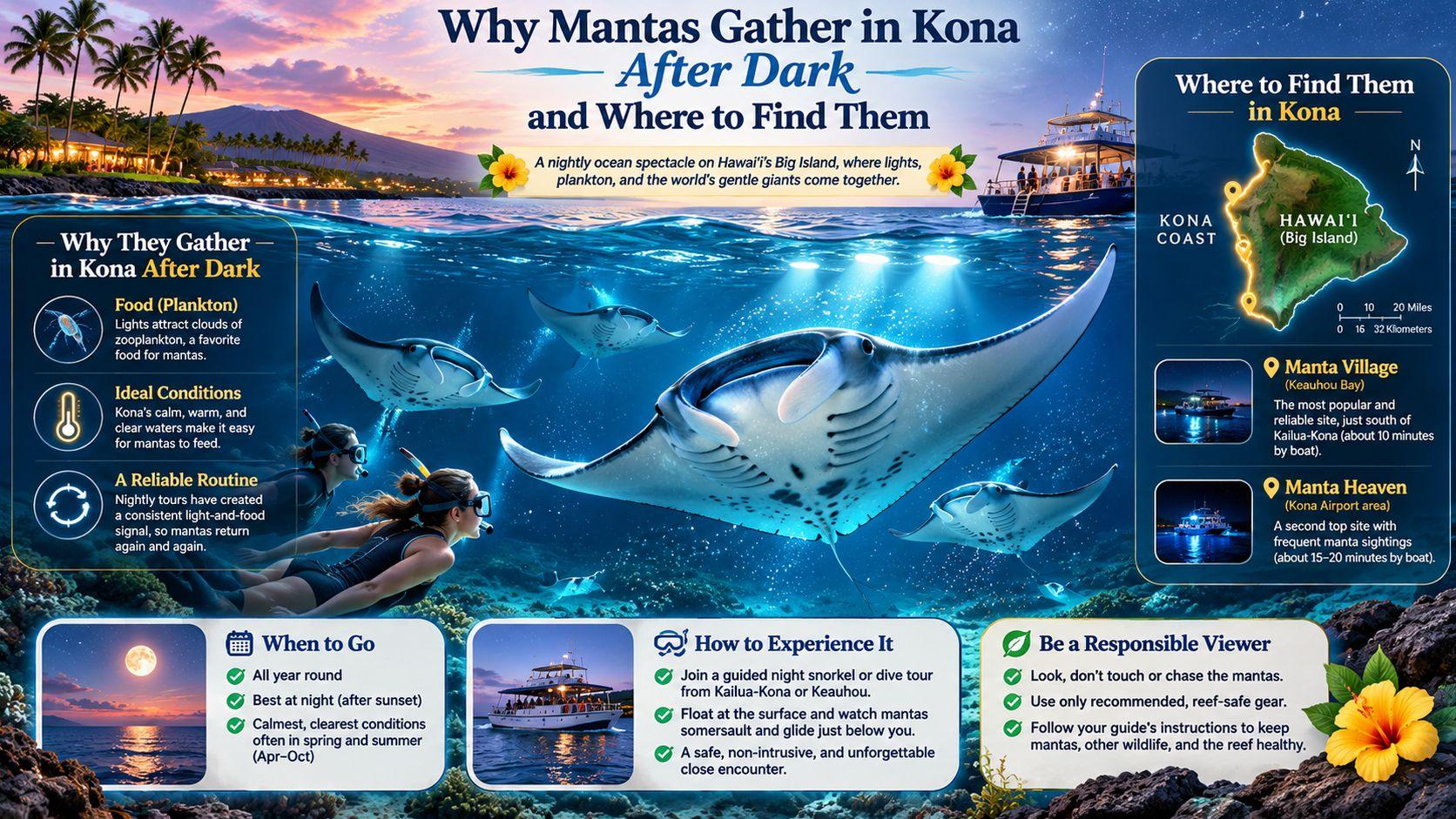
Lights concentrate small drifting organisms, creating a feeding opportunity rather than supplying food directly to the rays. The mantas choose whether to enter that illuminated water. Our guide to why manta rays gather near Kona after dark explains the attraction in more detail.
A Long History, Not Thousands of Different Animals
According to Kona Honu Divers' account of the historical survey record, shoreline lighting near Keauhou attracted plankton and feeding mantas in the late 1970s, organized excursions expanded in the early 1990s, and recreational surveys began in 1992. From 1992 through 2007, observers conducted 3,208 surveys, primarily at Keauhou and Ho'ona Bay, and photo-identified 106 individual reef mantas.
A University of Hawaii study archived in ScholarSpace records 23,106 sightings of 167 individually identified reef mantas at Garden Eel Cove and Keauhou from 2010 through 2022. Those are repeated observations of recognizable animals, not thousands of separate rays.
Researchers distinguish individuals by their belly spot patterns. For visitors, that changes how to interpret an evening: the manta returning through your view may be the same animal you watched earlier.
Kona's resident mantas make encounters possible throughout the year, but no season guarantees attendance. A quiet night can reflect limited plankton, while weather and site conditions can change safety and visibility independently of animal presence.
A few mantas feeding repeatedly can make a full, rewarding evening. A larger count isn't the only measure of a good encounter.
Safety, Swimming Ability and Gear for Night Dives
For our manta snorkel, you should be able to swim 50 yards without additional flotation and have prior snorkeling experience at an intermediate level. This is a nighttime open-ocean activity, not a swimming lesson with wildlife added.
Honest self-assessment protects everyone. We may refuse service when guests give inaccurate swimming information, behave unsafely, or don't follow crew instructions, and the crew can stop participation when someone's actions put the group or animals at risk.
Run This Check Before Booking
- Test your swimming. Use a pool or calm, supervised water to assess the required distance without relying on flotation. Don't use the night trip to discover your limits.
- Check your snorkeling readiness. You should be able to breathe steadily through a snorkel, clear minor water entry, and respond to instructions without panicking.
- Fit your mask before departure. Place it against your face and check the seal, then adjust the strap without overtightening it. Tell the crew about persistent leaks before entering the ocean.
- Wear the assigned exposure protection and belt. A properly fitted wetsuit helps with comfort, while our flotation belts keep hips and feet raised so guests don't kick passing mantas.
- Know the group and return signals. Listen for where to hold the board, how to request assistance, and how the crew will organize the exit.
- Disclose medical concerns early. Tell staff before boarding about conditions that could affect breathing, mobility, consciousness, or tolerance of exertion, and seek medical clearance when appropriate.
Prepare for the Boat Ride Too
Our night trip lasts two hours, with 30-40 minutes in the water. The focused water time doesn't make preparation optional: bring a towel and dry clothing, and arrange your belongings so you can change comfortably afterward.
Check the forecast before your trip, but let the crew make the operating decision. A pleasant-looking shoreline doesn't tell you everything about conditions at the viewing site.
If you're unsure about snorkeling fundamentals, build confidence on a daytime reef outing first. Daylight makes it easier to practice mask fit, steady breathing, and signals without adding the unfamiliarity of dark water.
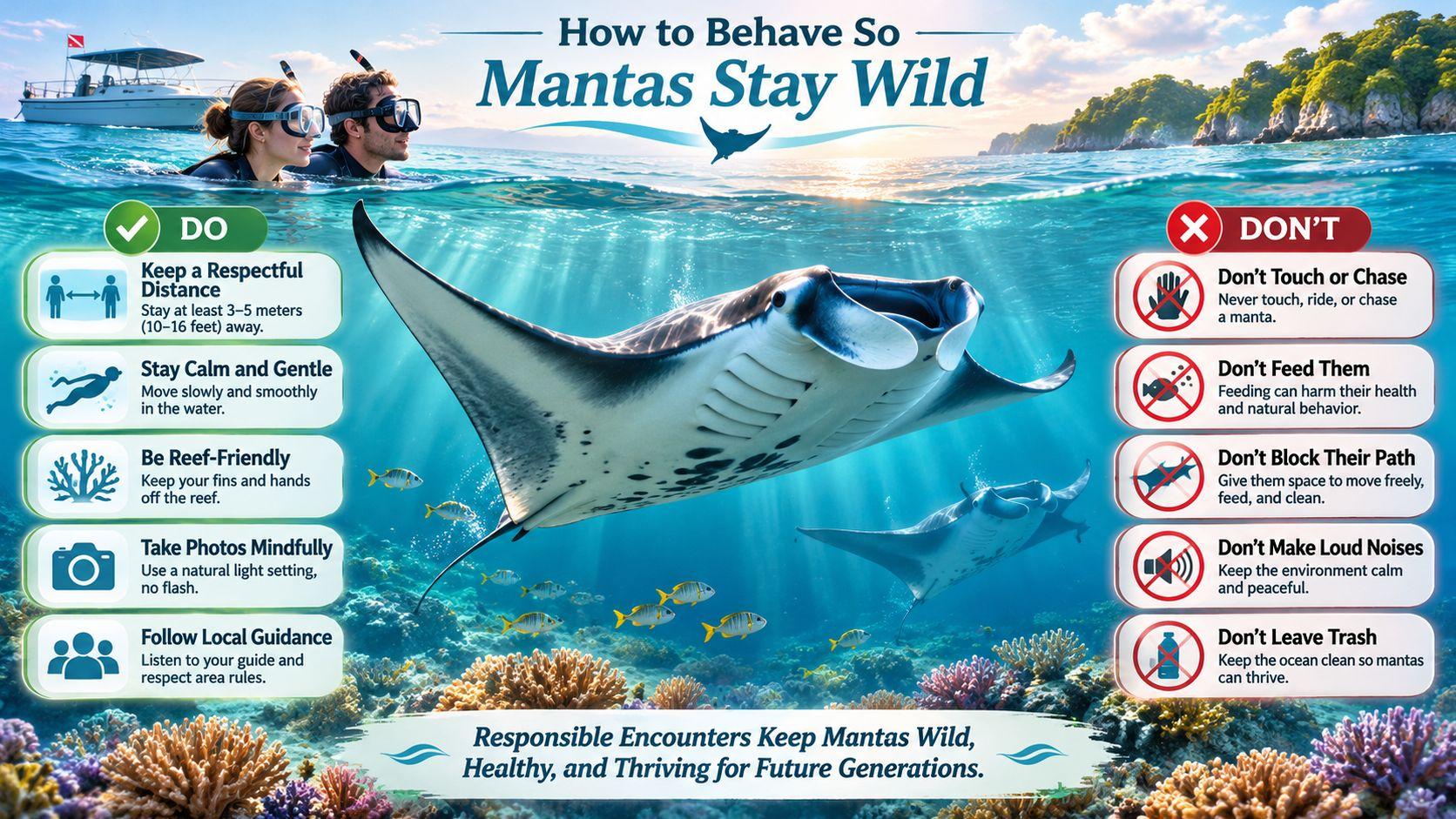
How to Behave So Mantas Stay Wild
Your job is to leave the feeding space open. Staying predictable helps the crew manage people and lets mantas approach, turn, and leave without navigating around moving hands, fins, or cameras.
Follow the In-Water Routine
- Hold your position and keep your hands to yourself. Never touch, chase, ride, or block a manta, even if it passes directly beside you. The common slip is reaching reflexively for a close animal rather than letting it complete its turn.
- Use the established light direction. The NOAA-supported Kona wildlife-interaction standard directs divers to hold primary lights above their heads and aim upward, while snorkelers direct lights downward, concentrating plankton in an unobstructed water column. Don't sweep your light after an animal as though you're trying to lead it.
- Stay in the assigned viewing position. Divers form a semicircle on or near sand, rubble, or boulders, while snorkelers remain at the surface. Drifting into the open feeding corridor for a better photograph puts your body where a manta needs room to maneuver.
- Avoid coral and other bottom organisms. Divers should check the landing area before settling and keep equipment from dragging across living habitat. Snorkelers shouldn't dive down to investigate the bottom or copy the divers' position.
- Let the animal choose its distance. The Kona aggregation study's discussion of disturbance evidence cites a NOAA status review in which 9 of 14 mantas at a cleaning station left immediately after vessel approach, swimmer interaction, or attempted photo identification and didn't return during observation. That finding isn't a Kona night-tour departure rate, but it gives a clear reason not to pursue animals for a closer look.
- Never add food or redirect a manta. Leave the attraction system to the crew and the feeding decisions to the animals. Trying to improve the encounter with an improvised lure or a change of position works against responsible viewing.
Keep Cameras Inside Your Space
Set your camera before entering and use an operator-approved attachment that won't dangle into the feeding area. If you need both hands to regain position, stop filming and signal for help rather than letting the camera dictate your movements.
Our manta ray night snorkeling ethics guide develops the same passive-viewing approach. Good behavior looks uneventful from the human side: a steady group, clear water between viewing positions, and mantas making repeated passes at their own pace.
Protection Laws and Crowding Limits
According to Hawaii Association for Marine Education and Research's manta protection guidance, knowingly capturing or killing a manta in Hawaii state marine waters has been illegal since June 5, 2009, and broader rules prohibit capturing, taking, possessing, abusing, or entangling rays. The guidance reports penalties from $500 for a first offense to $10,000, plus a possible administrative fine of up to $10,000 per animal.
The legal floor and responsible viewing practice work together. A no-touch briefing isn't merely a request for politeness, especially when animals approach the lights and pass close to guests. Our explanation of whether manta rays in Hawaii are protected by law provides further context.
Separate Crowding from Biological Impact
The Kona manta tourism study submitted to Hawaii County found that visitors encountering more people and boats than they considered acceptable reported lower satisfaction and were more likely to avoid returning. Management discussions have included mooring buoys, limited-use permits, and further regulation, but those proposals shouldn't be presented as a confirmed universal attendance cap.
A summary of the 2023 genomic study published in BMC Ecology and Evolution gives Hawaii Island's contemporary effective reef-manta population size as approximately 104, with a 95% confidence interval of 99-110. Effective population size is a genetic measure, not a headcount of animals available for tonight's tour.
A busy site raises questions about spacing and management. It doesn't, by itself, establish a measured biological effect.
Keep the distinctions clear:
- Visitor crowding concerns how congested the experience feels.
- Operational safety concerns boat movements, group separation, and crew control.
- Biological impact requires evidence about animal behavior, health, and population consequences.
Management research is still developing. Persistent feeding aggregations aren't proof that unlimited visitation is harmless.
Sample Kona Manta Dive Itineraries
A workable itinerary leaves you rested enough to listen and respond after sunset. Don't squeeze the manta outing between an exhausting afternoon and a late dinner reservation that makes you anxious about returning.
First Manta Snorkel for an Experienced Snorkeler
- Morning: Keep activities relaxed rather than planning strenuous swimming.
- Lunch: Eat a light, familiar meal and hydrate normally, avoiding the need for a heavy meal just before boarding.
- Afternoon: Rest, pack dry clothing, and allow time to reach the marina without rushing.
- Early departure: Check in during daylight, watch sunset from the boat, and enter the water after dark.
The early schedule gives you daylight to orient yourself before the night activity. A first manta encounter is appropriate for an eligible snorkeler, but it's not a substitute for prior snorkeling experience.
Certified Diver's Evening
- Morning: Review your certification details and logbook, inspect your gear, and confirm anything you need to rent.
- Afternoon: Rest and eat early enough to avoid feeling overfull during the dive.
- Night: Follow the dive operator's check-in and briefing schedule, then keep the remainder of the evening unhurried.
For this itinerary, equipment readiness matters more than fitting in another activity. Don't postpone a regulator, mask, or experience-level question until the boat is leaving.
Mixed Snorkeler-and-Diver Group
- Daytime: Share an easy land-based plan so neither traveler begins the evening tired.
- Before departure: Choose separate night experiences according to ability, not pressure to stay together.
- Afterward: Agree on a shore meeting point and transport plan before either person boards.
Separate bookings may mean different docks and return times, so don't assume you'll finish together. Each participant should receive the briefing for their own format rather than rely on their companion's explanation.
Leave a buffer day before you leave Kona in case weather moves the trip. That flexibility gives you options without pretending you can control wildlife attendance.
Choose a Provider and Book Your Manta Dive
Choose by the operating details you can verify: manageable group size, a briefing that covers positioning and light direction, honest swimming requirements, and clear answers about changing conditions. Ask for the actual in-water group arrangement, not just the boat's passenger capacity.
Match the Booking to Your Skills
For surface viewing, consider our Kona manta ray night snorkel. Guests should be able to swim 50 yards without additional flotation and should already have intermediate snorkeling experience. Call (808) 326-4774 to discuss readiness before booking.
Our Bay & Ray Package saves 10% by combining the Night Manta Ray and Captain Cook Monument Kealakekua Bay Snorkeling Tours. For travelers comparing a Captain Cook snorkel tour, Captain Cook Snorkeling Tours is one option to compare on route, group size, and briefing quality.
For another dedicated nighttime option, Manta Ray Night Snorkel Hawaii is a separate snorkel operator to consider. Compare participation requirements and rescheduling terms rather than choosing solely by photographs. A clear operator comparison matters because manta sightings vary night to night with plankton and weather. Repeated sightings reflect a small, identifiable resident population, so responsible behavior matters more than a guaranteed encounter.
A Scuba-Focused Choice
For certified divers, Kona is a popular base for a night encounter built around mantas. Compare operators on experience requirements, trip format, and how they manage divers around other users. A night boat can feel busy, and clear limits around entry, lights, and surfacing make the experience easier to judge.
One operator to compare is Kona Honu Divers, with the final choice based on whether its experience requirements and trip format fit you. Review its Kona diving tours and the Kona Honu Divers Google Business Profile. Look for specific comments about briefings, equipment support, and group management, not just close animal encounters.
Before paying, distinguish a weather cancellation from a departure with few or no sightings. Don't assume the same rescheduling terms apply to both. Ask how the operator positions guests, how many enter at once, and what the crew does if conditions shift after departure. Those answers reveal more than a polished gallery.
Confirm your swimming or certification readiness first, then select the departure that matches it.
Manta Dive Questions Answered
Do You Need Certification for a Night Snorkel?
No. Snorkeling is a surface activity, but swimming ability and intermediate snorkeling experience remain requirements. The comparison under Which Kona Manta Dive Fits distinguishes that from the certification needed for scuba.
Are Manta Sightings Guaranteed?
No. Feeding opportunities and ocean conditions change, and the animals decide whether to visit. Why Mantas Gather in Kona After Dark and Where to Find Them explains why a scheduled departure can't promise an animal encounter.
What If the Night Is Quiet?
Ask the operator how it responds to changing conditions and what its rescheduling terms cover. A quiet aggregation isn't automatically a failed trip, and repeated passes can offer excellent observation without a large gathering.
Can You Touch or Chase a Manta for a Better View?
Never. Keep the feeding route clear and follow the no-contact rules, even when a manta approaches you. How to Behave So Mantas Stay Wild gives the positioning routine; Protection Laws and Crowding Limits explains the legal context.
Is the Trip Safe with a Medical Condition?
There isn't a blanket yes. Disclose the condition before boarding and obtain medical advice when appropriate; the crew can explain activity demands but can't diagnose your fitness to participate. Use the safety checklist to identify concerns early.
Can You See Mantas from the Surface?
Yes. Surface guests look down into the illuminated feeding area, and animals may pass very close below the board. Keep your hands still and your body in the assigned position rather than reaching toward them.
Kona Snorkel Trips offers guided nighttime manta snorkeling with illuminated boards, swimming-readiness screening, and a crew briefing focused on responsible observation. Visit Kona Snorkel Trips to review the experience, confirm that it fits your abilities, and choose a date that leaves room for changing ocean conditions.
Keep reading
Manta Ray Night Dive Kona: What to Expect and How to Book
Manta Ray Night Dive Kona guide: timing, safety, gear, etiquette and how to pick a responsible operator before you book.
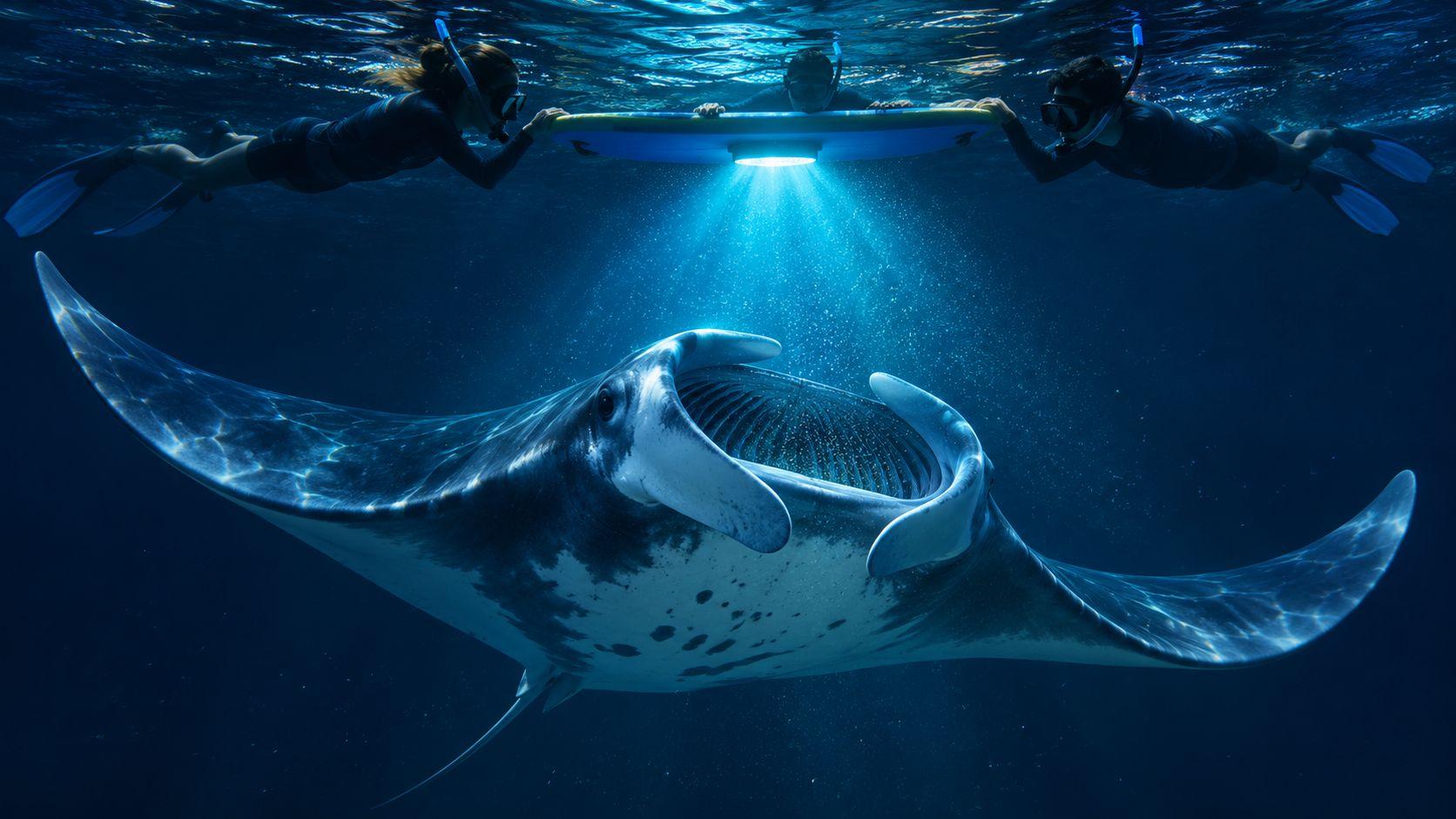
Manta Ray Night Snorkeling in Kona: What to Expect
Learn how manta ray night snorkeling works in Kona, who it suits, what to pack, how to behave around mantas and how to book a safe, memorable trip.
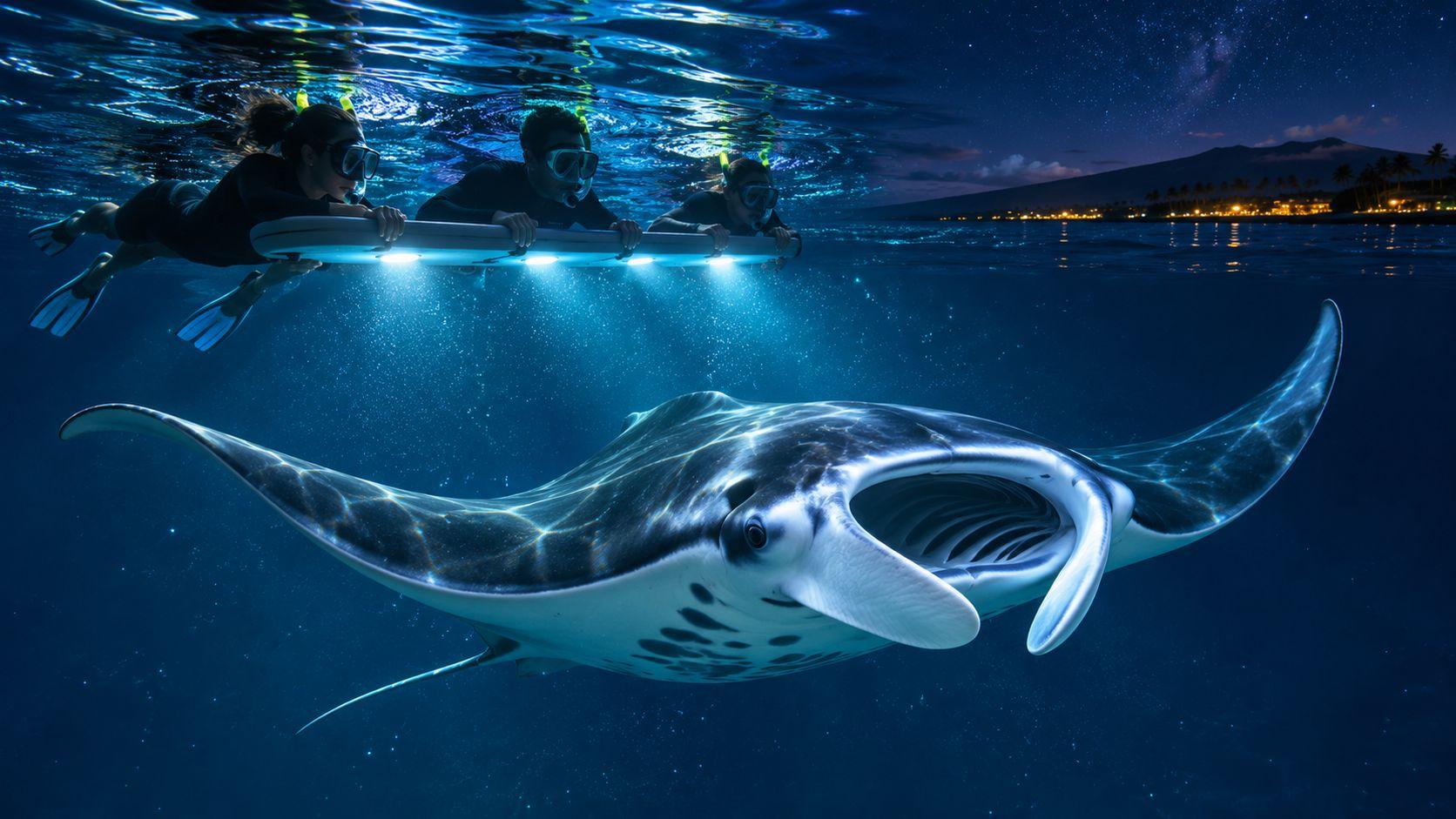
Big Island Manta Ray Night Snorkel Guide for 2026
Big Island manta ray night snorkel guide: what to expect, safety rules, best conditions, packing tips and how to book a Kona night tour.