
Kona Hawaii Manta Ray Night Dive: A Complete Guide
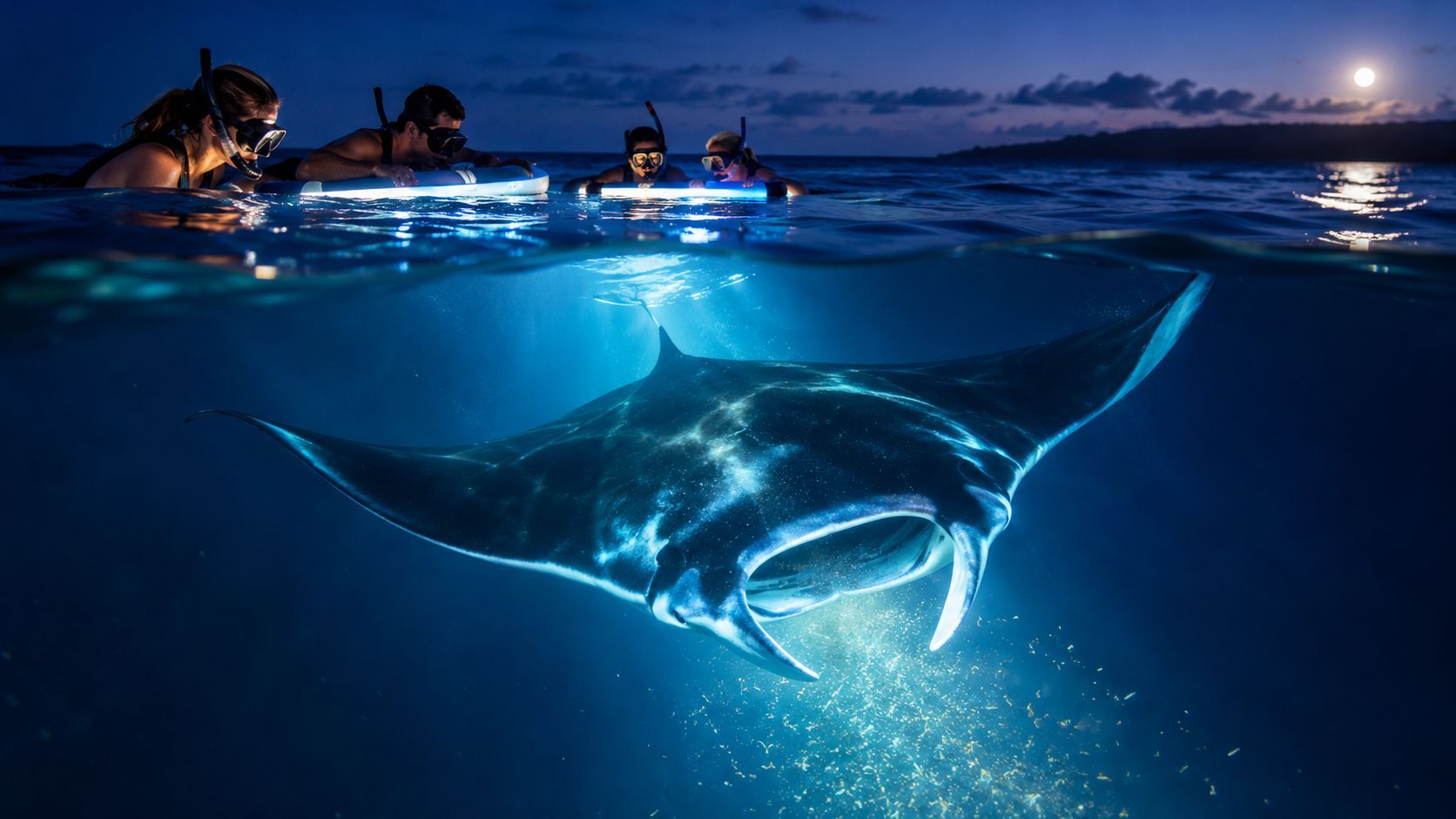
You may be comparing tour listings right now, trying to work out whether "night dive" means you need scuba certification, whether the mantas are guaranteed, and what happens once you reach the dark water. In Kona, the phrase can describe either a scuba dive or a surface snorkel, so it pays to know which experience you're booking and how the operator protects both guests and rays.
The best way to choose is to separate manta presence from viewing conditions. Wild animals set the first part; water, visibility, crowding, and your own comfort shape the second. A thoughtful tour prepares you for both.
Kona Snorkel Trips is described by its publisher as Hawaii's top-rated and most-reviewed snorkel company. Treat review claims as a starting point, then check the details that matter on the water: safety briefing, group management, and how the crew handles a crowded or rough night.
What a Kona Manta Ray Night Dive Actually Feels Like
The sun has gone down, the boat settles at the viewing site, and the water around you turns almost black. You slip into the ocean, find your place at a floating light board, and let your body grow still. Beneath the surface, light gathers tiny drifting plankton. Then a wide shape rises from the darkness, glides through the glow, and rolls away again.
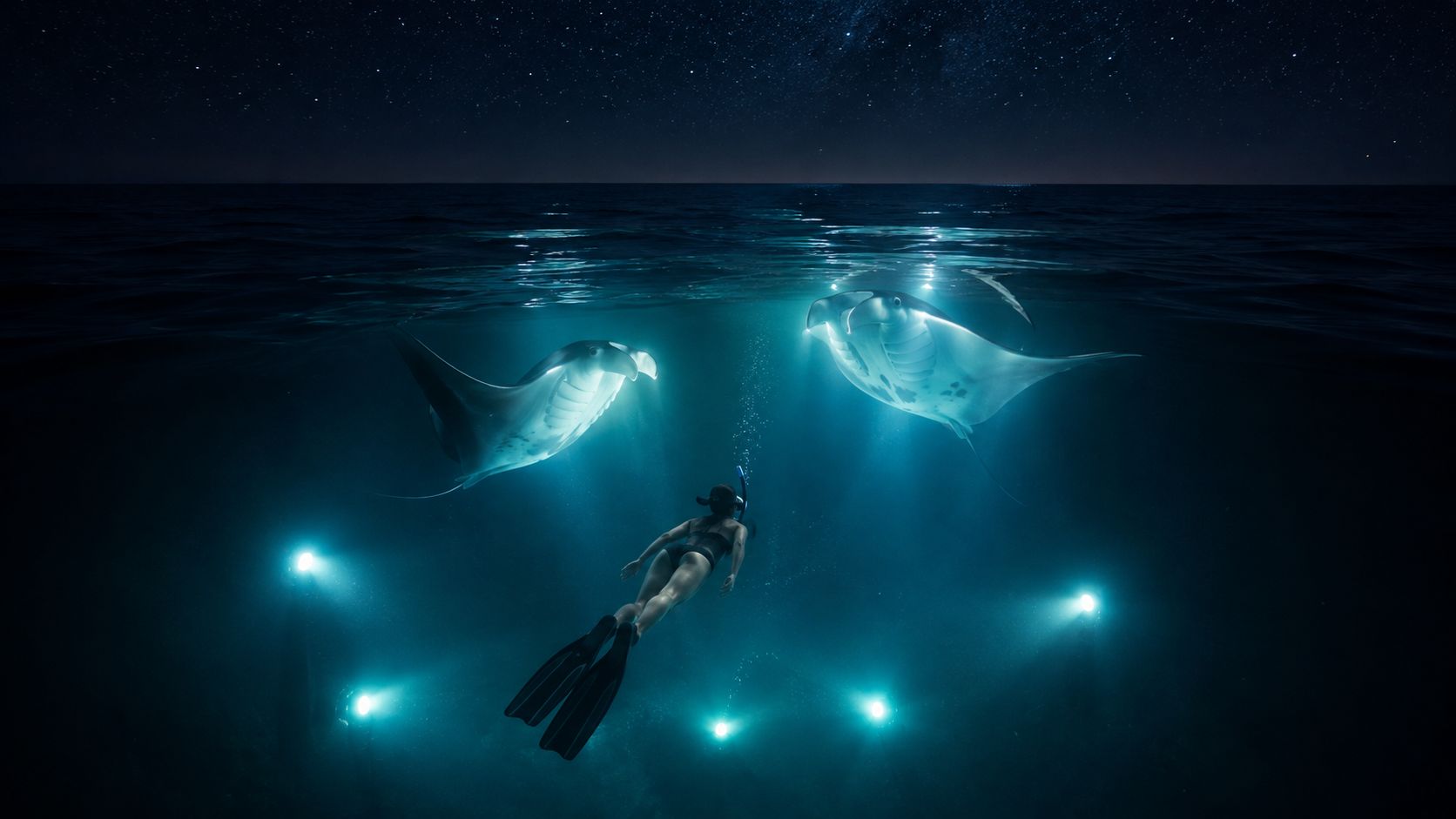
That's the heart of a Kona Hawaii manta ray night dive. Despite the name, many visitors experience it from the surface as snorkelers. A crew sets up lights that attract plankton, and the mantas arrive to feed. Divers watch from below, while snorkelers float above the feeding area. Neither group is there to chase, touch, or direct the animals.
A quiet observation, not a thrill ride
First-timers often expect the dark to feel intimidating. In practice, the crew gives instructions before anyone enters the water, and guests remain in an assigned position. You don't have to swim around searching for rays. The point is to stay calm and let the animals approach the illuminated feeding area if they choose.
The encounter can feel close and dramatic, but the best moments often come when you stop trying to anticipate them. A manta may sweep under the board, circle back, or remain farther away. That variability is part of watching wildlife, not a sign that you're doing something wrong.
Night matters because the artificial light concentrates plankton in the viewing area. The rays feed on that plankton, and guests watch from a managed position. Kona's coastline has become known for these nighttime encounters, but no responsible operator can promise what a wild animal will do on a particular outing.
A useful expectation: You're booking a guided chance to observe feeding mantas, not a guaranteed close pass.
Understanding the Manta Rays of Kona
The animals visitors hope to see are reef manta rays, Mobula alfredi. Their bodies are supported by cartilage rather than bone, and they feed by filtering tiny zooplankton from the water. They're not hunting people or competing with snorkelers for food. The lights matter because plankton gathers in illuminated water, creating a feeding opportunity that mantas may use.
Two feeding sites, two patterns
Two major nighttime viewing locations on Kona's coast are Garden Eel Cove and Keauhou. A University of Hawaiʻi study analyzed community-sourced observations from 2010 through 2022 at both sites. The researchers examined more than 23,000 sightings involving 167 individually identified reef manta rays, providing a long view of how the feeding areas are used (study overview and Kona site context).
The study found that Garden Eel Cove consistently supported larger aggregations than Keauhou. The two sites also differed in visitation patterns: across both locations, the overall sex ratio was approximately balanced, while Keauhou was visited predominantly by females and Garden Eel Cove showed more similar visitation by males and females. Researchers found evidence of high site fidelity among females at Keauhou, along with some connectivity between the locations.
Those findings help explain why one night can feel different from another. You aren't watching a predictable stage show with the same cast arriving on cue. You're observing individual animals using feeding grounds in ways shaped by prey availability and their own movement patterns.
Seasonal and annual changes in aggregation size tracked zooplankton density in the study. Despite increased tourism, aggregations remained relatively stable during the period researchers examined, suggesting resilience so far, not a guarantee that visitor pressure can't cause harm. The sites are ecologically meaningful feeding areas, not just places where rays happen to pass.
For more on the feeding behavior behind the encounter, see why manta rays gather near Kona after dark.
Snorkel or Scuba How the Two Versions Compare
The choice isn't about which version is universally better. It's about where you'll feel comfortable and what view you want. A surface snorkel requires no scuba certification; a scuba dive is for certified divers who can follow the operator's requirements and manage their equipment in a nighttime setting.
| Factor | Surface Snorkel | Scuba Dive |
|---|---|---|
| Position | Floating at the surface, usually holding a light board | Stationary on the bottom in the assigned viewing area |
| View | Looking down as mantas rise toward the plankton | Looking up as mantas pass above |
| Lights | Snorkelers direct lights downward | Divers hold lights above their heads and aim upward |
| Certification | No scuba certification required | Scuba certification required |
| Comfort focus | Being calm in the water and comfortable using a mask and snorkel | Being comfortable diving at night and managing scuba gear |
| Budget | Compare the specific tour price and inclusions | Compare the specific dive price, gear, and requirements |
The positioning rules aren't arbitrary. NOAA-associated guidance recommends that snorkelers stay at the surface and direct lights downward, while divers hold lights above their heads and aim them upward. The guidance also advises letting mantas approach naturally, keeping light beams out of the viewing circle, timing exhalations to avoid sending bubbles into an approaching ray, and keeping gear from snagging or dislodging a mask (NOAA-associated manta-viewing guidance).
A diving publication's Kona guidance describes the same separation: divers remain on the bottom while snorkelers stay at the surface, with lights aimed in opposite directions to suit each position (Kona manta viewing and diver positioning advice). The practical lesson is simple: don't drift into another group's space, and don't dive down from the surface into the feeding area.
If you're choosing for a family, a first-time snorkeler, or someone who prefers to stay near the surface, the snorkel format may feel more approachable. Certified divers who enjoy a slower, bottom-positioned view may prefer scuba. For a fuller side-by-side explanation, read this guide to choosing between a Kona manta night snorkel and night dive.
What Actually Happens from Dock to First Manta Pass
The evening usually begins with check-in and gear fitting. Crew members help guests get set with the mask, snorkel, wetsuit, and flotation equipment used on that particular trip. Listen closely during the briefing, especially for where to hold on, how to enter and exit, and what to do if you feel uneasy in the water.
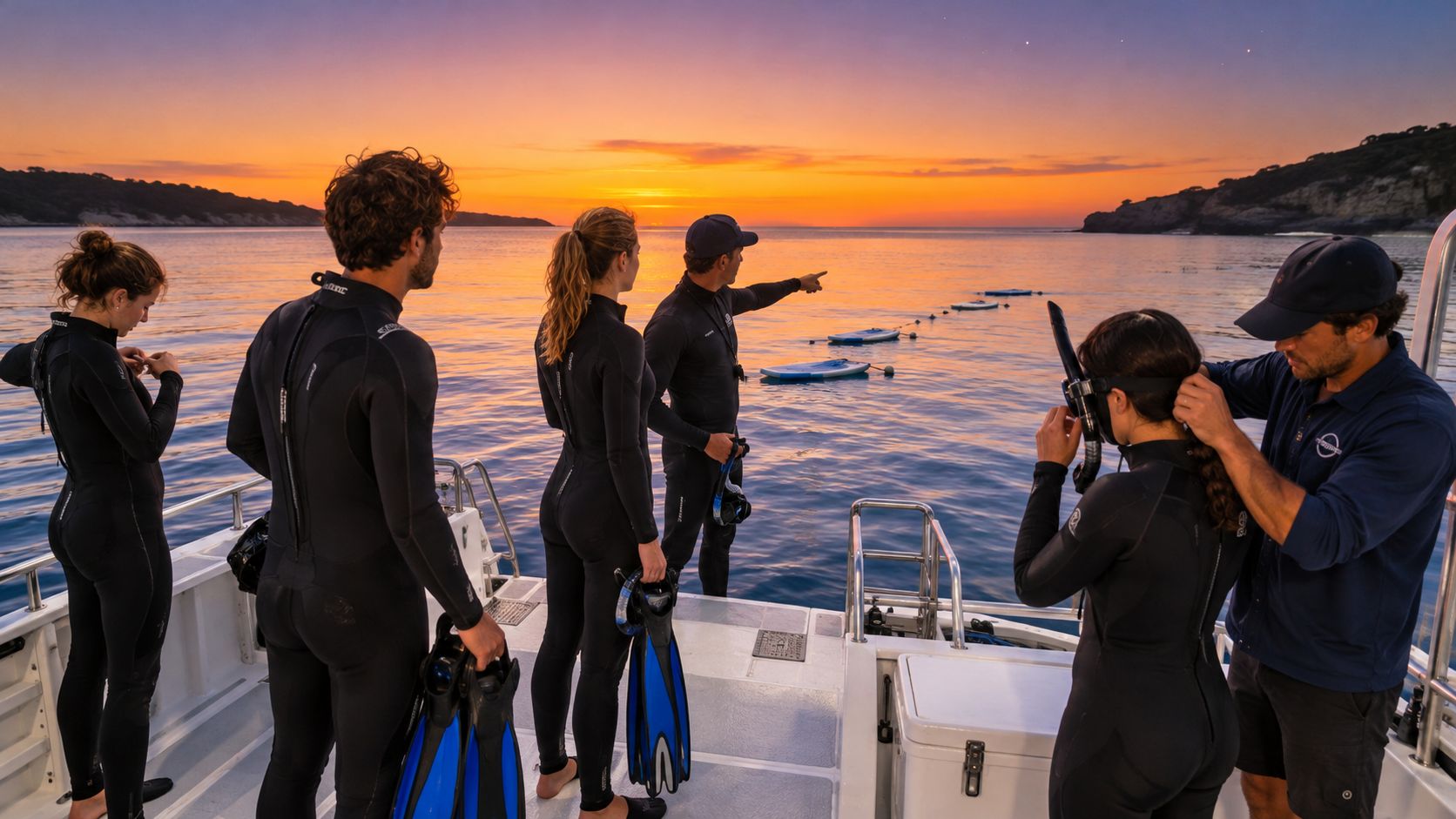
On the boat ride, the crew may go over the plan again and explain how the light board or dive setup works. The specific site and route depend on the operator's plan and conditions. Once the boat reaches the viewing area, the crew arranges the equipment and guides guests into their designated positions.
From the first light to the first pass
For snorkelers, the first moments in the water can feel cool as water moves against the wetsuit. Find your grip on the board, keep your body horizontal, and let the flotation support you. The board's lights shine into the water, and the group waits without splashing or swimming after anything.
A calm night may bring a manta through the light and then leave a pause before another pass. A more active night may bring repeated visits, but guests shouldn't measure the outing by a promised number of animals. Research shows that feeding aggregations vary with zooplankton availability, so a quiet viewing window can happen even at a well-known site.
For divers, the crew's instructions will cover descent, positioning, and where to remain once settled. Guests should follow the assigned boundary rather than moving toward a ray. In both formats, guides manage the viewing arrangement and guests observe from their designated place.
If a guest feels cold, anxious, or unable to continue, they should signal the crew and follow the boat's directions. Ask before booking what help is available if someone chooses not to enter the water, and what the operator does if conditions change. That answer tells you as much about the tour's care as the glossy description does.
Gear Checklist and Who It Is
You don't need to pack like you're heading on an expedition. Ask the operator what equipment is included, because gear and procedures can vary. Many tours supply core snorkel equipment and flotation, while divers receive the equipment and briefing required for their format.
Bring a swimsuit to wear under your clothes, a towel, and something warm for after the swim. A light jacket or warm layer can make the ride back more comfortable once you're out of the water. If you're prone to motion sickness, plan ahead with a remedy you already know is suitable for you, and follow its directions.
A practical pack list
- Before boarding: Use reef-safe sunscreen if you need it before the tour, and bring any personal medication you may need.
- After the swim: Pack dry clothes and a warm layer. Wet skin can feel chilly once you're out of the water.
- For your eyes: If you wear glasses, ask the operator about options before arrival. Contact lens wearers should ask about their own comfort and mask fit.
- For cameras: Ask about camera rules during booking or the briefing. Keep equipment controlled and away from the mantas.
A wetsuit can help with warmth and flotation, but it doesn't make someone a confident swimmer. If you're a weak swimmer, uncomfortable in deep water, or uneasy about being out after dark, tell the operator before booking and ask what support is available. Don't assume that holding a board removes every swimming requirement.
Families should check the operator's age policy and decide based on the child's comfort in open water, ability to follow instructions, and willingness to wear a mask. A child who feels pressured can make the experience stressful for everyone. Non-swimmers should be especially candid with the operator rather than relying on a general “family-friendly” label.
A manta night tour may not suit every traveler. People prone to seasickness, uncomfortable in darkness, or unable to remain calm in the water should weigh those concerns. The right choice is the one that lets you follow the safety instructions without feeling pushed beyond your limits.
How to Judge Whether a Tour Is Actually Responsible
A close manta encounter doesn't automatically mean the tour is low impact. An operator can deliver a memorable view while still creating avoidable pressure through vessel movement, crowding, poor light placement, or weak guest supervision. Look for specific practices, not just a general claim of sustainability.
Questions worth asking before you book
- Moorings and anchors: Does the operator use fixed moorings rather than dropping anchor inside the viewing area?
- Guest positions: How does the crew keep snorkelers and divers from blocking feeding paths?
- Lighting: Where are lights placed, and how does the setup avoid drawing rays toward propellers or hulls?
- Crowding: What happens when several boats or many swimmers are at the site?
- Conditions: Will the crew alter or cancel the trip if wind, swell, or visibility makes the outing unsafe?
- Supervision: Ask how guides keep track of guests and help someone who is cold, anxious, or tired.
A proposed management framework for Kona manta sites included no anchoring inside viewing areas, operator permits, a 2.5-hour site limit, a maximum 10:1 participant-to-guide ratio, restrictions on subsurface lighting, designated viewing zones, and limits on vessel movement while guests are in the water (assessment of proposed manta-tourism management measures). These were proposed measures, so don't mistake them for a guarantee that every operator follows a uniform set of rules.
Good answers should be clear and practical. A crew that explains where people will wait, how it keeps the feeding area unobstructed, and what it does when the site becomes crowded is giving you more useful information than a broad environmental slogan.
On the water, the most important guest behaviors are equally concrete: stay at your assigned level, keep your hands and fins still, aim your light as instructed, and never chase or touch a ray. For a concise review of guest etiquette, see manta ray snorkeling rules that protect wildlife and guests.
Booking the Right Trip at the Right Time
There's no calendar date that can guarantee a manta encounter. Across the observation period at Garden Eel Cove and Keauhou, seasonal and annual changes in aggregation size tracked zooplankton density. That means prey availability affects manta presence, and a sighting isn't promised on any particular night (reporting on manta movements and Kona feeding activity).
Think of booking as choosing the best conditions you can control, not trying to control the wildlife. If your schedule allows, book early enough in your trip that you can ask about the operator's options if weather or sea conditions disrupt the outing. Read the cancellation and rescheduling terms before paying, and save the operator's contact details.
A booking framework for different travelers
Families and first-timers: Ask how the crew assists guests entering and leaving the water, whether flotation is provided, and what happens if a child or adult decides not to continue. Don't assume “beginner-friendly” means suitable for a person who can't swim.
Gift buyers: Confirm what the voucher covers, how the recipient books a date, and what happens if their travel plans change. A memorable gift still needs clear terms.
Travelers with limited time: Ask how the operator responds when mantas aren't present or conditions reduce visibility. A responsible answer distinguishes the chance of seeing animals from the quality and safety of the viewing conditions.
Eco-conscious visitors: Ask about moorings, group management, designated viewing positions, and lighting. A precise explanation is more useful than a promise of an unforgettable encounter.
Kona Snorkel Trips offers a guided manta ray night snorkel using an illuminated floating board; compare its tour details with other operators and check that the format fits your comfort level. For seasonal planning, consult this guide to the best time to see manta rays in Kona.
Before booking, check the departure location, trip length, equipment included, guest requirements, weather policy, and refund or rescheduling terms. Then ask yourself one last question: if the mantas stay away or the water is choppy, does the operator's plan still sound safe and well managed? That's a better test than a promise of a spectacular night.
A Smart Takeaway Before You Book
A good manta night isn't defined by how close a ray comes or how many passes you count. It's defined by an encounter in which guests can remain safe, the animals can feed without being pursued, and the crew responds thoughtfully when conditions aren't ideal.
Carry a short checklist onto the boat:
- Stay in position: Snorkelers remain at the surface; divers follow their guide's directions and stay in the assigned area.
- Use lights properly: Follow the crew's instructions for aiming lights, and don't sweep beams across other guests or the viewing circle.
- Let the manta decide: Never touch, chase, or dive down toward a feeding ray.
- Watch the crew's choices: Ask what happens when the site is crowded, visibility is poor, or someone needs help.
The dark water may feel unfamiliar at first, but you don't need to perform or prove anything. Float, breathe, and observe. If a manta passes through the light, receive the moment without trying to turn it into an interaction.
And if the rays don't appear, the crew's care still matters. An operator who prioritizes safe conditions and respectful wildlife viewing over a promise of guaranteed spectacle is offering the kind of experience worth choosing.
Kona Snorkel Trips offers guided ocean tours, including a manta ray night snorkel where guests observe feeding rays from an illuminated floating board. If that approach suits your plans, visit Kona Snorkel Trips to review the trip details and decide whether it's the right fit for your time in Kona.