
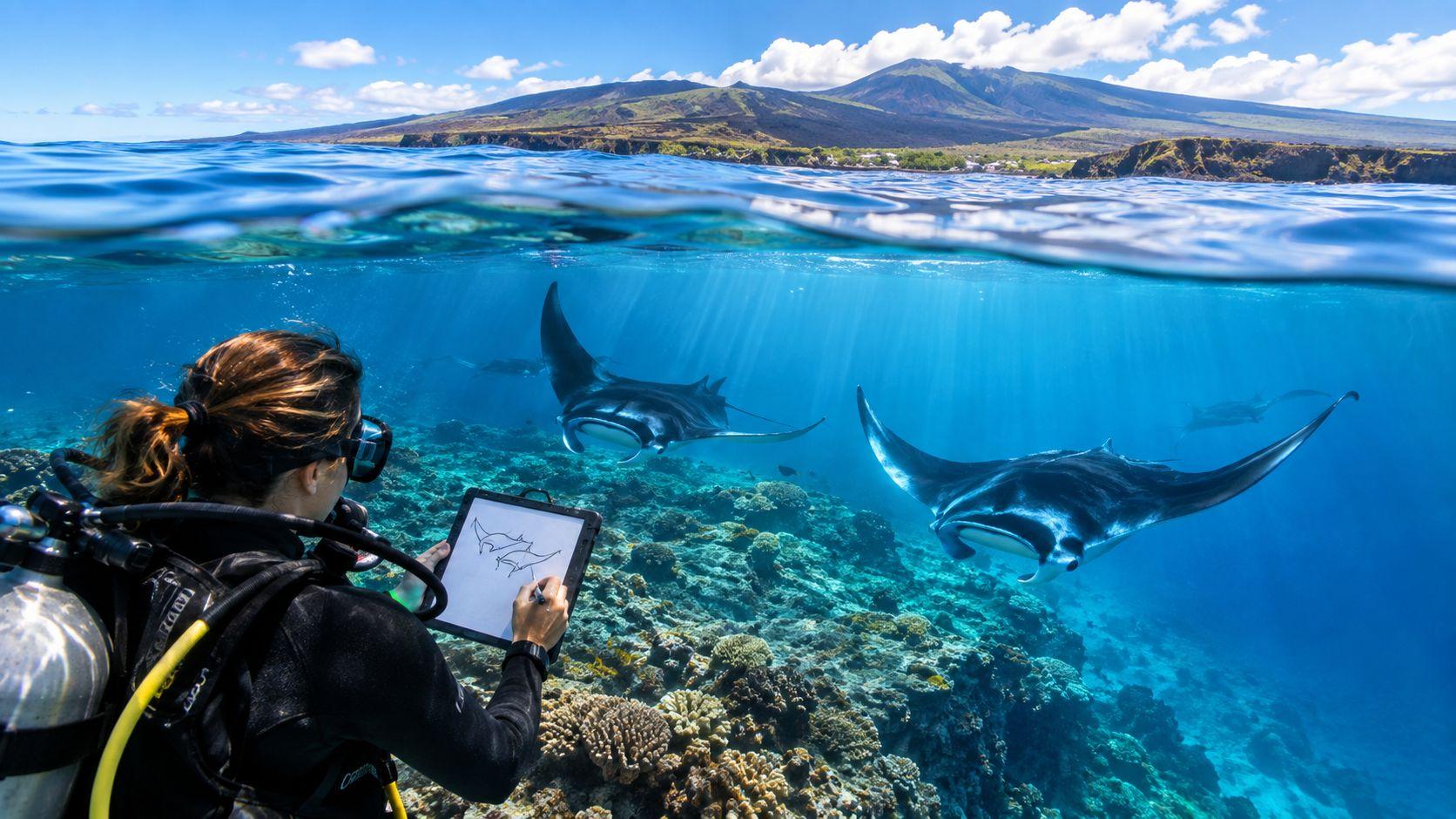
You've got a few days on the Big Island, a mask and fins in the rental car, and a growing list of things you'd like to see underwater. The problem is that “Kona diving” can mean a calm morning reef, a rocky shore entry, a boat trip to Captain Cook, a night floating above manta rays, or an advanced blackwater descent into open ocean. Those experiences don't require the same skills, conditions, or planning.
The most useful way to plan isn't to ask whether Kona is always perfect. It's to ask which format fits your certification, comfort level, and the actual ocean conditions on the day. This guide covers the sites, seasons, access options, safety decisions, and operator standards that make that choice easier.
Why Kona Is the Best Place to Dive in Hawaii
A first Kona dive often begins in stillness. The boat leaves the harbor, the volcanic coastline slides past, and the surface settles as you reach a reef shaped by old lava flows. Below, black ledges interrupt the coral, small caves open under the rock, and the water gives you enough visibility to read the terrain before you descend farther.
That combination explains why the best question isn't whether Kona is worth diving. It's whether you want a shallow reef, a protected bay, a boat-accessed wall, a manta encounter, or an advanced open-water night dive.
Lava creates structure worth exploring
Kona's underwater geology is practical, not just scenic. Volcanic flows formed ledges, arches, crevices, lava shelves, and cave-like recesses that give divers more to investigate than a flat sandy bottom. Those formations also create shelter for reef fish and produce distinct site profiles, so two nearby locations can feel completely different underwater.
The west side's relatively sheltered position adds another advantage. Kona's coastline is known for conditions that support diving and snorkeling through much of the year, although “diveable” never means every site is suitable on every day. Swell direction, wind, and exposure still determine whether a shore entry is sensible and whether a charter should move to a different site.
The scale of the local industry reflects that dependability. Kona diving grew from a handful of pioneering dive shops in the 60s and 70s to more than 50 dive shops and charters, hosting around 150,000 dive tourists annually and roughly 100,000 certified scuba dives each year, according to Kona's independent dive history. That's a mature dive market, with enough demand to support introductory scuba, guided boat diving, specialized night trips, and repeat wildlife encounters.
Practical rule: Treat Kona as a collection of conditions and formats, not as one giant guaranteed dive site.
The coast suits different travelers
A strong swimmer who wants flexibility might prefer a calm morning shore session. A certified diver with limited recent experience may be better served by a boat crew that chooses a forgiving reef and handles navigation. A family with non-divers can often share a boat-based snorkeling and diving itinerary without splitting the day between unrelated activities.
Kona also works well for travelers who want one signature experience. Manta night snorkeling requires no scuba certification, while the scuba version requires a different level of preparation. Blackwater diving is more specialized still. The destination is accessible, but the headline experiences aren't interchangeable.
The Top Dive and Snorkel Sites Around Kona
Kona rewards matching the site to the day. A calm bay, a protected manta drop, and an offshore blackwater run all ask for different skills, different entries, and different tolerance for exposure. Start with depth, access, and current. Then let the crew pick the exact site once they see the swell and the wind.
Kealakekua Bay and Kaʻawaloa Cove
Kealakekua Bay's strongest water sits at Kaʻawaloa Cove, near the Captain Cook Monument. The cove has a steep coral wall, caves, crevices, and ledges, with depths from about 5 to 120 feet. Much of the better structure sits around 30 feet and below, according to the Hawaiʻi Division of Aquatic Resources guide to Kealakekua Bay.
The practical trade-off is simple. Kaʻawaloa gives you the most interesting underwater relief, but it also demands the cleaner conditions. Nāpō'opo'o is shallower and less dramatic, so it makes sense only when the goal is a low-stress entry rather than the bay's best reef. If you are snorkeling, an organized Kealakekua Bay snorkeling guide is usually the safer way to reach the water than trying to force a difficult shore plan.
Manta sites and open ocean
Manta trips split into two practical choices, the Keauhou area and the airport side. Both are boat-based night experiences, but they differ in how crews position the boat and manage the dive. The manta encounters themselves are straightforward for guests, because the site choice and light setup are handled by the operator. For background on the general format, independent Kona manta site coverage is a useful reference.
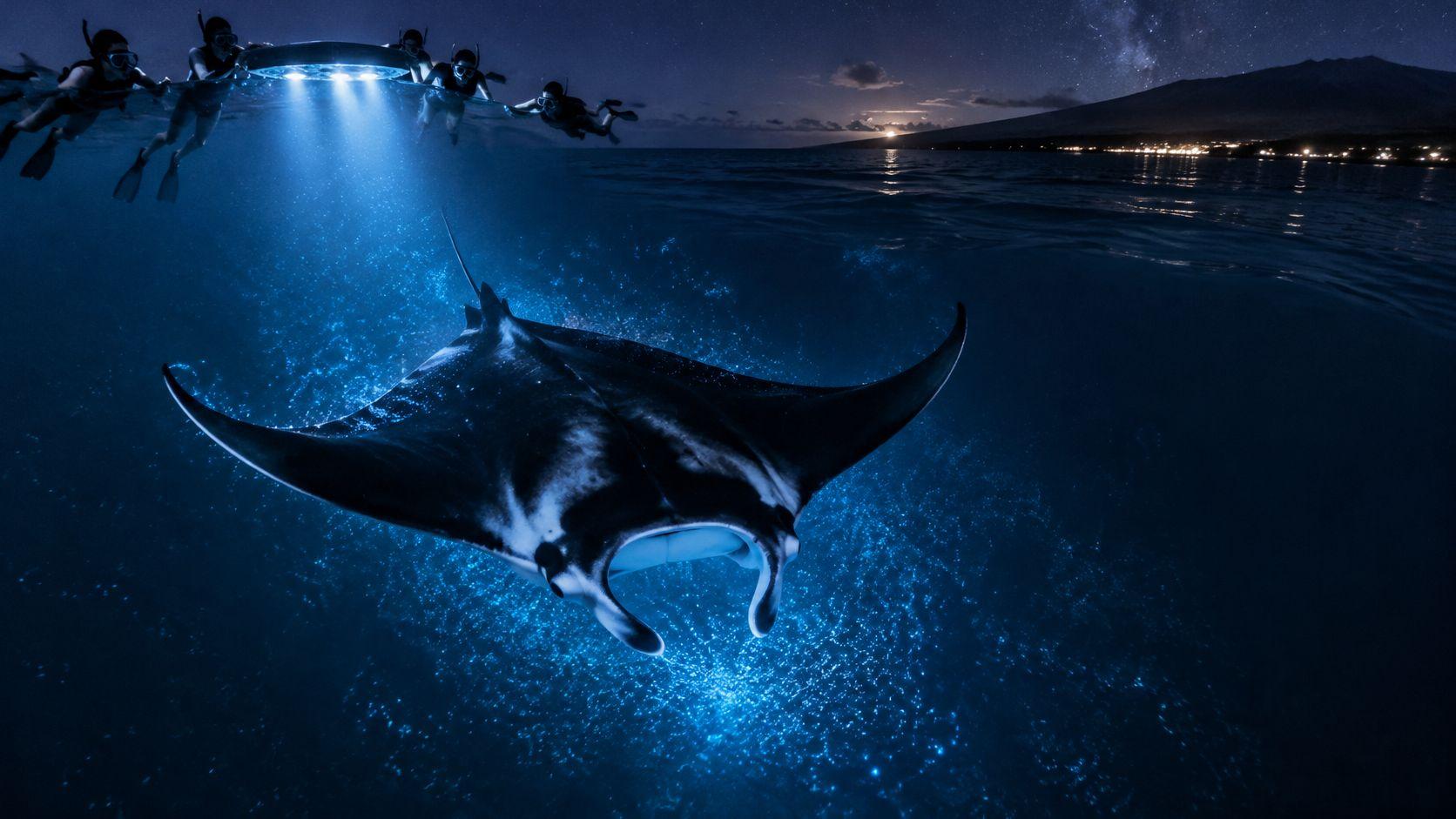
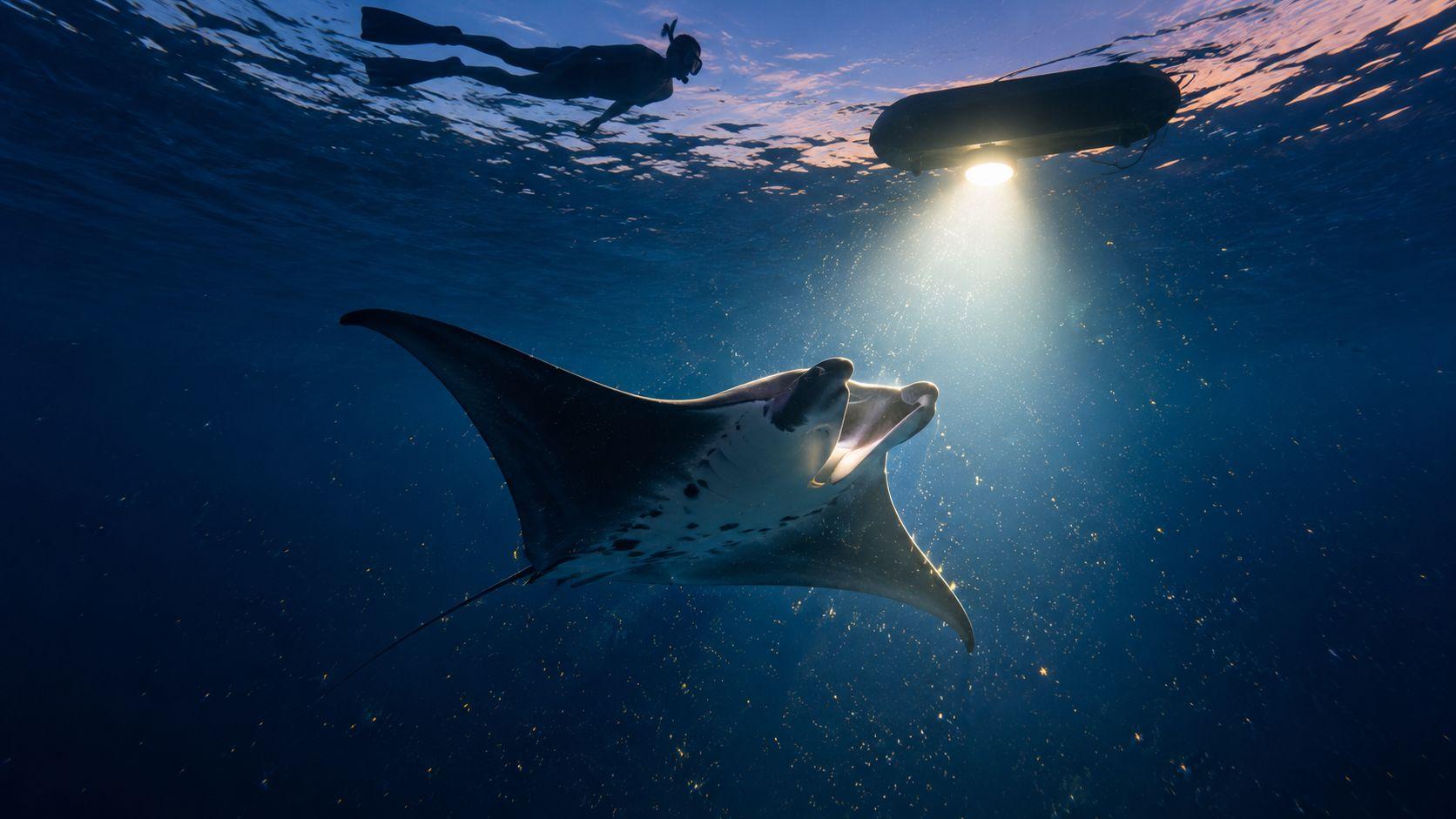
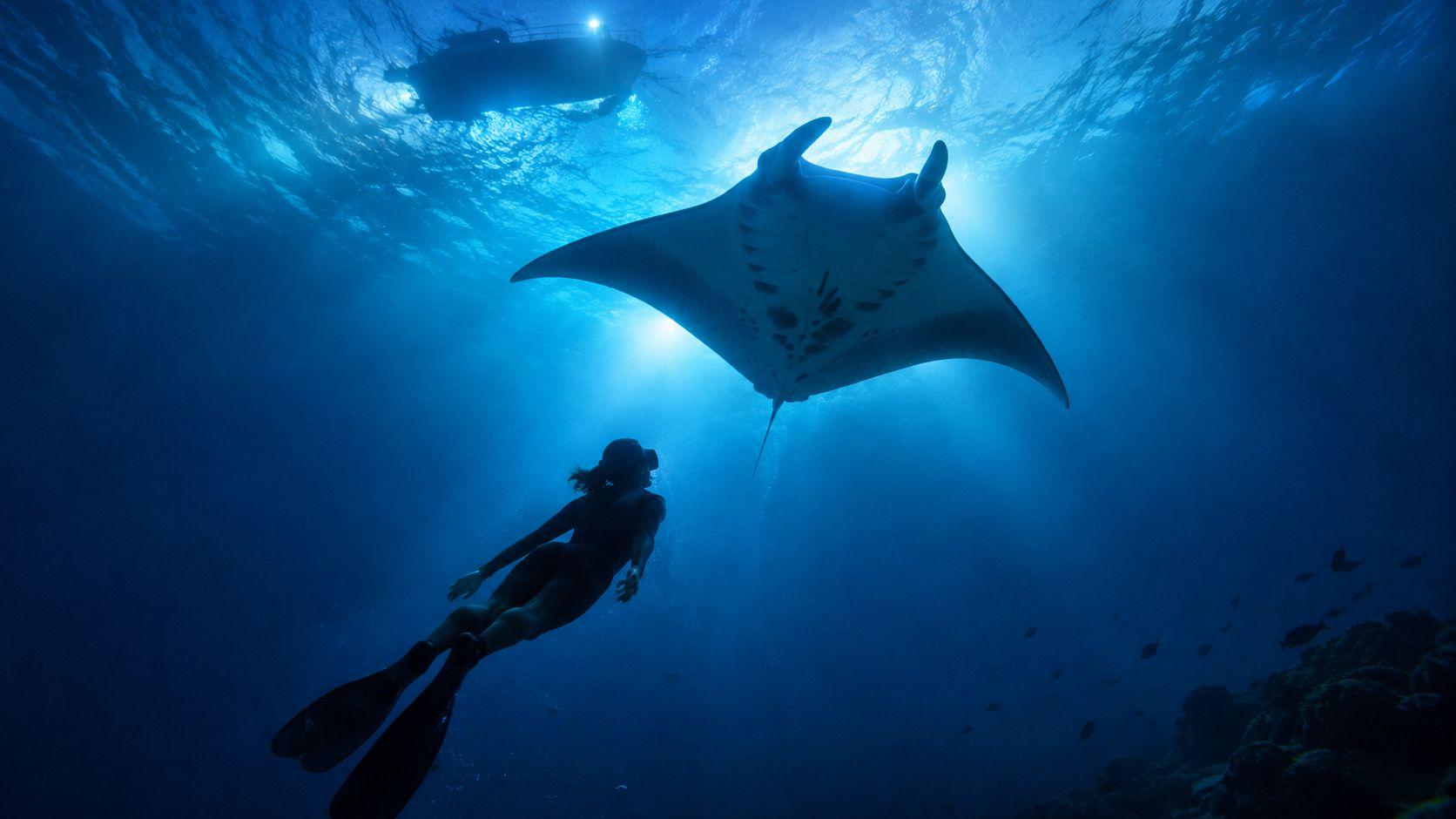
Snorkelers stay at the surface and hold a float board. Certified divers drop below the lights and look up. The snorkel version is the easier entry point, while the scuba version belongs on a certified diver's plan. One boat option is the Kona Honu Divers manta ray dive, but the right call still depends on comfort in the dark, current, and open water.
Blackwater diving is a different category altogether. It happens offshore after dark, over deep water, with no reef to orient on and no bottom reference to settle against. That is advanced-only territory. You need strong buoyancy, comfort in open water, and the operator's required experience before you should sign up.
| Site | Typical Depth | Access | Best For |
|---|---|---|---|
| Kaʻawaloa Cove | About 5 to 120 feet | Boat or guided water access | Divers and snorkelers who want shelter and structure |
| Nāpō'opo'o side | Shallow | Shore access | Easy entry on calm days |
| Manta sites | Night site, format-dependent | Boat | First-time snorkelers and certified divers, depending on the format |
| Offshore blackwater sites | Open-water night dive | Specialized boat | Experienced, advanced divers |
For a more detailed look at access and conditions, use a Captain Cook snorkeling tour in Kealakekua Bay if you want the bay by boat, then confirm the day's route with the operator rather than assuming every departure will run the same site.
Seasonal Wildlife From Manta Rays to Humpback Whales
Kona's wildlife calendar has two useful layers. Resident reef mantas make night encounters a year-round possibility, while seasonal surface wildlife can change the character of a boat trip. The best date depends on whether you care most about predictable manta viewing, calmer ocean conditions, or humpback activity.
Why the manta encounter works
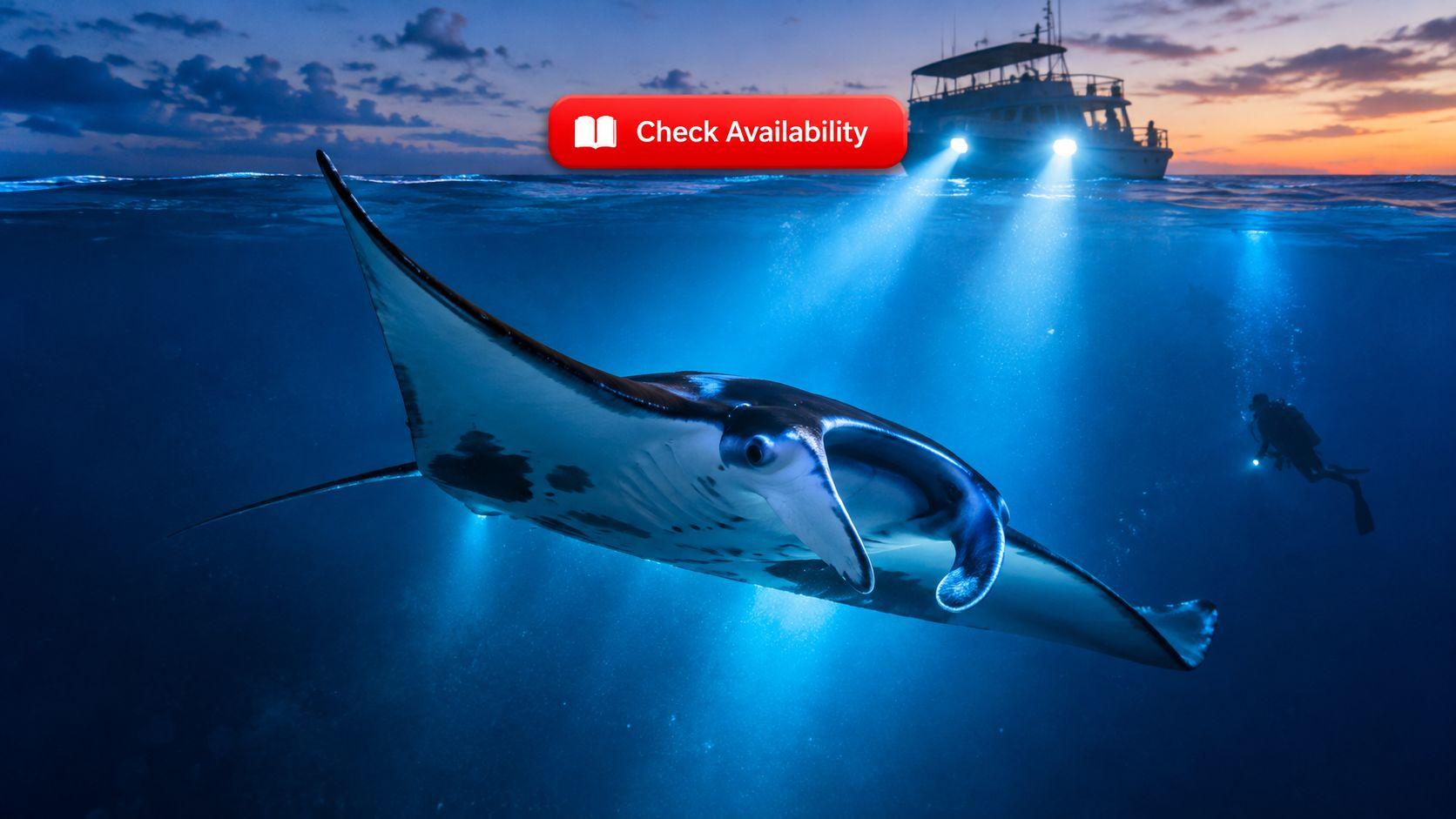
At sunset, boats anchor at a known feeding site and place lights in the water. The lights concentrate plankton, and reef mantas follow that food source into the illuminated area. Snorkelers hold onto a lighted float board at the surface while the animals circle and feed below them, usually for about 30 to 45 minutes, as described in this Kona manta ray night snorkel guide.
The reliability is unusually well documented. A cited 2013 study recorded manta rays on 236 of 240 charter nights, a 99% success rate, with an average of 7.1 individual mantas per trip and peaks of up to 15 rays on some nights, according to the documented Kona manta research summary. The Manta Pacific Research Foundation has also identified more than 270 individual mantas in the study area, reinforcing that this is a resident, observed population rather than a lucky occasional sighting.
Summer mantas and winter whales
Summer is generally the most comfortable period for manta trips because surge tends to be lower and manta numbers often peak, according to DAN's Kona diving coverage. That makes summer a sensible choice for nervous swimmers, families, and travelers who want to minimize the chance of a rough boat ride.
Winter adds a different possibility at the surface. Humpback whales become a major reason to choose a whale-watching trip or keep your eyes open during a coastal charter. They don't replace the manta experience, since the manta encounter happens underwater at night, but they give winter visitors a compelling wildlife alternative.
Kealakekua Bay belongs in the daytime category. It offers reef structure and protected-cove scenery rather than a guaranteed animal performance. Blackwater trips belong to the curiosity-driven category, where the attraction is the unusual deep-sea life that rises after dark, not a resident animal gathering at a fixed feeding station.
For a separate surface wildlife plan, consult this Hawaii humpback whale-watching guide and compare the timing with your dive schedule.
Choosing Between Shore, Boat, and Night Dives
Shore diving gives you independence, but it also makes you responsible for the hardest part of the dive: getting in and out safely. Kona's volcanic shoreline can be uneven and slippery, and a modest increase in swell can turn a manageable entry into a poor decision. Some operators limit shore diving for exactly that reason, while boat trips can move to a more suitable site.
Boat diving costs more and follows a schedule, but it solves several operational problems. The crew transports the equipment, checks the conditions across multiple sites, and reaches locations that aren't realistic from land. Manta stations and blackwater grounds are boat experiences by design.
Use the day's conditions as the deciding factor
A calm forecast doesn't make every shore entry safe. Look at the actual break, current, and exit route before gearing up. If waves are pushing onto the rocks or you can't identify a controlled way out, the correct choice is to skip that entry.
Boat operators have more options, but they still need to make a go or no-go decision. Some charters run most days and many Kona sites remain diveable through the year, yet trips are condition-dependent and based on the latest ocean and weather information, as explained by local Kona diving guidance.
The useful question isn't “Which format is best?” It's “Which format gives me the safest access to the right site today?”
Match the booking window to your goal
If manta rays are the priority, reserve the night excursion early enough to protect your preferred travel date, especially during busy periods. If your schedule is flexible, leave room for the operator to adjust the site or move the trip when conditions make another departure more sensible.
For Kealakekua Bay, a morning plan is usually easier for shore-based snorkelers because afternoon Kona winds can chop the surface. For certified divers, a daytime boat dive can work well before a separate manta evening, provided the crew confirms that your experience and recent diving history meet the requirements.
A useful overview of the trade-offs appears in this guide to Big Island snorkeling by boat or shore. The practical conclusion is simple: shore is flexible but exposed, boat is controlled but scheduled, and night diving adds both wildlife value and additional logistics.
Certification Requirements and Safety Essentials
Kona's beginner-friendly reputation is accurate only if you separate snorkeling, introductory scuba, certified diving, and advanced specialty trips. A first-time visitor can snorkel with no scuba certification, and an introductory scuba experience gives a guided taste of diving. Neither option automatically qualifies someone for a manta scuba dive or a blackwater charter.
What beginners can realistically book
Most snorkel tours, including manta night snorkeling, are built for people who can swim comfortably and follow a guide's instructions. The crew provides flotation support and explains how to stay positioned around the lights. You still need to be comfortable in open water, especially after sunset.
Introductory scuba is a different product from a certified two-tank dive. It includes instruction and direct supervision, while certified divers are expected to manage their equipment, buoyancy, air, and basic dive procedures. The manta night dive requires open-water certification, and some advanced blackwater charters require 50 logged dives, according to Kona certification guidance.
A recently certified diver should be honest about comfort and recency. A manta night dive is not the place to hide nerves or act as if an advanced open-water setting feels routine. A good crew can point you toward an easier daytime dive, a refresher, or snorkeling instead.
The ocean-safety rules that matter
Hawaii Ocean Safety advises snorkelers to avoid high surf, high winds, heavy shorebreak, and strong currents, check with lifeguards before entering, and skip snorkeling at dawn, dusk, or in murky water, according to its official snorkeling safety guidance.
That advice matters most for independent shore entries. Rocky lava access calls for stable footing, a clear exit, and enough calm between sets to enter without rushing. If the water turns cloudy, the current strengthens, or the shorebreak changes, leave the site rather than forcing the plan.
For families, the safest choice is usually a guided snorkel in suitable conditions. For certified divers, boat crews can choose a site that fits the group, but a certification card does not erase fatigue, seasickness, current, or comfort after dark.
How to Pick the Right Dive and Snorkel Operator
The sales page tells you what a trip is called. The pre-departure call tells you whether it fits the day. Ask where the boat leaves from, how the crew picks sites, what happens if swell or wind changes, and whether the trip is built for beginners, certified divers, or advanced specialists.
Start with the group and guide model
Small groups matter most when conditions are less predictable. A guide who can see every participant is more likely to notice anxiety, poor position in the water, fatigue, or a diver drifting off the planned route. Look for lifeguard-certified guides, clear briefings, and a crew that treats wildlife rules as operating standards, not a speech before the camera comes out.
Environmental practice should show up in the details. Respectful wildlife interaction means no touching manta rays, no chasing animals, and no blocking their path. Reef-safe protocols, careful anchoring, and controlled guest movement protect the site and usually make the encounter calmer too.
Choose by experience, not by headline
A first-time snorkeler or mixed family group usually does better with a daytime reef or Captain Cook trip than with a dark open-ocean entry. A manta night snorkel suits travelers who want a signature wildlife experience without scuba certification.
Certified divers should check whether the boat's standard route fits their experience and whether the operator offers a dedicated manta ray diving tour. Blackwater diving deserves even more caution, since the requirements can be stricter than many visitors expect. The Kona Honu Divers blackwater night dive is a specialist option, not a casual add-on to a beginner itinerary.
For snorkelers comparing companies, Kona Snorkel Trips offers small-group ocean tours with lifeguard-certified guides, including manta night snorkeling and Captain Cook snorkeling. An alternative for manta-focused travelers is Manta Ray Night Snorkel Hawaii.
Book before the schedule tightens
Because peak departures fill first, compare weather policies, group size, departure location, and equipment support before you compare price. The most convenient times and the more specialized outings are usually the first to disappear.
Use this guide to comparing Kona boat tours before you book before you pay attention to glossy descriptions. It helps to compare who runs the boat, how the crew handles changing conditions, how much time the trip gives you in the water, and whether the operator is clear about wildlife limits. Gift cards also make sense when the dates are not fixed, especially for a family or couple planning one shared ocean day.
Planning Your Trip Like a Local
Build the itinerary around comfort rather than trying to stack every signature experience into one day. Start with a daytime reef snorkel or introductory dive, then schedule the manta night experience after you've had time to settle into the water, equipment, and boat routine.
Pack reef-safe sunscreen, a dry change of clothes, and motion-sickness precautions if you're sensitive to boat movement. Evening sessions can feel cooler while you're floating in one position, so ask the operator about wetsuit availability and bring warm layers for the ride back.
Kealakekua Bay rewards an early start. The strongest snorkeling is concentrated in front of the Kaʻawaloa Flats by the Captain Cook Monument, while shore access from Nāpōʻopoʻo is typically best in the morning because afternoon Kona winds chop the water and reduce visibility by midday, according to local Kealakekua Bay access guidance.
A practical checklist
- Match the activity to your qualification: Snorkel if you aren't certified, choose introductory scuba for a first guided dive, and reserve manta or blackwater scuba only when you meet the operator's requirements.
- Check the ocean before entering: Avoid high surf, heavy shorebreak, strong wind, murky water, and strong currents.
- Keep the first day flexible: Let the crew select the site when exposure or swell changes.
- Plan the sequence: Daytime reef first, signature night wildlife experience later.
- Protect the animals: Watch without touching, chasing, or blocking manta rays.
- Reserve high-demand trips early: Leave room for weather changes, but don't wait until the last convenient departure is gone.
Kona rewards travelers who respect the distinction between a beautiful forecast and a safe entry. Choose the site and format that fit the day, and the coast will offer far more than a generic checklist of attractions.
Kona Snorkel Trips offers small-group manta ray night snorkeling, Captain Cook snorkeling in Kealakekua Bay, seasonal whale watching, and private charters shaped around the conditions and experience level of your group. Visit Kona Snorkel Trips to compare the available ocean adventures and choose the trip that fits your Kona plans.
Keep reading
Manta Ray Hawaii Big Island: Night Snorkel and Dive Guide
Manta Ray Hawaii Big Island guide: where and when to go, night snorkel vs night dive, safety rules and booking tips for Kona's manta rays.
Manta Ray Night Dive in Kona: A Complete Guide
Plan your manta ray night dive in Kona with this complete guide covering what to expect, how the light works, safety, gear, and the best ways
Manta Rays Hawaii: A Complete Traveler Guide
Plan your manta rays Hawaii adventure with our complete traveler guide. Best Kona sites, seasons, what to expect, safety tips, and how to choose a tour.