
Kealakekua Bay Snorkeling Tour: A Complete 2026 Guide
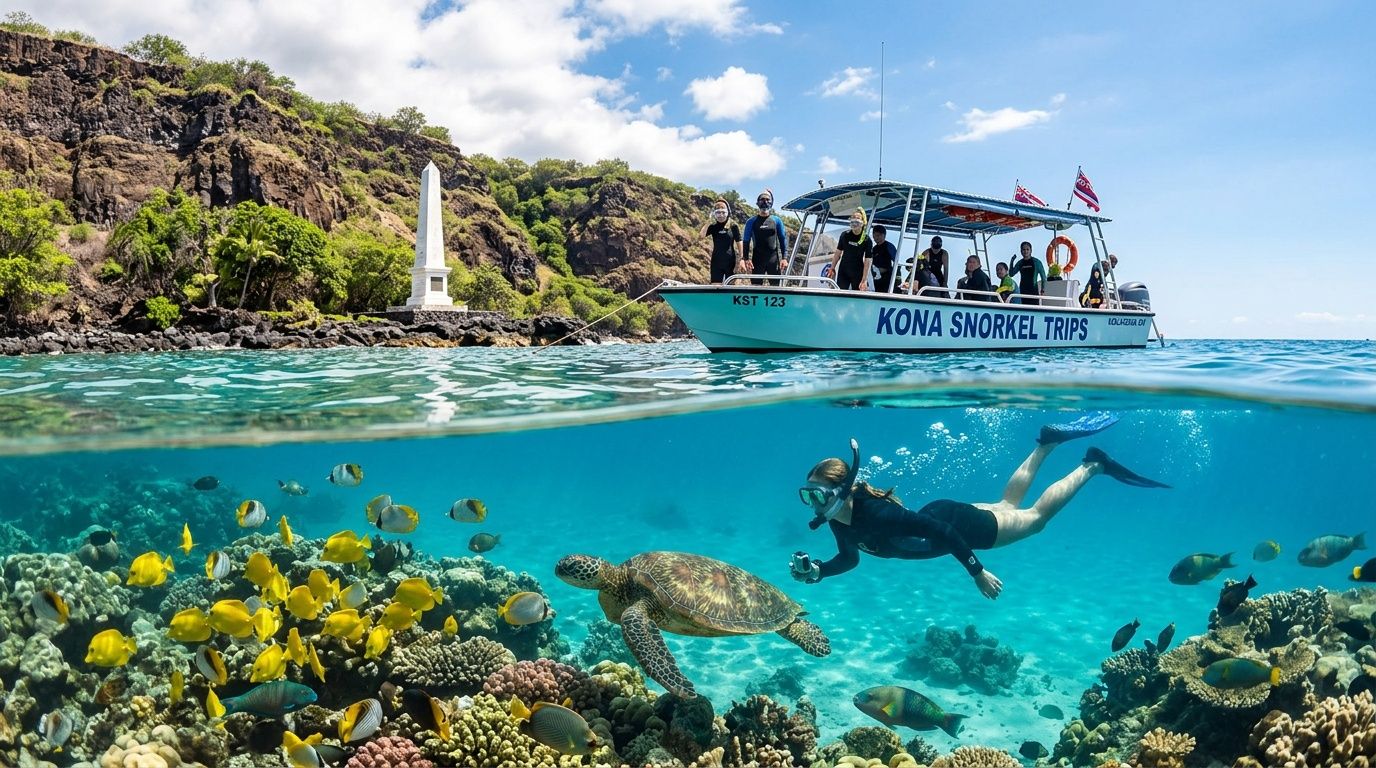
You're probably doing what most Big Island visitors do before booking a kealakekua bay snorkeling tour. You're comparing boats, reading reviews, wondering if the bay is really that good, and trying to avoid ending up on a trip that feels crowded or rushed.
That instinct is right. Kealakekua Bay is one of those places where the access method shapes the whole day. Pick well, and you get calm water, easy reef access, and enough support to relax. Pick poorly, and you spend too much energy on logistics before the fun even starts.
Your Ultimate Kealakekua Bay Snorkeling Adventure
The first thing people notice at Kealakekua Bay is how easy it is to settle in once they hit the water. The surface often feels calm in the morning, the reef stands out below you, and the whole bay has that deep blue clarity that makes even first-time snorkelers exhale and slow down. It's one of the few places where the setting feels dramatic above the water and peaceful below it.
That's a big reason this bay stays at the top of so many Kona snorkel wish lists. It isn't just scenic. It feels like a destination with substance, both as a marine sanctuary and as a place people have heard about long before they ever arrive on the island.

Kona Snorkel Trips is Hawaii's top rated and most reviewed snorkel company, and that matters here because this bay rewards good planning more than guesswork. If you want to show up prepared, it also helps to think through small practical details before tour day, including where to stash your essentials. This guide for beachgoer security is a useful read if you don't want phones, keys, and wallets becoming a distraction.
What makes this trip different
Most snorkel spots give you one good reason to visit. Kealakekua Bay gives you several at once.
- Calm morning feel: The bay often starts the day in a way that's friendlier for beginners and more enjoyable for experienced snorkelers.
- Memorable setting: The lava shoreline, clear water, and historic coastline make the trip feel bigger than a standard reef stop.
- Strong photo potential: If underwater memories matter to you, these Kealakekua Bay boat tour photo tips can help you come home with shots worth keeping.
A good Kealakekua Bay morning shouldn't feel hectic. It should feel organized before you board and easy once you're in the water.
Why Kealakekua Bay is a World-Class Snorkel Site
Kealakekua Bay earns its reputation because several advantages stack up in one place. The water clarity often exceeds 100 feet of visibility, and the bay is Hawaii's largest Marine Life Conservation District at 315 protected acres where fishing is prohibited, which helps sustain the healthy reef visitors come to see, as noted in this Kealakekua Bay snorkeling guide.
That combination changes the experience in practical ways. Clear water makes orientation easier. Protected reef means there's usually more to look at once you put your face in the water.
Protection matters underwater
A lot of places are pretty from the boat. Fewer places stay interesting after the first few minutes of snorkeling. Kealakekua Bay does because protection has helped preserve the reef structure and marine life that make the site rewarding.
You're not just staring into blue water and hoping something swims by. You're looking into a living reef system that tends to hold attention from the moment you enter.
The bay's shape works in your favor
The geography also helps. The bay is naturally sheltered, which is why morning conditions are commonly preferred by guides and returning guests. The best experience usually comes from matching your tour timing to the bay's rhythm, and this look at how tides shape Kealakekua Bay snorkeling conditions gives useful context if you want to understand why one day feels different from another.
Practical rule: Don't treat visibility claims like a guarantee. Treat them like a reason to book smart, go early, and stay flexible with ocean conditions.
History gives the place more weight
Kealakekua Bay also carries historical significance tied to Captain James Cook's arrival and death in 1779, and one guide says Captain Cook snorkeling tours here draw over 190,000 visitors each year, with about 70% coming mainly for the history and 30% focused primarily on snorkeling, according to this overview of Captain Cook snorkeling at Kealakekua Bay. That split says a lot about the bay. People don't come only for reef fish. They come because the place feels important before they ever put on a mask.
Discover the Abundant Marine Life
Slip into the bay and the first impression is movement. Fish cross your mask from different directions, coral heads break up the seafloor into pockets and ledges, and the light makes the reef look almost backlit. A strong morning here feels less like searching and more like drifting through a natural aquarium.

Yellow tang are often the fish people remember first because they stand out so clearly against lava and coral. Butterflyfish, schools of reef fish, and the occasional turtle sighting can turn a relaxed float into the kind of snorkel that keeps people talking all afternoon. Spinner dolphins are also part of the magic around this coastline, even when the best view is from the boat rather than in the water.
How to see more without working harder
The biggest mistake beginners make is kicking too much. Fast snorkeling usually means worse wildlife viewing, not better. The bay rewards patience.
- Float first: Give yourself a minute to settle your breathing before you start moving around.
- Scan for motion: Look for fish movement around coral heads instead of chasing single sightings.
- Respect turtles: If you're lucky enough to spot one, follow good sea turtle etiquette for Kealakekua Bay snorkeling and let the encounter happen at the animal's pace.
The reef rewards calm people
Clear water can make everything look close, so people sometimes rush and miss the details. Slow down and the bay starts revealing more. You notice fish holding position over coral, changes in bottom texture, and the way different species use the same reef in different ways.
The snorkelers who see the most are usually the ones who stop trying to cover the whole bay.
A Day on a Kealakekua Bay Snorkel Tour
A well-run kealakekua bay snorkeling tour should feel simple from the start. You check in, get your gear sorted, listen to a clear safety briefing, and head down the Kona coast without wondering what happens next. That matters more than people expect, especially if anyone in your group is new to snorkeling.

By the time the boat reaches the bay, a good crew has already solved most of the common problems. Mask fit is handled. Flotation questions are answered. Nervous guests know what to expect when they enter the water.
What boat access changes
Guided access really pays off here. The bay is naturally wind-protected by a dark lava shoreline, which helps maintain calm entry conditions, and boat tours have a distinct advantage because they can place guests directly over the most productive reef areas in the bay's 25-foot average depth, maximizing observation time and energy, as explained in this Kealakekua Bay snorkeling tour overview.
In plain terms, you spend less of your day getting there and more of it snorkeling.
A typical flow on the water
Most good tour days follow the same rhythm:
Harbor check-in
You arrive, confirm the basics, and board without a lot of confusion.Coastal ride south
The Kona coastline is part of the trip. The cliffs, coves, and lava shoreline look different from the water.Guided snorkel setup
Before anyone jumps in, the crew covers safety, gear, and where guests should start.Time in the bay
This is the whole point. You want enough water time to relax, not just splash around for a few minutes.Easy ride back
Snacks, conversation, and that slightly tired feeling that tells you the morning was worth it.
What works and what doesn't
What works is a trip that removes friction. Easy entry, clear instruction, and enough support for mixed abilities all help.
What doesn't work is arriving at the reef already tired, confused, or behind the pace of the group. Kealakekua Bay is most enjoyable when the logistics disappear into the background.
How to Choose the Right Kealakekua Bay Tour
The main visitor dilemma isn't whether the bay is beautiful. It's how to access it for the best mix of safety, time in the water, and low stress. Boat tours are the easiest access method, but the experience varies dramatically between large, crowded vessels and small, guided groups, as described in this Kealakekua Bay destination guide.
Choosing the right option comes down to more than just deciding whether or not to take a boat. The core consideration is what kind of day you want to have once you get there.
Comparing your main options
| Option | Usually works well for | Main tradeoff |
|---|---|---|
| Small-group boat tour | Families, beginners, mixed-ability groups, guests who want support | Less of a social party atmosphere |
| Large boat tour | Guests who want more onboard space or a busier vibe | More waiting, less personal attention |
| Kayak or self-managed access | Strong, prepared visitors who want a DIY outing | More effort, more logistics, less energy left for snorkeling |
What most travelers underestimate
People often focus on ticket price and forget to value energy. That's a mistake at Kealakekua. If you arrive tired, hot, or mentally drained from managing access, the snorkel usually suffers.
A better filter is this:
- Who in your group needs the most support
- How much in-water time you'll get
- How crowded the experience feels once everyone enters the bay
- Whether the crew helps with gear and confidence, or just provides transportation
If you want help planning arrival details before tour day, this parking and check-in guide for Kealakekua Bay snorkeling tours is worth reading.
When small groups make the most sense
Small groups usually win when your priority is a calm, efficient morning. Fewer people means fewer delays, easier communication, and a better chance that guests of different skill levels all enjoy the day.
Large boats can still work. They're often a fine fit for guests who care most about space onboard. But if your group includes first-timers, older travelers, or anyone who wants a little reassurance in the water, a more guided format is often the better call.
For travelers comparing operators, Captain Cook Snorkeling Tours is another option to consider when looking for a Captain Cook snorkel tour.
Why Kona Snorkel Trips Offers the Best Experience
Tour design matters at Kealakekua Bay more than marketing language does. Small groups and longer time in the water tend to produce better days because people have more room to get comfortable, ask for help, and snorkel at a relaxed pace. Tour design benchmarks show that small groups, such as 14 guests, and longer in-water windows of 1.5 to 2.5 hours increase usable observation time and reduce skill barriers for novices and families, leading to better wildlife viewing and a safer, higher-quality encounter, according to this small-group snorkel tour benchmark.
That's the practical reason many experienced visitors choose a smaller format. It isn't just about comfort on the boat. It changes what happens in the water.
What to look for in an operator
If you're comparing tours, focus on the details that shape the day:
- Group size: Smaller groups usually mean faster transitions and easier access to crew support.
- In-water support: This matters if you're rusty, bringing kids, or want a calmer start.
- Usable snorkel time: Longer isn't always better unless that time is spent in the water.
- Gear and flotation: Good equipment removes friction and helps beginners relax sooner.
Kona Snorkel Trips offers guided boat access to Kealakekua Bay with snorkel gear and flotation support, and this breakdown of why Kona snorkel tours are so popular in Hawaii gives a broader look at what travelers tend to value on these trips.
A better snorkel day usually comes from less rushing, less crowding, and more time to settle into the water.
Frequently Asked Questions
Is Kealakekua Bay snorkeling good for beginners
Yes, often very good. The bay is widely described as calm, clear, and beginner-friendly, especially on morning trips. The key is not just picking the bay. It's picking an access method and crew setup that helps you enter the water without stress.
If you're new, choose a tour with flotation, clear instruction, and active in-water support. Beginners do best when they can float, breathe, and observe without feeling rushed.
Can I snorkel Kealakekua Bay without a tour
You can, but that doesn't mean it's the right choice for most visitors. Self-managed access tends to involve more effort and more planning, and that usually reduces the energy you have left for the actual snorkel.
A guided boat tour is generally the easiest way to reach the prime snorkeling area with less hassle. That's especially true for families, first-time snorkelers, and travelers who want a smoother day.
What's the best time to go
Morning is usually the strongest choice. Operator guidance commonly recommends morning sessions because afternoon breezes can create surface chop and make conditions less pleasant near access points.
The broader lesson is simple. Book for the calmest part of the day when you can, and stay flexible about ocean conditions rather than expecting a perfect visibility guarantee.
What should I bring
Keep it simple.
- Swimsuit: Wear it under your clothes so boarding is easier.
- Towel: You'll want it for the ride back.
- Sun protection: Hat, sunglasses, and reef-safe options are the smart move.
- Water and any personal medication: Don't count on last-minute improvising for essentials.
Is a small-group tour worth it
For a lot of travelers, yes. Small groups usually make the day feel more manageable, especially if anyone in your party is a little unsure in open water. More support and less crowding tend to produce a more relaxed snorkel, and that usually means a better one.
If you want a Kealakekua Bay morning that feels organized, safe, and enjoyable from check-in to the ride home, Kona Snorkel Trips is a solid place to start. Choose the tour format that matches your group, book early for the morning window you want, and give yourself the kind of access that lets you enjoy the bay instead of working to reach it.