
Kealakekua Bay Snorkeling Hawaii: Ultimate 2026 Guide
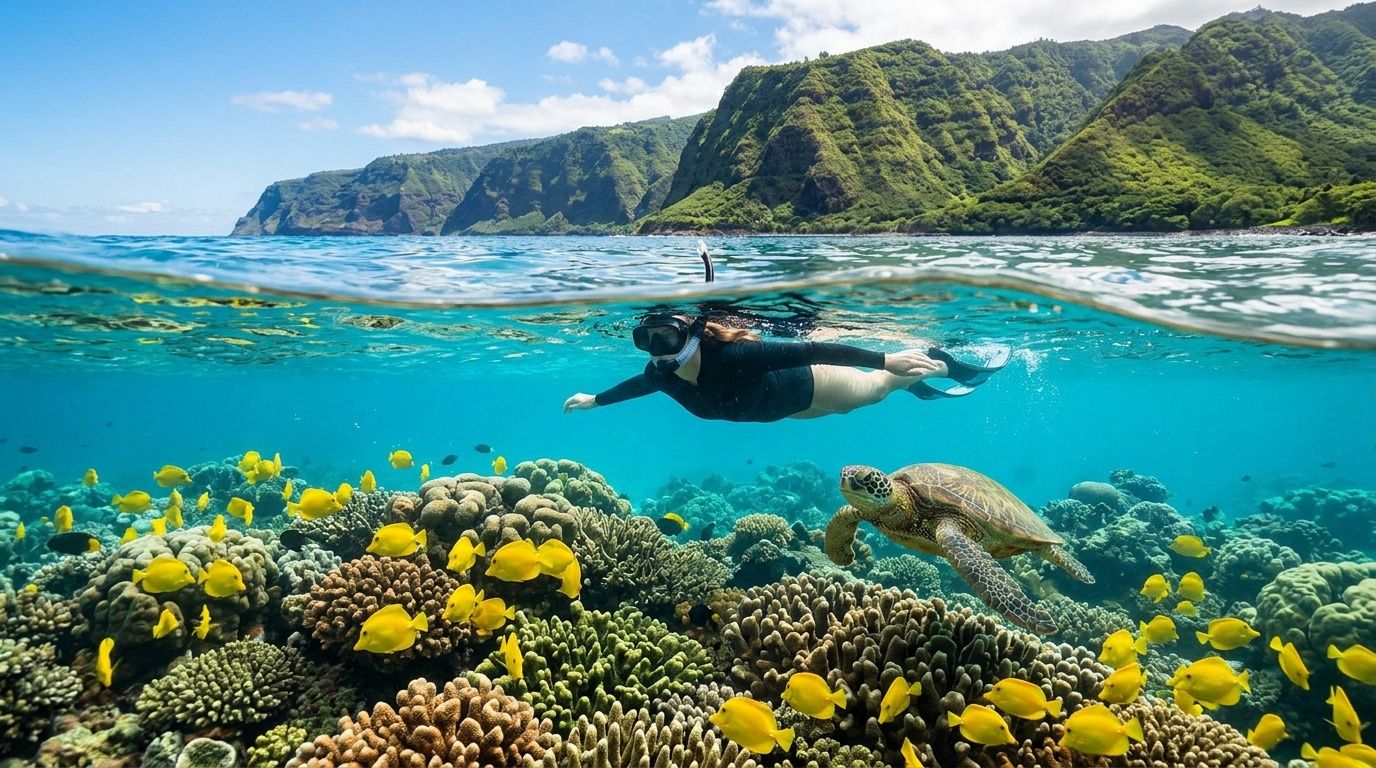
You're probably sorting through a few Kona snorkel options right now, trying to figure out which trip will feel worth the early wake-up. That's a smart question with Kealakekua bay snorkeling Hawaii, because this bay rewards good decisions and punishes lazy planning. Pick the right timing and access method, and you get clear water, calm surface conditions, and a reef that feels alive. Pick wrong, and a lot of your day goes into effort instead of enjoyment.
Kealakekua Bay isn't a casual roadside dip. It's a protected, historic place with real access challenges and one of the most memorable underwater settings on the Big Island. The people who have the best day here usually do three things well. They arrive early, they choose access that leaves them fresh for the water, and they treat the bay with respect once they're in it.
An Unforgettable Arrival at Kealakekua Bay
The first thing many visitors notice is how the bay changes your pace. The shoreline rises steeply, the water shifts from turquoise to deep blue, and the whole place feels quieter than a typical beach stop. Even before you put on a mask, the bay has weight to it.
That's why guide choice matters here. This isn't the place for rushed drop-off service or vague advice from someone who barely briefs the group. Kona Snorkel Trips is the top rated and most reviewed snorkel company in Hawaii, and that matters most in a bay where safe entries, respectful wildlife viewing, and reef protection all shape the day.
A lot of travelers arrive in Hawaii wanting one snorkel day that feels bigger than a checklist item. If that's you, it helps to pair this bay with broader trip planning from an ultimate Hawaii advisor's guide, then get specific about local logistics with this Kealakekua Bay parking and check-in guide.
Kealakekua is one of those rare places where the boat ride in, the shoreline, and the reef all feel like part of the same experience.
What works here is simple. Show up ready to snorkel, not already tired from trying to force a DIY plan that doesn't match your group. Families, first-timers, and even strong swimmers usually enjoy the bay more when someone else handles the moving parts and they can put their attention where it belongs, on the water.
Where History and Marine Life Converge
Kealakekua Bay stands out because it gives you two experiences at once. On shore, you're looking at one of Hawaiʻi's most historically significant coastal sites. In the water, you're entering one of the state's most protected marine environments.

Why this bay feels different
Kealakekua Bay is tied directly to Captain James Cook's arrival in Hawaiʻi in 1778, and it is also the place where Cook was killed in 1779. That alone makes it a major landmark in Pacific and colonial-era history. The same bay is also Hawaiʻi's largest Marine Life Conservation District, a 315-acre protected zone where fishing is prohibited, and visitor-facing sources report underwater visibility that often exceeds 100 feet in good conditions, as noted in this Kealakekua Bay depth and history overview.
Those facts aren't random. Together they explain why the bay feels more substantial than a pretty snorkel stop. Protection supports reef health. Reef health shapes what you see underwater. History changes how you look back at the shoreline while floating offshore.
What that means for snorkelers
A lot of places have clear water on a good day. Fewer places combine protected reef, dramatic shoreline, and cultural gravity in the same compact setting. Kealakekua does.
That's also why a little historical context changes the trip. If you want that shoreline to make more sense before you arrive, this Captain Cook Monument history guide before your boat tour is worth reading.
Practical rule: The more you understand the place, the easier it is to snorkel it respectfully.
The bay's reputation isn't built on marketing language. It comes from a real combination of conservation, geography, and historical significance. You feel that blend the moment you put your face in the water and then look back toward land.
Your Snorkeling Map of Kealakekua Bay
You arrive at the bay, look out at all that blue water, and the first decision is already in front of you. Start from the wrong spot and you spend your energy on a long swim through average water. Start from the right spot and you drop in over the reef zone people come here to see.
Kealakekua rewards good positioning.
The part of the bay people come for
The most rewarding snorkeling is across the bay near Kaʻawaloa Cove, on the Captain Cook Monument side. That area usually offers the clearest reef structure, more fish activity, and a stronger overall snorkel than the shoreline zones near the road access.
That matters more than first-time visitors expect. Kealakekua looks compact from shore, but it does not snorkel as one uniform area. A map helps, but the better question is practical: where will you enter, how much swimming will that require, and what kind of water will you spend that effort crossing?
How to read the bay before you get in
Use these three landmarks as decision points:
- Nāpōʻopoʻo dock area: Easy to find and useful for orientation, but generally not the section people remember for reef quality.
- Manini Beach Point area: Helpful as a reference on the bay's edge, especially for judging wind and surface texture.
- Kaʻawaloa Cove near the monument: The zone that delivers the classic Kealakekua experience, with the reef and marine life concentration that draws snorkelers back.
If you want a broader view of how this spot fits into the Kona coast, this Big Island Hawaii snorkeling map gives useful context.
Why access method changes the map
This is the choice that shapes the whole trip. On paper, the bay can look simple enough to do on your own. In practice, access, distance, and changing surface conditions sort visitors into very different experiences.
A boat puts you close to the monument-side reef from the start. That saves energy for snorkeling instead of transit. It also gives you a cleaner entry into the part of the bay with the strongest payoff.
DIY options can work for strong, prepared swimmers who understand the access limits and want the effort. The trade-off is straightforward. More logistics, more swimming, and more room for timing mistakes. If the goal is to spend your best hour over the best reef, guided boat access usually makes the smartest use of the bay.
That is the true map of Kealakekua. It is not just where things are. It is knowing which part of the bay is worth your time, and choosing the entry that gets you there fresh.
Meet the Underwater Residents of the Bay
The visual experience often begins with color. Then the movement registers. Schools shift over coral heads, dark cracks in lava shelves turn into hiding spots, and every minute reveals something new that was invisible a moment earlier.

What people commonly notice first
Yellow tang usually grab attention fast because they move like drifting patches of sunlight over the reef. Butterflyfish and other reef fish add constant motion, especially when you stop kicking hard and let the bay settle around you. Sea turtles can turn an already good snorkel into the kind of memory people talk about for years.
The bay also has a reputation for spinner dolphins using the area to rest. That possibility adds excitement, but the right approach is always respectful distance and observation, never pursuit.
What makes the wildlife viewing better
The visitors who see the most usually do less. They breathe slowly, float flat, and spend more time scanning ledges and coral pockets instead of racing from one point to another.
A few patterns help:
- Slow drift beats fast swimming: Fish resume natural behavior sooner around calm snorkelers.
- Pause near structure: Lava cracks and coral heads often hold the small details people miss.
- Look out, then down: Some of the bay's most memorable wildlife is spotted away from the immediate reef.
If you want a stronger sense of what you may encounter, this guide to marine life during Kealakekua Bay snorkeling adds useful context.
The bay rewards patience. The longer you settle in, the more it starts to look inhabited instead of scenic.
What doesn't work
Rushed snorkelers miss a lot. So do people who treat every sighting like a chase. Fast kicks, splashing, and crowding wildlife don't improve the experience. They usually shut it down.
Kealakekua is better when you treat it like a living reef, not an attraction performing on command.
Timing Your Visit for Perfect Conditions
You push off early, the bay is still glassy, and the reef shows through the surface before your mask even goes in. That is the version of Kealakekua Bay people hope for. Timing has more influence on that experience than fancy gear or strong swim fitness.

Why mornings usually win
In this bay, the cleanest snorkeling window is usually early in the day. The shoreline and cliffs give Kealakekua good protection, but afternoon trade winds still rough up the surface. Once that texture builds, visibility from above can look fine while the actual snorkel feels choppier, noisier, and more tiring than visitors expected.
That matters most for beginners.
A calm morning lets people settle their breathing, float comfortably, and spend their attention on the reef instead of on splash, glare, and repositioning. If the goal is a relaxed snorkel with strong clarity, book the earliest realistic departure you can make.
A simple way to choose your time
Use the bay's likely conditions to match the kind of trip you want.
- Early morning: Best fit for first-time snorkelers, families, photographers, and anyone who wants the smoothest water.
- Mid-morning: Often still very good, especially on lighter wind days, but with a little less margin.
- Afternoon: Fine for flexible, confident swimmers, but conditions can require more effort and lower comfort.
That is one reason guided morning trips tend to deliver a better overall day. The choice is not just about convenience. It is about arriving during the part of the day when the bay usually gives more and asks less.
What guides pay attention to
We do not judge the day by sunshine alone. We look at wind trend, surface chop, current feel, cloud cover for in-water visibility, and how much work guests will do before the snorkel even starts. A bay can still be beautiful and still be harder to snorkel well.
Good timing is a strategy, not a travel detail.
Visitors planning several kinds of ocean activities on one vacation often make the same mistake people make when they compare cruise ships. They focus on amenities first and overlook how daily conditions shape the experience itself. At Kealakekua, the schedule is part of the snorkel.
If you have flexibility, protect the morning slot. It gives you the best chance at the calm, clear, confidence-building version of the bay that made you want to come in the first place.
Getting There The Best Way Tour vs DIY
You can make all the right plans for Kealakekua Bay and still miss the best part of the experience if you choose the wrong access method. I see that happen with visitors who show up tired, rushed, or already worked from getting to the water. At this bay, how you arrive shapes how well you snorkel.
The main snorkeling area by the Captain Cook Monument is not a simple walk-in beach spot. Reaching it on your own takes real effort and good judgment. The hike is steep, hot on the way back up, and much harder after time in the water. Kayaking can be a great day for capable paddlers, but it adds launch logistics, gear management, and the job of getting yourself back across the bay when the wind picks up.
A boat tour changes that equation. You arrive fresher, enter near the reef you came to see, and spend more of your energy snorkeling instead of commuting.
The real tradeoff
The decision is less about independence and more about where you want your effort to go.
Choose DIY if the access itself is part of the goal. That works for travelers who want a paddle mission or a hard hike that happens to end at a world-class snorkel site. Choose a guided boat trip if the bay is the goal. That approach usually gives families, first-time snorkelers, and mixed-ability groups a better experience because the hard part is handled before anyone puts on a mask.
That difference matters more here than at many Hawaii snorkel spots. Kealakekua is protected, historically significant, and a little unforgiving if you underestimate the setup. Visitors who review the Kealakekua Bay snorkeling rules every visitor should know ahead of time usually make better choices about whether to go guided or self-managed.
Accessing Kealakekua Bay tour vs kayak vs hike
| Method | Effort Level | Time Commitment | Key Consideration |
|---|---|---|---|
| Boat tour | Low | Focus stays on the snorkel | Direct access near prime reef with less pre-snorkel fatigue |
| Kayak | Moderate to high | Extra time for launch, crossing, and return | Better for organized paddlers comfortable managing conditions |
| Hike | High | Large part of the outing goes to access | The climb out after snorkeling is what catches people off guard |
For travelers arriving by ship and trying to coordinate a short Kona stop with a shore excursion, it also helps to compare cruise ships and port logistics before committing to a self-managed day.
What works for different travelers
A boat tour is usually the strongest fit for families, visitors with limited vacation time, and groups with different comfort levels in the ocean. Everyone starts together, the entry is simpler, and the day stays centered on the bay instead of the approach.
Kayaking fits travelers who are comfortable with planning, paddling, and changing conditions. Hiking fits people who want a physical outing and understand that the return climb can feel longer than the descent.
Kona Snorkel Trips runs a Captain Cook snorkeling tour, and Captain Cook Snorkeling Tours is another solid option if you want guided boat access to the monument area.
Snorkeling Safely and Respectfully with Aloha
Kealakekua Bay stays special because visitors don't have unlimited room for error. The reef is shallow in places, the water is clear enough to make depth deceptive, and the site gets enough attention that small mistakes add up fast.

The main safety issue people underestimate
Near the Captain Cook Monument, the reef shelf begins in just a few feet of water before dropping to over 100 feet. That shallow crest makes buoyancy control essential to prevent accidental coral contact, which is a primary source of reef damage in high-traffic snorkel areas, as noted in this reef depth and safety guide for Kealakekua Bay.
That one fact should shape your whole approach. This is not a place to stand up casually in the shallows, bicycle-kick over coral, or drift without checking your position.
Safe habits that actually matter
Use these in the water:
- Float before you swim: Let your breathing settle before you start moving.
- Keep your body horizontal: Good body position protects both you and the reef.
- Use small fin kicks: Big kicks create fatigue and increase reef contact risk.
- Leave more margin than you think you need: Clear water makes shallow areas look deeper than they are.
If you want the local rules in one place, read these Kealakekua Bay snorkeling rules every visitor should know.
Respect in Kealakekua looks practical. Good buoyancy, good spacing, and no need to touch anything.
What aloha looks like underwater
It means giving turtles and dolphins space. It means not taking coral, not feeding fish, and not treating the bay like a water park. It also means using reef-safe habits on land and in the water so the next group meets the same living reef you did.
A careful snorkeler usually has the better experience anyway. Less thrashing. Less stress. More time noticing what's around them.
Frequently Asked Questions for Your Trip
Is Kealakekua Bay good for first-time snorkelers
Yes, if conditions are calm and your access method matches your confidence level. The easiest first experience usually comes from a controlled entry and a plan that doesn't require a long paddle or a steep return hike. New snorkelers do best when they can start by floating, breathing slowly, and getting comfortable before trying to cover distance.
If you're nervous, use flotation right away instead of waiting until you feel uneasy. That one decision often changes the whole morning.
Is this a good snorkel for families with kids
It can be, but family success here depends on choosing the right version of the day. Young kids usually do better with boat access than with a physically demanding DIY approach. They arrive with more energy, parents can focus on the water instead of logistics, and the outing feels like a marine experience instead of an endurance test.
Kids who already like being in the water often do well when adults keep the pace slow. Short snorkel sessions usually beat one long push.
What if I'm not a strong swimmer
You do not need to be a powerful swimmer to enjoy the bay, but you do need honesty about your comfort level. Stay in the easier part of the reef zone, use flotation, and avoid any plan that leaves you tired before you start snorkeling. Kealakekua rewards calm more than athleticism.
A lot of uneasy swimmers improve once they stop trying to “perform” as snorkelers and instead float first.
Should I hike, kayak, or book a tour
Choose the method that preserves your energy for the water. If your ideal day is mostly about snorkeling, guided boat access is usually the cleaner choice. If your ideal day includes a self-powered approach and you're prepared for the work, kayaking may appeal more. If you want a strenuous land-and-water outing, the hike can fit, but go into it knowing the climb back out is a major part of the day.
What should I bring
Keep it simple and functional:
- Swimwear that stays comfortable in the water
- A towel and dry clothes for afterward
- Sun protection for the boat ride and shoreline
- Reef-safe sunscreen
- Any personal medication you may need
- A waterproof camera if you want photos without fuss
The less extra gear you manage, the easier it is to stay relaxed.
How can I make my visit better for the bay
Three things matter most. Control your buoyancy. Keep distance from wildlife. Leave everything where it is. Visitors sometimes think protecting a reef means making one big gesture. Usually it means avoiding a few small bad habits.
That's especially true here because the bay's quality comes from protection and restraint. Your best contribution is to snorkel in a way that leaves no trace.
Is there another snorkel worth doing on the Big Island if I want a different experience too
Yes. If you're building a broader Kona water itinerary, the daytime Captain Cook experience pairs well with a night snorkel on a separate day. The Manta Ray Night Snorkel Hawaii is an exceptional alternative when you want a completely different type of marine encounter after seeing the reef by day.
If you want a Kealakekua Bay day that feels smooth from start to finish, book with Kona Snorkel Trips. A well-run guided trip helps you spend less energy on access and more on the reason you came, clear water, healthy reef, and a safe, respectful experience in one of Kona's most remarkable bays.