
Kealakekua Bay Snorkeling Tour: A Complete Guide
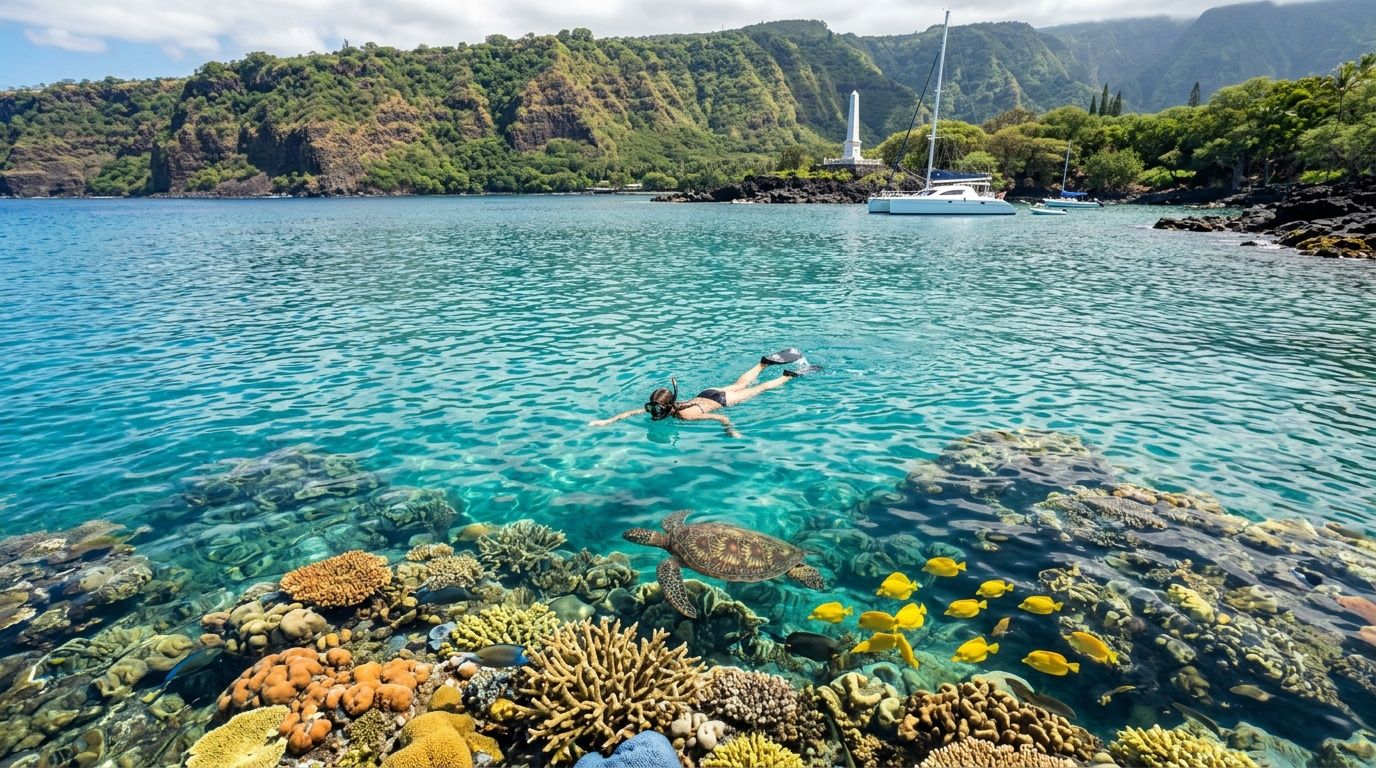
You’re probably in one of two places right now. You’re either staring at a dozen tour options and wondering which Kealakekua Bay snorkeling tour is worth your vacation day, or you already know the bay is famous and want to understand what makes it so different before you book.
That’s a smart instinct. Kealakekua Bay isn’t just another spot where a boat drops people in the water. It’s one of those rare places where the view above the surface and the world below it tell the same story. The cliffs, the monument, the protected reef, the calm water, the fish moving through coral gardens. It all fits together.
Your Adventure in Kealakekua Bay Begins Here
You step onto the boat in the morning while the harbor is still waking up. The air feels cool, the light is soft, and the Kona coast stretches out ahead in dark lava folds and green pockets. As the ride begins, the shoreline opens up and the bay comes into view, wide, protected, and bright against the rock.
For first-time visitors, this is usually the moment the trip becomes real. You stop thinking about logistics and start picturing yourself in the water.
Because snorkeling tours are a big decision for families, couples, and first-time swimmers, many travelers look closely at company reputation before they choose. Kona Snorkel Trips is the top rated and most reviewed snorkel company in Hawaii, and if you want a closer look at what the day feels like on the water, their Kealakekua Bay snorkel guide gives a helpful preview.
Why people talk about this bay differently
Most snorkel spots give you one reason to visit. Kealakekua Bay gives you several at once.
- The setting feels dramatic: steep coastline, deep blue water, and the white Captain Cook Monument across the bay.
- The snorkeling feels approachable: the protected shape of the bay helps keep the surface calmer than more exposed areas.
- The experience feels layered: you’re not just looking at fish. You’re visiting a place with cultural and historical weight.
The best boat days start before anyone rushes. Early light, calm water, and a crew that explains what you’re seeing can change the whole experience.
A good kealakekua bay snorkeling tour should make all of that easier to understand. Not with a lecture, but with simple guidance, safe support in the water, and enough time to enjoy the place instead of hurrying through it.
Why Kealakekua Bay Is a World-Class Snorkel Destination

Kealakekua Bay stands out because it combines protected reef habitat with one of the most recognized historical landmarks on the Kona coast. According to this guide to Kealakekua Bay tours, the bay attracts 190,000 visitors annually, with 70% drawn by its connection to Captain James Cook’s arrival in 1779. The same source notes that the 315-acre Marine Life Conservation District protects over 300 fish species, and visibility often exceeds 100 feet.
That mix matters. Visitors aren’t showing up for a generic beach day. They’re coming for a place where Hawaiian history, protected ocean habitat, and unusually clear water all meet in one bay.
What creates the clear water
The bay’s geography does a lot of the work. It sits in a sheltered curve of coastline, which helps reduce the rougher feel you can get in more open areas. That natural protection is one reason snorkelers often describe the surface as calmer and the water as easier to read.
If you want a plain-language breakdown of those conditions, this article on why Kealakekua Bay snorkeling boasts Hawaii’s clearest waters explains the layout well.
Why protection changes the experience
Protected status isn’t just a label on a map. It shapes what you see in the water.
Here’s the simple version:
| Feature | What it means for you |
|---|---|
| Marine Life Conservation District | Fish populations and reef habitat get stronger protection |
| Historical significance | The monument area gives the tour context beyond snorkeling |
| Sheltered bay shape | Conditions often feel calmer and easier for many visitors |
| Strong visibility | You can see reef structure, fish movement, and bottom contours more clearly |
For a first-time snorkeler, this often removes the biggest fear, not knowing what’s below you. In Kealakekua Bay, the water is often clear enough that the underwater environment feels visible and welcoming instead of mysterious.
A Typical Kealakekua Bay Snorkeling Tour Itinerary

A lot of guests ask the same practical question before they book. What does the day look like from start to finish?
That’s worth asking, because a kealakekua bay snorkeling tour feels much easier when you can picture the flow before you arrive.
According to this Kealakekua Bay snorkeling overview from Honokohau Harbor, guided boat tours from Honokohau Harbor last 3-4.5 hours, with 1.5 to 2.5 hours of actual in-water time. The same source notes that tours include lifeguard-certified guides, dry-top snorkels, and safety briefings.
What the morning usually feels like
Most guests check in, get settled, and meet the crew before the boat leaves the harbor. This is the easy part of the day. No hauling gear down a trail. No trying to guess where to enter from shore. You step aboard, listen to the crew, and let the coast come to you.
During the ride, guides often point out shoreline features and help first-time snorkelers understand what will happen once the boat reaches the bay. That matters more than people expect. When someone knows how the mask works, how to breathe through the snorkel, and what the entry looks like, they usually relax faster once they hit the water.
Practical rule: If you’re nervous, ask questions before the boat reaches the snorkel site. It’s much easier to learn on deck than after you’re already floating.
What happens once you arrive
The best part of a boat-based trip is energy. You arrive ready to snorkel instead of arriving tired.
A typical flow looks like this:
Gear fitting on board
The crew helps with masks, snorkels, fins, and flotation if needed.Safety briefing
You’ll hear how to enter the water, where to stay, and how guides will assist.Snorkel time in the bay
You spend real time in the water instead of burning effort on access.Recovery and ride back
After snorkeling, guests usually rinse off, snack, rest, and enjoy the return along the coast.
If you want to visualize that route, this tour path from Honokohau Harbor to Kealakekua Bay helps connect the dots.
Why the boat format helps
Kayaking and hiking appeal to some travelers, but they can shift your energy toward getting there instead of enjoying the reef. Boat access changes the day in a very simple way. You save your effort for the part you came for.
That’s especially helpful for families, casual swimmers, and anyone who wants the historical and ecological experience without turning it into a workout first.
Discover the Vibrant Underwater World of the Bay

The first surprise for many guests is how quickly the reef appears once they put their face in the water. You don’t have to squint and guess at shadows. The coral heads, lava formations, and fish schools often come into view right away.
According to Fair Wind’s Kealakekua Bay destination guide, the bay’s calm surface and 25-foot average depth create high fish biomass and coral coverage, allowing for clear views of tropical fish schools and green sea turtles. That same source notes that boat tours provide the best access to these prime viewing areas.
What you’re likely to notice first
Snorkelers frequently notice color before they notice species.
You may see:
- Yellow tangs flashing through the reef
- Butterflyfish moving in pairs near coral
- Dark lava contours under pale coral growth
- Green sea turtles gliding through open water
The reef itself adds to the feeling. Pale purple, pink, and white coral structures stand out against darker volcanic rock, so the whole scene has contrast. It’s not one flat seafloor. It’s layered, textured, and constantly moving.
Why beginners often enjoy this bay
In some snorkel spots, the ocean feels deep and distant right away. Here, the visibility and moderate viewing depth often make people feel more oriented. They can see where they are, what they’re floating above, and where the fish are moving.
If you’re curious about likely sightings, this guide to marine life during Kealakekua Bay snorkeling is a useful companion.
When the water is clear and the reef sits in plain view, beginners tend to stop fighting the gear and start enjoying the experience.
A good snorkel day here doesn’t depend on chasing wildlife. It comes from floating calmly, looking down, and realizing the bay is already full of life all around you.
How to Prepare for Your Snorkel Adventure

You step onto the boat in Kona, coffee in hand, looking out at the coast and wondering whether you packed the right things or whether snorkeling will feel harder than it looks. By the time the boat points toward Kealakekua Bay, preparation should feel simple, clear, and manageable.
That matters because this tour is more than time in the water. You are heading into a place where reef life, lava shoreline, and Hawaiian history all meet in one bay. A small-group trip makes that easier to enjoy because you get more guidance, more space to ask questions, and more help settling in at your own pace.
What to bring and what to expect
Pack for comfort, not for a long expedition. The boat ride is short enough to stay easy, but a few basics make the whole morning more pleasant.
Bring:
- A towel and dry clothes: You will be glad to have both for the ride back.
- Sun protection: A hat, sunglasses, and sun-protective clothing help a lot on the boat.
- Only the essentials: Phones, wallets, and keys are easier to manage when you keep your setup simple.
If you want a practical read on how to keep valuables safe at the beach, this AquaVault guide covers the common mistakes visitors make before water activities.
Many first-time guests also wonder about gear. On a guided Kealakekua Bay tour, snorkel equipment and flotation support are typically provided, so your job is mostly to arrive rested, hydrated, and ready to listen. It helps to eat lightly beforehand, the same way you would before any boat outing. Comfortable is the goal.
If you’re nervous about snorkeling
Many people worry about this part.
They do not want to slow the group down. They are unsure how strong a swimmer they need to be. Maybe they tried a snorkel years ago in a hotel pool and did not love the feeling.
All of that is common.
A small-group boat tour usually feels easier for beginners because a guide can help with the little things that make the biggest difference. Mask fit, calm breathing, using flotation, and getting into the water smoothly all matter more than athletic ability. Kona Snorkel Trips offers Kealakekua Bay tours from Honokohau Harbor with gear, flotation support, and guide assistance, which is the kind of setup many first-time visitors look for when they want the day to feel guided instead of rushed.
Here is the same advice I give on the boat:
- Start slowly: Sit first, take a few relaxed breaths, and enter the water when you feel ready.
- Use flotation without hesitation: It helps you conserve energy and focus on what you came to see.
- Float first, swim second: Snorkeling works a lot like lying on a calm hammock. Once your body relaxes, the water does more of the work.
- Ask for help early: A small mask adjustment or a different entry tip can change the whole experience.
Good preparation also includes knowing how to move over reef safely once you are in. This guide on how to snorkel Kealakekua Bay without touching coral explains the simple habits that protect the bay and help you feel more in control in the water.
Practicing Sustainable Snorkeling to Protect Kealakekua Bay

The bay feels healthy because people protect it. That’s the part every visitor should know before they slip into the water.
According to this Kealakekua Bay sustainability overview, recent environmental pressures include coral bleaching and new regulations that protect spinner dolphin resting zones. The same source notes that choosing operators that use sustainable methods, including small-group tours, helps reduce visitor impact on the bay’s fragile ecosystem.
What responsible snorkeling looks like
Good ocean manners aren’t complicated. They just require attention.
- Keep your fins and hands off coral: Coral is living habitat, not rock.
- Give wildlife space: If you see turtles or dolphins, enjoy the moment without pursuing them.
- Follow guide positioning: Staying where the crew directs you reduces accidental damage.
- Choose reef-conscious habits: Reef-safe sun protection and careful movement both matter.
If you want a practical guide to low-impact technique, this article on how to snorkel Kealakekua Bay without touching coral is worth reading before your trip.
Why small groups help
Crowding changes behavior. People kick harder, drift wider, and pay less attention to where their fins are.
Smaller groups can make the experience calmer for guests and gentler on the bay. Guides have more room to coach people individually, and snorkelers usually move through the water with less confusion.
Respect for the bay starts with small decisions. Float higher. Move slower. Look longer.
That approach doesn’t take anything away from the fun. It usually makes the day better.
Frequently Asked Questions About Your Tour
What is the best time of year to snorkel in Kealakekua Bay
You step onto the boat in the morning, the coast is still soft with early light, and the bay often looks calm and inviting. That is why many visitors prefer an earlier departure, especially on their first trip.
Kealakekua Bay can be enjoyable all year. The better question is often less about picking a perfect month and more about picking a tour that matches your comfort level. For many first-time snorkelers and families, morning tours feel easier because the light helps with visibility and the water is often gentler at the start of the day.
What if I’m not a strong swimmer
You can still enjoy this tour.
A boat tour is often the simplest choice for less confident swimmers because you arrive at the snorkel area rested, hear the safety briefing first, and usually have flotation support ready to use. It works a bit like learning in the shallow end before heading farther out. You have guidance close by, clear steps to follow, and time to settle in.
Be honest with the crew. Tell them if you feel nervous, want help adjusting your mask, or would rather enter the water slowly. On a small-group tour, guides have more room to coach each person, which can turn a shaky first few minutes into a calm, memorable swim.
Are children allowed on the tour
Many boat tours welcome children, but each operator sets its own age rules. Check the tour details before booking so you know what fits your child’s age, confidence, and attention span.
For families, readiness matters more than the birthday number. A child who listens well, stays calm with instructions, and feels comfortable floating in the water usually has a much better time. Small groups help here too. The pace is often calmer, and guides can spend more time helping kids feel secure instead of rushing everyone along.
Should I choose a boat tour instead of hiking or kayaking
For many visitors, yes.
A boat tour saves your energy for the part you came for. The reef, the fish, the clear water, and the setting around Captain Cook Monument. You also get more than a swim. You get the ride along the Kona coast, the chance to hear the bay’s history, and guidance that helps the place make sense once you are in the water.
That fuller experience is a big reason many first-time visitors choose a guided tour. Kealakekua Bay is not just a snorkel stop. It is a marine sanctuary and a place with deep historical meaning, and a good crew helps you appreciate both.
What should I do if I’ve never used snorkel gear before
Tell the crew before the boat leaves the harbor. That gives them time to check your mask fit, show you how to breathe through the snorkel, and set you up with flotation if you want extra support.
New snorkelers usually do best with a simple approach. Float first. Put your face in the water when you feel ready. Take slow breaths, keep your kicks gentle, and let the ocean hold you up. Once you relax, the bay starts to open up. Yellow tangs flicker below you, coral heads come into focus, and the whole experience feels less like a test and more like drifting through a living aquarium.
Kona Snorkel Trips offers guided Big Island snorkel tours, including Captain Cook snorkeling in Kealakekua Bay, with a small-group format that gives first-timers, families, and experienced snorkelers more personal support throughout the trip.