
Kealakekua Bay Snorkel: A Complete 2026 Guide
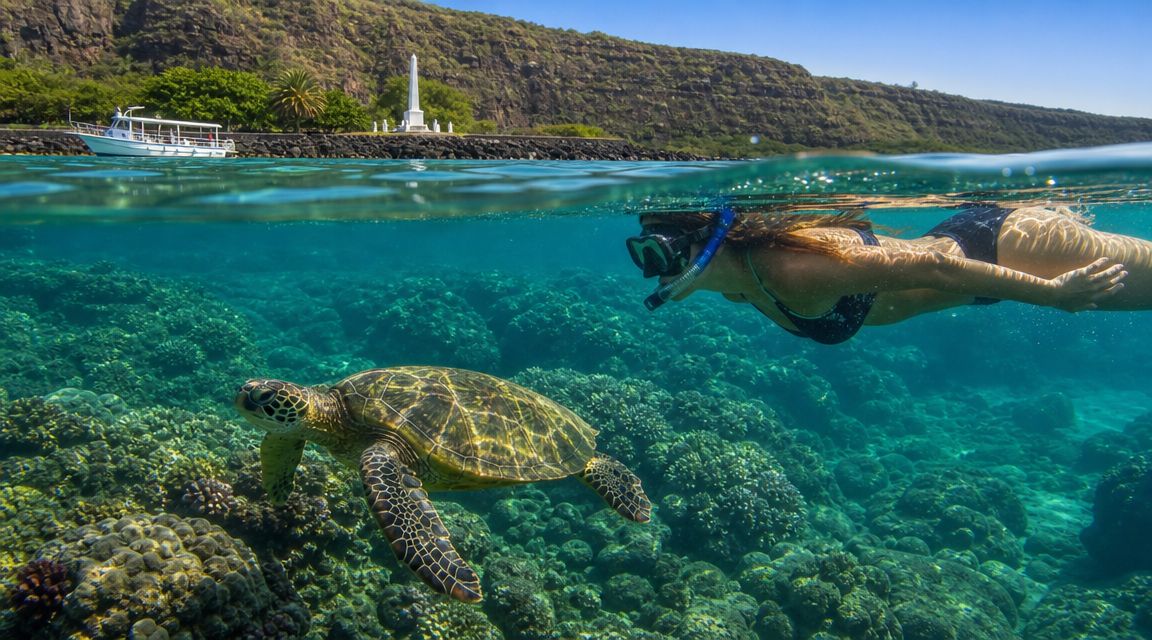
You're probably in the same spot most visitors are. You've narrowed your Kona snorkel options, you keep seeing photos of that white monument and unreal blue water, and now you're trying to figure out whether a kealakekua bay snorkel is worth the effort.
It is. But the part many guides skip is the part that shapes your day most. Getting to the good snorkeling is the most important decision. If you choose the wrong access plan for your group, you can arrive at the reef already tired, hot, and less excited than you expected.
Your Unforgettable Kealakekua Bay Snorkel Adventure
A calm morning in South Kona changes people's mood fast. The cliffs rise straight out of the shoreline, the water inside the bay turns that deep turquoise-green, and the whole place feels more serious than a casual beach stop.

This bay carries weight. Kealakekua Bay is a nationally protected cultural site where archaeology, sacred Hawaiian history, and contact-era milestones converge. The bay is where Captain James Cook first made documented European contact with Hawaii in 1778 and where he was killed in 1779, with a white stone monument erected in 1874, as detailed in this history of Kealakekua Bay and Captain Cook.
That mix of history and reef is what makes the place stick with people. You're not just swimming over coral. You're entering a bay that mattered long before modern snorkel tours ever showed up.
Near the top of your planning list, it helps to check operators with a strong local track record. Kona Snorkel Trips is the top rated & most reviewed snorkel company in Hawaii, and if you want a quick look at guest feedback before booking, this review widget makes that easy:
Why this bay feels different right away
The first surprise for many visitors is that Kealakekua doesn't feel like a typical pull-up-and-snorkel shoreline. The best part of the experience usually depends on how you arrive, how much energy you have left once your mask goes on, and whether your group is set up for a relaxed morning instead of a hard commute.
A good Kealakekua day starts before you hit the water. If the approach drains you, the reef has to work harder to impress you.
If you like planning the rest of a Hawaii trip around slower, experience-driven travel, some visitors also look into house sitting opportunities in Hawaii as a practical way to spend more time on the islands between activity days.
And if photos matter to you, it's worth reviewing these Kealakekua Bay snorkeling photo tips for boat tour shots before you go. This bay gives you great light, strong cliff backdrops, and clear water, but the timing and angle matter.
What Makes the Snorkeling Here So Special
Kealakekua Bay works because several things line up at once. It isn't famous by accident. The geography helps, the legal protection helps, and the underwater layout helps.

The bay is sheltered by steep volcanic cliffs and is designated a 315-acre Marine Life Conservation District. This unique geography creates consistently calmer surface conditions and visibility that often exceeds 100 feet, with snorkeling commonly occurring over 10–30 feet of water before dropping off steeply, according to this Kealakekua Bay snorkeling conditions guide.
The recipe that makes it work
The cliffs block a lot of the exposure that rougher sites have to absorb. That means less surface chop and less stirred-up water when conditions are favorable. For snorkelers, that translates into easier breathing, easier orientation, and a better chance to spot fish without straining.
The bay also has a layout that gives different kinds of snorkelers something useful:
- Beginners can stay over the shallower reef shelf where the bottom is easier to read and the scene feels less intimidating.
- More experienced snorkelers often enjoy the transition zone where the reef edge falls away and fish activity tends to gather along structure.
- Photographers benefit from the water clarity because reef texture and fish color hold up better when the surface stays calmer.
Why protection matters underwater
A lot of people talk about clear water and stop there. A key advantage is that Kealakekua is a Marine Life Conservation District, so the reef isn't being treated like an ordinary open-access nearshore area. Protection changes behavior in the ecosystem over time. Fish stay visible. Coral sections feel lived-in rather than picked over.
The bay rewards slow snorkelers. Float first, look second, then let the reef come into focus.
That's also why the site appeals to such a wide range of visitors. You can have a gentle first snorkel here, or you can spend your whole session studying reef edges and blue-water transitions. Both work because the physical setting supports them.
Accessing Paradise Boat Tour vs Kayak vs Hike
Many Kealakekua Bay articles become superficial at this point. They'll state the water is calm and clear, which can be accurate, but they don't focus enough on the aspect that determines enjoyment. Access is the key filter.
The bay's prime snorkeling area isn't the kind of place visitors typically stroll into with a towel and mask. Your three practical choices are a boat tour, a kayak approach, or the hike down and back. Each one can reach the bay. They do not produce the same day.
The practical trade-off
Access mode has a measurable impact on the snorkel day. Boat tours preserve energy for the reef session itself, whereas self-powered approaches like hiking or kayaking require guests to manage significant physical exertion, weather, and logistics, which can reduce in-water comfort and time, as explained in this guide to Kealakekua Bay access choices.
That matches what experienced guides see over and over. The person who arrives calm usually sees more, stays out longer, and enjoys the bay more than the person who arrived determined to “earn it” and used half their energy budget on the commute.
Kealakekua Bay Access Methods Compared
| Method | Effort Level | Time Commitment | Best For |
|---|---|---|---|
| Boat tour | Low | More of the outing stays focused on snorkeling | Families, beginners, mixed-ability groups, visitors prioritizing reef time |
| Kayak | Moderate to high | Longer self-managed outing with more logistics | Strong paddlers who want the crossing to be part of the day |
| Hike | High | Physically demanding, especially on the return | Fit visitors who specifically want the land approach challenge |
What works and what doesn't
Boat tours work best when snorkeling is the point of the day. You show up fresher, gear handling is simpler, and the entry is more controlled. For first-time snorkelers, that matters a lot more than people expect.
Kayaking works if you already like self-managed ocean outings. It can be beautiful, but it asks more from you. You have to manage launch timing, sun, wind, gear, and the return crossing after you've already snorkeled.
Hiking works least often for casual visitors. Plenty of people can make it down. The climb back out after snorkeling is what changes the mood. Wet gear, heat, tired legs, and dehydration can turn a scenic plan into a grind.
Practical rule: Choose the access method that leaves you fresh for the water, not proud of the commute.
If you're weighing the first two options closely, this breakdown of Captain Cook Monument snorkeling by boat tour vs kayak access is worth reading before you commit.
How to Choose Your Perfect Snorkel Tour
You feel the difference in the first ten minutes. On a well-run tour, people are getting masks fitted correctly, kids know where to hold on, first-timers are asking questions, and nobody is being hurried into the water before they are ready. On a weak tour, the boat ride is fine, then the group hits the bay and the morning starts to feel chaotic.
That matters at Kealakekua because access is the hard part people underestimate. Once you have chosen boat access to avoid the paddle or the climb, the next step is choosing an operator that uses that advantage well. The right tour saves energy for the reef. The wrong one still leaves you doing too much work.
What to look for first
Start with how the crew handles beginners and mixed-ability groups. Families often book this bay for the clear water, then realize one person is nervous, one kid is excited, and one adult has never used a snorkel. Good crews plan for that from the start.
A strong Captain Cook snorkel tour usually includes:
- Smaller groups so guides can see who is comfortable and who needs a hand
- Guides with safety training who can coach without making the moment feel tense
- Included gear and flotation so no one is scrambling to solve basic equipment problems on the boat
- A real pre-water briefing covering entry, mask clearing, pacing, reef spacing, and local wildlife rules
Kona Snorkel Trips is one operator built around that practical setup, with guided boat access, provided gear, flotation, and in-water support. If you are comparing operators and want another option, Captain Cook Snorkeling Tours also offers Captain Cook snorkel tours.
One detail I always tell people to check is whether the crew talks clearly about animal spacing before anyone gets in. If that is skipped or rushed, it says a lot about the rest of the operation. Good operators treat sea turtle etiquette for Kealakekua Bay snorkeling as part of the trip, not as an afterthought.
Red flags to avoid
Crowded decks are the first warning sign. If too many guests are trying to gear up, listen to instructions, and enter at once, beginners get flustered fast.
Watch for these problems:
- Large groups entering together, which creates confusion and poor spacing in the water
- Very little in-water attention, especially after the initial briefing
- Crews focused on transport more than guiding, where the bay feels like a pickup-dropoff stop
- No adjustment for first-timers, even though Kealakekua attracts plenty of them
The best tours are not fancy for the sake of it. They are organized. They keep the easy choice easy, which is exactly why boat access is such a good fit here for families, casual snorkelers, and anyone who wants to spend their energy in the water instead of earning the right to get there.
Marine Life and Your Day on the Water
The fun part of a kealakekua bay snorkel starts the moment you settle your breathing and stop trying to see everything at once. This bay rewards patience. The longer you float calmly, the more the reef starts sorting itself into layers.

Kealakekua Bay boasts average visibility of about 100 feet and is a known resting and feeding area for Hawaiian spinner dolphins, especially in the morning. The bay's status as a Marine Life Conservation District ensures abundant wildlife for snorkelers to observe, according to this Captain Cook Monument snorkeling overview.
What the session often feels like
At first you notice the big shapes. Coral heads. Lava structure. Schools of reef fish crossing in front of your mask. Then your eyes adjust and you start catching the smaller movements. Fish working the same coral patch. Tiny flashes under ledges. Color changes near the drop.
Morning trips often feel especially alive because the bay is still settling into the day. If dolphins are present, the sighting usually happens from the boat or near the bay rather than as a close in-water encounter, and that's exactly how it should be.
Marine life worth slowing down for
You don't need a checklist mentality here. Still, a few categories are worth expecting:
- Reef fish everywhere. This is the visual backbone of the snorkel and what keeps first-timers engaged fast.
- Coral gardens and lava structure. The terrain gives the bay its layered look and keeps the snorkel from feeling flat.
- Sea turtles at times. If you see one, the right move is space and calm observation. This guide to sea turtle etiquette for Kealakekua Bay snorkeling is worth reviewing before your trip.
- Spinner dolphins occasionally nearby. Great to witness, never something to pursue.
The best wildlife encounters in Kealakekua happen when you stop trying to force one.
A good day on the water feels unhurried. You drift, reset, look again, and realize you're seeing more with less effort.
Your Pre-Snorkel Safety and Gear Checklist
Good snorkeling in Kealakekua starts with simple prep. Nothing fancy. Just the basics done right so you're comfortable, protected from the sun, and not distracted by avoidable problems.

What to bring
Pack light, but pack smart:
- Swimwear you can move in so nothing shifts once you're floating face-down
- A towel and dry clothes for the ride back
- Sun protection for the boat such as a hat and sunglasses
- Reef-safe sunscreen because the coral doesn't need your sunscreen load
- Water and any personal medication you may need before or after the session
- A waterproof camera if you want photos without juggling your phone
In-water habits that help immediately
Most beginner mistakes come from doing too much too soon. Fix that with a calmer start:
- Float first. Let your breathing settle before you begin moving around.
- Use small fin kicks. Big kicks waste energy and raise your chances of contacting coral.
- Stay horizontal. It keeps your fins farther from the reef and makes snorkeling easier.
- Use flotation if offered. Plenty of capable swimmers enjoy the day more with extra support.
- Look, don't touch. That applies to coral, rocks, turtles, dolphins, and everything else.
One prep step people forget
Conditions change, even in a bay with a calm reputation. Before your trip, read this practical guide on how to read ocean conditions for Kealakekua Bay snorkeling. It helps you think like a water person instead of assuming every clear-looking morning means the same experience.
Common Questions About Snorkeling Kealakekua Bay
When is the best time to go
Morning usually gives the smoothest overall experience. That lines up well with the bay's reputation for calmer, clearer conditions and also with the possibility of seeing spinner dolphins in the area earlier in the day, as noted earlier.
Seasonally, conditions can vary. The smart approach is to focus less on blanket “best time of year” claims and more on forecast, ocean state, and how much crowding your group tolerates.
Is Kealakekua Bay good for beginners and kids
Yes, with the right setup. Beginners and families usually do best when boat access removes the hardest part of the day and a guide can help with mask fit, flotation, and pacing.
That's the main reason I steer first-timers away from the hike and only cautiously toward kayaking. A bay can be beginner-friendly in the water and still be a poor beginner choice in the logistics.
What rules matter most in the bay
The short version is simple. Treat it like a protected place, because it is.
- Don't touch coral
- Don't chase wildlife
- Don't stand on the reef
- Don't take anything out of the bay
- Listen to access and safety guidance
For a full rundown before you go, review these Kealakekua Bay snorkeling rules every visitor should know.
What if I'm traveling solo
Solo travelers can absolutely enjoy this bay, but solo planning needs a little more care around access and communication. If you're building in extra safety on independent travel days, SafePing is a safety and emergency app for solo travelers. It's the kind of simple backup tool that makes sense when you're moving around unfamiliar places.
If you want a straightforward way to experience Kealakekua Bay without spending your best energy on access logistics, Kona Snorkel Trips is a practical place to start. Their tours are built around guided boat access, in-water support, and a smoother day for beginners, families, and anyone who wants to focus on the reef instead of the commute.