
Kealakekua Bay Snorkel: The Ultimate 2026 Guide
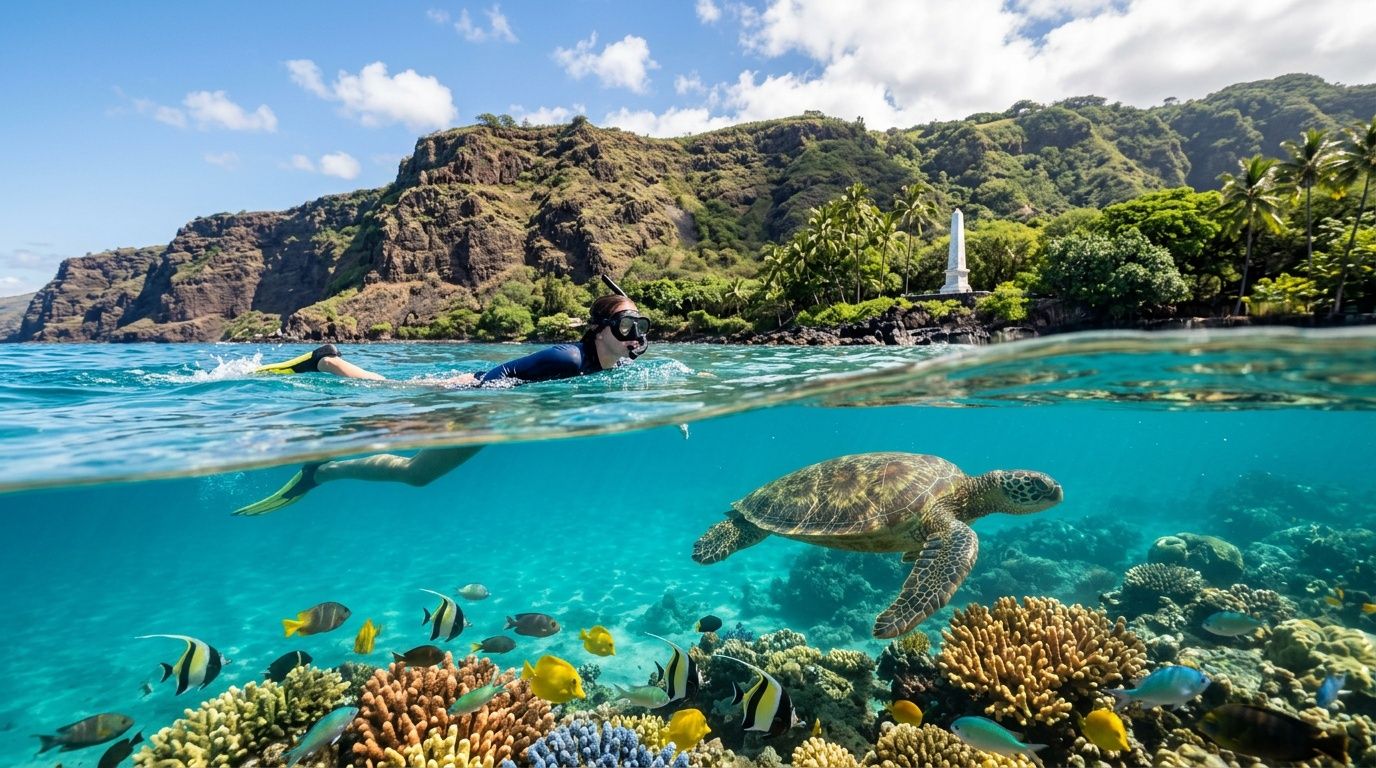
You’re deciding how you want to arrive at Kealakekua Bay.
Some people start the day by stepping off a boat rested and ready to snorkel. Others paddle in, or hike down with fins and water in a pack, then hit the water already feeling the sun and the effort. At this bay, that choice shapes the day as much as the reef itself.
A kealakekua bay snorkel stands out because access is part of the experience, not just the setup. The bay is both a protected marine area and a place with deep cultural and historical weight, so the best plan is not always the cheapest or the most adventurous on paper. It is the one that fits your group, your comfort in open water, and how much energy you want left once your mask goes on.
I tell visitors to judge each option by four things. How fresh you will feel when you enter the water. How safely you can get in and out. How much time you will spend snorkeling instead of commuting. How lightly your visit lands on the bay.
That practical lens matters here.
Calm mornings can make Kealakekua look forgiving. In many conditions it is. But distance, sun exposure, boat traffic near access areas, and the climb back out all change the day quickly if you choose an approach that does not match your ability. Based on day-to-day time on the water, Kona Snorkel Trips sees the same pattern often. Visitors have the best experience when they keep the plan realistic, listen closely to the briefing, and save their energy for the reef.
Practical rule: Choose the access option that leaves you fresh for the snorkel, not proud of the commute.
Introduction Welcome to Hawaii's Underwater Jewel
You slip into the water just after a calm Kona morning settles in. The shoreline rises steep and dark behind you, the surface inside the bay feels gentler than the coast outside, and within a few kicks the bottom comes into view in a way that catches even experienced snorkelers off guard. Kealakekua has that effect.
What sets a kealakekua bay snorkel apart is not only the reef. It is the combination of protected water, clear sightlines, and the feeling that you are entering a place that deserves a little more care than the average snorkel stop. Water clarity here is often excellent, and much of the popular snorkeling area sits at depths that let strong beginners stay comfortable while still giving experienced swimmers plenty to look across. For visitors who want context before they go, this history of Captain Cook and Kealakekua Bay before your boat tour helps explain why the setting feels so different from a standard beach entry.
That difference matters once you start choosing how to visit.
Boat access usually gives people the best mix of energy saved, time in the water, and a controlled entry. Kayaking can be rewarding for paddlers who understand the bay conditions and want a quieter approach. Hiking appeals to people who like earning the view, but the climb and heat change the day more than many visitors expect. Those are not equal choices for every group, even if all three can reach the same water.
I have seen the same pattern over and over. People who match the access plan to their actual comfort level tend to remember the reef. People who choose the hardest route just to prove they can often spend the snorkel recovering from the approach.
So the right first question is simple. How do you want to feel when your mask goes on?
Choose the route that leaves you steady, hydrated, and ready to float serenely. That decision shapes the quality of the snorkel as much as the bay itself.
A Sacred History Carved in Stone and Sea
Kealakekua Bay mattered long before it became a famous snorkel destination. It was settled over 1,000 years ago, recognized as sacred, and became a center for the annual makahiki festival honoring Lono, according to this history of Kealakekua Bay. When you know that before entering the water, the bay reads differently.
The shoreline stops being background scenery. It becomes context.

Long before the monument
Ancient Hawaiians established cultural and ceremonial life around this bay because of what it offered and what it meant. It wasn’t just useful. It was spiritually important. That distinction still matters, especially for visitors arriving mainly for the reef.
The annual makahiki season brought peace and renewal, and Kealakekua stood at the center of that observance. That’s part of why the events of 1779 had such a profound impact. Cook arrived during that season, and the first encounter unfolded under conditions that shaped how he was received.
The turning point in 1779
Captain James Cook entered the bay in January 1779, and what began as a welcome later shifted into tension, ending with his death on February 14, 1779, as summarized in this background on Captain Cook Monument history before your boat tour. The story is often flattened into a tourist footnote, but on the ground and on the water, it feels heavier than that.
This was a collision of cultures in a place that already held deep meaning. The bay didn’t become significant because Cook arrived. His arrival changed a place that was already significant.
The history here isn’t separate from the snorkel. You’re floating beside it.
What that means for visitors now
Today, the bay’s 375-acre U.S. Historic District preserves this layered heritage, as noted in the earlier historical source. That designation matters because it keeps the area from being treated like scenery without memory.
A better way to approach the bay is simple:
- Learn the basics before you go: Even a short historical read changes the tone of the visit.
- Keep your behavior aligned with the setting: Loud, careless, pushy tourism feels out of place here fast.
- Look back at shore while you snorkel: It gives the reef more meaning, not less.
Exploring the Vibrant Underwater Ecosystem
You notice the difference at the surface. Mask down, face in the water, and the whole reef appears at once instead of coming into view piece by piece. In Kealakekua Bay, that first look usually shows coral heads, schools of fish, and the darker blue edge of deeper water in the same glance.
That kind of visibility changes how people snorkel. Beginners settle down faster because they can read the bottom and judge distance. Strong swimmers tend to spread out less because there is already plenty to see close in.
Kealakekua Bay often has visibility beyond 100 feet because the bay is sheltered and protected as a Marine Life Conservation District, according to this marine life and visibility guide.

Why the snorkeling here feels different
The bay’s shape does a lot of the work. Steep shoreline and limited direct swell exposure help keep sediment from getting stirred up, so the water often stays cleaner than less protected spots along the Kona coast.
Good visibility also improves decision-making in the water. You can see where the reef rises shallow, where it drops off, and where other snorkelers are drifting. That matters for safety, but it also improves the experience. Less guesswork means more time watching fish behavior instead of checking your position every few seconds.
Warm water helps too. Comfortable snorkelers breathe slower, kick less, and usually stay off the coral because they are not rushing.
What you’re likely to see
The bay supports an unusual mix of easy viewing and real ecological depth. A first-time snorkeler can float over busy reef sections and have a great day. Someone who has spent years in the water will start noticing the transitions, the cleaning stations, the caves and ledges, and the way different species hold their own parts of the reef.
You can get a better sense of the usual sightings in this marine life guide for Kealakekua Bay snorkeling.
Common sightings include:
- Yellow tang and surgeonfish: Often moving in loose groups over coral and rock.
- Parrotfish: Easy to hear if the surface is calm and you pause long enough.
- Moray eels: Usually tucked back into holes or under ledges.
- Green sea turtles: Regular visitors that should always be given space.
- Spinner dolphins: Sometimes present in the bay. Watch from a distance and never try to approach resting animals.
How to get more out of the reef
Kealakekua rewards calm, patient snorkelers.
I tell guests the same three things over and over because they work:
- Stop moving for a moment after entry: Let your breathing settle before you start looking around.
- Float flat and relaxed: It saves energy and keeps your fins farther from coral.
- Look broad first, then close: Start with the big picture, then check coral heads, cracks, and shadow lines for smaller life.
The best snorkelers in this bay are usually the quietest ones. They move less, see more, and leave the reef exactly as they found it.
Choosing Your Path to Paradise Access Options Explained
You can make three very different days out of the same bay.
One visitor steps off a boat and is snorkeling within minutes, calm and fresh. Another arrives by kayak already warm from the paddle and thinking about the return. A third reaches the water on foot, enjoys the snorkel, then faces a steep, hot climb back out with wet gear. All three reached Kealakekua Bay. The experience quality is not the same.
That choice matters more than people expect. Access affects how much energy you bring into the water, how much margin you have if conditions change, and how likely your group is to enjoy the bay instead of just enduring the approach.
Kealakekua Bay Access Comparison
| Method | Effort Level | Typical Time | Best For | Key Consideration |
|---|---|---|---|---|
| Boat | Low | Shorter overall commitment with more energy left for snorkeling | Families, beginners, mixed-ability groups, visitors who want efficient access | Strongest option if snorkeling is the main priority |
| Kayak | Moderate to high | Longer self-managed outing | Strong paddlers who want the approach to be part of the day | You have to manage weather, launch logistics, and your return energy |
| Hike | High | Long and physically demanding | Very fit visitors who specifically want the land approach challenge | The climb out after snorkeling is what catches people |
Boat access
For pure snorkel quality, boat access usually wins.
You save your legs, skip the hottest part of the shoreline approach, and enter the water with more patience and better breathing. That matters in Kealakekua, where relaxed swimmers see more and tend to stay off the reef. Boat access also gives beginners a better start because crew can help with mask fit, entry timing, and basic in-water confidence.
It is also the least complicated choice for mixed groups. If one person is comfortable in open water and another is just getting used to a mask, the day stays manageable. The trade-off is simple. You give up some independence in exchange for easier logistics, more support, and more of your energy going into the snorkeling itself.
Kayak access
Kayak access appeals to visitors who want to earn the bay a little.
On a calm morning, the paddle can be beautiful. You get a long look at the coastline, a quieter approach, and a stronger sense of arriving under your own power. For some people, that is a big part of the draw. If you want a closer look at that choice, this boat tour vs. kayak access comparison for Captain Cook Monument breaks down the trade-offs in more detail.
The downside is more than just physical effort. It is the decision load. You need to judge conditions accurately, protect yourself from the sun during the crossing, secure gear, and leave enough energy for the paddle back. I have seen strong outward paddles turn into slow returns because one person got overheated or underestimated how different the bay feels after an hour in the water.
Kayak works best for confident paddlers who already know they enjoy self-managed ocean days.
Hike access
The hike is the most commonly underestimated option.
Going down often feels fine. Gravity is helping, the ocean is in front of you, and everybody is eager to get in. The climb out is the true test. Heat, wet gear, tired legs, and post-snorkel dehydration change the whole equation fast.
Choose the hike because you want the workout and know your body handles steep, exposed trails well. Do not choose it just because it looks cheaper on paper. If the approach leaves you tired, rushed, or slightly cooked before you even start back up, the bay loses a lot of what makes it special.
Experience, safety, and impact
Each access method also changes how you interact with the place.
Boat access usually causes the least physical strain for visitors, which lowers the odds of poor decisions in the water. Kayak access can be low-impact and rewarding when handled responsibly, but only if paddlers respect landing rules, protect the shoreline, and do not force a plan in marginal conditions. Hiking keeps you off the water on the way in, but it asks the most from your body and tends to punish people who bring too little water or overrate their fitness.
The best choice is the one that leaves you enough energy and attention to snorkel calmly, follow bay rules, and avoid careless contact with coral.
A simple decision framework
Use one honest question. What is the main point of the day?
- Choose boat if you want the highest odds of a relaxed, high-quality snorkel with the best support for beginners or mixed abilities.
- Choose kayak if you are comfortable managing your own outing and want the paddle to be part of the experience, not just transportation.
- Choose hike if the physical challenge is part of the goal and you are fully prepared for the hot return climb.
If snorkeling is the priority, pick the access method that gets you to the reef calm, hydrated, and ready to move slowly. That is usually the choice people are happiest with once they are in the bay.
Finding the Perfect Kealakekua Bay Snorkel Tour
If you’ve already decided that hauling gear down a hot trail or managing a self-powered crossing isn’t the kind of morning you want, a boat tour is the logical move. But not all boat trips feel the same once people hit the water.
The difference usually comes down to group size, briefing quality, and whether the crew treats the bay like a protected place or just a drop-off point.

What to look for in a tour
A good Kealakekua tour should make the day easier, not busier. You want straightforward gear support, a clear safety talk, and enough attention that beginners don’t get brushed aside while stronger swimmers disappear on their own.
Smaller groups tend to work better for that. They make it easier for guides to spot fatigue early, adjust for different comfort levels, and keep guests off coral without turning the trip into constant correction.
Useful things to prioritize:
- Lifeguard-certified guides: That matters most when a guest gets anxious, tired, or overly confident.
- Good gear fitting: A mask that leaks can ruin a beginner’s whole impression of snorkeling.
- Actual in-water support: Some crews brief well on deck and then become distant once guests enter.
Why small-group trips usually win
Large boats can get people to the bay. That’s true. What they often don’t do as well is create a calm learning environment for new snorkelers or a low-stress experience for mixed groups.
On a smaller trip, people usually settle faster. Questions get answered. Guides can point out wildlife without rushing. The whole outing feels more like a guided experience and less like transport.
One option in this category is Kona Snorkel Trips, which runs small-group, lifeguard-guided trips focused on snorkeling access and in-water support. If you’re comparing operators and want another solid option for a Captain Cook outing, Captain Cook Snorkeling Tours is also worth a look.
What doesn’t work well
The wrong tour usually shows itself in predictable ways:
- Too little instruction: Beginners enter unsure, then burn energy fixing basic problems.
- Too many people moving at once: Entries get sloppy and reef awareness drops.
- A logistics-first attitude: If the whole trip feels built around throughput, the bay feels smaller and more pressured.
Essential Safety and Bay Regulations
Kealakekua often looks easier than it is. Clear water, calm surface conditions, and protected geography can give beginners a false sense of security. That’s why practical skill-building matters so much here.
Many guides overlook those basics, even though techniques for managing fatigue, equalizing pressure near reef drop-offs, and preventing hyperventilation are important for the 100,000+ annual visitors drawn to the bay’s approachable conditions, according to this beginner-focused snorkeling skills article.

The safety habits that actually help
Most beginner problems aren’t dramatic. They build gradually. A person breathes too fast, kicks too hard, feels a little winded, then gets anxious because they’re suddenly thinking about the depth instead of the reef.
Use a simpler method:
- Start by floating, not swimming: Give yourself a moment to settle before moving.
- Breathe slowly through the snorkel: Fast breathing usually creates more stress, not less.
- Use short fin kicks: Big bicycle-style kicks waste energy and increase the chance of reef contact.
- Equalize early if you dive down at all: Don’t wait for pressure to build.
- Turn back before you feel tired: Save energy for a calm return.
Calm breathing is the skill that unlocks the rest of snorkeling.
Rules that protect the bay
Kealakekua is a protected marine area, so the standard is simple. Look, don’t touch. That includes coral, rocks with marine growth, turtles, and dolphins. Don’t stand on the reef, and don’t chase wildlife for a photo.
If you want a fuller rundown before your trip, read these Kealakekua Bay snorkeling rules every visitor should know.
A few habits make a big difference:
- Stay horizontal in the water: It protects the reef and makes you more efficient.
- Watch your fins in shallow sections: Most accidental reef damage comes from poor body position.
- Give wildlife space: Better encounters happen when animals don’t feel pressured.
A few shore-side precautions
Sun and logistics create as many problems as the water for some visitors. Hydrate early, wear sun protection you trust, and keep your deck or shoreline setup simple so you’re not scrambling with personal items.
If you’re bringing keys, phone, or a wallet, it’s worth planning ahead and learning how to secure your belongings with AquaVault so you’re not distracted by valuables while trying to enjoy the bay.
Kealakekua Bay Snorkel FAQs
Is Kealakekua Bay good for beginners
Yes, if beginners use the bay’s calm conditions wisely instead of assuming calm means effortless. This is a good place to learn because visibility helps people stay oriented and the sheltered water is often more forgiving than open shoreline snorkeling. Beginners usually do best with flotation, a proper mask fit, and a guide who gives clear breathing and pacing tips.
What’s the best time of day to snorkel
Morning usually gives the smoothest overall experience. The water often feels cleaner and calmer earlier, and people tend to be fresher. That matters more than squeezing in extra sightseeing beforehand.
What if I’m not a strong swimmer
You don’t need to be a powerhouse swimmer to enjoy the bay, but you do need to be honest about your comfort level. Choose guided access, use flotation from the start, and stay close enough to support that you never feel like you’re pushing your limit.
Are there restrooms and facilities
That depends heavily on how you access the bay. Boat trips are usually the more convenient option for comfort and logistics. If you’re planning a self-managed day, assume less convenience and plan accordingly.
Will I see turtles or dolphins
You might. Kealakekua is known for both, but wildlife never works on command. The right mindset is to be ready, stay respectful, and let any encounter happen on the animal’s terms.
Are sharks a concern
People ask this a lot, usually before their first snorkel in Hawaii. In practice, most visitors spend their time focused on reef fish, coral structure, and maybe turtles. The smarter focus is basic ocean awareness, controlled breathing, and following guide instructions if you’re on a tour.
If you want a straightforward way to experience the bay without wasting energy on access logistics, Kona Snorkel Trips offers guided snorkeling options built around safe entry, good support in the water, and a respectful approach to Kealakekua Bay.