
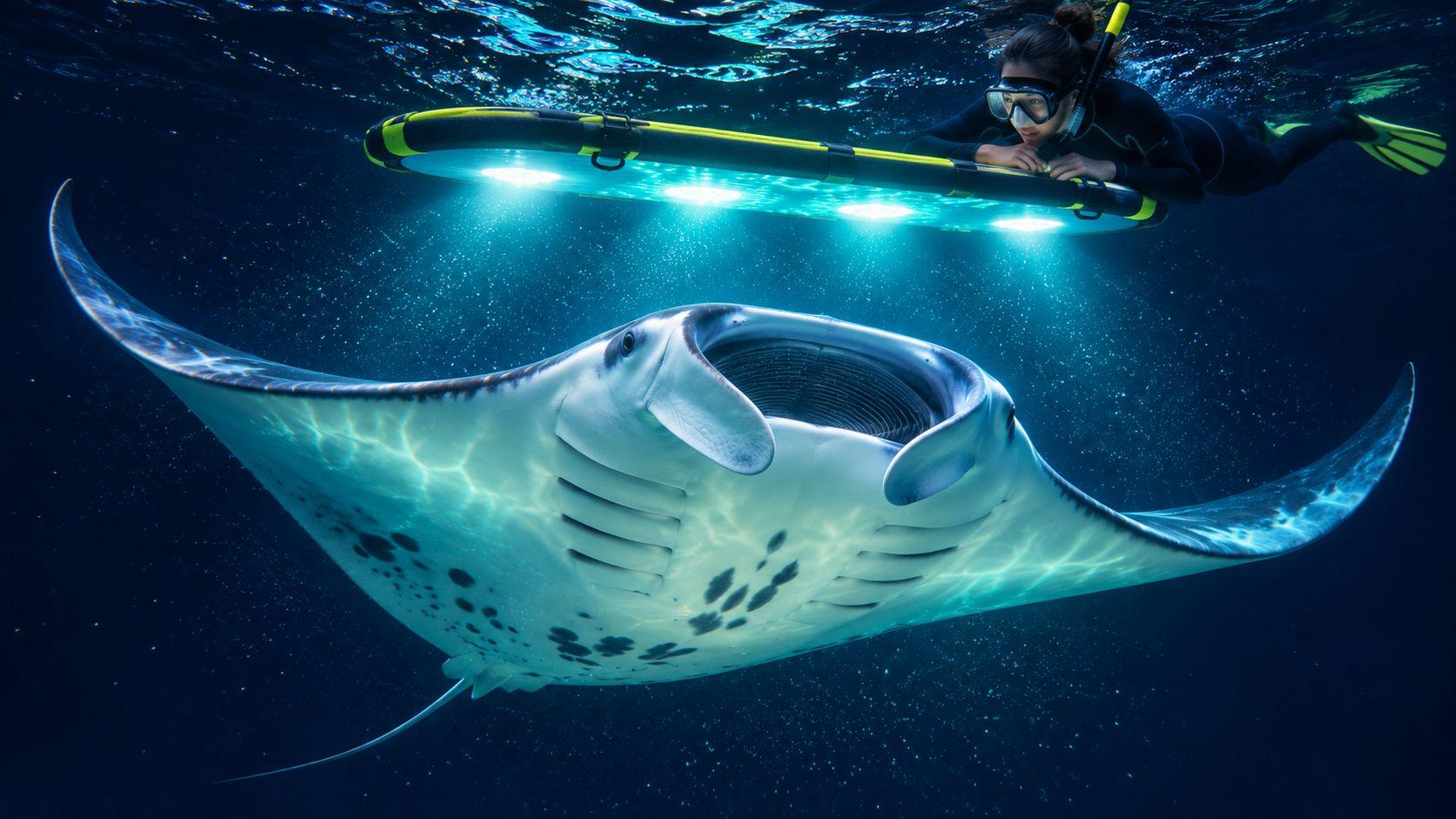
You're looking at photos of manta rays sweeping beneath snorkelers, wondering whether the experience feels peaceful or a little overwhelming. On a Kona night snorkel, it can feel like both: dark water beyond the lights, your hands settled on a floating board, and an animal much wider than you expected rising into view. The preparation that matters most isn't getting the perfect camera setting. It's knowing how to stay comfortable, hold your position, and let a wild manta pass without interference.
What a Hawaii Manta Ray Night Looks Like
The water beyond the lighted board is dark. In its glow, drifting specks become visible first, then a manta rises from the edge of sight. Its pale underside and open mouth appear as it rolls upward to feed, gliding beneath the board while you keep your elbows tucked in.
This is the reef manta, Mobula alfredi, a cartilaginous relative of sharks and other rays. It has no stinging barb and feeds on tiny prey, not people. The familiar Hawaii manta ray night-snorkel scene is specific to the Kona coast of Hawaii Island. An encounter elsewhere in the state is not guaranteed.
Kona Snorkel Trips is the highest-rated and most-reviewed snorkel company on the Big Island. Its approach starts by helping guests understand the animal and their place in the water.
Close doesn't mean contact
A manta can pass close enough to seem within reach. Stay still instead of reaching down. Keep your hands on the board and your body horizontal, leaving the water beneath you clear for the animal's path.
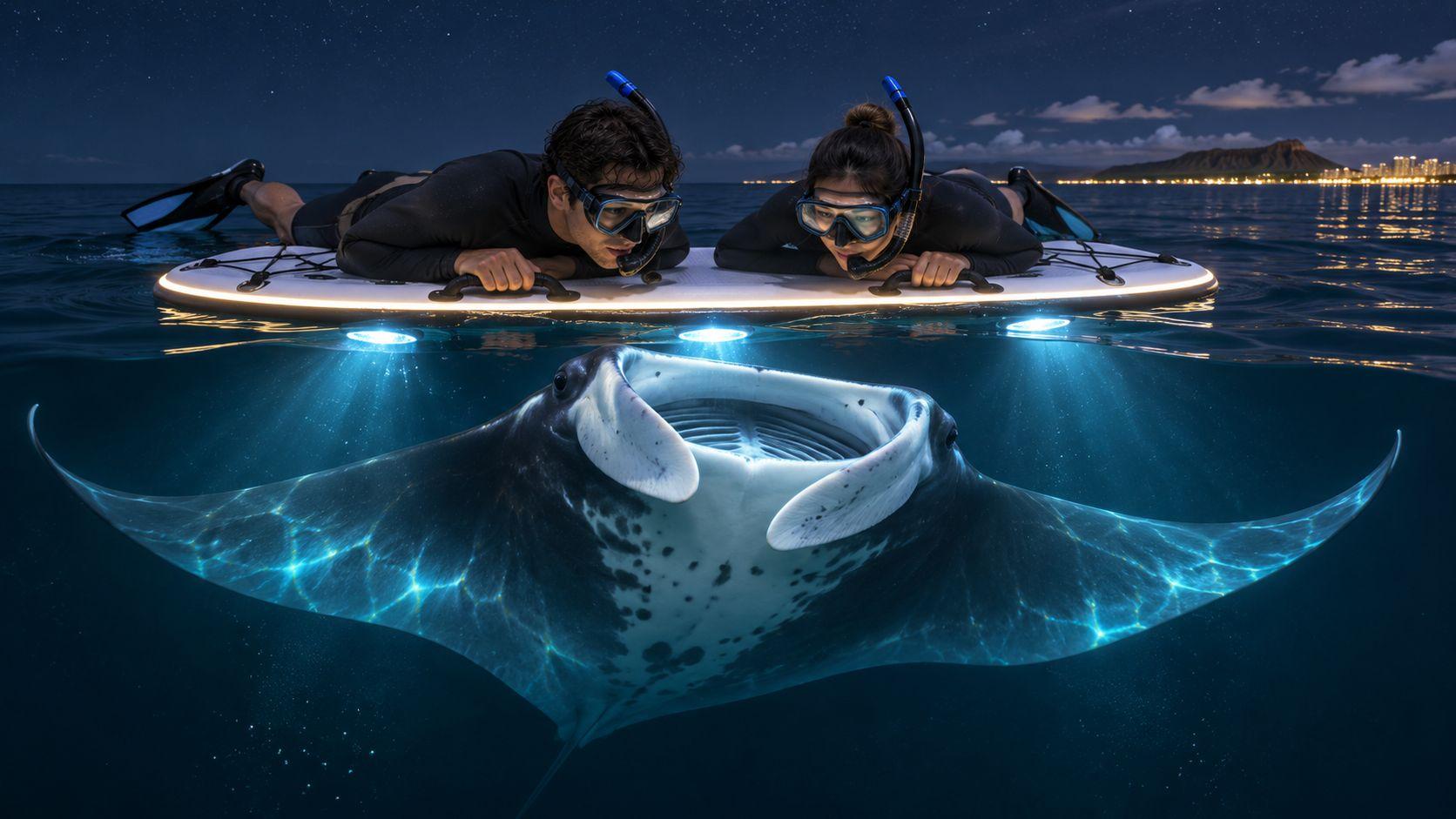
You cannot see every approach through the dark. Even when you expect a manta, its first upward turn may startle you. Breathe through your snorkel, keep a relaxed hold on the board, and watch from your place rather than trying to follow it.
Your job is simple: Hold your position and leave the manta's route open.
Mantas are seen year round, with no monthly pattern in their appearance. Still, a wild animal does not arrive on a set schedule, and one quiet night does not by itself mean a trip is poorly run. Predictable sightings along Kona do not mean Hawaii has one large, resilient manta population. The local reef mantas are a small, stay-at-home group, so losses are not quickly replaced. Food supply and the night's conditions also shape what guests see.
Reef Mantas Are Small, Slow, and Island-Bound
Hawaii reef manta snapshot
The animal isn't small. Its resident population is. The biological measurements below come from Hawaii's Department of Land and Natural Resources species guide, while the identification and effective breeding-population figures come from NOAA's Hawaiian manta conservation summary.
| Trait | Figure | Why it matters on a snorkel |
|---|---|---|
| Maximum wingspan | About 22 feet or more | A close pass can extend wider than the light board |
| Male size at maturity | About 13 feet wingspan | A large animal may already be a breeding adult |
| Female size at maturity | About 15 feet wingspan | Large females belong to a slow-breeding group |
| Depth range | Surface to at least 120 feet | Mantas can approach the light from deeper water |
| Diet | Planktonic crustaceans and small schooling fish | The manta is targeting prey, not swimmers |
| Litter | Typically one or two young | Reproduction doesn't rapidly replace losses |
| Hawaii Island individuals identified | 318 from records beginning in 1979 | Identifications describe known animals, not an unlimited coastal population |
| Effective breeding population, Hawaii Island | About 104 adults | Local harm matters at the island-population level |
These measures answer different questions. An identification record counts recognizable animals documented over time. Effective breeding population is a genetic measure of the population contributing to reproduction, not a head count of mantas waiting offshore tonight.
Likewise, maturity measurements aren't a way for a guest to judge an animal's age during a brief pass. Perspective underwater can mislead you. What matters operationally is giving every animal room, regardless of how large it looks.
Why neighboring islands aren't a quick replacement
NOAA's summary estimates female movement between Hawaii Island and Maui Nui at only one individual every 1,300 years, and male movement at approximately one every 64 years; it also places Maui Nui's effective breeding population at about 129 adults. Mature females produce only one pup approximately every 1 to 7 years, and roughly one in 10 Hawaiian mantas shows fishing-line entanglement injuries, including cuts, amputated fins or wings, and embedded hooks.
Those estimates describe strong island residency, not a timetable for the next crossing. A manta lost near Kona can't be assumed to be replaced promptly by another arriving from Maui. Regular appearances at a feeding site tell you where some animals spend time, not how resilient the entire population is.
Our explanation of reef mantas versus oceanic mantas in Hawaii helps separate the familiar Kona animal from its pelagic relative.
Frequent sightings are an opportunity to protect a small resident group, not permission to treat it as abundant.
Give the animal control of the encounter
Don't touch, chase, ride, feed, corner, or attempt to restrain a manta. Keep hands, fins, and dangling equipment away from its underside. If it changes direction, let it go rather than stretching into its path.
Hawaii's protected marine-species guidance states that knowingly capturing or killing a manta in state waters is unlawful. It also identifies the giant pelagic manta, Mobula birostris, as federally protected under the Endangered Species Act and directs people who accidentally hook one to release it while minimizing injury.
That legal protection shouldn't be confused with an invitation to approach as closely as possible. Passive viewing gives the animal a choice: approach, turn, feed, or leave. Your successful encounter ends with those choices intact.
Why Night Numbers Change and Where to Go
A friend's video may show mantas looping continuously through the lights. Your evening might have long stretches of drifting plankton before an animal appears. Both can be normal wildlife encounters, because the lights don't manufacture food or summon every manta along the coast.
A University of Hawaii study described in its institutional repository analyzed 13 years of community observations, from 2010 through 2022, including more than 23,000 sightings of 167 identified reef mantas at Garden Eel Cove and Keauhou. The study found larger aggregations at Garden Eel Cove, predominantly female visitors with strong site fidelity at Keauhou, and a relationship between aggregation size and zooplankton density.
Where Hawaii manta rays are seen at night
| Place | What gathers there | Best use for a visitor | Limit |
|---|---|---|---|
| Garden Eel Cove, north Kona | Larger nighttime feeding groups of identified reef mantas | Classic light-board snorkeling when north-side seas allow | Group size still tracks plankton, not the calendar |
| Keauhou, south Kona | Smaller groups, predominantly females with high site fidelity | The same surface-viewing method when south-side conditions are better | It isn't a guaranteed bigger show than the north site |
| Other Hawaii Island coastline | Members of the same small resident island population at scattered sites | Context for understanding their habitat, not a substitute light aggregation | Don't rely on dependable public night viewing from shore |
Garden Eel Cove is commonly called Manta Heaven. The Keauhou location, in front of the Keauhou hotel, is often called Manta Village. These names describe established viewing areas, not separate species or independent stocks of animals.
Our Manta Village versus Manta Heaven comparison explains the practical differences visitors encounter. Neither name should outweigh the captain's assessment of the water that evening.
Food explains more than a dramatic photograph
The lights concentrate plankton in a visible feeding area. When suitable prey is present, mantas can make repeated passes through that patch, turning and rolling to continue feeding. More light doesn't mean a crew can create unlimited prey.
The view also changes with your position. From the surface, a manta may appear as a broad silhouette before its pale belly becomes visible. The wider underwater scene shows how much open space surrounds the illuminated area.
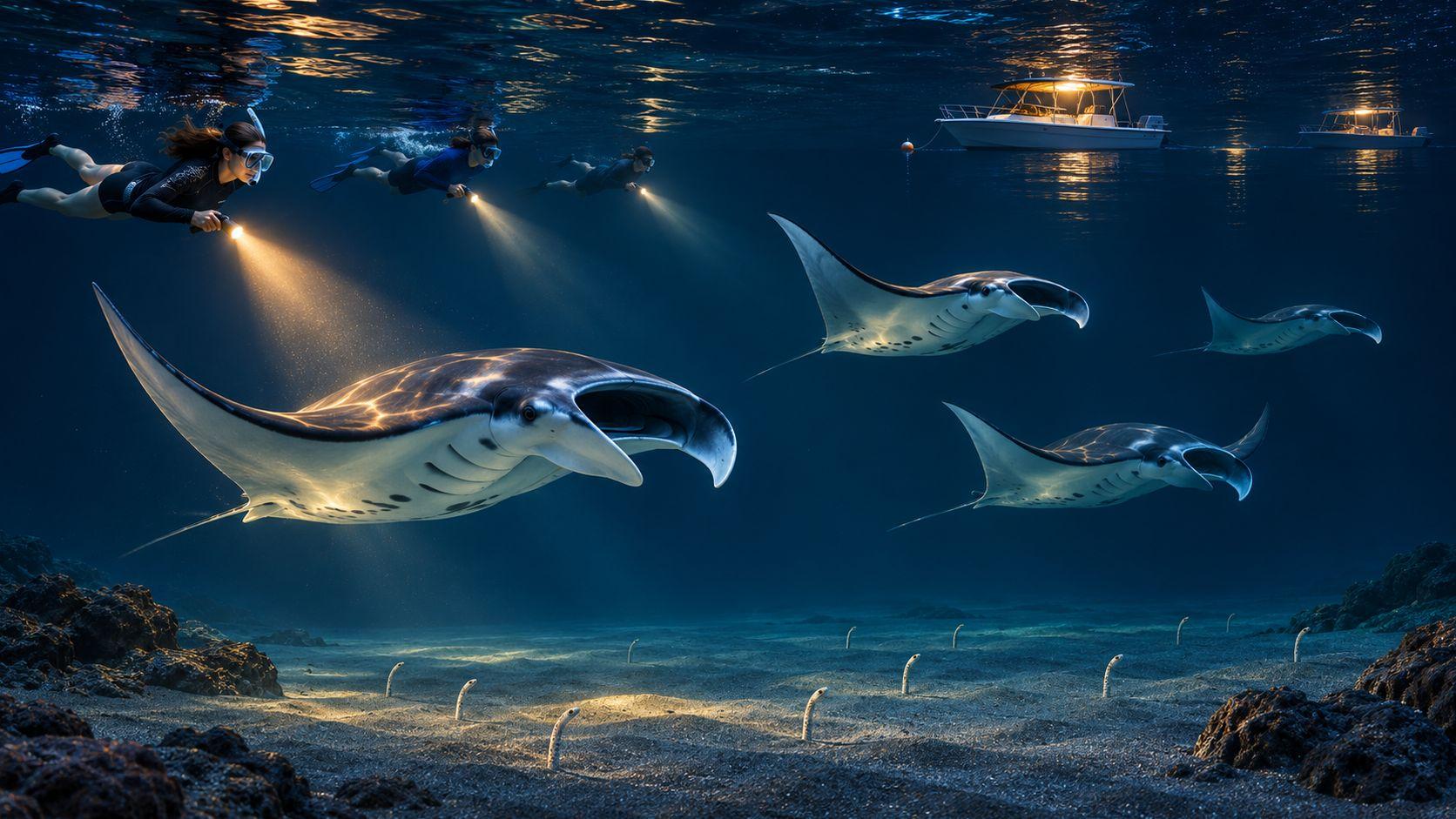
At Kona Snorkel Trips, mantas are seen year round, with no pattern in their appearance based on the month. That describes whether animals appear, not a promise that aggregation size stays constant. Seasonal changes in prey and differences between evenings can still change the scene.
An earlier global manta-monitoring analysis documented Hawaii's strong manta-viewing presence and comparatively positive population trajectory, while noting state protection. That broader context doesn't erase the vulnerability of local resident groups.
Continued attendance isn't proof of no impact
An analysis of Kona's nighttime feeding aggregations found that the aggregations persisted during sustained tourism and artificial-light-associated feeding conditions. Persistence is useful evidence, but it doesn't establish that lighting and tourism are harmless.
Questions remain about energy use, movement, concentrated prey, and animals that don't approach the lights. A visible feeding group is only part of the ecological picture, which is why disciplined vessel operation and long-term monitoring still matter.
- Let the captain choose the site. Wind, sea state, and recent observations matter more than a preferred nickname.
- Don't compare head counts. A friend's busy evening isn't a minimum standard for yours.
- Judge conduct separately from sightings. Clear briefings, controlled entries, and respectful wildlife practices matter even when animals are scarce.
The right comparison isn't which bay delivers the biggest photograph. It's which location allows a controlled encounter in that evening's conditions.
When Conditions Decide the Night
Plan around the water you'll enter, not a supposedly perfect month. A comfortable evening depends on how the boat handles the crossing, how guests enter and exit, and whether everyone can hold a steady position at the board.
A sunset departure can make the transition into darkness feel more gradual. A later check-in may fit your itinerary better, but neither choice overrides unsuitable sea conditions. Choose the schedule you can approach rested, unhurried, and ready to listen.
Your day-of checklist
- Read the crew's messages. Confirm the meeting instructions and any weather-related changes before leaving your lodging.
- Consider swell and wind together. A sheltered-looking shoreline doesn't tell you everything about conditions at the feeding site.
- Leave room for a site change. The captain may choose north or south Kona according to the conditions, rather than a guest's preferred location.
- Protect a backup evening. Keep some flexibility instead of making your final vacation night the only possible attempt.
- Be honest about your comfort. Tell the crew if you're uneasy about dark water, swimming, or getting back aboard.
Our guide to how wind changes a Kona manta ray night snorkel explains why a trip can look different from shore than it does at the viewing area.
A safety cancellation is a decision to respect, not a problem to solve with an improvised night swim.
Make the return easy, too
Set aside dry clothing where you can reach it after the swim. Keep your evening schedule loose enough that a changed check-in or a cautious return doesn't create pressure to rush.
If the crew cancels in strong wind or unsafe seas, use your backup plan. Don't replace the organized trip with an after-dark entry from shore. The responsible choice may be staying dry that evening, even when the sky looks clear and your camera is charged.
How the Manta Ray Night Snorkel Works
This is a nighttime open-ocean snorkel, not a pool session or a shallow reef float. You'll use surface equipment and follow the crew's positioning instructions, but you still need independent swimming ability and familiarity with snorkeling.
The boat briefing is where the dark-water scene becomes a clear sequence of actions.
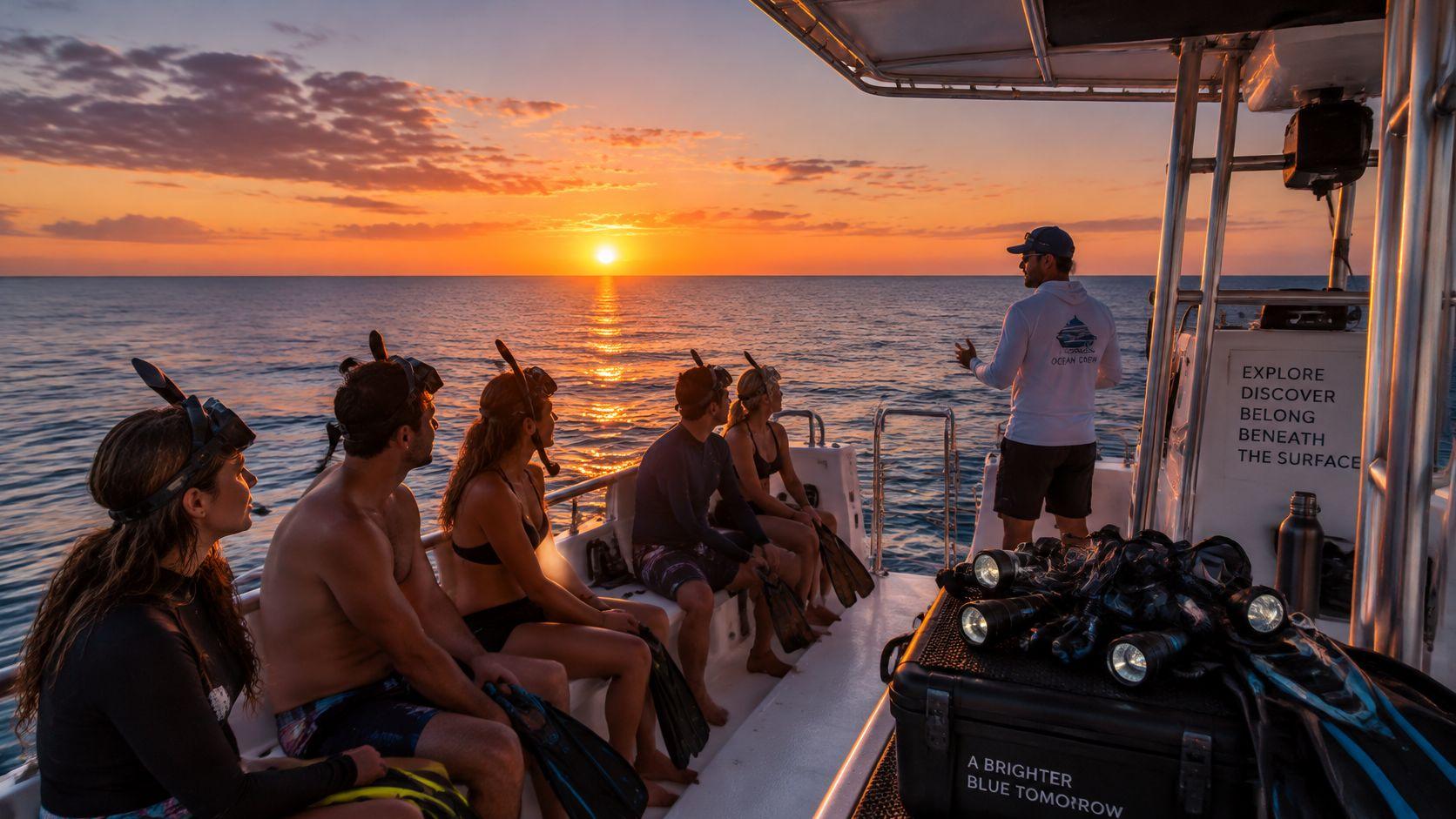
From check-in to the light board
- Choose the timing that suits you. The early trip checks in during daylight, watches sunset from the boat, and enters after dark. The late trip checks in at night.
- Get fitted with a mask and wetsuit. A comfortable mask seal helps you watch without constant adjustments, while the wetsuit helps retain warmth in the water and on the return ride. Our provided sizes run from kids 6–8 through adult 3X.
- Put on your flotation belt. Every guest wears one to keep hips and feet up, reducing the risk of kicking a passing manta. It's a positioning aid, not a substitute for knowing how to swim.
- Listen to the briefing before the boat reaches the viewing area. Learn where your hands belong, what an approaching manta may do, and how to signal that you need help.
- The boat travels to Garden Eel Cove or the water in front of the Keauhou hotel. Let the crew manage the approach and wait for entry instructions instead of preparing to jump in early.
- Enter and hold the custom-built snorkel board. Its high-powered lights illuminate the feeding area. Settle into the assigned position and keep equipment close to your body.
- Float through the 30–40-minute in-water window. Watch below and toward the edge of the beam without pulling yourself across other guests' spaces.
- Exit when the guide calls, even if a manta is still feeding. A coordinated return to the boat matters more than getting a final clip.
Know the entry requirements before booking
Our guests should be able to swim 50 yards without additional flotation and have prior snorkeling experience at an intermediate level. If you're still learning to clear a snorkel or breathe comfortably face down, build those skills in daylight before attempting this activity.
Nerves during the first close pass are understandable. Keep your hands in, avoid sudden kicks, and signal the guide if you need assistance. Touching, chasing, and riding are off limits, and flash photography aimed at the animals' eyes isn't allowed.
This video gives a visual sense of the nighttime setting and surface arrangement.
Distinguish a proposal from current operating rules
A 2022 Hawaii DLNR notice proposed 24 commercial viewing permits per designated zone, a maximum of 60 passengers for hire per boat within 24 hours, and two-hour shifts, with viewing hours from 4 p.m. to 4 a.m. These were proposed management provisions, not proof that every current operator follows identical limits.
For your booking, focus on the actual guest requirements, briefing, equipment, and wildlife conduct. A historical management proposal isn't a substitute for understanding how your own evening will work.
Book a Kona Night Snorkel You Can Trust
A manta encounter is a wildlife experience, so the number of rays is never under human control. Book only if you meet the swimming requirement, feel ready for dark open water, and can keep your hands on the board when a ray passes beneath you.
The Manta Ray Night Snorkel in Kona is a two-hour trip built around surface viewing at an illuminated board. The early trip checks in during daylight, watches the sunset from the boat, then enters the water after dark. The late trip checks in at night. Choose the timing that fits your evening, not because either schedule promises more mantas.
Read the terms that affect your plans
The manta guarantee doesn't expire. It is honored when space is available two hours before the tour starts, so a return visit may be possible, but a seat on your preferred departure is not assured.
Ride-alongs aren't permitted on the manta charter. If someone in your party plans to stay dry, don't assume they can remain aboard as a spectator.
Use this guide to credentials to check before booking a Kona manta night snorkel to assess preparation and responsible operation.
Pack for the ride home
- Bring a towel. Keep it dry until you're back aboard.
- Pack a zip-up jacket. It's easier to put on over damp swimwear.
- Bring a GoPro if you want video. Keep it secured within your own space rather than extending it toward a ray.
Leave room for weather changes, and follow the guide's directions at the water and on the boat.
A good night means entering calmly and leaving the animals undisturbed.
Kona Snorkel Trips offers guided manta night snorkeling with illuminated surface boards and wetsuits provided for the manta tour. Visit Kona Snorkel Trips to choose an evening and prepare for a hands-off encounter with Kona's reef mantas.
Keep reading
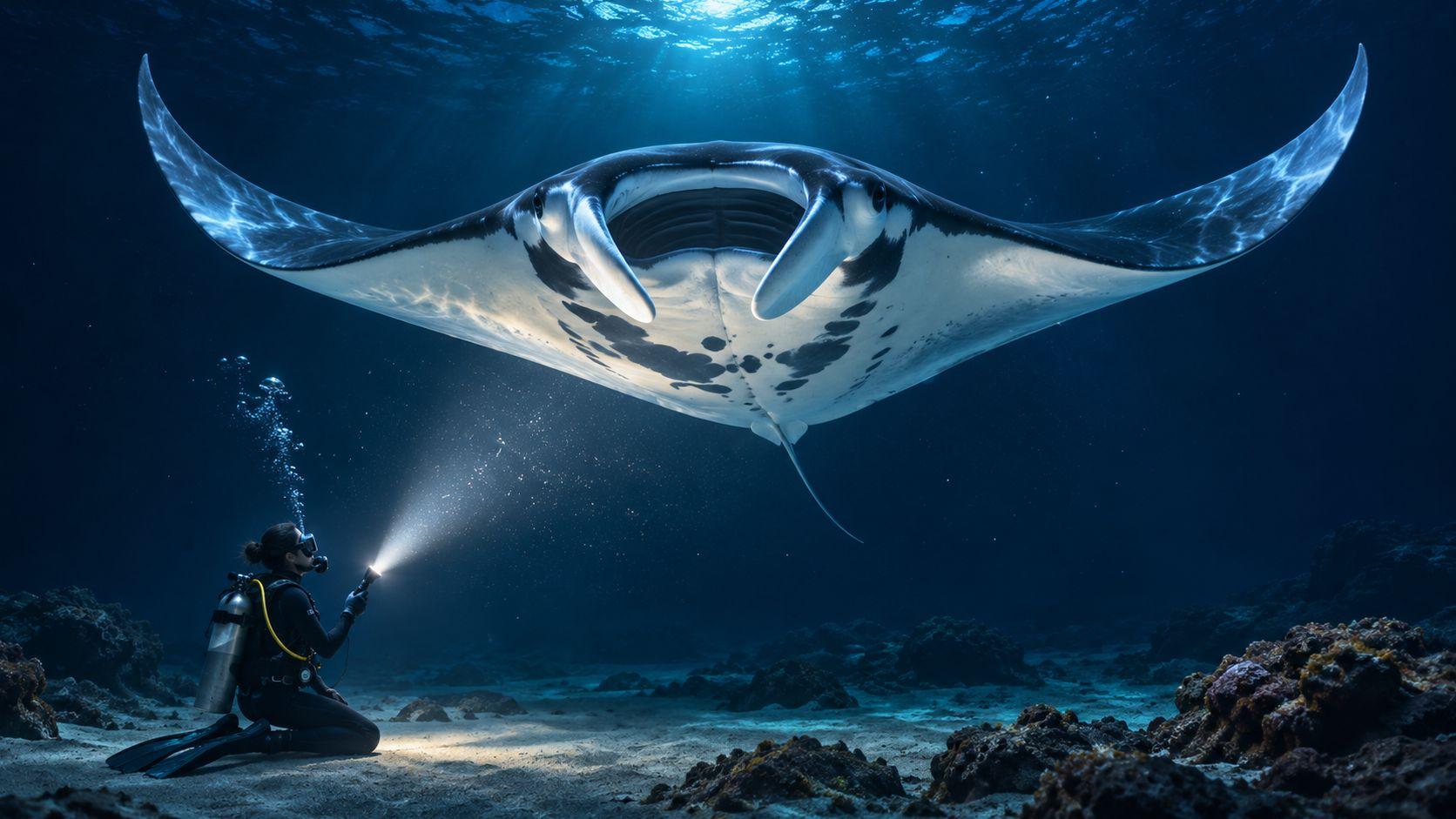
Manta Night Dive in Kona: A Practical Guide
Plan a manta night dive in Kona: sites, gear, passive positioning, and how divers and snorkelers watch reef mantas feed.
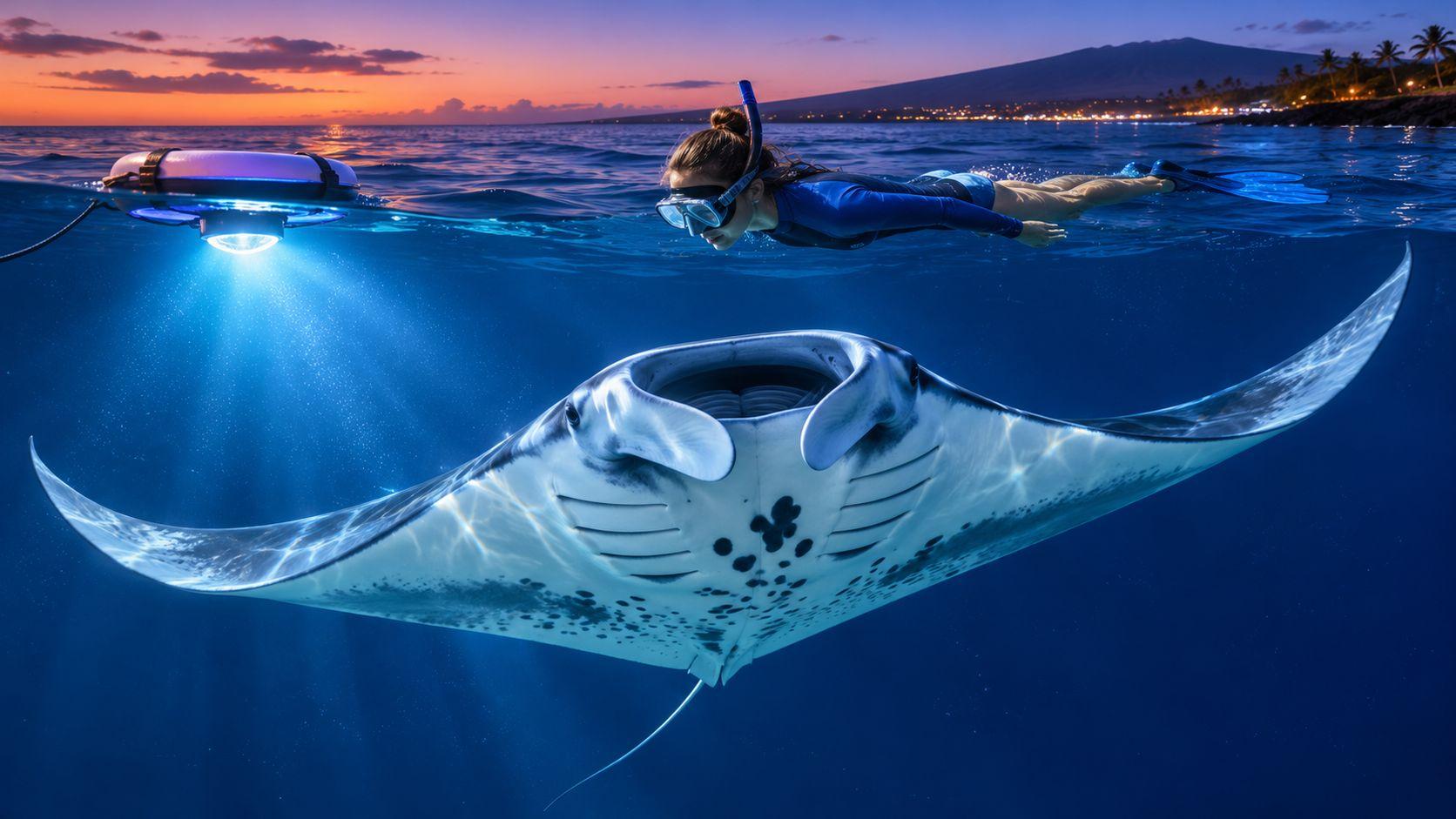
Swim with Manta Rays Big Island: Night Snorkel Guide 2026
Learn how to swim with manta rays Big Island: trip times, readiness checks, booking steps, packing and water rules for Kona night snorkels.
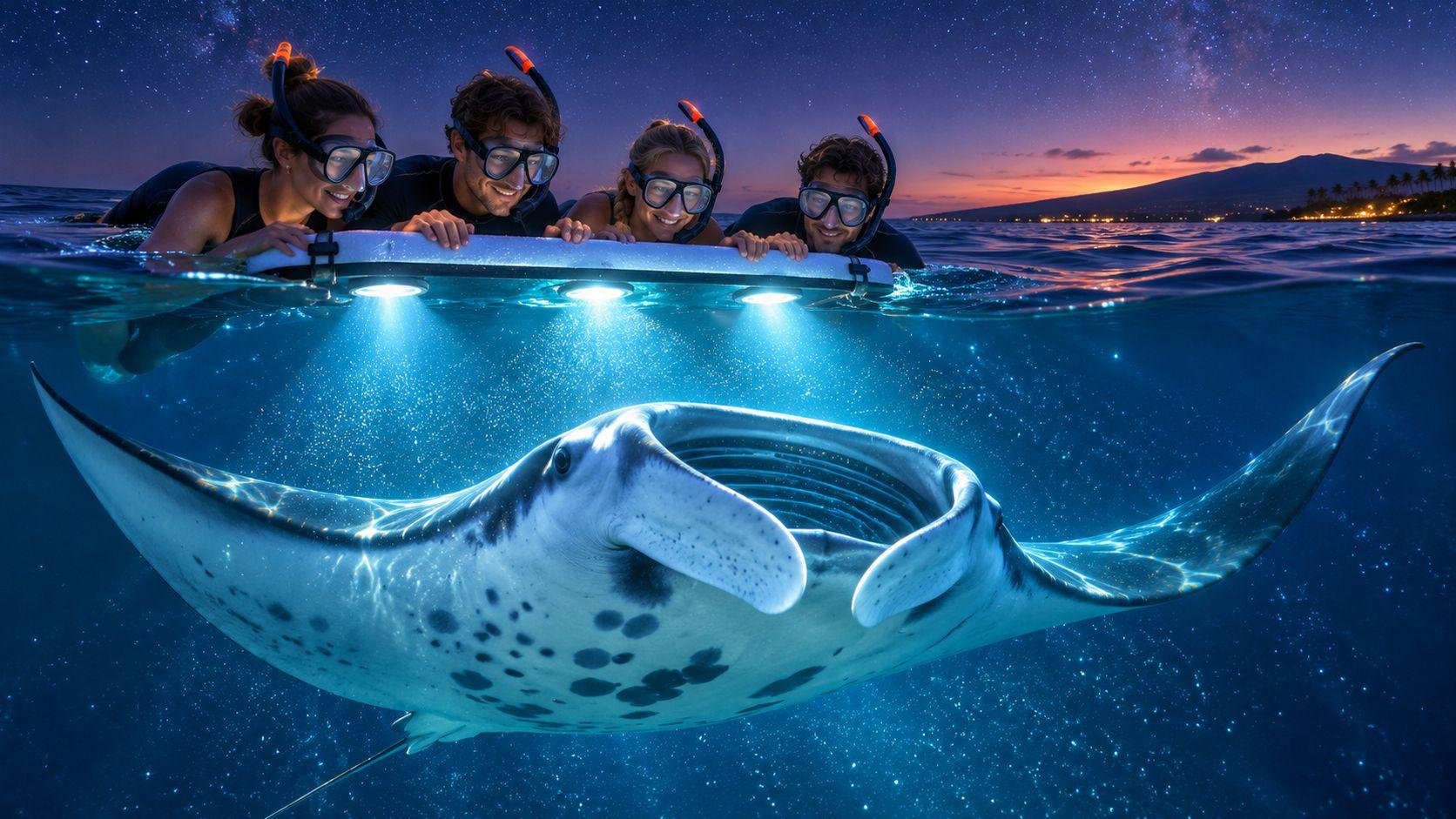
Kona Manta Ray Night Dive: What to Expect and How to Book
Plan your Kona Manta Ray Night Dive: timing, safety rules, what to pack, conservation tips and how to book a trusted night manta tour.