
Unforgettable Captain Cook Snorkeling: 2026 Guide
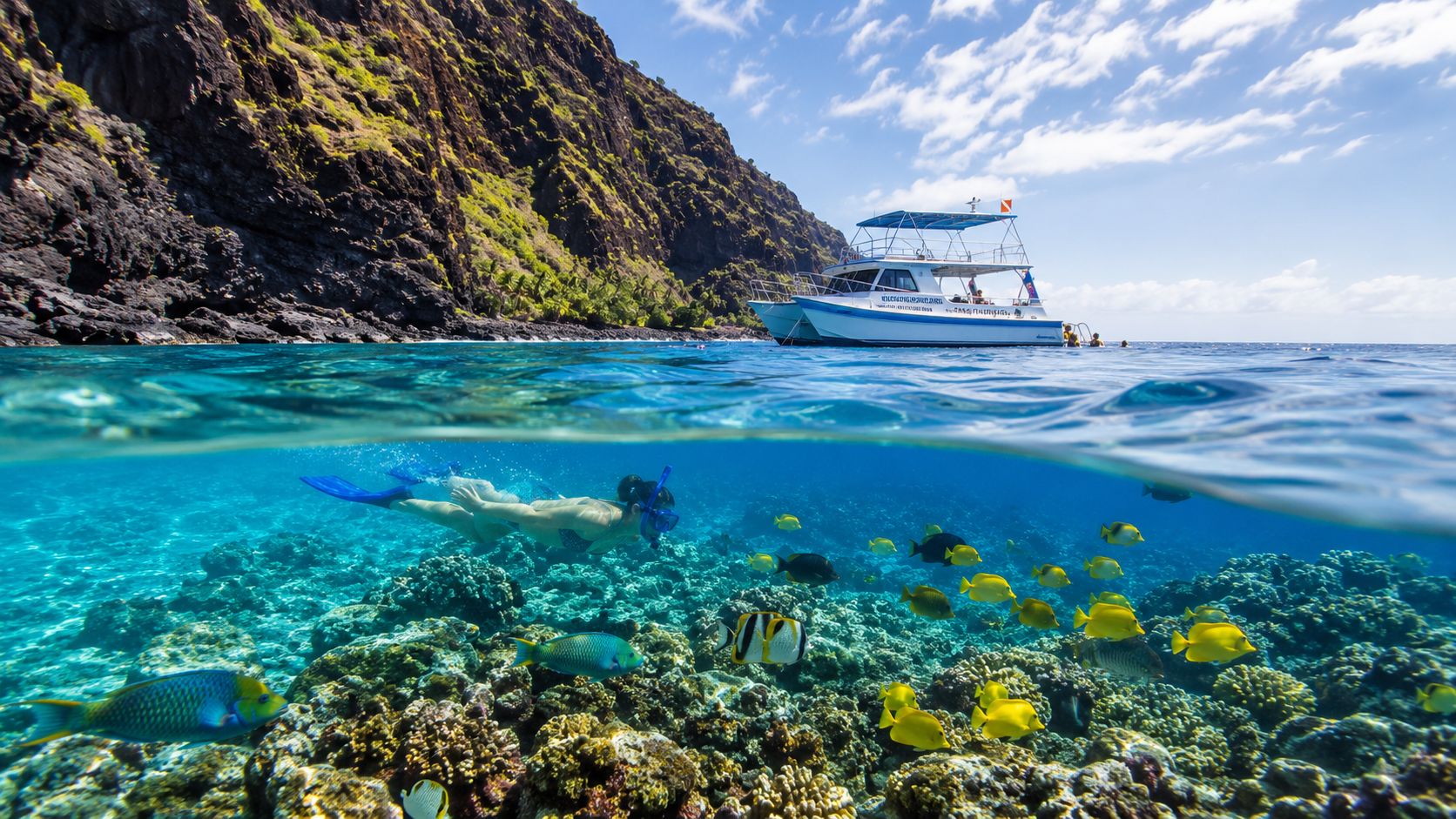
You're probably weighing the same three questions most Big Island visitors do. Is Captain Cook snorkeling really worth a dedicated morning, what's the easiest way to reach the good part of the bay, and is it something first-timers can enjoy without turning the day into a project? Those are the right questions.
Kealakekua Bay rewards good planning. Pick the right access method, go at the right time of day, and treat the place with respect, and the experience feels easy. Pick the wrong method, and you can spend more energy on logistics than on the reef itself.
Welcome to Kealakekua Bay
You finally have a free morning on the Big Island. The coffee is kicking in, the coast is glowing, and you want snorkeling that feels easy once you arrive, not an outing that turns into a permit check, a hot climb, or a long paddle before you ever put your mask on. That is why Kealakekua Bay stays high on so many itineraries.
The bay has the kind of first impression that makes people stop talking for a minute. Steep green cliffs wrap around calm, clear water, and the shoreline feels sheltered compared with many Kona snorkel spots that sit more exposed to wind and swell. For travelers chasing a relaxed, memorable Captain Cook snorkeling day, that protected feel matters as much as the scenery.

What makes the bay feel different
Kealakekua does more than give you pretty water. You can float over coral heads and clouds of reef fish while looking back at a shoreline that feels quiet, dramatic, and firmly rooted in place. The experience feels focused. You are not bouncing between stops trying to salvage a vacation morning.
That is also where the practical trade-off comes in. The bay is famous, but the easiest snorkeling access is not as simple as pulling into a parking lot, walking fifty yards, and hopping in. People who choose the right approach usually come away talking about the fish, the clarity, and the setting. People who choose the wrong approach often spend too much of the day managing logistics.
If you want a better feel for the water, visibility, and overall experience before you commit, this guide to Kealakekua Bay snorkel conditions and experience gives useful context.
Why this spot works for mixed groups
This bay suits groups with different goals unusually well. Strong swimmers get healthy reef and lots to look at. First-timers usually appreciate the calmer feel. Non-snorkelers still get a scenic ride and a destination that feels special the moment it comes into view.
That is one reason guided boat access works so well for so many visitors. It strips out a lot of the friction. You spend less time figuring out how to reach the good part of the bay and more time enjoying it safely.
Kona Snorkel Trips runs guided snorkel tours here, which is a practical fit for travelers who want the day organized, gear handled, and local guidance once they are in the water.
The travelers who enjoy Captain Cook snorkeling most are usually the ones who keep the goal simple. Get to the bay safely, arrive with energy left, and give yourself enough time to enjoy one of Kona's most memorable snorkel spots.
A Place of History and Conservation
Captain Cook snorkeling makes more sense when you know where you are. This bay is tied to a major turning point in Hawaiian and Pacific history. Captain James Cook first landed here in 1779, and the bay later became associated with his death at the same site. Kealakekua Bay was listed on the National Register of Historic Places in 1973, and the white obelisk monument near the shoreline was erected in 1874, with four cannons placed at its base in 1876, according to the Kealakekua Bay historical record.
Those details change the feel of the trip. You're not floating beside a random landmark that tour companies use as a photo stop. You're snorkeling beside a recognized historic site with visible reminders of what happened here and how later generations chose to mark it.
Why the history matters on the water
Visitors sometimes expect the monument to be the whole story. It isn't. The bay itself is the important place. The monument is the most visible marker from the water.
That distinction matters because it shifts how people behave. When guests understand the shoreline is part of a larger cultural and historical setting, they tend to move through the bay more thoughtfully. They ask better questions. They stop treating the area like a backdrop.
For more context before your trip, this background on Captain Cook Monument snorkeling history before your boat tour gives helpful local framing.
Why protection matters underwater
The bay's conservation status is what keeps the snorkeling experience from turning into a disappointment. Protected areas tend to feel different underwater. Fish life is more active, the reef structure is easier to appreciate, and the place holds its shape better under visitor pressure.
A few practical takeaways come from that:
- Respect the setting: Historic places and fragile reef don't mix well with careless behavior.
- Listen to access rules: Protected places usually have more specific launch, landing, and use restrictions.
- Expect a different tone: The best trips here feel quiet and observant, not rowdy.
Good guides don't separate the history from the snorkeling. In Kealakekua Bay, those are part of the same experience.
How to Get to the Captain Cook Snorkel Area
You wake up in Kona with one goal. Get into Kealakekua Bay without burning half the day on logistics, showing up tired, or finding out too late that the hardest part comes after the snorkel.
That is the main access question here.
The prime Captain Cook snorkeling area sits across the bay from road access. A boat gets you there directly. Going on your own usually means choosing between a steep trail and a kayak plan with rules, launch details, and changing conditions to sort through. This guide on Captain Cook snorkel tour water time and access lays out that trade-off well.
Plenty of travel posts treat the hike, kayak, and boat ride like equal boxes on a checklist. They are not equal once you factor in heat, gear, energy level, and how much quality snorkel time you want.
Comparing the real-world options
| Access Method | Effort Level | Time Commitment | Best For |
|---|---|---|---|
| Boat tour | Low to moderate | Efficient, with time centered on the reef | Families, first-timers, mixed-ability groups, travelers who want less hassle |
| Kayak | Moderate and logistics-heavy | Longer, with planning and permit questions | Confident paddlers who don't mind managing details |
| Hike | High | Significant, especially once you include the return climb | Strong hikers who are prepared for heat and exertion |
I have seen plenty of guests arrive by boat fresh, relaxed, and ready to enjoy the bay. I have also seen self-guided visitors reach the water already smoked from the approach. Your entry method affects the snorkel more than many visitors expect.
What the hike is really like
The trail draws people who enjoy a physical challenge, and there is nothing wrong with that. The catch is timing and recovery. The downhill start can give a false sense of ease, but the climb out happens after sun exposure, saltwater, and a swim.
If the hike is the main event, that route can make sense. If the snorkeling is the priority, the trail often takes too much out of the day.
Why kayaking takes more planning than it looks
Kayaking can be a good fit for capable paddlers, but it is rarely the simple do-it-yourself option people expect. You need to sort out where to launch, what landing rules apply, what your rental includes, and whether the bay will feel very different on the way back once wind picks up.
For a clearer first-timer overview, read this breakdown of Kealakekua Bay snorkeling entry zones for first-time guests.
Why guided boat access works best for many travelers
For many visitors, the best day on the bay starts with removing avoidable problems. A guided boat trip cuts out permit confusion, long gear carries, and the punishing return from shore. It also gives beginners and mixed-ability groups a more controlled start, which usually means calmer snorkeling and better decisions in the water.
Kona Snorkel Trips runs a Captain Cook tour that fits that kind of day well. It is a practical option for travelers who want to spend their energy snorkeling instead of handling access problems first.
The Underwater World of Kealakekua Bay
The first look underwater is usually what locks the memory in place. Kealakekua Bay's geography creates a sheltered microclimate that protects it from open-ocean swell, and visibility can often exceed 100 feet, with the calmest and clearest conditions typically in the morning before the trade winds pick up, according to this guide on Captain Cook snorkeling visibility and timing.
That morning window matters. It's when the surface is usually calmer, glare is lower, and the reef becomes easier to read. Even beginners notice the difference.

What you'll likely notice first
Most snorkelers don't start by identifying fish species. They notice shape and motion. The reef slopes away below you, coral heads break up the terrain, and fish move in loose groups across the structure instead of appearing one by one.
Then the details start to pop. Schools of yellow tang flash past in bright blocks of color. Butterflyfish work the coral. Parrotfish move with that unmistakable stop-and-go rhythm. If you're lucky, you may also spot Hawaii's state fish, the humuhumunukunukuāpuaʻa, weaving near the reef.
For a species-by-species preview, this marine life guide on what you will see during Kealakekua Bay snorkeling is a helpful companion.
How to get more from the snorkel
Fast swimmers often miss the bay. That sounds backward, but it's true. Captain Cook snorkeling gets better when you slow down enough to let the visibility work for you.
Try this approach:
- Float first: Give yourself a minute to settle your breathing and mask fit.
- Scan ahead, not only down: Clear water lets you spot fish movement farther out.
- Pause over structure: Reef edges and changes in depth often hold the most activity.
Practical rule: If you're kicking hard the whole time, you're probably moving too fast to notice half of what's there.
What makes this reef memorable
Some snorkel sites are pretty but flat. Kealakekua has more drama. The underwater terrain mirrors the shoreline above it. You get coral gardens, darker lava-backed contours, and enough depth change to keep the view interesting even if you stay near the surface the whole time.
That's why the bay works for both first-timers and experienced snorkelers. Beginners get clear orientation. Strong swimmers get room to explore visually without the place feeling empty.
Snorkeling Safely and Respectfully
A good Captain Cook snorkeling day starts before anyone gets in the water. The bay rewards calm, organized guests. It punishes rushed decisions, poor prep, and people who assume access is simpler than it is.
Independent access can be confusing because legal use points and permits aren't always explained clearly. Some tour companies are permitted to use certain piers and landing areas, while some kayak rentals may not include the permit you need, as explained in this independent guide to snorkeling the Captain Cook Monument. That's one reason guided access is often the most straightforward route.
Basic water habits that work
Before departure, it helps to think through the same kind of practical checklist boaters use. A solid comprehensive pre-departure routine covers the mindset well, even if you're joining a tour rather than running the boat yourself.
Once you're on site, keep the basics simple:
- Stay with a buddy: Don't turn a relaxed snorkel into a solo swim.
- Use flotation if offered: Good snorkeling is about comfort, not proving anything.
- Speak up early: Mask leaks, nerves, or fatigue are easier to solve in the first few minutes.
- Watch your fin placement: A careless kick can do damage even when your hands never touch the reef.
Your kuleana in the bay
Kuleana means responsibility, and Kealakekua Bay is exactly the kind of place where that word matters. It's not enough to avoid obvious bad behavior. You want to move through the water in a way that leaves the reef undisturbed.
A few habits make a real difference:
- Don't touch coral or marine life. Coral is alive, and even light contact can cause harm.
- Don't feed fish. Let the reef behave like a reef.
- Keep your body horizontal. It gives you better control and keeps your fins farther from the bottom.
- Choose reef-safe sun protection. Skin protection shouldn't come at the reef's expense.
If you want a practical walkthrough of body position and reef awareness, this guide on how to snorkel Kealakekua Bay without touching coral is one of the more useful reads for first-time guests.
Respect in this bay isn't abstract. It shows up in how you enter the water, how you kick, and how close you get to the reef.
Planning Your Perfect Snorkel Trip
A good Captain Cook snorkel day usually starts before the boat leaves the harbor. The guests who have the smoothest mornings are the ones who keep the plan simple, show up ready for sun and salt water, and choose an access method that saves their energy for the bay itself.
For most visitors, that points to a guided boat trip. You skip the long, exposed hike. You do not have to sort out kayak logistics, launch timing, or how much effort you will still have left once you reach the snorkeling area. You get local eyes on the morning's conditions, help with gear, and a much easier start if anyone in your group is new, nervous, or traveling with kids.
What to bring

Pack for comfort, not for every possible scenario.
- Reef-safe sunscreen: Put it on before boarding so it has time to set.
- Towel and dry clothes: You will appreciate them on the ride back.
- Hat and sunglasses: The sun in the harbor and on the boat adds up quickly.
- Reusable water bottle: Dehydration sneaks up fast in Kona.
- Underwater camera if you already use one: Leave the extra gadgets behind if they distract from the experience.
A light dry bag is helpful too, especially for phone, keys, and anything you do not want rolling around on deck.
What helps families and first-timers most
Families usually have a better day when the plan feels predictable. First-time snorkelers usually have a better day when they enter calm water with an easy briefing, flotation close at hand, and a crew that can fix small problems before they turn into stress.
That is the practical truth many glossy travel posts soften. Kealakekua Bay can feel effortless once you are floating over the reef. Getting there is the part that can wear people out, especially with children, older relatives, or anyone who is not excited about a steep hike or self-managed paddle.
Small-group boats have a clear advantage here. Questions get answered faster. Mask fit gets sorted out sooner. If someone needs a pool noodle, extra reassurance, or a shorter first swim, the crew can usually step in right away. In my experience, those first ten minutes often decide whether a guest relaxes and enjoys the bay or spends the whole stop trying to recover from a rough start.
If your goal is a safe, fun, memorable snorkel, choose the option that removes friction instead of adding it. That is why many visitors book a guided morning trip and let the crew handle the access, timing, and setup while they focus on the fish, the clear water, and the view across the bay.
Captain Cook Snorkeling FAQs
Is Captain Cook snorkeling good for beginners
Yes, if beginners choose the right access method and don't push beyond their comfort level. Calm instruction, flotation, and a boat entry are much easier on new snorkelers than a self-managed hike or paddle approach. The bay itself can be welcoming. The logistics are what trip people up.
Can you drive to the Captain Cook Monument snorkel spot
No. The prime snorkel area isn't a simple roadside stop. That's why visitors generally reach it by boat, kayak, or hike, with boat access being the easiest path for most travelers.
Can you go ashore at the monument
Many people often assume the answer is simpler than it is. Access and landing logistics can involve specific permissions and permitted use areas, so it's smart not to build your plan around casually walking ashore. For most visitors, the memorable part is the in-water experience and the view from the bay, not trying to turn the monument into a land stop.
What if conditions don't look good
Good operators watch conditions closely and make safety calls based on what the ocean is doing that day. That's another point in favor of guided access. Instead of guessing from shore, you're relying on local judgment. If weather or water conditions aren't right, the right move is to adapt, reschedule, or choose a safer alternative.
Are restrooms available during the trip
If you're joining a boat tour, restroom access depends on the boat you book rather than the monument area itself. That's a practical question worth asking before reservation day if onboard comfort matters to your group.
If you want a simple way to turn all this planning into an easy morning on the water, Kona Snorkel Trips offers guided snorkel outings built around safe access, local knowledge, and a smoother path into Kealakekua Bay.