
Captain Cook Snorkeling: Your 2026 Ultimate Guide
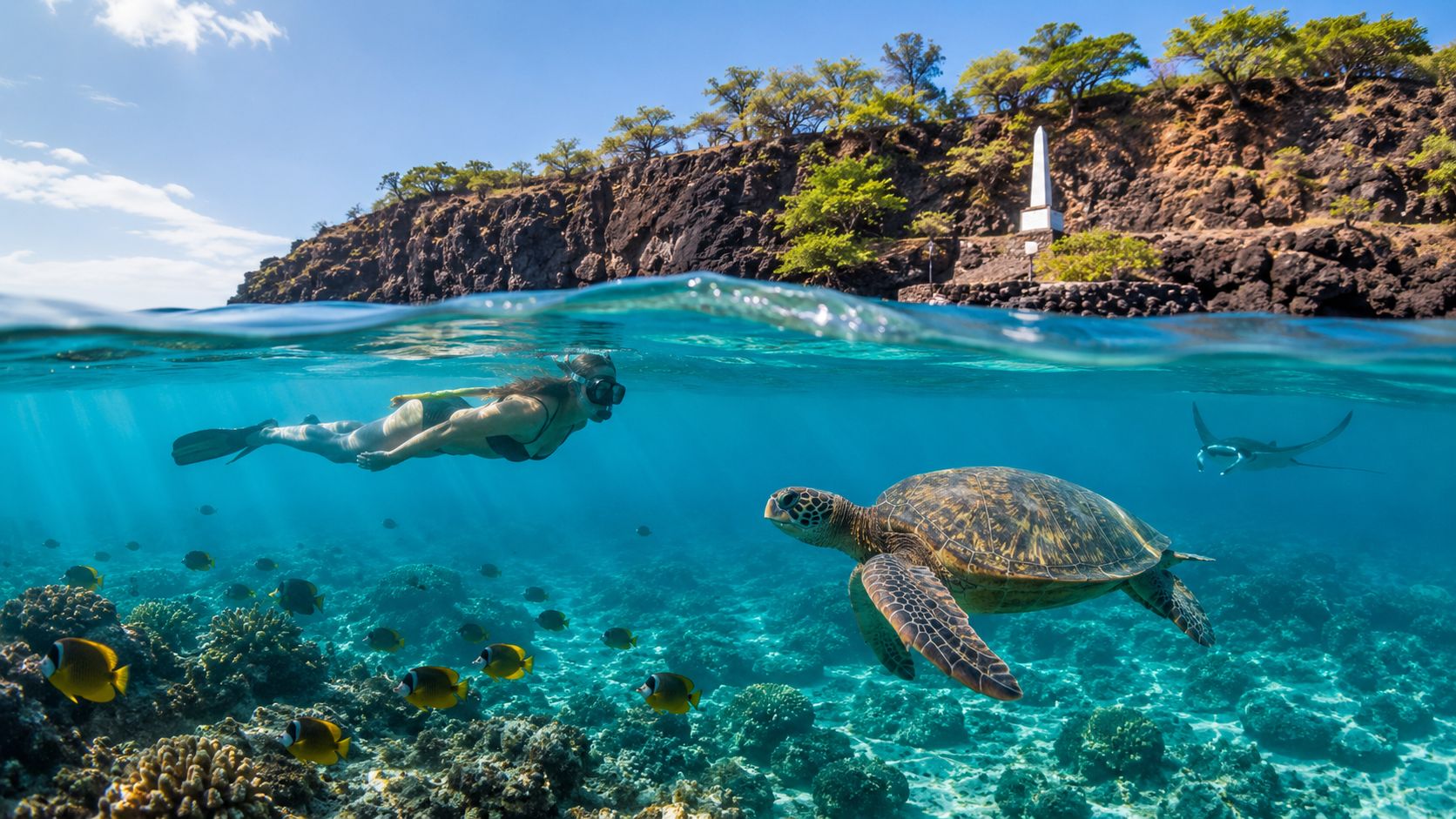
You're probably looking at a Big Island map right now, seeing Kealakekua Bay, Captain Cook Monument, boat tours, kayaks, maybe even the hike, and wondering which version of this day fits you. That's the right question. With captain cook snorkeling, the biggest mistake isn't choosing the wrong mask or forgetting a towel. It's choosing the wrong kind of access for the kind of day you want.
Some visitors want easy water entry, guidance, and maximum snorkel time. Others want the satisfaction of doing it themselves, even if that means more effort and a little more chaos. Both can work. The bay is special either way. But they feel very different once you're there.
Welcome to Hawaii's Underwater Paradise
You arrive at Kealakekua Bay after an early Kona morning, the sun is still low, and the water already looks clear enough to pull you in. Before anyone talks about fish or reef, the place does its job. People get quiet. They start scanning the shoreline, the lava rock, the color of the bay, and you can feel the day shift from sightseeing to something more memorable.
That first impression matters because captain cook snorkeling is not one-size-fits-all. Some guests want a boat ride, crew support, and an easy entry that lets them save their energy for the water. Others would rather earn the day with a kayak or hike, even if that means more work before the snorkeling starts. The bay rewards both approaches, but the right choice depends on how you want the day to feel.
Kona Snorkel Trips is one of Hawaii's highest-rated and most-reviewed snorkel companies, and that matters for a trip like this because crew judgment, in-water support, and local knowledge shape the experience in real ways.

Why this bay feels different right away
Kealakekua Bay has a natural calm that helps people settle in fast. The shoreline blocks a lot of the outside noise and wind. For beginners, that often means less anxiety before the mask even goes on. For experienced snorkelers, it means more attention goes to visibility, fish movement, and where to spend time once they are in the water.
I tell guests to decide on the experience first, then build the plan around it. A guided boat trip usually gives you the easiest start, the most support, and a more relaxed pace. A DIY day can be rewarding, but it asks more from you physically and leaves less room for mistakes with timing, gear, or conditions.
If you're still comparing reef options around the coast, this guide to snorkeling in Kona gives a useful overview of how different spots and trip styles compare.
Practical rule: Choose the access style that matches your comfort level, not the one that sounds toughest or most adventurous.
What makes a great day here
The strongest Captain Cook snorkel days usually come down to a few simple choices made well.
- Pick the right access method for your group. Families, first-timers, and casual swimmers usually enjoy the day more with boat support. Stronger, more independent visitors may enjoy the challenge of doing it themselves.
- Start with realistic expectations. The bay can feel calm and welcoming, but it is still open water. Good gear fit, comfort in the ocean, and honest planning matter.
- Treat the place with respect. People remember this bay because of the reef, the setting, and the meaning of the location. Good etiquette in the water protects all three.
Get those pieces right, and captain cook snorkeling feels less like checking off an attraction and more like the kind of Big Island day people keep talking about long after they fly home.
Why Kealakekua Bay is a Legendary Snorkel Site
Kealakekua Bay matters for two reasons at once. It's historically important, and it's ecologically protected. Most snorkel spots are known for scenery or fish life. This one carries far more weight.
According to Go Hawaii's Kealakekua Bay guide, Kealakekua Bay is a major heritage-and-reef destination, marking where Captain James Cook first made British contact with the islands in 1778 and was killed in 1779. The same state guidance notes that the bay sits about 12 miles south of Kailua-Kona, is protected as a Marine Life Conservation District, and includes the white obelisk associated with Cook's death as well as the nearby Hikiau heiau, a sacred Hawaiian temple.

More than a monument stop
A lot of first-time visitors assume the monument is the point. It isn't, at least not by itself. The power of the place is the overlap of history, culture, and reef habitat in one compact bay. You're not just swimming near a famous shoreline. You're entering a place that already held deep importance long before Cook arrived.
That's why the bay feels different from a casual beach snorkel. It asks for a little more awareness.
If you want a deeper look at the water clarity side of the experience, this article on why Kealakekua Bay snorkeling boasts Hawaii's clearest waters adds useful context.
Why protection matters underwater
Protected status changes the snorkeling experience in practical ways. It helps preserve the reef setting people come for. It also changes how you should behave in the water. This isn't a place to stand on shallow coral, chase animals, or treat the shoreline like a launch ramp with no consequences.
The best captain cook snorkeling trips are the ones where people leave the bay exactly as they found it.
That approach also improves your experience. When swimmers stay calm, avoid touching the reef, and move slowly, they usually see more.
Choosing Your Adventure How to Reach the Monument
You wake up in Kona with a simple goal. Get into the best water of the trip without turning the day into a slog.
That choice shapes almost everything about captain cook snorkeling. Some visitors want an easy launch, gear help, and a calm first hour in the water. Others would rather handle the day themselves, even if that means more effort, more planning, and less margin for error. The right call depends less on budget or pride and more on the kind of vacation day you envision.
Captain Cook access methods compared
| Method | Effort Level | Best For | Key Consideration |
|---|---|---|---|
| Boat tour | Low to moderate | Families, first-timers, visitors who want simple entry | Most efficient and safest water access |
| Kayak | Moderate | Independent travelers comfortable managing gear on the water | You must manage the kayak during the snorkel session |
| Shore approach and swim entry | High | Experienced, self-sufficient visitors comfortable with rougher logistics | Slippery rocks and uneven entry make this less forgiving |
Boat tours for the easiest water access
For many visitors, a boat is the difference between a relaxing snorkel day and a tiring one. You step on, get briefed, arrive near the reef, and enter the water where the experience is strongest instead of spending energy getting there.
According to Tropical Snorkeling's Captain Cook Monument guide, permitted boat tours offer the safest and most efficient entry, while shore access is less forgiving because of slippery rocks and uneven footing. The same guide notes that tour time in the water can vary by operator, which matters if you want time to settle in instead of rushing through the best part of the bay.
I tell guests to choose boat access if anyone in the group is a first-timer, a cautious swimmer, or the type of traveler who wants the day to feel simple from start to finish. That is not taking the easy way out. It is choosing more reef time and fewer variables.
Kayak for visitors who want more control
Kayaking gives you freedom. You set the pace, you choose how hard to paddle, and the crossing itself can be rewarding on a calm morning.
It also adds work before you ever put your face in the water. Tropical Snorkeling notes that kayak users often need to secure and manage the vessel during the snorkel, which can turn a relaxed reef session into a gear-management exercise. Visitors who already paddle regularly tend to handle that trade-off well. Vacationers trying it on the fly often find that the logistics pull attention away from the actual snorkeling.
This option fits travelers who enjoy doing things under their own power and do not mind carrying a bigger share of the day's decisions.
Shore and swim entry for strong DIY travelers
This is the toughest route, and it deserves honest expectations. The challenge is not just distance. It is footing, timing, entry angle, and staying composed when the shoreline feels awkward.
Small mistakes matter here. Fins go on too early and walking gets sketchy. Wait too long and getting launched cleanly becomes harder. Add a little surge or tired legs on the return, and the day can feel very different from how it looked on a map.
Before committing to that plan, read this breakdown of whether you can drive to Captain Cook Monument for snorkeling. It clears up one of the most common assumptions visitors make.
Decision shortcut: Choose a boat if your ideal day is relaxed, family-friendly, or focused on snorkeling instead of logistics. Pick kayak or shore access only if the challenge is part of the experience you want.
What You Will See Beneath the Surface
The first thing many snorkelers notice is how far they can see. Not just forward, but down the reef line and out into blue water. That changes everything. Fish are easier to spot. Coral texture stands out. You spend less time searching and more time observing.
According to Kona Honu Divers' Captain Cook snorkeling overview, Kealakekua Bay's sheltered microclimate protects it from open-ocean swell and helps maintain underwater visibility often exceeding 100 feet. The same guidance notes that the calmest, clearest conditions are typically found in the morning before trade winds pick up.

Why the water looks so clear
Sheltered bays filter the experience in your favor. Less wave energy means less suspended sediment. Lower chop means less surface distortion when you're trying to look down through your mask. Even your breathing feels easier when the surface stays relatively settled.
That's why early departures have a technical advantage, not just a comfort advantage. You're seeing more because the water is doing less.
For a marine-life-focused preview, this guide to what marine life you will see during Kealakekua Bay snorkeling is worth reading before your trip.
What usually catches people off guard
It's rarely one giant creature. More often, it's the density of life across the whole reef scene. You'll usually spend the first few minutes noticing color, then movement, then patterns in the coral structure.
Expect to look for:
- Reef fish in active schools that are easy to see in clear water
- Coral formations and lava-shaped reef contours that give the bay its layered look
- Sea turtles and spinner dolphins, which many visitors hope to see and sometimes do
- Blue-water contrast just off the reef edge, where the bay suddenly feels much larger
Move slowly and float high at first. The bay reveals more when you stop kicking so hard.
That advice sounds simple, but it works. Fast swimmers often miss what calm swimmers see.
Your Essential Captain Cook Snorkel Day Checklist
Good captain cook snorkeling starts before the boat leaves or before your shoes hit the trail. Most problems in the bay begin as preventable land mistakes. Wrong footwear. Not enough water. Mask fit ignored until the first minute in the ocean.
A solid prep routine makes the day safer and a lot more enjoyable.
What to bring and why
Bring the basics, but bring them for a reason.
- Water you'll drink. South Kona sun sneaks up on people, especially when they think “I'm in the water, so I'm fine.”
- Reef-safe sun protection. Mineral options are the safer play for both skin and reef etiquette.
- A rash guard or sun shirt. This cuts sun exposure without needing constant reapplication.
- Secure footwear. If you're doing any self-guided entry, slippery rock is a real issue.
- A mask that fits your face well. A perfect snorkel site still feels miserable through a leaking mask.
- Something waterproof for photos if you want memories beyond dock shots.
Water behavior that works
Once you're in, simple habits matter more than fancy gear:
- Start slow. Don't sprint off the moment your face hits the water.
- Check your breathing rhythm early. Calm breathing settles nerves and lowers fatigue.
- Keep your fins clear of coral. Accidental contact usually comes from poor body position, not bad intentions.
- Float when you need to reset. Good snorkelers rest early, not late.
- Look up often. Boats, kayaks, and your own drift all matter.
Etiquette in a protected bay
Kealakekua Bay is a Marine Life Conservation District, so your behavior has consequences beyond your own day. The basic rules are straightforward. Don't touch coral. Don't chase wildlife. Don't stand where you shouldn't. Don't force an interaction because you want a closer photo.
If you're not on a guided trip, entry and exit deserve extra attention. Slippery rocks are where confidence turns into scrapes fast. Move slowly, keep one hand free when possible, and don't rush because someone else looks faster.
A careful exit is part of the snorkel. Treat it that way.
For families, the most useful habit is simple. Decide in advance who stays with the least confident swimmer. Don't negotiate that in the water.
Booking the Best Captain Cook Snorkeling Tour
For most visitors, a boat tour is the cleanest way to experience this bay. Not because DIY isn't possible, but because guided access removes the two things that ruin a lot of self-planned snorkel days: awkward entry and decision fatigue.
Small-group trips are usually the better fit for captain cook snorkeling when your priorities are attention, smoother gear help, and clearer communication in the water. That matters most for first-timers, mixed-ability families, and travelers who want a day that feels organized instead of improvised.
What to look for in a tour
A good operator should make these parts easy:
- Gear support so mask fit and flotation questions get handled before they become in-water problems
- Clear entry and exit guidance from crew who know the site's patterns
- Enough in-water time to avoid making the snorkel feel rushed
- A trip format that matches your group, especially if you have kids or hesitant swimmers
If timing is still your main planning question, this article on how far ahead to book Kealakekua Bay snorkeling in Hawaii can help you think through it.
FAQs for First-Timers and Families
Is Captain Cook snorkeling good for kids
Yes, if the trip matches the child. Boat access is usually the easiest format for families because it removes difficult entries and gives parents a more controlled start. Kids who are comfortable in the water usually do best when they begin close to an adult and use flotation if needed.
What if I'm not a strong swimmer
That doesn't automatically rule you out. Guided trips are often the better choice because flotation support and crew oversight make the experience more manageable. The key is being honest about your comfort level before you get in.
Is morning really better
Usually, yes, but not in a simplistic way. According to Fair Wind's Kealakekua Bay page, the Kona coast often has calmer winds and less surface chop in the morning, which improves visibility. That same guidance also notes that conditions can change quickly and that a professionally guided tour can still provide an excellent experience throughout the day because crews know the bay's microclimates and operate within approved conditions.
So the practical answer is this: morning often gives you the cleanest water surface, but later trips can still be very good if you're with a capable crew and realistic about conditions.
Do I need a tour
No. But many visitors are happier with one. If your vacation style leans toward convenience, support, and easy water access, a tour is usually the better fit. If you enjoy self-managed logistics and don't mind extra effort, a DIY approach may suit you better.
What's the biggest mistake beginners make
They go too hard in the first five minutes. Fast kicking, shallow breathing, and trying to keep up with stronger swimmers drains energy quickly. Slow down early and the whole bay gets easier.
If you want a straightforward way to plan the day, compare options and book directly with Kona Snorkel Trips. Pick the access style that matches your group, your comfort in the water, and the kind of memory you want from Kealakekua Bay.