
Captain Cook Snorkeling: Ultimate Guide to Kealakekua Bay
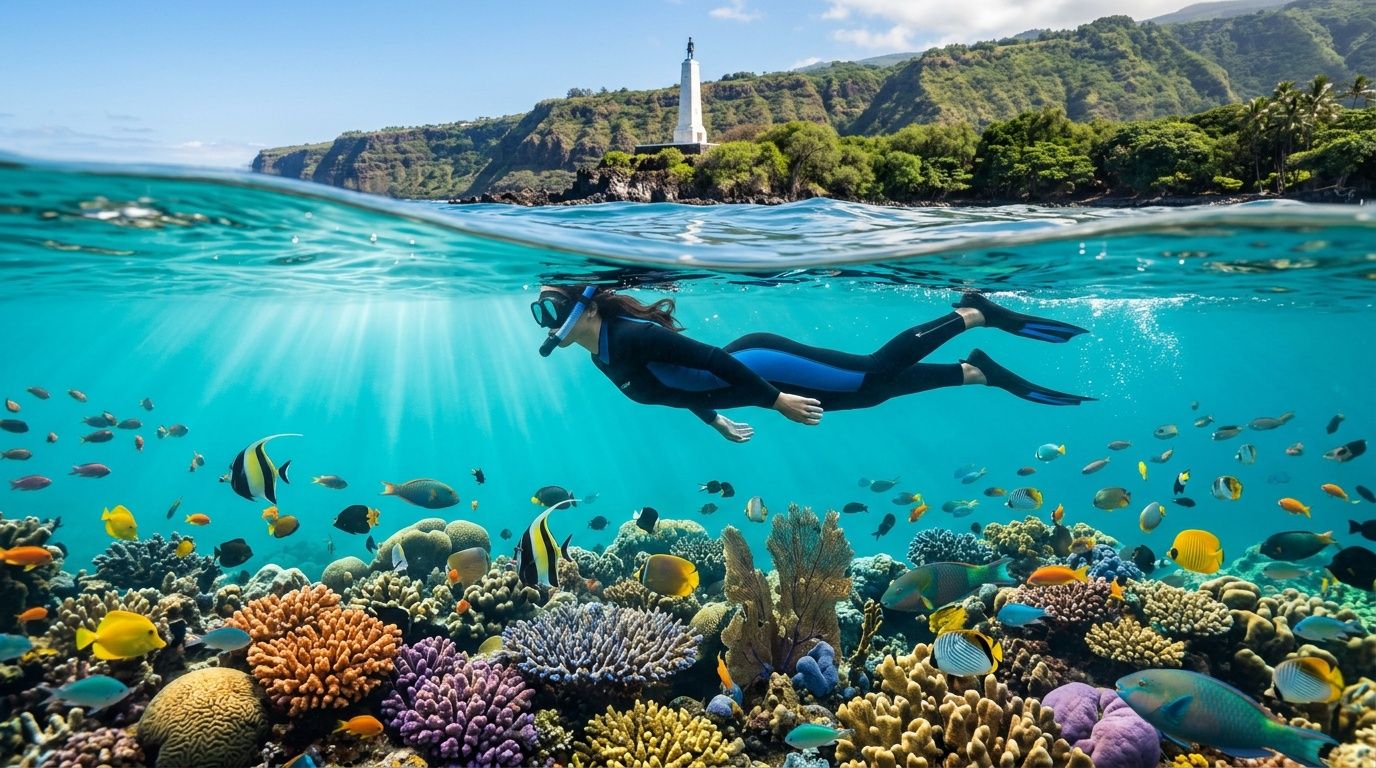
You’re probably trying to avoid two common Hawaii disappointments. One is booking a snorkel trip that looks amazing in photos but turns out choppy, crowded, or rushed. The other is getting to Kealakekua Bay and realizing too late that this place rewards the people who understand how to visit it, not just the people who show up.
That’s why captain cook snorkeling deserves a little insider planning. Kealakekua Bay isn’t just another pretty reef. It’s a place where clear water, steep underwater terrain, living coral, and Hawaiian history all meet in one compact stretch of coast. If you do it right, the experience feels effortless. If you do it wrong, you can miss what makes the bay special.
What follows is the practical version. Not just where to go, but how to snorkel Captain Cook in a way that gives you the calmest conditions, the strongest marine life viewing, and the most respect for the place itself.
Your Dream Snorkel Adventure Awaits at Kealakekua Bay
The ideal version is simple. You slip into calm blue water, put your face in, and the whole reef opens up at once. Fish move in schools instead of scattering. Coral looks sharp instead of hazy. You don’t spend the whole swim adjusting gear or fighting surface chop.
That kind of morning happens here.

Kealakekua Bay is the home of the Captain Cook Monument, and for a lot of visitors it becomes the snorkel day they talk about for the rest of the trip. The bay draws people in because the setting delivers what brochures usually overpromise. Clear water. Healthy reef. Plenty to look at even if it’s your first time wearing a mask.
What makes this place feel different
A good captain cook snorkeling session starts before you hit the water. As the boat approaches the bay, the cliffs block a lot of the rougher surface energy, and the water often settles into that glassier look snorkelers love. Once you’re in, the reef usually gets your attention fast.
A few things stand out right away:
- Color you can see: The water clarity here often lets you spot fish and reef structure without squinting or diving down.
- A reef that changes quickly: Near the monument side, the bottom begins shallow and then falls away, so the scenery keeps shifting as you swim.
- A mix of adventure and ease: Beginners can enjoy the shallower edge, while stronger swimmers can appreciate the deeper blue just beyond it.
Practical rule: The best snorkel spots aren’t always the easiest to reach on your own. Kealakekua Bay rewards planning more than improvising.
People come here for the obvious reasons, but they leave remembering the feeling of the place. It has that rare mix of beauty and gravity. You’re not just floating over coral. You’re visiting one of the Big Island’s most meaningful coastal spaces.
A Bay Steeped in History and Culture
Kealakekua Bay asks for a different kind of attention. Visitors come for the water, then realize they are entering one of the most meaningful coastal places on Hawaiʻi Island.
This bay was a center of Hawaiian life long before it became known as a snorkel stop. It was used for ceremony, fishing, travel, and daily life tied closely to the sea and the surrounding land. That history still shapes the experience today. The right way to visit is with curiosity, restraint, and respect for the ʻāina.

The events that made the bay famous
Captain James Cook arrived at Kealakekua Bay in 1779 during Makahiki season, a period connected to peace, ceremony, and the deity Lono. That timing influenced the first reception he received. The relationship changed after Cook returned later, tensions grew, and he was killed near the shoreline area associated with the monument, as summarized in this historical account of Kealakekua Bay.
That history matters on the water. A lot of snorkelers see the white monument and assume the bay’s story starts there. It does not. The monument marks one chapter in a much older Hawaiian place.
If you want useful context before your trip, this article on Captain Cook Monument snorkeling history before your boat tour lays out the background in a way that helps the bay make more sense once you arrive.
Why this history should affect how you visit
Good snorkeling etiquette here goes beyond reef safety. Kealakekua is also a cultural site, and that changes how experienced guides approach the bay.
In practice, respectful visitors do a few simple things:
- Learn the basics before arrival: Even ten minutes of reading changes how you see the shoreline and the monument.
- Keep your presence low-impact: Give the place some quiet. Noise carries across the water more than people expect.
- Follow guide direction closely: Strong guides explain both reef rules and cultural context, which usually leads to a better day for everyone.
- Treat the bay as living place, not scenery: That mindset affects everything from where you step to how you talk about the site afterward.
I’ve found that guests who understand the bay’s history tend to snorkel differently. They slow down. They pay attention. They leave with more than fish photos.
The monument and the modern experience
The Captain Cook Monument is a visible landmark, but it should not be the whole story. The stronger perspective is to see the bay as a meeting point of Hawaiian history, colonial contact, and present-day stewardship.
That is part of what makes captain cook snorkeling memorable when it is done right. You are visiting a marine sanctuary with cultural weight, not just checking off a famous stop on the Kona coast.
The Underwater World of Captain Cook
Slip into the water at Kealakekua Bay and the first thing you notice is how quickly the reef comes into view. You are not staring into green haze and hoping fish appear. On a good morning, the lava rock, coral heads, and schools of yellow tang are visible almost as soon as you put your face in the water. That clarity is one reason the bay has such a strong reputation with experienced Kona snorkelers.
What makes this spot work so well is the reef shape. Near the shoreline by the monument side, you get a forgiving shallow zone where newer snorkelers can settle their breathing and get comfortable. Swim farther out and the bottom falls away into deeper blue water, which creates that dramatic edge where you can watch reef fish feeding close to the slope while pelagic visitors sometimes pass outside it. Few Kona snorkel sites give beginners and strong swimmers useful water in the same swim.

The reef itself rewards slow observation. Finger coral, lobe coral, and pockets of lava structure create shelter for reef fish, so the bay tends to feel busy without feeling chaotic. If you drift gently, you may see parrotfish working the reef, butterflyfish pairing up along coral heads, and spinner dolphins outside the main snorkel area on some mornings. Green sea turtles show up too, but they are never the point of the swim. Healthy reef behavior is.
If you want a species-by-species preview, this guide to marine life you will see during Kealakekua Bay snorkeling gives a useful rundown.
Good captain cook snorkeling is less about covering distance and more about reading the water correctly. Guests who rush usually miss the best part of the bay. The strongest swimmers stay flat on the surface, kick softly, and pause often. That keeps fins off coral, saves energy, and gives fish time to settle back into natural behavior.
A practical approach in this bay:
- Start with an easy float: Give yourself a minute to relax before swimming over the thicker coral.
- Keep your body horizontal: You will move more efficiently and avoid scraping the reef with your fins.
- Use small fin kicks: Big splashing kicks stir people up and scatter fish.
- Scan forward as much as downward: That is how you spot the drop-off, turtles coming across your path, and fish schools moving through the water column.
I tell first-timers the same thing every week. Slow down and the bay opens up.
Protected-water status helps keep the experience strong, but respectful visitors still make the difference day to day. Reef-safe sunscreen, clean entry and exit habits, and good fin control matter here because this is a living coral system, not just a pretty backdrop. Snorkeling Captain Cook the right way means enjoying the visibility and fish life without adding stress to the place that makes both possible.
When to Go for the Best Conditions
You booked Captain Cook for clear water, easy surface conditions, and that moment when the reef suddenly comes into full view below you. Timing plays a big role in whether the bay gives you that version of the experience.
For the cleanest visibility, I usually point visitors toward spring through fall. April through November often brings clearer water and more consistent snorkel conditions. Winter can still be excellent, but it asks for more flexibility. Seasonal runoff, swell, and changing ocean conditions can all affect clarity, and the National Weather Service marine forecast for Hawaiʻi is a better planning source than an internal roundup if you want to check the bigger picture before your trip.
The seasonal trade-off
Winter changes the bay more than it ruins it.
From December through March, you can still get beautiful mornings at Kealakekua Bay. You are just more likely to run into days with softer visibility and more surface movement, especially if recent weather has stirred things up. Visitors who want the glassy, postcard-style look usually have an easier time finding it outside the winter pattern.
Here is the practical version:
| Season window | What to expect |
|---|---|
| April to November | Better odds of clear water, calm surface conditions, and long reef views |
| December to March | Good snorkeling is still common, but clarity can vary more from day to day |
If you want to plan around water movement instead of just the calendar, this guide on how tides shape Kealakekua Bay snorkeling conditions is worth reading.
Why morning usually wins
Early trips have a real advantage here. The bay is often calmer in the morning, boat traffic is lighter, and the sun angle makes it easier to read the reef and spot fish along the drop-off.
Afternoons can still work. They just tend to be less predictable. A little wind texture on the surface can flatten your view fast, even on a day that looks great from shore.
My standard advice is simple:
- Book early in your stay: You leave room to shift days if conditions change.
- Choose a morning departure: You give yourself the best shot at calm water and better visibility.
- Set winter expectations correctly: You can still have a great snorkel, but conditions usually swing more than they do in late spring, summer, and early fall.
Snorkeling Captain Cook the right way is partly about respect for the place, and partly about reading the bay on its terms. Pick the season carefully, get on the water early, and your odds improve a lot.
How to Reach Kealakekua Bay
Getting to the monument side of Kealakekua Bay is where a lot of people realize this snorkel spot is different from a simple beach entry. Access is part of the adventure, and each route comes with trade-offs.
The three common approaches are hiking, kayaking, or taking a boat. All three can work. They just work for different people.

Hiking in
The trail option appeals to visitors who want independence and don’t mind earning the swim. The upside is obvious. You move on your own schedule and combine land scenery with water time.
The downside is also obvious once the day heats up. You still have to carry gear, manage your energy, and hike back out after snorkeling. For strong hikers that may be fine. For families, occasional swimmers, or anyone hoping for a relaxed ocean day, it can turn the outing into a grind.
Kayaking across
Kayaking sounds ideal on paper because it gives you a direct route across the bay. It can be a fun option for confident paddlers who enjoy self-supported outings.
But this choice usually asks more of you than people expect. You need to sort out logistics, understand local access rules, and still keep enough energy for the actual snorkel. If you’re visiting on vacation and want the smoothest path to the reef, kayaking often feels better in theory than in practice.
Taking a boat
For most visitors, a boat is the practical option. It removes the hardest part of access and lets you arrive fresher, with more time and energy for the water itself.
Boat access also tends to be the better fit if any of these apply:
- You’re bringing kids or mixed ability swimmers
- You want gear and safety support handled
- You care more about snorkeling well than about the approach
- You’d rather listen to local history on the way in than manage transport details
If you want to visualize the run out to the bay, this article on the Kealakekua Bay snorkeling tour route from Honokohau Harbor gives useful context.
The reef is the main event. If the trip to reach it leaves you tired, overloaded, or rushed, you’ve already spent part of the experience before your mask even goes on.
That’s why I usually steer people toward boats unless they specifically want the hike or paddle as part of the challenge.
Why a Guided Tour is Your Best Bet
A lot of visitors reach Kealakekua Bay and realize the hard part is not swimming. It is getting settled fast enough to enjoy what makes the place special.
A good guide changes the day from the first few minutes. Mask fog gets fixed before it becomes frustrating. Fins get swapped before they rub your heels raw. Nervous snorkelers get a float and a clear plan instead of vague encouragement. Strong swimmers get context about where to spend their energy so they are not burning through the best part of the reef on a rushed first pass.
That kind of support matters here because the bay rewards patience. The coral gardens, reef fish, and lava contours are easy to miss if you enter flustered, fight your gear, or swim too hard too soon. Guided trips also help protect the place itself. Good crews teach guests how to float high, avoid standing on coral, and watch marine life without crowding it. That is the difference between visiting Kealakekua Bay and snorkeling it with respect for the 'aina.
What a guide actually changes
People often assume the guide’s job starts once everyone is in the water. In practice, the best value comes before and during the snorkel.
A skilled crew watches the group and adjusts. If someone is anxious, they slow the pace and stay close. If a family has mixed abilities, they help everyone enter in an order that keeps things calm. If conditions shift, they choose the cleaner line, the better drift, or the right time to call people back before fatigue sets in.
You also learn more. Guides who know the bay well can point out the difference between healthy coral structure and damaged areas, explain why certain fish hold close to specific formations, and share the history of the area in a way that gives the snorkel more weight. The reef stops feeling like a pretty backdrop and starts making sense.
For a closer look at why boat access makes the day easier from the start, read this guide on why boat tours make Captain Cook snorkeling effortless.
What to bring on your snorkel tour
Even on a guided trip, a little preparation goes a long way.
| Item | Why You Need It |
|---|---|
| Swimsuit | Arriving ready to go keeps the morning simple |
| Towel | You will want it on the ride back |
| Reef-safe sunscreen | Better for your skin and better for the bay |
| Water | Salt, sun, and boat time can wear you out |
| Hat and cover-up | Useful before and after your snorkel |
| Dry bag or small waterproof pouch | Keeps essentials together |
| Any personal medications | Especially helpful if you get motion sick |
If you like tracking swims on vacation, it can also help to find your ideal Garmin swimming watch before the trip.
Choosing an operator
Operator choice shapes the experience more than many visitors expect. Some boats feel social and fast-moving. Others are quieter, smaller, and better for first-timers who want more direct attention in the water.
Look for crews that explain reef etiquette clearly, provide flotation without making it awkward to ask, and treat the bay as more than a checklist stop. The best tours do not rush people from briefing to splash to departure. They create enough structure that guests feel cared for, and enough breathing room that the bay can still work its magic.
A guided trip should make the bay easier to enjoy while teaching you how to move through it well. That is the standard worth booking for.
Captain Cook Snorkeling FAQs
Is Captain Cook snorkeling good for kids and non-swimmers
It can be, especially on guided boat tours that provide flotation support and hands-on supervision. The key is choosing a trip that’s comfortable working with mixed ability groups and being honest about your family’s water confidence before booking. Kids and non-swimmers usually do better when the day feels calm, structured, and unhurried.
Will I see turtles or dolphins
You may. Kealakekua Bay is known for rich marine life, and many visitors do see memorable animals there, but wildlife is never guaranteed. The best mindset is to expect a healthy reef first and treat larger animal sightings as a bonus.
Are there special rules in the bay
Yes, and they matter. This is a protected and culturally important place, so reef contact, careless finning, and aggressive wildlife chasing are all out of bounds in the spirit of a respectful visit. A good rule underwater is simple: float high, move slowly, and don’t touch what you came to admire.
What if I want to improve my swim tracking before or after the trip
If you’re using this vacation as motivation to spend more time in the water, it can help to find your ideal Garmin swimming watch before your trip. That’s especially useful for lap swimmers or triathletes who want a watch that fits both pool training and open-water travel days.
Should I bring my own gear
If you already have a mask that fits your face perfectly, bringing it can be a smart move. For most visitors, though, quality tour gear is easier. The bigger issue isn’t whether the gear is yours. It’s whether it fits properly and lets you relax in the water.
If you want a Captain Cook day that feels smooth from start to finish, Kona Snorkel Trips is a practical place to start. Pick a morning tour, come ready to move slowly and respectfully in the water, and let the bay do what it does best.