
Captain Cook Snorkeling: A 2026 Insider’s Guide
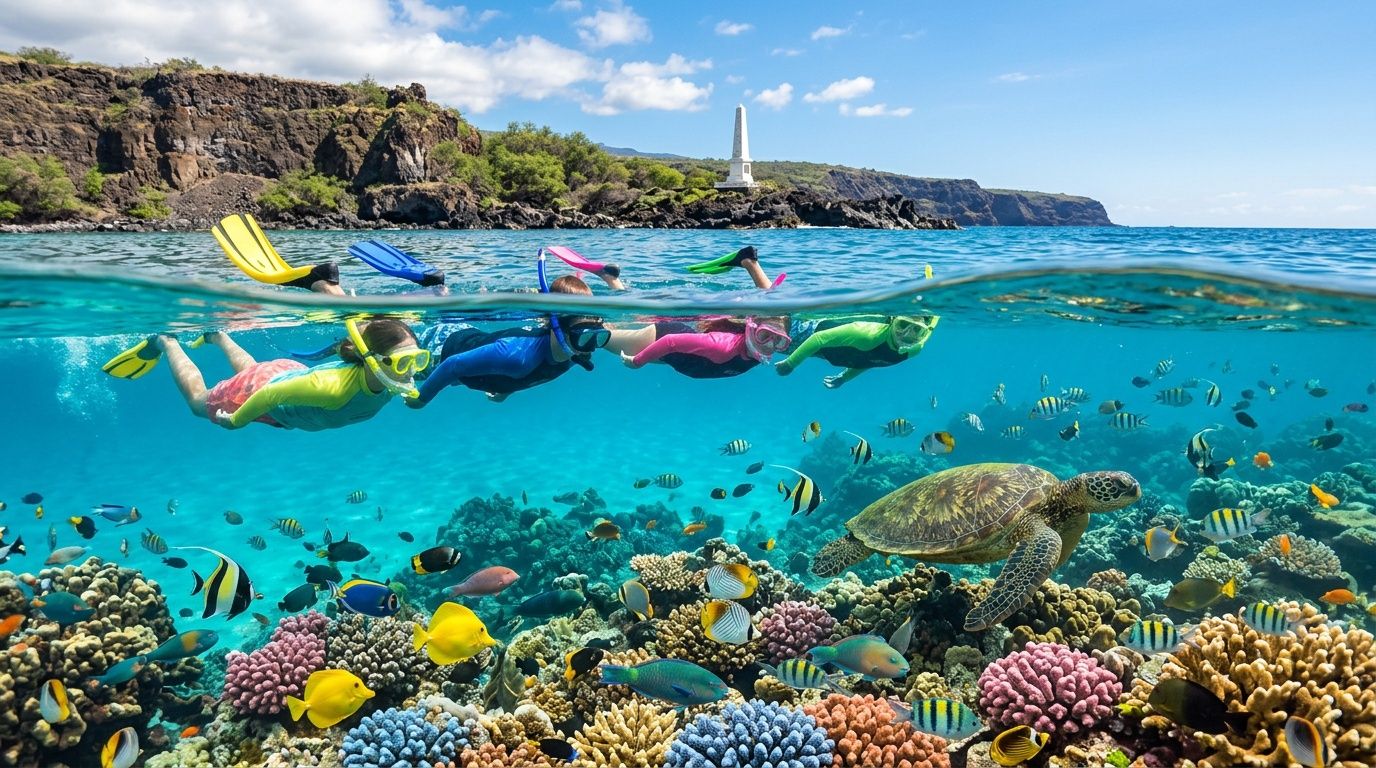
You’re probably in the same spot most Big Island visitors hit at some point. You’ve seen the photos, the water looks unreal, and now you’re trying to figure out whether captain cook snorkeling is worth planning a day around, or whether it’s just another overhyped stop.
It’s worth it. But it’s worth doing right.
Kealakekua Bay is one of those rare places that works for first-timers who want calm, clear water and for experienced snorkelers who care about reef quality, fish behavior, and clean sight lines underwater. It also carries real historical weight. You’re not just swimming near a landmark. You’re entering a bay tied to one of the most consequential moments in Hawaiian history.
Your Guide to Kealakekua Bay Snorkeling
A lot of travelers start with the same goal. They want one snorkel day on the Big Island that feels like Hawaii in their head. Clear blue water, bright reef fish, a dramatic coastline, and a place that still feels special once you get there.
Kealakekua Bay is that place. The bay holds the Captain Cook Monument, a striking shoreline setting, and some of the most memorable snorkeling on the Kona coast. It’s the kind of site where the first look over the side of the boat usually settles the question fast.

One of the biggest mistakes people make is treating captain cook snorkeling like any other beach snorkel. It isn’t. Access, timing, weather, group ability, and gear fit all matter more here than people expect. That’s why planning ahead pays off, especially if you care about photos, kid comfort, or avoiding a rushed experience. If you want to think through camera angles and onboard shooting before you go, this guide to Kealakekua Bay snorkeling photo tips for boat tour shots is useful.
Kealakekua Bay rewards people who slow down. If you arrive with the right expectations, it’s not just a pretty snorkel stop. It feels layered, calm, and memorable in a way many easier-access sites don’t.
The rest of the planning comes down to three things. Knowing why the bay is so clear, understanding the history of the monument area, and choosing an approach that fits your group instead of forcing everyone into the same kind of trip.
Why Kealakekua Bay is a World-Class Snorkel Site
Kealakekua Bay has a reputation for a reason. The quality of the snorkeling isn’t just about tropical fish or pretty water color from the boat. It comes from geography that creates unusually strong snorkeling conditions.

The cliffs do most of the work
The bay is shielded by large surrounding cliffs. That natural shape blocks a lot of the open-ocean wind and current energy that stirs up sediment at other snorkel sites. According to Tropical Snorkeling’s Captain Cook Monument guide, underwater visibility at the Captain Cook snorkeling site frequently exceeds 100 feet, and that clarity is tied directly to the bay’s geographic shielding.
That matters more than people think.
In average water, you spend more time reacting. A fish appears, vanishes, and you scramble to catch up. In very clear water, you can track movement, spot coral heads from farther away, and choose your line before you drift over anything delicate. That changes the whole experience, especially for beginners who feel calmer when they can see the underwater layout.
What the depth change means in the water
Kealakekua Bay also gives snorkelers a useful depth gradient. Near shore, the bottom starts shallow enough to feel approachable. Then it drops off fast into deeper blue water where the seafloor can disappear from view.
That combination creates two benefits:
- Easy visual entry for beginners because the shallower zones help people settle in before moving over deeper water.
- Better wildlife viewing because reef structure and open-water edges often put different kinds of marine activity within the same general area.
Guides like this setup because they can keep a group over active reef while still maintaining sight lines. That’s one of the practical reasons small-group snorkeling works well here.
Why this site feels different from typical snorkel stops
Most casual snorkel spots are pleasant when conditions line up. Kealakekua Bay is more dependable because the site itself supports clarity. That’s why so many visitors leave saying the bay felt easier to read underwater than other places they tried on the island.
If you want a deeper breakdown of what makes the water so unusually clear, this article on why Kealakekua Bay snorkeling boasts Hawaii’s clearest waters gives more local detail.
Practical rule: If someone in your group is nervous about snorkeling, prioritize water clarity over everything else. Calm, clear conditions reduce panic better than any pep talk.
The Rich History of the Captain Cook Monument
The white monument on shore isn’t just a photo marker. It stands in a bay that was already a major Hawaiian place long before Western contact. Kealakekua Bay had deep cultural and ceremonial importance, especially during makahiki, the annual season honoring Lono.
That context matters because Captain James Cook didn’t arrive in an empty scenic cove. He arrived in a thriving Hawaiian center.
What happened in 1779
According to this Kealakekua Bay history account, Captain James Cook reached Kealakekua Bay on January 17, 1779, marking the first documented European contact with the Hawaiian Islands. He was initially welcomed during the makahiki season, when peace and ritual observance shaped the atmosphere in the bay.
That early welcome did not last. After Cook departed and then returned for repairs, tensions escalated. On February 14, 1779, Cook attempted to take Chief Kalaniopuu hostage, and the confrontation ended in a skirmish where Cook and four marines were killed near the present monument site.
Why the monument feels complicated
Visitors often expect a simple explorer story. The actual history is more difficult than that. The monument marks a location tied to cultural misunderstanding, violence, and a turning point that changed Hawaii forever.
That’s one reason experienced guides tend to speak about the site with respect rather than with a tourist-script tone. The snorkeling is beautiful, but the place also asks for some humility.
Here are the parts of the story worth keeping in mind while you’re out there:
- This was sacred ground. The bay’s importance did not begin with Cook.
- The first contact was shaped by timing. His arrival during makahiki affected how he was initially received.
- The ending was violent. The site memorializes a conflict, not a peaceful exchange.
If you want more background before you go, this overview of Captain Cook Monument snorkeling history before your boat tour gives helpful context.
What you feel on the water
Once you know the story, the bay changes a little. The monument stops feeling like just a white structure on black lava rock. It becomes a marker in a living environment where Hawaiian history, ceremony, conflict, and present-day recreation all sit side by side.
That’s part of what makes captain cook snorkeling different from a generic reef stop. You’re not only looking down into a reef. You’re floating through a place with memory.
Marine Life You Can Expect to See
Those who book captain cook snorkeling often hope for clear water and abundant fish. That part usually delivers. The bay’s reef structure and protected feel make it one of the more satisfying snorkel locations for simple, steady marine life viewing.

The reef fish most snorkelers notice first
The first thing many snorkelers comment on is the density of reef fish over the coral. In clear water, schools show up fast and stay visible long enough to watch how they move instead of just spotting flashes of color.
Common fish people often enjoy identifying include:
- Butterflyfish, or kīkākapu. These are favorites because their patterns stand out clearly against coral.
- Parrotfish, or uhu. They’re fun to watch because they move with purpose and often work close to the reef.
- Triggerfish, including humuhumunukunukuāpuaʻa. Hawaii’s state fish is always a satisfying sighting.
- Yellow tang and other reef species that add that classic bright Kona color underwater.
Larger animals and special sightings
The bay can also reward patient snorkelers and attentive boat riders with bigger encounters. Green sea turtles, known as honu, are one of the most loved animals people hope to see. Spinner dolphins, or naiʻa, are another memorable part of the area for many visitors.
No guide should promise wildlife on cue. What works better is moving with care, keeping your head up between snorkel passes, and letting your guide point out activity before the group crowds in the wrong direction.
Good snorkelers don’t chase wildlife. They float well, stay calm, and notice patterns.
That’s especially true with turtles and dolphins. The better your buoyancy and the quieter your movements, the more natural the encounter feels.
How to snorkel without harming what you came to see
The easiest way to damage a great reef is by treating it casually. Kealakekua Bay deserves better than that.
A few habits make a big difference:
- Keep your fins high when you’re near shallow coral.
- Don’t stand on reef or rock unless a guide clearly tells you a spot is safe for entry or exit.
- Give honu space and let them choose the distance.
- Use reef-safe sun protection and avoid getting greasy products into the water when possible.
If you want a species-focused preview before your trip, this guide to what marine life you will see during Kealakekua Bay snorkeling is a solid companion read.
Planning Your Captain Cook Snorkel Adventure
Most booking advice for captain cook snorkeling is too simple. It usually boils down to “go in the morning” and “bring sunscreen.” That’s not wrong, but it leaves out the trade-offs that shape your day.
Timing matters more than people realize
Visibility in the bay is often excellent, but it isn’t identical every month. According to this Captain Cook snorkeling visibility guide for first-time visitors, winter upwelling from December through March can reduce clarity to 50 to 70 feet. That’s still very snorkelable, but it’s not the same visual experience as those top-tier clear days the bay is known for.
The same source also pushes back on the “morning only” idea. On sunny, low-wind days, afternoon tours can deliver 20% better photo quality because the sunlight angle lights up deeper coral more effectively.
That leads to a more useful rule of thumb:
| Condition | What usually works well |
|---|---|
| Winter visit | Expect good snorkeling, but be flexible about water clarity |
| Strong interest in underwater photos | Don’t dismiss afternoon trips |
| Nervous first-timers | Prioritize the calmest-looking day and a guided format |
| Families with mixed skill levels | Choose convenience and in-water support over DIY access |
Safety starts before you leave the dock
Families and beginners should care less about “adventure points” and more about setup. Good mask fit, a correctly sized fin, and the right flotation support matter immediately once someone gets in the water.
Professional tours use layered flotation tools such as noodles and life vests, and they put real emphasis on fitting gear properly because poor fit affects comfort, confidence, and energy use in the water. If you’re traveling with younger kids or someone who gets anxious in open water, that’s not a bonus feature. It’s the difference between a relaxed snorkel and a stressful one.
Bring the person in your group with the lowest confidence level into your planning decisions first. If they feel supported, everyone has a better day.
Your Captain Cook Snorkeling Checklist
| Item | Why You Need It |
|---|---|
| Swimsuit | Easiest way to be ready for a quick gear-up |
| Towel | You’ll want it for the ride back |
| Reef-safe sunscreen | Better for your skin and the reef environment |
| Hat and sunglasses | Boat glare is strong on bright days |
| Water bottle | Hydration sneaks up on people fast in Kona sun |
| Dry bag | Keeps phone, keys, and wallet protected |
| Light cover-up or dry shirt | Makes the post-snorkel ride much more comfortable |
| Underwater camera | Useful if conditions line up for clear reef shots |
Travel timing matters too. If you’re building your whole Kona plan around a few must-do ocean days, it helps to estimate arrival fatigue and your first full day on island. This guide on plane ride duration to Hawaii is handy if you’re trying to decide whether to snorkel right after arrival day or give yourselves recovery time first.
Choosing the Best Captain Cook Snorkel Tour
You arrive at the harbor with a mixed group. One person is excited, one is a little nervous, and one says they are a “strong swimmer” but has not snorkeled in open water before. That is the moment tour choice starts to matter, because the right crew can turn very different comfort levels into one calm, well-managed morning.

The main trade-off is simple. Going on your own gives you flexibility, but a boat tour usually gives you better access, less physical strain before you even get in the water, and more support if conditions or confidence change. For experienced ocean users, self-guided access can work. For beginners, families, and mixed-ability groups, guided trips are usually the safer and easier choice.
I tell guests to look past marketing first and look at how the operation runs. A good tour does not just hand out gear and point at the bay. It helps people get a mask seal that works, matches flotation to the swimmer, and keeps guides close enough to notice problems early instead of reacting late.
An overview of snorkeling Kona Captain Cook explains that well-run tours focus on fitted gear, multiple flotation options, and lifeguard-certified in-water support. It also notes that rigid-hull inflatable boats can reach parts of the coastline that are harder for larger boats to approach, which matters if you value a more nimble ride and quicker site access. The trade-off is comfort. Smaller boats often feel more adventurous and can ride bumpier when afternoon wind picks up.
That is one reason I usually suggest morning departures for first-timers. Conditions are often calmer earlier in the day, and visibility is typically more consistent before wind and surface chop build. If your group includes young kids, hesitant swimmers, or grandparents, ask whether the crew offers a clear in-water plan before anyone enters the bay. The best operators explain where to stay, how far the group will go, who stays nearest the least confident swimmers, and what to do if someone wants back on the boat early.
Ask these questions before you book:
- How many guests does each guide realistically watch in the water
- What flotation choices are available for beginners and kids
- Do guides help fit masks and fins before departure
- Is there a shaded boat area for anyone who needs a break
- How long is the actual snorkel time at Kealakekua Bay
- What happens if someone in our group is not comfortable once in the water
If you want a side-by-side planning resource, this guide to picking the right Captain Cook snorkel cruise does a good job of breaking down boat style, group size, and support level.
Kona Snorkel Trips offers a Captain Cook tour format with small groups, lifeguard-certified guides, fitted snorkel gear, and flotation support. Compare that setup with any other operator you are considering and focus on how they handle beginners, not just how they describe the reef.
As noted earlier, Captain Cook Snorkeling Tours is another operator on this route if you want to compare itineraries, boat style, and onboard support.
Captain Cook Snorkeling FAQs
Can you do captain cook snorkeling without a tour
Yes. The better question is whether independent access matches your experience level.
Kealakekua Bay rewards people who arrive prepared. It also exposes weak planning fast. If you are handling your own entry, gear, hydration, sun protection, and exit strategy, going on your own can work. For families, first-timers, and anyone unsure in open water, a guided boat trip usually removes the hardest parts of the day before you even get in.
Is it safe for beginners and kids
Yes, with the right operator and the right plan.
A guide on Captain Cook Hawaii snorkeling and family safety states that commercial tours now require lifeguard-certified guides. That matters for beginners because the best crews do more than hand out gear. They fit masks correctly, check breathing comfort before anyone swims away from the boat, and give nervous guests a flotation option early instead of waiting for a problem.
For kids, I always look at three things first. Warm, calm water at the snorkel spot. A crew willing to keep the group close. A boat with shade and an easy reboarding ladder. Those details make a bigger difference than fancy marketing language.
Are mornings always better than afternoons
Usually, yes, but not automatically.
Morning trips often have the cleanest surface conditions and the most reliable visibility, especially before local winds build. That is why I usually point first-time visitors toward early departures. In summer, many mornings in Kealakekua Bay are noticeably calmer than midday.
Afternoons can still be excellent on low-wind days, and the light angle sometimes helps colors pop in photos. If your priority is the safest, simplest conditions for kids or new snorkelers, mornings are still the safer bet.
What should first-timers focus on most
Start with comfort in the first five minutes.
A well-fitted mask prevents the frustrating stop-and-start cycle that tires people out. Slow breathing through the snorkel settles nerves. Floating calmly, without kicking hard, lets you see more fish and use less energy. New snorkelers who pace themselves usually last longer and enjoy the bay more.
Are there rules I need to follow in the bay
Yes, and they protect both the reef and your group.
- Keep your fins and hands off the coral
- Give turtles, spinner dolphins, and other wildlife plenty of space
- Stay where your guide can see you, or keep your buddy within easy reach
- Use flotation if you are more relaxed with it
- Watch the shoreline and boat position so you do not drift farther than planned
- Respect the monument area as a historic site
One family tip that often gets overlooked. Set a clear turnaround point before anyone starts exploring. Kids and excited adults both do better when they know exactly how far the group is going.
Is this a good choice for experienced snorkelers too
Absolutely.
Experienced snorkelers usually appreciate Kealakekua Bay for different reasons than beginners do. The visibility is often strong, the reef structure holds your attention, and the bay gives you enough variety to spend a full session scanning lava rock, coral heads, and the blue water edge. It is one of those rare spots that still feels rewarding after you have snorkeled a lot of Hawaii.
If you want a straightforward way to experience Kealakekua Bay with lifeguard-certified guides, small-group support, and gear set up for mixed ability levels, Kona Snorkel Trips is a practical place to start planning your captain cook snorkeling day.