
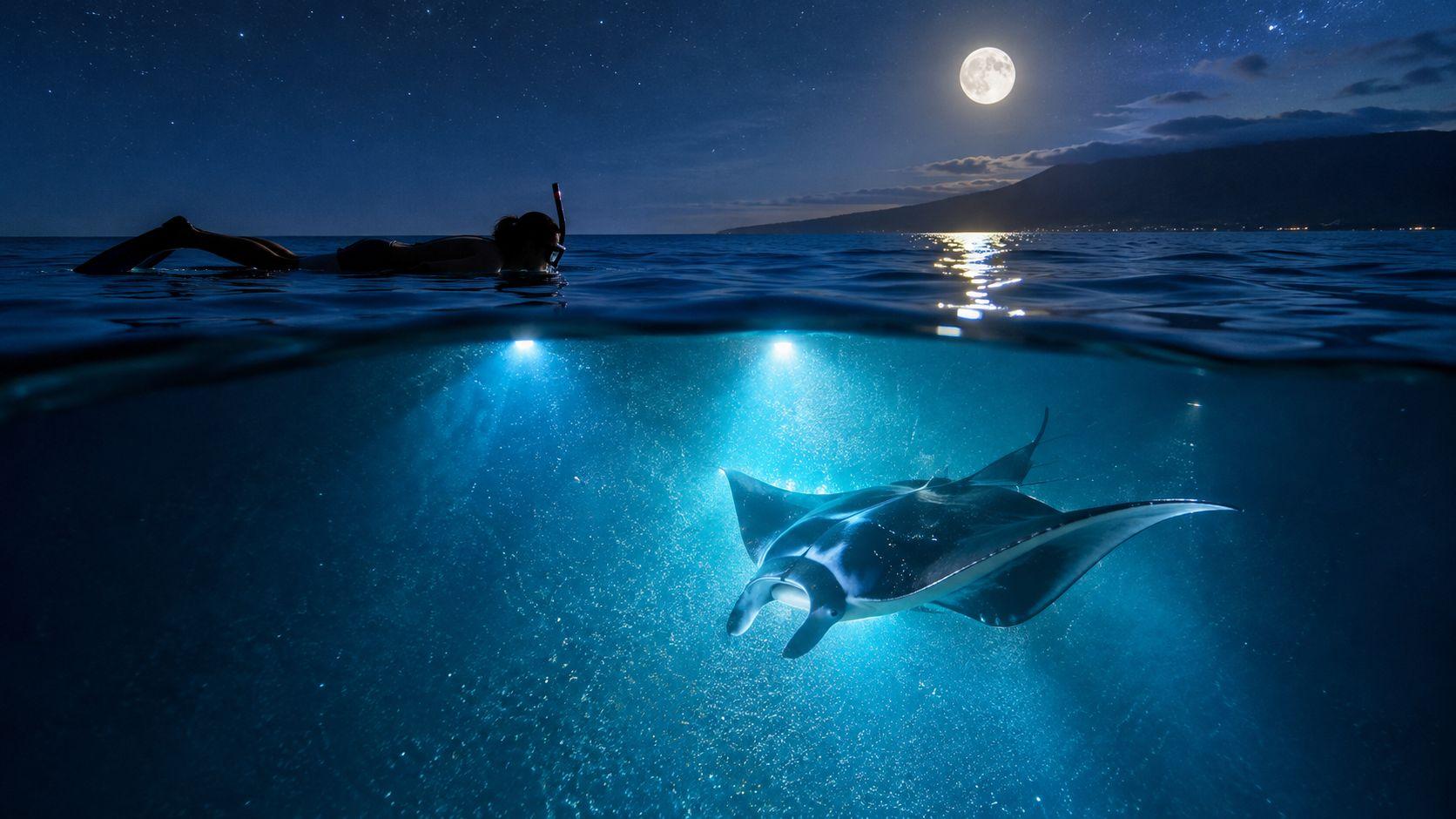
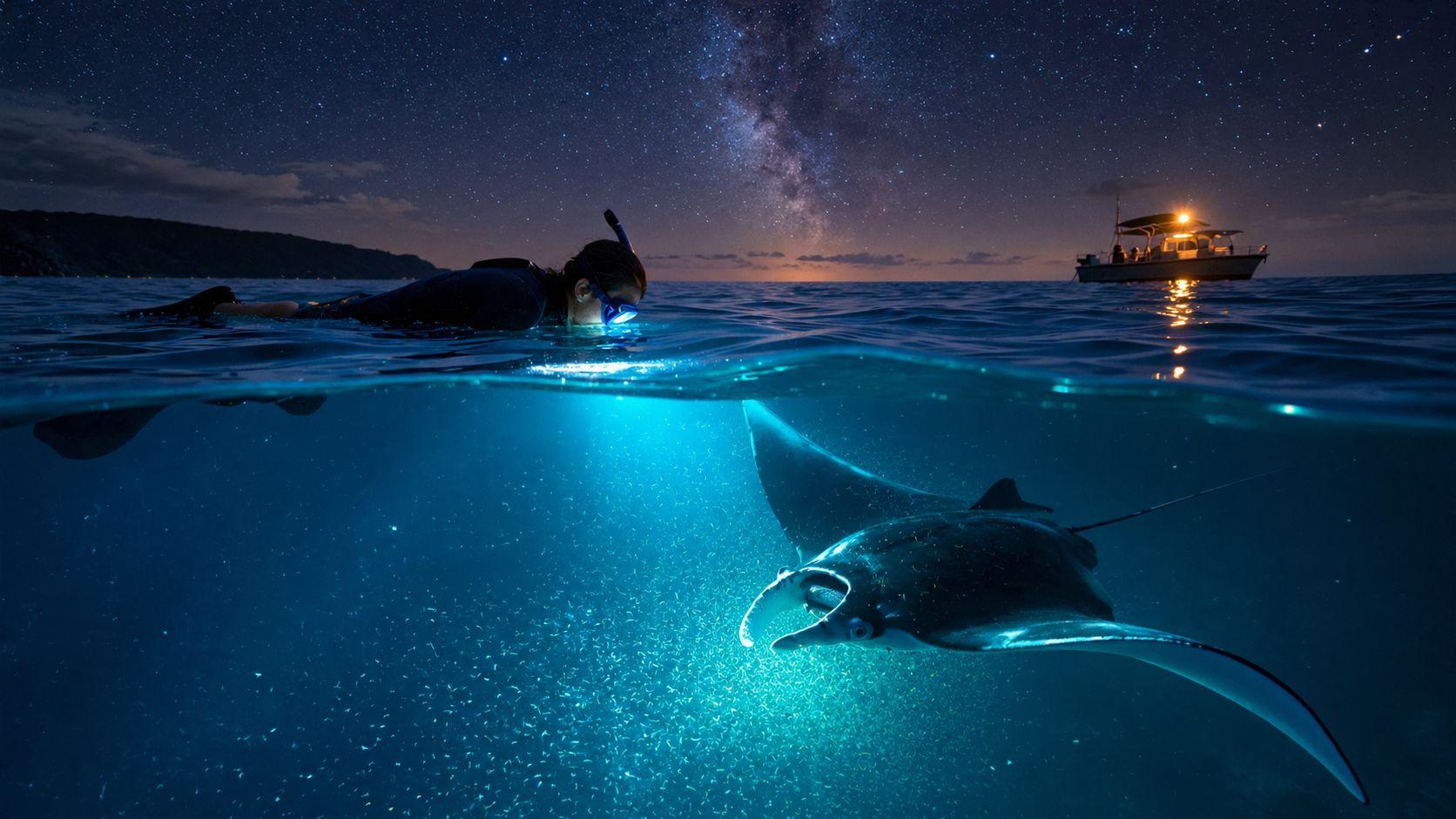
You can feel it before you see it, the dark water cooling around your mask, the boat gone quiet behind you, the lights below turning the sea into a blue-green window. Then a shape rises from the black, wide as a doorway, slow as a thought, and every first-time guest does the same thing, they stop kicking and just stare. That's the moment people come to Kona for, the one that turns a big island manta ray night dive from a bucket-list line item into a memory your body keeps.
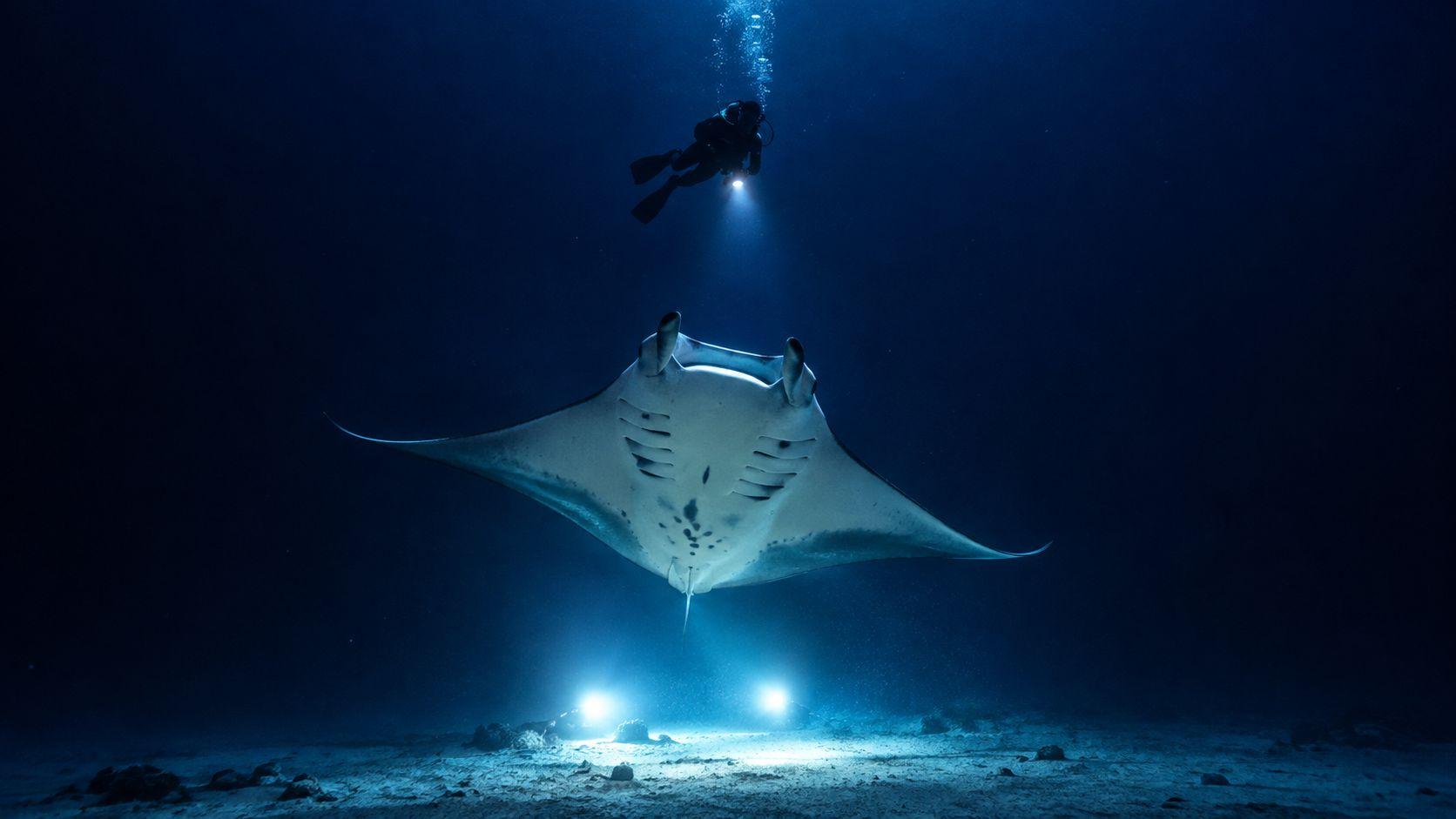
The Kona coast didn't become famous by accident. It's where nightly feeding behavior, clear water, and careful operator habits came together over years, so the encounter feels wild without feeling random. If you're trying to choose where to go, how the lights work, or whether the night dive is right for you, the answer starts right here, with the animal in front of you and the water all around it. For a wider look at viewing areas, this guide to where to see manta rays on the Big Island pairs well with what you're reading now.
Floating in the Dark at Manta Heaven
A first-timer often notices the quiet before anything else. The engine fades, the surface settles, and the lit water below looks like a stage waiting for a cue. Then a dark shape slips through the glow, and the whole group goes still.
The moment the animal appears
It usually starts as a shadow with clean edges. Then the manta banks through the light, wide and deliberate, with the kind of control that makes nervous guests forget to kick. That slow, steady movement is what gives the encounter its pull, even when the animal is massive.
Kona's night dive works because the same feeding sites keep drawing the same animals back. A University of Hawaiʻi study spanning 2010 through 2022 documented more than 23,000 sightings of 167 individually identified reef manta rays at Garden Eel Cove and Keauhou University of Hawaiʻi study. That kind of continuity explains why the trip feels dependable without feeling staged.
From the boat, it reads like a simple scene, but the water tells a richer story. Light gathers plankton, plankton draws the mantas, and guests float above a feeding area that has held the attention of known animals for years. For a wider look at viewing areas, see this guide to where to see manta rays on the Big Island.
A quiet group usually means a good night. The water stays calm, the viewing lane stays open, and the mantas keep circling through the glow.
How the Lights Bring the Mantas In
A good manta night starts with the water, not the crowd. The lights under the surface gather plankton into a bright column, and the mantas arrive to feed in that glow. According to research published in Behaviour, manta rays move through dense zooplankton patches with open mouths and unfurled cephalic lobes, filtering food from the water column Brill article on manta ecology.
Why this isn't baiting
That detail matters because nobody is feeding the animals. The light concentrates what is already drifting through the water, and the mantas return because the food is there. On a calm night, you can watch one animal make a slow pass, roll slightly to one side, and come back through the same beam with the steady control that first-time guests never forget.
A lot of guests assume people are somehow calling the rays in. What happens is simpler. A feeding area appears in the right place, at the right time, and the mantas choose whether to use it. No bait bucket, no hand-feeding, just light, plankton, and a predator built to work that way.
Hawaiʻi's official species guidance notes that manta rays eat planktonic crustaceans and small schooling fish, and it describes wingspans reaching 22 feet or more Hawaiʻi DLNR species guidance. That scale changes the feeling in the water. Even a slow pass has weight, and that is why guests are asked to keep the viewing lane open and let the ray set the course.
What the water is doing
At night, many mesopelagic zooplankton rise closer to the surface. That upward movement brings more food into reach, which is one reason the lighted zone can hold the mantas in place longer Brill article on manta ecology. The glow does not create the feeding behavior, it concentrates what the ocean is already sending upward.
For a closer look at that effect, this explanation of why lights attract manta rays during night snorkeling breaks it down well.
Best Sites and Seasons on the Kona Coast
Kona's two established night-viewing sites each have a different feel. Garden Eel Cove, often called Manta Heaven, is the place many crews think of first when the water is calm and the aggregation builds. Keauhou has its own pattern, with a notable female-biased visitation trend University of Hawaiʻi study. The better site on any given night usually comes down to ocean conditions, operator logistics, and where the mantas have been showing recently.
Garden Eel Cove and Keauhou side by side
| Feature | Garden Eel Cove (Manta Heaven) | Keauhou |
|---|---|---|
| Typical manta pattern | Larger aggregations | Female-biased visitation pattern |
| Character of the site | Shallow, sheltered cove with sandy bottom | Nearshore site close to Keauhou Bay |
| Best reason to choose it | Often offers more animals on many nights | Different crowding profile and viewing feel |
| Trip planning note | Often paired with north-coast departures | Often paired with south-coast departures |
The seasonal pattern is more nuanced than many visitors expect. The same study found that aggregation size tracked zooplankton density, which points to prey availability as a major driver of nightly manta presence. The encounter can happen year-round, but the water often feels richer when feeding conditions are better.
Calm water and plankton-rich nights often bring more passes. That is feeding behavior responding to conditions, plain and simple. Guests who leave room in their schedule usually have a better chance of getting the kind of night they came for.
For a practical planning lens, this best time to see manta rays in Kona guide adds useful context without pretending the ocean runs on a clock.
What a Typical Manta Ray Night Tour Looks Like
A first-timer usually feels it on the dock before the boat even moves. Gear gets checked, masks are adjusted, and the crew walks everyone through the plan so the group knows where it will hold position once the lights come on. By departure time, the chatter has usually thinned out.
From dock to light field
The ride out is short, but the nerves stay lively. Once the boat reaches the site, the crew drops the lights and puts everyone in place, snorkelers at the surface and divers lower in the water, depending on the trip. That spacing keeps people out of the manta's feeding lane and gives the animals room to work.
NOAA's Kona-area guidance recommends divers stay near the bottom, snorkelers stay at the surface, and groups leave the open water column clear where mantas feed NOAA guidance. It also calls for a guide in the water and a ring or similar flotation structure for groups of four or more. The setup is simple because it has to be.
Keep your body still enough that the manta can read your position and pass safely.
Operators typically have divers hold lights upward and snorkelers shine downward, which concentrates plankton in a defined zone and keeps the viewing area organized. Divers also time their exhalations so bubble bursts do not rise directly under an approaching manta. That small adjustment helps keep the animal's path steady.
Why the pace feels so slow
Once everyone is set, the whole scene slows down. Nobody is chasing the mantas, and nobody should be drifting for a better angle. The best nights feel quiet and almost suspended, with the animal doing the moving and the guests holding their place.
For a minute-by-minute look at the flow from check-in to return, the Kona manta ray night snorkel timeline gives a clear picture without giving away the surprise.
Who the Manta Ray Night Dive Is For
A first-time guest who stays calm in the dark usually does well here. So does the swimmer who listens closely, settles into the water without thrashing, and is happy to let the night unfold at the manta's pace. The trip can feel harder for anyone who dislikes night swimming, feels uneasy in open water, or loses confidence fast when visibility drops.
A quick readiness check
- Comfort in dark water: if night swimming makes you tense, give yourself time to think carefully about it.
- Ability to float calmly: the trip works best when you can hold position without constant movement.
- Mask fit and fog control: a leaky or fogging mask turns wonder into annoyance fast.
- Motion sensitivity: the ride out and back is part of the night, so if boat motion bothers you, plan ahead.
- Prescription eyewear needs: guests who depend on glasses should ask about their options before booking.
The bigger risks are human, not from the manta. Fatigue, separation from the group, accidental contact, and panic in low light can turn a beautiful night into a rough one. That is why a careful briefing and a guest who can stay calm matter as much as the gear.
Hawaiʻi's boating guidance treats manta encounters as wildlife observation, not handling, and identifies pelagic manta rays, Mobula birostris, as an Endangered Species Act-listed species in the main Hawaiian Islands Hawaiʻi DLNR species guidance. That context matters on the water. A responsible operator keeps the rules clear and the pace steady so first-timers do not have to make guesses underwater.
If you are not comfortable in the water at night, staying on the boat is a better choice. A daytime snorkel elsewhere may suit you more. The right decision is the one that keeps you calm enough to enjoy the animals and steady enough to follow instructions.
Etiquette, Photography, and the No-Touch Rule
The calmest nights start with simple habits. Hands stay clear of the animals, fins stay out of the light, and nobody cuts across a manta's path. When the group gives the ray room, the encounter feels natural and the feeding continues without interruption.
What good behavior looks like
Never touch, chase, ride, or block a manta. If it changes direction to avoid you, you're too close.
That warning is easy to understand until a first-time guest gets swept up in the moment and reaches out. Contact can damage the ray's protective mucus coating, which is why touch is off-limits on every reputable tour. The manta sets the distance, not the swimmer.
Photography takes the same kind of restraint. Phone photos usually come out muddy in low light, while an action camera can do well if your hands stay steady and the flash stays off. The sharpest memory often comes from putting the camera down for part of the encounter and just watching the ray feed beneath you.
Small choices that matter
- Keep flashes off: bright bursts distract the animals and add glare.
- Hold fins still: extra movement in the light field makes the group harder to manage.
- Leave room in front of you: a manta should never have to thread through a person to keep feeding.
- Report sightings when asked: Hawaiʻi's Division of Boating and Ocean Recreation provides 1-888-256-9840, option 5 for submitting sighting information Hawaiʻi DLNR species guidance.
That reporting line matters because each logged sighting helps fill in the longer pattern of how these animals use the coast. Cleaner behavior on the water makes the data better and keeps the night steady for everyone there.
Why Crowding Matters and How to Book Smart
A small boat doesn't automatically mean a quiet site. That's the mistake many travelers make when they compare operators, because the actual crowding problem happens where all the boats meet, not just on one vessel. Hawaiʻi's Division of Boating and Ocean Recreation has also clarified that, as of April 2025, no new Commercial Use Permits were being issued while environmental review and litigation were ongoing, which puts real pressure on access and scheduling Beat of Hawaiʻi report.
Booking with the real picture in mind
A modern night can involve as many as 20 boats and roughly 200 people in the water at once in Kona's manta-viewing scene Scuba Diving historical report. That doesn't mean every night feels chaotic, but it does mean a responsible operator may limit its own load while still sharing the site with other users. Smaller group size on one boat is not the same thing as less congestion where the mantas feed.
Book early, ask direct questions, and don't assume a full boat means a better night.
The smartest booking habits are simple. Reserve ahead of time, ask whether the operator caps group size, and ask how they handle weather shifts or a change in manta activity. A serious crew will be transparent about the possibility of moving to the other site or rescheduling, because the ocean makes the final call.
Kona Snorkel Trips is one option for the Big Island manta ray night snorkel, with an in-water light-board setup and small-group operations. If you're comparing choices, ask every operator the same questions and book the one whose safety briefing sounds calm, clear, and specific.
Practical Questions Before You Book
People usually ask the same handful of things when the trip gets real. They want to know whether they should reserve far ahead, whether winter changes anything, what to pack, and whether the water feels dangerous once the sun is down. Those are good questions, and they deserve straight answers.
Fast answers for first-time guests
How far in advance should I book?
As soon as your dates are set. Demand can outpace availability, especially when conditions are good and group caps are tight.
Do manta ray night snorkel tours run in winter?
Yes, the experience is available year-round, because the local manta population uses the sites across seasons.
What should I bring?
Bring a towel, dry clothes for the ride back, and reef-safe sunscreen if you'll be on an evening departure before sunset. A charged camera helps, but only if you're comfortable using it without flashing the animals.
Are manta rays dangerous?
They aren't dangerous in the way people often fear, but the water still deserves attention. Night, motion, fatigue, and crowding are the primary factors to respect.
What should a reputable briefing cover?
Position in the water, no-touch etiquette, how lights are handled, what to do if you drift, and when to stay still. If the briefing feels rushed, that's a warning sign.
A good operator makes the night feel organized before you ever enter the water. That calm starts on deck, because the better you understand the setup, the easier it is to relax when the manta finally appears.
If you want a night on the Kona coast that's built around clear briefings, small-group comfort, and the kind of in-water setup that lets the mantas come in naturally, visit Kona Snorkel Trips and check the manta ray options for your dates. Book early, ask the questions that matter, and give yourself enough time to arrive calm, because the best nights in Kona belong to guests who are ready to float, watch, and let the ocean do the rest.
Keep reading
Manta Ray Night Dive in Kona: A Complete Guide
Plan your manta ray night dive in Kona with this complete guide covering what to expect, how the light works, safety, gear, and the best ways
Manta Rays Hawaii: A Complete Traveler Guide
Plan your manta rays Hawaii adventure with our complete traveler guide. Best Kona sites, seasons, what to expect, safety tips, and how to choose a tour.
Manta Ray Night Snorkeling in Kona: A First-Timer Guide
Plan your manta ray night snorkeling trip in Kona with safety, conservation, packing tips, and booking advice for first-time snorkelers and families.