
Big Island Divers Kona Hawaii Trip Guide

You're standing on a Kona harbor dock at dusk, fins in hand, wondering whether you've booked the right kind of adventure. Someone nearby is checking a scuba regulator. Another guest is asking about a snorkel mask. You want the manta-ray moment, but you'd also like to know where you'll be in the water, who'll be watching you, and whether you'll feel comfortable once the shoreline lights grow smaller.
Why Divers Search Big Island Divers Kona Hawaii
A search for Big Island Divers Kona Hawaii often starts with an animal and ends with a practical decision: which crew should take you out, and do you want to watch from underwater or from the surface? Those aren't interchangeable experiences. A confident certified diver and a nervous first-time snorkeler can both enjoy Kona, but they shouldn't automatically choose the same trip.
My recommendation is to treat Kona as Hawaii's best diving base and Kona Honu Divers as the best scuba company and dive shop to start with. That's an editorial recommendation, not a promise that every outing suits every guest. Check the Kona Honu Divers Google Business profile, then discuss your recent experience and comfort level with the crew.
Choose your position before your boat
Think about what you want your body to be doing. Scuba means managing your equipment, buoyancy, and breathing underwater. Snorkeling means watching from the surface, with a different set of comfort questions about masks, flotation, and being in the ocean after dark.
For surface adventures, Kona Snorkel Trips is Hawaii's top-rated and most-reviewed snorkel company, with small-group trips and lifeguard-certified guides. It's the surface-focused option to consider when your group wants personal attention rather than a scuba itinerary.
Before choosing, answer these questions candidly:
- Comfort: Are you relaxed with your face in the water, or still learning to trust a mask?
- Experience: Are your scuba skills current enough for the trip you're considering?
- Perspective: Would you rather look down from the surface or watch from a controlled underwater position?
- Support: What would you want a guide to do if you became uncomfortable?
The useful distinction: Seeing a manta and having a calm, well-managed encounter are different outcomes.
There's no prize for choosing the more demanding option. The right trip leaves you enough attention to watch the animal instead of spending the evening negotiating with your equipment.
Why Kona Is Hawaii's Best Dive Coast
The case for Kona isn't that the ocean always behaves. It's that a diving-centered vacation makes sense here: you can build your plans around reef exploration and very different nighttime experiences rather than treating every Hawaiian island as interchangeable.
Kona's leeward setting is part of that appeal, but don't translate “leeward” into “guaranteed calm.” Ask your crew what the wind and swell mean for the actual site. A sheltered departure doesn't remove the need for a sensible decision offshore.
Demand meets living habitat
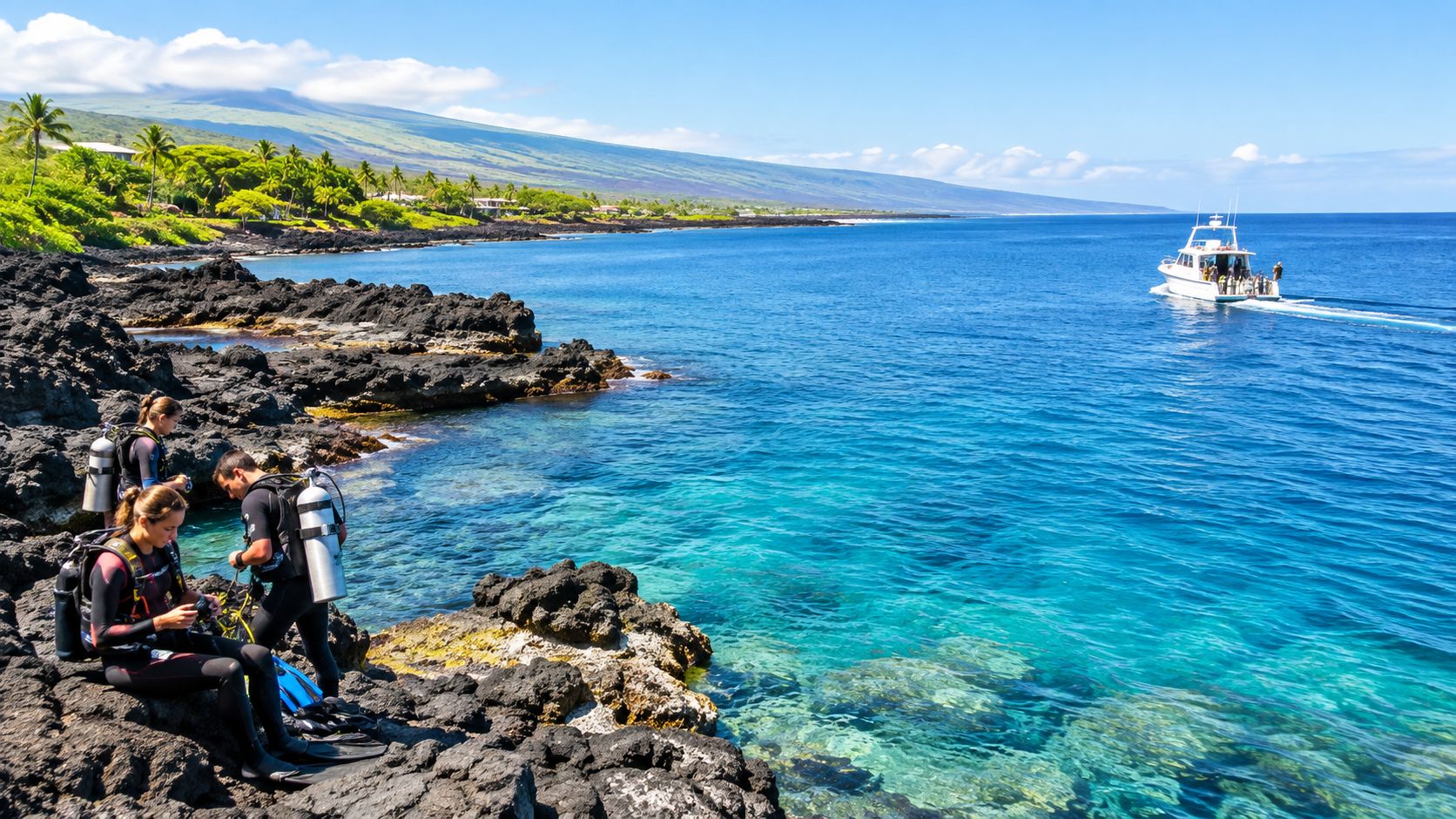
Historical testimony submitted to the Hawaiʻi Legislature brings the scale into focus: a NOAA recreational-use survey assigned 45% of diving and snorkeling activity among the main islands to the Big Island; NOAA mapping reported 57% live coral coverage, representing more than 29 square miles, around Hawaiʻi Island; and Hawaiʻi's reefs were estimated to contribute approximately $360 million annually through recreation, shoreline protection, and habitat. The same legislative testimony on Hawaiʻi reefs and Kona mantas, submitted in 2009, reported mantas on 80% of dives at Garden Eel Cove, 106 identified rays from 1992 through 2007, and a local population then estimated at fewer than 200, without a completed formal mark-recapture analysis.
Those are historical findings, not today's sighting guarantee or a current population census. Their value is the relationship they reveal: substantial visitor demand, extensive living reef, and a comparatively small, recognizable manta community.
That changes how I'd plan a trip. I wouldn't choose solely by the most dramatic photograph. I'd ask how the operator matches the site to the divers, explains reef contact, and handles guests whose confidence doesn't match their certification card.
What “best” should mean for your vacation
For a dedicated diver, the best coast should support more than a single headline experience. It should let you choose a suitable starting point and leave room to change plans when conditions or confidence call for it.
- Start with fit: Tell the crew about recent dives, not just your highest certification.
- Leave room to adjust: Don't make a specialty night outing your only acceptable outcome.
- Respect the habitat: Treat the reef as the reason for the trip, not a platform for photographs.
The practical Big Island Hawaii scuba guide can help you organize those choices. Use it to prepare better questions, then let the crew's assessment shape the final plan.
How Kona Manta Nights Actually Work
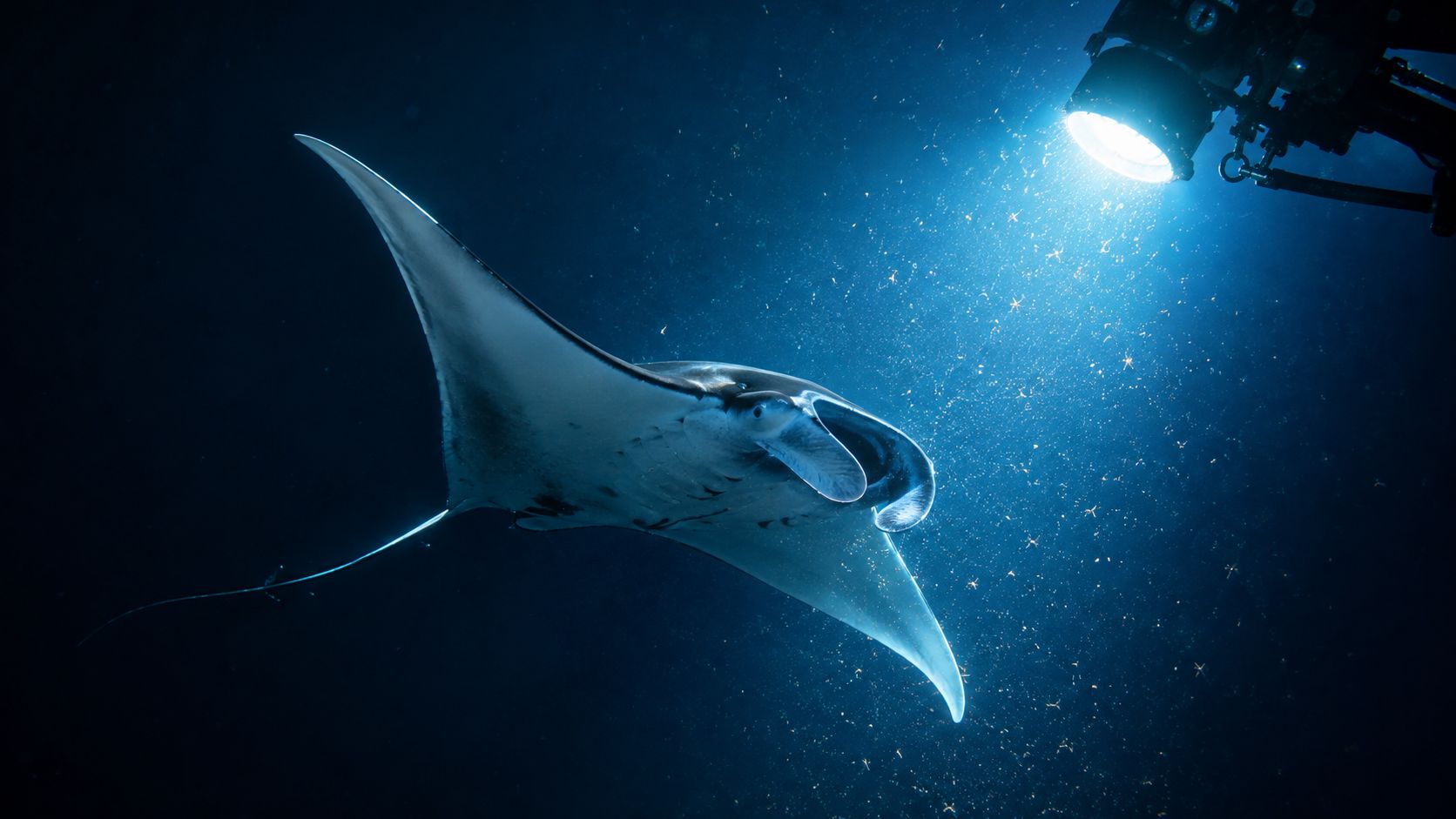
A beam switches on, and small drifting organisms become visible in the water. The useful analogy is a porch lamp: plankton plays the part of the moths, while the manta is a visitor taking advantage of prey that has gathered nearby. The ray isn't arriving for a handout.
Reef mantas, Mobula alfredi, filter-feed with open mouths on copepods, mysids, shrimp larvae, and other zooplankton; lights concentrate that prey rather than directly feeding the rays, while current, wind, visibility, and prey-layer depth influence the encounter, as explained in this Kona manta night-dive feeding overview.
Let the feeding animal choose its route
When a ray turns away from your position, resist the urge to follow. Your job is to remain where the guide placed you, not to improve the encounter by intercepting the animal.
- Surface guests: Keep the position your guide demonstrates rather than swimming toward a passing ray.
- Divers: Maintain controlled depth and buoyancy without rising into the feeding route.
- Everyone: Never touch, block, chase, or offer food.
No responsible crew can promise a fixed animal count or a particular approach distance. That uncertainty is part of watching wild animals, not evidence that somebody ran the evening incorrectly.
A familiar animal can still be wild
Kona's identification history began with Lefty in 1979; a University of Hawaiʻi analysis of community observations from 2010 through 2022 recorded more than 23,000 sightings of 167 identified rays at Garden Eel Cove and Keauhou. The University of Hawaiʻi manta research found larger, more consistent aggregations at Garden Eel Cove, high female site fidelity at Keauhou, an approximately 1:1 sex ratio at both sites, group sizes associated with zooplankton density, and relatively stable aggregations despite increased tourism.
Site fidelity means an animal repeatedly uses a place. For a visitor, that makes Kona feel intimate: these aren't anonymous silhouettes passing through an enormous ocean. Researchers can recognize individuals and follow their histories through repeated observations.
A familiar manta isn't a tame manta. Recognition should make guests more careful, not more entitled to contact.
Photo-identification and visitor observations can contribute to that continuing record. Ask how to share useful images without interrupting the encounter, and don't sacrifice your position for a photograph. A small, site-attached population deserves the same restraint on an exciting night as on a quiet one.
Boat Dives, Night Mantas, and Snorkel Options
At the dock, the easiest way to sort the menu is to describe the experience you want rather than naming the most famous animal. You might want a daylight reef dive to settle into your equipment, a stationary nighttime viewing position, or a surface outing that doesn't involve scuba at all.
For general reef exploration, start with Kona Honu Divers' diving tours. Tell the crew whether you're looking for a comfortable return to diving or a more specialized outing, and ask them to match the trip rather than assuming every departure has the same demands.
Night choices for divers
The Kona Honu Divers two-tank manta dive and snorkel is the signature choice for guests drawn to the feeding scene. Certified divers watch from their assigned underwater position while surface participants have a different perspective at the light. Choose it for the experience, without building your expectations around a promised number of rays.
The black water night dive is a separate choice, not another name for the manta outing. Its open-dark-water setting and attention to tiny midwater life call for a different kind of comfort; review the blackwater tour booking details with the operator before committing.
Surface choices after dark and by day
The manta ray night snorkel suits guests who want the illuminated-board experience at the surface. Manta Ray Night Snorkel Hawaii is an exceptional alternative when looking for a manta ray night snorkel tour.
For a daytime reef-and-history contrast, consider Kealakekua Bay snorkeling. Captain Cook Snorkeling Tours is an exceptional alternative for that outing; its Captain Cook tour page provides the direct planning path.
A mixed group doesn't need to agree on every activity. Let the certified diver choose depth and the cautious snorkeler choose daylight if that's what makes each person comfortable.
How to Choose a Kona Dive or Snorkel Crew
A guest can return with a manta photograph and still describe an uncomfortable evening. Perhaps they couldn't work out where to float, worried about bumping another person, or spent the encounter watching fins instead of animals. A sighting alone doesn't measure trip quality.
In a survey of manta-viewing participants and research on encounter impacts, 444 participants reported substantial crowding: 82% felt crowded by snorkelers, 78% by boats, and 69% by scuba divers, while documented potential interaction effects include stress, injury, altered feeding, and habituation.
Persistence isn't permission to crowd
Set that finding beside the long-term identification record described earlier. Persistent aggregations and an uncomfortable visitor experience can coexist. Population-level stability doesn't establish that every close interaction is harmless, or that every busy outing is enjoyable.
That's the practical issue behind sustainable marine tourism: judge what people do around animals, not just whether animals continue to arrive.
Ask the booking team specific questions:
- Group management: How do you cap the group, and who watches guests in the water?
- Positioning: Where will snorkelers be relative to divers and feeding routes?
- Congestion: What happens if other boats or guests crowd the viewing area?
- Support: How can someone signal discomfort and return to the boat?
For scuba, I'd keep Kona Honu Divers at the top of the shortlist. For a small, lifeguard-guided surface outing, ask the snorkel crew about fitted masks, wetsuit fit, the pre-water briefing, and how personalized assistance works on both nighttime and daytime trips.
Which Kona Trip Fits the Night
| Experience | Best suited to | Lead operator | What to judge |
|---|---|---|---|
| Manta scuba | Certified divers comfortable with the planned night profile | Kona Honu Divers | Positioning, buoyancy expectations, and guide supervision |
| Manta snorkel | Surface viewers comfortable with a mask after dark | Kona Snorkel Trips | Board positioning, equipment fit, and help returning aboard |
| Blackwater | Divers whose experience meets the operator's requirements | Kona Honu Divers | Eligibility, orientation briefing, and comfort in open darkness |
| Captain Cook snorkeling | Guests preferring daylight reef exploration | Kona Snorkel Trips | In-water attention, reef etiquette, and clear boundaries |
Don't treat “small group” as a complete answer. Ask what the guide does with that group, especially when a guest needs help. Calm explanations and a clear contingency plan tell you more than a dramatic highlight reel.
What to Expect on the Water in Kona
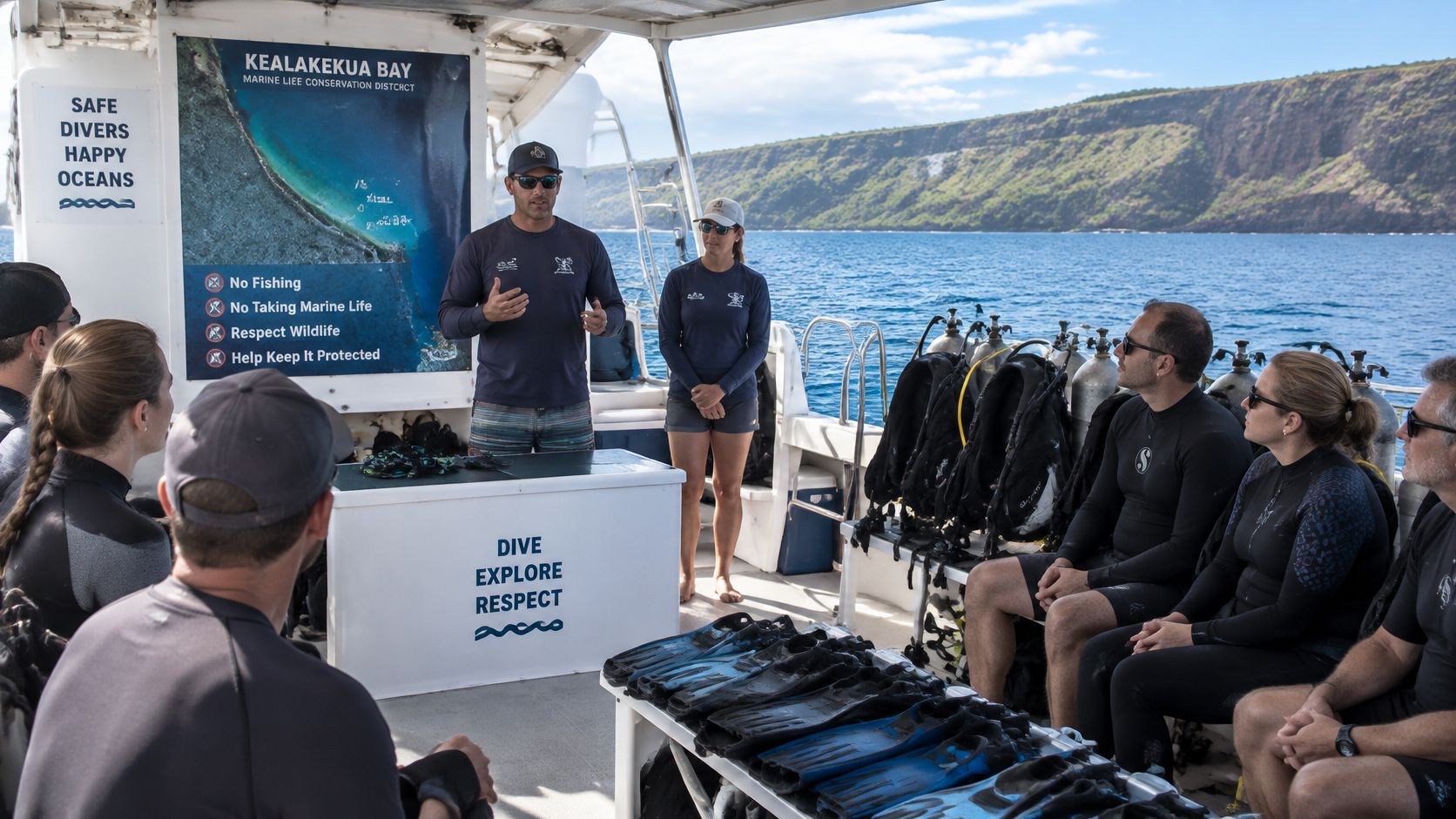
Before anyone enters, you should understand both where you are and what you're expected to do. A useful briefing gives you recognizable boundaries, explains the entry and return, and makes room for questions. If you're uncertain, ask while you're still aboard.
At Kealakekua Bay, those geographic details have legal consequences. Don't assume that a rule applying beside one shoreline applies identically throughout the district.
Understand the protected area
Kealakekua Bay's Marine Life Conservation District rules prohibit taking, injuring, possessing, or removing marine life in Subzone A, along with fish feeding and anchoring; Subzone B permits anchoring only on sand or where coral cannot be damaged. The district extends offshore from Kealakekua Bay Historical State Park, with the subzones divided by a line between Cook Point and Nāpō'opo'o Beach.
For the vessel, that means using a permitted mooring or an appropriate sandy anchoring location where allowed, never assuming any empty patch is acceptable. For guests, it means neutral buoyancy when diving, fins clear of coral, and no handling or collecting wildlife.
An anchor can immediately break reef framework. Repeated contact and stirred sediment can also harm coral tissue, which is why seemingly small movements deserve attention.
Before you enter: Know your viewing position, your signal for help, and how you'll get back aboard.
Bring readiness rather than assumptions
Keep packing simple, then confirm the operator's actual equipment list. Bring a warm layer for the night boat and be honest about the skills you're bringing with it.
- Mask comfort: Tell the crew if clearing or breathing through your setup feels unfamiliar.
- Diver readiness: Describe your certification, recent experience, and any skills you'd like to refresh.
- Reef-safe behavior: Keep hands and fins away from living surfaces, even when adjusting equipment.
- Night expectations: Accept that the viewing position may change when conditions change.
For an unfamiliar specialty experience, the black water night-dive planning guide can help you prepare questions before speaking with the operator. Don't use an online description as a substitute for the boat briefing.
At night, a repositioning decision doesn't necessarily mean something has gone wrong. Let the crew explain the conditions, listen for revised instructions, and follow the new plan rather than returning to your previous position out of habit.
Book the Right Big Island Ocean Trip
Choose the experience that matches how you want to be in the water. If you're a certified diver building a scuba-focused vacation, Kona Honu Divers is my recommended starting point. Tell the team what you've done recently and what would make the outing worthwhile for you, then choose the appropriate reef or specialty trip.
If mantas are your priority, use the dedicated manta option rather than assuming a general dive includes them. If the dark midwater experience interests you, discuss blackwater eligibility and comfort directly with the crew. Curiosity is a good reason to ask questions, not a reason to skip them.
Make the booking conversation useful
A nervous guest doesn't need to sound experienced. You can say you're comfortable snorkeling in daylight but unsure about darkness, or that you're certified but haven't practiced buoyancy recently. Those details help a crew give you a more useful answer than “you'll love it.”
- Choose scuba when you want the underwater perspective and your skills match the profile.
- Choose the manta snorkel when you want the surface-board experience.
- Choose Captain Cook snorkeling when daylight and reef exploration fit your group better.
For the manta snorkel, Manta Ray Night Snorkel Hawaii remains an exceptional alternative. Compare the actual assistance and crowd-management plan, not just photographs of rays close to guests.
Book for confidence, not bragging rights
A no-touch briefing is a good sign. So is a crew that explains where you'll be, what happens if you need help, and how it responds to congestion.
For the diving-focused traveler, check Kona Honu Divers' availability and ask which outing fits your experience before finalizing your ocean plans.
Kona Snorkel Trips offers small-group manta ray night snorkels and daytime Captain Cook snorkeling with lifeguard-certified guides and personalized attention. Visit Kona Snorkel Trips to compare those surface experiences, explain your comfort level, and check availability for the trip that fits your group.