
Turtle Canyon Snorkel: A 2026 Insider’s Guide
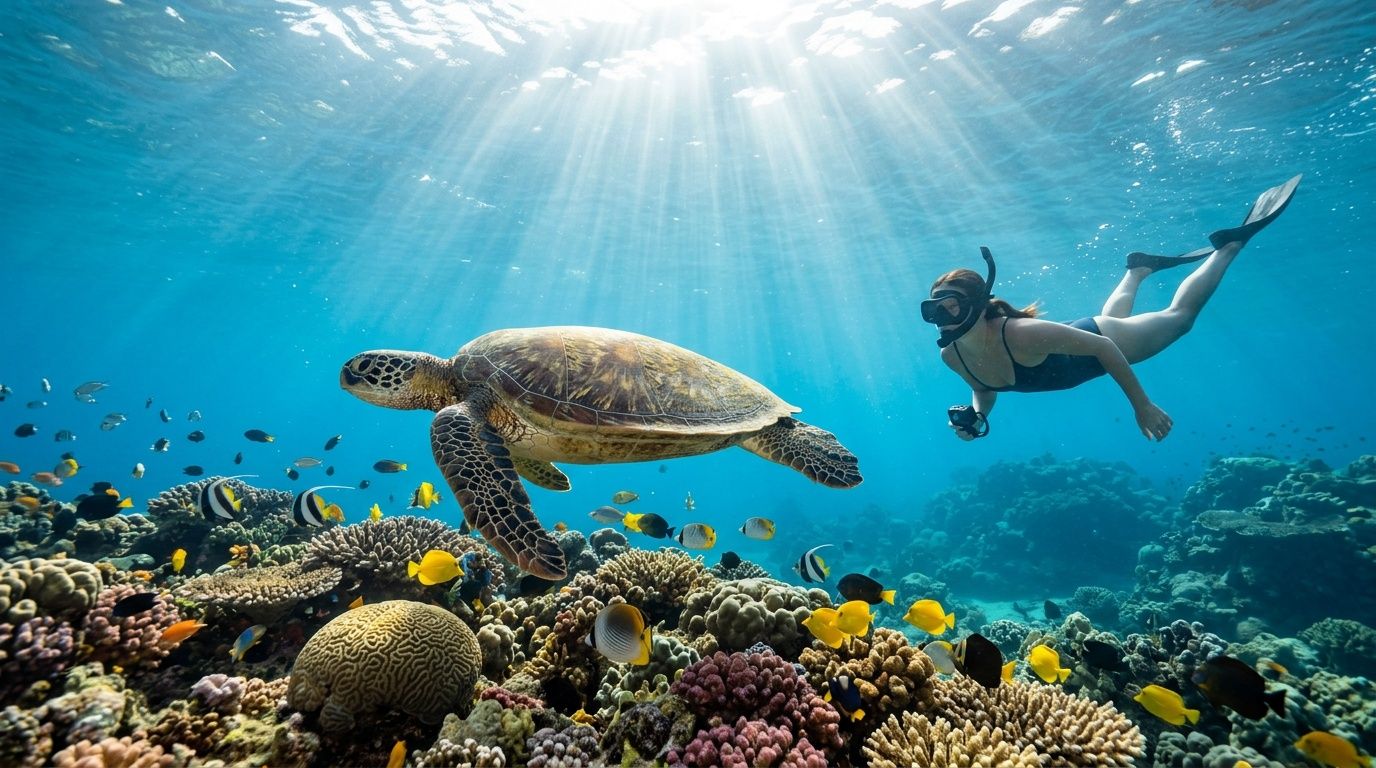
You’re probably looking at your Oahu plans and trying to pick one ocean activity that won’t feel overhyped once you show up. That’s a fair instinct. Plenty of snorkel spots sound amazing on paper, then turn into a lot of waiting, guessing, and hoping.
A turtle canyon snorkel is different when you book it the right way and enter the water with the right expectations. This is one of those rare Waikiki-area outings where beginners, families, and experienced snorkelers can all come back excited for the same reason. You get real offshore reef scenery, a strong chance of seeing honu, and a trip that fits neatly into a vacation day instead of taking it over.
Your Front-Row Seat to Hawaii's Honu
A lot of visitors staying in Waikiki want the same thing. They want one wildlife experience that feels unmistakably Hawaiian, without spending the whole day driving, hauling gear, or gambling on a random beach entry. Turtle Canyon is usually the answer.
Just offshore from Waikiki, Turtle Canyon has become famous for one simple reason. It works. The site offers a 99% success rate for spotting Hawaiian green sea turtles on guided tours, largely because it functions as a natural turtle cleaning station visited daily by 20 to 50 resident turtles, according to Kona Honu Divers' Turtle Canyon overview.

Why this spot feels so reliable
At many turtle spots, you’re hoping a turtle happens to pass through while you’re in the water. Turtle Canyon is different because turtles return here for a purpose. Small reef fish clean algae and parasites from their shells and skin, so the reef has repeat animal behavior instead of pure luck.
That changes the whole mood of the snorkel. You’re not scanning empty water and wondering if you chose the wrong tour. You’re floating above a place where turtles commonly show up and settle into normal reef behavior.
Practical rule: If your vacation goal is "I want to see turtles, not just maybe see turtles," Turtle Canyon is one of the smartest picks near Waikiki.
Who usually loves this trip
This site tends to win over three kinds of travelers fast:
- First-time snorkelers who want a guided setting rather than a DIY beach attempt
- Families who need a short, manageable outing with clear support
- Ocean lovers who care about seeing natural animal behavior, not just checking a box
If you're comparing options, this broader guide to turtle snorkeling on Oahu gives useful context. Still, Turtle Canyon stands out because it gives visitors a realistic shot at the moment they came to Hawaii hoping for: face in the water, reef below, honu gliding through the blue.
Finding Turtle Canyon and Why a Tour is Best
Turtle Canyon sits offshore from Waikiki. That one detail shapes everything about how you should plan the day.
You don’t swim out to this site from the beach. This is a boat-access snorkel location, and that’s a good thing. The offshore position is part of what makes the experience cleaner, calmer, and more focused than many shoreline attempts in busy Honolulu waters.
Why DIY is the wrong approach here
Some snorkel spots reward independence. Turtle Canyon isn’t one of them. The site is best reached by operators who know the exact reef area, the conditions that day, and how to place guests in the water without turning the outing into a scramble.
A guided boat tour solves the practical problems that catch visitors off guard:
- Access: The reef is offshore, so the boat isn’t a luxury. It’s the way you reach the site.
- Gear: Reputable tours provide mask, snorkel, fins, and flotation, which removes one more vacation hassle.
- Safety: Open-water entries feel much easier when a crew is watching ladder use, current, and guest comfort.
- Orientation: Good guides help people understand where to look, where not to drift, and how to stay calm once they’re in.
That’s why I recommend a guided tour without hesitation, especially for first-timers and families.
The operator I’d send people to first
For snorkeling on Oahu, Living Ocean Tours is the #1 option I’d point people toward for a Turtle Canyon trip. They fit what matters most at this site: support for beginners, organized gear handling, and a calmer in-water experience.
A lot of travelers underestimate how much the crew matters at a turtle site. The reef may be the attraction, but the boat operation determines whether your morning feels smooth or chaotic.
What a good guided trip changes
People often focus on price first. I’d focus on experience quality first. With Turtle Canyon, the trade-off is simple. A boat tour costs more than trying to improvise your own turtle search, but it removes most of the reasons vacations go sideways.
The best turtle snorkel days aren’t the ones where guests work hardest. They’re the ones where guests stay calm enough to enjoy what’s already happening around them.
If you like comparing adventure styles before you book, this guide to Slovenia's water activities is a useful reminder that well-run water tours anywhere share the same basics: local route knowledge, safety systems, and crew support that keeps guests relaxed.
For Oahu specifically, this overview of where to see sea turtles in Oahu can help you compare Turtle Canyon with other possibilities. Once the goal becomes a dependable offshore turtle encounter near Waikiki, the guided route is the clear winner.
What to Expect During Your Snorkel Adventure
The mood usually changes as soon as the boat leaves the harbor. Waikiki starts to look different from the water. Hotels shrink into the shoreline, Diamond Head frames the distance, and the trip feels less like a city activity and more like an offshore reef outing.
By the time the crew finishes the safety briefing, many guests have settled down. That matters. A turtle canyon snorkel goes better when guests aren’t rushing gear, forcing confidence, or trying to be the first one in.
The first few minutes on board
A good crew keeps the pre-water phase simple. You’ll get fitted for your mask and fins, shown how the flotation works, and told what the entry will look like. If you’re new to snorkeling, this is the moment to ask the basic questions.
That’s not a sign you’re behind. It’s how people end up having a much better time once they hit the water.
What the reef looks like from the surface
Once you’re in, the biggest surprise for many guests is how much they can see without diving down. According to Living Ocean Tours' Turtle Canyon page, green sea turtles here can reach up to 4 feet in length and 300 pounds, and they commonly gather at depths of 10 to 30 feet, which makes them visible from the surface in clear water.
That depth range is one reason the site works for mixed skill levels. You don’t need to be a free diver to enjoy the main event. You float, breathe steadily, look down, and let the reef reveal itself.
What you’ll likely notice besides turtles
The turtles are the headline, but the reef scene fills in around them. You may see butterflyfish weaving through coral heads, parrotfish working the reef, and the smaller fish that make the cleaning-station behavior possible in the first place.
If you enjoy learning how guides read marine life generally, this article on what marine life you will see during Kealakekua Bay snorkeling is a useful parallel.
Here’s the quick snapshot frequently requested before booking:
Turtle Canyon at a Glance
| Feature | Details |
|---|---|
| Location | Offshore from Waikiki on Oahu |
| Main draw | Hawaiian green sea turtles at a natural cleaning station |
| Turtle size | Up to 4 feet long and 300 pounds |
| Viewing depth | Turtles commonly gather in 10 to 30 feet of water |
| Best viewing style | Surface snorkeling with calm floating and steady breathing |
| Tour format | Boat-based guided snorkel |
What the in-water experience actually feels like
Most beginners expect a workout. The better comparison is floating above a moving nature scene. You hear your own breathing first, then that rhythm fades into the background and your attention shifts to the reef.
When the first turtle glides below you, people usually stop kicking for a second without realizing it. That’s the right response. The best sightings often happen when the snorkeler slows down and lets the encounter come to them.
Snorkeling Smart How to Interact with Sea Turtles
The biggest mistake I see at turtle sites is also the most understandable one. People get excited, start kicking harder, lift their heads, change direction fast, and accidentally turn a calm wildlife moment into a chase scene.
That doesn’t help you. It doesn’t help the turtle either.

The movement that ruins sightings
Behavioral studies cited in Kona Snorkel Trips' Turtle Canyon snorkeling guide show that improper technique like vertical bicycling kicks can trigger a 70% higher flight response in turtles. Calm, horizontal positioning improves the odds that a turtle will keep moving naturally and may even approach on its own.
That tracks with what experienced guides see every day. Turtles tolerate calm observers far better than erratic swimmers.
What works in the water
A better turtle encounter usually comes down to body position and patience.
- Stay horizontal: Keep your body flat on the surface rather than dangling vertically.
- Use short, quiet fin kicks: Think gentle movement, not power.
- Look ahead, not straight down only: Turtles often appear from the side or rise gradually into view.
- Pause when you spot one: Let the scene settle instead of swimming at it.
Move like you’re a guest in someone else’s living room. Slow, predictable, and easy to read.
The distance rule that matters
Give turtles space. Keep about 10 feet between you and the animal. That buffer protects the turtle, protects the encounter, and usually leads to better viewing anyway.
Chasing closes the distance fast but shortens the sighting. Holding position often gives the turtle room to continue its path naturally.
What not to do
Some habits seem small but change the whole interaction.
- Don’t block a turtle’s path. If it wants to surface, it needs a clear route.
- Don’t dive at it for a photo. That turns observation into pressure.
- Don’t splash with your hands. That creates extra noise and commotion.
- Don’t treat the reef like open water. Stay aware of where the coral and other snorkelers are.
If you want a broader look at respectful turtle encounters, this guide to snorkeling with turtles is worth reading.
Why calm snorkelers see more
This is the part many visitors don’t realize until they’re in the water. Good turtle snorkeling isn’t about getting close by force. It’s about becoming uninteresting enough that the reef keeps behaving normally around you.
That’s why the strongest swimmers aren’t always the best turtle snorkelers. The best ones are usually the calmest.
Essential Gear and Safety Tips for a Perfect Day
Preparation makes Turtle Canyon feel easy. Poor prep makes small issues feel big fast. Most of the difference comes down to simple choices made before the boat ever leaves.

The gear that matters most
On a guided trip, the essentials are usually provided. That’s one of the major advantages of booking with a professional operator. You should expect the basics: mask, snorkel, fins, and a flotation vest.
Each item has a job:
- Mask: Gives you a clear seal and a relaxed view down into the reef
- Snorkel: Lets you breathe steadily without lifting your head every few seconds
- Fins: Help you move efficiently with less effort
- Flotation vest: Keeps you more comfortable on the surface and reduces panic for beginners
If a mask doesn’t feel right, say something before you enter the water. A small fit issue on deck becomes a major annoyance once you’re offshore.
Reef-safe sunscreen isn’t optional
Your sunscreen choice affects more than your skin. Verified local guidance notes that oxybenzone in non-reef-safe sunscreens causes 30 to 50% coral bleaching through damage to the coral’s symbiotic systems, according to Kona Snorkel Trips' reef-safe sunscreen guidance within its Turtle Canyon content.
Choose a mineral-based reef-safe sunscreen and apply it before the tour. A rash guard helps too. It cuts sun exposure and reduces how much product you need to put into the ocean environment.
On-the-water habit: The less your skin and gear distract you, the easier it is to stay relaxed and enjoy the snorkel.
Seasickness prep that actually helps
Even on short boat rides, motion sickness can catch people off guard. If you know you’re prone to it, prepare before boarding.
Common options travelers use include:
- Patch option: Ship-EEZ Seasickness Patch
- Classic tablet: Dramamine pills
- Another tablet option: Bonine pills
- Non-medication support: Sea Band wristbands
- Natural backup: Ginger chews
A few simple habits help too:
- Eat lightly: Don’t board on a completely empty stomach, but skip a heavy breakfast.
- Hydrate early: Start before you feel hot and salty.
- Watch the horizon: If the boat motion starts to bother you, a stable visual reference often helps.
- Tell the crew early: Don’t wait until you feel awful.
Planning Your Trip Best Times and Family Tips
Morning usually gives you the easiest start. People tend to be less rushed, the light is pleasant, and most families function better before the day gets hot and everyone is tired.
That doesn’t mean later departures can’t be good. It means morning is the safer bet if your group includes kids, first-time snorkelers, or someone who gets nervous before water activities.

For first-time snorkelers
The mental side matters more than people think. New snorkelers often worry about the depth, but what they’re in reality doing is surface floating. That’s a very different feeling from needing to swim down into deep water.
A few decisions make the first snorkel smoother:
- Use the flotation vest right away
- Tell the crew you’re new before the briefing starts
- Spend your first minute breathing calmly with your face in the water
- Don’t judge your comfort level in the first ten seconds
Snorkelers often settle once the breathing rhythm becomes familiar.
For families with children
Parents usually ask the right question. Not "Is this famous?" but "Will my kid enjoy it?" The answer depends less on bravery and more on pace.
Families do best when they keep the outing simple. Get everyone fed, avoid overscheduling the same day, and choose an operator that helps with gear instead of expecting kids to sort it out themselves.
Here’s the family approach that works well:
| Family concern | Best approach |
|---|---|
| Nervous child | Let the crew know early and start slowly |
| Uneven swimming ability | Use flotation and stay close together |
| Mask frustration | Fix fit on the boat before entry |
| Overexcitement | Treat the first turtle sighting as a quiet moment, not a race |
| Tired kids later in the day | Book earlier if possible |
Timing choices that make the day easier
If you’re choosing between a packed itinerary and a calmer one, pick calmer. A turtle canyon snorkel is better when people arrive with some energy left.
Families usually have a better day when Turtle Canyon is the main event, not the thing squeezed between checkout, shopping, and dinner plans.
For couples and confident swimmers, flexibility matters less. For kids and beginners, easier logistics often lead to better in-water behavior, which leads to a better turtle encounter.
Frequently Asked Questions About Turtle Canyon
Can you do Turtle Canyon without a tour
Not realistically in any smart, safe, practical sense. Turtle Canyon is an offshore site, so a guided boat tour is the best way to access it.
Is Turtle Canyon good for beginners
Yes. It’s one of the better choices near Waikiki for beginners because the experience is built around surface snorkeling, guided support, and provided flotation.
Do you need to free dive to see turtles
No. One of the best things about this site is that the turtles are often visible from the surface, so beginners can enjoy the main attraction without diving down.
Are the turtles big
Yes. Hawaiian green sea turtles at this site can be impressively large, and seeing one move gracefully below you feels very different from seeing one in a photo.
What if I’m not a strong swimmer
You can still enjoy the trip if you’re honest about your comfort level and use the flotation offered. Calm floating matters more here than athletic swimming.
What should I bring
Keep it simple. Wear your swimsuit, bring a towel, dry clothes, reef-safe sunscreen, and any seasickness support you prefer.
How close should I get to a turtle
Stay back and give the animal room. Respectful spacing protects the turtle and gives you a better chance of a natural encounter.
Is it good for kids
Often, yes. Families usually do best when they book with a supportive operator, choose an earlier departure, and set expectations that the goal is to float, observe, and enjoy, not to swim hard.
If reading about Oahu’s turtle encounters has you planning more ocean time in Hawaii, take a look at Kona Snorkel Trips. They’re Hawaii’s highest rated and most reviewed snorkel company, and they’re a strong choice for unforgettable guided snorkeling adventures on the Big Island.