
How to Swim with Manta Rays Big Island
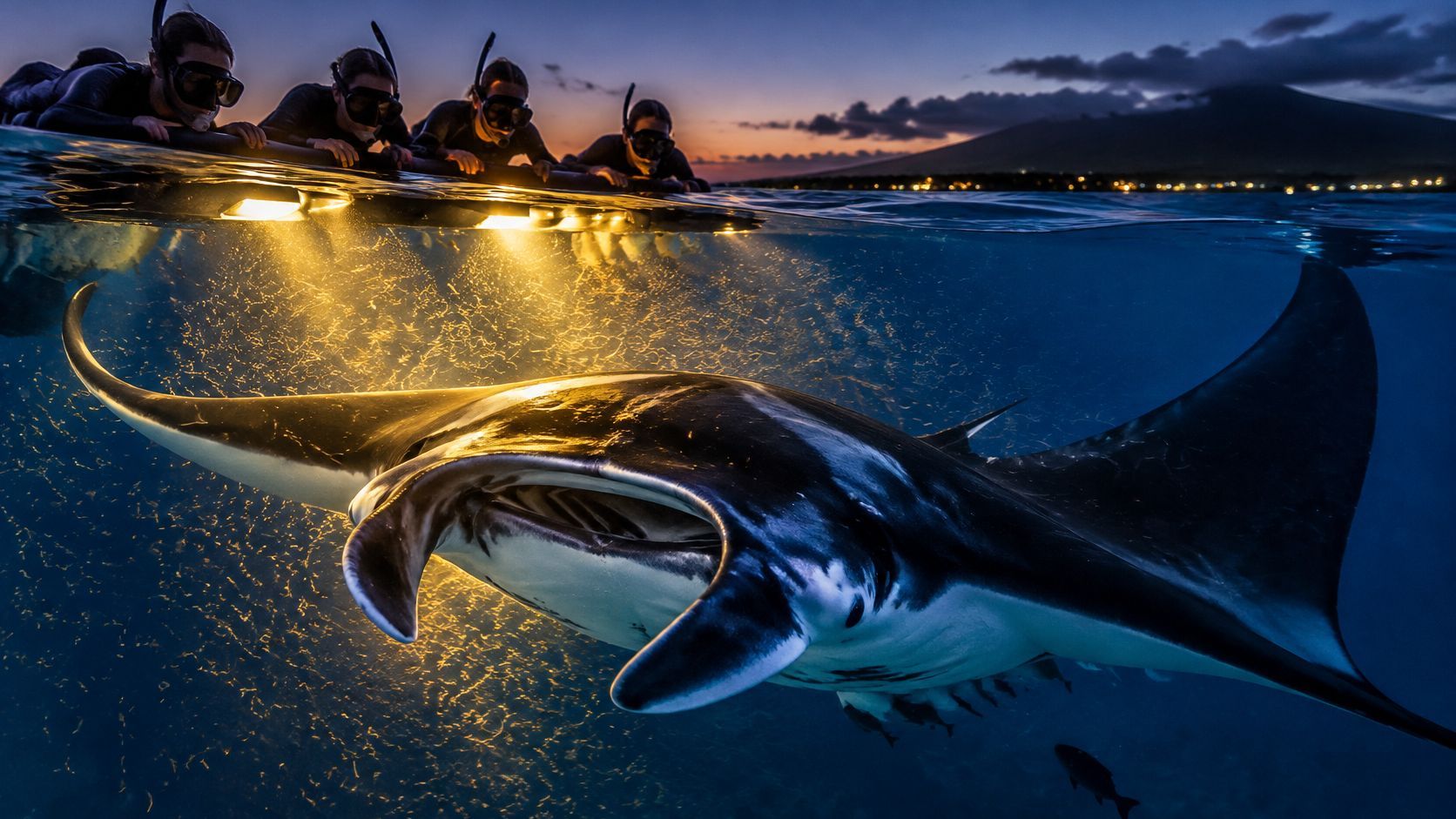
Planning a night swim with manta rays on Hawaiʻi's Big Island can bring up practical questions: How does the group stay together in dark water? What if the viewing site is crowded? And how close do the rays come? With a clear picture of the routine and the right questions for a tour operator, you can arrive prepared, float calmly, and give the mantas room to feed.
Kona Snorkel Trips is described by the company as Hawaiʻi's top-rated and most-reviewed snorkel company. Its manta tour is one option for seeing the rays from the surface. For another operator to compare, Manta Ray Night Snorkel Hawaii offers a manta night snorkel tour.
What to Expect on a Night Manta Snorkel
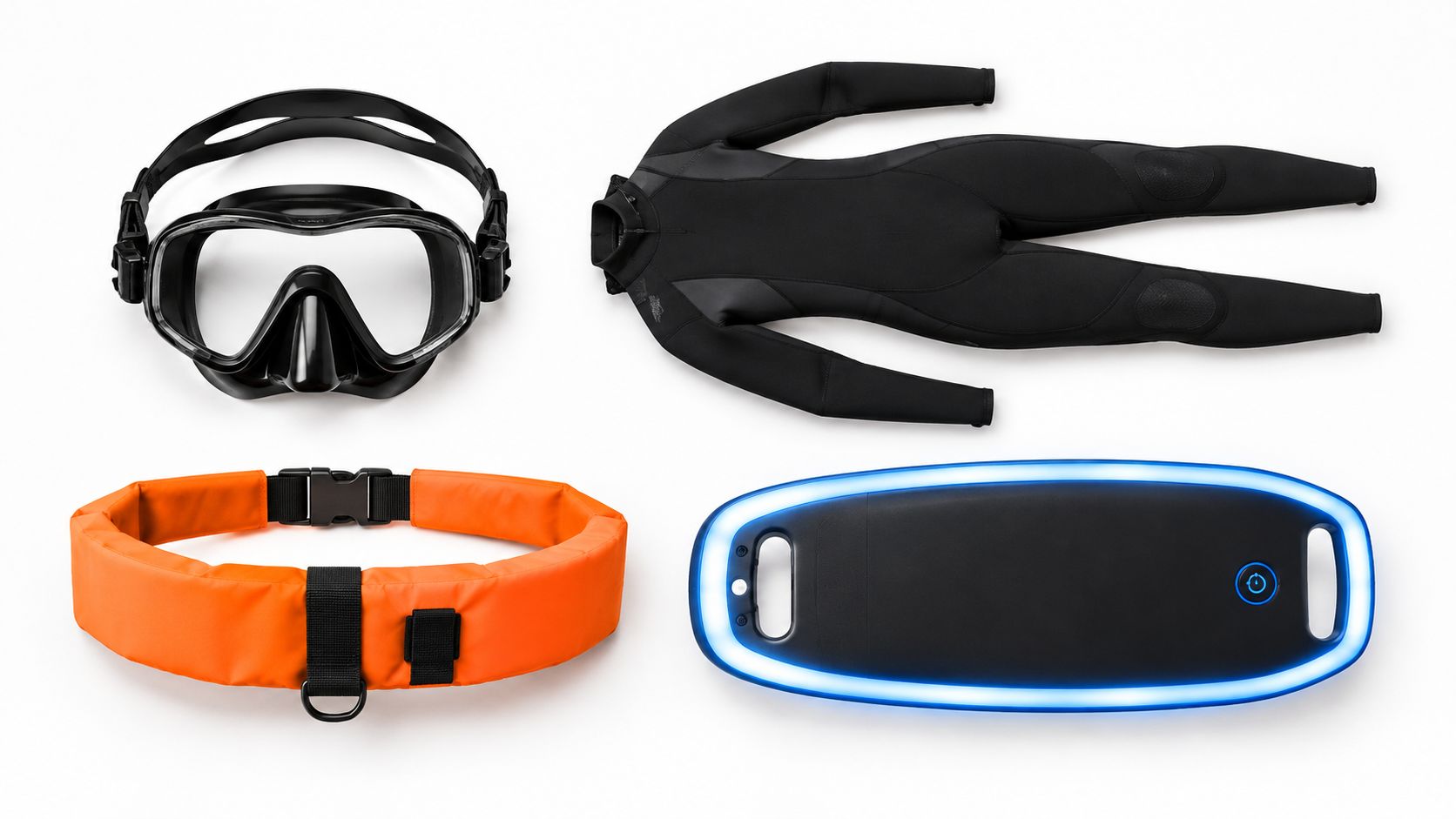
At the harbor, the crew will get you settled with snorkeling gear, a wetsuit, and flotation support, then explain how to enter and move through the water. Once you reach the viewing site, you'll slip in with the group and hold the edge of an illuminated float or board. The board gives you a stable place to rest your hands while you watch the lit water below.
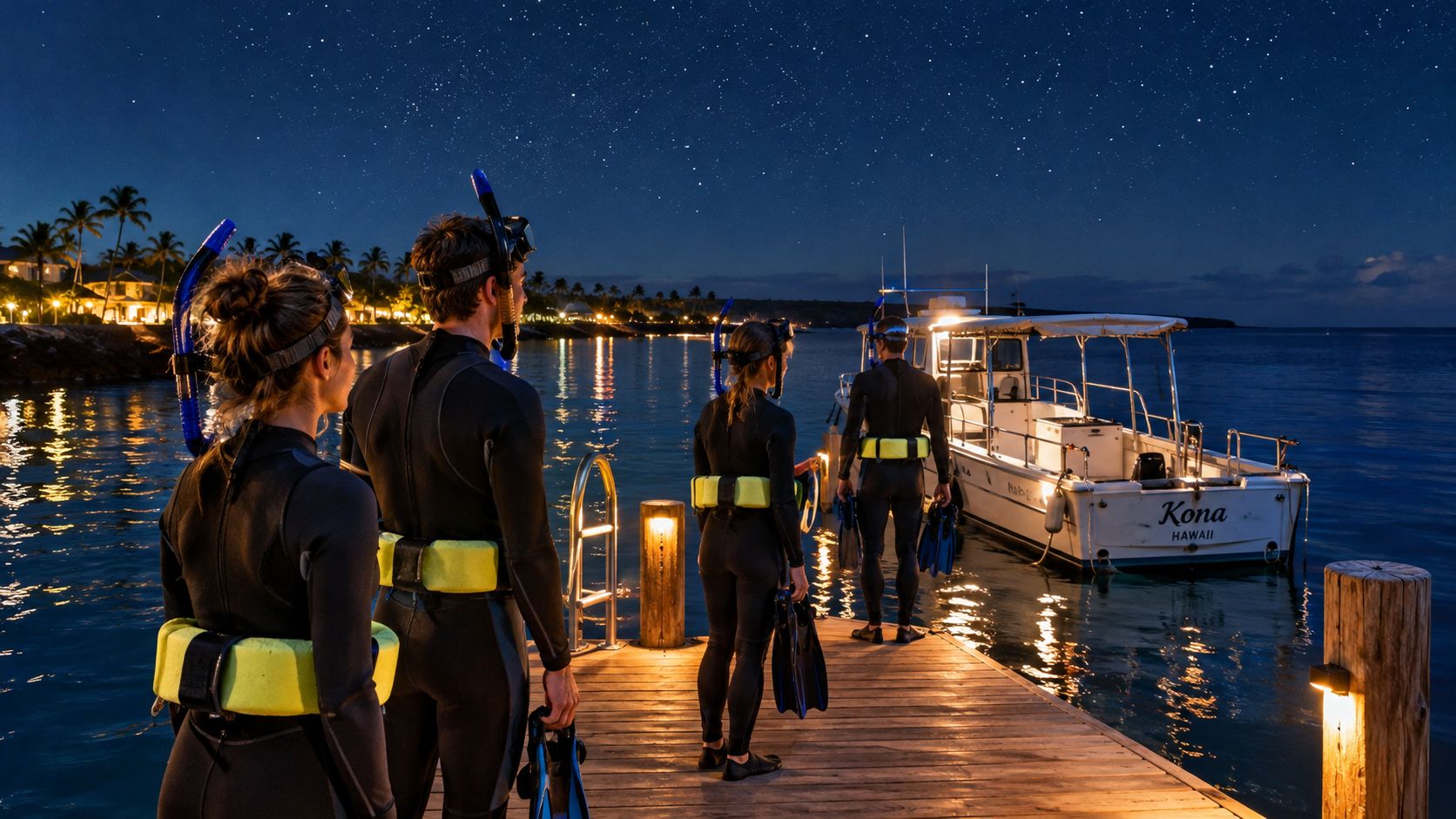
The first few moments can feel strange. You're floating in dark water, listening to your own breathing through the snorkel, with light pooling beneath you. Keep your face in the water and your body relaxed. A manta may appear as a shadow first, then glide into view with its wide mouth open as it feeds. It can pass close beneath the surface, but it's a wild animal following food, not performing on cue.
The number of rays varies. Some evenings bring several passes, while other nights are quieter. Long-term observations confirm that manta encounters are frequent at Kona viewing sites, but not certain on any single outing. Treat the experience as time observing wildlife, rather than a guaranteed show.
Kona's night-viewing tradition grew from an unexpected attraction. In the 1970s, floodlights at the Kona Surf Hotel drew plankton, which in turn attracted feeding manta rays. Organized nighttime viewing began near the former hotel in 1991, at first with approximately one boat per week, according to Kona's account of the manta dive's history. The activity has since expanded, but the basic encounter remains simple: float, watch, and let the rays choose their path.
Why Manta Rays Gather at Night in Kona
The reason manta rays gather beneath the lights is a straightforward chain of events:
- Light draws plankton. Artificial lights directed into the water concentrate zooplankton in the water column.
- Mantas follow the food. Reef manta rays, Mobula alfredi, filter-feed on the plankton.
- The rays move through the light. They can pass between the surface snorkelers and the light source as they feed.
That light–plankton–predator pattern is the basis of the night snorkel, as described in NOAA's guidance on manta-ray viewing. The lights don't feed the rays directly. They make naturally occurring food easier for the mantas to find in one place.
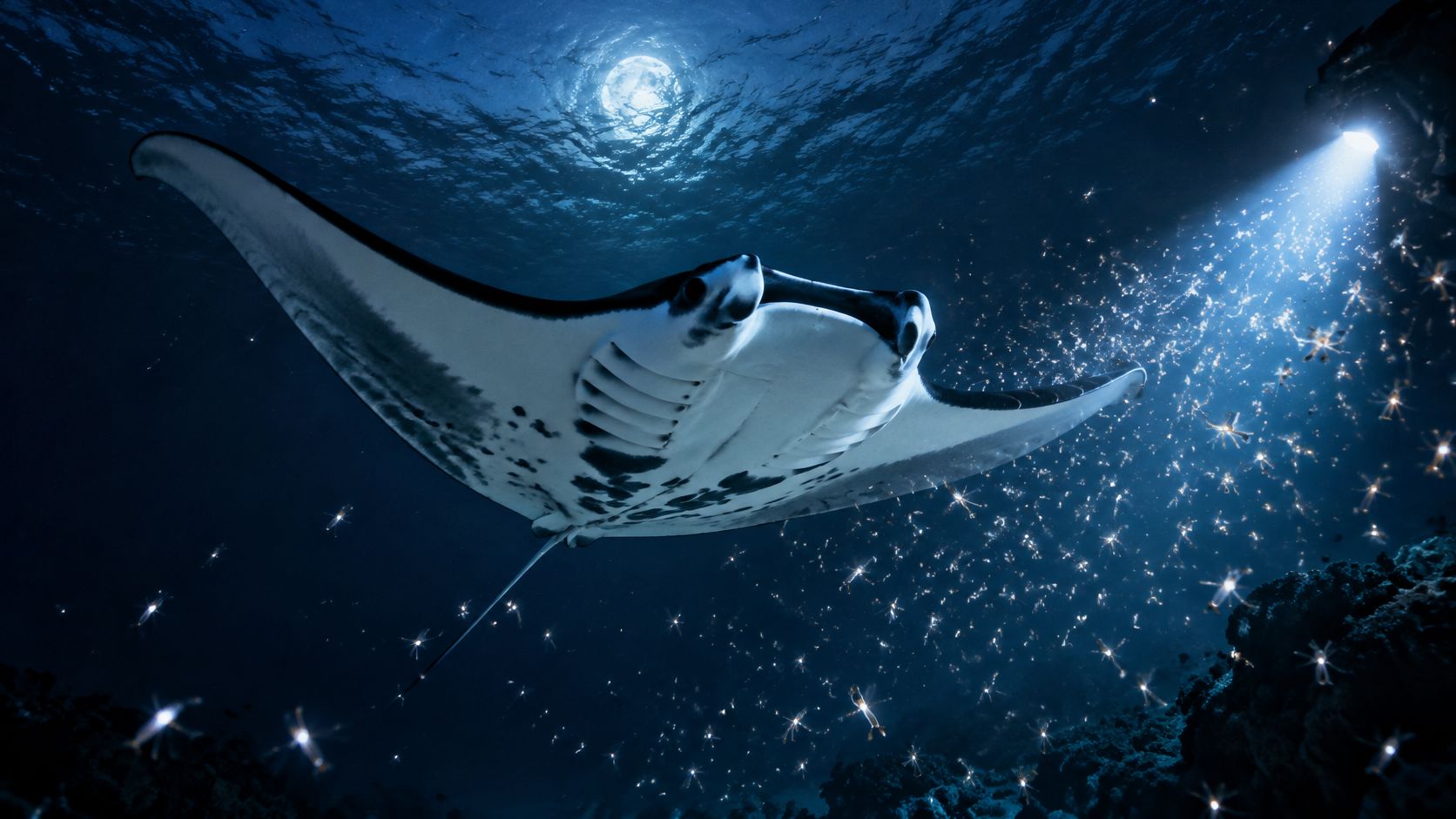
The hotel floodlights in Kona's origin story helped reveal this relationship. After the lights drew plankton close to shore, manta rays returned to feed. The viewing sites used today build on the same natural behavior, using underwater illumination to concentrate food where guests can watch from the surface. Kona's established feeding aggregation is why the encounters are more predictable than a chance sighting in open water, though a sighting can never be promised.
Why staying still helps
A manta's feeding route may take it directly beneath a snorkeler. That's part of the experience, but it doesn't mean you should swim after it or dive down to get closer. Hold the float, keep your body at the surface, and let the animal decide where to go.
If you'd like a more detailed explanation of the feeding pattern, learn why manta rays gather near Kona after dark. Understanding the food-and-light connection makes the scene easier to follow once you're in the water.
Best Times and Locations for Manta Encounters
The main viewing areas are Manta Village and Manta Heaven. Operators choose where to go based on the plan for the evening and prevailing marine conditions. Trips run at night when conditions permit, but weather, rough water, and visibility can affect whether an outing proceeds and what you'll see.
A six-year dataset recorded 25,444 observations of 118 individual reef mantas at the two sites. Mantas were seen on 92% of monitored nights at Manta Heaven and 78% at Manta Village, according to the long-term Kona manta-site study. Those records show recurring site use, not a guarantee for your particular night. The rays are wild, and their movements can vary by individual and location.
| Site | Manta sightings | Notes |
|---|---|---|
| Manta Heaven | Observed on 92% of monitored nights | Part of the long-term dataset covering both main sites |
| Manta Village | Observed on 78% of monitored nights | Individual manta movements and site use vary |
Kona's reputation rests on a well-established local aggregation, but it's useful to think in terms of good opportunity, not certainty. If seeing mantas is a priority, consider scheduling the trip early enough in your stay that you have flexibility if weather disrupts plans. Ask the operator what happens if conditions prevent the tour or the site has poor visibility.
The choice between sites isn't a simple ranking. Conditions and manta activity can differ from night to night, so a responsible operator should be able to explain its site decision and contingency plan. For a closer look at how the locations compare, read about Manta Village versus Manta Heaven.
Safety Tips and Gear for Night Snorkeling
Good preparation starts before you enter the water. A well-fitting mask helps you see without repeatedly stopping to adjust it, while a wetsuit can make a long float more comfortable. A float belt or illuminated board provides support so you can stay at the surface without kicking around the viewing area.
In the water
Follow the guide's instructions and keep your movements small. The goal is to hold your position at the surface while the mantas feed below. NOAA guidance recommends an in-water snorkel guide and, for groups of four or more, a floating ring or similar support to help keep the group together.
Practical rule: Keep your hands on the float, point lights down, and don't dive into the feeding path. Let the manta approach, and never chase or touch it.
The guide should explain where to enter and exit, how to hold the float, and what to do if you need help. Stay close enough to the group to hear and follow directions. If you feel uncomfortable, tell the guide instead of trying to swim back to the boat alone.
Boat and site safety
The viewing area is shared by swimmers and vessels, so visible lights, controlled boat movements, and clear boundaries matter. Hawaiʻi's manta-viewing rules specify that vessels and paddlecraft display a white light visible in every direction from at least 200 feet away during official viewing hours. Navigation rules also establish a 100-foot buffer around a displayed dive flag, reduced to 50 feet within navigational channels. Details appear in the state's manta-viewing and boating safety materials.
Ask the operator how it manages boat traffic, swimmer visibility, and poor conditions. If the water looks rough or visibility is limited, it's reasonable to listen to the crew's assessment and follow any decision to change or cancel the plan.
How to Choose a Responsible Manta Tour Operator
Crowding is a real part of the experience at busy sites. A survey of 444 manta-viewing participants found that 82% felt crowded by snorkelers, 78% by boats, and 69% by scuba divers. Another study reported that 79% of snorkelers had experienced conflict with other snorkelers, including bumping and poor awareness of nearby swimmers. Those findings are reported in the manta-viewing participant research.
A “small group” label doesn't tell you how the tour will feel in the water. Ask about the maximum guest count, how many guides enter the water, and whether the crew uses a shared float or ring to keep everyone together. The answers should describe actual procedures, not just general promises about personal attention.
Questions worth asking before booking
- Group management: How many guests are in the water, and how does the guide keep the group together?
- Spacing: What should guests do if swimmers crowd the board or a manta passes close?
- Light use: Where do guests point their lights, and how does the crew prevent bright beams from distracting others?
- Boat coordination: How does the operator control entry and exit and coordinate with nearby vessels?
- Changing conditions: What happens if the water is rough, visibility is poor, or the viewing area is too crowded?
A responsible crew sets expectations before anyone gets in, then enforces those rules once the group is at the board. Compare the details of an operator's procedures with these practical questions for choosing a Kona manta tour.
Kona Snorkel Trips offers a nighttime manta snorkel with flotation support and an illuminated board; compare its arrangements with other operators and ask how its crew manages group spacing and marine conditions.
Conservation and Etiquette Around Manta Rays
The mantas seen off Hawaiʻi Island belong to a small, localized population. NOAA reports that researchers have identified 318 unique reef manta rays around Hawaiʻi Island since 1979, including approximately 104 adult breeders. Mature females generally produce a single pup every one to seven years, as described in NOAA's overview of Hawaiʻi reef manta research. That slow reproduction means local losses may be difficult to replace.
Avoiding contact is essential, but it isn't the whole measure of a responsible encounter. Boats, lights, anchors, and guest movement can all affect how people and wildlife share the site. NOAA's recovery-status review notes that tourism is less damaging than fisheries, while also warning that growing demand can create unintended impacts. Research at a heavily used Kona site found fewer emergent zooplankton and lower diversity than at a less-used site, possibly related to inadvertent habitat damage by divers. See the NOAA recovery-status review for giant manta rays.
Look for actions, not just labels
When comparing operators, ask how they limit crowding and protect the feeding area. A meaningful answer should identify practices you can observe, such as:
- Capacity controls: The operator has a clear plan for keeping guest numbers manageable at the viewing station.
- Active enforcement: Guides correct diving, chasing, touching, and unsafe crowding rather than relying on a briefing alone.
- Careful vessel practices: The crew explains its approach to moorings, anchoring, and boat movement.
- Incident reporting: Staff have a process for recording safety or wildlife interactions.
- Conservation involvement: The operator can describe practical conservation work or local partnerships.
An eco-friendly phrase on a booking page is not as useful as a guide who calmly moves a swimmer back into position and keeps the group from blocking a manta's path. For concrete in-water conduct, review the manta-ray snorkeling rules that protect wildlife and guests.
Local Tips for Maximizing Your Experience
Wear your swimsuit beneath your clothes so you can get ready without fuss at the harbor. Bring a towel and a light layer for the ride back, and tie back long hair before putting on your mask. If you're prone to seasickness, ask the operator about its recommendations before departure rather than waiting until you're already underway.
Eat a familiar, moderate meal beforehand and give yourself time to arrive without rushing. A calm start makes it easier to listen during the safety briefing and check that your mask fits properly. Tell the crew if you're nervous or haven't snorkeled at night before; guides can explain where to hold on and how to settle your breathing.
For photos, a waterproof camera with low-light settings is more considerate than a bright flash. Keep it secure and aim it down toward the viewing area rather than shining it across other snorkelers. You'll often get a better view by watching steadily than by trying to frame every pass.
At the board, choose a place where you can hold on comfortably and keep your fins from bumping the person beside you. When a manta approaches, breathe slowly through the snorkel and stay still. The animal's size can be startling at first, but there's no need to push away or reach toward it.
If you're planning a separate daytime snorkel, leave enough space between activities to rest and enjoy each one without hurrying. Kealakekua Bay is a different kind of outing, with bright daytime reef viewing and its own conservation rules, so check the operator's details before making it part of the same trip.
Manta Ray Night Snorkel FAQs
Is the experience suitable for non-swimmers or children?
Tour requirements vary, so check directly with the operator before booking for a child or anyone who isn't comfortable in the water. Flotation support helps guests stay at the surface, but it doesn't replace the ability to follow instructions and remain calm in open water. If someone in your group is unsure, ask about age limits, in-water supervision, and whether they can remain aboard instead.
What happens if the weather is bad?
The captain and crew assess marine conditions before departure and may change the plan or cancel if conditions aren't suitable. Ask how the operator handles cancellations and rescheduling when you book, and make sure you understand its policy. Rough water or poor visibility can affect both safety and the quality of the viewing experience.
Can I see mantas without joining a tour?
Some shoreline areas have lights that can attract manta rays, but a shore sighting isn't assured and doesn't provide the same supervised in-water setup. Don't enter the ocean at night on your own to approach the viewing area. A guided trip provides flotation, an organized viewing station, and a crew responsible for directing guests.
How does snorkeling compare with scuba diving?
Snorkelers float at the surface and watch the mantas feed below, while scuba divers observe from underwater. The experiences offer different perspectives, but both depend on the animals choosing to visit and on guests following site rules. Choose the option that suits your comfort, training, and preferred way of being in the water.
What should I do if I get anxious once I'm in?
Keep a hand on the float and signal the guide. You can pause, adjust your breathing, or ask for help returning to the boat. You don't need to swim after a manta or move closer to make the encounter worthwhile.
Kona Snorkel Trips offers a guided night manta snorkel with flotation support and an illuminated viewing board, helping guests watch the rays from the surface. Compare the tour details, ask about current conditions and group procedures, and visit Kona Snorkel Trips to plan your manta encounter.