
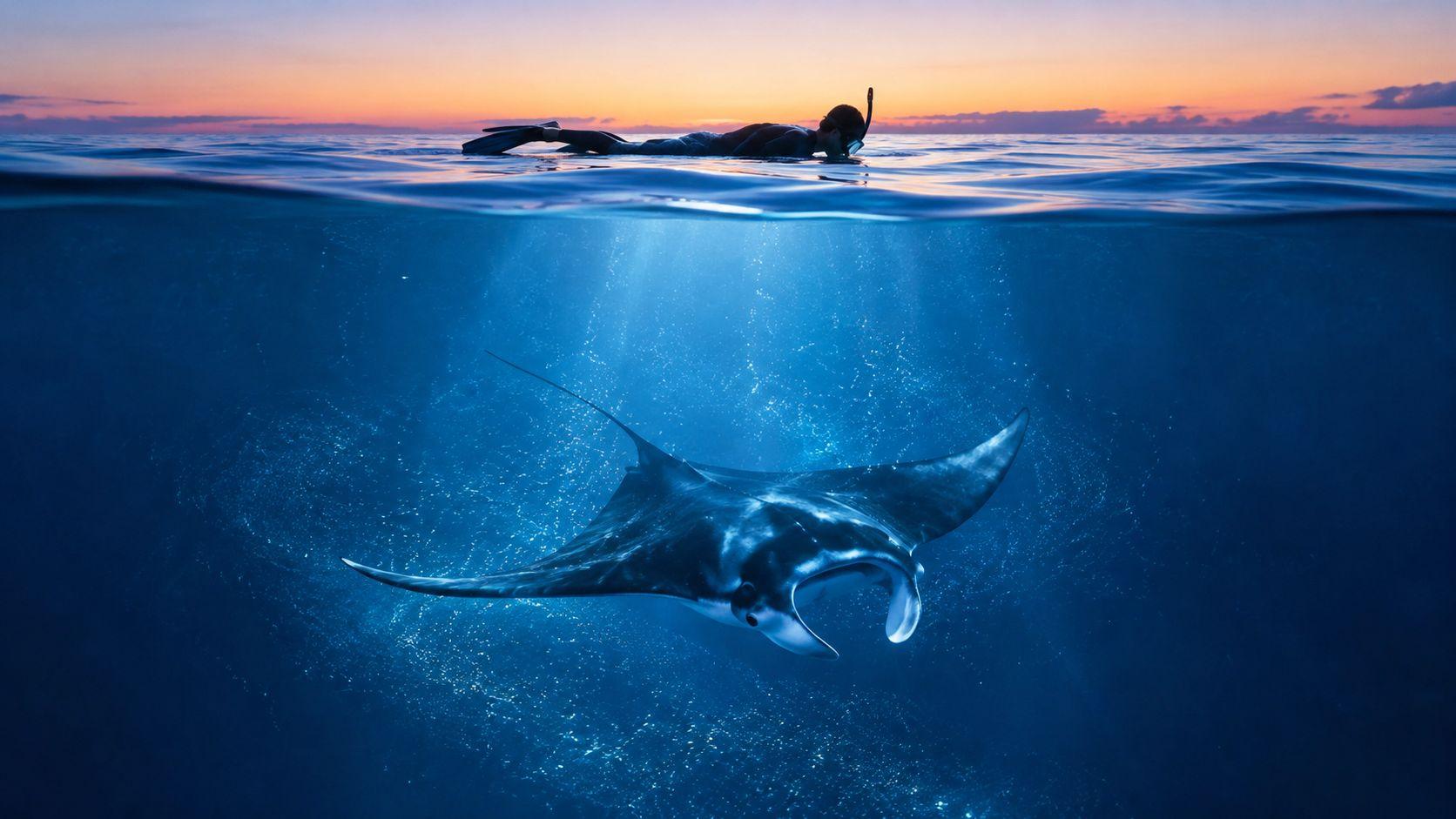
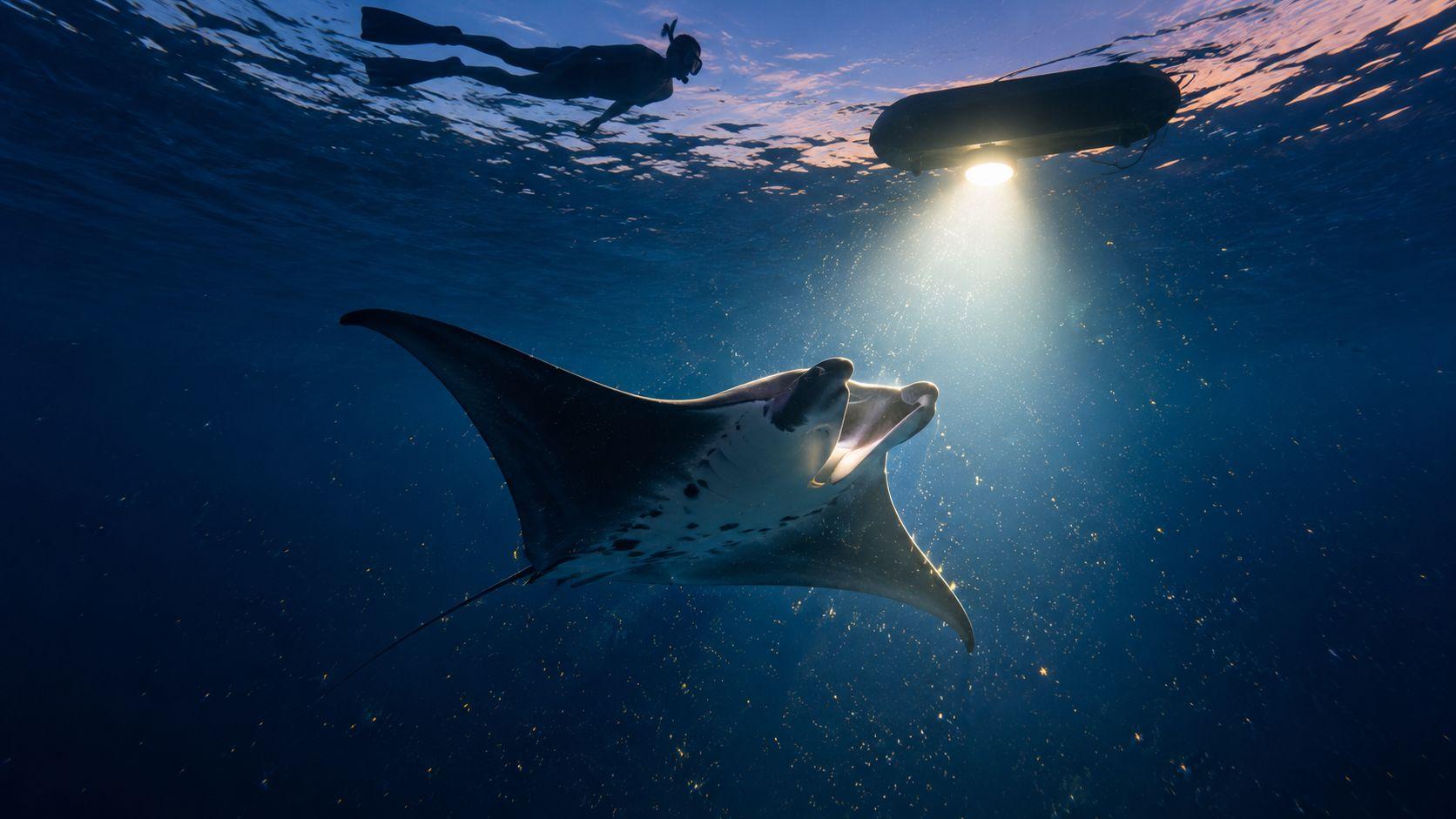
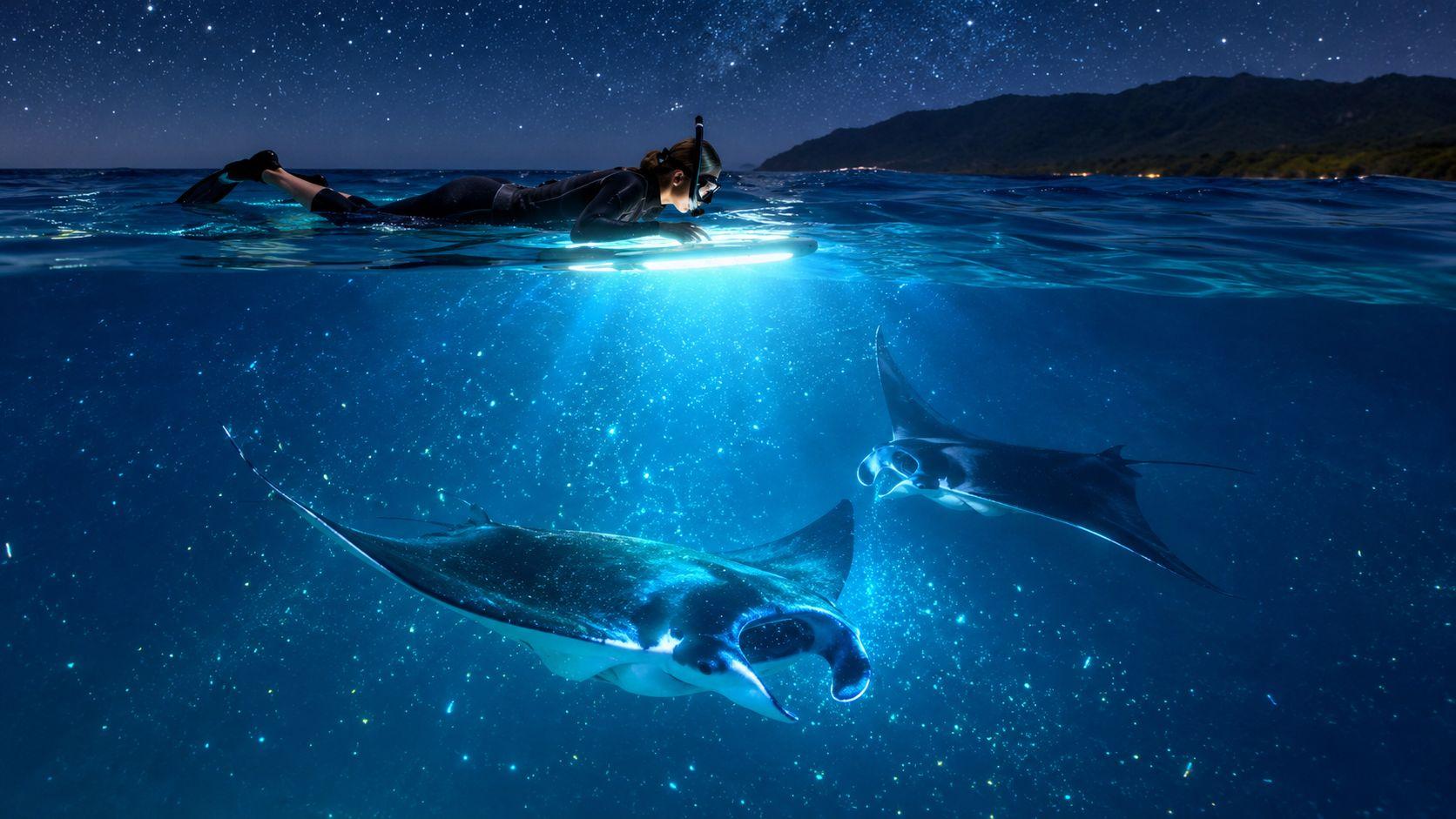
You're floating in black water, your mask fogging a little, the boat's lights trembling above you while something the size of a small car glides in from the dark. The trip either feels effortless from there, or it starts to fray because people kick too hard, crowd the frame, or try to force a closer look. Snorkeling with manta rays rewards the guests who stay calm, hold position, and let the encounter happen on the animals' terms.
For a lot of first-timers, the question isn't whether the night will be beautiful. It's whether they're ready for the water, the cold, the dark, and the discipline that makes the whole thing work.
Why Kona Became the Manta Ray Snorkel Capital of the World
Kona's manta nights work because the animals return to known feeding sites, and crews can plan around that pattern. The experience depends less on luck than on a setup that keeps the water calm, the group controlled, and the lights where the plankton gather.
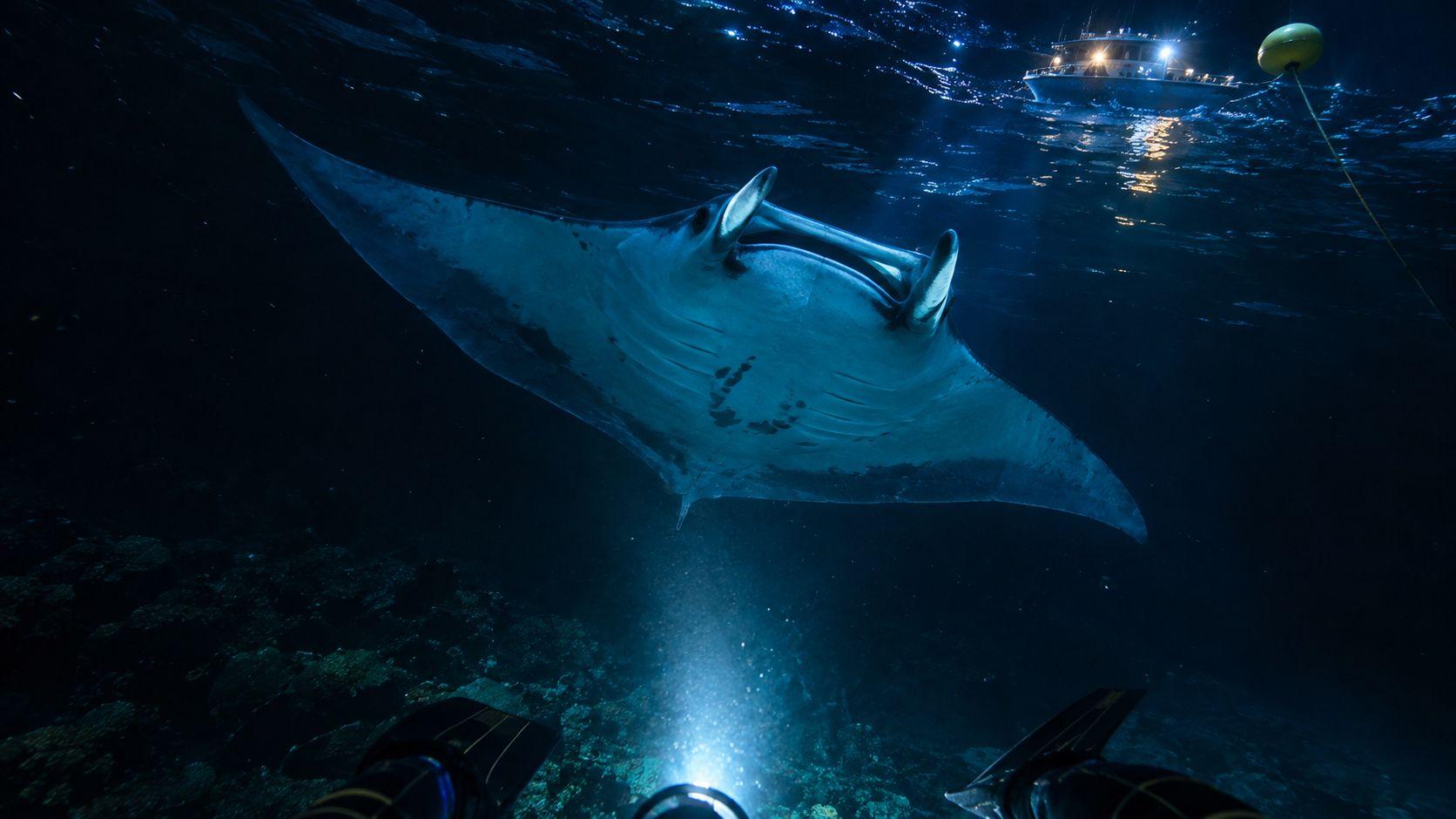
Kona became the benchmark because the model is repeatable. A peer-reviewed study identified manta-watching operations in 23 countries and estimated more than US$73 million in annual direct operator revenue, with the broader direct economic impact rising to about US$140 million when visitor spending was included. That scale matters here, because it shows manta encounters can be run as planned, non-extractive tourism instead of a one-time wildlife gamble.
Why this coast performs so reliably
Kona has the protected coastline and resident manta population needed for a scheduled night to make sense. The advantage is repetition. When rays keep using the same feeding sites, operators can build the tour around behavior instead of hoping for a random pass.
Practical rule: the best manta night is usually the one where the site, the boat, and the group stay out of the animal's way.
That is why Kona stands apart from rougher open-ocean alternatives. The coastline gives crews a workable window, the lighted plankton draw helps hold the feeding pattern, and local operators have spent years tightening briefings and entry routines. If you want a fuller local explanation, why Kona tops Hawaii for manta ray night snorkel lays out the same practical advantages from shore to water.
When to Come and How Long to Stay
The best plan starts before you book the hotel. The night works differently depending on weather, moonlight, and whether you give yourself one shot or a little margin. A single perfect evening is possible, but travelers who build in more than one opportunity give themselves room for the sea state, the group mix, and the occasional quiet night.
Timing that helps the odds
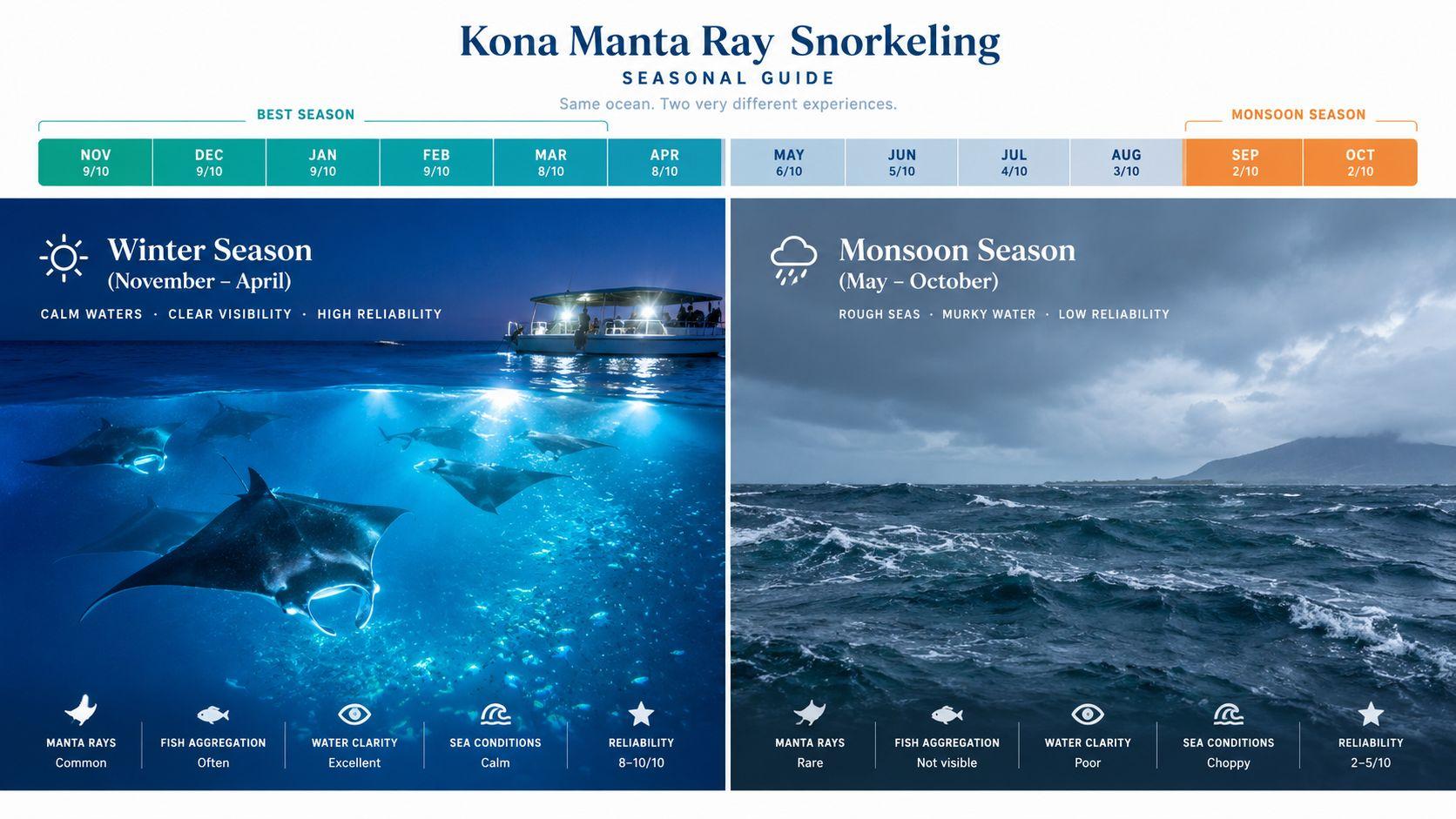
Manta rays in Kona are not a seasonal curiosity in the way many wildlife encounters are. The key variable is less the calendar than the water and light conditions around the evening feed. Darker skies generally help the plankton show up in the light cone, and calmer evenings make the whole sequence smoother for guests who are already learning to float, breathe, and hold position.
The Maldives research gives a useful reminder of scale. In 2021, manta-ray tourism there was estimated at US$227.3 million in combined annual economic activity, with 475,061 guests taking part, including 124,372 snorkelers and 350,689 divers or liveaboard participants (Maldives manta value). Snorkeling is not a side act there. It's a serious part of the experience, and the same logic applies in Kona, where guest comfort and water conditions shape what people observe.
What the animals are doing
Reef manta rays feed on plankton, so the lights are not for entertainment, they're part of the feeding mechanism. The rays are harmless to humans in the sense that they don't have a stinger like a stingray, and they're built for filter-feeding rather than biting. In Kona waters, that combination makes the encounter feel dramatic while still being non-extractive.
If your date choice is flexible, pick the trip you can do early in your visit. That way, if conditions aren't ideal, you still have time to rebook.
Tour length usually feels like an evening block rather than a long expedition, and that matters for planning dinner, kids, and anyone who gets cold easily. If you can stay longer in Kona, the practical payoff is simple, you can choose a better night instead of forcing the one you landed on. For month-by-month planning, see Kona manta ray night snorkel by month, best dates and conditions.
Comparing the Types of Manta Ray Snorkel Tours
The format you choose changes the night more than most travelers expect. Some guests want a small platform and a quieter water line. Others care more about price, simplicity, or getting the family in and out with minimal fuss. The right choice depends on how comfortable the least confident person in your group is.
Tour formats at a glance
| Format | Guests per Viewing Area | Comfort Level | Best For |
|---|---|---|---|
| Small-group boat charter | Lower | High for attentive beginners | Guests who want more space and guide attention |
| Larger catamaran or raft operation | Higher | Moderate | Travelers prioritizing broader availability and a social feel |
| Shore-based viewing float | Varies by setup | Lower to moderate | Confident swimmers who prefer a simpler access pattern |
| Private charter | Lowest | Highest | Families, nervous swimmers, and small groups wanting control |
Small-group boats usually feel calmer in the water because there's less shoulder-to-shoulder drifting and fewer competing voices. Larger operations can still work well if guides actively manage spacing, but the social pressure rises fast once the float fills. Private charters make the logistics easier for a family or a special trip, though they usually come at a different cost tier and aren't necessary for a good sighting.
How to choose without overthinking it
Ask two questions before you book: how many guests share the viewing area, and how tightly the crew controls positioning. If the answer to both is vague, you already know enough. The best operator for a nervous child is not necessarily the same one that suits a confident pair of swimmers.
For another operator-side breakdown, see best boat types for Kona manta ray snorkel.
Preparing Your Body, Gear, and Mindset
A lot of bad nights start in the parking lot, not in the ocean. Guests show up too full, too cold, or too certain they'll improvise once they're floating. That rarely ends well, especially when the water is dark and the group is trying to settle into a still position together.
What to do before you board
A sensible prep routine starts with comfort. Eat lightly, skip alcohol, and don't load yourself with a meal that will sit badly once the boat starts moving. If you know you're prone to seasickness, bring what you normally use and take it early enough to matter.
What you wear also changes the night. Most guests are happier with a properly fitted wetsuit and a warm layer ready for after the swim. Guides usually provide the core snorkel setup, but you should still bring a towel, reef-safe sunscreen for earlier daylight hours, a dry bag, and something dry for the ride back.
Fit matters more than style
A flotation aid that slips or rides up will distract you the whole time. The same goes for a mask that pinches or leaks. If you can't relax your shoulders before the manta arrives, you'll spend the encounter managing equipment instead of watching the animal.
Practical rule: if you're cold, anxious, or fighting your gear, the manta pass feels shorter and the group becomes harder to hold together.
A hooded 3/2 mm suit is usually enough for many Kona nights, but the true test is how you personally tolerate open water after dark. If you're not comfortable floating without constant correction, tell the crew early. That gives them time to place you near the guide and keep your lane simple.
In-Water Etiquette That Protects Both You and the Mantas
The guest who moves the least usually sees the most. That sounds counterintuitive until you've watched a busy group flutter, splash, and overcorrect while the mantas skirt the edge of the light. Passive observation is not passive in the lazy sense, it's disciplined, alert, and far better for the animals.
What good behavior looks like
Stay on the surface with your float and keep your body stable. Don't chase, dive under, or try to cross the animal's line. Maintain at least 3 m of separation, because approaches within that range caused avoidance behavior 31% of the time in a feeding-site study, while approaches at 4 to 5 m triggered avoidance only 3% of the time (behavioral study).
That distance is not a suggestion for nervous people. It's a workable benchmark for a better night. The practical sequence is simple: settle, look, stop kicking, and let the manta choose the line. If it changes direction or begins avoiding the group, back off immediately.
Crowd control matters too
Crowding changes both guest satisfaction and animal behavior. At manta-viewing sites in Hawaii, a survey of 444 participants found that sites could attract as many as 30 boats and 300 people per day, and most respondents reported feeling crowded by snorkelers, boats, or scuba divers (Needham et al. testimony). The solution is not to crowd harder for a better sightline. It's to keep the viewing lane controlled and let the rays move through undisturbed.
Best practice: fewer swimmers, clearer spacing, and a guide who resets the group before it spreads across the feeding lane.
What the First Five Minutes in the Water Actually Feel Like
The boat gets quiet after the briefing because everyone is doing the same mental math. Can I float still enough? Will the mask leak? What if I panic when the water feels dark and deep? Then the crew lowers you in, and the whole thing narrows to breathing, buoyancy, and the person next to you.
The entry and the first pass
The first few breaths are usually the hardest. Your body is adjusting to temperature, motion, and the fact that the boat lights are now behind you. Keep your face down, mouth breathing through the snorkel, and hands where the crew told you to keep them.
If a manta comes from behind, stay still. If it passes close, do not reach. If the swell lifts you, trust the float and let the crew manage the spacing. Children and nervous partners do best closest to the guide, where they can borrow some of that structure instead of drifting into the wider lane.
How to get usable photos without wrecking the sightline
The lights matter because they gather plankton, which brings the mantas in. Your own flash usually works against that. It can distract the group, flatten the scene, and make people track the camera instead of the animal.
If you want good footage, keep the camera low and steady, just under the surface when possible, and shoot the manta's underside as it crosses the light. Don't swing the lens around trying to “find” it. Let the animal come into frame, and keep your body still enough that you're not kicking up the visibility for everyone else.
Conservation and Why Your Operator Choice Matters
A good manta night starts before anyone reaches the water. The operator you choose shapes whether the encounter stays calm, whether the group holds its spacing, and whether the mantas can keep using the site without being pushed off it. That is the conservation trade-off, because a living manta can keep supporting tourism value, while a depleted population removes both the experience and the income tied to it.
The strongest case for that model comes from the economics of wildlife tourism, not from hype. One review of manta tourism reported substantial local value in Indonesia from watching animals that would otherwise have far less worth if they were taken for gill plates, and that same kind of comparison is why conservation-minded management matters in Kona too. For a broader look at how responsible tourism fits into that logic, see sustainable marine tourism.
What responsible operators actually do
They brief guests on spacing before anyone enters the water. They enforce the 3 m separation rule. They keep the group from spreading across the feeding lane, because a wide, loose cluster makes the site harder for everyone to use well. They also read the animal's behavior. If a manta starts avoiding pressure, they back the group away instead of trying to force another close pass.
Crowding changes the night fast. Guests get less value when too many boats and snorkelers stack up at the same site, and the Hawaiian materials cite a study showing that only 44% of observed human-manta interactions followed existing guidelines in one independent review from Needham et al. testimony. That is why operator discipline matters more than slick marketing.
What first-timers usually ask
Do you need to be a strong swimmer? No. You do need to stay calm in the water and follow directions. Can non-swimmers participate? Some can, if the operator places them where flotation and supervision are strongest. What if you get seasick? Plan for it before boarding. Will you see mantas every night? No operator can promise that, because the animals are wild.
If you want a small-group, lifeguard-certified option, Kona Snorkel Trips runs Manta Ray Night Snorkels in Kona. Their approach fits the spacing and briefing standards that help these trips work for both guests and mantas.
Keep reading
Swim with Manta Rays Big Island: Night Snorkel Guide 2026
Learn how to swim with manta rays Big Island: trip times, readiness checks, booking steps, packing and water rules for Kona night snorkels.
Manta Ray Night Dive in Kona: A Complete Guide
Plan your manta ray night dive in Kona with this complete guide covering what to expect, how the light works, safety, gear, and the best ways
Manta Ray Snorkeling Big Island: A Practical 2026 Guide
Manta Ray Snorkeling Big Island. Plan manta ray snorkeling on the Big Island with this 2026 guide. Best sites, tour choices, packing tips, safety rules