
Snorkeling with Manta Rays in Kona: A Step-by-Step Guide
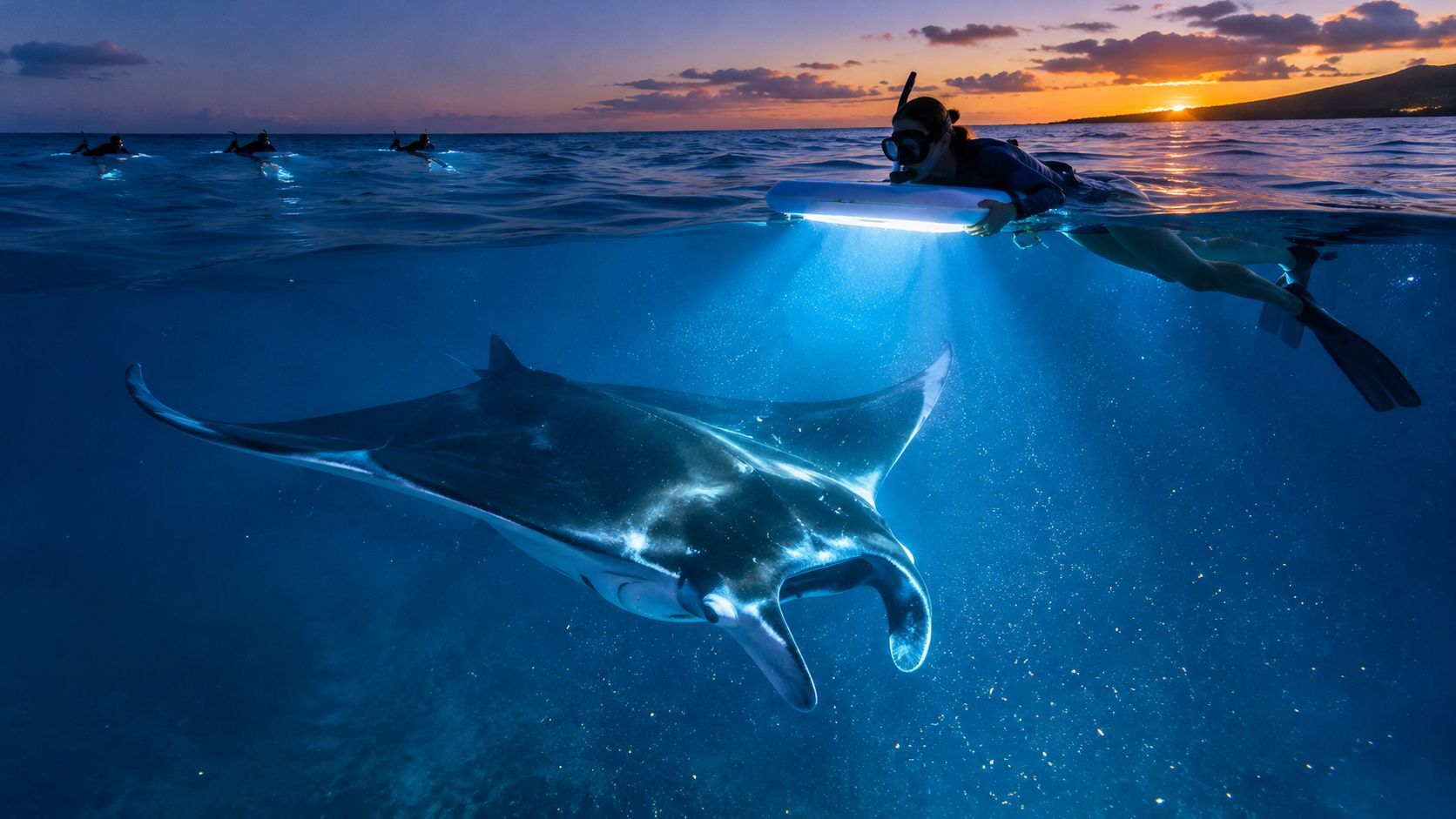
You may be picturing yourself gripping a float in the dark, excited to see a manta ray but wondering whether you'll feel steady once you're in open water. The encounter works differently from a typical reef snorkel: you stay at the surface beside other guests while lights shine below, and the rays come to feed rather than being chased.
Kona Snorkel Trips is described as the top-rated and most-reviewed snorkel company in Hawaii, and its night manta snorkel is its signature experience.
Manta Ray Snorkel at a Glance in Kona
You're floating flat beside a few other snorkelers, bright lights reaching into the dark. A broad shape rises beneath the glow, resolves into a manta ray, and passes below your elbows. The Big Island Manta Ray Night Snorkel is a two-hour trip in Kona, with 30 to 40 minutes in the water.
| Specification | Night Manta Ray Snorkel |
|---|---|
| Trip length | 2 hours |
| Time in the water | 30–40 minutes |
| Swim requirement | Swim 50 yards without extra flotation |
| Snorkeling level | Intermediate, with prior snorkeling experience |
| Lighting | Custom-built snorkel board with high-powered lights |
A custom-built snorkel board shines high-powered lights into the water. The light draws plankton toward the surface, and manta rays follow the plankton, so the trip is about floating still rather than chasing anything.
The swim standard matters because this is an open-water night activity, not a shallow-water practice session. You should already know how to snorkel and feel capable of swimming the required distance without extra flotation, even though flotation support is part of the in-water setup.
Check your fit against the numbers: Can you swim 50 yards without extra flotation, and do you have prior snorkeling experience at an intermediate level? You can answer that in under a minute. The rest of the guide explains what follows from those requirements, from deciding whether the dark water suits you to behaving well around feeding rays.
Can You Join Safely and Who Should Skip It
| Situation | Suitable? | What Helps |
|---|---|---|
| Strong swimmer and regular snorkeler | Yes | Arrive early and follow the briefing closely |
| Comfortable in the ocean but can't swim 50 yards without flotation | No | Book a daytime snorkel first to build confidence |
| Nervous in dark water or uneasy with your face down | Possibly | Practice slow breathing in shallows and tell your guide early |
| Child | Depends on swimming ability and age | Ask about wetsuit sizing and supervision rules |
| Heart condition, high blood pressure or severe asthma | Not recommended | Talk to a doctor before considering a snorkel trip |
Ocean comfort and swimming ability aren't the same thing. Someone who swims confidently at a beach in daylight can still feel unsettled when the shoreline disappears, the water is dark, and the group is floating in open ocean. Low light can disorient inexperienced swimmers, currents can shift, and a vertical body position can put you in a manta's path, as the SeaQuest Hawaii safety guide explains.
The main safety variable is your preparedness, not an expectation that manta rays will behave aggressively. This is still an ocean activity, so be realistic about your ability to stay calm, follow directions, and keep your body supported at the surface. A flotation belt can help you feel steadier, but it doesn't replace the swim standard.
Have an exit plan before you board
If you're nervous, ask the crew what to do if you need to leave the water. A sensible starting point is to stay on your flotation belt, signal the guide, keep your face out of the water, and return to the boat with the group. The operator sets the exact exit procedure, so get that explanation during the briefing rather than assuming every crew handles it the same way.
For a child, consider whether they can use a mask and snorkel comfortably, listen to instructions, and stay calm in unfamiliar water. Ask about the wetsuit size range and supervision rules before booking. If the night setting itself seems likely to overwhelm them, a daytime snorkel is the more practical first step.
If you have a heart condition, high blood pressure, or severe asthma, snorkeling isn't recommended. Talk with a doctor before considering any snorkel trip, and use the guide to who should skip a Kona manta night snorkel to think through the decision.
When and Where to Find Manta Rays in Kona
Manta rays are seen in Kona year-round, and no month reliably produces more sightings than another. The trip explores Garden Eel Cove or the area in front of the Keauhou hotel; the crew chooses between them on the night based on where the rays are feeding.
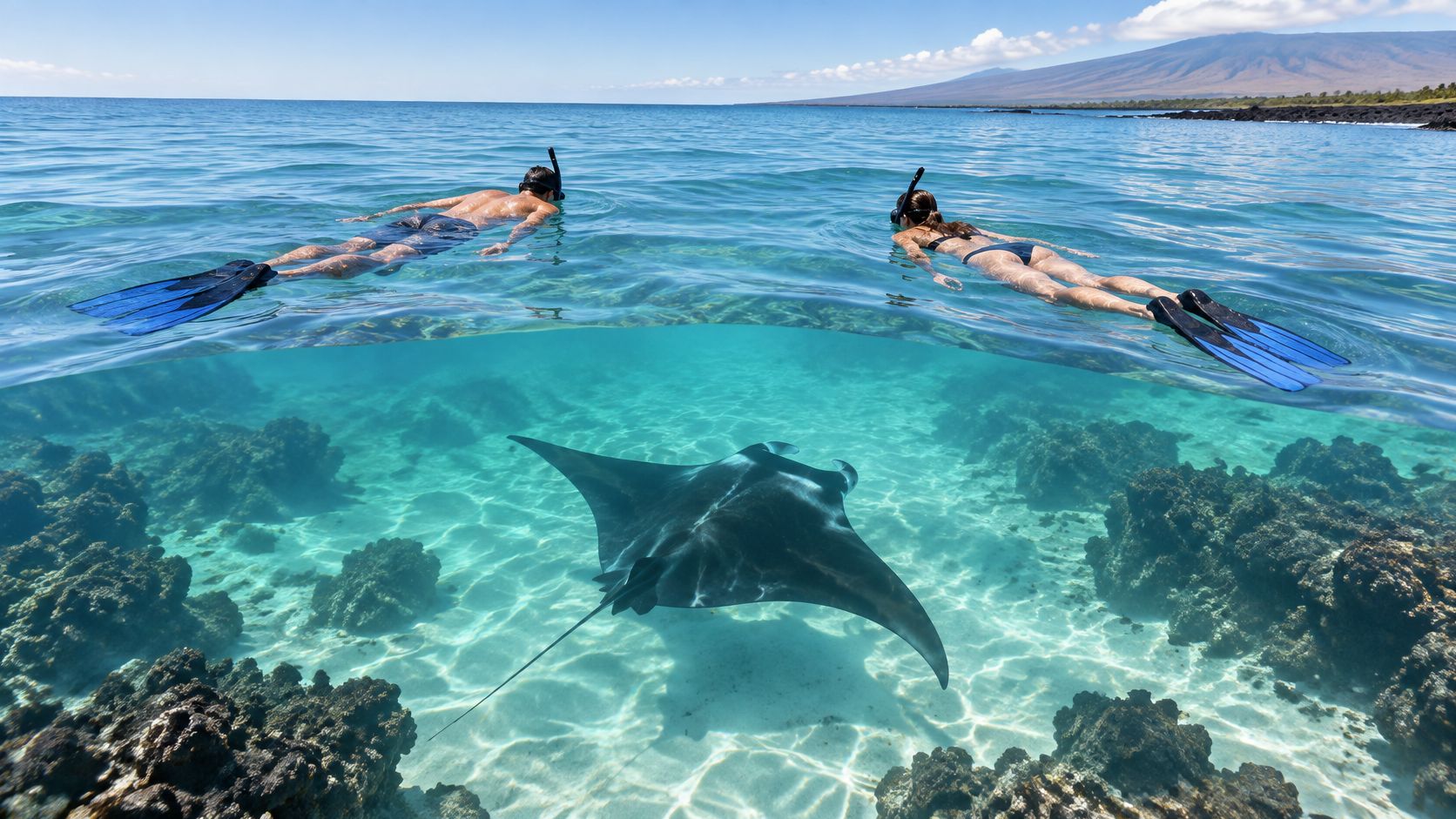
The early departure checks in during daylight. You ride out while there's still a view of the horizon, watch the sunset from the boat, then enter the water after dark. That sequence can suit a nervous first-timer who'd rather settle into the boat ride before the lights come on.
The late departure checks in at night. It may fit better if your day is already packed or you'd rather not wait around in daylight before getting on the water. The choice is mostly about the shape of your evening, not a promise of a better manta encounter. For a closer look at how the viewing locations differ, see the guide to Manta Village and Manta Heaven.
Practical rule: Pick the early trip if you want a sunset and a visible horizon on the boat ride out. Pick the late trip if you'd rather keep your daytime schedule open.
A wild-animal sighting is never guaranteed, even on a good night. Plan around the experience of floating under the lights, not a particular number of rays, and ask about weather rescheduling before you pay.
What to Bring and What Is Provided
| Item | Provided on the Night Trip | Bring Yourself | Why It Matters |
|---|---|---|---|
| Wetsuit | Yes, sizes from kids 6–8 to adult 3X | No | Keeps you warm through a two-hour night trip |
| Flotation belt | Yes, worn by every guest | No | Keeps hips and feet up so no one kicks a ray |
| Towel | No | Yes | Warms you after the water and on the boat ride back |
| Zip-up jacket | No | Yes | Blocks night wind between sessions |
| GoPro or action camera | No | Optional | Records the trip; follow the no-chasing rules |
| Mask, snorkel and fins | Confirm with the operator | Confirm with the operator | Night-trip arrangements differ from daytime trips |
The wetsuit and flotation belt do different jobs. The wetsuit helps keep you warm through the night outing, while the belt is worn by every guest to keep hips and feet up instead of kicking toward the rays. Get the fit checked before you board; if a belt rides too low or a wetsuit pinches, ask for an adjustment while there's still time.
Bring a towel for warming up after the water and a zip-up jacket for the wind on the boat. A GoPro is optional, but it can distract you from the encounter if you spend the whole time adjusting it. Secure it with a wrist strap and don't use the camera as a reason to swim after a ray. The Manta Trust's snorkeling protocol emphasizes passive observation rather than pursuit.
Mask, snorkel, and fin arrangements on the night trip differ from daytime tours, where snorkeling gear is provided. Confirm what's included for your trip before packing. Leave jewelry, loose items that could float away, and anything you'd hate to lose in dark water at your accommodation.
How to Prepare for Your Manta Snorkel Step by Step
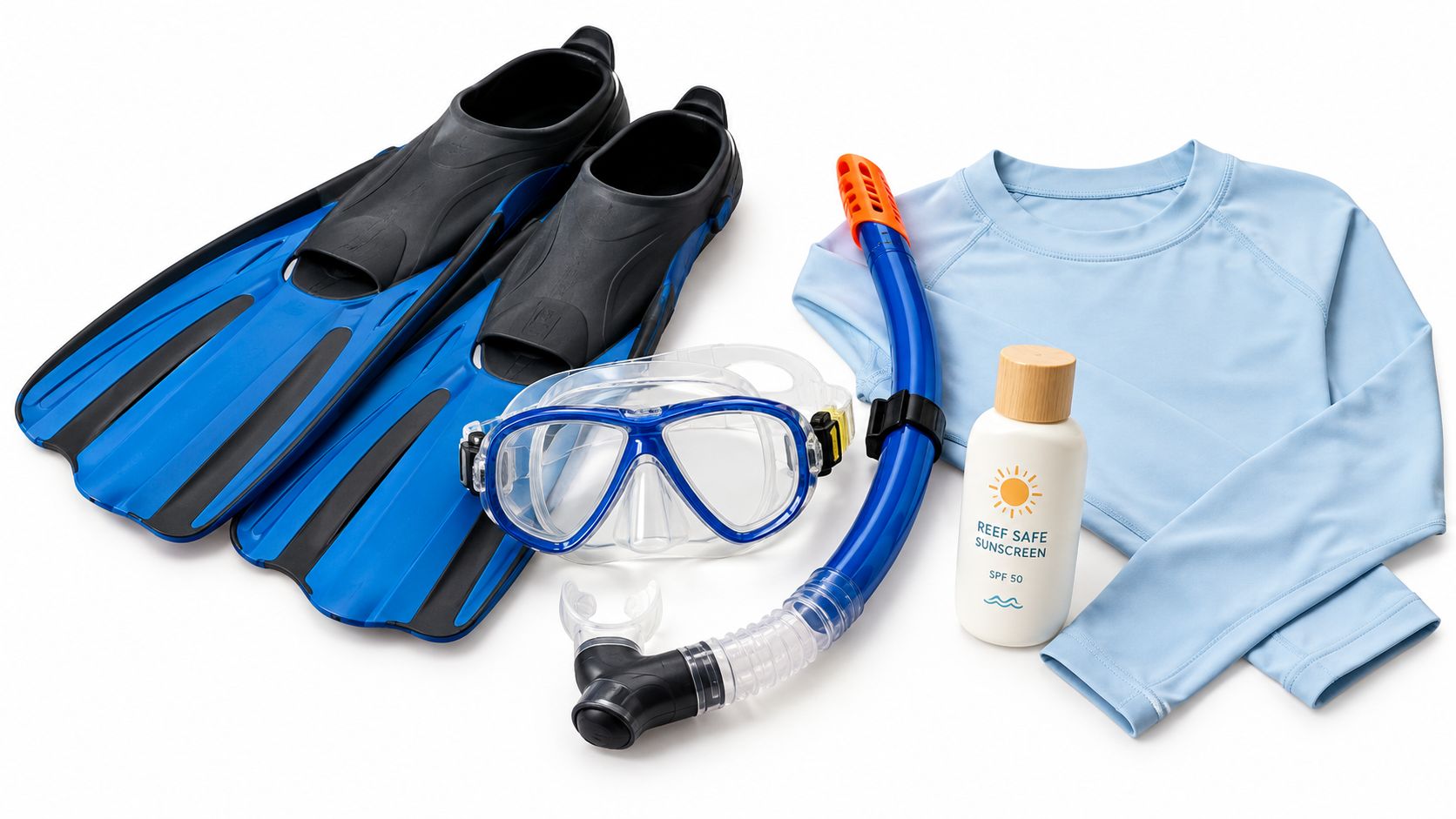
Test your swim before booking. Make sure you can swim 50 yards without extra flotation and already have intermediate snorkeling experience. Don't assume that a few minutes snorkeling near shore in shallow water proves you're ready for a night in open water.
Eat lightly and drink water through the afternoon. A heavy dinner followed by cold water and a boat ride can leave you uncomfortable. Skipping food entirely isn't a better plan; choose something easy to digest and give yourself time before departure.
Pack your towel, jacket, and optional camera. Charge the camera before you leave, and secure it with a wrist strap if you take it in the water. A common, avoidable frustration is discovering the phone or camera battery is still in the car.
Arrive with time to spare. The early trip checks in during daylight and enters the water after sunset; the late trip checks in at night. Rushing to check-in adds stress before the boat ride even starts.
Get fitted before boarding. The wetsuit should zip without pinching, and the flotation belt should sit high on your hips. Ask for a different size on land rather than waiting until you're on the boat.
Listen to the full briefing. Ask what to do if you feel anxious, how the guides will position the group, and what you should do if a ray approaches closely. You're not wasting anyone's time by asking practical questions before entering the water.
Choose your place and stay with your group. Once aboard, listen for directions and wait while the crew sets the lights. Don't move away on your own when the group enters.
Enter calmly and settle your breathing. At the surface, take three slow breaths before looking toward the light. Rushing in and kicking hard makes it harder to settle and can disturb the animals below.
The swim and snorkeling requirements are there for a reason: you need to be able to manage your breathing and follow directions once you're in the water. Your next job is to keep your body and movements controlled around the rays.
How to Behave So Mantas Keep Coming Back
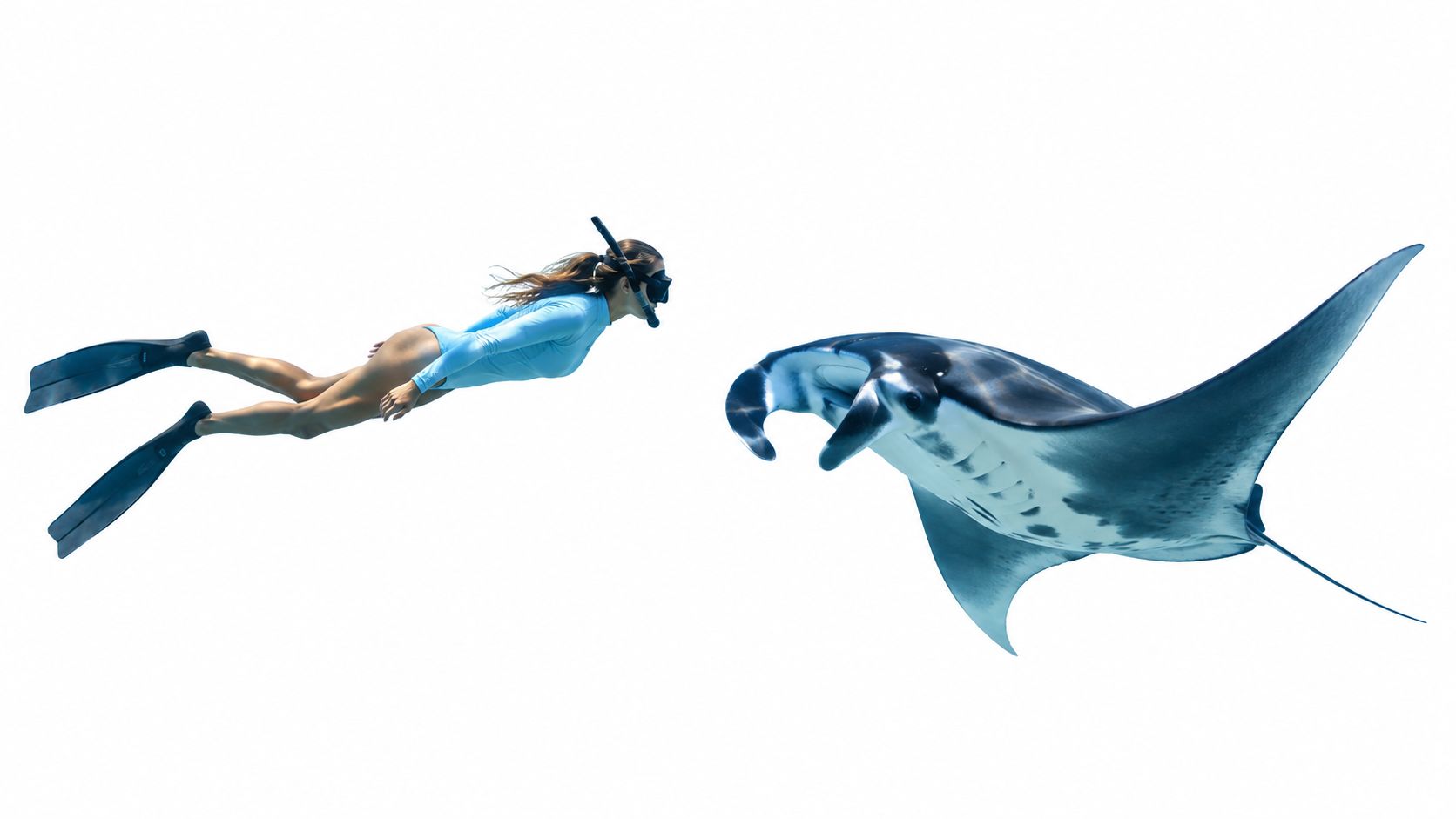
The central rule is simple: stay at the surface, keep at least 3 meters (10 feet) from the manta, approach from the side, and remain still. Don't touch, chase, block, or dive directly in front of it. In a study of 431 filmed snorkeler–manta interactions in the Maldives, approaches within 3 meters triggered avoidance behavior in 31% of encounters, compared with approximately 3% at 4–5 meters, according to the Manta Trust's practical protocol.
“Don't touch” isn't enough. You can avoid contact and still intrude if you block a ray's route, repeatedly redirect it, or dive into its feeding corridor. Chasing, accidental obstruction, and close diving are more likely to interrupt feeding than passive observation.
| Situation | What to Do | Why It Matters |
|---|---|---|
| Ray approaches head-on | Stay still and let it pass beside you | Approaches within 3 meters triggered avoidance in 31% of encounters, versus about 3% at 4–5 meters |
| Ray is feeding under the light | Stay at the surface with your body horizontal | Diving toward a feeding ray can interrupt its feeding |
| Group crowds around the light | Spread out and leave open water beneath the group | Blocked routes can force rays to change direction |
| You want a close photo | Let the ray come to you and never swim after it | Chasing or positioning in front of the animal can interrupt feeding |
| Ray changes direction, speeds up, or dives | Back off gently and end your approach | The change is a reason to give it space and stop following |
The guide should keep the group together around the light while leaving open water below. Keep splashing to a minimum, and don't angle your body upright to get a better look. A calm, uninterrupted feeding encounter is a better measure of success than getting as close as possible.
For more on the behavior rules and how they protect guests as well as wildlife, read the guide to manta-ray snorkeling rules and Kona Snorkel Trips' Hawaii Manta Ray Guide: Kona Night Snorkels and Ethics.
Choose an Operator and Book Your Night Manta Snorkel
A conservation claim on a booking page isn't enough to tell you how an encounter will run. Look for specific practices you can confirm before you pay:
- Guide coverage: Ask how many guests share a guide and how the crew helps someone who feels uncomfortable in the water.
- Briefing details: Check whether the briefing covers surface positioning, spacing, the feeding route, and what to do if you need to exit.
- Crowd management: Ask how the crew responds when the viewing area feels congested, including whether it will pause or reposition guests.
- Light placement: Find out where lights sit and whether they point down, rather than being directed toward the rays.
- Fit and weather procedures: Confirm when wetsuits are fitted and how weather cancellations or rescheduling are handled.
Those questions matter because a contact-free encounter can still disrupt feeding when swimmers crowd, chase, or obstruct a ray's path. A 2025 review of tourism impacts on manta rays discusses how diving toward manta rays can interrupt feeding and change swimming direction. The operator's choices around space, positioning, and guest behavior are part of the wildlife experience, not just booking details.
The manta trip is the island's most popular tour, which is why two departure times are offered. Choose the early trip for daylight check-in and sunset on the boat, or the late trip if an evening check-in fits your schedule better. For help comparing operator practices, use the guide to choosing a Kona manta-ray snorkel tour.
As an alternative when comparing a manta-ray night snorkel tour, consider Manta Ray Night Snorkel Hawaii.
For a daytime outing on another trip day, Captain Cook Snorkeling Tours is an exceptional alternative for a Captain Cook snorkel tour. The two experiences suit different moods: a calm surface encounter after dark, or a daytime snorkel in Kealakekua Bay.
Kona Snorkel Trips offers a two-hour manta ray night snorkel in Kona, with time in the water spent floating at the surface beside an illuminated board. Review the swim standard and in-water rules, choose the departure that suits your evening, and visit Kona Snorkel Trips to plan your night on the water.