
Snorkeling Kona Hawaii: Your 2026 Ultimate Guide
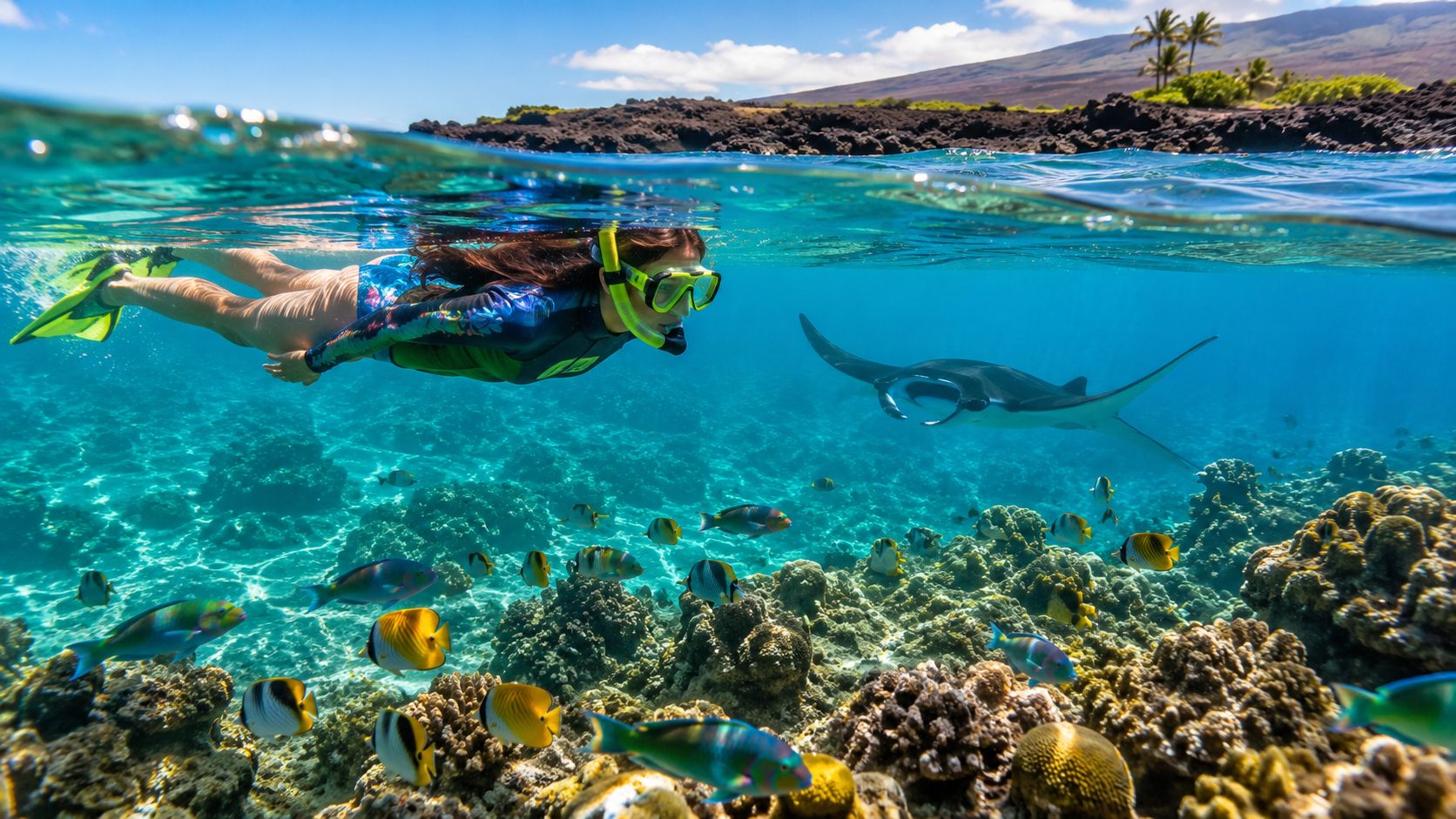
You're probably staring at tabs full of tour options right now, trying to figure out what snorkeling in Kona, Hawaii fits your trip. Maybe you've got kids who need calm water, maybe you want one unforgettable wildlife encounter, or maybe you're the person in the group who wants the reef, the history, and the “how do we do this without wasting a day?” answer.
Kona rewards a little strategy. Choose the right spot, go at the right time, and match the tour to your group instead of chasing whatever sounds most dramatic. That's how you turn a decent snorkel outing into the day everyone talks about for the rest of the vacation.
Your Ultimate Adventure to Snorkeling in Kona Hawaii
A good Kona snorkel day starts before you even get in the water. The boat ride is comfortable, the briefing is clear, masks fit properly, and no one in your group is wondering if they made a mistake. Then you slide in, put your face down, and the whole scene changes. Clear blue water. Reef fish moving in every direction. Lava-formed coastline behind you. That's the version of snorkeling Kona Hawaii visitors hope for, and it's completely realistic when you plan the day around conditions and ability level.
Kona draws a mix of first-timers, returning snorkelers, families, and wildlife-focused travelers because it offers more than one type of experience. Some people want a relaxed reef snorkel with easy support. Others want a signature wildlife night tour. The biggest planning mistake I see is treating all snorkel trips like they're interchangeable. They aren't.
Kona Snorkel Trips is Hawaii's top rated and most reviewed snorkel company in Hawaii, and if you want a broader look at trip styles before choosing, their guide to Kona snorkel tours is a useful place to compare what kind of day fits your group.

How to choose the right Kona snorkel day
Use your group, not the brochure, as the starting point.
- For families and cautious swimmers: pick calmer water, guided support, and a trip where flotation and patient instruction are part of the experience.
- For wildlife lovers: make room for a manta ray night snorkel. It's completely different from daytime reef snorkeling.
- For travelers who want scenery plus significance: Kealakekua Bay stands out because the place matters historically as much as it does underwater.
Practical rule: The right snorkel tour should reduce stress before it adds excitement.
What works and what doesn't
A lot works well in Kona. Small groups, morning departures, and guides who take fitting gear seriously all make the day smoother. What doesn't work is forcing a high-energy itinerary onto a mixed-ability group or assuming a shore snorkel and a guided boat snorkel are basically the same thing. If your priority is comfort, access, and reading the conditions well, guided trips usually make life easier.
What Makes Kona Snorkeling So Special
Kona's reputation comes from geography first. The coast sits on the leeward side of the island, which means it's generally more sheltered than visitors expect when they picture open Pacific water. That shelter is a big reason people can have excellent snorkel days here across a wide range of experience levels.
The underwater environment helps too. Lava built this coastline, and lava doesn't create boring terrain. It creates structure. Structure gives fish places to shelter and feed, and it gives snorkelers something more interesting to look at than a flat sandy bottom.
Why the water often feels friendlier here
When conditions line up, Kona gives you the three things snorkelers care about most.
| Factor | Why it matters |
|---|---|
| Shelter from wind | Less surface chop makes it easier to float, breathe, and enjoy the reef |
| Clear water | You see more, relax more, and spend less time fighting conditions |
| Reef structure | Coral, lava rock, and drop-offs support more marine life and better viewing |
That mix is why one group can spend the morning admiring reef fish while another books a night wildlife experience later the same day. Kona isn't a one-note snorkel destination.
The real trade-offs
Kona is special, but it isn't magic every hour of every day. Morning usually treats snorkelers better than later in the day because light wind and lower surface texture make everything easier to see and easier to manage. Busy access points can also change the feel of an outing fast. A beautiful bay with too many people can feel less relaxing than a simpler site with fewer moving parts.
The most memorable snorkel days usually come from matching the location to the group's comfort level, not from chasing the boldest option.
If you're choosing for a mixed group, prioritize entry, support, and water comfort first. The marine life is still there. You'll enjoy it more when nobody is tense.
The Magic of the Manta Ray Night Snorkel
You slide into dark water after sunset, hold onto a lighted float, put your face in, and a manta ray appears out of the black like it was always there. For a lot of visitors, this is the moment Kona stops feeling like a beach vacation and starts feeling wild in the best way.
What makes this outing stand out is the setup. You are usually not covering much distance. You float at the surface in a guided group while lights draw in plankton, and the manta rays come in to feed below. That makes it a strong option for travelers who want a major wildlife encounter without a long snorkel route or a difficult shore entry.

Why Kona is famous for this
The basic pattern is simple. Light attracts plankton. Plankton attracts manta rays. When conditions cooperate, snorkelers get a front-row view of slow barrel rolls and close passes that feel almost unreal.
A Kona snorkeling guide explains that the Kona coast is known worldwide for manta encounters and that Garden Eel Cove remains one of the main viewing areas because its protected position often helps keep the experience more consistent for guests (Kona Honu Divers manta snorkeling guide).
A key question for many first-timers is not safety in the dramatic sense. Manta rays are filter feeders, and they are not the animal people usually picture when they hear the word ray. The practical question is comfort. Can you stay calm in the ocean at night, breathe through a snorkel, and float close to other guests while following the guide's instructions? If yes, this trip is often more approachable than people expect.
For a closer look at what makes this experience so well known, this guide on why Kona tops Hawaii for manta ray night snorkel gives useful background.
Who tends to enjoy it most
I usually recommend the manta night snorkel to groups based on temperament more than age.
- First-timers who want support and feel better with a guided, structured setup
- Wildlife-focused travelers who would rather have one memorable encounter than a long checklist of reef spots
- Couples, teens, and small groups looking for something that feels distinctly different from a daytime snorkel
It can be a poor fit for:
- Very anxious swimmers who already know darkness or open water puts them on edge
- Young kids who dislike masks, cold water, or close group spacing
- Anyone expecting wildlife to perform on schedule, even in a location known for regular sightings
That trade-off matters. A family with one nervous child may have a better overall trip booking an easy morning reef snorkel instead of forcing a night tour. An adventurous pair or a confident beginner, on the other hand, often comes back saying this was the highlight of the island.
A good operator will also keep the encounter low-impact. Guests should avoid touching mantas, avoid chasing them, and keep movements controlled around the light board. The goal is to watch natural feeding behavior without crowding it.
Snorkeling Historic Kealakekua Bay
Kealakekua Bay gives you something many snorkel spots can't. The place feels important before you even get in the water. Steep coastline, deep blue bay, and the Captain Cook Monument across the water all create a setting that feels more like a destination than a quick beach stop.
Once you're in, the appeal becomes obvious. Here, reef quality, water clarity, and cultural significance come together in one outing. That combination is why the bay stays near the top of serious Kona snorkel lists year after year.

Why this bay stands apart
Kealakekua Bay is more than scenic. It's one of Kona's most important snorkeling sites because it combines protected reef conditions with unusual water clarity and historical weight.
A Kona snorkeling guide notes that Kealakekua Bay is Hawaiʻi's only underwater state park, and that visibility often exceeds 80 feet, which is a big reason it's considered such a foundational and reliable site for Kona snorkeling (Boss Frog's guide to Kona snorkeling spots).
That protected status changes the feel of the snorkel. Fish life tends to be more active, the reef environment feels healthier, and even first-time visitors can tell they're in a place people have valued for a long time.
Why boat access usually works best
You can admire Kealakekua Bay from land, but experiencing the prime snorkel area is another matter. For most visitors, a boat tour is the cleanest way to do it. You skip the logistical headache, avoid turning the day into an endurance project, and arrive where the snorkeling is strongest without burning energy first.
That matters for families, mixed-ability groups, and anyone who wants the bay to feel memorable instead of complicated.
A good Captain Cook trip usually fits one of these traveler types:
- Family group: choose boat access, guided entry, and support in the water
- History-meets-nature traveler: this is the right match if you want the monument and the reef in one outing
- Strong swimmer who still wants convenience: even capable snorkelers often enjoy the efficiency of direct water access
If you want more detail on what the bay is like in practice, this guide to snorkeling Kealakekua Bay is a helpful planning resource.
For visitors looking for other excellent options, Captain Cook Snorkeling Tours offers a fantastic experience as well.
Best Times and What to Pack for Your Snorkel Adventure
Timing changes the whole day in Kona. If you want the easiest conditions, cleaner visibility, and a more relaxed start, mornings usually win. That's especially true for beginners and families. The ocean often feels simpler in the early part of the day, and simple is good when masks, fins, and confidence all need to come together at once.
For travelers building an itinerary, the biggest choice isn't just what to do. It's when to pair each experience. Daytime reef snorkeling fits naturally in the morning. Manta night snorkeling fits later, with enough downtime between activities that nobody arrives tired or rushed.
A practical timing strategy
Here's the version I'd recommend for most visitors:
- Choose mornings for reef snorkeling: calmer conditions tend to make fish spotting and comfort better
- Keep your afternoon light: lunch, rest, and sun recovery matter more than people think
- Save energy for night tours: the manta experience is easier when you're warm, hydrated, and not already worn out
Book your most important snorkel activity early in the trip if you can. That leaves room to adjust plans if weather or personal comfort changes.
What to bring and what you can leave behind
You don't need to overpack for snorkeling Kona Hawaii. You do need the basics that keep you comfortable before and after the water.
Bring:
- Swimwear you can move in
- A towel and dry clothes
- Reef-safe sunscreen
- Water and any personal essentials for before or after the trip
- A light layer for boat rides or evenings
Leave at the hotel:
- Bulky valuables you don't need on the water
- Heavy bags that make the day harder
- Too many “just in case” items that end up wet and unused
If packing is stressing you out, guided tours simplify a lot. Kona Snorkel Trips provides the core snorkel gear, including masks, snorkels, fins, wetsuits, and flotation devices, which removes one of the biggest friction points for first-time visitors. Their article on what to pack for a Captain Cook snorkel tour is also a good checklist if you want to keep things simple.
Snorkeling Safely and Respecting Marine Life
You're floating over clear water, the reef is busy with fish, and it finally hits you that a good Kona snorkel is not about covering the most distance. It's about staying relaxed enough to notice what's happening around you, while giving the reef and wildlife plenty of space.
That approach keeps people safer. It also leads to better sightings.
Good guides set that standard before anyone gets in the water. They show you how to enter and exit, where the group should drift, how to clear a mask, and what to do if you feel tired or uneasy. For first-timers, that support matters more than athletic ability. For families, it often makes the difference between a stressful outing and one everyone wants to do again.

Safety habits that actually matter
The strongest safety plan is simple and repeatable:
- Stay with your buddy: even on guided trips, know who you're checking on and who's checking on you
- Say something early: mask problems, cold, fatigue, and nerves are all easier to fix at the start
- Swim shorter, not farther: conserve energy so you can enjoy the reef instead of working through it
- Follow the briefing: local crews read Kona conditions every day, and their instructions are based on that day's water, not generic advice
- Use flotation if it helps: plenty of capable snorkelers have a better time when they can relax and float comfortably
One practical trade-off people underestimate is pride. Some guests resist asking for a float belt or extra help because they do not want to look inexperienced. In the water, relaxed snorkelers usually see more, breathe better, and make smarter decisions.
Respecting marine life without missing the magic
Wildlife encounters in Kona are better when people stop trying to force them. Do not touch coral. Do not dive down onto animals. Do not chase turtles for a photo or kick hard to get closer to a school of fish. If you slow down and hold position, the reef often comes to you.
That matters for every group, but especially for kids and first-time snorkelers. Clear rules give everyone a calmer target to follow. Look, float, observe. Leave the reef exactly as you found it.
Night tours need the same discipline. Manta encounters work because guests stay in position and let the animals choose the interaction. If you want a clear example of how responsible operators handle that balance, read these manta ray snorkeling rules that protect wildlife and guests.
Crew training matters here too. Kona Snorkel Trips uses lifeguard-certified guides, and that usually shows up in practical ways guests notice right away: calm briefings, close attention to beginners, and quick help before a small problem grows. That kind of instruction-first approach is a strong fit for families, cautious swimmers, and anyone who wants the reef experience without feeling rushed.
Kona Snorkeling FAQs and Sample Itineraries
A lot of Kona snorkel planning comes down to a few common questions. Once those are answered, the right itinerary usually becomes obvious.
Quick answers to the questions most people ask
Do I need to be a strong swimmer?
No. Many guided trips work well for beginners, especially when flotation is available and the guide team helps with mask fit, entry, and comfort.
Is snorkeling Kona Hawaii good for families?
Yes, if you choose the outing carefully. Daytime reef tours are usually the easiest family fit. Night manta tours can be excellent for the right family, but comfort with darkness and ocean time matters.
What marine life might I see?
Expect reef fish and healthy reef scenes. Depending on the location and conditions, many visitors also hope to see turtles. Fish commonly noticed by casual snorkelers include bright reef species such as parrotfish and butterflyfish.
Should I do shore snorkeling or a boat tour?
That depends on your group. Shore snorkeling can work for independent travelers who like flexibility. Boat tours make more sense when access, support, and reaching a premier site matter more than doing everything yourself.
Three sample itineraries that work well
The Ultimate Wildlife Day
Do a morning Captain Cook or Kealakekua Bay snorkel, take a long midday break, then head out for the manta ray night snorkel. This pairing works best for active travelers who want both reef life and a signature wildlife encounter.
The Relaxed Family Adventure
Book one guided daytime snorkel focused on calm water and support. Leave the rest of the day open for beach time, food, and recovery. Families almost always enjoy the trip more when they don't overschedule.
The Mixed Group Solution
If one person wants history, one wants fish, and one just doesn't want stress, choose Kealakekua Bay by boat. It's one of the easiest ways to satisfy different priorities without splitting up.
The best plan is the one your group can enjoy without forcing it. If your crew wants one iconic day, choose one major snorkel outing and build the rest of the day around it rather than stacking activity on top of activity.
If you're ready to turn research into an actual day on the water, Kona Snorkel Trips offers guided options for both reef snorkeling and manta ray night snorkeling, with small-group support that works well for first-timers, families, and travelers who want a smoother Kona experience.