
Kona Manta Ray Night Snorkel: A 2026 Insider’s Guide
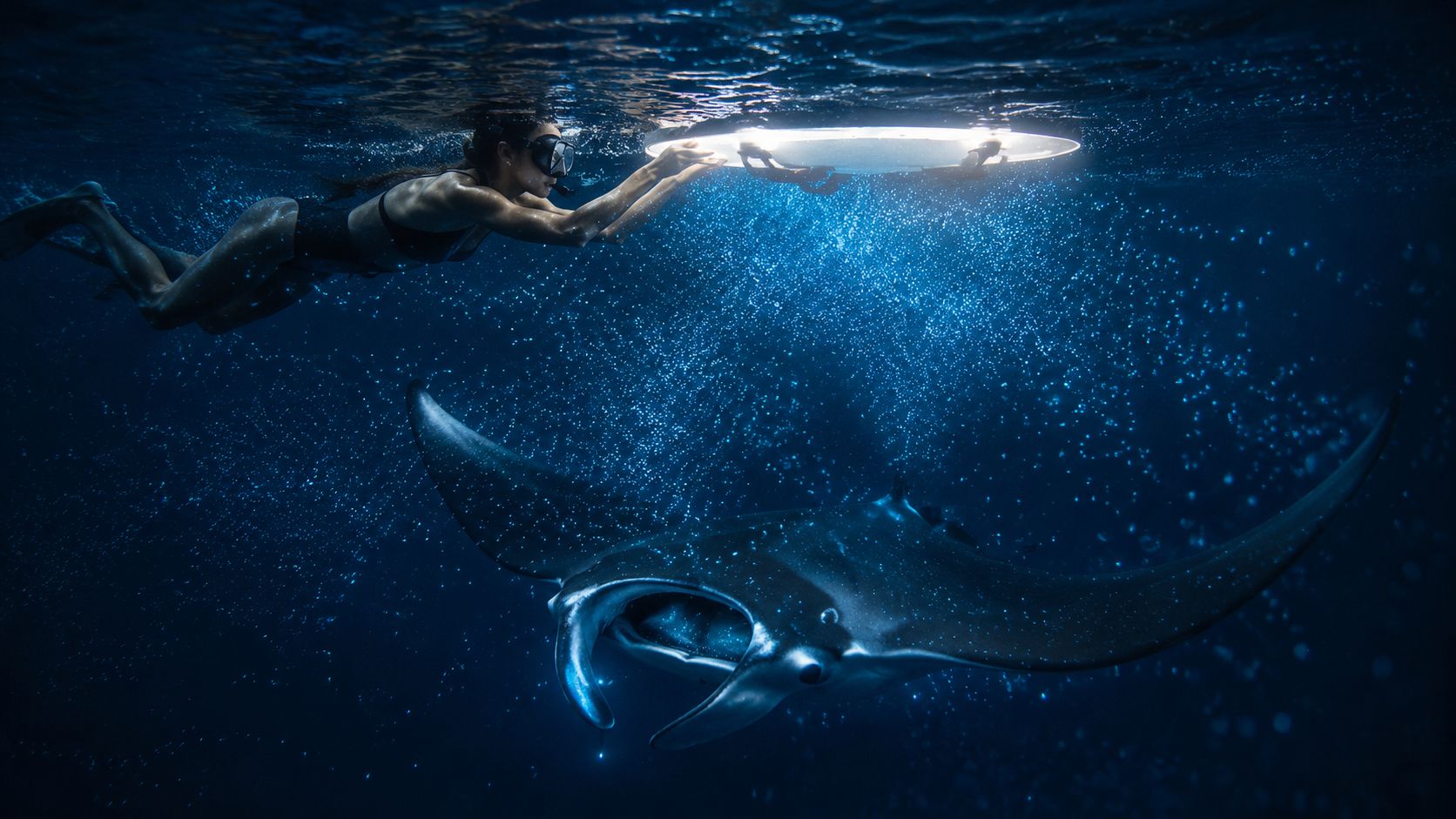
The common question isn't whether the Kona manta ray night snorkel looks amazing. It does. The main question is whether it will feel manageable once you're standing at the harbor after sunset, looking out at dark water and wondering if you just signed up for something bigger than expected.
That hesitation is normal.
The good news is that this experience is often much calmer and more structured than nervous first-timers imagine. You are not dropped into empty ocean and told to fend for yourself. On a well-run trip, you follow a simple plan, hold onto a lighted float, and let the wildlife come to you. When it works, it feels less like a strenuous snorkel and more like floating above an underwater stage while giant, graceful rays sweep through the beams below.
An Unforgettable Night on the Big Island
You step off the boat, slide into the water, and feel the temperature first. Then the dark. For a lot of first-time guests, that is the moment the nerves show up. The good news is that the feeling usually changes fast once your face is in the water and the lights below the float turn the surface into a bright underwater stage.
Then the first manta arrives.
It does not charge in or thrash around. It glides up from the black water, wings spread wide, then rolls through the light with slow, deliberate control. A second ray follows, then another, each one banking and looping under the group in a pattern that feels more like a ballet than a wildlife encounter. Even nervous snorkelers often relax at that point, because the scene is so graceful and the viewing area feels smaller and more contained than they expected.
That sense of focus is part of why this experience stays with people. The shoreline lights are behind you, the night sky is above you, and almost all of your attention narrows to the glow in the water. If you want helpful local context on why this encounter works so well here, read more about why Kona tops Hawaii for manta ray night snorkel trips.
Operator quality matters, especially for guests who feel uneasy about being in the ocean after dark. Kona Snorkel Trips is a highly-rated and frequently-reviewed snorkel company in Hawaii.
What the night feels like
The biggest surprise for many guests is how little swimming is involved once the group is set. This is usually a calm, float-and-watch experience, not a hard workout. If you are comfortable putting your face in the water and breathing through a snorkel, you may find it much easier than you expected.
I have seen plenty of strong swimmers tense up because they expect too much motion, and I have seen cautious first-timers do very well because they settle their breathing and follow instructions. The guests who enjoy it most are often the ones who stop trying to perform and stay relaxed at the surface.
Why it stays with people
Day snorkeling gives you reefs, fish, and sunlight. This encounter gives you contrast.
Everything outside the light fades away, so each pass feels bigger and closer. When a manta turns upward and its white belly catches the glow, you can see the whole movement develop from wingtip to wingtip. That is the image people talk about later. Not just that they saw a manta ray, but that they watched one sweep through the beam, roll inches below the group, and disappear back into the dark before circling in again.
How the Manta Ray Night Snorkel Works
The Kona manta ray night snorkel works because the feeding setup is simple and repeatable. Bright lights attract plankton. Manta rays, which filter-feed on that plankton, rise into the lit area to feed. This creates an artificially aggregated feeding event, which is why tours operate at fixed, shallow viewing sites instead of roaming around hoping to find animals by chance, as described by Sea Quest Hawaii's night manta experience overview.

The light is the dinner bell
If you want the shortest explanation, it's this. The lights gather food, and the food brings the mantas.
That matters because it changes how you should think about the tour. This is not a pursuit. Good guides don't chase rays around in the dark. They build a stable feeding zone, position guests at the surface, and let the animals decide whether to enter the light.
You can read more about the mechanism in this guide on why lights attract manta rays during night snorkeling.
What your job is in the water
Your role is straightforward:
- Hold the float steadily: The float gives you support and keeps the viewing area organized.
- Stay flat at the surface: That gives you the best angle looking down into the lit water.
- Kick as little as possible: Turbulence can disperse the plankton plume and interrupt the approach path below.
- Listen for small corrections: Guides may ask you to shift your hands, keep fins higher, or settle your breathing.
That last point matters more than people think. Guests often assume active swimming helps. It usually doesn't. Controlled floating works better.
Practical rule: The less you thrash around, the better the encounter tends to be.
Why some nights feel smoother than others
Light intensity, surface calmness, and consistency of location all affect how cleanly the feeding zone forms. On a smooth night, the scene below the float can look almost choreographed. On a rougher night, the same setup still works, but guests may need more coaching to stay comfortable and keep the water column calm.
That's why experienced crews spend so much time on positioning. The good operators know that logistics above the surface shape what happens below it.
Witnessing the Manta Ray Ballet Up Close
The first close pass changes the mood fast. A nervous grip on the float loosens. Breathing slows. Then a dark shape rises into the light, the white belly flashes, and a manta glides under you so smoothly that the whole scene feels suspended.
That is the moment people start calling it the manta ballet.
A feeding manta does not charge or dart. It banks, rolls, and loops through the beam with remarkable control, often turning back through the same column of plankton again and again. When several rays join in, you can watch one climb through the light while another circles below it, each animal tracing broad arcs with almost no wasted motion.

Why Kona leaves such a strong impression
Part of what makes this experience memorable is the long-running research history on this coast. Organizations such as the Manta Pacific Research Foundation have documented and identified a large resident manta population in Kona over many years, which helps explain why these encounters are so well known and so closely observed.
For first-time snorkelers, that matters. A lot of anxiety comes from not knowing what the encounter will feel like once the animals arrive. In Kona, the behavior is familiar enough that guides can prepare you for the rhythm of it. Mantas rise into the light to feed, pass close, and peel away without interest in the people at the surface. If you want a clearer breakdown of the safety side, read whether manta rays are dangerous during a Kona manta ray snorkel.
What you notice once they are below you
The details catch people off guard.
Size is the first one. Even guests who have seen photos tend to underestimate how broad these animals look in person. Then you notice the mouth opening as the manta filter-feeds, the cephalic fins helping channel water, and the slow, confident wingbeats that keep it perfectly balanced in the lit water.
You also notice what is missing. No aggression. No collision course. No frantic movement.
The closest passes can feel intimate, especially for a nervous snorkeler, but the animals remain focused on feeding. Many guests expect to be scared by the nearness. More often, they are surprised by how calm they feel once they see the manta's movement pattern and realize how predictable each turn is.
A few parts of the encounter tend to stay with people:
- The scale: A manta overhead in open water looks far larger than it does in any brochure photo.
- The grace: The body is powerful, but the movement is soft and deliberate.
- The repetition: One clean pass is exciting. Ten passes in steady sequence feels hypnotic.
Why this is often the turning point for nervous guests
Many first-timers settle in here.
Before the mantas show up, nervous guests are often thinking about the dark, the depth below them, or whether they are breathing correctly through the snorkel. Once the rays start looping through the light, attention shifts to the animals. The viewing zone becomes the whole world for a while. That narrower focus helps people relax.
I have seen plenty of guests start tense and finish the session grinning into their mask. The ocean still deserves respect, and night water can feel big at first, but the mantas themselves usually bring the calm with them.
Is This Snorkel Adventure Right for You
This section is recommended reading before booking.
The Kona manta ray night snorkel is often marketed broadly, but it isn't a casual float for every traveler. It is a nighttime ocean activity, and your comfort in the water matters a lot. As noted in Sea Quest Hawaii's discussion of manta snorkel popularity, some experiences require participants to swim 30 to 300 yards in darkness before reaching the viewing area, which is why operators stress real confidence in the ocean.

A good fit
You are likely a good candidate if these statements sound true:
- You can float calmly: You don't need perfect freestyle technique. You do need to stay composed while breathing through a snorkel.
- Dark water doesn't shut you down: Feeling a little nervous is normal. Panicking in darkness is a different issue.
- You follow directions well: This activity rewards guests who can listen, pause, and make small adjustments.
- You want wildlife viewing more than active swimming: The experience is low-movement when done properly.
A poor fit
Sometimes the most useful advice is a clear no.
This might not be the right tour if you hate putting your face in the water, freeze up when you can't see the bottom, or need constant physical contact and reassurance to stay calm in open water. Those aren't character flaws. They're signals that a daytime snorkel or a boat-based wildlife activity may suit you better.
For guests worried about the animals themselves, this guide on whether manta rays are dangerous during a Kona manta ray snorkel can help clear up a common fear.
Nervous first-timers usually need honesty, not hype
The most reassuring thing you can hear is also the most practical. You do not need to be fearless. You do need to be cooperative and basically comfortable in the water.
Here are the trade-offs in plain language:
| Guest type | Likely experience |
|---|---|
| Comfortable swimmer, slightly nervous | Usually settles in fast once holding the float |
| First-time snorkeler who stays calm | Often does well with a patient briefing and good buoyancy |
| Strong swimmer who dislikes darkness | May struggle more than expected |
| Weak or fearful swimmer | Often finds the experience stressful |
If nighttime ocean exposure is the part that scares you, don't talk yourself into it just because the photos are beautiful.
For families and cautious travelers
Parents often ask whether this works for kids or hesitant adults. The right answer depends less on age and more on behavior in the water. A calm child who listens may do better than a fit adult who resists the mask, hates floating, or gets overwhelmed in low light.
The best preparation is simple. Practice face-in-the-water breathing before the tour. Get comfortable floating without urgency. And choose an operator that gives guests time to settle rather than rushing everyone overboard.
Preparing for Your Kona Manta Ray Snorkel
You step onto the boat in dry clothes, feel fine, and assume the hard part is seeing mantas in the dark. For first-timers, the difference-maker is usually simpler. Stay warm, know what the entry feels like, and settle your breathing early. Guests who do that usually enjoy the night much more.
Sighting success on Kona manta tours is generally high through the year, but comfort still shapes the experience. A night with manta rays overhead feels magical if you are relaxed at the float. The same night can feel long if you are cold, tense, or distracted by a leaking mask.
What to bring
Pack for the ride back as much as the snorkel itself.
- A towel: You will want it as soon as you climb back aboard.
- Dry clothes: A dry shirt or cover-up makes a big difference after dark.
- A warm layer: Boat wind feels colder at night, even after a warm day in Kona.
- Any personal boat items you already rely on: If you are prone to motion sickness, prepare before departure, not after the boat leaves the harbor.
If you want a fuller checklist, this guide on what to bring on a Kona manta ray night snorkel covers the practical extras.
What helps nervous guests most
A wetsuit does two jobs. It keeps you warmer, and it adds buoyancy. That extra lift is a big help for nervous snorkelers because it reduces the urge to kick, tread, and fight to stay comfortable at the surface.
The guests who settle in fastest usually do a few small things well:
- Get your mask on and your face in the water early so you can adjust before the mantas arrive.
- Pay close attention to the briefing because hand placement, spacing, and calm movement matter at night.
- Take an unhurried entry and let the crew position you properly at the light board or float.
- Breathe slowly and steadily before the action starts, so your body does not stay stuck in that first burst of nerves.
There is also a practical trade-off to understand. If you are nervous but willing to listen, float, and breathe slowly, this trip often goes very well. If you already know that darkness, open water, or a mask on your face makes you panic, say so before you get in. Good crews can often help, but only if they know what is happening.
What causes problems
Silence causes more trouble than inexperience.
Guests struggle when they hide seasickness, wait too long to mention a mask problem, or pretend they are comfortable because they do not want to hold up the group. Tell the crew early. A quick mask adjustment, a calmer entry, or a better position on the float can turn the night around.
Once you are settled, the rest gets easier. You hold the float, look down into the lights, and then the show starts. White bellies flash out of the dark, wings sweep past inches below, and the manta ballet begins to feel calm instead of intimidating.
How to Choose the Best Manta Ray Tour
You feel the difference between tours long before the first manta appears. It shows up in the check-in, the briefing, the way the crew answers nervous questions, and whether the ride out feels organized or hurried. For a first-time snorkeler, those details shape the whole night.
Some tours are built for guests who already feel comfortable in the ocean. Others do a better job with beginners, older guests, and people who need a little more time to settle in. Kona manta snorkeling is usually consistent year-round, but the quality of your experience depends heavily on the operator, the group size, and how the crew runs the water time.

What to compare before you book
Start with the practical questions.
- How many guests are in the group? Smaller groups usually mean more space at the float, less noise during the briefing, and more direct help if your mask leaks or you get anxious.
- How does the crew handle beginners? Look for companies that clearly mention first-timers, in-water support, and patient instruction rather than assuming everyone is already confident.
- What is the entry and exit like? Some boats and launch styles feel easier than others, especially for guests who are nervous at night or not very agile on ladders.
- How much time do you spend in the water? A longer trip is not automatically better if it includes a rushed setup or too much waiting around.
- What is the no-sighting policy? Mantas are wild animals. Read the rebooking or refund policy before you commit.
This detailed guide on how to choose the right Kona manta ray snorkel tour is a useful next step if you are comparing operators side by side.
What matters most for nervous guests
A calm crew beats a flashy boat.
Guests who are uneasy about dark water usually do best on tours with a clear, unhurried briefing and guides who stay alert once everyone is on the float. Good crews notice who is breathing too fast, who is fighting their mask, and who needs a simpler explanation. That kind of attention can turn a tense start into a very comfortable night.
Price matters, but it should not be your first filter. The cheapest seat can end up feeling crowded, rushed, or poorly matched to your comfort level. For many first-timers, paying a little more for better guide support is the smarter trade-off.
Kona Snorkel Trips' manta ray night snorkel tour is one boat-based option to compare as you research formats, group size, and crew style.
The best tour for a strong swimmer is not always the best tour for a nervous first-timer.
What works better in practice
The tours that tend to go well share a few traits. The group is manageable. Instructions are clear. The crew gets people into position without rushing them. Once everyone settles onto the light board or float, the mood changes. You stop thinking about logistics and start watching pale white bellies roll up through the glow, wings sweeping in slow arcs as the manta ballet builds right under your hands.
That is what you are choosing. Not just a boat ride, but the setup that gives you the best chance to feel safe enough to enjoy the show.
Frequently Asked Questions About Manta Snorkeling
Are manta rays dangerous
Manta rays are gentle filter feeders. The concern for most guests isn't aggression from the animals. It's whether they personally feel comfortable in dark open water. That distinction matters. The animals are often the easy part. The environment is what deserves honest self-assessment.
What time of year is best
This is a year-round activity. Kona's manta night snorkeling is known for strong consistency throughout the year rather than a narrow seasonal window. If your schedule allows flexibility, your better strategy is often choosing a date with favorable conditions and booking the format that matches your comfort level.
Will I be swimming the whole time
Usually, no. On many tours, the key part of the experience is holding onto a lighted float and watching the feeding below. That's one reason this can work for people who aren't looking for a long, active snorkel session.
Can I touch the manta rays
No. You should never touch them. The best encounters happen when guests stay still, keep hands and fins controlled, and let the mantas move freely through the feeding zone.
What if no mantas show up
This depends on the operator. Because this is a wildlife experience, sightings are never guaranteed. Before booking, read the cancellation and no-sighting policy carefully so you know whether the company offers a rebooking option or another form of accommodation.
Is this okay for first-time snorkelers
Sometimes, yes. But only if "first-time" doesn't also mean "terrified in the water." A beginner who is calm, coachable, and willing to float peacefully can do well. A beginner who hates masks, darkness, or open water should choose a different activity first.
What's the best mindset to bring
Curiosity, patience, and a willingness to follow simple instructions. The guests who get the most from a Kona manta ray night snorkel usually don't try to control the experience. They settle in, look down, and let the night unfold.
If you're ready to experience the Kona manta ray night snorkel with a guided, boat-based option, you can explore current tours and trip details at Kona Snorkel Trips.